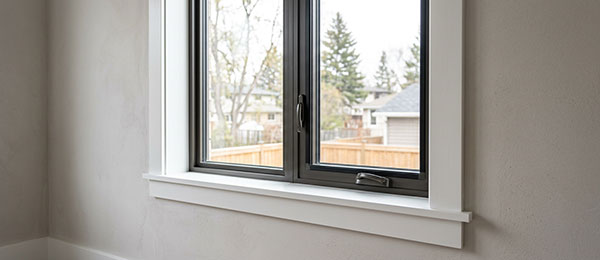
At first glance, a window may appear to be nothing more than glass inside a frame. In reality, it is a carefully engineered system comprising multiple structural, operational, and energy-performance components. Each part — from the frame and sash to the glazing unit and weatherstripping — plays a specific role in maintaining strength, insulation, and long-term durability. A professional window manufacturer must engineer these components to function as a single integrated system.
As a Canadian window manufacturer, Window Force Inc. designs window systems with this integrated performance approach in mind. By breaking down each component and explaining how they function together, this guide clarifies how modern window systems deliver structural stability, air tightness, moisture control, and energy efficiency in demanding Canadian climates.
Key Takeaways
- A window is a system of interdependent structural, operational, and energy-performance components.
- The frame, sash, glazing unit, jamb, sill, and head work together to manage structural loads and environmental exposure.
- Modern residential windows rely heavily on advanced glazing units, insulated spacers, gas fills, and precision weatherstripping.
- Window terminology, such as glazing, mullion, muntin, IGU, and U-factor, directly relates to energy efficiency and structural performance.
- Different window types — casement, double-hung, sliding, awning, and picture — vary significantly in how their parts operate and seal.
- U-factor, SHGC, and air leakage ratings directly determine how well a window performs in Canadian climates.
- Multi-pane glazing, low-emissivity (Low-E) coatings, inert gas fills, and thermal breaks significantly improve insulation.
What are the main parts of the window, and how do they function together?
A window is not simply glass inside a frame. It is a structural opening system engineered to resist wind loads, prevent air leakage, manage water infiltration, and limit heat transfer. According to the National Building Code of Canada and CSA A440 standards, each component contributes to structural and thermal performance.
To understand how a window functions as a unified system, we can divide its components into Structural Parts, Operational Parts, and Decorative Parts.
Structural Parts
The structural components form the backbone of the window assembly. They resist wind pressure, transfer loads to the surrounding wall, and maintain alignment over decades of use.
Frame
The frame is the outermost supporting structure anchored to the building envelope. It consists of the head (top horizontal section), sill (bottom horizontal section), and jambs (vertical sides). The frame transfers wind loads to the surrounding wall structure and provides the mounting surface for the sash.
Head
The head is the top horizontal part of the frame. It supports vertical loads above the window opening and works in conjunction with the building’s lintel.
Sill
The sill forms the bottom portion of the frame and is engineered with a slight slope to shed water away from the building envelope, minimizing moisture intrusion — a critical consideration in Canadian freeze-thaw cycles.
Jambs
The side jambs are vertical frame members that provide lateral support and guide the sash in operable windows.
Glass (Glazing)
In modern construction, the glass is no longer a single pane. Today’s residential windows typically use sealed insulating glass units (IGUs). These units consist of multiple panes separated by spacers and sealed to create an air- or gas-filled cavity. According to Natural Resources Canada, multi-pane glazing significantly reduces heat transfer compared to single-pane windows.
Together, these structural components maintain the window’s shape and resist deformation under pressure from wind and temperature fluctuations.
Operational Parts
Operational components allow the window to open, close, and seal properly.
Sash
The sash is the movable part of the window that holds the glazing unit. In casement windows, the sash swings outward; in sliding windows, it moves horizontally; in hung windows, it moves vertically.
Hardware
Handles, locks, hinges, and operators ensure smooth movement and secure closure. Precision hardware directly impacts air tightness and long-term performance.
Weatherstripping
Weatherstripping seals the gap between sash and frame, reducing air leakage. NRCan identifies air leakage as a key contributor to energy loss in residential buildings, making weatherstripping critical for efficiency.
Without properly functioning operational parts, even high-performance glazing cannot deliver optimal results.
Decorative Parts
Although structural integrity is primary, aesthetic elements also play a role.
Muntins
Muntins are strips that divide the glazing visually into smaller sections. In modern windows, they are typically decorative and placed between panes to preserve thermal performance.
Glazing Details
Glazing refers not only to the glass itself but also to the sealing methods used to secure the glass in the sash. Proper glazing prevents moisture infiltration and maintains seal integrity.
How These Components Work Together
Structurally, the frame anchors the system, the sash supports the glazing, and the jambs maintain alignment. Thermally, the glazing unit reduces conductive heat transfer, while weatherstripping minimizes convective air leakage. Externally, the sill and head manage water drainage.
If one component underperforms — for example, poorly sealed glazing — overall performance declines. That is why manufacturing precision is critical. As Sergey Essipov, seasoned engineer of Window Force Inc., with 20 years of experience in window manufacturing, explains:
“A window performs only as well as its weakest component. Precision in frame welding, glazing, sealing, and hardware alignment is what ensures durability in Canadian conditions.”
Summary Table: Main Window Components and Their Functions
| Component | Location | Primary Function | Structural Role | Thermal Role |
| Frame | Exterior perimeter | Anchors the window to the wall | Transfers wind loads | Supports the insulation system |
| Sash | Movable section | Holds glazing | Maintains alignment | Ensures compression seal |
| Glazing Unit | Centre | Admits light | Adds rigidity | Reduces heat transfer |
| Jambs | Vertical sides | Guides sash | Lateral stability | Sealing interface |
| Sill | Bottom | Water drainage | Load transfer | Moisture management |
| Head | Top | Structural support | Supports upper load | Sealing surface |
| Weatherstripping | Between sash & frame | Air seal | N/A | Reduces air leakage |
What are the essential window components in modern residential windows?

Modern residential windows in Canada are engineered around energy performance requirements outlined by Natural Resources Canada and Energy Star Canada. Unlike older single-pane systems, contemporary windows integrate multiple efficiency technologies into one unit.
Energy Efficiency Components
The biggest advancements in window design over the past two decades have been in glazing and insulation.
Insulating Glass Unit (IGU)
Modern windows typically use double- or triple-glazing. According to Natural Resources Canada, multi-pane glazing reduces heat loss by creating insulating air spaces between panes.
Spacer
The spacer separates panes within the IGU. Warm-edge spacers reduce thermal bridging at the perimeter of the glass.
Gas Fill
Argon or krypton gas is often used between panes to improve insulation performance. These inert gases conduct less heat than air.
Low-Emissivity (Low-E) Coatings
Low-E coatings reflect infrared heat while allowing visible light to pass. This improves winter heat retention and reduces summer heat gain.
Weatherstripping Systems
Multi-point sealing systems significantly reduce air leakage, which NRCan identifies as a major contributor to residential heat loss.
Structural Components
Energy performance cannot exist without structural integrity.
Reinforced Frame Systems
Vinyl window frames often contain internal reinforcements to prevent warping under temperature fluctuations common in Alberta.
Fusion-Welded Corners
Modern vinyl windows use heat fusion welding at corners, creating a continuous, airtight joint.
Hardware and Multi-Point Locks
Multi-point locking systems enhance compression between sash and frame, improving both security and air tightness.
Typical Features of Modern Canadian Residential Windows
| Feature | Standard Double-Glazed | High-Performance Triple-Glazed |
| Panes | 2 | 3 |
| Gas Fill | Argon | Argon/Krypton |
| Low-E Coating | Yes | Advanced multi-layer |
| Spacer | Aluminum or Warm-Edge | Warm-Edge composite |
| U-Value (Typical Range)* | ~1.4–1.8 W/m²·K | ~0.8–1.2 W/m²·K |
| Air Leakage | CSA-rated | CSA-rated, lower values |
What are the most common window terminology terms homeowners should know?
If you’ve ever reviewed a window quote and felt overwhelmed by technical language, you’re not alone. Many of the terms used in manufacturing directly influence performance, durability, and compliance with Canadian building standards.
Let’s clarify the most essential ones.
Glazing
Glazing refers to the glass installed within a window frame. In modern residential construction, glazing typically consists of an Insulating Glass Unit (IGU) rather than a single pane.
According to Natural Resources Canada, multi-pane glazing with Low-E coatings significantly reduces heat transfer compared to older single-pane systems. Glazing is responsible for both light transmission and thermal control.
IGU (Insulating Glass Unit)
An IGU is a sealed unit made of two or three panes of glass separated by spacers and often filled with argon gas. The perimeter seal prevents moisture intrusion between panes.
The performance of an IGU directly impacts the window’s energy rating. Seal failure can result in condensation between panes — a common issue in aging units.
U-Factor
The U-factor measures the rate of heat transfer through a window. According to Energy Star Canada, lower U-factor values indicate better insulation performance.
In Canada, Energy Star-qualified windows must meet specific maximum U-factor thresholds by climate zone.
Mullion
A mullion is a structural element that joins two or more window units together. It adds rigidity and allows larger window combinations while maintaining structural integrity.
Muntin
A mountain divides the glass visually into smaller sections. In modern manufacturing, muntins are usually decorative and positioned between panes so they do not reduce thermal performance.
Stool and Apron
These interior components are often misunderstood.
- Stool: The interior horizontal trim at the bottom of the window.
- Apron: The decorative trim installed beneath the stool.
While not structural, they affect interior finishing and aesthetics.
Terminology Summary Table
| Term | Definition | Why It Matters |
| Glazing | Glass is installed in the frame | Affects insulation and light |
| IGU | Sealed multi-pane glass unit | Determines energy efficiency |
| U-Factor | Heat transfer measurement | Lower = better insulation |
| Mullion | Structural connector between units | Adds strength to large assemblies |
| Muntin | Decorative glass divider | Visual design element |
| Stool | Interior bottom trim | Interior finish detail |
| Apron | Trim below the stool | Decorative finish |
What are the different types of windows, and how do their parts vary?
Not all windows function the same way. Structural differences influence air leakage, water resistance, and operational durability — especially important in Canadian climates with wind, snow, and temperature extremes.
Casement Windows
Casement windows are hinged on one side and open outward using a crank mechanism. Because the sash presses tightly against the frame when closed, they typically provide strong air-sealing performance.
Double-Hung Windows
Double-hung windows have two vertically sliding sashes. While they offer ventilation flexibility, they contain more moving parts and sliding tracks, which may result in slightly higher air leakage compared to compression-sealed designs.
Sliding Windows
Sliding windows move horizontally along tracks. They are mechanically simple but rely on brush seals rather than compression seals.
Awning Windows
Awning windows are hinged at the top and open outward. Their compression seal design provides strong resistance to water infiltration.
Picture Windows
Picture windows are fixed and non-operable. With no moving parts, they generally offer excellent airtightness and structural simplicity.
Structural Comparison Table
| Window Type | Operable | Seal Type | Air Tightness Potential | Common Use |
| Casement | Yes | Compression | High | Energy-efficient designs |
| Double-Hung | Yes | Sliding/brush | Moderate | Traditional homes |
| Sliding | Yes | Brush | Moderate | Wide openings |
| Awning | Yes | Compression | High | Basements, ventilation |
| Picture | No | Fixed | Very High | Large viewing areas |
What are the parts of a vinyl window, and how are they different from wood or aluminum?
Vinyl windows dominate modern Canadian residential construction due to thermal performance and low maintenance.
Vinyl Frame Chambers
Vinyl frames are designed with multiple internal chambers. These air pockets act as insulation barriers, reducing heat transfer through the frame.
Welded Corners
Unlike mechanically fastened wood or aluminum frames, vinyl windows use fusion-welded corners, creating a continuous joint that enhances structural integrity and airtightness.
Reinforcement
In larger vinyl windows, internal reinforcements may be added to increase structural stability and meet CSA load requirements.
Drainage Systems
Modern vinyl windows incorporate weep holes and drainage channels that allow water to exit safely, preventing moisture damage.
Material Comparison Table
| Feature | Vinyl | Wood | Aluminum |
| Thermal Insulation | High (multi-chamber) | Moderate | Low (conductive) |
| Maintenance | Low | High | Low |
| Moisture Resistance | High | Moderate | High |
| Corner Construction | Welded | Fastened | Mechanically joined |
| Energy Efficiency | High | Moderate | Requires thermal break |
How do window components impact energy efficiency and insulation?
Stand next to an older window in January, and you’ll feel it instantly — the cold radiating inward. That sensation isn’t just discomfort; it’s physics. Windows are one of the largest contributors to residential heat loss in Canada. According to Natural Resources Canada (NRCan), up to 25% of a home’s heat can escape through windows in colder climates when inefficient units are installed. That’s why understanding window anatomy isn’t cosmetic — it’s financial and structural.
Let’s break down the performance drivers that matter most.
U-Factor: Measuring Heat Loss
The U-factor measures how well a window prevents heat from escaping. It represents the rate of heat transfer through the entire window assembly (glass, frame, spacers).
- Lower U-factor = better insulation
- Measured in W/m²·K in Canada
- ENERGY STAR® Canada sets climate-specific performance zones
In Canada’s colder zones (Zone 3 and beyond), windows typically must meet a U-factor of 1.22 W/m²·K (0.22 US equivalent) or lower, depending on province and updated ENERGY STAR criteria (Natural Resources Canada, energy-efficiency standards).
But here’s what’s often overlooked: the frame design impacts U-factor just as much as the glass. Vinyl frames generally outperform aluminum unless thermal breaks are properly integrated.
As Sergey Essipov, seasoned engineer of Window Force Inc., explains:
“Homeowners often focus only on the glass, but the frame and spacer system are equally critical. A well-engineered window is a system — every component must work together to achieve true energy efficiency.”
Solar Heat Gain Coefficient (SHGC): Managing Solar Energy

While U-factor measures heat loss, SHGC measures how much solar radiation enters the home.
- Higher SHGC = more passive solar heat gain
- Lower SHGC = better at reducing overheating
Even within a single province like Ontario, SHGC requirements vary significantly. In colder cities such as Ottawa or parts of Northern Ontario, slightly higher SHGC on south-facing windows can help offset long winter heating demands. Meanwhile, in Southern Ontario —Toronto, Mississauga, or Hamilton— excessive solar gain during hot, humid summers can increase cooling loads.
That’s why SHGC selection must account for orientation and regional climate — even within the same province. Modern Low-E coatings make this balance possible without sacrificing natural light.
Air Leakage: The Invisible Efficiency Killer
Air leakage is measured in cubic feet per minute per square foot (cfm/ft²). According to ENERGY STAR standards:
- A lower air leakage rating means better airtightness.
- Poor sealing increases the risk of drafts and condensation.
Even a window with excellent glass performance can underperform if the sash seals are weak or the hardware doesn’t compress the frame properly. This is why high-quality weatherstripping and multi-point locking systems matter.
Multi-Pane Glass & Gas Fills
Double-pane windows are now standard. Triple-pane units are increasingly common in Canada due to:
- Reduced conductive heat loss
- Improved sound insulation
- Increased interior glass temperature (less condensation risk)
Triple-pane systems can substantially reduce U-factor — ideal for colder Prairie climates.
Thermal Breaks: Essential in Frame Construction
Metal frames conduct heat rapidly. Without interruption, they create thermal bridges.
A thermal break is an insulating barrier placed between conductive materials to reduce heat flow. In aluminum windows, polyamide strips are commonly used.
Without a thermal break:
- Condensation risk increases
- Interior comfort decreases
- Energy performance drops significantly
Properly engineered vinyl frames inherently reduce thermal bridging compared to aluminum systems.
What are the structural and decorative window parts inside and outside the home?

Walk through any Canadian home, and you’ll notice trim profiles differ. But behind aesthetics lies function. Window anatomy is divided into structural and decorative components — inside and outside.
Interior Window Components
These elements affect appearance, insulation, and the integration of finishing.
| Component | Function | Structural or Decorative |
| Frame | Main structural support | Structural |
| Sash | Holds the glass unit | Structural |
| Glass Unit | Insulated glazing | Structural |
| Casing | Decorative trim around the window | Decorative |
| Stool | Interior horizontal ledge | Decorative/Functional |
| Apron | Trim below the stool | Decorative |
| Weatherstripping | Seals air gaps | Functional |
Exterior Window Components
Exterior elements protect against moisture intrusion and structural damage.
| Component | Function | Structural or Protective |
| Brickmould | Exterior trim framing window | Protective/Decorative |
| Flashing | Directs water away | Protective |
| Drip Cap | Prevents water entry above the frame | Protective |
| Frame | Structural support | Structural |
What should homeowners remember about window anatomy before buying or replacing windows?
A window is not a single product — it is an integrated structural and energy-performance system where the frame, sash, glazing, seals, and installation must work together. In Canadian climates, even small weaknesses in air sealing, thermal bridging, or glazing performance can translate into higher energy costs, moisture risk, and reduced long-term durability.
Before replacing or purchasing new windows, homeowners should evaluate the complete system — not just glass type or price. True performance comes from proper engineering, material quality, and precision installation that ensures the window performs consistently for decades, not just the first winter.
Frequently Asked Questions
What are the most important parts of a window?
The most critical window components are the frame, sash, glazing unit (IGU), weatherstripping, and hardware. Together, they determine structural stability, air tightness, moisture resistance, and energy performance. If one component underperforms, the entire system’s efficiency declines.
What is the difference between a sash and a frame?
The frame is the fixed outer structure anchored to the wall, while the sash is the movable section that holds the glass. The sash opens and closes, compressing against the frame to create an airtight seal in operable windows.
What does IGU mean in windows?
IGU stands for Insulating Glass Unit. It consists of two or three panes of glass separated by spacers and sealed to create an insulated air or gas-filled cavity. IGUs significantly reduce heat transfer compared to single-pane glass.
Why is U-factor important when buying windows?
The U-factor measures how much heat passes through a window assembly. Lower U-factor values indicate better insulation. In Canadian climates, selecting a window with an appropriate U-factor is essential for reducing heating costs and improving indoor comfort.
What is SHGC, and why does it matter?
SHGC (Solar Heat Gain Coefficient) measures how much solar radiation enters through a window. Higher SHGC allows more passive solar heat gain, which can help in colder regions. Lower SHGC reduces overheating in warmer months. The right balance depends on orientation and local climate.
Are triple-pane windows worth it in Canada?
In many Canadian regions, especially colder zones, triple-pane windows can significantly reduce heat loss, improve sound insulation, and increase interior glass temperature, lowering condensation risk. They are particularly beneficial in climates with long heating seasons.
How does window frame material affect performance?
Frame material impacts thermal bridging, durability, and maintenance.
- Vinyl offers strong insulation and low maintenance.
- Wood provides moderate insulation but requires upkeep.
- Aluminum is durable but conductive unless equipped with thermal breaks.
Proper frame design is just as important as the glazing.
Can individual window parts be replaced, or does the entire unit need to be replaced?
Some components — such as IGUs, weatherstripping, and hardware — can often be replaced individually. However, if the frame is compromised or structural performance has declined, full window replacement is usually the more durable long-term solution.
What causes condensation between window panes?
Condensation between panes usually indicates a failure of the IGU seal. When the perimeter seal breaks down, moisture enters the cavity, reducing insulation performance and clarity. In such cases, the sealed glass unit typically needs to be replaced.
Does installation quality affect window performance?
Yes. Even a high-performance window will underperform if installed incorrectly. Proper flashing, sealing, alignment, and integration with the building envelope are essential to prevent air leakage, water infiltration, and structural stress.