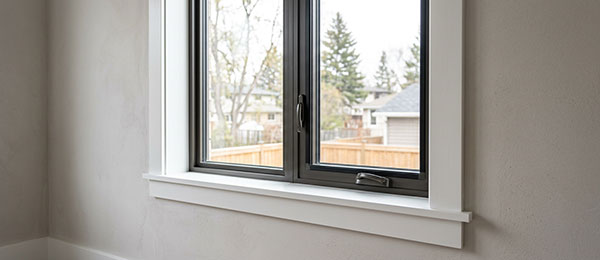
Windows are one of the most important performance components of a Canadian home — yet their lifespan is often misunderstood. Unlike interior finishes that remain relatively stable, windows operate under constant structural and environmental stress: extreme winter cold, summer UV radiation, freeze–thaw cycling, wind pressure, and humidity fluctuations. Over time, these forces gradually affect seals, insulated glass units, hardware, and frame stability.
Understanding how long vinyl windows truly last — and what factors determine whether they perform for 20 years or 30 — requires looking beyond manufacturer claims. Climate exposure, installation precision, frame engineering, and maintenance all influence real-world durability. This guide breaks down the science, the standards, and the warning signs so Canadian homeowners can make informed, long-term decisions rather than reactive replacements.
Key Takeaways
- Vinyl windows typically last 20–30 years and require minimal maintenance compared to wood or aluminum.
- Poor installation, UV exposure, drainage failure, and hardware wear are leading causes of premature window failure.
- Replacement is usually more cost‑effective than repair when seals fail, frames warp, or energy performance significantly declines.
- Extreme Canadian conditions — including freeze–thaw cycles and thermal expansion — can significantly affect longevity.
- Regular maintenance can meaningfully extend service life, particularly through seal inspection, drainage management, and hardware lubrication.
- Higher cost does not automatically guarantee longer lifespan; frame reinforcement, IGU quality, and warranty structure matter more than price alone.
How long do windows last in Canada under different climate conditions?
Windows in Canada don’t age in a neutral environment. They endure deep winter cold, summer UV exposure, heavy precipitation, and repeated freeze–thaw cycles. On average, residential windows last between 15 and 30 years, depending on the material and the quality of installation.
Even within Ontario alone, climate conditions vary enough to influence how long residential windows perform effectively — and that’s without considering differences from one province to another. For perspective, compare three Ontario cities: Toronto, Ottawa, and Thunder Bay.
- Toronto experiences humid summers, strong UV exposure, and moderate winters compared to northern Ontario. High humidity can stress seals and increase the risk of condensation if ventilation is inadequate.
- Ottawa is known for sharp freeze–thaw cycles and colder winter lows, which repeatedly expand and contract frame materials.
- Thunder Bay faces prolonged extreme cold, heavy snowfall, and strong winds off Lake Superior, increasing structural and seal stress.
The greater the temperature swing, the greater the stress on insulated glass units (IGUs). When temperatures fluctuate from −30°C in winter to +30°C in summer, materials expand and contract at different rates. Over time, this mechanical stress can weaken perimeter seals. Once seals degrade, moisture infiltration becomes more likely.
The Impact of Freeze–Thaw Cycles in Canada
Freeze–thaw cycling is a significant factor across many Canadian regions, particularly where winter temperatures regularly fluctuate around the freezing point. When moisture enters microscopic gaps around frames or glazing components, freezing conditions cause expansion, placing repeated stress on surrounding materials. Over time, this can:
- Distort frame corners
- Compromise sealants
- Accelerate hardware wear
Even minor installation inconsistencies — such as improper flashing or insufficient insulation around the frame — can amplify these stresses. That is why installation quality is just as critical as material selection in ensuring long-term durability.
UV Exposure Across Canada
In regions with sustained sun exposure, prolonged UV radiation can gradually affect vinyl stability and seal integrity. Although modern vinyl formulations incorporate UV inhibitors, decades of exposure may still contribute to:
- Surface fading
- Minor brittleness
- Gasket hardening
High-quality vinyl windows manufactured to Canadian performance standards are engineered to withstand long-term UV exposure, but environmental intensity and building orientation continue to influence overall service life.
Humidity and Condensation Stress
Humidity plays a subtler but important role in long-term performance. In higher-moisture environments, condensation can accumulate on interior surfaces when ventilation is inadequate, and persistent dampness around frames may increase the risk of mould growth while gradually affecting adjacent building materials.
The takeaway? In climates with significant seasonal variation, residential windows generally last:
- 20–30 years in moderate southern climates (with proper installation)
- 15–25 years in harsher northern or high freeze–thaw regions
Climate does not automatically shorten lifespan — but it amplifies weaknesses in materials and installation.
How long do vinyl windows last compared to other window materials?
Material choice directly influences service life, maintenance requirements, and resistance to Canadian climate stressors. Vinyl has become the dominant residential window material in Canada because of its balance between durability, energy efficiency, and low maintenance.
On average:
- Vinyl windows: 20–30 years
- Wood windows: 15–25 years (highly maintenance dependent)
- Aluminum windows: 15–20 years (thermal performance limitations)
- Fibreglass windows: 25–40 years (higher upfront cost)
These lifespan ranges reflect typical real-world performance observed across Canadian residential applications. Actual durability depends on installation quality, exposure to climate, material engineering, and ongoing maintenance, but under normal conditions, these timeframes represent what homeowners can reasonably expect from each window material.
Comparison Table: Window Material Lifespan and Performance
| Material | Average Lifespan | Maintenance Level | Moisture Resistance | Thermal Efficiency | Suitability for Canadian Climate |
| Vinyl | 20–30 years | Low | High | High | Excellent |
| Wood | 15–25 years | High | Moderate–Low | High | Good with maintenance |
| Aluminum | 15–20 years | Low | High | Low (conductive) | Moderate |
| Fiberglass | 25–40 years | Low | High | Very High | Excellent |
Why Vinyl Performs Well in Canada
Vinyl does not rot, corrode, or require repainting. Unlike wood, it does not absorb moisture. Unlike aluminum, it does not conduct heat readily at low temperatures. And unlike some early generations of vinyl products from decades ago, modern formulations are engineered with UV stabilizers and reinforced frames.
Fibreglass can last longer in some cases, but it typically comes at a higher price point. For many Canadian homeowners, vinyl offers a practical lifespan-to-cost ratio.
And here’s what matters most — lifespan is not just about the frame. The insulated glass unit often determines when replacement becomes necessary. Even if the frame remains structurally intact, seal failure within double‑ or triple‑pane glass can significantly reduce performance.
What factors affect vinyl window lifespan the most?
Even the highest‑quality vinyl window can fail prematurely if critical factors are overlooked. Based on industry performance standards and field experience, five elements dominate lifespan outcomes.
1. Installation Quality
Improper installation is one of the most common causes of reduced lifespan. Poor sealing, inadequate insulation, or incorrect fastening can create pathways for air and moisture infiltration. Over time, that leads to:
- Seal deterioration
- Frame distortion
- Increased condensation
A properly installed window distributes structural loads evenly and protects perimeter seals from water intrusion.
2. Frame Quality and Reinforcement
Not all vinyl frames are manufactured to the same thickness or to the same reinforcement standards. Multi‑chambered frames improve structural stability and thermal resistance. Reinforced frames help resist warping under the wide temperature swings common across Canada
Seasoned engineer Sergey Essipov, who has 20 years of experience in window manufacturing, explains:
“The lifespan of a vinyl window depends less on the PVC itself and more on engineering precision — reinforcement, weld quality, and seal integrity determine whether it performs for 20 years or 30.”
This observation reflects what long‑term performance data consistently shows: structural integrity and seal reliability drive durability.
3. UV Exposure and Orientation
South‑ and west‑facing windows receive stronger UV exposure. Over the decades, this can harden gaskets and slightly reduce the flexibility of vinyl components. Quality materials slow this process, but cannot eliminate environmental exposure entirely.
4. Seal Failure in Insulated Glass Units
The insulated glass seal keeps inert gas sealed between panes. When seals degrade, fogging or condensation appears between panes. Industry studies indicate that the probability of seal failure increases significantly after 15–20 years, especially in extreme climates.
5. Hardware Wear and Drainage Systems
Operational components — hinges, locks, balances — wear mechanically. Proper drainage channels (weep systems) are also essential. If blocked, water accumulation may stress internal components.
Routine inspection and occasional hardware replacement can extend usability, but seal failure usually marks the practical end of life.
When to replace windows instead of repairing them?
Homeowners often hesitate between repair and replacement. The decision becomes clearer when evaluating structural integrity, energy performance, and long‑term cost efficiency.
Step‑by‑Step Evaluation Guide
- Check for condensation between panes. Persistent fogging indicates seal failure.
- Assess drafts. Noticeable air movement around closed windows suggests frame or seal degradation.
- Inspect frame condition. Warping, cracking, or moisture damage reduces structural reliability.
- Evaluate energy bills. A steady rise without behavioural changes may reflect declining thermal performance.
- Test operation. Difficulty opening or locking can signal hardware or frame distortion.
If only hardware components fail, repair may be reasonable. But if insulated-glass seals fail, replacement is typically more cost‑effective than repairing glass units in older systems.
When multiple symptoms appear simultaneously — drafts, condensation, rising bills — replacement usually offers better long‑term value than incremental repairs.
What are the warning signs that your windows are reaching the end of their lifespan?
Windows rarely fail overnight. Instead, performance declines gradually.
Common Warning Signs
- Persistent drafts even when windows are locked
- Condensation or fogging between panes
- Noticeable outside noise infiltration
- Frame warping or corner separation
- Water infiltration during heavy rain
Condensation between panes is one of the clearest indicators of decline. Once the hermetic seal fails, thermal performance drops as argon gas escapes and moisture infiltrates the insulated glass unit, significantly reducing energy efficiency.
Warping or operational difficulty can signal structural stress from repeated freeze–thaw exposure, a common condition across many Canadian regions, particularly in colder climates where material contraction and expansion are more pronounced.
Comfort is another telling metric. If rooms feel noticeably colder near windows in winter despite adequate heating, performance degradation may already be underway.
Windows are long-term building components, but they are not permanent. With proper manufacturing, installation, and maintenance, vinyl windows typically provide 20 to 30 years of reliable service across Canada’s diverse climate conditions. Monitoring performance indicators allows homeowners to plan replacement proactively rather than reactively.
Can maintenance extend the lifespan of vinyl windows?
It’s easy to assume that once vinyl windows are installed, they simply perform until they fail. But that assumption overlooks something critical: windows are dynamic systems. They expand, contract, drain, seal, ventilate, and resist pressure changes daily. In Canadian climates — where seasonal temperature swings can exceed 60°C annually — that movement is significant.
The National Research Council Canada (NRC) explains that building components exposed to repeated freeze–thaw cycles undergo material stress over time. While uPVC (unplasticized polyvinyl chloride) is highly resistant to moisture and rot, hardware, gaskets, and insulated glass units (IGUs) are mechanical systems that benefit from care.
And here’s the important point: maintenance doesn’t “freeze time,” but it slows degradation.
Step-by-Step Guide to Extending Vinyl Window Lifespan
1. Clean Frames and Glass (Twice Per Year)
Dust, pollutants, and airborne salts — particularly in urban or coastal areas — accumulate on frames. Cleaning with mild soap and water prevents surface degradation. Abrasive cleaners should never be used, as they can damage UV-protective coatings.
2. Inspect and Clean Drainage (Weep) Holes
Vinyl windows are designed with drainage pathways to channel moisture away from the frame. Blocked weep holes can trap water, increasing stress on seals and internal reinforcements. Clearing debris ensures proper moisture management.
3. Lubricate Moving Hardware Annually
Locks, hinges, and sliding mechanisms require silicone-based lubricant to prevent corrosion and stiffness — especially after harsh winters.
4. Check Weatherstripping and Seals
Rubber gaskets may compress over time. Visual inspection for cracking or shrinkage helps identify early signs of air leakage.
5. Examine IGU Condition
Fogging between panes indicates seal failure in the insulated glass unit. Addressing this early prevents larger thermal performance losses.
Maintenance Impact Overview
| Maintenance Task | Frequency | Impact on Lifespan | Risk if Ignored |
| Frame cleaning | 2× yearly | Preserves UV coating | Surface wear, staining |
| Drainage inspection | 1–2× yearly | Prevents moisture stress | Seal degradation |
| Hardware lubrication | Annual | Maintains operation | Premature hardware failure |
| Seal inspection | Annual | Maintains energy efficiency | Air and water infiltration |
| IGU check | Annual | Protects thermal performance | Condensation, energy loss |
Research shows that proper moisture management is essential for maintaining the durability of building envelope components. While vinyl materials are resistant to rot and moisture damage, surrounding structural elements can still deteriorate if moisture is not effectively controlled.
As seasoned engineer Sergey Essipov, with 20 years of experience in window manufacturing, explains:
“Vinyl itself is durable, but the longevity of a window system depends on the weakest component — typically seals, hardware, or installation quality. Proper maintenance ensures those elements perform as long as the frame is capable of lasting.”
And that distinction matters. Because often, windows fail functionally before the vinyl frame structurally degrades.
How does Canada’s climate specifically affect vinyl window lifespan?
Canada is not a uniform climate zone. Window performance expectations in southern Canadian regions differ substantially from northern or lake-effect climates.
The primary environmental stressors affecting vinyl window longevity include:
- Extreme temperature fluctuations
- Freeze–thaw cycling
- Ice accumulation
- High humidity or coastal exposure
Building materials exposed to large seasonal temperature fluctuations experience gradual structural fatigue over time. While vinyl is generally more resistant to cracking and moisture damage than wood, critical components such as perimeter seals, gaskets, and insulated glass units remain sensitive to long-term thermal stress and environmental exposure.
Canadian Provincial Climate Comparison
| Province | Avg January Temp | Avg July Temp | Primary Climate Stress Factor |
| British Columbia (Coastal) | 0°C to 5°C | 18°C to 22°C | High humidity, salt air exposure |
| Ontario (Southern) | −5°C to −10°C | 20°C to 24°C | Temperature swings, humidity |
| Alberta | −10°C to −15°C | 18°C to 22°C | Extreme temperature variation |
| Quebec | −12°C to −15°C | 20°C to 24°C | Cold winters, seasonal humidity |
| Manitoba | −15°C to −20°C | 19°C to 23°C | Severe cold, wind exposure |
Western coastal regions experience higher humidity and salt exposure, which can influence hardware durability. Prairie provinces face some of the widest annual temperature ranges in Canada, leading to more frequent thermal expansion and contraction cycles. Central and eastern provinces combine cold winters with seasonal humidity, creating mixed environmental stress patterns that affect long-term window performance.
Thermal Expansion Considerations
Vinyl expands by approximately 0.07 mm per metre per °C. Over large window spans, cumulative expansion and contraction can place stress on frame corners and seals. Proper installation — allowing for expansion gaps — becomes critical.
Coastal areas introduce another variable: salt exposure. Sodium chloride carried by wind can accelerate hardware corrosion if components are not properly coated.
So yes, climate matters — and it matters regionally.
Are expensive windows guaranteed to last longer?

Higher price tags create expectations. But are they justified?
The answer depends on what you’re actually paying for.
Not all vinyl windows are manufactured equally. In Canada, performance standards for windows and doors are regulated by CSA A440. Certified products are tested for air infiltration, water penetration resistance, and structural performance.
However, price differences often stem from three major factors:
- Frame construction and reinforcement
- Insulated Glass Unit (IGU) quality
- Warranty coverage and manufacturing standards
Frame Reinforcement and Profile Design
Premium vinyl windows often include galvanized steel or composite reinforcement within the frame. This improves structural rigidity, particularly in larger window configurations.
Without reinforcement, frames may experience greater deflection over time due to thermal expansion and contraction.
Insulated Glass Unit (IGU) Quality
IGU lifespan is commonly estimated at 15–30 years, depending largely on spacer design and sealant performance. Industry research indicates that warm-edge spacer systems combined with dual-seal edge construction can substantially enhance durability compared to older aluminum spacer configurations, primarily by reducing thermal stress and limiting moisture infiltration at the perimeter.
Higher-tier windows often feature:
- Low-E coatings optimized for Canadian climates
- Argon or krypton gas fills
- Dual-seal IGU systems
- Warm-edge spacer technology
These elements improve durability — not just efficiency.
Warranty Comparison
| Tier | Typical Warranty | Frame Reinforcement | IGU Quality | Expected Lifespan |
| Economy | 10–15 years limited | Minimal | Standard aluminum spacer | 20–25 years |
| Mid-Range | 20–25 years | Partial reinforcement | Warm-edge spacer | 25–35 years |
| Premium | Lifetime transferable | Full reinforcement | Dual-seal, high-performance IGU | 30–40+ years |
A longer warranty doesn’t always guarantee performance — but it does indicate manufacturer confidence in materials and fabrication standards.
What’s the takeaway? Price alone isn’t predictive. Construction quality is.
What should Canadian homeowners know before replacing their windows?
Replacing windows is not just a purchase decision — it is a long-term investment in building performance. In Canada’s demanding climate, durability depends far more on proper engineering, certification, and installation quality than on the material alone. Homeowners who evaluate products based on verified standards, energy performance for their climate zone, and installer expertise position themselves for decades of reliability. In the end, informed choices protect comfort, efficiency, and long-term property value far beyond the initial price tag.
Frequently Asked Questions
How long do vinyl windows realistically last in Canada?
Most quality vinyl windows in Canada perform effectively for 20–30 years, with some well-engineered systems lasting longer. However, lifespan depends less on the vinyl itself and more on installation precision, insulated glass performance, reinforcement, and environmental exposure.
Do windows fail suddenly or gradually?
Windows rarely fail overnight. Performance typically declines gradually — first through minor draft sensation, subtle condensation issues, or operational stiffness. Seal failure in the insulated glass unit is often the clearest turning point, as it directly affects thermal efficiency.
Is seal failure inevitable?
Over decades, perimeter seals experience thermal movement and environmental stress. While modern dual-seal systems and warm-edge spacers significantly improve durability, most insulated glass units eventually reach a performance threshold where gas retention declines. This is a normal part of the aging process rather than a manufacturing defect in most cases.
Can proper installation really add years to window lifespan?
Yes. Installation quality directly affects structural loading, moisture management, and seal protection. Even premium windows can underperform if flashing, insulation, or fastening is improperly executed. Conversely, a well-installed mid-range window often outperforms a poorly installed premium product.
Does a higher price always mean a longer lifespan?
Not automatically. Price differences often reflect reinforcement levels, glass technology, warranty structure, and manufacturing standards. What matters most is engineering quality and certification compliance, not cost alone.
Are certain Canadian regions harder on windows than others?
Yes. Areas with large seasonal temperature swings, sustained UV exposure, coastal salt air, or prolonged cold can increase material stress. Climate does not automatically shorten lifespan — but it amplifies weaknesses in seals, hardware, and installation.
When is replacement more practical than repair?
If condensation appears between panes, energy bills steadily increase, and frames show distortion or persistent drafts, replacement is usually more cost-effective than incremental repairs. Hardware repairs alone are reasonable, but seal failure typically signals the practical end of the insulated glass unit’s life cycle.
Can maintenance truly extend window lifespan?
Maintenance cannot stop aging, but it can meaningfully slow degradation. Regular cleaning, drainage inspection, seal checks, and hardware lubrication help protect the components that most commonly fail before the frame itself.
What is the most overlooked factor in window longevity?
The insulated glass unit. Frames often remain structurally intact long after IGU seals begin to degrade. Many homeowners assume the vinyl frame determines lifespan, but in reality, glass performance frequently dictates replacement timing.
Does installation quality affect window performance?
Yes. Even a high-performance window will underperform if installed incorrectly. Proper flashing, sealing, alignment, and integration with the building envelope are essential to prevent air leakage, water infiltration, and structural stress.