What Are the Main Structural and Operational Differences Between Casement and Awning Windows?
Casement and awning windows are both outward-opening systems that use hinge-based operation, but they differ significantly in orientation, engineering, and performance characteristics. Understanding these differences is essential for architects, developers, and contractors who need to specify window types based on functionality, airflow, and weather performance.
Structural Overview
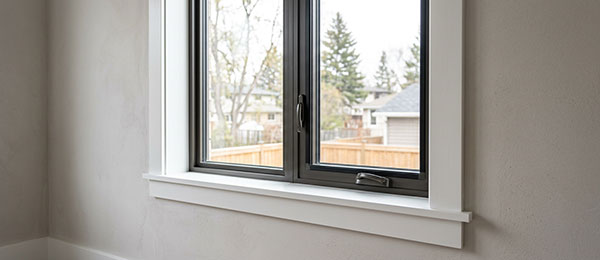
Casement windows are side-hinged and open horizontally, similar to a door. This design allows the sash to swing outward or inward, depending on configuration, enabling full-frame ventilation. The opening angle is typically controlled by a crank or friction hinge mechanism that ensures smooth operation and secure closure.
Awning windows, by contrast, are top-hinged and open outward from the bottom. The hinge placement allows the sash to create a downward angle when open, forming a protective canopy against rain while still allowing airflow. This feature makes awning systems especially valuable for high-rainfall or coastal regions.
Engineering and Hardware Design
| Engineering Aspect | Casement Windows | Awning Windows | Design Implication |
| Hinge Placement | Side-mounted (left or right) | Top-mounted | Determines airflow direction and water shedding |
| Opening Direction | Outward (horizontal swing) | Outward (bottom projection) | Casements capture lateral wind; awnings vent air downward |
| Crank Mechanism | Single or dual-arm operator | Bottom crank with stabilizing arms | Awnings use more compact gear assemblies |
| Weather Resistance | Excellent under moderate wind loads | Superior in rain and upward wind conditions | Awnings resist water infiltration better in open position |
| Ventilation Area | 90–95% of sash area | 60–70% of sash area | Casements enable broader air exchange |
| Accessibility | Easier cleaning from interior (inward design optional) | Requires external access for cleaning large panels | Casements are more suitable for upper-floor operability |
| Common Use | Bedrooms, offices, living areas | Bathrooms, basements, high-rainfall zones | Awning windows ideal for limited-space openings |
Operational Functionality
Casement systems are known for their tight compression seals — when closed, the sash presses firmly against the frame, creating exceptional airtightness. This design contributes to low air leakage rates and excellent sound insulation. The friction hinge system allows partial or full opening, giving precise control over ventilation intensity.
Awning systems, on the other hand, are engineered for weather-shielded ventilation. Even during light rain, they maintain airflow without water intrusion, a feature particularly useful in commercial buildings and residential units that require consistent indoor air renewal. Their design also minimizes dust ingress in windy environments.
Typical Building Applications
- Casement Windows: Used in spaces requiring full ventilation and easy egress, such as living rooms, offices, and classrooms.
- Awning Windows: Installed in locations that need privacy, controlled ventilation, or weather protection — like restrooms, basements, or high-exposure façades.
Performance Insight
According to Natural Resources Canada (NRCan) (source), both casement and awning systems rank among the most energy-efficient operable windows available. However, their optimal application depends on project location and performance goals: casements for maximum airflow and accessibility, awnings for weather-sealed ventilation.
- Casement windows: side-hinged, wide ventilation range, better for accessibility and large openings.
- Awning windows: top-hinged, provide rain-protected airflow and superior weather sealing in exposed environments.
For most façade designs, combining both types — casements for operability and awnings for continuous weather-resistant ventilation — provides the most efficient balance of comfort, performance, and energy control.
How Do Casement and Awning Windows Perform in Airflow and Energy Efficiency?
Casement and awning windows share similar construction principles but differ significantly in how they manage airflow, pressure sealing, and thermal performance. For builders and architects, understanding these nuances helps determine which system offers the best performance for specific building conditions and energy-efficiency goals.
Airflow Characteristics
Casement windows open laterally, allowing air to flow directly into the building at an angle. When positioned strategically, the sash acts like a sail, capturing side breezes and channeling them indoors. This makes casement windows ideal for cross-ventilation in open-plan layouts or multi-unit developments.
Awning windows, with their top-hinged design, provide controlled airflow even during inclement weather. Their downward projection allows air circulation without rain entry, maintaining indoor comfort while protecting interiors. However, their ventilation range is smaller, typically 60–70% of the sash area, compared to casements that open fully.
| Performance Metric | Casement Windows | Awning Windows | Airflow Insight |
| Ventilation Direction | Horizontal – side airflow | Downward – angled airflow | Casements enhance cross-ventilation; awnings limit upward draft |
| Openable Area (% of Frame) | 90–95% | 60–70% | Casements maximize air exchange rate |
| Weather Ventilation | Limited during rain | Excellent – allows ventilation in rain | Awnings maintain airflow under precipitation |
| Wind Pressure Response | Good in moderate exposure | Excellent in high-exposure façades | Awnings resist uplift and pressure differential better |
Energy Efficiency and Sealing Performance
Both systems are engineered to deliver high energy performance under CSA A440.2-19 and ENERGY STAR Canada standards. The primary distinction lies in the sealing mechanism:
- Casement windows rely on compression seals that engage when closed, achieving some of the lowest air infiltration rates in operable window categories — 0.3 to 0.5 L/s·m².
- Awning windows use similar compression seals but face downward pressure from wind and rain, which naturally tightens the seal, further improving their weather resistance.
According to Natural Resources Canada (NRCan) (source), ENERGY STAR–certified casement and awning systems both qualify as top-tier energy performers, with U-factors ranging from 1.2–1.6 W/m²·K and solar heat gain coefficients (SHGC) between 0.25–0.45.
Comparative Energy Ratings
| Energy Metric | Casement Windows | Awning Windows | Performance Summary |
| U-Factor (W/m²·K) | 1.2–1.6 | 1.2–1.5 | Comparable – both exceed CSA A440.2-19 Tier 2 targets |
| Air Leakage (L/s·m²) | 0.3–0.5 | 0.2–0.4 | Awnings perform slightly better under downward pressure |
| Condensation Resistance (CR) | 65–75 | 70–80 | Awnings resist condensation in humid conditions |
| ENERGY STAR Tier Eligibility | Tier 1–3 | Tier 2–3 | Both meet national standards for efficiency |
Performance Summary
- Casement systems deliver maximum airflow efficiency and are best suited for rooms requiring strong natural ventilation.
- Awning systems offer enhanced weather resistance and slightly better sealing under downward wind loads.
When specified together, these systems provide a balanced façade solution, combining energy savings, ventilation flexibility, and resilience to external weather pressures — critical for high-performance buildings in variable Canadian climates.
Which Window Type Offers the Best Value and ROI for Large-Scale Construction Projects?
In large-scale construction, determining the best value between casement and awning windows involves assessing initial costs, installation efficiency, energy performance, and lifecycle maintenance. While both window types deliver long-term durability and energy compliance, their ROI varies based on project scale and building type.
Cost and Installation Efficiency
Casement windows typically have a higher initial cost due to their larger opening mechanisms and hardware components. Installation requires precise calibration of hinges and locks to maintain consistent compression. In contrast, awning windows feature simpler mechanical systems and smaller sash dimensions, allowing faster installation in repetitive façade layouts such as apartment complexes or institutional buildings.
| Cost Factor | Casement Windows | Awning Windows | Contractor Insight |
| Average Installed Cost (per unit) | $650–$950 | $500–$800 | Awnings reduce hardware and labor costs by 15–20% |
| Installation Time (per unit) | 1.5–2.5 hours | 1–1.5 hours | Awnings enable faster sequencing in mass installations |
| Maintenance Frequency | Every 5–7 years | Every 8–10 years | Awnings require fewer hardware adjustments |
| Expected Lifespan | 30–40 years | 35–45 years | Both achieve long lifecycle performance |
ROI Examples from Window Force Inc. Projects
Toronto Mid-Rise Residential Complex (2024):
Window Force Inc. supplied a combination of casement and awning units across 320 suites. The project recorded:
- Energy savings: 22% annual reduction in HVAC demand.
- Maintenance advantage: Awning units required no adjustment after 12 months of operation.
- ROI timeline: Full cost recovery achieved in 5.4 years, supported by utility savings and reduced service costs.
Institutional Retrofit – Ottawa (2023):
Fixed and awning systems replaced outdated aluminum sliders. The retrofit produced:
- Installation efficiency: 18% time reduction due to modular awning integration.
- Energy efficiency improvement: 24% reduction in heating load.
- Long-term ROI: Estimated 78% return within 10 years based on reduced maintenance and energy expenditure.
Lifecycle and Operational Value
- Energy Cost Savings: Both systems meet or exceed ENERGY STAR Tier 2 efficiency, but awning windows often achieve higher air-tightness scores in downward pressure conditions.
- Maintenance Advantage: Awnings use simpler mechanical hardware, minimizing service interventions over time.
- Replacement Value: Both systems retain long-term resale value due to CSA-certified frame and glazing durability.
ROI Summary
| Performance Indicator | Casement Windows | Awning Windows | Long-Term Impact |
| Initial Investment | Moderate to high | Moderate | Awnings lower startup costs in volume builds |
| Energy Savings (10 years) | 20–25% | 18–28% | Both perform within Tier 2–3 compliance range |
| Service Requirements | Occasional hardware lubrication | Minimal seal maintenance | Awnings have fewer moving parts |
| ROI After 10 Years | 70–75% | 75–80% | Awnings show slightly higher lifecycle returns |
For large-scale construction, awning windows deliver marginally higher ROI due to simplified installation, reduced maintenance, and strong weather resistance. Casement systems, however, remain advantageous where full ventilation and accessibility are project priorities.
When supplied through Window Force Inc., both systems are supported by CSA-certified quality, extended warranties, and documented performance data — ensuring measurable financial and operational value over the building’s lifespan.
What Design and Functional Considerations Should Architects Evaluate Before Installation?
For architects and planners, selecting between casement and awning windows requires evaluating a project’s façade orientation, ventilation strategy, user accessibility, and design intent. The right configuration balances performance with usability while supporting long-term maintenance efficiency.
Step 1: Evaluate Façade Orientation and Climate
- South or West-Facing Elevations: Favor awning systems for their superior rain protection and shading potential during precipitation.
- North and East-Facing Elevations: Opt for casement systems to capture prevailing breezes and maximize airflow.
- High-Wind or Coastal Zones: Awning systems perform better under upward wind pressure, minimizing water ingress during storms.
Step 2: Define Functional and Accessibility Goals
| Design Factor | Casement Windows | Awning Windows | Architectural Impact |
| Ventilation Control | Adjustable opening angle for directional airflow | Limited but consistent ventilation | Casements enhance passive airflow strategies |
| Accessibility | Easier to operate in reachable zones | Ideal for higher or hard-to-reach areas | Awnings fit transoms or clerestory applications |
| Safety and Egress | Meets emergency escape standards (bedrooms) | Limited egress clearance | Casements required in code-compliant sleeping areas |
| Cleaning and Maintenance | Easier to clean from inside (inward models) | Requires exterior access | Casements better for upper-floor access |
Step 3: Match Aesthetic and Structural Design Intent
Casement systems feature more visible frames and operable hardware, providing a classic and balanced appearance suited for traditional or modular façades. Awning systems, with their slimmer profiles and horizontal emphasis, complement contemporary commercial designs or mixed-use buildings emphasizing glass continuity.
Architectural Application Examples:
- Mid-Rise Condominiums (Toronto): Combination of casement and awning windows achieved both ventilation compliance and consistent exterior symmetry.
- Educational Facility (Ottawa): Top-hinged awning windows integrated into clerestory bands for continuous daylight and controlled airflow.
- Custom Residential Design (Burlington): Casement units positioned along lake-facing elevations to enhance cross-ventilation and meet egress codes.
Step 4: Consider Integration with Building Systems
- HVAC Interaction: Casement windows complement passive cooling systems through directional ventilation.
- Automation Readiness: Awning systems adapt well to motorized or sensor-based opening mechanisms.
- Curtainwall Compatibility: Both systems can integrate with aluminum or vinyl mullion frameworks, depending on project scale.
Step 5: Review Manufacturer Guidelines Before Specification
Architectural Selection Checklist:
- Confirm compliance with CSA A440.2-19 and ENERGY STAR certification levels.
- Verify maximum allowable wind-load ratings per building height.
- Review available frame depths and mullion profiles for façade integration.
- Request thermal and structural test data from the manufacturer (Window Force Inc.).
- Coordinate operable unit locations with mechanical ventilation strategy.
Summary
- Casement windows: best for projects requiring wide ventilation control, accessibility, and code-compliant egress.
- Awning windows: preferred for continuous ventilation under weather exposure and in automated or clerestory installations.
Architects can achieve optimal results by integrating both systems strategically — using awning units in upper façades for rain-protected ventilation and casement units for accessible operability and cross-ventilation — ensuring performance consistency and design harmony across the building envelope.
How Do Casement and Awning Windows Differ in Air Flow and Weather Resistance Performance?
Casement and awning windows both offer excellent energy efficiency and structural reliability, but their airflow dynamics and weather resistance vary significantly due to hinge placement and opening geometry. These differences directly affect performance under real-world conditions such as wind exposure, rainfall, and pressure differentials in high-rise or coastal projects.
Airflow Performance
Casement windows open outward on a vertical axis, allowing them to catch lateral breezes and redirect airflow into the building. This design promotes cross-ventilation, especially when placed on opposing or perpendicular walls. The open sash operates like a sail, guiding outside air deeper into the space and enhancing natural cooling efficiency.
Awning windows, hinged at the top, open outward to form a downward angle. This configuration enables continuous airflow, even during light rain. The direction of airflow, however, is primarily downward and localized, making awnings less effective for deep ventilation but ideal for steady air renewal in moisture-prone areas.
| Airflow Characteristic | Casement Windows | Awning Windows | Performance Observation |
| Ventilation Type | Lateral and directional | Downward and diffuse | Casements enhance cross-ventilation; awnings maintain steady flow |
| Airflow Coverage | Wide room penetration | Localized airflow | Casements improve circulation depth |
| Wind Utilization | Captures side winds | Deflects wind downward | Awnings better for gentle, continuous air exchange |
| Weather Ventilation | Limited during rainfall | Excellent – allows airflow during rain | Awnings ideal for wet climates |
Weather Resistance and Seal Integrity
Both window types use compression sealing for airtightness, but their geometry influences how each performs against environmental forces.
- Casement windows rely on multi-point locks that pull the sash tight against the frame. This creates excellent pressure resistance, preventing air leakage in high-wind scenarios. However, during driving rain, their vertical hinge orientation can make them slightly more prone to water infiltration if improperly installed.
- Awning windows, by contrast, use the downward force of rain and wind to enhance seal compression. Their design naturally sheds water away from the frame, offering superior weather resistance in exposed or high-precipitation locations.
Structural and Environmental Ratings
According to CSA A440.2-19 and ENERGY STAR Canada data, both window types consistently achieve air infiltration ratings below 0.5 L/s·m². Awning systems generally outperform casements in water penetration tests by up to 15%, thanks to their top-hinged geometry.
| Performance Metric | Casement Windows | Awning Windows | Weather Performance Summary |
| Air Leakage (L/s·m²) | 0.3–0.5 | 0.2–0.4 | Both meet CSA Tier 2–3 benchmarks |
| Water Penetration Resistance (Pa) | 400–500 | 450–600 | Awnings outperform under driving rain |
| Wind Load Resistance (Pa) | 1,200–2,000 | 1,000–1,800 | Casements handle higher lateral loads |
| Condensation Resistance (CR) | 65–75 | 70–80 | Awnings reduce cold-edge condensation risk |
Practical Use in High-Rise and Coastal Applications
- Casement systems are best suited for buildings where wind load is a key factor — such as mid- to high-rise towers — because their multi-point locking maintains seal pressure even under strong gusts.
- Awning systems excel in coastal or rainy climates, where maintaining ventilation during precipitation is critical to occupant comfort and humidity control.
Summary
- Casement windows: Optimal for wind-facing façades and high-rise applications requiring superior air sealing and ventilation reach.
- Awning windows: Ideal for wet or coastal climates where continuous, rain-protected airflow is a design priority.
By strategically combining both types, architects and contractors can deliver façades that balance ventilation performance, moisture protection, and energy compliance, meeting both CSA and ENERGY STAR criteria across diverse environmental conditions.
Why Do Contractors and Developers Choose Window Force Inc. as Their Window Manufacturing Partner?
Contractors and developers across Canada rely on Window Force Inc. for its combination of engineering quality, large-scale production capacity, and certified energy-efficient systems. The company’s reputation is built on consistent product performance, timely delivery, and reliable project support for both residential and commercial developments.
Certified Quality and Manufacturing Standards
All Window Force Inc. products — casement, awning, and hybrid configurations — are fully certified to meet CSA A440.2-19, ENERGY STAR, and NFRC performance standards. Each system undergoes rigorous testing for air leakage, water penetration, and structural load compliance, ensuring every product meets Tier 2–3 national efficiency requirements.
Core Certifications:
- CSA A440.2-19 – Air-water-structural performance standard
- NFRC 100/200 – Verified U-factor and SHGC performance
- ENERGY STAR Canada – Tier 2–3 energy efficiency certification
Scalable Production and Logistics Support
With advanced manufacturing facilities in Ontario, Window Force Inc. delivers consistent product quality and rapid order fulfillment for high-volume developments. Automated fabrication lines allow the company to maintain uniform dimensional accuracy across thousands of units.
Operational Advantages:
- Flexible production scheduling for phased construction timelines
- Average lead time of 4–8 weeks
- Local sourcing to minimize logistics costs and carbon footprint
Engineering Assistance and Project Collaboration
Window Force Inc. provides design-to-installation technical support to simplify specification, compliance, and installation. Its engineering team works directly with architects and contractors to optimize façade systems for both performance and cost efficiency.
Engineering Capabilities:
- Detailed shop drawings and performance submittals
- Custom profile extrusion and glazing configuration options
- On-site inspection and installation QA coordination
Competitive Pricing and Warranty Programs
The company’s transparent pricing structure supports contractors and developers working on large-scale or multi-phase projects. Tiered pricing ensures predictable budgeting and consistent supply for ongoing developments.
Program Benefits:
- Volume discounts for bulk orders and annual contracts
- Long-term supply partnerships for recurring projects
- 25-year frame warranty, 10-year glazing warranty, and 5-year hardware/service coverage
Summary
Contractors and developers choose Window Force Inc. for its certified quality, dependable logistics, and technical collaboration. The company’s systems — engineered to exceed CSA and ENERGY STAR standards — provide measurable ROI and operational reliability across residential, commercial, and institutiona
Conclusion: Which Window Type Best Suits Your Project Requirements?
Choosing between casement and awning windows depends on the project’s environmental conditions, architectural goals, and performance priorities. Each system offers clear strengths in airflow, sealing efficiency, and installation flexibility.
Comparative Overview
| Feature | Casement Windows | Awning Windows |
| Opening Mechanism | Side-hinged, swings outward | Top-hinged, opens outward from bottom |
| Airflow Efficiency | High – captures side winds for deep ventilation | Moderate – allows downward airflow during rain |
| Weather Resistance | Excellent – strong air and water seal | Superior – performs best in rainy or coastal climates |
| Maintenance Needs | Periodic hinge and lock inspection | Minimal – fewer moving components |
| Installation Time | Slightly longer due to alignment needs | Faster and simpler for repetitive façades |
| Lifespan | 30–40 years | 35–45 years |
| Estimated ROI (10 years) | 70–75% | 75–80% |
Technical Recommendation
- Casement systems are best suited for areas requiring strong ventilation control, wide openings, and accessibility. Their directional airflow enhances indoor comfort and supports natural cooling in multi-room layouts.
- Awning systems provide consistent airflow during rain and high humidity, offering superior weather performance and minimal maintenance requirements. Their design is particularly effective in upper façades and moisture-prone zones.
Expert Summary
Performance data from Window Force Inc. field projects confirm that combining both window types within a single façade design offers the highest overall efficiency. Casements deliver optimal ventilation and operability, while awnings ensure weather-sealed airflow and structural resilience.
Final Thoughts
Both systems meet CSA A440.2-19 and ENERGY STAR certification standards, ensuring reliable insulation, airtightness, and energy savings. By integrating casement and awning windows strategically, projects achieve the perfect balance between design flexibility, energy efficiency, and long-term durability, supported by the proven manufacturing quality of Window Force Inc.
Frequently Asked Questions
What’s the key difference between casement and awning windows in performance?
The main distinction lies in hinge orientation and airflow direction. Casement windows are side-hinged and open outward, allowing full-frame ventilation and strong directional airflow. Awning windows are top-hinged, opening outward from the bottom to provide rain-protected ventilation and superior weather sealing. Both deliver excellent airtightness and energy efficiency when manufactured to CSA and ENERGY STAR standards.
Which type provides better air circulation for offices or multi-unit buildings?
Casement windows generally provide stronger air circulation since their side-hinged design catches lateral breezes and channels airflow deep into the space. Awning windows, however, maintain consistent airflow even during light rain, making them ideal for steady air exchange in humid or high-exposure environments. Combining both types allows buildings to achieve balanced natural ventilation across all façades.
Should you specify casement or awning windows for upper-floor installations?
Awning windows are often preferred for upper levels because their top-hinged design shields interiors from rain and wind while allowing ventilation. They also work well in transoms or clerestories where direct accessibility is limited. Casement windows are more suitable for lower or easily reachable areas, where full operability and cleaning access are required.