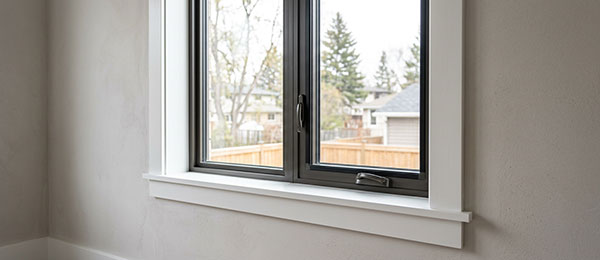
What Are the Most Common Casement Window Sizes Used in Construction Projects?
Casement windows are widely used in residential, commercial, and institutional buildings due to their versatility, airtight performance, and ability to accommodate a broad range of dimensions. While custom fabrication is always an option, most construction projects rely on standardized sizes that simplify specification, installation, and cost management.
Overview of Standard Casement Dimensions
Casement windows are typically measured by width (W) and height (H) in inches, based on the rough opening or frame size. The most common single casement window dimensions fall between 18" and 36" wide, and 24" to 72" high. These measurements accommodate common architectural openings while maintaining structural integrity and ease of operation.
| Application Type | Typical Width (inches) | Typical Height (inches) | Aspect Ratio | Notes |
| Residential – Standard Room | 18–36 | 36–60 | 1:1.5 | Most frequently specified for bedrooms and living areas |
| Residential – Large View Window | 30–42 | 60–72 | 1:1.7 | Allows wide ventilation with clear sightlines |
| Commercial – Modular Unit | 24–36 | 48–66 | 1:1.8 | Designed for uniform façade patterns |
| Institutional – High Ventilation Zone | 20–28 | 48–54 | 1:2 | Used for schools and healthcare buildings |
| Custom Architectural Unit | 42–48 | 72–84 | Variable | Requires reinforced hinges and heavy-duty hardware |
Dimensional Balance and Performance
Casement windows operate best when maintaining a balanced width-to-height ratio. Extremely wide units can strain hinge mechanisms, while tall and narrow designs may create uneven stress on the frame. The ideal ratio typically falls between 1:1.5 and 1:2, ensuring optimal airflow, durability, and smooth operation.
Frame Profiles and Configuration Options
- Single Casement: One operable sash hinged on either side, most common in standard room installations.
- Double Casement (French Style): Two operable sashes opening from the center, used in larger wall openings or symmetrical façades.
- Fixed + Casement Combination: A fixed pane paired with an operable casement for visual and functional balance.
Design Considerations for Builders and Architects
When determining casement window sizes, key factors include:
- Ventilation Requirements: Larger openings increase airflow but may require stronger hinges and cranks.
- Structural Load: Frame material and wall design must support window weight, especially for triple-glazed units.
- Aesthetic Proportions: Maintain visual alignment across façades to achieve architectural symmetry.
- Compliance: Ensure all selected dimensions meet local building codes and CSA A440.2-19 performance standards.
Data Reference
Standard sizing data are based on common manufacturing ranges verified by Natural Resources Canada (NRCan) and leading Canadian fenestration suppliers (source). Custom dimensions beyond standard ranges typically require structural reinforcement, upgraded hardware, and longer fabrication lead times.
Summary
- Common widths: 18–36 inches; common heights: 24–72 inches.
- Aspect ratios: Typically between 1:1.5 and 1:2 for mechanical balance.
- Best practice: Select dimensions that align with performance, design, and code compliance to ensure smooth installation and long-term efficiency.
Casement windows remain a flexible choice in both contemporary and traditional architecture — balancing aesthetic value, ventilation, and technical reliability.
What Are the Standard Casement Window Sizes in Canada?
Casement window sizing in Canada follows national manufacturing and performance standards defined by CSA A440.2-19 and ENERGY STAR Canada. These standards ensure windows are dimensioned and tested for optimal insulation, air sealing, and structural integrity, supporting consistency across residential and commercial applications.
Canadian Standard Window Size Ranges
Canadian manufacturers typically produce casement windows in standardized increments to simplify integration into framing systems and modular façades. The most common nominal sizes — measured as frame dimensions (width × height) — are shown below.
| Nominal Width (inches) | Nominal Height (inches) | Common Use Case | Performance Rating |
| 18 × 36 | Small bathroom or utility room | Excellent airtightness | |
| 24 × 48 | Bedroom or office ventilation | Meets CSA A440.2-19 Air Infiltration Class A3 | |
| 30 × 60 | Standard living area window | ENERGY STAR Tier 2 certified | |
| 36 × 60 | Large residential or mixed-use | Ideal for Low-E, triple-glazed configurations | |
| 42 × 72 | Commercial or feature glazing | Requires reinforced hinge hardware | |
| 48 × 72 | Architectural or view application | Max size under most standard ratings |
CSA- and ENERGY STAR-Compliant Dimensions
The CSA A440.2-19 standard specifies structural and air-water-thermal performance parameters rather than fixed dimensions, but most manufacturers align with these default sizing categories for efficiency testing. ENERGY STAR ratings are determined based on glazing size and configuration, meaning larger units must compensate with higher insulation values to meet performance thresholds.
| Certification Standard | Criteria | Typical Casement Window Compliance |
| CSA A440.2-19 | Air, water, and structural performance | Air Infiltration A3 or higher |
| ENERGY STAR Canada (Zone 2–3) | U-Factor ≤ 1.4 W/m²·K | Meets Tier 2–3 efficiency targets |
| NFRC 100/200 | Verified thermal and solar coefficients | U-Factor 1.2–1.6 W/m²·K, SHGC 0.25–0.45 |
Dimensional Tolerance and Fabrication Notes
Canadian fabricators maintain dimensional tolerance margins of ±1/8 inch for standard vinyl casement systems. For aluminum or fiberglass frames, tolerances are even tighter to ensure smooth installation and thermal break alignment. Larger custom dimensions above 48 × 72 inches often require additional reinforcement and upgraded hardware such as stainless-steel friction hinges.
Energy Performance and Compliance
ENERGY STAR Canada evaluates performance zones based on regional climate conditions:
- Zone 1 (Mild): Accepts higher SHGC for solar gain.
- Zone 2 (Moderate): Standardized for most southern Ontario builds.
- Zone 3 (Cold): Requires lower U-Factor and advanced glazing systems.
Casement windows from Window Force Inc. are designed to meet Tier 2 or Tier 3 performance across all Canadian zones, providing verified energy compliance through certified testing.
Reference Data
Size and compliance data verified through Natural Resources Canada (NRCan) and CSA Group databases (source).
Summary
- Standard width range: 18–48 inches; standard height range: 36–72 inches.
- Compliant with CSA A440.2-19 and ENERGY STAR Canada Tier 2–3.
- For larger custom units, reinforcement and upgraded hardware are required.
These standardized dimensions ensure casement windows achieve consistent energy efficiency, durability, and integration with Canadian building systems.
How to Use a Casement Window Size Chart Effectively During Project Planning
Casement window size charts are essential tools for architects, builders, and estimators during the early design and planning phases. They provide standardized references for frame dimensions, glass area, and operable clearances, ensuring accurate specification and compliance with building requirements.
Step 1: Understand Key Dimensions on a Size Chart
A standard size chart includes the following core parameters:
| Parameter | Definition | Typical Range (inches) | Importance |
| Frame Width (W) | The total outer width of the window unit | 18–48 | Determines rough opening width |
| Frame Height (H) | The total outer height of the window unit | 36–72 | Determines rough opening height |
| Sash Opening Width | The actual operable width when open | 15–45 | Defines ventilation capability |
| Glass Area | Visible glass surface inside frame | 70–85% of frame size | Impacts daylighting and aesthetics |
| Frame Depth | Profile thickness from interior to exterior | 3–5 inches | Important for wall integration and insulation alignment |
Understanding these measurements allows architects to calculate both rough openings and net glazing areas, crucial for thermal modeling and ventilation performance.
Step 2: Determine Rough Opening Requirements
Rough openings are typically ½ inch larger than the nominal window frame size to allow for shimming, sealing, and thermal expansion. For example, a 36" × 60" casement window would require a rough opening of approximately 36½" × 60½".
- Always verify opening tolerances per manufacturer guidelines.
- Account for added space in insulated or sheathed wall assemblies.
- Maintain consistent sill level alignment across grouped window units.
Step 3: Apply the Chart in Architectural Drawings
When integrating casement sizes into project plans:
- Use chart values as baseline dimensions in CAD or BIM software.
- Ensure all openings align with standard manufacturing modules (e.g., 6-inch height increments).
- Mark operable swing direction (left-hand or right-hand hinge) clearly on elevation drawings.
- Cross-reference glass area to calculate daylight factor or solar heat gain coefficients.
Step 4: Account for Frame Thickness and Insulation Performance
Frame depth varies depending on material and insulation strategy:
- Vinyl frames: 3¼ to 3½ inches, commonly used in residential applications.
- Fiberglass frames: 4 to 4½ inches for commercial energy compliance.
- Aluminum-clad or hybrid frames: Up to 5 inches to accommodate triple glazing and thermal breaks.
Deeper frames enhance structural rigidity and improve thermal resistance (U-Factor), particularly in larger or exposed installations.
Step 5: Confirm Compliance with CSA and ENERGY STAR Requirements
Before finalizing dimensions:
- Check that selected window sizes fit within CSA A440.2-19 load and air infiltration testing parameters.
- Verify compliance with ENERGY STAR Tier 2 or Tier 3 performance targets based on climate zone.
- Ensure all custom or oversized units are tested for deflection and hinge loading under wind pressure standards.
Summary
- Use the size chart to align design intent with manufacturing capabilities.
- Adjust rough openings with tolerance margins for sealant and insulation layers.
- Reference CSA and ENERGY STAR standards to validate structural and energy compliance.
Casement window size charts act as a bridge between architectural design and field performance, ensuring that every unit specified meets both visual and technical expectations.
What Are the Limitations on Width and Height for Casement Windows?
While casement windows offer exceptional versatility, their dimensions are limited by hardware strength, material rigidity, and wind-load performance. Oversized units can create issues with sash stability, air leakage, and hinge durability if not properly designed.
Maximum Operable Sizes
Standard single casement windows are typically limited to:
| Frame Material | Maximum Width (inches) | Maximum Height (inches) | Recommended Max Area (sq. ft.) | Notes |
| Vinyl | 36–40 | 72 | 15 | Common residential configuration; limited by hinge load |
| Fiberglass | 42–48 | 84 | 20 | Supports larger units due to higher rigidity |
| Aluminum-Clad Wood | 42 | 84 | 18 | Balances thermal performance with durability |
| Aluminum (Commercial) | 48 | 96 | 24 | Suitable for high-rise and institutional applications |
Casement sashes exceeding these limits require reinforced hardware systems, such as stainless-steel friction hinges or multi-point locking mechanisms rated for heavy loads.
Hardware and Weight Considerations
The hinges, locks, and operators bear the full weight of the sash when open. As glazing area increases, so does stress on the hinge mechanism. Typical hinge capacities:
- Standard friction hinge: up to 80 lbs
- Heavy-duty hinge: up to 120 lbs
- Commercial-grade hinge: up to 150 lbs or more
For triple-glazed configurations, weight can exceed 6–7 lbs per square foot, necessitating reinforced frame corners and additional mounting screws.
Wind Load and Structural Performance
Casement windows must resist deflection and air leakage under CSA A440.2-19 wind-load testing. Oversized units may struggle to maintain compression-seal contact in high-pressure environments, especially on tall or exposed buildings.
| Building Height Category | Recommended Max Width (inches) | Recommended Max Height (inches) | Wind Pressure Limit (Pa) |
| Low-rise (≤3 storeys) | 40 | 72 | 500–700 |
| Mid-rise (4–8 storeys) | 36 | 66 | 700–900 |
| High-rise (9+ storeys) | 32 | 60 | 900–1200 |
These recommendations ensure the sash maintains contact with the frame under pressure differentials without distortion.
Operational Restrictions
Beyond certain size limits, the sash may become difficult to operate due to hinge torque and operator handle resistance. In such cases, dual-arm or multi-link operators are required. Casement systems above 48 inches wide or 84 inches tall should incorporate:
- Heavy-duty stainless hardware
- Structural reinforcement bars
- Wind restrictors or opening limiters for occupant safety
Practical Recommendations
- Keep width-to-height ratios near 1:1.5–1:2 for balanced mechanical performance.
- For large façade openings, consider double casement or casement + fixed combinations to reduce individual sash loads.
- Confirm hardware load ratings directly from the manufacturer’s engineering data.
Summary
- Maximum standard dimensions: up to 48" × 84" depending on frame material.
- Oversized units require reinforced hinges, locks, and frames.
- Compliance with CSA A440.2-19 wind-load limits is critical for maintaining long-term performance.
Understanding dimensional and hardware limits ensures casement windows perform reliably under both everyday use and extreme weather conditions.
What Egress Requirements Apply to Casement Window Installations in Canada?
Egress windows serve a vital safety function, allowing occupants to escape during emergencies and providing access for rescue personnel. In Canada, all bedrooms and certain basement areas must include windows that meet National Building Code (NBC) and Ontario Building Code (OBC) egress requirements. Casement windows are well-suited to meet these standards due to their full-swing opening design.
National Building Code of Canada (NBC) Egress Standards
The NBC Section 9.9.10.1 outlines minimum dimensions for egress windows in all sleeping rooms and basement living spaces:
| Egress Requirement | Minimum Dimension | Notes |
| Unobstructed Opening Area | 0.35 m² (3.77 ft²) | Required clear opening when fully open |
| Minimum Height (H) | 380 mm (15 in) | Clear opening, not frame size |
| Minimum Width (W) | 380 mm (15 in) | Clear opening, not frame size |
| Maximum Sill Height Above Floor | 1.5 m (59 in) | To allow easy exit without ladders |
Casement windows meet these requirements efficiently since their sash opens fully outward, providing the maximum possible clear opening relative to frame size.
Provincial Code Variations
While the NBC sets national standards, provinces may introduce additional criteria:
- Ontario Building Code (OBC): Mirrors NBC 0.35 m² minimum but adds stricter sill height limits in certain municipalities.
- British Columbia Building Code (BCBC): Allows egress openings to be slightly smaller if direct access to grade is available.
- Quebec Construction Code: Requires compliance with CAN/CSA-A440 standards for hardware operability and emergency use.
Common Egress Casement Sizes
Casement windows are often the preferred choice for egress applications because they open entirely and do not restrict clear area with fixed tracks or rails.
| Nominal Frame Size (inches) | Approx. Clear Opening (inches) | Egress-Compliant? | Use Case |
| 24 × 36 | 20 × 32 | No | Bathroom or secondary room |
| 28 × 46 | 24 × 42 | Yes | Basement egress |
| 30 × 50 | 26 × 46 | Yes | Standard bedroom window |
| 36 × 60 | 32 × 56 | Yes | Above-grade egress installation |
To qualify as an egress unit, the clear opening — the unobstructed area when the sash is fully open — must meet or exceed the NBC’s minimum size requirements.
Hardware and Accessibility Requirements
For compliance, egress casement windows must:
- Open without tools or keys and without special knowledge.
- Use hardware accessible from the inside, such as crank handles or push latches.
- Maintain operability during power outages and under minor obstruction conditions.
Windows equipped with removable screens are allowed as long as they can be easily detached without special equipment.
Canadian Standards Association (CSA) Compliance
Egress casement windows must also adhere to:
- CSA A440.2-19 – Structural performance under wind, air, and water pressure.
- CSA A440.4 – Window installation best practices ensuring safe and accessible egress openings.
These standards guarantee that casement windows can perform reliably under both daily use and emergency conditions.
Summary
- Minimum egress opening: 0.35 m² (3.77 ft²) with 380 mm (15 in) minimum width and height.
- Casement windows are the most common egress type due to full unobstructed openings.
- All installations must comply with NBC 9.9.10.1 and applicable provincial codes.
By selecting properly sized and tested casement windows, builders ensure both safety compliance and functional design across residential and basem
How Do Double Casement Windows Fit Into Modern Building Designs?
Double casement windows — also known as French casement windows — feature two sashes that open outward from the center without a fixed mullion between them. This configuration allows for a completely unobstructed opening, enhanced ventilation, and balanced visual symmetry, making them a popular choice for both contemporary and traditional architecture.
Standard Dimensions and Configurations
Double casement systems are available in multiple size ranges depending on building type and intended function. The combined width typically doubles that of a single casement while maintaining proportional height.
| Configuration Type | Nominal Width (inches) | Nominal Height (inches) | Recommended Aspect Ratio | Common Application |
| Residential (Standard Pair) | 36–72 | 36–60 | 1:1.2–1:1.6 | Living areas and patios |
| Commercial (Large Pair) | 60–84 | 48–72 | 1:1.3–1:1.5 | Multi-unit façades |
| Architectural Feature Window | 72–96 | 60–84 | 1:1.2 | Showrooms, offices, and retail spaces |
Each sash is supported by independent hinges and operated with individual cranks or a dual-operator system. When fully open, the design creates a clear passage ideal for balconies, egress zones, or large ventilation areas.
Design and Aesthetic Integration
Double casement windows are often specified for their balanced symmetry and versatile integration into building façades:
- Symmetrical appearance: Enhances both modern and classical architectural designs.
- No center post: Provides unobstructed views and maximized natural light.
- Flexible pairing: Can be combined with transoms or fixed sidelites for extended vertical or horizontal layouts.
In commercial architecture, these windows are used to maintain uniform visual rhythm across multiple floors while offering accessible ventilation zones within large glass walls.
Performance and Functionality
- Ventilation Efficiency: Dual sashes double the available airflow area compared to a single casement.
- Energy Performance: Compression seals on both sashes maintain high airtightness and reduce thermal bridging.
- Accessibility: Wide central opening supports emergency egress compliance.
- Maintenance: Sashes can be cleaned easily from the interior, which is advantageous for multi-level buildings.
Performance Parameter Double Casement Single Casement Clear Opening Width 100% of frame 45–50% of frame Air Leakage (L/s·m²) 0.4–0.6 0.3–0.5 Typical U-Factor (W/m²·K) 1.3–1.6 1.2–1.5 Energy Star Rating Tier 2–3 Tier 2–3 Installation and Structural Considerations
When specifying double casement systems for large façades:
- Ensure both sashes have synchronized locking hardware for even compression.
- Reinforce frame corners and sill sections to handle additional load.
- Include multipoint locks and limiters for secure operation under wind pressure.
Hardware upgrades such as dual-arm operators and reinforced hinges are recommended for wider assemblies exceeding 72 inches.
Applications in Commercial and Residential Projects
- Residential: Common in great rooms, dining areas, or upper-level balconies for panoramic ventilation and visual impact.
- Commercial: Used in mid-rise offices and hospitality projects for aesthetic balance and performance reliability.
- Mixed-Use: Blends modern glass curtain aesthetics with practical operability and natural air exchange.
Summary
- Double casement windows combine aesthetic symmetry, full ventilation, and energy efficiency in a single unit.
- Standard pair widths range from 36–96 inches, with heights up to 84 inches.
- Proper hardware selection and reinforcement are essential for durability and compliance.
These systems deliver both architectural elegance and performance consistency, making them a valuable specification for modern Canadian developments.
Conclusion: How to Select the Perfect Casement Window Size for Your Next Build
Selecting the right casement window size involves balancing design intent, code compliance, and performance efficiency. A well-planned sizing strategy ensures visual harmony, structural reliability, and optimal airflow across residential and commercial projects.
Key Considerations for Size Selection
- Application Type: Determine whether the window will serve as a primary light source, ventilation unit, or egress opening.
- Building Location and Exposure: Adjust dimensions according to wind-load pressures, orientation, and climate zone.
- Material Choice: Vinyl and fiberglass frames offer the best size flexibility for standard builds; aluminum and hybrid systems excel in large-scale projects.
- Hardware Capacity: Confirm hinge and operator ratings for intended sash size and glazing weight.
- Code Compliance: Verify that all sizes meet CSA A440.2-19 and ENERGY STAR Canada standards, as well as NBC/OBC egress requirements where applicable.
Recommended Size Matrix by Application
Project Type Typical Size Range (W × H) Notes Residential – Bedroom or Living Room 24–36 × 48–60 in Meets egress and daylighting needs Residential – Basement or Utility Area 28–46 × 30–50 in Compact design with clear egress compliance Commercial – Office or Retail Space 36–48 × 60–72 in Optimized for modular façade layouts Institutional – Healthcare/Education 24–36 × 48–66 in Prioritizes natural ventilation and durability Architectural Feature or Showcase Window 48–72 × 72–84 in Requires reinforced hinges and framing Performance and Aesthetic Balance
Selecting the correct window size also impacts thermal comfort and architectural proportion. Oversized units offer panoramic views but may demand additional hardware and reinforcement. Smaller casements provide better control over ventilation and energy efficiency.
For optimal results:
- Maintain a width-to-height ratio between 1:1.5 and 1:2.
- Combine fixed and operable panels for balanced appearance and airflow.
- Integrate Low-E coated glazing and argon gas fills to maintain insulation performance in larger windows.
Expert Recommendation
Based on field data from Window Force Inc., the most efficient casement configurations use reinforced vinyl or fiberglass frames with triple-glazed Low-E units for projects in Canada’s cold and mixed climate zones. These designs consistently deliver:
- Up to 25% lower annual energy costs,
- Extended hardware lifespan (20–25 years), and
- Reliable compliance with Tier 2–3 ENERGY STAR benchmarks.
Final Summary
Selection Factor Best Practice Impact Structural Stability Maintain ratios within 1:1.5–1:2 Prevents hinge strain Energy Efficiency Specify Low-E, argon-filled units Reduces thermal loss Compliance Follow CSA and NBC egress dimensions Ensures certification Aesthetic Design Match façade rhythm and proportions Enhances curb appeal By aligning project requirements with these standards, builders and architects can ensure each casement window performs at its highest potential — combining safety, durability, and modern design excellence in every installation.
Frequently Asked Questions
How Wide Can a Casement Window Be Without Compromising Performance?
Casement windows can typically reach up to 48 inches wide before performance begins to decline. Beyond this width, hardware stress and sash deflection may reduce airtightness and ease of operation. For larger openings, using double casement or casement + fixed combinations is recommended. Reinforced hinges and multi-point locks can extend durability for units up to 54 inches wide when properly engineered.
What Are the Minimum Egress Casement Window Sizes Under Canadian Code?
Under the National Building Code of Canada (NBC 9.9.10.1), an egress window must provide a clear opening area of at least 0.35 m² (3.77 ft²), with both minimum height and width of 380 mm (15 inches). Casement windows meet these requirements efficiently due to their fully operable sash. Common egress-compliant sizes include 28 × 46 inches, 30 × 50 inches, and 36 × 60 inches, depending on frame style and hinge type.
What Are the Typical Sizes for Double Casement Windows in Residential and Commercial Applications?
Double casement windows, also known as French casements, range from 36 to 96 inches wide and 36 to 84 inches high. In residential designs, standard pairs measure 60–72 inches wide, while commercial façades may use extended widths up to 84–96 inches. Both configurations maintain ENERGY STAR compliance when fitted with reinforced frames and Low-E glazing systems.