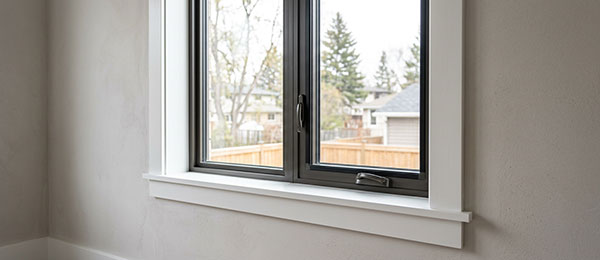
What Are the Most Common Double Hung Window Sizes in the Building Industry
Double hung windows are among the most widely used window styles in both residential and multi-unit construction due to their versatility, ease of maintenance, and balanced ventilation. The size of these windows varies based on project requirements, but the industry follows a set of standardized dimensions that simplify manufacturing, installation, and code compliance.
Standard Width and Height Ranges
In the North American building industry, double hung windows are produced in common modular increments to align with typical framing dimensions. The following table outlines the most frequently specified sizes:
| Nominal Width (inches) | Nominal Height (inches) | Common Application |
| 24 (2'0") | 36 (3'0") | Bathroom or narrow openings |
| 28 (2'4") | 54 (4'6") | Small bedrooms, secondary rooms |
| 32 (2'8") | 60 (5'0") | Standard bedroom window |
| 36 (3'0") | 72 (6'0") | Living rooms, larger residential openings |
| 40 (3'4") | 60 (5'0") | Condominiums, office applications |
| 48 (4'0") | 72 (6'0") | Multi-unit or commercial façades |
These measurements refer to the nominal frame size, not the exact rough opening. Installers typically add ½ inch to each dimension to accommodate shimming and insulation space.
Rough Opening Guidelines
To ensure proper fitting, contractors should follow the standard formula:
- Rough Opening Width = Window Width + ½ inch
- Rough Opening Height = Window Height + ½ inch
For example, a 36 × 60-inch double hung window requires a rough opening of 36½ × 60½ inches.
Industry Data and Reference Standards
According to the American Architectural Manufacturers Association (AAMA) and CSA A440.2-19, standardization across these sizes improves both installation efficiency and product availability. Most manufacturers in Canada and the U.S. adhere to these modular ranges for consistent framing compatibility.
Typical Size Grouping by Building Type
| Building Category | Common Window Size Range (W × H) | Notes |
| Single-Family Homes | 28 × 54 to 36 × 72 | Emphasis on ventilation and daylighting |
| Multi-Unit Residential | 30 × 60 to 48 × 72 | Optimized for mass production and uniform façades |
| Commercial Buildings | 36 × 60 to 48 × 84 | Often customized with reinforced frames |
Summary
Most double hung windows fall within the width range of 24 to 48 inches and height range of 36 to 72 inches. These proportions meet both aesthetic and functional demands for modern construction, ensuring proper ventilation, compliance with egress standards, and simplified framing. Following standardized dimensions helps reduce costs, streamline installation, and maintain consistency across project types.
What Are the Standard Double Hung Window Sizes in Canada
In Canada, double hung window sizing follows national and provincial building standards designed to ensure consistency, safety, and energy efficiency. Manufacturers align their production with CSA A440.2-19 and ENERGY STAR Canada guidelines to meet performance and thermal compliance requirements. While dimensions can vary slightly by supplier, most standard windows are produced within specific modular sizes that fit typical framing systems.
Canadian Standard Dimensions
| Nominal Width (inches) | Nominal Height (inches) | Metric Equivalent (mm) | Typical Use Case |
| 24 (2'0") | 36 (3'0") | 610 × 915 | Basement or bathroom |
| 28 (2'4") | 54 (4'6") | 710 × 1370 | Small bedrooms |
| 30 (2'6") | 60 (5'0") | 760 × 1520 | General purpose |
| 36 (3'0") | 72 (6'0") | 915 × 1830 | Living rooms, standard openings |
| 40 (3'4") | 60 (5'0") | 1020 × 1520 | Multi-unit developments |
| 48 (4'0") | 72 (6'0") | 1220 × 1830 | Large façade applications |
These measurements correspond to frame dimensions, while rough openings are typically ½ inch larger in both width and height to allow proper installation clearance.
CSA and ENERGY STAR Compliance
Double hung windows distributed in Canada must meet the following minimum performance standards:
- Air Leakage: ≤ 0.5 L/s·m² (CSA A440.2-19)
- Water Penetration Resistance: ≥ 720 Pa (ASTM E547 equivalent)
- Thermal Transmittance (U-Factor): ≤ 1.6 W/m²·K (ENERGY STAR Canada)
These requirements apply across all Canadian climate zones, ensuring windows are both energy-efficient and structurally sound.
For reference, ENERGY STAR maintains a public database of certified products available at ENERGY STAR Canada’s window directory.
Regional Adaptations
Window sizing and configuration may differ slightly based on climate conditions and regional building practices:
- Western Canada (BC, Alberta): Larger double hung formats (up to 48 × 72) preferred for daylight maximization.
- Ontario and Quebec: Balanced medium sizes (30 × 60, 36 × 72) for insulation and ventilation efficiency.
- Atlantic Provinces: Smaller frame widths often selected for better wind and water resistance.
Common Size Groupings for Canadian Builders
| Application Type | Typical Size Range (inches) | Compliance Standard |
| Residential – Detached Homes | 28 × 54 to 36 × 72 | CSA A440.2 / ENERGY STAR Zone 2–3 |
| Multi-Family Developments | 30 × 60 to 48 × 72 | CSA A440.2 / ENERGY STAR Zone 3 |
| Commercial Retrofits | 36 × 60 to 48 × 84 | CSA A440.2 / ASTM E330 |
In Canada, standard double hung window sizes typically range from 24 × 36 inches to 48 × 72 inches, providing the right balance of ventilation, light, and compliance. Choosing CSA- and ENERGY STAR-certified sizes ensures optimal performance and eligibility for provincial energy efficiency incentives.
How to Select the Right Double Hung Window Size for Your Project Type
Selecting the correct double hung window size depends on the building type, ventilation goals, façade design, and code compliance. The right dimensions improve energy efficiency, natural light distribution, and overall project economics. Builders can follow a structured approach to ensure each window meets both functional and regulatory needs.
Step 1: Define Functional Requirements
Start by identifying what the window must achieve in each room or façade zone:
- Ventilation: Larger sashes (36 × 72 or 48 × 72) provide better airflow for living spaces.
- Natural Light: Use taller units for north-facing walls to enhance daylight penetration.
- Egress Requirements: For bedrooms, CSA-compliant openings must meet local emergency escape dimensions (minimum 3.8 sq. ft. clear opening area).
Step 2: Match Size to Architectural Design
Proportions matter in both single-family and multi-unit projects. Choose window sizes that complement the building’s design grid and elevation symmetry:
- Traditional builds: Commonly use balanced sizes such as 30 × 60 or 36 × 60 inches.
- Modern architecture: Prefers taller and narrower units like 32 × 72 or 36 × 72 inches to accentuate vertical lines.
- Commercial retrofits: May combine double hung and fixed upper transoms to achieve higher glazing areas.
| Design Style | Typical Window Size (inches) | Purpose |
| Colonial or Heritage | 28 × 54 | Period-correct proportions |
| Transitional | 32 × 60 | Balanced ventilation and light |
| Contemporary | 36 × 72 | Modern tall window design |
| Multi-Unit Developments | 30 × 60 | Uniform mass-production compatibility |
Step 3: Consider Climate and Orientation
Window sizing also depends on exposure and environmental conditions:
- South-facing façades: Larger double hung windows improve passive solar gain in colder climates.
- North or coastal exposure: Smaller, reinforced units provide better protection from wind and water infiltration.
- High humidity zones: Ensure the selected size supports adequate sealing pressure without hardware stress.
Step 4: Verify Structural and Framing Compatibility
Each size must fit within the project’s stud spacing and load-bearing design. The standard framing opening should be at least ½ inch larger than the nominal window size. Always verify framing details in project blueprints before ordering.
Example: For a 36 × 60-inch window, the rough opening should measure 36½ × 60½ inches.
Step 5: Builder’s Size Specification Checklist
Before finalizing orders, use this verification list:
- Confirm compliance with CSA A440.2 and ENERGY STAR requirements.
- Match window proportions to façade symmetry and interior layout.
- Ensure egress window locations meet local building codes.
- Coordinate rough openings with framing and insulation plans.
- Review manufacturer tolerances for glass and hardware specifications.
Selecting the correct double hung window size involves balancing design intent, functionality, and compliance. By referencing standard Canadian dimensions and following a structured specification checklist, builders can ensure precise fitting, long-term performance, and visual harmony throughout the project.
What Are the Size Limitations and Customization Options for Double Hung Windows
Double hung windows are adaptable to a wide range of building applications, but every manufacturer adheres to specific engineering and fabrication limits that ensure structural integrity and operational performance. Understanding these boundaries helps builders choose dimensions that optimize function, safety, and longevity.
1. Standard Manufacturing Size Limits
Manufacturers define maximum and minimum sizes for double hung windows based on frame material, glass weight, and hardware strength. Exceeding these dimensions can lead to reduced performance, difficulty in operation, or potential air and water leakage.
| Frame Material | Minimum Size (W × H) | Maximum Size (W × H) | Recommended Aspect Ratio (W:H) | Notes |
| Vinyl | 20 × 36 in | 48 × 78 in | 1:1.6 | Cost-effective and energy efficient, limited for tall openings |
| Fiberglass | 18 × 36 in | 54 × 84 in | 1:1.5 | High rigidity and minimal thermal expansion |
| Aluminum-Clad Wood | 22 × 36 in | 60 × 96 in | 1:1.5 | Suitable for custom or high-end projects |
| Composite Hybrid | 18 × 30 in | 60 × 84 in | 1:1.4 | Structural balance for commercial installations |
The typical maximum operable sash area for double hung designs ranges from 12 to 16 square feet per panel.
2. Structural and Glass Load Considerations
The upper limit of window size depends not only on frame material but also on glass thickness and reinforcement. As the sash height increases, wind pressure and sash weight can strain balances and tracks.
Specifications:
- Maximum glass thickness: 6 mm for standard residential, 8–10 mm for commercial use.
- Reinforced meeting rails are required for heights over 72 inches.
- Optional metal reinforcements improve deflection resistance under wind load.
All sizes must comply with CSA A440.2-19 structural and air leakage standards, tested for deflection not exceeding 1/175 of the span under design pressure.
3. Customization Options
Manufacturers such as Window Force Inc. offer extended customization to meet architectural or performance goals:
- Custom Width and Height: Made-to-order up to 60 × 96 inches (material dependent).
- Profile Variations: Narrow-line frames for modern aesthetics or deep jambs for retrofit compatibility.
- Glazing Options: Dual, triple-pane, or laminated glass configurations with argon gas and Low-E coatings.
- Finish Choices: Powder-coated aluminum or color-bond vinyl exteriors for long-term fade resistance.
4. Design Adaptations for Large Openings
For oversized areas exceeding the maximum operable limits, builders can use combination assemblies — pairing double hung units with fixed or transom windows. This hybrid configuration maintains uniform appearance while satisfying structural and ventilation requirements.
5. Hardware Adjustments for Oversized Units
To maintain smooth operation in large custom windows:
- Use heavy-duty block and tackle or spiral balance systems.
- Install reinforced meeting rails and upgraded tilt latches.
- Include compression seals rated for larger sash pressure zones.
Summary
| Customization Factor | Standard Limit | Enhanced Option (Manufacturer-Dependent) |
| Maximum Height | 78 in | Up to 96 in with reinforced frame |
| Maximum Width | 48 in | Up to 60 in with composite hybrid material |
| Glazing Type | Dual-pane | Triple-pane or laminated safety glass |
| Finish | White / Bronze | Custom RAL colors or wood-grain laminate |
In most projects, double hung windows can be safely customized within structural tolerances while maintaining compliance with CSA A440.2 standards. Proper specification ensures every unit achieves optimal aesthetics, performance, and durability for its intended application.
How Do Standard Window Sizes Affect Cost, Lead Time, and Logistics for Contractors
The choice between standardized and custom double hung window sizes has a direct effect on project cost, delivery schedules, and site logistics. For contractors managing large residential or commercial builds, aligning window selection with industry-standard dimensions simplifies procurement and minimizes both production and installation delays.
1. Cost Efficiency Through Standardization
Standard window sizes are mass-produced, which significantly reduces manufacturing costs per unit. Builders can benefit from predictable pricing and availability, while avoiding surcharges for custom tooling or design modifications.
| Window Type | Average Cost per Unit (CAD) | Production Lead Time | Installation Time (per unit) |
| Standard Double Hung (36 × 60) | $450–$650 | 2–3 weeks | 45–60 minutes |
| Custom Double Hung (42 × 78) | $650–$950 | 5–7 weeks | 60–90 minutes |
| Oversized or Specialty Unit (60 × 96) | $900–$1,300 | 6–10 weeks | 90+ minutes |
Key takeaway: Using standard dimensions can lower total project window costs by 15–25% and cut procurement time in half.
2. Lead Time and Supply Chain Planning
Most Canadian manufacturers maintain standard sizes in stock or on short-run production cycles, which means shorter turnaround times. Custom orders require engineering approval, material reconfiguration, and specialized packaging — leading to longer lead times.
Factors impacting lead time include:
- Material availability (vinyl vs. fiberglass).
- Seasonal demand — spring and summer peak periods may add 1–2 weeks.
- Shipping distance from production facilities to project site.
Contractors benefit from early order scheduling, especially for high-volume developments with phased construction timelines.
3. Installation Logistics and Labor Impact
Standard-sized windows align with predefined rough openings, reducing field modification work and minimizing installation errors. This results in faster fitting, easier sealing, and consistent alignment across multiple units.
Advantages:
- Simplified rough-in framing for standardized sizes (e.g., 36 × 60 or 32 × 72 inches).
- Less cutting and shimming, ensuring uniform compression sealing.
- Reduced material waste during installation.
Custom sizes often require additional coordination with framing teams and can increase labor hours by 10–20% per unit.
4. Budget Predictability and Warranty Integration
Manufacturers such as Window Force Inc. integrate warranty and performance guarantees directly into standardized product lines. Because these units are tested under CSA and ENERGY STAR conditions, performance ratings are pre-certified, reducing administrative time during project documentation.
| Factor | Standard Size Windows | Custom Size Windows |
| Unit Cost | Lower – volume pricing available | Higher – custom tooling and labor |
| Lead Time | 2–3 weeks | 5–10 weeks |
| Installation Complexity | Simple – pre-fitted openings | Moderate – field modification required |
| Warranty & Certification | Pre-certified under CSA/ENERGY STAR | Requires custom validation |
5. Logistics and Site Coordination
Standard window units are easier to store, transport, and handle due to uniform packaging dimensions. They can be palletized efficiently, minimizing space requirements on crowded job sites. Custom orders, especially larger dimensions, demand careful handling, which can increase logistics costs by up to 10%.
Tip for contractors: Always coordinate delivery schedules with framing completion to avoid on-site damage and storage challenges.
Summary
| Category | Standard Sizes | Custom Sizes |
| Cost Efficiency | High – lower per-unit cost | Moderate to low – added manufacturing costs |
| Lead Time | Short (2–3 weeks) | Extended (5–10 weeks) |
| Installation Speed | Fast, minimal adjustments | Slower, requires alignment work |
| Supply Chain Reliability | Consistent and pre-tested | Variable and project-dependent |
Choosing standardized double hung window sizes offers measurable benefits in cost control, scheduling, and installation precision. For most large-scale projects, the combination of pre-certified performance and logistical efficiency provides the best value proposition.
Why Do Contractors and Distributors Choose Window Force Inc. for Double Hung Window Supply
Window Force Inc. is recognized across Canada for delivering high-quality, CSA-certified double hung window systems tailored to meet the demands of residential, commercial, and multi-unit construction. Contractors and distributors rely on the company’s manufacturing precision, logistics reliability, and strong after-sales support to maintain smooth project execution.
1. Manufacturing Capacity and Precision Engineering
Window Force Inc. operates with full in-house production capability, ensuring that every double hung window meets strict CSA A440.2-19 and ENERGY STAR Canada standards. Each unit is manufactured with precision-calibrated balances, reinforced sashes, and energy-efficient glazing systems.
| Manufacturing Feature | Specification | Result |
| Frame Materials | Vinyl, fiberglass, aluminum-clad wood | Structural stability and design flexibility |
| Glazing | Dual or triple Low-E with argon gas | Enhanced thermal performance |
| Hardware | Stainless steel balances and locks | Long-term operational reliability |
| Testing Standard | CSA A440.2 / ASTM E330 | Certified structural performance |
Every order undergoes multi-point quality inspection before shipment, ensuring consistency and compliance for high-volume distribution.
2. Custom Manufacturing for Large-Scale Projects
Contractors benefit from custom manufacturing options that align with architectural and structural needs. Window Force Inc. provides:
- Made-to-order sizing for non-standard rough openings.
- Custom color matching and finish options (powder coat or laminate).
- Advanced glazing packages meeting LEED and Passive House energy goals.
- Integrated mullion or transom assemblies for large façades.
This flexibility allows builders to maintain architectural integrity while ensuring project efficiency.
3. Distribution and Supply Chain Support
Window Force Inc. maintains a well-established logistics network serving Ontario, Quebec, and Western Canada. The company’s distribution system enables:
- Scheduled deliveries synchronized with framing stages.
- On-site packaging identification for multi-phase builds.
- Just-in-time inventory for large developers managing multiple projects.
Dedicated logistics coordinators ensure that product flow remains uninterrupted, minimizing downtime and on-site storage issues.
4. Partner and Contractor Programs
To strengthen long-term relationships, Window Force Inc. offers partnership programs for repeat clients and bulk purchasers:
- Volume-based pricing and project-specific discounts.
- Extended warranty coverage for qualified installations.
- Priority scheduling during peak construction periods.
- Direct technical consultation for installation and compliance documentation.
Client feedback from major developments in Toronto and Mississauga highlights the company’s consistency in lead time adherence and post-installation service.
5. Certification and Quality Assurance
All double hung windows produced by Window Force Inc. carry:
- CSA A440.2-19 certification for air, water, and structural integrity.
- ENERGY STAR Zone 3 compliance for superior thermal efficiency.
- Manufacturer-backed warranty covering hardware and frame components for up to 25 years.
These certifications provide builders and distributors with documented assurance of performance and long-term durability.
Window Force Inc. remains a trusted supply partner for double hung windows because it offers:
- Proven manufacturing precision and product reliability.
- Customized solutions for complex architectural requirements.
- Efficient logistics and distribution systems designed for large-scale projects.
- Certified quality and warranty support ensuring compliance and peace of mind.
For contractors and distributors seeking consistent performance and responsive partnership, Window Force Inc. provides a dependable foundation for every stage of construction — from design through installation.
Conclusion: How to Ensure Perfect Fit and Performance with Double Hung Windows
Choosing the correct size and configuration of double hung windows is crucial for maximizing performance, efficiency, and design integrity across residential and commercial projects. Standardization simplifies installation, while customization ensures compatibility with architectural intent and environmental conditions.
Technical Summary of Key Factors
| Performance Category | Key Considerations | Specification Reference |
| Sizing Range | Standard: 24 × 36 in to 48 × 72 in | CSA A440.2-19 |
| Structural Performance | Maximum deflection ≤ 1/175 span | ASTM E330 |
| Thermal Efficiency | U-Factor ≤ 1.6 W/m²·K | ENERGY STAR Canada |
| Material Options | Vinyl, fiberglass, aluminum-clad wood | Manufacturer specifications |
| Warranty Coverage | Hardware and frame up to 25 years | Window Force Inc. warranty |
Ensuring Precision Fit
To achieve the best performance from double hung windows, builders should verify the following steps during specification and installation:
- Align window selection with standard framing modules to avoid unnecessary field modification.
- Allow proper tolerance (½ inch) on rough openings for insulation and sealant application.
- Confirm ENERGY STAR and CSA compliance for both frame and glazing performance.
- Integrate reinforced balance systems for units taller than 72 inches to maintain smooth operation.
- Coordinate with the manufacturer’s technical team for large-scale or custom installations.
These practices minimize performance degradation and ensure the window’s rated efficiency is achieved after installation.
Builder and Contractor Benefits
Using CSA-compliant double hung windows from Window Force Inc. offers measurable advantages:
- Reduced installation time: Pre-sized units fit standard openings precisely.
- Energy efficiency assurance: Factory-tested performance for all Canadian climate zones.
- Low maintenance: Durable components designed for longevity and ease of service.
- Design consistency: Modular sizing supports architectural uniformity.
Expert Recommendation
Industry data from Natural Resources Canada and verified manufacturer test results confirm that double hung windows — when properly specified and installed — deliver an excellent balance of cost-efficiency, ventilation, and energy savings. For long-term performance and compliance, partnering with certified suppliers ensures reliability and warranty protection.
Summary Table
| Evaluation Area | Best Practice | Expected Outcome |
| Sizing & Fit | Use CSA-compliant standard sizes | Precision installation, reduced waste |
| Energy Performance | Specify Low-E, argon-filled glazing | Up to 25% energy savings |
| Durability | Select reinforced sash and balance hardware | 25–30-year service life |
| Procurement Efficiency | Partner with Window Force Inc. for pre-tested systems | On-time delivery and quality assurance |
Final Thoughts
Achieving the perfect fit and performance in double hung windows relies on combining standardized sizing with certified manufacturing. Window Force Inc. delivers precision-engineered systems that meet the highest standards of durability, energy efficiency, and design adaptability — helping contractors and architects complete every project with confidence and lasting value.
Frequently Asked Questions
What Are the Standard Double Hung Window Sizes Used in Canada?
In Canada, standard double hung windows typically range from 24 × 36 inches to 48 × 72 inches, conforming to CSA A440.2-19 and ENERGY STAR Canada standards. These modular dimensions align with common framing systems, providing easy installation and reliable air and water performance. Manufacturers like Window Force Inc. maintain these configurations in stock to ensure faster lead times and consistent quality.
Can Standard Double Hung Windows Be Customized for Larger Commercial Applications?
Yes. Manufacturers can extend the size range of double hung windows for commercial use up to 60 × 96 inches, depending on material type and reinforcement. Fiberglass and aluminum-clad wood frames allow for greater structural strength, supporting larger sash areas without compromising airtightness. Custom designs may include triple glazing, integrated mullions, or reinforced balance systems for long-term durability.
How Do Standard Sizes Influence Project Planning and Framing Requirements?
Standard window dimensions simplify rough opening preparation and reduce on-site adjustments, saving installation time and labor. For example, a 36 × 60-inch double hung window requires a 36½ × 60½-inch rough opening. Using standardized sizing ensures compatibility with insulation, flashing, and finishing details — minimizing waste and improving project efficiency.