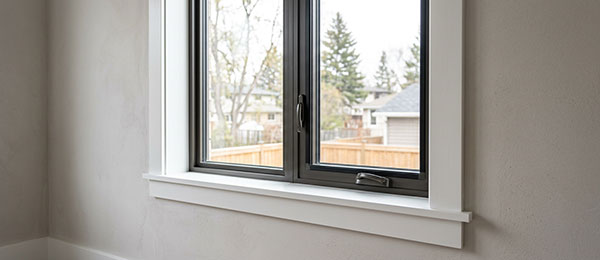
Choosing between fibreglass and vinyl residential windows is less about the material itself and more about how each performs over time in real-world conditions. Understanding their structural behaviour and long-term impact on comfort can help homeowners make a more informed decision beyond upfront window cost.
As a Canadian vinyl window manufacturer operating an 80,000 sq ft production facility in Toronto since 2007, Window Force offers a direct perspective on how these materials perform — not just in theory, but across thousands of units installed in homes throughout Ontario, Alberta, and British Columbia.
Key Takeaways
- Fibreglass windows are engineered from glass fibres and resin, creating a highly durable and dimensionally stable frame material.
- Vinyl windows are made from PVC, which is cost-effective but more prone to expansion and contraction over time.
- These windows offer superior strength, longevity, and resistance to temperature fluctuations compared to vinyl.
- In Canadian climates, fibreglass windows generally deliver better long-term energy efficiency due to lower thermal movement.
- Replacement fibreglass windows can significantly increase property value and reduce maintenance requirements.
- Buyers increasingly prioritize durability, energy efficiency, and long-term performance, all of which align with the characteristics of fibreglass windows.
- Fibreglass windows require stricter alignment and fastening accuracy due to their rigidity.
- Replacement projects benefit from fibreglass stability, especially in Canadian climates with significant temperature variation.
- Professional installation standards vary slightly by material, affecting durability, airtightness, and overall lifecycle performance.
- From an investment perspective, fibreglass windows offer stronger lifecycle returns and reduced maintenance risk.
What are fibreglass windows, and how do they differ from vinyl windows?
The difference between fibreglass and vinyl windows goes beyond surface appearance. The distinction lies in the materials, manufacturing processes, and how each performs over time under real-world conditions, especially in demanding climates like Canada's.
Material composition
Fibreglass windows are manufactured by embedding glass fibres in a resin matrix. This composite material is pultruded, meaning it is pulled through a heated die to create rigid, uniform profiles. The result is a frame that closely mimics the strength and expansion rate of glass itself.
Vinyl windows, by contrast, are made from polyvinyl chloride (PVC) and are widely offered by any experienced window supplier in Canada. This plastic-based material is extruded into hollow profiles, often reinforced internally to improve rigidity. While PVC is lightweight and cost-efficient, it offers sufficient structural performance for most residential applications, though it is less rigid than fibreglass.
At Window Force, our vinyl profiles are extruded from lead-free uPVC and feature multi-chamber construction with fusion-welded corners — an approach that maximizes both thermal performance and structural integrity for Canadian conditions.
From a material science perspective, the difference is significant:
- Fibreglass consists of up to 60–70% glass content, giving it high tensile strength
- Vinyl relies on plastic polymers, which provide flexibility and impact resistance, though they are less rigid than fibreglass
- Fibreglass resists UV degradation more effectively than PVC
- Modern vinyl formulations are designed to perform reliably in cold climates, though material properties can vary depending on product quality
These material characteristics directly influence durability, lifespan, and maintenance requirements.
Structural differences
The structural behaviour of each window type becomes evident once installed. Fibreglass frames are thinner yet stronger, allowing for larger glass surfaces without compromising integrity. This results in improved natural light and better aesthetic proportions.
Vinyl frames typically use thicker profiles to enhance insulation and structural performance and internal chambers to maintain rigidity. While this design helps with insulation, it reduces the glass-to-frame ratio.
A key engineering consideration is thermal expansion. Fibreglass expands and contracts at nearly the same rate as glass, which minimizes seal failure and air leakage over time. Vinyl, however, has a higher rate of thermal expansion, which is accounted for in modern window design and installation, especially under temperature swings.
Matching the expansion rates between the frame and the glass improves long-term durability.
Are fibreglass windows more energy efficient than vinyl windows?
Energy efficiency is often the deciding factor when selecting replacement windows in Canada. While both fibreglass and vinyl windows can meet modern efficiency standards, their performance diverges over time due to material behaviour.
Insulation performance
At first glance, vinyl windows appear competitive because their multi-chambered frames trap air, which acts as an insulator. This design can deliver solid thermal performance in the short term.
Fibreglass windows, however, rely less on trapped air and more on material stability. Because fibreglass frames do not expand or contract significantly, they maintain tighter seals around the glass unit. This consistency reduces air infiltration, which is one of the main sources of energy loss in residential buildings.
Over the lifespan of the window:
- Fibreglass maintains consistent insulation performance
- Vinyl may experience minor performance changes over time, depending on installation quality and environmental conditions
- Fibreglass is less prone to dimensional changes, while properly manufactured and installed vinyl windows are designed to maintain effective sealing and airtightness.
This difference becomes particularly relevant in regions with large seasonal temperature swings.
Thermal expansion and its impact
Thermal expansion is not just a theoretical concept; it directly affects energy efficiency. When a frame expands and contracts, it stresses the seals and can lead to air leakage.
Fibreglass has a coefficient of thermal expansion very close to that of glass. This compatibility ensures that the sealed unit remains intact even under extreme temperature variations.

Vinyl expands more than glass; however, modern systems are engineered to manage this movement effectively and maintain sealing performance under normal conditions. In cold Canadian winters and hot summers, this repeated movement can weaken seals and reduce insulating performance.
In practice, modern vinyl window systems are engineered to manage thermal movement effectively, helping maintain consistent energy performance in real-world conditions.
R-value comparison
R-value measures thermal resistance. The higher the value, the better the insulation.
Studies on window performance, including data from organizations such as Natural Resources Canada (NRCan) and ENERGY STAR®, indicate that:
- Both fibreglass and vinyl windows can achieve similar initial R-values when new
- Fibreglass windows maintain consistent insulation performance over time, while vinyl windows may experience minor variations in performance depending on installation quality and environmental conditions.
In practical terms, homeowners can achieve stable indoor temperatures with both fibreglass and vinyl windows, depending on glazing quality, installation, and overall system design, and can reduce reliance on heating and cooling systems over the long term.
Why vinyl windows remain a practical and energy-efficient choice for Canadian homes
While fibreglass windows are often recognized for long-term stability, modern vinyl window systems are specifically engineered to deliver reliable energy performance in real-world Canadian conditions. Their design focuses on practical efficiency, affordability, and adaptability rather than material rigidity alone.
Multi-chamber insulation design
Vinyl windows use multi-chambered frame construction, where internal air pockets act as natural insulators. This design reduces heat transfer and helps maintain stable indoor temperatures throughout the year.
Unlike solid materials, these chambers:
- trap air to slow thermal movement
- improve overall insulation performance
- contribute to competitive R-values when paired with quality glazing
As a result, vinyl windows can achieve energy-efficiency levels comparable to those of other materials at the time of installation.
Window Force's vinyl windows pair this multi-chamber frame design with a dual-seal warm-edge spacer system, which further reduces heat transfer at the glass edge — one of the most vulnerable points in any window assembly. This combination is why our products consistently meet or exceed ENERGY STAR® requirements across all Canadian climate zones.
Engineered performance in Canadian climates
Vinyl is often criticized for thermal expansion, but in modern systems, this is not a flaw — it is a managed characteristic. High-quality vinyl windows are designed with expansion allowances, reinforced frames, and flexible sealing systems that maintain airtightness over time.
As explained by Sergey Essipov, who has over 20 years of experience in window manufacturing:
"Vinyl windows are engineered as complete systems, not just materials. At Window Force, we design every component — from the multi-chamber profile to the spacer to the weatherstripping — to work together as a sealed unit. Their performance comes from how expansion, sealing, and insulation interact in real conditions, and that's something we validate before a window leaves our facility."
This systems-based approach allows vinyl windows to perform consistently across seasonal temperature swings typical for Canada.
Real-world efficiency vs theoretical performance
Energy efficiency is not determined by material alone. Installation quality, glazing, and sealing play a critical role in long-term results.
In practice:
- Properly installed vinyl windows maintain strong airtightness
- Modern sealing technologies compensate for material movement
- Performance remains stable when systems are correctly designed
This real-world performance is reflected in energy savings data. According to ENERGY STAR, replacing inefficient or single-pane windows with certified models can reduce household energy bills by up to 12–13% on average, depending on climate and existing window conditions.
For many homeowners, vinyl windows offer a reliable balance of efficiency, cost, and long-term usability without requiring a premium investment.
What are the main advantages of choosing replacement fibreglass windows?
When it comes to renovation projects, replacement fibreglass windows offer advantages that extend beyond basic performance. They address structural, economic, and long-term maintenance considerations.
Long-term durability and stability
Fibreglass is engineered for longevity. Unlike materials that degrade under environmental stress, fibreglass maintains its shape and strength for decades.
Key durability benefits include:
- Resistance to warping, cracking, and swelling
- High tolerance to moisture and humidity
- Stability under extreme temperature fluctuations
This durability reduces the need for frequent replacements and repairs, positioning fibreglass as a durable option, while vinyl remains a reliable and widely used solution across residential projects.

Renovation efficiency and installation benefits
Replacement projects often involve working within existing wall structures. Fibreglass windows are particularly well-suited for this because of their dimensional stability.
A typical replacement process includes:
- Assessment of existing window openings
- Removal of old frames without major structural disruption
- Precise fitting of fibreglass frames due to minimal expansion
- Sealing and insulation to ensure airtight performance
Because fibreglass does not expand or contract significantly, installers can achieve tighter tolerances. This improves both energy efficiency and overall finish quality.
Increased property value
From a real estate perspective, window quality is a visible and measurable upgrade. Fibreglass windows are often associated with premium construction, while vinyl windows are widely recognized for delivering strong performance and value in residential markets.
Benefits for property value include:
- Enhanced curb appeal with slimmer frames and larger glass areas
- Improved energy efficiency ratings
- Reduced future maintenance costs for potential buyers
These factors can positively influence resale value and buyer perception during property evaluations.
Reduced maintenance requirements
Maintenance is a critical factor for homeowners. Fibreglass windows require minimal upkeep compared to traditional materials such as wood.
Unlike wood, fibreglass:
- Does not rot, swell, or attract pests
- Does not require frequent repainting or sealing
- Maintains its finish for extended periods
Both fibreglass and modern vinyl windows are designed to resist discoloration, though fibreglass may offer slightly higher long-term colour stability and greater resistance to UV-related degradation.
Window Force's vinyl windows are manufactured with UV-stabilized uPVC compounds specifically formulated for Canadian exposure conditions, helping maintain colour consistency and surface integrity over the product's lifespan.

Environmental and sustainability considerations
Fibreglass windows contribute to sustainability in several ways:
- Longer lifespan reduces material waste
- Improved energy efficiency lowers household energy consumption
- Some fibreglass products incorporate recyclable components
In renovation projects, both fibreglass and vinyl can align with energy efficiency and sustainability goals, depending on product specifications and installation quality
What are the key advantages of choosing vinyl replacement windows?
Vinyl windows remain one of the most widely used solutions in residential construction, especially for homeowners considering replacement windows in Calgary where durability and cost-efficiency are key priorities.
Cost-efficiency and accessible ROI
One of the strongest advantages of vinyl windows is their cost-to-performance ratio. They deliver solid energy efficiency and durability at a significantly lower upfront cost compared to fibreglass.
Key financial benefits include:
- lower initial investment
- faster return on investment through energy savings
- affordability for most renovation projects
This makes vinyl an especially practical choice for homeowners prioritizing value and budget control.
As a manufacturer selling through an authorized dealer network, Window Force eliminates the markup layers that often inflate window costs for homeowners and contractors, making high-performance vinyl windows accessible at competitive price points.
Installation flexibility and reduced risk
Vinyl frames offer a degree of flexibility that simplifies installation, particularly in replacement projects where existing openings may not be perfectly level.
Compared to rigid materials:
- Vinyl can adapt to minor structural irregularities
- Installation is generally faster and more forgiving
- The risk of visible installation errors is lower
This flexibility can directly impact long-term performance by reducing stress on the frame and seals.
Proven durability in residential applications
Although vinyl is less rigid than fibreglass, modern formulations are designed to perform reliably over decades.
Typical lifespan expectations:
- 20–30 years or more with proper installation
- resistance to moisture, corrosion, and everyday wear
- minimal maintenance requirements
As noted by Sergey Essipov, who has 20 years of experience in window manufacturing:
"After two decades in window manufacturing, I can say that vinyl became the industry standard because it solves the majority of homeowner needs — efficiency, durability, and cost — without overengineering the solution. The consistency we see across our production output confirms this every day."
Market acceptance and homeowner preference
Vinyl windows dominate the residential market across North America, with consistent demand driven by their reliable performance in diverse climates. This is especially relevant in regions like British Columbia, where a mild marine climate, high humidity, and frequent rainfall require durable, moisture-resistant solutions — making products from any experienced window company in British Columbia particularly well-suited to these conditions.
From a practical standpoint, they offer:
- predictable performance across different home types
- wide availability in various configurations
- a balance between short-term costs and long-term benefits
For most homeowners, vinyl windows represent a reliable, well-tested solution that aligns with both performance expectations and financial considerations.
Can fibreglass windows increase property value more than vinyl windows?
Property value is influenced by more than visible upgrades. Buyers and appraisers evaluate materials based on durability, efficiency, and expected lifecycle. In this context, the choice between fibreglass and vinyl windows becomes a strategic decision rather than a purely aesthetic one.
Buyer perception and market positioning
In the current Canadian real estate market, material quality plays a central role in how a property is perceived. Fibreglass windows are typically associated with high-performance construction and long-term reliability. This perception is not incidental; it is based on measurable characteristics such as strength, stability, and resistance to environmental stress.
Vinyl windows are widely used in residential construction due to their affordability, energy efficiency, and proven performance. They meet performance requirements and are widely accepted as a reliable, energy-efficient, and cost-effective solution in residential construction during property evaluations.
From a buyer’s perspective, several factors influence preference:
- Expectation of reduced future maintenance
- Confidence in long-term structural performance
- Association with modern, energy-efficient construction standards
Both fibreglass and high-quality vinyl windows can meet these expectations, depending on the product selection and installation. Their thinner frames and larger glazing areas also contribute to improved natural lighting, which is a recognized factor in buyer decision-making.
ROI and long-term investment benefits
Return on investment for window replacement is not limited to immediate resale gains. It includes energy savings, maintenance reduction, and lifecycle cost efficiency.
According to the 2025 Cost vs. Value Report, vinyl window replacement can recoup approximately 75–76% of its cost at resale, depending on the region and project specifics.
Research from Natural Resources Canada highlights that high-performance windows can significantly reduce heat loss in residential buildings.
Fibreglass windows contribute to this efficiency by maintaining airtight seals over time. Vinyl windows may initially perform similarly, but their greater thermal expansion can gradually reduce efficiency.
When evaluating ROI, several long-term factors are often associated with fibreglass, while vinyl windows provide advantages in affordability and overall cost-efficiency:
- Lower likelihood of seal failure, reducing repair costs
- Extended lifespan, often exceeding 30–40 years
- Stable energy performance, leading to consistent utility savings
In contrast, Vinyl windows may require maintenance or eventual replacement depending on long-term exposure and product quality. These differences can influence the cost-benefit calculation, depending on the homeowner’s priorities, timeframe, and budget over the property's life.

Impact on home inspections and resale outcomes
During the resale process, professional inspections often identify weaknesses in building components. Windows are a frequent point of evaluation, particularly in older homes or recent renovations.
Both fibreglass and well-maintained vinyl windows can perform well under inspection, particularly when properly installed and maintained due to their structural stability. They are less prone to issues such as:
- Frame warping or distortion
- Seal degradation and condensation between panes
- Air leakage around the frame
Older vinyl windows may show signs of wear, depending on age and exposure, similar to other window materials.
An additional consideration is aesthetic longevity. Both fibreglass and modern vinyl windows are designed to maintain their appearance over time, though differences in appearance may depend on product quality and exposure conditions. They exhibit minimal fading or deformation, supporting a consistent exterior look over time. This is particularly relevant in competitive housing markets where visual condition contributes to perceived value.
Comparative value impact
| Factor | Fiberglass Windows | Vinyl Windows |
| Market perception | High-performance | Widely used, cost-efficient |
| Lifespan | 30–50+ years | 20–30 years |
| Maintenance impact | Minimal | Moderate over time |
| Energy efficiency retention | High and consistent | May decline slightly |
| Influence on resale price | Strong positive | Moderate |
| Buyer confidence | High | High |
The table illustrates that while both materials contribute to property value, fibreglass windows provide a more durable and consistent impact. This consistency is critical in long-term investment planning.
Strategic value in renovation projects
In renovation scenarios, the choice of window material can influence not only resale value but also how the project is classified. Fibreglass window replacement is often viewed as a structural upgrade rather than a surface-level improvement.
This distinction matters because structural upgrades tend to:
- Deliver higher appraisal recognition
- Appeal to more discerning buyers
- Reduce the likelihood of post-sale issues
From a contractor’s perspective, fibreglass also offers greater installation precision due to its dimensional stability. This results in tighter seals and improved overall performance.
How do installation and replacement processes differ between the two materials?
Window installation is not a uniform process across materials. The structural behaviour of fibreglass and vinyl directly affects how frames are handled, secured, and sealed within an opening. These differences become particularly important in replacement scenarios, where existing structures impose limitations.
Installation complexity and material behaviour
Fibreglass windows are engineered for strength and dimensional stability. This rigidity means the frame does not flex during installation, requiring greater precision from the installer. Openings must be properly squared and levelled before placement, as the frame will not compensate for irregularities.
Vinyl windows, in contrast, offer a degree of flexibility. Installers can make minor adjustments during placement because the material can slightly bend to fit imperfect openings. While this simplifies installation, long-term performance depends on proper fitting and fastening to avoid unnecessary stress on the frame.
From a contractor’s standpoint, the differences can be summarized as follows:
- Fibreglass demands precise measurements and careful handling to avoid misalignment
- Vinyl allows faster installation due to its adaptability
- Fibreglass maintains its shape under load, while vinyl may gradually shift
- Vinyl requires careful fastening to prevent over-tightening and distortion
These characteristics influence not only the installation process but also the long-term performance of the window system.
A critical factor is how each material responds after installation. Fibreglass remains stable regardless of seasonal temperature changes, preserving the integrity of seals. Vinyl, due to higher thermal expansion, may experience slight movement within the opening, which can affect airtightness over time.
Contractor requirements and skill considerations
Not all window installations demand the same level of expertise. Fibreglass windows typically require installers who are experienced with rigid-frame systems and understand the importance of exact measurements.
Contractors working with fibreglass must:
- Ensure precise opening preparation
- Use accurate levelling and shimming techniques
- Apply consistent fastening without introducing stress points
Vinyl window installation, while still requiring professional standards, is generally more forgiving. This can make it more accessible for a broader range of installers, though it does not eliminate the need for proper technique.
An important distinction lies in accountability. Because fibreglass does not compensate for installation errors, any issues are immediately apparent. Vinyl’s flexibility can help accommodate minor irregularities, though proper installation remains essential for long-term performance

Expert installation insight
Proper installation is as critical as the window material itself. With fibreglass, there is no margin for error in alignment, but when installed correctly, it delivers strong, long-term performance when installed correctly.
This perspective reflects industry consensus. Material quality and installation quality are interconnected, and fibreglass amplifies both the risks of poor installation and the benefits of correct execution.
Comparative installation overview
| Aspect | Fiberglass Windows | Vinyl Windows |
| Frame flexibility | Rigid | Flexible |
| Installation tolerance | Low | Moderate |
| Required precision | High | Medium |
| Risk of installation error | Immediate and visible | May appear over time |
| Seal durability | Highly stable | Can be affected by movement |
| Contractor skill level | Specialized | General professional |
The comparison demonstrates that fibreglass installation is more demanding but yields a stable, reliable outcome when installed correctly, whereas vinyl offers greater flexibility during installation. In replacement projects, this stability becomes a defining advantage, particularly in climates where temperature fluctuations place continuous stress on building materials.
Conclusion: Which is the better investment — fibreglass or vinyl windows?
Choosing between fibreglass and vinyl windows depends on your priorities, including budget, performance expectations, and long-term plans. Both materials meet modern building standards and can deliver strong energy efficiency, durability, and overall comfort when properly manufactured and installed. In Canadian climates, each option performs reliably, with differences mainly appearing over extended periods and under varying conditions.
Window Force manufactures both vinyl window systems at our Toronto facility, with every unit built to order, CSA certified, and backed by a comprehensive warranty. Whether the project calls for the cost-efficiency of vinyl or the dimensional stability of a different frame material, our team can help determine the best fit based on the property's specific requirements.
Fibreglass windows offer greater rigidity and dimensional stability, while vinyl windows provide excellent value, flexibility, and consistent performance across a wide range of residential applications. For many homeowners, vinyl remains a practical and efficient solution, while fibreglass may appeal to those prioritizing long-term structural stability. Ultimately, both options are solid investments when chosen based on the property's specific needs and the quality of the installation.
Frequently Asked Questions
Do vinyl windows perform well in Canadian climates?
Yes, modern vinyl windows are specifically engineered to handle Canadian temperature swings. With proper installation and high-quality sealing systems, they maintain reliable energy efficiency and airtightness in both winter and summer.
Is there a noticeable difference in energy efficiency?
Both materials can achieve similar energy efficiency initially. The main difference becomes apparent over time, as fibreglass tends to maintain stable performance for longer due to lower thermal movement.
Are vinyl windows a good option for budget-conscious homeowners?
Yes, vinyl windows offer one of the best cost-to-performance ratios. They provide solid insulation, low maintenance, and accessible pricing, making them a practical choice for most residential projects.
Which windows are easier to install?
Vinyl windows are generally easier and more forgiving to install due to their flexibility. Fibreglass requires greater precision and experienced installers due to its rigidity.
What matters more: material or installation quality?
Installation quality is just as important as the material. Even high-performance windows can underperform if installed incorrectly, while properly installed systems — whether fibreglass or vinyl — deliver reliable results.