Opening Style
How or whether the window opens: swinging, sliding, tilting, or fixed.
Windows are among the most consequential choices you make for a home — they shape how much natural light enters each room, how well your home holds heat in a Canadian winter, how easily you can ventilate in a Canadian summer, and how the exterior reads from the street. Yet most homeowners encounter the full range of window styles only when it is time to buy, which can make the decision feel overwhelming.
This guide covers every major window type you are likely to encounter in Canada, including operating styles, specialty shapes, and configurations that serve specific needs. Each section explains how the window works, where it is best used, its energy efficiency characteristics, and typical Canadian pricing ranges.
Before diving into individual types, it helps to understand the three main dimensions windows are described along. Most window names combine two or three of these dimensions. Understanding this makes it easier to decode any product name you encounter when shopping.
How or whether the window opens: swinging, sliding, tilting, or fixed.
The arrangement of sashes and panes within the frame: single vs. double hung or slider.
The overall silhouette of the window: arched, round, or projecting outward from the wall.
| Opening Type | How it Works | Typical Examples | Energy Efficiency |
|---|---|---|---|
| Fixed / Non-operable | Stationary glass, does not open | Picture, deadlite, most shaped windows | Excellent, zero air leakage through sash |
| Hinged, casement | Sash swings outward on side hinges via crank | Casement, French casement | Excellent, full-perimeter compression seal |
| Hinged, awning | Sash swings outward from bottom on top hinge | Awning | Very good, weather-resistant even when open |
| Hinged, hopper | Sash tilts inward at bottom on top hinge | Hopper | Very good |
| Tilt-and-turn | Tilts in at top for ventilation or swings fully open inward | Tilt-and-turn | Excellent, multi-point locking perimeter seal |
| Sliding, horizontal | One or both sashes glide on a horizontal track | Single slider, double slider, end-vent | Good, moderate compression seal |
| Sliding, vertical | Sashes move up and down in vertical channels | Single hung, double hung | Good, moderate compression seal |
| Projecting | Entire unit projects outward from the wall plane | Bay, bow, garden | Varies, depends on sash types within the unit |
Operable windows open to allow ventilation. The type of opening mechanism is the defining feature of each style below.
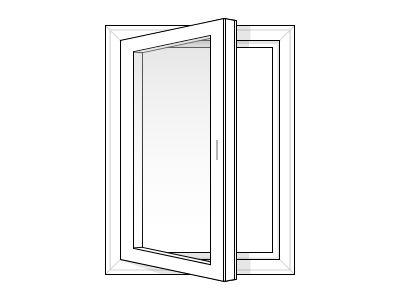
Casement windows consist of a single sash hinged at one side — left or right — that swings outward via a crank handle at the base of the frame. The sash spans the entire opening, meaning there is no fixed centre rail to block the view or restrict airflow.
Because the entire sash presses against the weatherstripping when locked, casement windows form a tighter compression seal than sliding or hung windows. This makes them one of the most energy-efficient operable styles available. The open sash can also be angled to catch a cross-breeze, directing more air into the room than a hung window of the same size.
Where they work best:
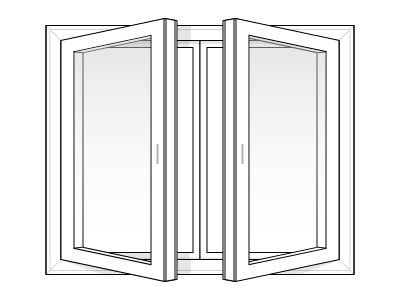
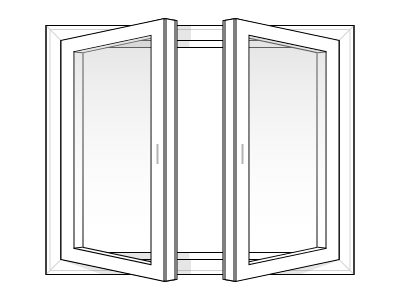
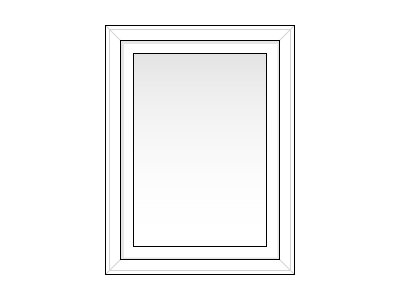
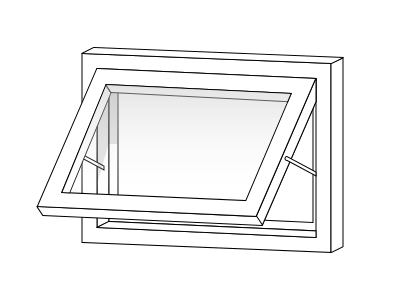
Awning windows are hinged at the top of the frame and crank open outward from the bottom. The sash extends at an angle, creating a canopy-like overhang — hence the name. Rain falls on the outer face of the glass and runs off rather than entering through the gap, which means awning windows can stay open during light rain without letting water in.
Where they work best:
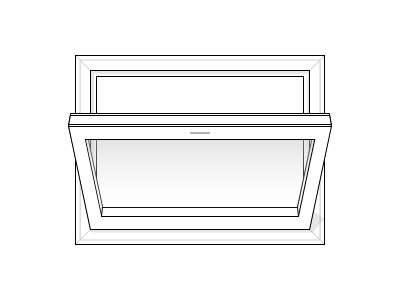
Hopper windows are the bottom-hinged inverse of awning windows. The sash is hinged at the bottom and tilts inward and downward from the top. They are most commonly found in basements, where the small horizontal opening sits near ceiling height and the inward tilt allows airflow without admitting rain or creating a wide exterior opening.
Hoppers are also used as transom windows above doors or picture windows, where the tilt-in opening provides ventilation in an otherwise fixed composition.
Practical notes:
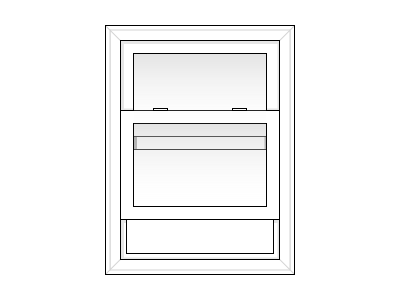
A single hung window has two sashes stacked vertically: a fixed upper sash and a lower sash that slides upward to open. The upper portion never moves. Screens typically cover the lower operable half.
Single hung windows are among the most familiar window styles in Canada, particularly in older housing stock. They are straightforward to manufacture and maintain, and their classic vertical proportion suits a wide range of architectural styles.
Single hung vs. double hung:
In a single hung window, only the lower sash moves. This reduces cost but limits ventilation — you cannot open the top and bottom simultaneously to create convective airflow (cool air in at the bottom, warm air out at the top), which is possible with a double hung. Cleaning the exterior face of the upper sash may also require access from outside.
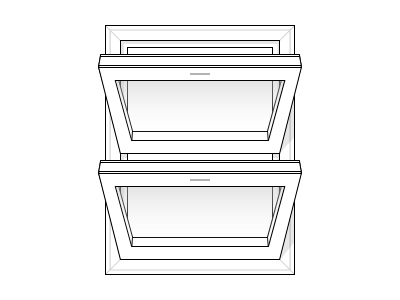
Double hung windows are arguably the most common residential window style in North America. Both the upper and lower sashes are independently operable — each can be raised, lowered, or held partially open at any position. Open the bottom for cool air in at floor level, open the top to let warm air escape near the ceiling, or open both simultaneously.
Most modern double hung windows also tilt both sashes inward for cleaning from inside the home — a significant practical advantage in multi-storey houses.
Where they work best:
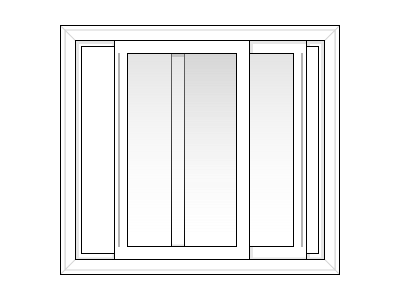
Sliding windows have one or more sashes that glide horizontally along a track. They open in the same plane as the wall and do not project outward or inward — a practical advantage where an outward-swinging sash would obstruct a walkway, deck railing, or patio furniture.
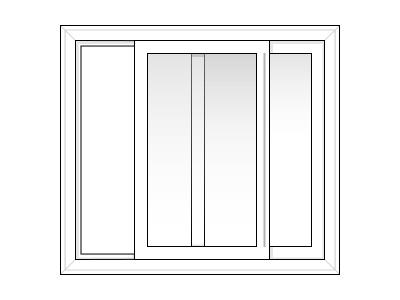
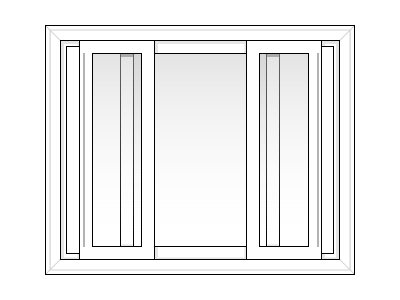
Where sliding windows work best:
Energy performance note:
Sliding windows use a brush seal along the track rather than a full compression seal, which makes them inherently slightly less airtight than hinged windows of comparable quality. Quality weatherstripping and tight track tolerances minimize this difference significantly.
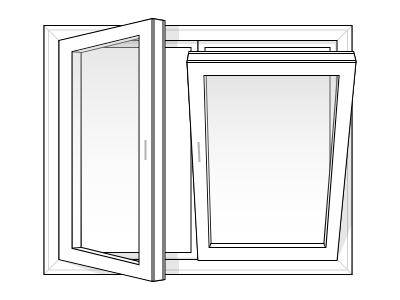
Tilt-and-turn windows are a European design that has become increasingly common in Canada, particularly in newer construction and high-performance renovations. A single sash operates in two distinct modes controlled by rotating the handle:
Why tilt-and-turn windows are gaining ground in Canada
Practical consideration
Because the sash swings fully inward in turn mode, furniture cannot be placed directly in front of the window. The inward opening is less intuitive for users accustomed to North American styles, but is quickly learned.
Fixed windows do not open. Their purpose is to admit light and frame a view. Because there is no sash mechanism and no weatherstripping gap to seal, fixed windows are inherently the most airtight type — they are frequently combined with operable windows in the same opening or wall to provide both the view and the ventilation.
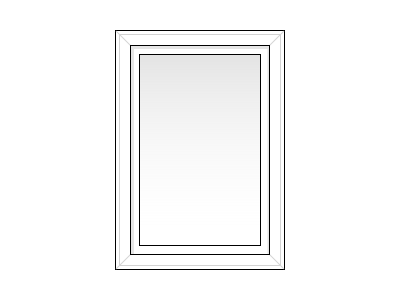
A picture window is a large, single-pane fixed window designed to frame an unobstructed view. There are no dividing rails, no sash mechanism, and typically no grilles or dividers. The entire opening is glass.
Picture windows are among the most thermally efficient options on a per-square-foot basis. The fixed perimeter seal eliminates all air leakage at the sash, and the large glass area can be specified with glazing optimized for direction — high solar heat gain facing south, low solar gain facing west to limit summer overheating.
Where picture windows work best:
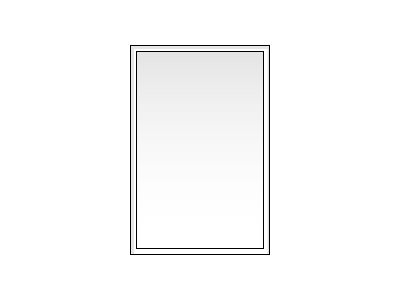
A deadlite is a fixed, non-operable glass unit that does not include its own outer frame. The insulated glass unit is installed directly into the rough opening or integrated into a surrounding frame system — for example, beside a door or between two operable windows — without a separate independent frame.
Deadlites are more economical than full picture windows and are commonly used in combination assemblies where a full outer frame would add cost and visual bulk without any functional benefit.
Specialty or architectural windows step outside the standard rectangular format. They are almost always fixed and serve primarily as design accents, focal points, or light sources. They are typically combined with one or more operable windows to provide ventilation for the space.
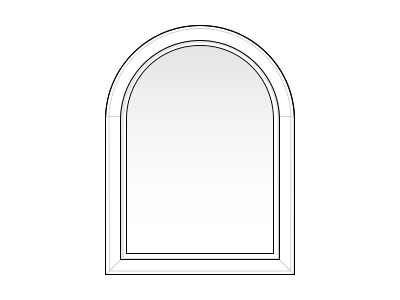
Arched windows have a curved top — typically a semicircular arch, a gothic pointed arch, or a subtler elliptical curve. They draw on centuries of architectural tradition and appear in both traditional and contemporary settings.
Most arched windows are fixed units. For a version that also ventilates, some manufacturers offer a single hung window modified with a fixed arch above it.
Arch variations:

Round windows — also called circle or porthole windows — are fixed circular units. They admit light in a distinctive pattern and serve as bold architectural accents on gable ends, stairwell walls, garages, and upper storeys of traditionally styled homes.
Variants
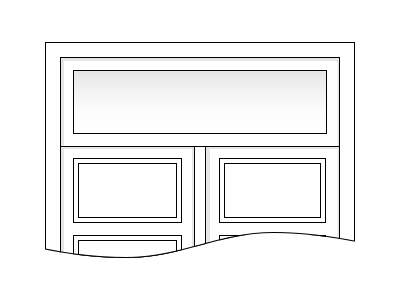
A transom window is placed horizontally above a door or another window. Historically, the term referred to the structural bar separating the door from the glass above; in common use it now refers to the window itself. Transoms admit additional light into spaces where a full-height window is not possible, and they add a classical proportion to doorways.
Transoms are almost always fixed, though awning and hopper transoms are available when ventilation above a door is wanted.
Where transoms are used
Projecting windows extend outward from the plane of the exterior wall, creating additional interior space, wider views, or distinctive architectural character. Composite windows combine multiple individual windows into a single larger assembly.
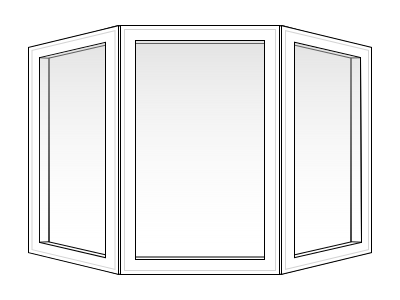
A bay window is a multi-unit assembly that projects outward from the exterior wall at an angle, creating a small alcove or nook on the interior. The standard configuration uses three windows: a flat centre unit (usually fixed or casement) flanked by two angled side units set at 30° or 45° from the wall. A small bay roof or bay cap covers the projection on the outside.
Bay windows add measurable interior floor space. The alcove is commonly used as a reading nook or window seat. The angled side panels capture a wider range of outdoor views and admit light from three directions simultaneously.
Common configurations:
Where bay windows work best:
Bay windows project through the building envelope and require careful insulation detailing at the floor, sides, and bay cap. The corner joints where individual windows meet are potential air leakage points. A well-installed bay window performs excellently; a poorly detailed one can create cold spots and condensation.
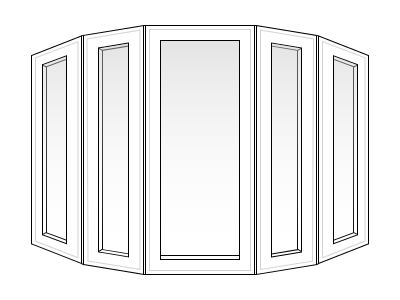
A bow window uses four, five, or six window units of equal size arranged in a gentle curve rather than sharp angles. The result is a rounded, sweeping projection that reads as a large curve from both inside and outside the home.
Bow windows command more wall space than bay windows and create a wider, more panoramic interior view. The curved sill is often used as a continuous window seat running the full length of the bow.
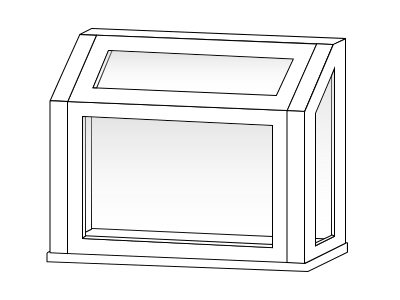
A garden window is a small projecting unit with a transparent top panel and glass sides that extend outward like a miniature greenhouse. They are almost exclusively installed in kitchens, positioned above the sink, to create a sunny alcove for growing herbs, housing small plants, or displaying decorative items.
Garden windows typically include a fixed glass roof, operable side vents (usually awning or casement panels), and a built-in shelf at sill level. The all-glass top maximizes the light reaching plants on the shelf.
A large fixed centre panel flanked by operable sashes on each end — you get the panoramic view of a picture window with the fresh air of two opening panels. The operable ends can be sliding, casement, or awning depending on the manufacturer.
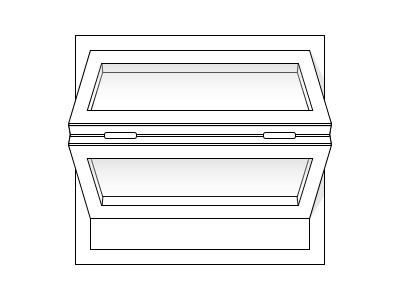
A pass-through window (also called a serving window or pass window) is designed to open completely — by sliding, folding, or swinging the sash fully — to create an opening for passing items between two spaces: most commonly between a kitchen and an outdoor deck or patio, or between an indoor bar and a dining area.
Pass-through windows are essentially a hybrid between a large casement or awning window and a fold-away door panel. When open, the sill acts as a counter extension. Some configurations use bi-fold panels that stack to the side.
Some window types are defined primarily by where in the building they are installed rather than by their opening mechanism. The location drives specific requirements for size, glazing, and code compliance.
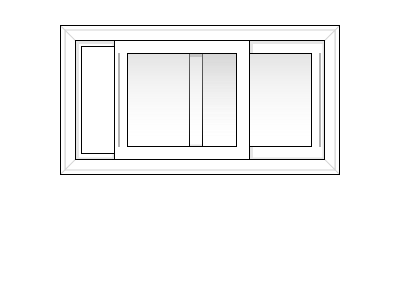
Basement windows are typically small horizontal windows installed at or near grade level, where the foundation wall meets the soil outside. Their primary purpose is to admit natural light and limited ventilation into the basement space.
Most basement windows in Canadian residential construction are slider or hopper style. Vinyl and aluminum frames are strongly preferred for basement applications because of their resistance to the ground moisture, condensation, and temperature variation that occur at grade level.
Key considerations:
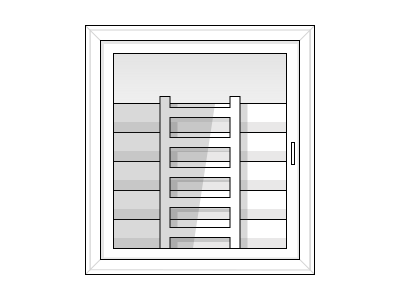
An egress window is an openable window large enough for a person to escape through in an emergency. Under the Ontario Building Code (OBC 2024), any bedroom in a dwelling unit — including basement bedrooms, — must have at least one window or door that qualifies as an emergency egress opening.
The OBC specifies minimum dimensions for egress openings. As of the 2024 OBC, an emergency egress window must provide a minimum clear opening of 0.35 m² (approximately 3.8 sq ft), with no single dimension (height or width) less than 380 mm (approximately 15 inches). The maximum sill height from the finished floor is 1,000 mm (approximately 39 inches). The window must open from the inside without special tools or keys.
Building codes vary by province. Always confirm current requirements with your local building department or a qualified contractor.
When an egress window is installed in a basement below grade, a window well — an excavated cavity on the exterior, — must be installed to provide clearance for the window to open and for a person to exit. The well must include a means of climbing out, either built-in ladder rungs or steps.
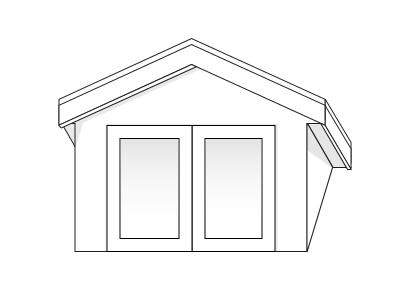
A dormer is a structural projection built out from a sloped roof to house a vertical window. It creates usable headroom in an attic space and brings natural light and ventilation into what would otherwise be a dark, low-ceilinged area.
The window within a dormer can be any standard operable style — casement, double hung, awning — chosen to suit the scale of the dormer and the ventilation needs of the space. Decorative dormers with fixed windows are used purely for exterior character.
Pricing for dormer windows depends heavily on whether the dormer structure is being built new or whether an existing dormer is receiving a window replacement. Replacement windows in existing dormers are priced based on the window style chosen.
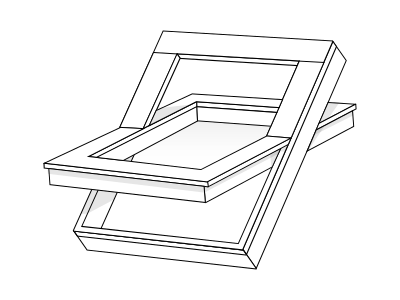
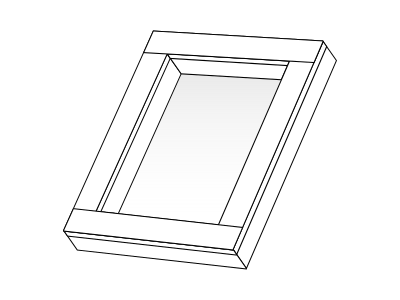
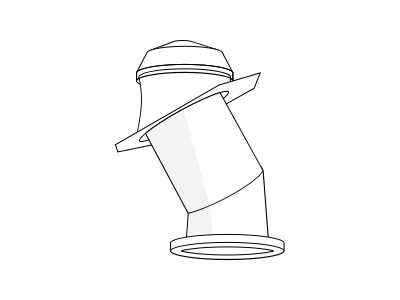
A skylight is a window installed in the plane of the roof rather than a vertical wall. Skylights admit a disproportionately large amount of natural light relative to their size — a roof-mounted window captures light throughout the day as the sun crosses overhead, admitting roughly three times more light per square foot than a vertical wall window of equal area.
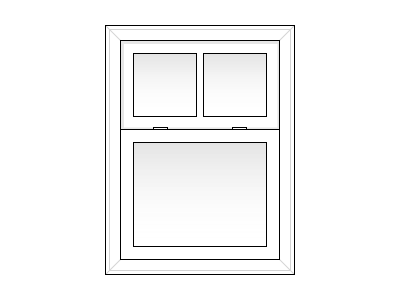
A cottage window is a variation on the double hung style where the upper sash is shorter than the lower sash — typically in a 1:2 or 1:3 ratio. This asymmetry gives the window a distinctive character associated with traditional cottage, farmhouse, and Arts and Crafts architecture.
Both sashes operate independently, as in a standard double hung. Cottage windows are sometimes fitted with grilles or divided lites in the upper sash to emphasize the traditional character.
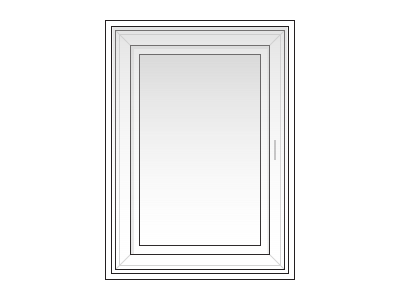
A storm window is a secondary window installed on the interior or exterior of an existing window. It provides an additional insulating layer without replacing the original window — acting as a buffer zone that slows heat loss and reduces condensation on the primary pane.
Storm windows remain relevant in two contexts today:
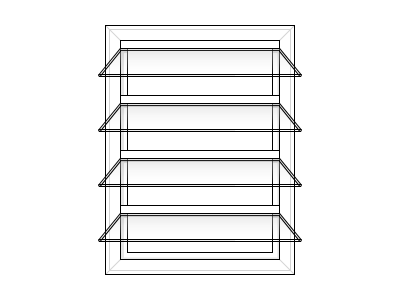
Jalousie windows use a series of horizontal glass slats that are angled simultaneously by a crank mechanism, similar to venetian blinds. When open, the slats angle downward to the outside, allowing large volumes of air to flow through the many gaps.
Jalousie windows offer excellent cross-ventilation in hot, humid climates but perform poorly in Canadian conditions: the numerous joints between the slats are extremely difficult to seal against winter air infiltration, and the narrow slats are fragile. In Canada, jalousie windows are rarely used in conditioned residential spaces today. They occasionally appear in sunrooms, screened porches, and non-conditioned outbuildings where their ventilation capability is still appreciated.
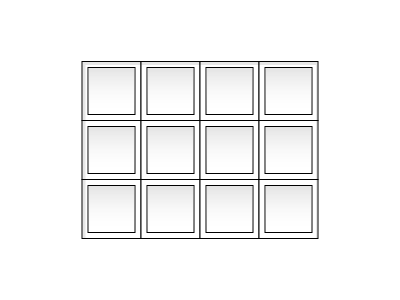
Glass block windows are composed of individual hollow glass blocks — typically 190 mm × 190 mm — mortared together in a frame or set directly into the wall opening. They admit diffused, obscured light while providing excellent privacy and solid thermal mass.
Glass block is commonly used in basement bathroom windows at grade level, shower enclosures, interior partitions, and commercial facades. The obscured surface prevents any clear view in either direction while still allowing substantial light transmission.
Glass block has moderate thermal resistance — better than single-pane glass but less than a double-pane insulated glass unit. Pre-assembled glass block window units are the preferred approach for residential installation.

Clerestory windows are a row of windows placed high on a wall — typically near the roofline — above the eye level of occupants. They admit natural light from high up without sacrificing wall space at furniture height. The term comes from cathedral architecture, where clerestories admitted light into the nave above the side aisles.
In residential design, clerestory windows are used in open-plan spaces with tall ceilings, passive solar homes where high south-facing glazing maximizes winter sun penetration deep into the floor plan, and contemporary designs where privacy is needed alongside natural light. The window itself is a standard product — typically fixed or awning — but its high placement defines the clerestory function.
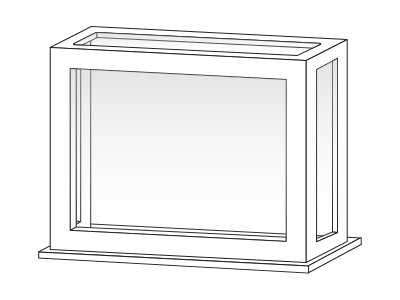
An oriel window is a bay-like projecting form supported from the wall by corbels or brackets rather than extending from the foundation. Oriel windows originate from medieval architecture and are most associated with Tudor Revival, Gothic Revival, and Victorian residential styles.
Because an oriel does not extend to the ground, it cannot expand floor space — it is purely a visual and light-admitting feature projecting from an upper storey wall. In contemporary residential construction, true oriel windows are uncommon and are typically executed as custom architectural work.
| Window Type | Opens? | Best Application | |
|---|---|---|---|
| Casement | Yes, side hinge, outward | Ventilation, above counters, modern homes | |
| Twin / French casement | Yes, both sides open outward | Maximum opening, no centre post | |
| Awning | Yes, top hinge, outward | Kitchens, bathrooms, basements, rain ventilation | |
| Hopper | Yes, bottom hinge, inward | Basements, transoms, utility openings | No |
| Single hung | Yes, lower sash only | Traditional homes, any floor | |
| Double hung | Yes, both sashes | Universal residential use, multi-storey | |
| Single slider | Yes, horizontal | Wide/low openings, beside patios | |
| Double slider | Yes, both sides | Wider openings, contemporary homes | |
| End-vent slider | Yes, ends only | Living rooms, panoramic view + ventilation | |
| Tilt-and-turn | Yes, tilt in or swing in | High-rise, high security, European style | No |
| Picture / fixed | No | Views, large glass, light maximizing | |
| Deadlite | No | Combination units, economical fixed glazing | |
| Arched | Rarely | Decorative accent, entry focal points | custom |
| Round / circular | No | Gable ends, accent features | custom |
| Transom | Fixed or operable | Above doors, high windows in tall rooms | |
| Bay (3-unit) | Mixed | Living rooms, nooks, curb appeal | |
| Bow (4-6 unit) | Mixed | Panoramic living rooms, formal rooms | |
| Garden | Partial (vent sides) | Kitchen above sink, herb growing | No |
| Pass-through | Yes, fully open | Kitchen-to-patio, bar-to-dining | No |
| Basement | Usually (slider/hopper) | Below-grade daylight and ventilation | |
| Egress | Yes (code-minimum opening) | Basement bedrooms (code requirement) | |
| Dormer | Varies by sash type | Attic habitable space, roof character | sash |
| Skylight, fixed | No | Interior light from roof plane | No |
| Skylight, venting | Yes | Ventilation + light from roof plane | No |
| Cottage | Yes, both sashes | Traditional, farmhouse, cottage style | |
| Storm | Varies | Heritage buildings, over existing windows | No |
| Jalousie | Yes, louvre slats | Non-conditioned spaces only | No |
| Glass block | No | Privacy with light: bathrooms, basements | No |
| Clerestory | Fixed or awning | Passive solar, tall-ceiling rooms | sash |
| Oriel | Varies | Upper-storey historical/traditional feature | sash |
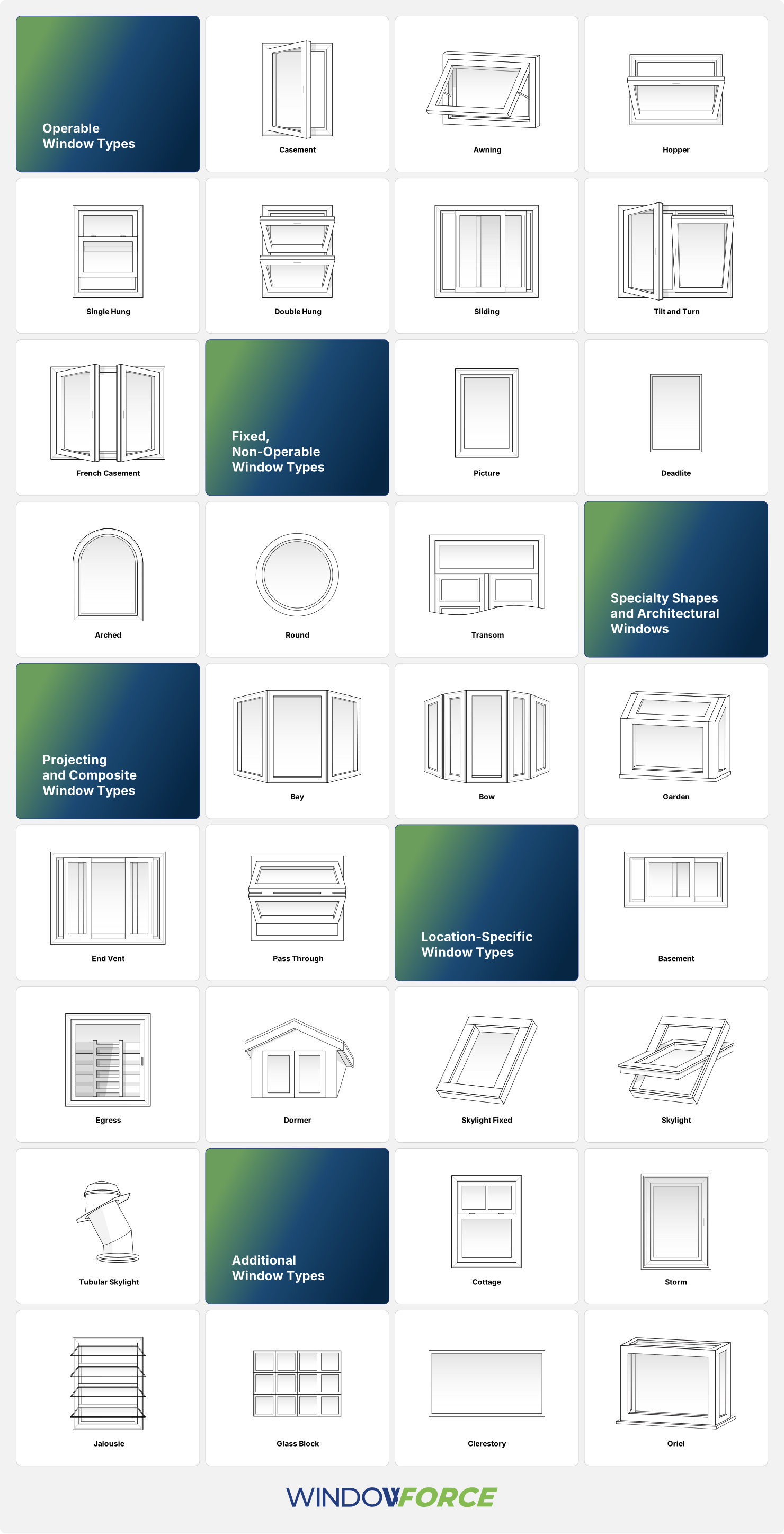
Choosing the right window comes down to four questions: Where is the window? What do you need it to do — primarily ventilate, primarily provide a view, or both? What architectural character does your home have? And what is your performance target for energy efficiency?
The answers will typically point to one or two window types, and from there, frame material and glass specification complete the picture. If you have questions or are ready to start planning a project, use the enquiry form — our team will get back to you with product recommendations and a quote.


