

Replacing windows is one of the most consequential decisions in home renovation: the right choice delivers measurable improvements in thermal comfort, energy costs, and structural integrity, while the wrong choice leads to issues that compound over time. Canadian homeowners face a uniquely demanding climate, where wide seasonal temperature swings, wind-driven moisture, and freeze-thaw cycles test every component of a window system. This guide provides the technical knowledge and practical framework needed to confidently evaluate options, including frame materials, glazing specifications, installation methods, and long-term costs.
This guide is informed by Window Force’s experience as a Canadian vinyl window manufacturer. Since 2007, we’ve produced custom windows at our 80,000 sq ft Ontario facility for builders, dealers, contractors, and homeowners across Canada. We see every variable that affects window performance and cost firsthand — from raw material quality and production engineering to glazing configuration and installation method. That perspective shapes the recommendations throughout this guide.
Key Takeaways
- Replacement windows should be installed when structural damage, seal failure, or poor thermal performance makes repair ineffective, typically after 15 — 25 years of service.
- Window style impacts performance: casement windows provide the best airtightness, while sliding and double-hung options offer practical ventilation with slightly lower sealing efficiency.
- Frame material is a key decision: vinyl balances cost and efficiency; fibreglass offers superior durability; wood requires maintenance; and aluminum must be thermally broken for cold climates.
- Typical installed costs range from $500 to $2,000+ per window, with full-home projects varying widely based on materials, glazing, and installation complexity.
- Energy efficiency depends on the full system (glass, gas fill, coatings, spacers, frame); ENERGY STAR certification is essential for both performance and rebate eligibility.
- Professional installation is strongly recommended to ensure proper sealing, code compliance, and warranty protection, as poor installation can negate all performance benefits.
- Common mistakes include prioritizing low upfront cost, ignoring energy ratings, incorrect measurements, and choosing the wrong installation method.
- Long-term savings come from selecting quality products, bundling installations, using rebates, and prioritizing the worst-performing windows first.
What Are Home Replacement Windows and When Should You Consider Buying Them?
Replacement windows are factory-manufactured window units designed to fit into an existing rough opening, replacing the frame, sash, and glazing within a single integrated assembly. Unlike new-construction windows, which are installed as part of a complete wall system, replacement windows are engineered to work within the dimensions and structural conditions of an already-built home. This distinction matters because it shapes how products are specified, manufactured, and installed.
The decision between repair and full window replacement depends on the nature and extent of the deterioration. Isolated hardware failures, minor weatherstripping wear, and small gaps in caulking are legitimately addressed through targeted repair. Full replacement is the appropriate course when the frame itself is structurally compromised, the sealed glass unit has failed (indicated by persistent fogging or condensation between panes), the window no longer closes or locks with a consistent seal, or age has rendered the product thermally obsolete.
Most residential windows begin to show performance deficiencies between 15 and 25 years after installation. The timeline varies significantly with material, climate exposure, and maintenance history, but windows approaching 20 years of service warrant careful assessment, even if they appear intact from the interior. Single-pane units, regardless of age, no longer meet acceptable thermal standards in Canada and incur a continuous energy penalty each heating season.
Key signs that window replacement is warranted include:
- Visible rot, warping, or cracking in the frame or sash
- Persistent drafts at the perimeter when the window is closed and latched
- Condensation or fogging between glass panes (failed sealed unit)
- Difficulty operating cranks, hinges, or locking mechanisms
- Ice formation on interior glass surfaces during cold weather
- Elevated heating or cooling costs with no other identifiable cause
Engineer Sergey Essipov, with 20 years of experience in window manufacturing, explains:
A failed sealed glass unit is one of the most common and misunderstood triggers for replacement. At Window Force, we hear this regularly from homeowners who assume the fogging is a cleaning problem, when in fact it signals argon gas loss and a collapse of the insulating air barrier — at that point, the glazing is performing at a level only marginally better than a single pane. Our dual-seal warm-edge spacer system is specifically engineered to resist this type of failure, but even the best spacer can’t compensate for a unit that was poorly manufactured or installed.
Windows Near Me
How Do You Choose the Right Type When You Buy Windows for Your House?
Window style is not purely an aesthetic choice. Each operating configuration carries distinct implications for ventilation capacity, airtightness, ease of cleaning, structural suitability, and compliance with egress requirements. Selecting the correct style for each opening requires matching the window's mechanical characteristics to the specific conditions of the room and wall assembly.
- Casement windows are hinged on one side and open outward via a crank mechanism. Because they use a compression seal when closed, they provide superior airtightness compared to sliding configurations. Casement windows are well-suited to locations where maximum ventilation and tight sealing are both priorities, such as kitchens, bathrooms, and bedrooms. Their outward swing requires clear exterior space.
- Double-hung windows have two independently operable sashes that slide vertically within the frame. This allows simultaneous ventilation from both the upper and lower sections, supporting natural convective airflow. Double-hung units are widely used throughout North American residential construction and are well-suited to traditional architectural styles. Many modern double-hung designs incorporate tilt-in sashes for simplified cleaning.
- Sliding windows operate on horizontal tracks, with one or both sashes moving laterally. They are practical for wide openings and locations where an outward swing is not possible. However, sliding windows use compression seals only at the ends of the sash travel, which makes them less airtight than casement designs under sustained wind pressure.
- Fixed (picture) windows contain no operating mechanism and provide no ventilation. They deliver the largest unobstructed glass area and the tightest thermal performance. Fixed windows are commonly paired with operable units on either side to achieve both view and ventilation.
- Awning windows are hinged at the top and open outward at the bottom. They can remain open during light rain without water entering the home, making them effective for basement-level or continuous ventilation applications.
| Window Style | Airtightness | Ventilation | Best Application |
| Casement | Excellent | Full sash opening | Bedrooms, main living areas |
| Double-hung | Good | Upper + lower sash | Traditional homes, most rooms |
| Sliding | Moderate | One sash width | Wide openings, limited clearance |
| Fixed (picture) | Excellent | None | Views, paired with operable units |
| Awning | Good | Bottom-out opening | Basements, continuous use in rain |
Which Materials Are Best for Home Replacement Windows?
Frame material determines durability, thermal performance, maintenance requirements, dimensional stability, and long-term value retention. “The four primary materials used in Canadian window manufacturing each have distinct performance profiles.
- Vinyl (uPVC) is the most widely specified frame material in Canadian residential construction. It is thermally efficient, moisture-resistant, requires no painting or sealing, and is available at accessible price points. Vinyl does not rot or corrode, but it is susceptible to dimensional change under extreme temperature cycling. High-quality vinyl frames use multi-chamber extrusions and UV stabilizers that resist colour degradation and maintain structural rigidity over a 20-40 year service life. Thin-walled, lower-grade vinyl can begin to warp within 10 to 15 years under harsh climate conditions.
Window Force’s vinyl frames are extruded from lead-free uPVC with multi-chamber profiles and fusion-welded corners — an approach that maximizes both thermal performance and structural integrity. Our UV-stabilized compounds are formulated specifically for Canadian exposure conditions, maintaining colour consistency and dimensional stability across decades of Ontario’s temperature extremes.
- Wood provides naturally high insulating value and has been used in residential windows for centuries. With consistent maintenance, including periodic repainting, caulking, and sealing, wood frames can perform well for 30 to 50 years. The need for ongoing maintenance is the primary limitation: neglect accelerates rot, warping, and pest infiltration. Wood-clad products, which use an exterior aluminum or vinyl cladding over a wood interior, offer improved weather resistance while retaining wood's insulating and aesthetic characteristics.
- Aluminum is structurally rigid, dimensionally stable, and suitable for large, heavy glazing assemblies. However, it conducts heat at a rate that is dramatically higher than that of non-metallic materials, making standard aluminum frames a thermal liability in Canadian climates. Thermally broken aluminum, which incorporates a non-conductive thermal barrier within the frame cross-section, significantly reduces this conductance and is the only aluminum configuration appropriate for cold-climate residential installation. Aluminum frames are favoured in high-end architectural and modern design applications.
- Fibreglass combines the dimensional stability of metal with the thermal properties of a non-conductive material. It does not expand or contract significantly with temperature change, which preserves seal integrity over time and reduces stress on the glazing unit. Fibreglass accepts paint adhesion well, providing design flexibility that vinyl does not. Its primary limitation is cost: fibreglass windows typically cost 30 to 60 percent more than comparable vinyl units.
Engineer Sergey Essipov, with 20 years of experience in window manufacturing, notes:
In cold-climate markets like Ontario, the choice between premium vinyl and fibreglass often comes down to temperature range. Vinyl's thermal expansion coefficient is substantially higher than glass, which means that in severe freeze-thaw cycles, frame distortion places cumulative stress on the sealed unit perimeter — a factor that shortens the service life of the insulated glass unit, regardless of the original glass quality.
| Frame Material | Lifespan | Thermal Performance | Maintenance | Cost (Relative) |
| Vinyl (uPVC) | 20 — 40 years | Very Good | Low | Low — Moderate |
| Wood | 15 — 50 years* | Good | High | Moderate |
| Aluminum (thermally broken) | 20 — 30 years | Good | Low | Moderate — High |
| Fiberglass | 30 — 50 years | Excellent | Low — Moderate | High |
* With consistent maintenance
A 2023 field study published in the Buildings journal (MDPI) tracking over 2,400 insulated glass units across 14 cities found cumulative seal failure rates of 4.9 percent at 10 years, 7.9 percent at 15 years, and 9.2 percent at 25 years under real-world conditions. Units from lower-quality manufacturers or incorrectly installed showed substantially higher failure rates, underscoring why both manufacturing quality and installation precision determine the practical service life of the glazing system.
What Energy Efficiency Features Should You Look for in Modern Windows?
Thermal performance in modern residential windows is the product of several interacting systems: the glazing configuration, the gas fill, the low-emissivity coating, the spacer technology, and the frame's thermal resistance. No single component determines overall energy efficiency in isolation — the assembly must be evaluated as a whole.
Glazing configuration
Double-pane insulated glass units provide a layer of insulating gas between two panes of glass, creating a thermal barrier that single glazing cannot approach. Triple-pane units add a second intermediate pane and a second gas-filled cavity, reducing heat loss further and substantially attenuating sound transmission. Triple-pane glazing is the appropriate specification for north-facing exposures, openings with high heat loss potential, or applications where noise reduction is a priority.
Low-E coatings
Low-emissivity coatings are microscopically thin metallic layers applied to one or more glass surfaces. They reduce radiant heat transfer by reflecting infrared energy. In winter, they reflect interior heat back into the room; in summer, they reduce solar heat gain. According to Natural Resources Canada, low-E coatings can reduce heat loss through glazing by up to 50 percent. Two primary variants exist: passive low-E coatings (higher Solar Heat Gain Coefficient) are suited to cold climates where solar gain is beneficial for supplemental heating; solar-control low-E coatings (lower SHGC) are preferred where summer overheating is a concern.
Gas fills
Argon is the standard gas fill for double-pane units; krypton, which has lower thermal conductance, is specified in triple-pane units where cavity dimensions are narrower. Both gases are odourless, colourless, and inert. Argon-filled units conduct heat more slowly than air-filled equivalents, reducing heat flow through the glass assembly.
Spacer systems
The spacer separates the glass panes along the perimeter of the sealed unit. Traditional aluminum spacers conduct heat efficiently, creating a thermal bridge at the edge of the glazing, which can sometimes be visible as condensation along the bottom rail. Warm-edge spacers fabricated from stainless steel, foam, or composite materials significantly reduce this edge-of-glass conduction, improving both thermal performance and the resistance to seal failure.
Window Force uses a dual-seal, metal-free warm-edge spacer system across all product lines. This is a deliberate engineering choice: eliminating the aluminum thermal bridge at the glass edge reduces condensation risk and extends seal life, which are two of the most common failure points in insulated glass units operating in the Canadian harsh climate.
According to Natural Resources Canada's Keeping the Heat In publication, windows, doors, and skylights can account for up to 35 percent of total residential heat loss, making the thermal specification of replacement windows one of the most impactful decisions in a home energy upgrade. For a typical home spending $2,000 annually on space heating, this represents a potential recoverable loss of $500 to $700 per year through properly specified and installed glazing.
Should You Hire a Professional or Install Replacement Windows Yourself?
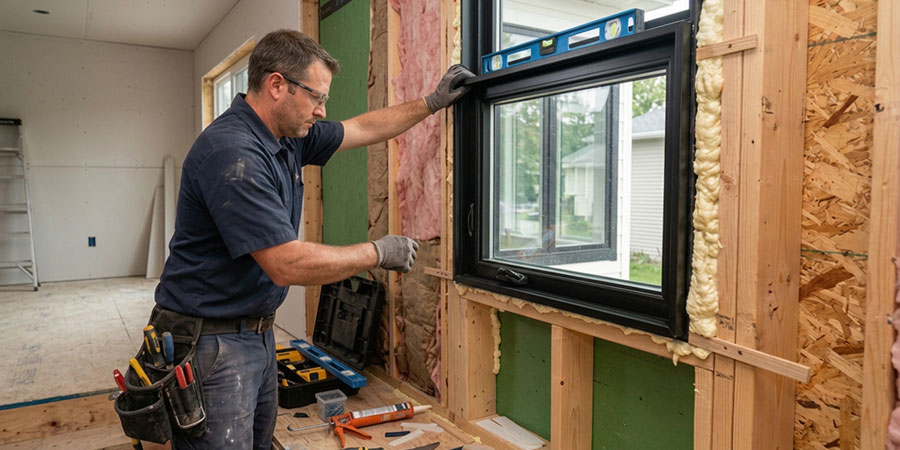
Window installation is governed by building codes that set clear requirements for structural support, continuity of air and vapour barriers, proper water drainage, and correct flashing at all exterior openings. Improper installation that compromises these requirements can lead to moisture infiltration, mould growth within wall assemblies, structural deterioration of framing components, and voided manufacturer warranties. These risks are well documented: moisture damage caused by a single improperly flashed window can result in repair costs that far exceed any initial savings from the installation.
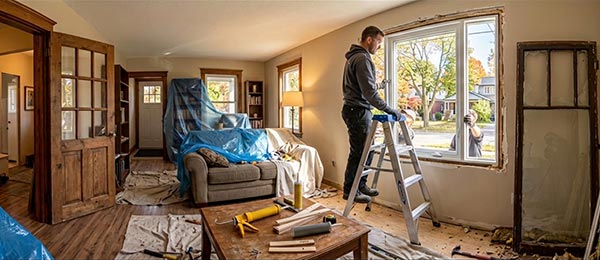
- DIY installation is technically feasible for homeowners with relevant trade experience in retrofit configurations that retain the existing frame. The critical prerequisites are precise measurement, correct shimming and levelling, continuous perimeter air sealing with compatible sealants, and proper integration with the existing water management plane. Without these, even a quality product will underperform.
- Professional installation by a qualified window supplier carries several practical advantages: accurate measurement prior to manufacturing, access to appropriate tools and access equipment, familiarity with local building code requirements, and critically, warranty continuity. Most window manufacturers condition their product warranties on certified installation. If a product fails and a non-professional installation is documented, the warranty claim is typically rejected.
| Consideration | DIY Installation | Professional Installation |
| Labour cost | Minimal | $100—$300 per window |
| Code compliance risk | High | Low |
| Warranty validity | May be voided | Maintained |
| Air and water seal quality | Variable | Consistent |
| Liability for damage | Homeowner | Contractor |
| Suitable for | Retrofit inserts, single units | Full-frame, multi-unit, upper storey |
The DIY path carries a hidden risk that is rarely quantified at the decision point: if the installation fails and the warranty is voided, the homeowner absorbs the full replacement cost, product and labour, a second time.
What Mistakes Should You Avoid When Shopping for Replacement Windows?
Common purchasing errors in window replacement tend to cluster in four areas: prioritizing upfront cost over lifecycle value, selecting products without verifying their technical specifications, underestimating installation complexity, and failing to account for applicable incentive programs.
- Selecting on price alone is the most consequential error. A lower-cost product from a manufacturer with thin frames, a limited chamber design, or inadequate UV stabilizers will begin to show performance degradation within 10 to 15 years. The incremental cost difference between budget and mid-range vinyl, when amortized over the window's service life, is substantially smaller than the replacement cost or the energy penalty of operating a thermally degraded product.
- Ignoring energy ratings in a Canadian climate represents a direct and measurable financial error. Purchasing windows without confirmed ENERGY STAR certification or without reviewing the ER and U-factor specifications for the specific climate zone means accepting reduced insulating performance in every heating season over the product's entire lifespan.
- Measuring incorrectly is a frequent and expensive DIY error. Replacement windows are custom-manufactured to specified dimensions; an error of even a few millimetres can result in a product that cannot be installed without costly modification or reorder. In a full-frame replacement, measurements must account for the rough opening, not the existing frame dimension.
- Underestimating the installation scope occurs when homeowners select a retrofit insert for an application that requires full-frame replacement. If the existing frame is deteriorated, moisture-damaged, or out of square, inserting a new sash into it transfers those structural problems to the new window. The frame condition must be assessed, not assumed.
- Skipping warranty review before purchase is a systemic oversight. Warranties vary substantially among manufacturers in duration, the conditions covered, and the installation or maintenance requirements that must be met for the warranty to remain valid. A 25-year warranty on a sealed unit is only meaningful if the claims process is realistic and the exclusions are not so broad as to eliminate most failure scenarios.
Window Force’s warranty is structured for transparency: 100% coverage for the first 25 years, 80% manufacturer / 20% customer from years 25 — 30, and 25% manufacturer / 75% customer beyond 30 years. The warranty is fully transferable to subsequent homeowners, which adds resale value and gives future owners confidence in the product. We publish these terms upfront because we believe warranty clarity should be part of the purchasing decision, not a post-sale discovery.
How Long Do Home Replacement Windows Last and What Affects Their Lifespan?
The service life of a replacement window is determined primarily by the frame material, but is significantly influenced by manufacturing quality, climate severity, installation precision, and maintenance practices. Published lifespan ranges for each material reflect population averages under normal conditions; actual performance at either extreme depends on factors within and outside the homeowner's control.
| Frame Material | Typical Service Life | Primary Degradation Mechanisms |
| Fiberglass | 30 — 50 years | Coating wear, hardware fatigue |
| Wood (maintained) | 30 — 50 years | Rot, paint failure, pest infiltration |
| Vinyl (premium) | 20 — 40 years | UV discolouration, frame brittleness, seal failure |
| Wood (average) | 15 — 30 years | Moisture damage with inconsistent maintenance |
| Aluminum (standard) | 15 — 30 years | Thermal bridge condensation, corrosion in coastal areas |
The sealed glass unit typically has a shorter functional lifespan than the frame. Industry data indicate that cumulative seal failure rates in insulated glass units under real-world conditions reach approximately 5 percent at 10 years and approach 10 percent at 25 years, under average-quality conditions. Units from lower-quality manufacturers or incorrectly installed show substantially higher failure rates. When the sealed unit fails before the frame, the glass can often be replaced independently, provided the frame remains structurally sound and square.
Climate is a consistent modifying factor. The combination of hot, humid summers and cold, dry winters creates conditions that accelerate thermal cycling stress on frame materials and perimeter seals. Vinyl’s expansion coefficient is approximately seven times greater than that of glass, which means that in high-amplitude temperature environments, repeated dimensional cycling compresses and relaxes the glazing edge bond. Premium vinyl frames engineered for cold-climate conditions incorporate design features that accommodate this movement without compromising the unit’s perimeter seal.
Maintenance practices that extend service life regardless of frame material include:
- Annual inspection and replacement of perimeter caulking at the exterior window-to-wall joint
- Cleaning and lubrication of hinges, cranks, and locking mechanisms
- For wood frames: inspection and reapplication of protective finish every 3 to 5 years
- Prompt attention to any visible seal failure, hardware binding, or new air leakage
How Can You Save Money When Buying Replacement Windows?
Cost reduction in a window replacement project is most effectively achieved through informed purchasing decisions, program eligibility, and project sequencing, not by compromising product quality, which shifts costs forward into energy losses and premature replacement.
What Is the Smartest Way to Shop for Replacement Windows Today?
Shopping for replacement windows effectively means treating the purchase as a long-term performance investment rather than a commodity transaction. The homeowners who achieve the best outcomes over a 20-40-year lifecycle are those who establish clear performance criteria before evaluating products, verify technical specifications rather than relying on marketing language, and confirm that both the product and the installer meet the requirements for available rebate programs.
The decision to invest in energy-efficient windows through a qualified window supplier is supported by both the short-term rebate environment and the long-term economics of reduced heat loss. Taking the time to understand what you are purchasing, from the technical specification to the warranty structure, is the most reliable path to a replacement project that delivers its expected performance for the full service life of the product.
Window Force manufactures custom vinyl windows at our Ontario production facility for homeowners, builders, and contractors across Canada. Every unit is built to order, CSA certified, ENERGY STAR rated, and backed by our 25-year transferable warranty. Whether you're replacing a few windows or planning a full-home upgrade, contact our team at 905.761.2030 or request a quote through our website — we'll help you navigate product selection, glazing configuration, and installation method for your specific project.
Frequently Asked Questions
What is the difference between a retrofit and a full-frame replacement?
A retrofit (or insert) replacement installs a new sash and glazing unit into the existing frame, which is left in place. A full-frame (or brick-to-brick) replacement removes the entire window assembly, including the frame, brickmould, and interior casing, and installs a new unit into the rough opening. Full-frame replacement is required when the existing frame is structurally deteriorated, out of square, or moisture-damaged. It provides better performance but at a higher labour cost.
How do I know if my sealed glass unit has failed?
The primary indicator of sealed unit failure is persistent fogging or condensation between the glass panes that does not clear with temperature changes. Once the perimeter seal degrades, moisture-laden air enters the cavity, displacing the insulating gas (argon or krypton). The glazing then performs at significantly reduced thermal efficiency until the unit is replaced.
What is the Energy Rating (ER) and why does it matter?
The Energy Rating is a metric used by Natural Resources Canada and the ENERGY STAR program to express the overall thermal performance of a window in a single number. It integrates the U-factor (heat loss), Solar Heat Gain Coefficient, and air leakage rate. The higher the ER, the better the window performs thermally. ENERGY STAR requires a minimum ER of 34 for certification, with the Most Efficient designation requiring an ER of 40 or above. A higher ER directly reduces heating costs in cold climates.
Can I replace windows in winter?
Yes. Professional installers complete window installation year-round, and many offer off-season pricing. Low temperatures do not prevent installation provided the perimeter sealants used are rated for the installation temperature, and the opening is managed to limit interior heat loss during the work. Installation quality is not inherently lower in winter when performed by an experienced crew.
What warranties should I expect on replacement windows?
Reputable manufacturers provide separate warranties for the frame and for the sealed glass unit. Frame warranties commonly range from 10 to lifetime, depending on material and manufacturer. Sealed unit warranties typically span 15 to 25 years. The key factors to verify are: what conditions void the warranty, whether the warranty is transferable to a subsequent owner, and what the claims process requires. Installation warranties from the contractor (typically 1 to 5 years for labour) are separate from the product warranty.
How many windows should I replace at once?
From a cost-efficiency standpoint, replacing multiple windows in a single project reduces the per-unit labour cost. Prioritize units that are failing, but consider whether replacing all windows in a section of the home at once, for example, all front-facing windows or all windows on the uppermost floor, offers a planning or cost advantage. Bundling also simplifies rebate administration.
People Also Ask