

Replacing windows is one of the most impactful home improvement decisions for homeowners in Canada, yet most people never consider whether the timing of that replacement matters as much as the product itself. The reality is that season, scheduling, and planning horizon all directly affect installation quality, project cost, and long-term performance. This guide breaks down everything you need to know to choose the right moment for your window replacement, from seasonal conditions and weather variables to manufacturing lead times and pre-installation preparation.
This guide is informed by Window Force’s experience as a Canadian vinyl window manufacturer. Since 2007, we’ve produced custom windows at our 80,000 sq ft Ontario facility for builders, dealers, contractors, and homeowners across Canada. We manufacture year-round and coordinate installations across all four seasons through our authorized dealer network — so the seasonal patterns described here reflect what we see directly from both the production floor and the job site.
Key Takeaways:
- The best seasons for window replacement are spring and fall, as moderate temperatures ensure optimal sealant curing, greater frame stability, and smoother installation.
- Summer is a strong alternative, offering long daylight hours and immediate comfort benefits, but it also comes with the highest demand and potential scheduling delays, so early booking is required.
- Winter installation is possible and safe when done professionally, but it requires cold-weather sealants, faster workflow, and experienced crews to manage heat loss and material performance.
- Installation quality is heavily influenced by temperature, as vinyl expansion/contraction and sealant curing behave most predictably in mild weather (roughly 5°C-25°C).
- Window replacement should be planned 2-4 months in advance, since custom manufacturing, measurement, and scheduling significantly extend the total project timeline.
- Early signs of window failure include drafts, condensation, and rising energy bills, with between-pane fogging being a clear indicator of irreversible IGU seal failure.
- Choosing a manufacturer matters as much as timing, since vertically integrated production and installation improve accountability, consistency, and warranty support compared to fragmented dealer/contractor models.
When is the best time of year to replace windows?
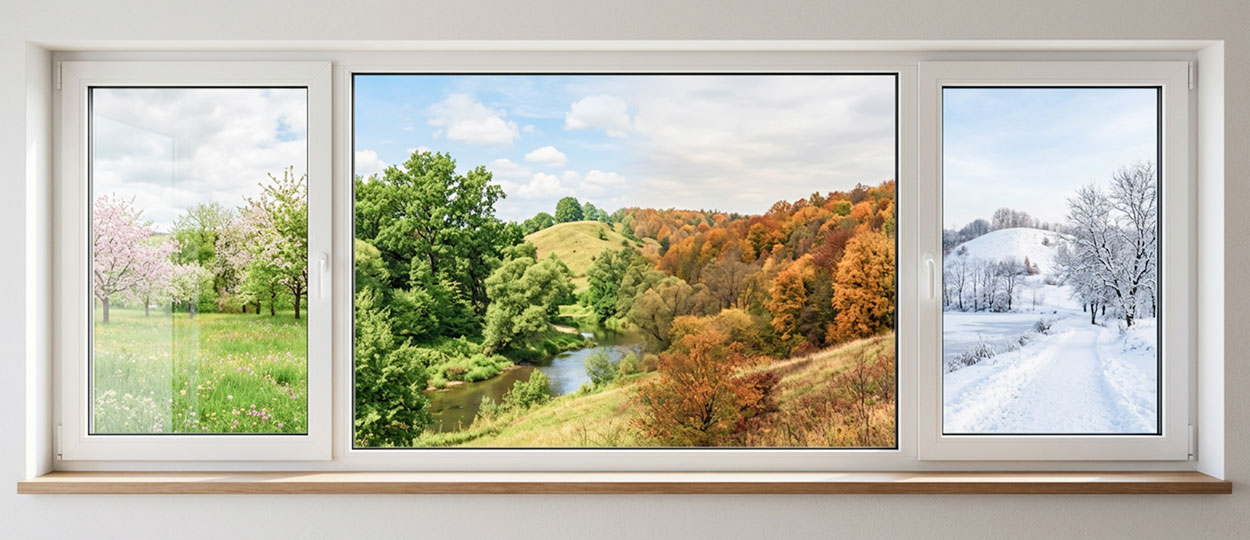
For most Canadian homeowners, spring and fall offer the most balanced conditions for window replacement. Moderate outdoor temperatures make it easier to seal frames properly, reduce stress on your home's heating or cooling system during the brief installation window, and give installers better working conditions overall. Summer is also a strong option, particularly when booked early in the season, because longer daylight hours give crews more working time and any comfort improvements are felt immediately before winter. Winter replacement is not out of the question, but it introduces additional complexity and requires specific precautions that a qualified installer must manage carefully.
Why mild weather helps installation
Window installation involves a sequence of steps where outdoor temperature directly affects material performance. Caulk and sealants, for example, require a specific temperature range to cure correctly. Most high-quality sealants used in residential window installation perform best between 5°C and 25°C. Outside that range, either too hot or too cold, adhesion can be compromised, curing may be uneven, and the long-term air seal around the frame may underperform. Vinyl frames, which expand and contract with temperature, also behave more predictably in mild weather, making it easier to maintain measurement tolerances. Installers can work more efficiently, make adjustments without the added pressure of racing against freezing conditions or direct summer sun, and produce cleaner, more precise results.
When winter replacement still makes sense
There are situations where waiting for an ideal season is simply not an option. A failed seal causing visible condensation between panes, a damaged frame allowing cold air into a bedroom, or a window that no longer closes properly are all urgent problems that cannot wait until April. In these cases, professional winter installation is the right call. Experienced crews have protocols for managing cold-weather installation: working room by room to minimize the duration of any opening, using cold-weather rated sealants, and pre-warming materials to ensure proper adhesion. The result may require slightly more preparation, but a skilled installer can complete a winter replacement that performs just as well as one done in October.
| Season | Installation Ease | Sealant Performance | Scheduling Availability | Energy Impact During Install | Recommended Priority |
| Spring | High | Excellent | Moderate, booking schedules fill quickly | Low | First choice |
| Fall | High | Excellent | Good | Low | First choice |
| Summer | Moderate | Good | Lower availability due to peak demand | Moderate | Strong second choice |
| Winter | Lower | Requires cold-weather sealants and products | Best availability | Higher due to brief drafts during installation | Recommended only for urgent replacement needs |
Windows Near Me
Why do spring and fall usually offer the best window replacement conditions?
Spring and fall share a set of conditions that make them consistently preferred by both homeowners and professional installers across Canada. Outdoor temperatures during these periods typically allow for proper sealant application without any special product substitution. The gap between indoor and outdoor temperatures is smaller, meaning the home loses less conditioned air during the brief periods when windows are open for installation. Homeowners are also less reliant on their HVAC systems during these months, reducing discomfort if a room is temporarily exposed to outside air.
From a logistics standpoint, spring and fall offer reasonable scheduling windows. Spring tends to fill up quickly as demand rises with the warming weather, but fall still sees strong availability in many markets. Contractors have more flexibility to accommodate specific scheduling preferences, and manufacturing lead times, which are discussed in more detail later, can be planned around a realistic install date.
Engineer Sergey Essipov, with over 20 years of experience in window manufacturing at Window Force, explains:
One of the most underestimated benefits of installing windows in spring or fall is how vinyl behaves under moderate temperatures. At our facility, we engineer our multi-chamber profiles and fusion-welded corners to accommodate thermal movement, but installers still get the most precise fit when the material is close to its natural thermal balance. This means the frame is set in conditions that closely resemble its typical year-round state, reducing the risk of significant contraction during the first cold weather. As a result, installers can achieve tighter, more reliable fits — and for our dual-seal warm-edge spacer system in particular, a stable installation temperature helps ensure the glass-edge seal performs as designed from day one.
What signs show that your windows are costing you comfort and energy?
Many homeowners continue living with underperforming windows because the degradation is gradual. You rarely wake up one morning to a dramatically failed window. Instead, you notice a slight chill near the glass in January, a slow climb in your heating bill over several winters, or a layer of condensation you keep wiping away. Knowing what to look for helps you catch the problem before it compounds.
Draft test
Stand close to your window frame on a cold or windy day and hold your hand along the edge of the sash, where it meets the frame, and along the sill. A noticeable airflow or temperature difference at any of these points indicates a failed or degraded weatherstrip, a warped frame, or a compromised seal. A more precise version of this test uses a lit incense stick held near the edges: if the smoke bends or drifts consistently toward the frame, you have an air infiltration point. In Canadian winters, even a small draft through a bedroom window can meaningfully increase your heating load.
According to the American Society of Heating, Refrigerating and Air-Conditioning Engineers (ASHRAE), air infiltration through residential window frames and sill junctions accounts for a disproportionate share of total building air leakage relative to window surface area. ASHRAE Standard 90.1 sets fenestration air leakage limits at 0.3 ft³/min/ft² for fixed windows and 1.0 ft³/min/ft² for operable windows. Windows consistently exceeding these thresholds in field testing incur both comfort and energy penalties that compound over the heating season.
Condensation check
Condensation on the interior surface of the glass, especially during cold weather, typically means the glass is cold enough to drop below the dew point of your indoor air. In a properly performing double or triple-glazed window, the interior pane should stay warm enough that this does not happen under normal conditions. Condensation between the panes is a more serious sign: it means the sealed unit has failed and the inert gas fill has been replaced by moist air. This seal failure permanently reduces the window's insulating value and cannot be resolved by cleaning.
The durability of insulated glass units is evaluated using standardized accelerated aging methods such as ASTM E2190, developed by ASTM International. These tests simulate long-term exposure to temperature and humidity cycles to assess seal integrity and predict the likelihood of fogging between panes over time. In practice, this means that spacer design and seal quality are among the most important determinants of a window’s real-world service life.
Window Force uses a dual-seal, metal-free warm-edge spacer system across all product lines specifically because of the failure patterns described above. By eliminating the aluminum thermal bridge at the glass edge, our spacer design reduces the temperature differential that accelerates seal degradation — extending the effective service life of the insulated glass unit in Ontario’s freeze-thaw climate.
Frame and hardware check
Inspect the frame for any visible softness, staining, or separation at corners. On older wood or composite frames, moisture intrusion can cause rot that is not visible from the interior but can be detected by pressing firmly along the lower sill. On vinyl frames, look for warping, cracking, or discoloration at the corners, which can indicate stress from decades of thermal cycling. Check that the window opens and closes smoothly and that the locking hardware engages cleanly. Difficulty operating the window or a lock that no longer closes flush often signals that the frame has shifted beyond its design tolerance.
Window Force’s vinyl frames are extruded from lead-free uPVC with UV stabilizers formulated for Canadian exposure conditions. Our fusion-welded corners create a continuous seal at every joint, which resists the corner separation and moisture infiltration that commonly affects mechanically fastened frames after years of thermal cycling. If you’re seeing the frame issues described above in your current windows, it’s often a sign that the original frame construction wasn’t engineered for the stress of Canadian temperature extremes.
Simple homeowner inspection checklist
| Symptom | Likely Cause | Recommended Action |
| Draft at frame edges | Air leakage or temperature difference around the frame | Replace soon to improve comfort and efficiency |
| Interior condensation | Regular fogging on the interior glass surface | Investigate — may indicate poor IGU performance or indoor humidity issues |
| Between-pane condensation | Fogging or residue trapped inside the glazing unit | Replace — the insulated glass unit (IGU) seal has failed |
| Frame softness or rot | Moisture damage causing soft spots, staining, or corner separation | Replace — structural deterioration is present |
| Difficulty opening or closing | Frame warping, settlement, or hardware wear | Assess hardware and overall frame condition |
| Increased heating or cooling bills | Reduced thermal performance over time | Compare energy costs with the overall window condition |
| Increased sound transmission | More outdoor noise is entering the home | Likely degraded IGU or failed seals; inspection recommended |
Is summer a good time for window replacement in Canada?
Summer is often underestimated as a window replacement season, particularly by homeowners who assume that the peak renovation season means delays and high costs. In reality, summer offers a distinct set of advantages that make it genuinely practical for many households. Longer daylight hours give installation crews more working time per day, which can compress project timelines on larger homes. There are no cold-weather concerns about sealant performance or vinyl frame behaviour. And any comfort improvements from new, energy-efficient windows take effect before the heating season, giving homeowners a full winter to measure the difference.
For homeowners in the Toronto and GTA area specifically, summer installation is particularly practical because it aligns with the period when many families are home, renovation projects are active, and the logistics of clearing rooms and managing access are easier to coordinate. Booking early in the summer season, ideally in May or early June, typically avoids the worst of the scheduling backlog that builds by July and August.
The main consideration is planning ahead. Summer is the peak season for window installations in Ontario, and custom-manufactured windows require a lead time from measurement to production and delivery. A homeowner who calls a manufacturer in late July, hoping for an August installation, may face a longer wait than one who booked in the spring. The practical solution is to treat summer installation the same way you would any high-demand service: initiate the process earlier than feels necessary.
At Window Force, our production schedule runs year-round, but summer order volume peaks between June and August. Homeowners who confirm their order by April or early May typically receive the shortest lead times and the widest scheduling flexibility for summer installation through our dealer network.
Can windows be replaced during winter without damaging the home?
Yes, and it is done regularly by professional installers across Canada. The important distinction is not whether winter installation is possible, but whether it is being done correctly. Cold weather presents specific challenges that an experienced crew manages through preparation, product selection, and sequencing, rather than by avoiding the season altogether.
The primary concern in winter installation is the brief period during which an opening is exposed to the elements. On a January day in Ontario, an open window frame can drop a room's temperature by several degrees within minutes. Professional installers address this by working one window at a time, often pre-fitting the new unit off-site or in a heated staging area, and completing the opening, fit, and initial seal in the shortest possible time. Plastic sheeting or temporary barriers are used in adjacent rooms to limit heat loss to the rest of the home.
What is the best time to buy windows for better scheduling and pricing?
The best time to buy windows is not always the same as the best time to have them installed, and understanding this distinction can meaningfully affect both your scheduling experience and your final cost.
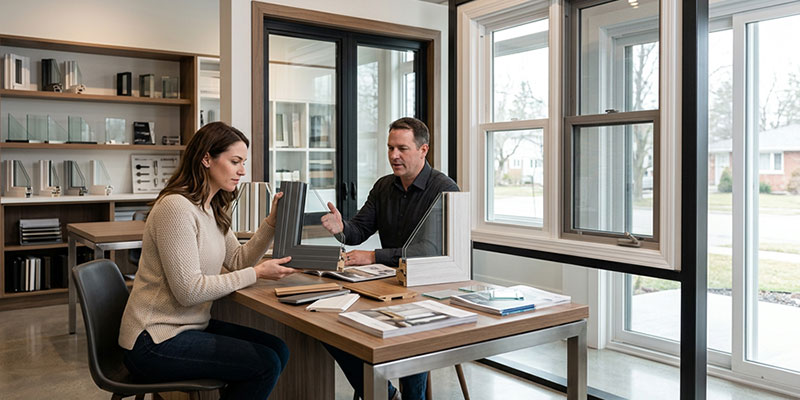
Custom windows require a sequence of steps between the moment you commit to a purchase and the day installation begins. The measurement visit happens first. From those measurements, the factory produces the units to exact specifications. Depending on the manufacturer's current production load, that process takes weeks, not days. Delivery to the installation site follows, and only then does scheduling for the install begin. For a manufacturer producing custom vinyl windows to order, rather than pulling standard sizes from inventory, this timeline must be built into any purchase decision.
Homeowners who initiate the buying process in late fall or early winter often benefit from several things at once. Production schedules at many manufacturers are lighter in the November through January period, which can reduce lead times. Installation crews have more scheduling flexibility. And some companies offer promotional pricing during slower periods to maintain production volume. The windows may not be installed until late winter or early spring, but the process moves more smoothly and predictably when demand is lower.
| Phase | Typical Duration | Notes |
| Measurement Visit | 1 to 3 days from booking | Custom windows require precise on-site measurements |
| Manufacturing | 3 to 6 weeks, depending on season and product complexity | Most replacement windows are custom-made rather than stock sizes |
| Delivery | 1 to 2 weeks | Timing depends on factory location and shipping logistics |
| Installation Scheduling | 1 to 3 weeks, depending on the season | Fall and winter often provide greater scheduling flexibility |
| Total Project Timeline | 6 to 12 weeks is typical | Plan ahead and avoid waiting until replacement becomes urgent |
How far ahead should homeowners plan a window replacement project?
The answer for most custom window projects in Ontario is a minimum of two to three months from first contact to completed installation, and up to four months during peak spring and summer demand. Homeowners who have not replaced windows before frequently underestimate this timeline because they compare it to in-stock retail purchases. Custom windows are not pulled from a shelf; they are manufactured to the specific dimensions and specifications of each opening.

Measurement stage
The project begins with a professional measurement visit. For custom manufacturing, this is not optional and cannot be skipped or approximated from a homeowner's own measurements. The installer or manufacturer representative measures each opening at multiple points, accounts for any variance in the rough opening, and records specifications for frame depth, sill condition, brickmould profile, and operating style. At Window Force, windows are custom-manufactured to order at its Ontario facility and are not produced in standard stock sizes, so the measurement data goes directly into the production specifications.
Manufacturing stage
Once measurements and specifications are confirmed and the order is placed, production begins. Vinyl window manufacturing typically takes three to six weeks, depending on the current production schedule and the complexity of the order. Multi-unit orders, specialty shapes, or specific glazing packages may extend this timeline. The homeowner should receive confirmation when production is complete and delivery is being arranged.
At Window Force, every window is built to order — we do not stock standard sizes. This means the measurement data feeds directly into our production specifications at our Ontario facility, and each unit is manufactured to the exact dimensions of your openings. The trade-off is a manufacturing lead time of several weeks, but the result is a precision fit that eliminates the shimming and on-site modification often required with off-the-shelf products.
How does Canadian weather affect when to replace windows?
Canada’s seasonal climate makes timing more important for window replacement than in many milder regions. Each season creates different installation conditions that affect scheduling, material performance, and overall homeowner comfort during the project.
Spring offers mild temperatures that are ideal for sealant application and frame handling, although rain in April and May can occasionally delay exterior finishing work. Demand also begins rising quickly as homeowners start planning renovation projects after winter. Many homeowners also begin consulting a window manufacturer in British Columbia during this period to prepare for summer installation schedules.
Summer remains one of the busiest periods for installations. Warm temperatures and longer daylight hours allow crews to work efficiently, especially on larger projects. However, high demand can extend manufacturing and installation timelines, particularly for custom-made windows ordered later in the season. Extremely humid days may also slow exterior sealing and finishing work.
Fall is widely considered one of the best seasons for window replacement. Temperatures remain stable enough for proper installation, scheduling is often more manageable than during peak summer demand, and homeowners benefit from improved energy efficiency before winter arrives. In prairie provinces, homeowners often coordinate projects early with a window supplier in Alberta before colder temperatures return.
Winter installation is still completely possible when handled by experienced crews using cold-weather sealants and proper installation procedures. While opening the home during freezing temperatures can cause temporary discomfort, winter often offers the shortest lead times, the greatest scheduling flexibility, and better promotional pricing for urgent replacement projects.
What window features should you choose before installation season arrives?
Confirming window specifications before your installation date saves time, avoids delays, and ensures the product you receive aligns with your home's performance and aesthetic requirements. Many homeowners discover mid-process that they have not considered all the relevant options, which can add weeks to the timeline if specification changes require new production runs.
Glass package
The glass unit is the primary component for the window's thermal and acoustic performance. Most Canadian residential installations today use triple-glazed units for maximum thermal performance, though double-glazed options remain appropriate for some applications. Low-E (low-emissivity) coatings on the glass surface reduce heat transfer by reflecting infrared radiation while allowing visible light to pass through. Argon or krypton gas fills between panes improve insulating value by reducing convective heat transfer across the glass cavity. The spacer material separating the panes also matters: warm-edge spacers with low thermal conductivity reduce condensation at the glass edge in cold weather, the most vulnerable point in a sealed unit.
A 2023 study published in the Buildings journal (MDPI), which tracked over 2,400 insulated glass units across 14 climate zones, found cumulative seal failure rates of 4.9% at 10 years and 9.2% at 25 years under real-world conditions, with substantially higher failure rates in units from lower-quality manufacturers or those that were incorrectly installed. The quality of the spacer system and the precision of the seal were the two strongest predictors of long-term performance.
Frame and sash
Vinyl frames are the dominant choice for residential window replacement across Canada due to their thermal performance, durability in freeze-thaw conditions, and low maintenance requirements. Key variables include the number of internal chambers in the frame profile (more chambers generally improve insulation), the PVC wall thickness, and the corner-welding method. Fusion-welded corners provide a stronger, more airtight joint than mechanically fastened ones. Colour options in vinyl range from standard white and beige to a growing selection of painted finishes and foil wraps that replicate the appearance of wood or metal.
Hardware and operation
Operating style affects both usability and air sealing performance. Casement windows, which hinge at the side and crank outward, provide the best air seal when closed because the closing force compresses the weatherstrip around the entire perimeter. Double-hung windows, in which both sashes slide vertically, are the most common style in Canadian homes and offer easy access for cleaning. Fixed windows provide no ventilation but achieve the tightest seal and best thermal performance. Awning windows, hinged at the top, can remain open during light rain. Hardware finish, handle style, and multi-point locking mechanisms are also specification choices that affect both function and aesthetics.
| Feature | Option A | Option B | Option C | Best for Ontario Climate |
| Glazing | Double glazing (2 panes) | Triple glazing (3 panes) | Triple glazing with krypton gas | Triple glazing is recommended for most Ontario homes |
| Low-E Coating | Standard coating | Soft-coat Low-E | Hard-coat Low-E | Soft-coat Low-E provides the best infrared heat control |
| Gas Fill | Air | Argon | Krypton | Argon offers the best value; krypton delivers higher performance |
| Spacer Type | Aluminum spacer | Warm-edge composite spacer | Structural foam spacer | Warm-edge spacers are strongly recommended |
| Frame Chambers | 2-chamber frame | 3-chamber frame | 5-chamber frame | 3 or more chambers are ideal for Ontario winters |
| Corner Welding | Mechanical fastening | Fusion-welded corners | — | Fusion-welded construction is preferred |
| Operating Style | Fixed window | Casement window | Double-hung window | Casement offers the best seal; double-hung provides ventilation flexibility |
How can homeowners prepare their house before window installers arrive?
Proper preparation before installation day reduces delays, protects your belongings, and allows the crew to work efficiently. Most professional installers will provide a preparation checklist, but the fundamentals remain consistent across companies.
Why does choosing a manufacturer matter when planning window replacement?
The window industry includes several distinct types of businesses, and understanding the differences between them can significantly affect both product quality and long-term accountability after installation.
A window dealer or retailer typically purchases products from a manufacturer and sells them to homeowners or contractors. In this model, the dealer does not control production quality, manufacturing timelines, or the full range of technical specifications beyond what the manufacturer already offers. An independent contractor may source windows from multiple suppliers and coordinate installation through different crews depending on availability. In such arrangements, homeowners may interact with several parties, which can make it more difficult to determine responsibility if issues arise with the product or installation.
In contrast, a manufacturer that also manages installation directly or works through a certified partner network offers a more integrated approach. In this model, the same organization is responsible for producing the window and overseeing its installation. This allows for tighter quality control, more consistent specifications, and a clearer path for warranty support, since claims are handled within the same system that produced the product.
Some manufacturers operate custom production facilities where each window is made to order based on exact project measurements, rather than relying on standard stock sizes modified on-site. This approach reduces the need for adjustments during installation and helps ensure a more precise fit. Many such manufacturers also design their products to meet regional energy-efficiency standards, including ENERGY STAR requirements for different climate zones, and distribute them through vetted or certified trade partners.
The distinction between purchasing from a manufacturer versus a dealer or independent contractor becomes especially important when evaluating warranty coverage. Manufacturer-backed warranties are generally offered by the organization that engineered and produced the product, often resulting in a more direct and structured claims process.
Window Force operates this integrated model. We manufacture every window at our 80,000 sq ft Ontario facility, coordinate installation through our authorized dealer network, and back every unit with a 25-year transferable warranty. Because we control the product from raw material through installation, warranty claims are resolved within a single system — there’s no finger-pointing between a manufacturer, a distributor, and an installer. Our products are CSA certified and engineered to meet or exceed ENERGY STAR® requirements across all Canadian climate zones.
Conclusion: What is the smartest time to replace windows for your home?
Spring and fall remain the most consistently reliable seasons for window replacement in Ontario and across Canada. The combination of moderate temperatures, good sealant conditions, and reasonable scheduling availability makes these periods the natural first choice for any homeowner with the flexibility to plan ahead. Fall, in particular, carries the added advantage of immediately realized energy savings before the heating season, making the timing both technically sound and financially motivating.
Summer is a genuinely strong second option, particularly for homeowners in the Toronto and GTA region who can book early in the season and want their home fully prepared before winter. Winter installation is appropriate for urgent situations and offers the lowest scheduling pressure and the best potential pricing, provided the installer uses cold-weather-rated materials and follows proper sequencing. Whatever season you choose, the most important factor is starting the planning process early enough to allow for measurement, manufacturing, delivery, and installation scheduling, with a timeline of two to four months for most custom window projects.
Ready to start planning? Contact Window Force at 905.761.2030 or request a quote through our website. We’ll coordinate a professional measurement visit, recommend the right glazing and frame configuration for your home, and provide a clear production and installation timeline — regardless of which season you choose to install.

Frequently Asked Questions
How long do windows typically last before they need to be replaced?
Most quality vinyl windows have a functional lifespan of 20 to 30 years under normal Canadian conditions. The sealed glass unit, which determines thermal performance, often shows degradation earlier, with measurable seal failure rates beginning around the 10-year mark, depending on manufacturing quality and installation precision. Frame integrity, hardware functionality, and weatherstrip condition should be assessed every 5 to 7 years.
Do I need to replace all my windows at once, or can I do them one at a time?
Windows can be replaced individually or in stages. There is no technical requirement to replace all windows simultaneously. Many homeowners prioritize the worst-performing units first, typically those showing seal failure, drafts, or frame damage, and complete the remaining windows in subsequent seasons. Each unit is custom-manufactured independently, so a phased approach does not affect product quality.
What does ENERGY STAR certification mean for windows in Canada?
ENERGY STAR certification for windows in Canada is administered by Natural Resources Canada. It sets minimum performance thresholds for U-factor, solar heat gain coefficient, and energy rating based on climate zone. In Ontario, windows must meet Zone C or D thresholds depending on location. Certified windows reduce heating and cooling loads relative to non-certified products and may qualify for rebates under provincial or utility-sponsored programs.
How long does the actual installation take?
For a typical residential project involving six to twelve windows, installation takes one to two days with a professional crew. The timeline depends on the complexity of the installation, the number of openings, trim and finishing requirements, and whether any rough opening repairs are needed.
Is there a significant cost difference between seasons for window replacement?
Pricing varies by company and region, but off-season periods, particularly late fall and winter, are more likely to carry promotional pricing or shorter manufacturing lead times due to lower demand. Spring and summer, the peak demand periods, tend to carry the highest pricing pressure and the longest lead times for custom orders.
What is a warm-edge spacer, and why does it matter in Canadian winters?
A warm-edge spacer is the component that separates the panes in a sealed glass unit. Unlike traditional aluminum spacers, warm-edge versions use materials with low thermal conductivity, which significantly reduces heat transfer at the edge of the glass. This is the coldest point of the window assembly in winter and the location most vulnerable to condensation. Warm-edge spacers reduce edge condensation, improve the measured edge-of-glass temperature, and contribute to a higher overall energy rating for the window unit.
Can I get a quote before committing to a specific installation date?
Yes. A professional window manufacturer or installer will conduct a measurement visit and provide a detailed quote before any commitment is required. The quote includes window type, glass package, frame options, and installation cost. For custom windows, the quote should also include the manufacturing lead time so you can plan your installation date accordingly.
People Also Ask