

Windows are a critical component of a building's thermal and structural envelope, yet they remain one of the most overlooked maintenance priorities among homeowners. Neglected windows not only degrade energy performance but also accelerate structural deterioration, leading to costly repairs. Understanding what maintenance requires, and when, is the foundation of responsible homeownership.
Key Takeaways
- Window maintenance is a structured, ongoing process that includes inspection, cleaning, sealing, and hardware servicing and is not a one-time or reactive task.
- Poorly maintained windows can significantly increase heat loss (up to 25 — 35%) and reduce overall energy efficiency, especially in cold climates.
- Preventive maintenance is far more cost-effective than reactive repairs, helping avoid major structural damage and expensive replacements.
- The most critical maintenance areas include weatherstripping, perimeter caulking, drainage systems, and insulated glass unit (IGU) seals.
- Early warning signs, such as drafts, condensation between panes, and operational difficulty, should be addressed immediately to prevent escalation.
- Consistent maintenance can extend window lifespan by 10 — 20+ years, delivering substantial long-term return on investment.
What Is Window Maintenance and Why Is It Important?
Window maintenance is the systematic practice of inspecting, cleaning, sealing, and servicing windows to preserve their structural integrity, thermal performance, and operational reliability over time. It encompasses everything from routine glass cleaning to weatherstripping replacement, sealant reapplication, and hardware lubrication, performed regularly, not only after problems appear.
The importance of this practice extends well beyond aesthetics. Windows are dynamic components: they expand and contract with temperature, absorb moisture, withstand wind pressure and regular use, and regulate indoor climate. Any failure in the window assembly, whether in the sealant, hardware, glazing, or frame, affects all of these functions simultaneously.
Impact on Energy Efficiency and Home Value
According to Natural Resources Canada's Office of Energy Efficiency, windows, doors, and skylights can account for up to 25 — 35% of a home's total heat loss. This percentage can increase further when windows are poorly maintained due to air leakage and seal degradation. Failed perimeter seals allow air infiltration, while degraded insulated glass units lose their inert gas fill, reducing their thermal resistance.
A study published in Buildings (MDPI) found that when argon gas leaks from a double-pane window unit, thermal performance can drop by up to 10.9%. More importantly, there is a 92% probability that argon levels will fall to a problematic threshold within just two years if the IGU seal is compromised — a process that is invisible to homeowners without professional inspection.
In a climate like Edmonton's, where heating costs are substantial, these losses translate directly to higher utility bills across every winter month.
Engineer Sergey Essipov, with 20 years of experience in window manufacturing, explains:
Most homeowners assume windows fail structurally. In practice, the dominant failure mode is incremental, such as a hairline crack in the caulk, slightly compressed weatherstripping, or a minor gas loss in the IGU. Each of these alone seems inconsequential. Together, over three to five years without maintenance, they reduce a window's effective thermal performance by as much as 30 to 40 percent.

Windows Near Me
How Often Should You Perform Window Maintenance?
Environment and Climate Change Canada's climate normals data show that, for example, in the aforementioned Edmonton, temperatures frequently fluctuate around the 0°C threshold throughout the year. Each freeze — thaw transition imposes mechanical stress on window seals, caulk, and frame materials as they contract and expand. By comparison, Toronto experiences fewer such temperature transitions, and Vancouver significantly fewer. This difference means that window sealant and weatherstripping in Edmonton-area homes degrade at a substantially faster rate than in more temperate climates, and maintenance schedules must be adjusted accordingly.
Building envelope consultants have documented that temperature fluctuations across the 0°C threshold cause moisture trapped in hairline sealant gaps to expand by approximately 9% upon freezing, progressively widening those gaps with each successive freeze-thaw event. A structural analysis published in Duffy Engineering (2025), citing ASHRAE climate data and NOAA records, confirmed that windows in cold-climate regions are particularly vulnerable at glazing pocket transitions and subsill junctions, where sealant failure is most commonly observed as increased air infiltration or early fogging.
Baseline Schedule for Most Canadian Climates
A minimum maintenance program for a temperate Canadian climate includes two comprehensive inspections per year, typically in late spring and early autumn. Spring inspection addresses damage from winter freeze-thaw cycling, ice damming, and wind-driven precipitation. Autumn inspection prepares windows for cold-weather exposure, verifying that all seals, weatherstripping, and glazing compounds are sound before temperatures drop.
For homeowners in northern Alberta, where winter temperatures routinely reach -30°C or below, autumn preparation warrants particular attention. Window installation in these climates imposes thermal stresses far more severe than those encountered in southern Ontario or coastal British Columbia, leading to faster seal degradation and frame movement.
Seasonal Checklist
Spring (April — May):
- Inspect perimeter caulk for cracking or separation
- Check weatherstripping for compression set and tears
- Test all operable hardware (locks, hinges, balances)
- Clean tracks and lubricate moving components
- Examine glazing seals for signs of seal failure (fogging)
Autumn (September — October):
- Reapply or repair caulk where degradation is found
- Replace weatherstripping if the compression depth has reduced by more than 30%
- Verify that all drainage paths in the frame system are clear
- Inspect for any water infiltration at frame-to-wall junctions
- Confirm that IGU is structurally intact before freezing conditions arrive
Ongoing (Monthly):
- Clear debris from sill drainage slots
- Check that no moisture is accumulating at interior sill junctions
Preventive vs Reactive Maintenance
Preventive maintenance operates on a fixed schedule regardless of visible defects. Reactive maintenance addresses problems after they appear. In window systems, the cost differential between these approaches is substantial: a $15 tube of caulk applied during a scheduled autumn inspection replaces what would otherwise become a $400—$800 frame repair if water infiltration is allowed to continue unchecked through winter.
What Are the Most Common Window Maintenance Tasks Homeowners Should Know?
Effective window maintenance involves a defined set of recurring tasks. Each addresses a different component of the window assembly, and together they constitute a complete maintenance programme.
Cleaning Glass and Frames
Glass should be cleaned at a minimum twice per year using a mild, non-abrasive solution. Accumulated grime, mineral deposits from hard water, and airborne particulates reduce light transmission and, over time, can etch into low-emissivity coatings on energy-efficient windows, reducing their solar heat gain and visible light transmittance ratings.
Frame cleaning protocols differ by material. Vinyl frames require only mild soap and water; avoid petroleum-based solvents, which degrade the PVC compound. Aluminum frames tolerate mild detergent applied with a soft-bristled brush, followed by thorough rinsing. Wooden frames require the most attention: they should be cleaned, inspected for paint integrity, and refinished as needed to prevent moisture absorption and subsequent rot.
| Frame Material | Recommended Cleaner | What to Avoid | Refinishing Needed |
| Vinyl (uPVC) | Mild dish soap + water | Petroleum solvents, abrasives | No |
| Aluminum | Mild detergent + soft brush | Abrasive pads, strong alkalis | Periodic repainting only |
| Wood | Soap + water; inspect paint | Excess moisture, pressure washers | Yes — every 3 — 5 years |
| Fibreglass | Mild soap + water | Harsh chemical cleaners | Rare |
Inspecting and Replacing Weatherstripping
Weatherstripping is the compressible seal between the operable window sash and the fixed frame. It prevents air infiltration and water penetration when the window is closed. Most weatherstripping is manufactured from EPDM rubber, silicone, or thermoplastic elastomers, each rated for a specified compression cycle life.
To assess the condition of the weatherstripping, close the window on a sheet of paper and attempt to slide it out. If it pulls free without resistance, the weatherstripping has lost sufficient compression and should be replaced. Visible tearing, surface cracking, or significant flattening are also indicators of end-of-service life.
Sealing Perimeter Gaps with Caulk
The perimeter joint between the window frame and the surrounding wall assembly requires an elastomeric caulk that can accommodate thermal movement. Rigid sealants crack under the seasonal expansion and contraction that windows undergo. A high-quality paintable latex or silicone caulk applied along the interior and exterior frame perimeters maintains the air- and vapour-barrier continuity that the wall assembly depends on.
Before applying new caulk, remove all existing material using a caulk removal tool and clean the substrate thoroughly. Applying new caulk over degraded existing material is among the most common and consequential DIY maintenance errors, as it provides only temporary adhesion and fails prematurely.
Lubricating Hardware and Tracks
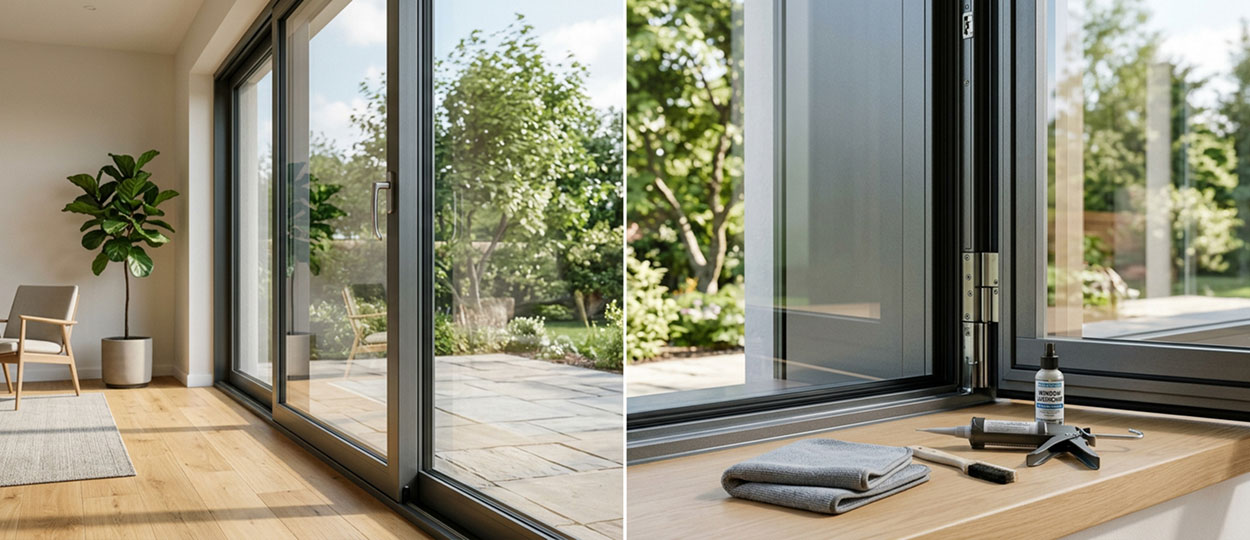
Sliding and tilt-turn windows operate on tracks and hardware that require periodic lubrication to function properly and prevent frame wear at contact surfaces. Use a dry silicone lubricant or a non-detergent oil on metal hardware. Avoid petroleum-based products on vinyl tracks, which can cause surface degradation. Apply lubricant sparingly, wipe off any excess with a clean cloth, and cycle the window through its full range of motion to distribute the lubricant evenly.
What Signs Indicate Your Windows Need Maintenance or Repair?
Identifying deterioration early is far less costly than allowing problems to advance. Several distinct indicators signal that maintenance or professional assessment is warranted.
Condensation Between Panes
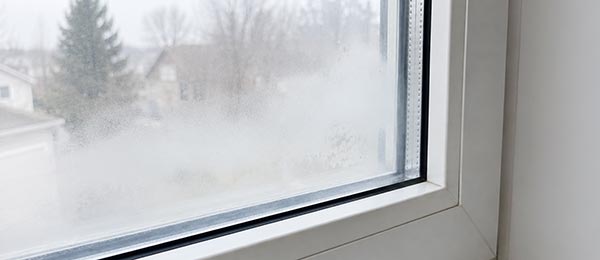
Fogging or moisture accumulation between the panes of an insulated glass unit (IGU) is the most definitive indicator of seal failure. Once the perimeter seal of an IGU is compromised, the desiccant material within the spacer bar becomes saturated and can no longer absorb the moisture that infiltrates through the failed seal. At this stage, the unit's insulating performance is permanently degraded, and glass replacement is required. No surface cleaning or maintenance procedure resolves this condition; only IGU replacement restores performance.
Engineer Sergey Essipov, with 20 years of experience in window manufacturing, notes:
When a homeowner notices fogging between the panes, the seal has already been failing for some time. What they see is the end stage, when the desiccant is exhausted. The actual seal failure may have begun six to eighteen months earlier, during which the window's U-value was quietly rising. This is precisely why annual inspection matters: we can identify early signs of edge seal stress before the unit reaches visible failure.

Drafts and Air Infiltration
A detectable draft near a closed window indicates either failed weatherstripping, compromised perimeter caulk, or, in severe cases, frame distortion that prevents the sash from seating correctly against the frame. Drafts are best identified on cold, still days by holding a lighted incense stick near the frame perimeter; deflection of smoke indicates air movement. Alternatively, thermographic inspection during winter months can locate infiltration zones with high precision.
Difficulty Operating Hardware
Windows that require excessive force to open or close, or that no longer lock securely, typically signal hardware wear, frame movement, or track obstruction. In some cases, seasonal swelling of wood framing is the cause; in others, hardware is worn beyond its service life. Neither condition should be ignored, as compromised hardware affects both security and the window's ability to form a continuous seal.
Visible Water Staining or Rot
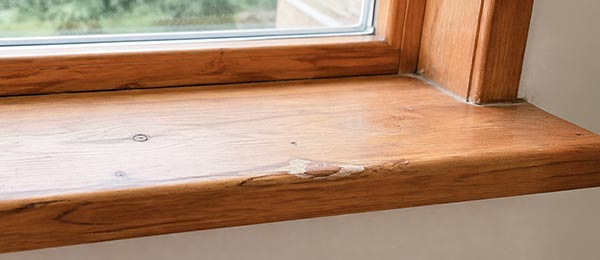
Water staining on interior surfaces adjacent to windows, or soft material detected when probing wooden frames with a firm instrument, indicates active or historic water infiltration. This requires immediate investigation to determine the infiltration path before remediation, as continued moisture ingress causes structural damage to the wall assembly beyond the window itself.
Should You Maintain Windows Yourself or Hire Professionals?
The appropriate approach depends on the nature of the task, the condition of the windows, and the homeowner's level of technical confidence. Not all window maintenance is equivalent in complexity or risk.
DIY vs Professional Maintenance: Comparison
| Task | DIY Appropriate? | Professional Recommended? | Notes |
| Glass cleaning | Yes | No | Standard skill level required |
| Caulk removal and reapplication | Yes (with preparation) | For complex assemblies | Correct substrate prep is critical |
| Weatherstripping replacement | Yes | If the frame is damaged | Straightforward on most product types |
| Hardware lubrication | Yes | No | Follow the manufacturer's lubricant specifications |
| Track cleaning | Yes | No | Simple with the correct tools |
| IGU replacement | No | Yes | Requires glazing tools and technical skill |
| Frame repair (rot, structural) | No | Yes | Risk of wall assembly damage if done incorrectly |
| Full window replacement | No | Yes | Requires building science knowledge and correct installation methods |
| Annual inspection | Optional DIY | Recommended professional every 2 — 3 years | Professionals identify issues that untrained eyes miss |
The fundamental principle is this: cleaning, lubrication, and surface sealing are within the competence of most attentive homeowners. Any task that involves the glazing unit, structural frame components, or the interface between the window and the wall assembly should be handled by a qualified installer.
Working with a reputable windows company and its associated service programme is the most reliable way to ensure that the full spectrum of maintenance needs, including those beyond DIY scope, are addressed correctly and under warranty.
How Does Seasonal Weather Affect Window Maintenance Needs?
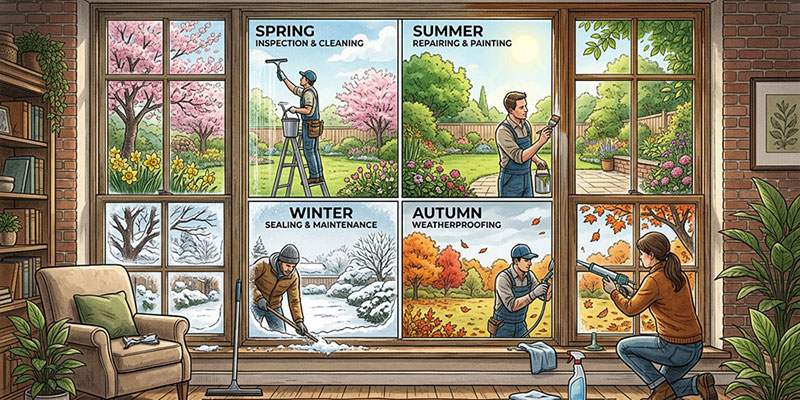
The Canadian climate subjects windows to some of the most demanding seasonal variations of any residential market in the world. Understanding the specific stresses each season imposes allows maintenance to be timed and targeted effectively.
Winter: Thermal Stress and Condensation Risk
At extremely cold temperatures, window frames contract; the gas fill within IGUs becomes denser and may exhibit minor pressure differentials; and any moisture present within the frame assembly is subject to freeze-thaw cycling. This cycling is the primary driver of caulk cracking: as water trapped in a hairline seal gap freezes, it expands, widening the gap, then contracts again upon thawing, progressively enlarging the defect.
Interior condensation on the glass surface during winter is normal when the indoor relative humidity exceeds the dew point at the glass surface temperature. It does not indicate a window defect. However, sustained condensation that pools and migrates to the frame or sill can cause long-term water damage and should be addressed by reducing indoor humidity rather than through window repair.
Spring: Freeze-Thaw Damage Assessment
Spring is the optimal time to assess the cumulative damage of winter exposure. Inspect all exterior caulk joints for separation, check weatherstripping for any permanent compression set from prolonged compression under frozen conditions, and clear any debris that has accumulated in sill drainage slots over the winter. Any frame components that show signs of movement or misalignment should be assessed before the next freeze season.
Summer: Thermal Expansion and UV Degradation
High summer temperatures cause all frame materials to expand, which can place stress on fixed sealants and glazing compounds. UV exposure, particularly on south- and west-facing windows, degrades exposed rubber seals and uncovered caulk compounds at a measurably faster rate than on shaded elevations. Sealant inspection and replacement are therefore more frequently needed on sun-exposed elevations.
Autumn: Winterization
Autumn preparation is the single most consequential seasonal maintenance activity. All identified deficiencies, including failed caulk, worn weatherstripping, and hardware issues, should be rectified before temperatures fall. Window installation services that include weatherization inspection offer a structured alternative to DIY autumn preparation, particularly for homeowners with large or complex window inventories.
What Mistakes Should You Avoid During Window Maintenance?
Avoidable errors during maintenance can negate the benefits of the work performed and, in some cases, cause damage more severe than the original defect.
Applying New Caulk Over Old
This is the single most prevalent DIY error. Existing caulk must be fully removed, mechanically using a caulk removal tool, and the substrate must be clean, dry, and free of residue before new material is applied. Caulk applied over degraded existing material adheres to the surface coating of the old caulk rather than to the substrate. The resulting joint has a fraction of the adhesion strength and service life of a correctly prepared application.
Using Incorrect Cleaning Products on Frame Materials
Vinyl frames are sensitive to petroleum-based solvents and strong alkalis, both of which cause surface crazing and long-term embrittlement. Aluminum frames are susceptible to strongly alkaline cleaners that attack the anodized or painted surface finish. Always verify that any cleaning product is compatible with the specific frame material before application, and test on an inconspicuous area.
Ignoring Drainage Slots
Virtually all window systems incorporate drainage slots or weep holes in the sill area to allow water that enters the system cavity to drain safely to the exterior. When these become blocked by debris, paint, or insect nesting material, water accumulates in the frame cavity and migrates into the wall assembly. Clearing drainage paths requires only a probe or compressed air and takes under two minutes per window; it should be part of every maintenance inspection.
Lubricating Vinyl Tracks with Oil-Based Products
Oil-based lubricants attract and retain fine particulate matter, progressively building up a gummy residue in tracks that worsens operational friction over time. Dry silicone spray is the correct choice for vinyl track systems. For metal hardware components, a non-detergent oil applied sparingly is appropriate.
Overlooking Frame-to-Wall Junction Movement
The junction between the window frame and the rough opening in the wall framing is the most structurally complex and thermally vulnerable point in the window assembly. In older buildings, this junction is frequently the first to show caulk failure and the site most likely to cause damage to concealed wood framing from water infiltration. It requires careful inspection and should not be overlooked in favour of the more visible frame-to-glass perimeter.
How Can Proper Maintenance Extend the Lifespan of Your Windows?
Windows do not have a fixed, immutable service life. The actual lifespan of any window installation is substantially a function of how it is maintained.
Published Lifespan Benchmarks
Lifespan estimates for window systems vary by frame material, glazing type, and exposure conditions. The following ranges reflect industry consensus and published guidance from window manufacturer warranty documentation:
| Window Type | Unmaintained Lifespan | Maintained Lifespan | Primary Failure Mode |
| Standard vinyl (uPVC) double-glazed | 15 — 20 years | 25 — 35 years | IGU seal failure |
| Premium vinyl (multi-chamber) | 20 — 25 years | 30 — 40 years | Hardware wear |
| Aluminum double-glazed | 20 — 30 years | 30 — 45 years | Thermal bridge condensation |
| Wood-clad fibreglass | 25 — 30 years | 40+ years | Finish degradation if unmaintained |
| Standard aluminum single-glazed | 15 — 25 years | 20 — 30 years | Frame corrosion at fasteners |
One of the key factors affecting window lifespan is the integrity of the insulated glass unit (IGU) seal. A sound perimeter seal on an insulated glass unit, protected from UV degradation and maintained with the correct caulk, can extend the useful life of the glazing unit well beyond baseline expectations.
The ROI of Maintenance Spending
A comprehensive annual window maintenance programme, covering caulk inspection and repair, weatherstripping assessment, hardware lubrication, and glass cleaning, typically costs a homeowner between $150 and $400 per year in materials and, where professional inspection is engaged, labour. Against the cost of premature window replacement, which in a Canadian mid-market home ranges from $400 to $1,200 per window installed (depending on size and specifications), even a modest extension of lifespan yields a return that substantially exceeds the maintenance investment.
A home with 15 windows that achieves a 10-year lifespan extension through consistent maintenance can avoid replacement costs ranging from $60,000 to $180,000 in current dollars, depending on window type, size, and installation complexity.
Working with an experienced window manufacturer that provides technical maintenance guidance and whose products are designed to be serviceable over their full intended lifespan gives homeowners the best foundation for achieving these outcomes. The design decisions made at the manufacturing level, including seal geometry, spacer bar specification, and hardware quality, determine the ceiling of what maintenance can achieve.
Conclusion: The Critical Role of Consistent Window Maintenance in Long-Term Performance
Window maintenance directly determines whether a window system meets its expected performance and lifespan in real-world conditions. Windows manufactured to high standards will underperform and fail prematurely without it; windows of reasonable quality will substantially outperform expectations when properly maintained.
The practices outlined here, including seasonal inspection, systematic seal management, hardware servicing, and timely repair, are not technically demanding. What they require is consistency and the discipline to act on findings before they compound. For tasks that exceed DIY scope, particularly IGU replacement or structural frame repair, engaging qualified window installation services is the correct and most cost-effective approach.

Frequently Asked Questions
How do I know if my window seal has failed?
The clearest indicator is condensation or fogging between the panes of glass, not on the glass surface but inside the unit. This is permanent and cannot be corrected by cleaning. The insulated glass unit must be replaced.
Can I recaulk my windows myself?
Yes, for straightforward perimeter joints. The critical requirement is the complete removal of all existing caulk before applying new material. Correct substrate preparation is what determines whether the new caulk achieves its rated service life.
How long should windows last?
Vinyl double-glazed windows installed and maintained correctly typically last 25 — 35 years. If left unmaintained, the same products often show significant degradation within 15 — 20 years. Frame material, climate exposure, and glazing quality are all variables.
What is the best way to identify drafts around windows?
On a cold, still day, move a lighted incense stick slowly along the frame perimeter with the window closed. Deflection of smoke indicates air movement through a gap. Alternatively, thermal imaging performed by a home energy auditor provides precise mapping of infiltration zones.
How often should I replace weatherstripping?
Weatherstripping service life depends on the material type and use frequency. EPDM rubber weatherstripping in a moderate climate typically lasts 5 — 10 years. In severe climates, particularly those with extreme cold, assess it annually and plan to replace it every 5 — 7 years.
Is condensation on the interior glass surface a sign of window failure?
Not necessarily. Condensation on the glass surface occurs when indoor relative humidity exceeds the dew point at the glass temperature. It indicates that indoor humidity is high relative to the window's thermal performance. Improving indoor air circulation, using a ventilation system, or reducing sources of humidity is typically the correct response. Condensation between the panes, however, does indicate IGU seal failure.
When should I involve a professional window company instead of handling the maintenance myself?
Involve professionals when you identify IGU fogging, structural frame damage, active water infiltration into the wall assembly, hardware that cannot be corrected through lubrication, or when the scope of work exceeds standard sealant and cleaning tasks. A qualified window manufacturer or installer can assess whether replacing individual components or the entire window is the more appropriate path.
People Also Ask