

When homeowners and builders evaluate window frames, the material specification determines not just how the window looks but how it performs over a 25-year service life in a climate that subjects every building component to repeated freeze-thaw cycles, UV exposure, and humidity variation. uPVC has become the dominant residential window frame material in Canada precisely because its physical properties address each of these conditions without requiring the ongoing maintenance that wood or aluminum alternatives demand. Understanding what uPVC is, how it differs from standard PVC, and what it can and cannot do in a window assembly provides the foundation for making an informed purchasing or specification decision.
This guide is informed by Window Force's experience as a Canadian vinyl window manufacturer. Since 2007, Window Force has produced custom-to-order uPVC windows at an 80,000 sq ft production facility in Canada for builders, dealers, contractors, and homeowners across Canada. All Window Force frames are manufactured from lead-free uPVC compound — a specification that matters for indoor air quality, end-of-life recycling, and long-term compound stability, and one that this guide explains in full. The material properties, performance claims, and specification guidance described here reflect what Window Force engineers and manufactures at the production level, not general industry estimates.
Key Takeaways
- uPVC (unplasticized polyvinyl chloride) is a rigid, additive-free form of PVC that does not soften under sustained load or temperature, making it structurally suitable for window frames, sashes, and multi-chamber profiles.
- The absence of plasticizers distinguishes uPVC from flexible PVC: standard PVC contains chemical additives that reduce rigidity for piping and cabling applications, while uPVC relies on its molecular structure for strength.
- Multi-chamber uPVC profiles improve thermal resistance by trapping insulating air within the frame cross-section, which contributes to the window’s overall energy performance alongside the glass package.
- In Canada, uPVC-framed windows are commonly sold and marketed as vinyl windows — the terms refer to the same frame material in the residential construction context.
- Frame material is one variable in window energy performance; glass specification, spacer type, Low-E coating, gas fill, and installation quality all contribute equally to the finished product’s thermal and comfort outcomes.
What Is uPVC and Why Is It Used in Modern Window Frames?
uPVC stands for unplasticized polyvinyl chloride. It is a rigid, chemically stabilized form of polyvinyl chloride that does not contain the plasticizer additives used to make standard flexible PVC. In practical terms, this means uPVC retains its dimensional stability under load, temperature changes, and long-term UV exposure without deforming, softening, or becoming brittle, as plasticized PVC can over time.
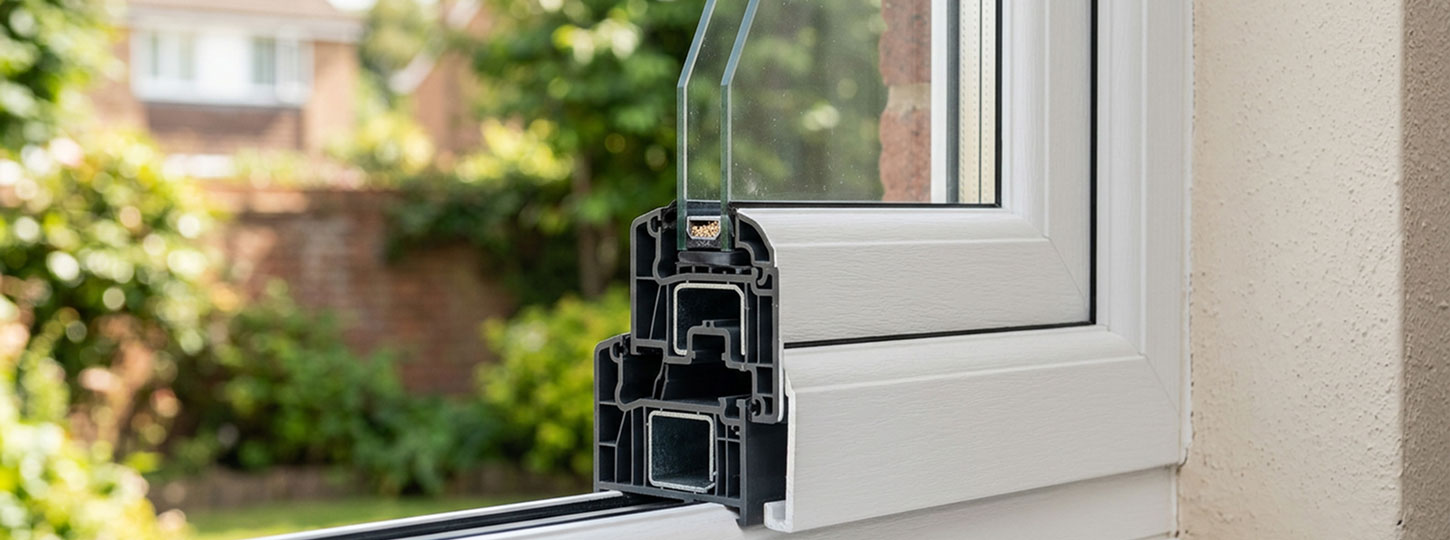
Window frames, sashes, and multi-chamber profiles made from uPVC are engineered to specific wall thicknesses and internal geometries that distribute structural loads across the profile cross-section. The material’s inherent rigidity means it can hold a glazing unit in place without deflecting under its weight, while its low thermal conductivity, approximately 0.17 W/(m·K), reduces the rate at which heat transfers through the frame material itself. This combination of structural rigidity and thermal resistance is the primary reason uPVC became the standard frame material in residential window manufacturing across Canada and most of Northern Europe.
What Does uPVC Stand For?
The abbreviation breaks down directly: U is for unplasticized, P for polyvinyl, and C for chloride. The “unplasticized” qualifier is the critical distinction — it indicates a material that has not been modified with liquid or solid plasticizers to increase flexibility. Manufacturers sometimes use the alternative spelling PVC-U or PVC-u, which means the same thing. In North American residential window markets, the equivalent consumer term is simply vinyl, referring to the same base material specification.
Why Rigidity Matters in Windows
A window frame that deflects under load, whether from the weight of the glass unit, wind pressure, or temperature-induced expansion, will eventually allow air and water infiltration at the joints and sealant lines. uPVC’s rigidity under normal service conditions means that a correctly extruded and fabricated frame holds its geometry across decades of thermal cycling. Multi-chamber profiles, in which the internal cross-section is divided into several sealed air-filled compartments, use this rigidity constructively: each chamber reduces the cross-sectional conductance of the frame while maintaining the structural load path through the outer walls of the profile.
Windows Near Me
What Are uPVC Windows? A Plain-Language Explanation for Homeowners
Users frequently search for “what are uPVC windows” — a grammatically informal phrase that reflects genuine curiosity about the material. The correct phrasing is “what are uPVC windows”, but the underlying question is straightforward: uPVC windows are windows whose frames, sashes, and structural members are made from unplasticized polyvinyl chloride rather than wood, aluminum, or fibreglass.
For homeowners, the practical meaning is this: uPVC windows do not require painting or staining, do not rot or corrode when exposed to moisture, and do not require seasonal sealing or treatment. The frame material is formed into precise shapes through an extrusion process, producing consistent wall thicknesses and internal chamber geometries across all units manufactured on the same tooling. When corners are welded at assembly rather than mechanically fastened, the resulting frame is a single continuous unit with no fastener points that could loosen or corrode over time.
In Canadian residential construction, uPVC windows are sold under the common trade term vinyl windows. Both terms describe the same material, and the energy performance, warranty terms, and maintenance requirements associated with one apply equally to the other. The distinction between uPVC and vinyl is primarily terminological: European markets tend to use uPVC or PVC-U, while North American markets use vinyl as the consumer-facing label.
What is the Difference Between uPVC and PVC?
The difference between uPVC and PVC comes down to a single class of chemical additives: plasticizers. Standard PVC is manufactured with a range of plasticizers — typically phthalates or adipates — incorporated into the polymer matrix to increase flexibility and workability. This produces a material that can be bent, shaped, and formed into flexible products such as electrical cable insulation, garden hose, and vinyl flooring. The trade-off is reduced hardness and dimensional stability under sustained load or elevated temperature.
uPVC removes the plasticizer entirely. Without these additives, the polymer retains its full molecular rigidity, producing a material that is harder, stiffer, and more dimensionally stable than plasticized PVC. The consequence of this rigidity is that uPVC cannot be cold-formed or bent as flexible PVC can; it must be shaped by extrusion at elevated temperatures or joined by heat-welding. These are precisely the manufacturing processes used in window frame production.
| Property | Standard PVC (Plasticized) | uPVC (Unplasticized) |
| Plasticizer content | 5 — 40% by weight | None |
| Flexibility | High — can be bent cold | Low — rigid, must be heat-formed |
| Hardness (Shore D) | Approx. 50 — 80 | Approx. 80 — 85 |
| Thermal conductivity | Higher (plasticizers increase conductance) | Approx. 0.17 W/(m·K) |
| Dimensional stability under load | Moderate — creep under sustained stress | High — holds shape over service life |
| UV resistance without additives | Poor — yellows and becomes brittle | Better, improved with UV stabilizers |
| Typical applications | Cable insulation, garden hose, and flooring | Window frames, door profiles, pipes |
| Window suitability | Not suitable — will deflect under glass weight | Suitable — holds glazing unit geometry |
One practical implication of this distinction is visible in how the two materials age. Flexible PVC products containing plasticizers can leach these additives over time through a process called plasticizer migration, which causes the material to harden, crack, and discolour. Because uPVC contains no plasticizers to lose, this degradation pathway does not apply. A uPVC window frame from a manufacturer that uses UV-stabilized compounds will maintain its structural and aesthetic properties considerably longer than products formulated without adequate UV protection.
What Is Lead-Free uPVC and Why Does It Matter?
The term "unplasticized" describes what uPVC does not contain, but it says nothing about the stabilizer additives that all PVC compounds do require during extrusion. Heat stabilizers prevent the polymer from degrading at the high temperatures used in the extrusion process. For decades, the most common stabilizer system in the window profile industry was lead-based: lead compounds are highly effective thermal stabilizers and were inexpensive at scale, making them the default choice for PVC manufacturers until health and regulatory pressures drove a transition away from the material.
Lead-stabilized uPVC frames are not inherently dangerous under normal residential use conditions — the lead is bound within the polymer matrix and does not off-gas or leach under ordinary circumstances. However, concerns arise at two points in the product lifecycle: during renovation or demolition, when cut or abraded frames can release lead-containing dust; and at the end of life, when lead-stabilized PVC complicates recycling and creates disposal issues. These concerns, combined with increasing regulatory pressure in the European Union and Canada, have driven the industry toward lead-free stabilizer systems.
The modern alternative is the calcium-zinc (Ca/Zn) stabilizer system, which provides equivalent processing performance to lead-based stabilizers without the associated health and disposal complications. A uPVC window frame produced with a calcium-zinc stabilizer system is classified as lead-free and meets current Canadian and international guidelines for building materials used in occupied residential spaces. When a manufacturer specifies "lead-free uPVC," this is the distinction they are making: the compound was formulated and extruded using a Ca/Zn or equivalent non-lead stabilizer system rather than a legacy lead-based one.
For buyers evaluating windows in Canada, lead-free uPVC is a key specification to confirm before purchasing. The finished frames look identical regardless of which stabilizer system was used, so the only way to verify compliance is through the manufacturer's compound documentation or a product certification that covers the stabilizer specification. Window Force manufactures all its uPVC profiles using a calcium-zinc stabilizer system, which means every unit — from standard replacement windows to custom architectural configurations — is lead-free by design, not as an upgrade option. This is why asking specifically whether a product uses lead-free compound, rather than simply whether it is "uPVC," is a more precise quality question than frame colour, profile width, or even warranty length alone.
Why Does uPVC Matter for Energy-Efficient Windows in Canada?
Frame material is one component in a window’s total energy performance, but it is not the only one. The complete thermal performance of a window unit is determined by the interaction of the frame material and geometry, the glass specification (double or triple pane, Low-E coatings, gas fill type), the spacer system at the glass edge, the air tightness of the weatherstripping, and the quality of the installation seal at the rough opening. uPVC contributes to this system primarily through its low thermal conductivity and the insulating air chambers within the profile, but a uPVC frame paired with a single-pane glass unit will not outperform an aluminum frame with a well-specified triple-pane unit.
A 2023 life cycle assessment published in Scientific Reports (Nature Publishing Group) evaluated the environmental and energy impacts of window production and in-service use across different frame materials in residential buildings. The study found that the dominant factor in a window’s lifetime energy impact is not the frame material itself but the thermal transmittance of the complete window unit — the lower the U-value, the greater the operational energy saving over the building’s service life, regardless of whether the frame is uPVC, aluminum, or timber. This finding reinforces a key practical point: selecting uPVC for its durability and low maintenance is sound reasoning, but it is the glass package and installation quality that determine whether the window delivers its rated energy performance in the field.
Natural Resources Canada certifies windows through the ENERGY STAR Canada program, which evaluates the complete window assembly, not just the frame material. A uPVC-framed window must meet the same U-factor and Energy Rating thresholds as any other certified product — a minimum ER of 34 or a maximum U-factor of 1.40 W/(m²·K) under the current national standard. Certification applies to the specific product model, meaning a manufacturer’s uPVC frame alone does not confer ENERGY STAR status without the qualifying glass package and assembly configuration.
Window Force manufactures its uPVC profiles from lead-free virgin polyvinyl chloride compounded with UV stabilizers that prevent the colour shift and surface degradation that accelerates in uPVC without this protection under Canadian sunlight and seasonal temperature extremes. The multi-chamber profile geometry used across the Window Force product line distributes insulating air cavities within the frame cross-section, reducing conductive heat transfer without increasing the visible frame width. These profiles are CSA certified and paired with ENERGY STAR®-qualified glass packages across all Canadian climate zones, ensuring that the complete window unit — not just the frame material — meets the rated thermal performance standard.
«At our facility, we extrude uPVC profiles from lead-free virgin compound, not from recycled blends where plasticizer content and UV stabilizer concentration are inconsistent. The distinction matters because a uPVC window frame that lacks adequate UV stabilization will begin yellowing within five to seven years of south-facing exposure in a Canadian climate — and once that surface degradation starts, it cannot be reversed by cleaning or maintenance. Specifying virgin compound with a confirmed UV stabilizer package is a manufacturing decision that determines the 25-year appearance of every unit we produce»,
engineer Sergey Essipov, with 20 years of experience in window manufacturing, notes.
How Does a uPVC Window Frame Support Durability and Low Maintenance?
The durability and maintenance profile of uPVC frames is directly tied to the material’s physical properties. Unlike wood, uPVC does not absorb moisture, which means it does not swell, warp, or rot when exposed to rain, condensation, or repeated wetting and drying cycles. Unlike aluminum, uPVC does not corrode or oxidize when in contact with water, and its lower thermal conductivity means it does not create the cold surface that promotes condensation on the interior face of the frame, as aluminum-framed windows do in cold Canadian winters.
Maintenance Tasks for uPVC Windows
Routine maintenance for uPVC frames is limited to periodic cleaning of the frame surface, inspection and lubrication of hardware components, and checking weatherstripping for compression loss or deterioration. The frame itself requires no painting, staining, or sealing across its service life. Cleaning is accomplished with mild soapy water and a soft cloth; abrasive cleaners and solvent-based products should be avoided because they can damage the surface finish or degrade the gasket materials.
Hardware maintenance, specifically lubricating hinges, locking mechanisms, and sash pivots, is more consequential for long-term performance than frame cleaning. Hardware that seizes or wears unevenly places stress on the sash corners and can gradually distort the frame geometry at the hinge attachment points. Periodic lubrication with a silicone-based product, applied every two to three years in normal residential use, maintains the operating forces within the range the frame and corner welds were designed to handle.
Durability Factors in Canadian Conditions
The durability of a uPVC window in Canadian conditions depends on two manufacturing variables that are not directly visible at the point of purchase: the quality of the UV stabilizer package in the compound and the precision of the corner weld. UV stabilizers are compounded into virgin uPVC at the extrusion stage; their absence is not apparent until the frame begins to yellow or become brittle after 5 to 10 years of sun exposure. Corner welds, in which the profiles are fusion-welded rather than mechanically fastened, produce a joint that is as strong as the surrounding profiles; mechanical fastener joints can loosen during repeated thermal cycling, creating air and water infiltration pathways at the corner.
The weep-hole and drainage-channel system in a uPVC sill is a detail that distinguishes well-engineered profiles from commodity extrusions. When the sill’s drainage channels are undersized or positioned incorrectly, water that enters the frame cavity during driving rain cannot exit efficiently and instead accumulates against the base of the glazing unit. Over multiple seasons, this standing water accelerates seal deterioration at the sill contact point, the most common location of first failure in residential IGUs. Window Force profiles incorporate drainage geometry validated against precipitation load patterns across Canadian markets, from the coastal rainfall exposure of British Columbia to the freeze-thaw cycle intensity of Prairie winters, ensuring that water exits the frame before it can contribute to seal or frame degradation.
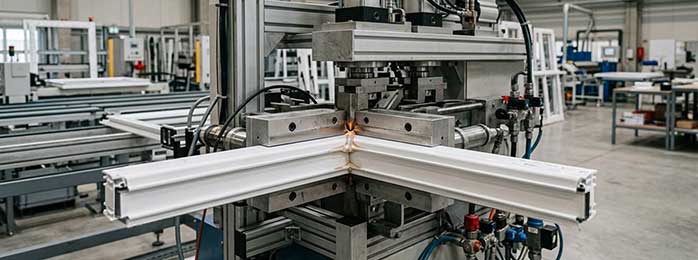
Window Force specifies fusion-welded corners across its full uPVC product line rather than mechanically fastened connections. In a fusion weld, the PVC profile ends are heated to their softening temperature and pressed together under controlled force, creating a molecular bond across the joint face. The resulting corner has no fastener penetrations, no sealant points that can deteriorate, and no differential thermal movement between joined members. Backed by Window Force’s 25-year transferable warranty on vinyl frames, this construction method reflects a manufacturing choice that prioritizes long-term structural integrity over production speed.
What is the Cost of uPVC Windows and What Factors Affect the Final Price?
The installed cost of uPVC windows in Canada varies significantly based on a combination of product and project variables. Providing a single benchmark figure without specifying these variables would be unhelpful; instead, understanding the cost drivers allows buyers to compare quotations consistently and identify where premium options create measurable value and where they do not.
Product Factors That Affect Price
The window style and operating mechanism are the primary drivers of product cost. Fixed or picture units are typically the least expensive per opening because they contain no moving parts, hardware, or weatherstripping. Casement and awning windows are more expensive because of the hardware, hinges, and locking systems they require. Bay and bow configurations incur the highest per-opening cost because they require structural assembly to extend the unit beyond the wall plane.
Glass package selection is the second major cost variable. Double-pane units with standard Low-E argon fill represent the baseline. Triple-pane units with krypton fill, acoustic-laminated glass, or specialty coatings each add to the cost. Frame colour is another variable: standard white is typically the most cost-effective option, while woodgrain foils, solid colours, or dual-colour configurations (different exterior and interior finishes) require additional processing at the extrusion or foiling stage.
Installation and Project Factors
Installation cost depends on the method selected, the number of windows, the floor level, and the condition of the existing openings. A single insert replacement at ground level in a structurally sound existing frame is the least labour-intensive scenario. Full-frame replacement, work above the ground floor, openings requiring structural modification, or projects in older homes with non-standard opening dimensions each add labour time and therefore cost.
Labour rates for window installation vary across Canadian provinces, and Statistics Canada’s Building Construction Price Index has tracked a cumulative increase of over 30% between 2014 and 2023. Obtaining itemized quotations that separate product and labour costs enables meaningful comparison between suppliers with differing pricing structures.
Quote Variables to Confirm Before Ordering
- Whether the price includes ENERGY STAR®-certified glass packages or requires an upgrade
- Whether installation is performed by the manufacturer’s authorized dealer network or a subcontracted crew
- What the warranty covers, and whether it is transferable to a subsequent owner
- Lead time from order to delivery for custom-sized units
- Whether a site measure is included or whether measurements are the buyer’s responsibility
Are uPVC Windows the Same as Vinyl Windows?
In the Canadian residential window market, the terms uPVC windows and vinyl windows describe the same product category. Vinyl is the consumer-facing trade term used consistently across North American markets, while uPVC is the technical and international designation for the same base material: unplasticized polyvinyl chloride. When a Canadian window manufacturer describes its product as a vinyl window, the frame is made from uPVC-grade PVC compound unless the product specification explicitly states otherwise.
The terminological difference has a geographic origin. In the United Kingdom and Europe, uPVC or PVC-U became the standard technical designation because those markets needed to distinguish window-grade rigid profiles from the flexible PVC used in plumbing and electrical applications. North American markets adopted vinyl as the consumer label partly because it avoided the chemical-sounding acronym and partly because the major early vinyl window manufacturers in the United States and Canada marketed the material under that name. Both terms refer to the same material specification.
Window Force manufactures and supplies vinyl (uPVC) windows as a custom-to-order Canadian manufacturer, producing units at its 80,000 sq ft Canadian manufacturing facility for builders, dealers, and homeowners from coast to coast. Every product in the Window Force line is ENERGY STAR® certified across all Canadian climate zones, meaning the frame-and-glass package combination has been independently tested and confirmed to meet national thermal performance thresholds. Orders are placed through Window Force’s authorized dealer network, which handles site measurement, installation, and coordination of warranty service for each project.
How Do Glass Packages Affect the Performance of uPVC Windows?
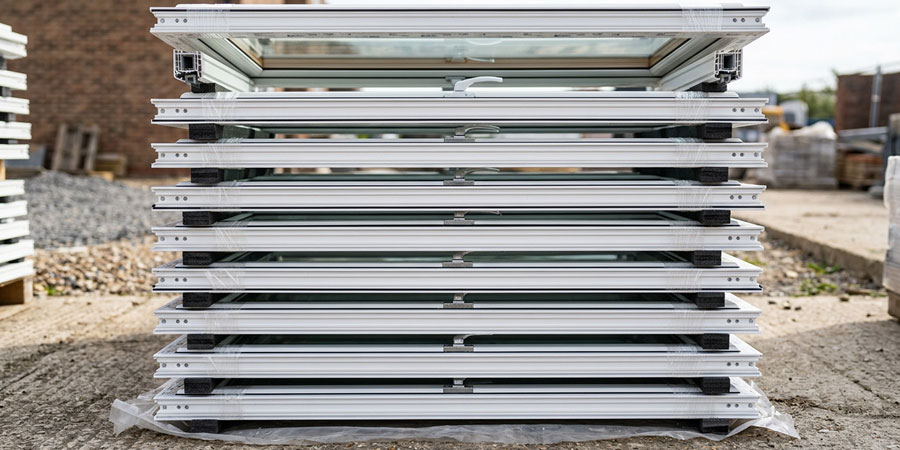
The frame material establishes the structural and maintenance foundation of a window unit, but the glass package determines the majority of its thermal, acoustic, and comfort performance. A well-specified glass package in a uPVC frame will outperform a poorly specified one in a premium frame material; the inverse is equally true. Understanding the key glass variables helps buyers evaluate what they are actually purchasing when comparing products at similar or different price points.
Double Pane vs. Triple Pane
A double-pane insulated glass unit (IGU) consists of two glass lites separated by a spacer and sealed gas cavity. A triple-pane unit adds a third pane and a second sealed cavity, reducing the centre-of-glass U-factor and improving acoustic performance. Triple-pane is the appropriate specification for colder Canadian climate zones, north-facing openings, and high-performance or near-net-zero building projects. For most southern Canadian installations, particularly south-facing openings where passive solar gain is beneficial, a double-pane unit with a passive Low-E coating and argon fill meets ENERGY STAR requirements while preserving higher solar heat gain than a triple-pane unit.
Low-E Coatings, Gas Fill, and Spacer Type
Low-E (low-emissivity) coatings are microscopically thin metallic layers applied to one of the inner glass surfaces. They reduce radiant heat transfer by reflecting infrared energy back toward its source. Passive Low-E coatings, applied to surface 3 of a double-pane unit, are the standard specification for cold climates because they reduce winter heat loss while allowing higher solar heat gain. Solar-control coatings on surface 2 are more appropriate for west and south-facing openings where summer overheating is a concern.
Argon gas fill between the panes replaces air with a denser, less thermally conductive gas, lowering the centre-of-glass U-factor. Krypton fill provides greater thermal benefit in the narrower cavities of triple-pane units and is the appropriate specification for near-net-zero applications. The spacer type at the glass edge also matters: metal and aluminum spacers conduct heat along the glazing edge, creating a condensation band on the interior glass surface in cold weather. Warm-edge spacers made from foam, stainless steel, or hybrid materials reduce this conductive path and improve the overall window U-factor.
Window Force offers more than 15 glass configurations across its product line, covering double and triple-pane units, passive and solar-control Low-E coatings, argon fill, tempered safety glass, laminated security glass, and acoustic glazing.
The spacer system at the glass edge is where most insulated glass unit failures begin, and it is the component most frequently specified in cost-driven manufacturing. Conventional aluminum spacers conduct heat across the glazing perimeter at a rate that drives condensation on the interior glass surface and creates repeated thermal stress in the primary seal. Window Force specifies a dual-seal, metal-free warm-edge spacer system: the first seal provides structural adhesion between the spacer and the glass, and the second seal provides the moisture barrier that prevents atmospheric water vapour from migrating into the gas-filled cavity. Eliminating the metal conductor removes the thermal bridge; maintaining both seals preserves gas fill concentration across the warranted service life. The practical outcome for the homeowner is a window that does not develop the condensation band at the sill edge that signals approaching IGU failure.
How Can Homeowners Tell Whether a uPVC Window Is High Quality?
The quality of a uPVC window is not fully visible at the point of purchase. Frame colour and surface finish can mask differences in profile wall thickness, compound formulation, and corner fabrication method. The following checklist covers the inspection and specification points that reliably separate high-quality products from commodity alternatives.
What to Check Before Buying
- Corner welds: Clean, smooth fusion welds with no gaps, cracks, or visible filler material. Rough or uneven welds suggest poor welding temperature control and indicate a corner that may not hold its seal over time.
- Profile consistency: Check that the frame and sash walls are uniform in thickness around the full perimeter. Uneven wall thickness indicates extrusion quality issues and affects both structural performance and insulation value.
- Hardware quality: Operate the locking mechanism and hinges. Hardware that feels loose, rough, or uneven at the point of sale will deteriorate faster in service and place lateral loads on the sash corners.
- Weatherstripping: Compression weatherstripping should be continuous around the full sash perimeter with no gaps at corners. Gaps or poorly fitted weatherstripping are a direct source of air infiltration.
- Drainage and weep holes: The sill area of casement, hung, and slider windows should have visible drainage channels or weep holes that allow water to exit the frame cavity. Absent or obstructed drainage is a common source of frame deterioration in retrofit installations.
- ENERGY STAR® certification: Ask for the product's ENERGY STAR Canada certification documentation, which lists the specific ER rating and U-factor for the model being purchased. Certification applies to the tested product configuration, not a generic claim about the material.
- Lead-free compound confirmation: Ask whether the uPVC compound is lead-free and which stabilizer system is used. A reputable manufacturer can directly confirm calcium-zinc or equivalent non-lead stabilization. This is not a standard item on most product brochures, but it is a verifiable specification — and a manufacturer that cannot answer it has not prioritized the question.
- Warranty terms: Confirm that the warranty covers the vinyl frame and the insulated glass unit separately, that it is transferable to a subsequent owner, and that it does not require the homeowner to perform specified maintenance in order to remain valid.
Red Flags to Avoid
«Corner welds are the most reliable indicator of manufacturing quality in a uPVC window, and they are also the easiest to assess before purchase. A fusion weld executed at the correct temperature and pressure produces a joint that is molecularly continuous with the surrounding profile — there is no visible seam, no filler material, and no fastener penetration. At our facility, we test weld quality quarterly by destructively examining sample joints: if the weld fractures before the adjacent profile material does, the process is out of specification. That mechanical result, not the warranty language, is what actually tells us the corner will hold across 25 years of Canadian thermal cycling»,
engineer Sergey Essipov, with 20 years of experience in window manufacturing, explains.
Quotations that do not specify the glass package, glazing specification, or Energy Rating should be treated with caution, as these variables most directly affect energy performance. A price that appears competitive for a standard window may reflect a non-Low-E glass package, a standard aluminum spacer, or a non-certified frame compound. Similarly, warranties that cover “manufacturing defects” without specifying the IGU separately from the frame often exclude the most likely failure point.
What Mistakes Should You Avoid When Buying uPVC Windows?
The most consequential purchasing errors in the uPVC window category are structural rather than cosmetic: they result in windows that underperform their energy ratings, fail to meet warranty expectations, or create maintenance costs that outweigh the initial savings.
Choosing by price alone without confirming the glass specification. Two windows quoting at different prices with the same frame description may have entirely different glass packages. A unit with a standard clear double-pane and no Low-E coating will not meet ENERGY STAR requirements and will perform measurably worse over its service life than a certified unit with Low-E argon fill. The frame material cost is typically a smaller variable than the glass specification in the total product price.
Ignoring Energy Rating documentation. In Canada, the Energy Rating (ER) is a combined measure of U-factor, solar heat gain coefficient, and air leakage that accounts for the specific conditions of Canadian heating-dominated climates. A window with a high ER is rated to lose less energy annually than one with a low ER, even if their stated U-factors are similar. Purchasing without confirmed ER documentation means accepting unverified energy performance.
Assuming all uPVC frames perform the same. Frame compound quality, UV stabilizer concentration, profile wall thickness, and corner fabrication method vary significantly between manufacturers, and none of these variables are visible from the finished frame surface. The consequence is that two white uPVC windows from different manufacturers may have substantially different service lives in Canadian conditions. Requesting ENERGY STAR documentation, warranty terms, and CAN/CSA A440 test compliance provides the verification layer that distinguishes certified products from unverified ones.
Not asking whether the compound is lead-free. Lead-stabilized and lead-free uPVC frames are visually indistinguishable. Both can carry identical Energy Rating numbers, identical warranties, and identical ENERGY STAR certifications — because those standards evaluate thermal performance, not compound chemistry. The only way to establish whether a product uses a lead-free stabilizer system is to ask the manufacturer directly and request documentation. For homeowners undertaking renovation projects, lead compound status is also relevant to safe cutting and disposal practices: frames from older installations or from manufacturers still using legacy stabilizer systems require different handling precautions than lead-free material.
Overlooking installation quality. A correctly specified uPVC window installed without proper pan flashing at the sill, without low-expansion foam sealing at the perimeter, or without correct shimming will fail to meet its rated air-tightness performance. The frame and glass may be of high quality, but the installation defines whether the window actually delivers that performance in the building.
Not verifying warranty transferability. In Canadian residential real estate, a transferable window warranty is a tangible asset at the point of resale. A warranty that applies only to the original purchaser provides no value to a buyer who purchases the home five or ten years after the windows were installed. Confirming transferability before purchase costs nothing and preserves the warranty’s value throughout the product's full service life.
Conclusion: Why uPVC Matters When Choosing New Windows
uPVC matters in window selection because it is the frame material specification that underpins the durability, maintenance profile, and structural performance of the complete window unit across a decades-long service life. Its rigidity holds the frame geometry under glazing loads and thermal cycling; its moisture resistance eliminates the rot and corrosion pathways that limit the service life of wood and aluminum alternatives; and its extrudable and weldable properties enable multi-chamber geometries that contribute to the window’s thermal resistance. These are not marketing claims; they are consequences of the material’s physical chemistry.
The practical implication for buyers and specifiers is that frame material selection is a prerequisite rather than a differentiator. Once uPVC is confirmed as the frame specification, the decisions that most affect window performance are the glass package, the spacer system, the corner fabrication method, the quality of the UV stabilizer in the compound, and the installation standard. Evaluating windows on these variables, alongside certification documentation and warranty terms, produces decisions that reflect the actual determinants of long-term value.
Every custom uPVC window produced at Window Force’s Canadian manufacturing facility is backed by a 25-year transferable warranty that covers both the vinyl frame and the insulated glass unit. Transferability is a deliberate design choice in the warranty structure, not an afterthought: a warranty that terminates with the original purchaser provides no value to the buyer who acquires the home five or ten years after installation, whereas a transferable warranty remains a verifiable asset in the property disclosure.
Frequently Asked Questions
What does uPVC stand for in windows?
uPVC stands for unplasticized polyvinyl chloride. It is a rigid form of PVC that contains no plasticizer additives, which makes it dimensionally stable, structurally suitable for window frames, and resistant to the softening and creep that occurs in standard plasticized PVC under sustained load or elevated temperature.
Are uPVC windows the same as vinyl windows in Canada?
Yes. In the Canadian residential window market, vinyl and uPVC windows refer to the same product. Vinyl is the North American consumer trade term for what European and international technical standards refer to as uPVC or PVC-U. Both terms refer to window frames made from unplasticized polyvinyl chloride.
How long do uPVC windows last in Canada?
A well-manufactured uPVC window with UV-stabilized compound and fusion-welded corners typically maintains its structural and aesthetic performance for 25 years or more under Canadian conditions. The frame material itself does not rot, corrode, or absorb moisture. The insulated glass unit is the component most susceptible to eventual degradation; quality units with dual-seal spacer systems and proper installation achieve 20- to 25-year seal integrity under normal conditions.
Do uPVC windows need to be painted or maintained?
No painting or staining is required. Routine maintenance is limited to periodic cleaning with mild soapy water, hardware lubrication every two to three years, and inspection of weatherstripping for compression loss. The frame material itself requires no surface treatment across its service life.
What makes one uPVC window better than another?
The primary quality differentiators are frame compound quality (virgin uPVC with UV stabilizers vs. recycled or under-stabilized material), corner fabrication method (fusion-welded vs. mechanically fastened), profile wall thickness and chamber geometry, and the glass package. ENERGY STAR Canada certification for the specific product model and compliance with CAN/CSA A440 tests are the most reliable third-party indicators of verified performance quality.
Can uPVC windows be recycled?
Yes. uPVC can be mechanically recycled at the end of its service life: profiles are granulated and reprocessed into new extruded products. The material retains its physical properties through multiple recycling cycles, which is a meaningful environmental advantage relative to composite or coated materials that cannot be cleanly separated for recycling. The practical constraint in Canada is the availability of organized collection systems for end-of-life uPVC window frames; individual homeowners typically work through a contractor or installer to remove the old units.
People Also Ask