

A living room can follow every 2026 trend on the mood board and still feel flat if the windows do not support it, because glazing controls how light, colour, and texture actually read in a finished space. Homeowners renovating this year face a practical question that goes beyond furniture and paint: which window styles, finishes, and glass configurations let a design vision hold up over time, in daily use, and in a Canadian climate.
Design trends reach a window manufacturer before they reach most living rooms; they first show up as shifts in the finishes, profiles, and glass configurations customers order. Window Force has been reading those signals from the production side for nearly 20 years, on an Ontario manufacturing floor that has grown to 80,000 square feet dedicated to custom vinyl window production, serving builders, dealers, and homeowners across Canada. The trend guidance in this article reflects what is actually being specified and built for Canadian homes right now, not just what circulates on international mood boards.
Key Takeaways
- Slim-profile, black, and bronze window frames are anchoring the open, light-filled look that defines modern contemporary interiors in 2026, replacing bulky sightlines with glass-forward walls.
- Natural materials such as linen, wood, stone, and matte plaster are being paired with warm-toned window trim and jamb finishes to create tactile, layered rooms rather than flat, showroom-style spaces.
- Younger homeowners are prioritizing flexible light control and privacy over fixed decorating rules, which is changing how coverings, glazing, and room layouts are specified.
- Richer 2026 palettes, from colour-drenched walls to darker woods, depend on how well a window manages glare and UV exposure, not just on the paint chosen.
- Trend-forward choices should sit atop durable, energy-efficient window performance, since frame colour and glass configuration decisions made now affect comfort and resale value for decades.
How Does a Modern Contemporary House Interior Use Windows to Create a Cleaner and Brighter Look?
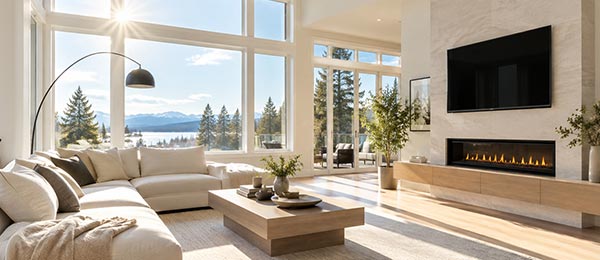
Modern contemporary interiors in 2026 are built around open sightlines and uninterrupted glass areas, not decorative window treatments layered over a small opening. The style relies on minimizing the frame's visual presence so that daylight and views become the dominant design elements. This shift favours slim sightlines, large-format glazing, and a restrained palette of frame colours that recede rather than compete with furnishings.
Black, bronze, and other minimalist frame finishes support this look because they act as a graphic outline rather than a decorative element, giving the eye a clean edge to follow without pulling focus from the room itself. A dark frame against a light wall reinforces the space's architectural character, while a white frame in the same setting can visually merge with the trim and lose its definition. Daylight distribution also matters more than raw glass area: a well-placed picture window paired with taller side units spreads even light across a room, reducing the dark corners that make open-plan spaces feel unfinished.
Best Frame Profiles
Slim sightlines are what make large-format glazing feel architectural instead of utilitarian. A narrower visible frame profile increases the glass-to-frame ratio within the same rough opening, which is the detail that separates a modern contemporary window wall from a standard retrofit unit.
- Ultra-narrow visible profiles maximize glass area in new construction and additions, where the wall framing is still exposed.
- Fixed picture units paired with slim operable sashes on either side maintain a continuous sightline across a wide opening.
- Deeper frame depth with a hidden gasket design supports larger spans without sacrificing the narrow visible edge homeowners want.
Slim sightlines place greater engineering pressure on the corner joint because less material carries the same structural load. Window Force fusion-welds every frame and sash corner rather than joining profiles with mechanical fasteners, producing a continuous, seamless mitre with no visible fastener lines or hairline gaps along the frame edge. On a design where the frame is meant to read as a thin graphic outline, the corners are where quality shows first, and welded construction is what keeps them crisp for the life of the unit.
Ideal Rooms for Large-Format Windows
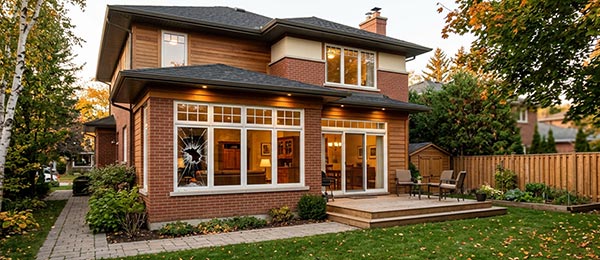
Great rooms, open-concept kitchens, and primary bedrooms with a garden or backyard view benefit most from large-format glazing because they combine long sightlines with a reason to maintain a strong indoor-outdoor connection. A picture window works particularly well in a great room where the goal is an unbroken view, while a mix of fixed and operable units suits kitchens that also need ventilation over a sink or island.
| Room Type | Recommended Configuration | Why It Works |
| Great room/living area | Large fixed picture unit, flanked by slim operable sashes | Maximizes uninterrupted sightlines and daylight spread |
| Open-concept kitchen | Mixed fixed and operable units near work zones | Balances the glass area with ventilation needs |
| Primary bedroom | Slim-profile casement or picture combination | Frames a private view without a bulky sill line |
| Home office/den | Taller, narrower operable units | Improves daylight without excessive solar glare on screens |
Windows Near Me
Why Are Natural Textures and Layered Materials So Important in 2026 Interiors?
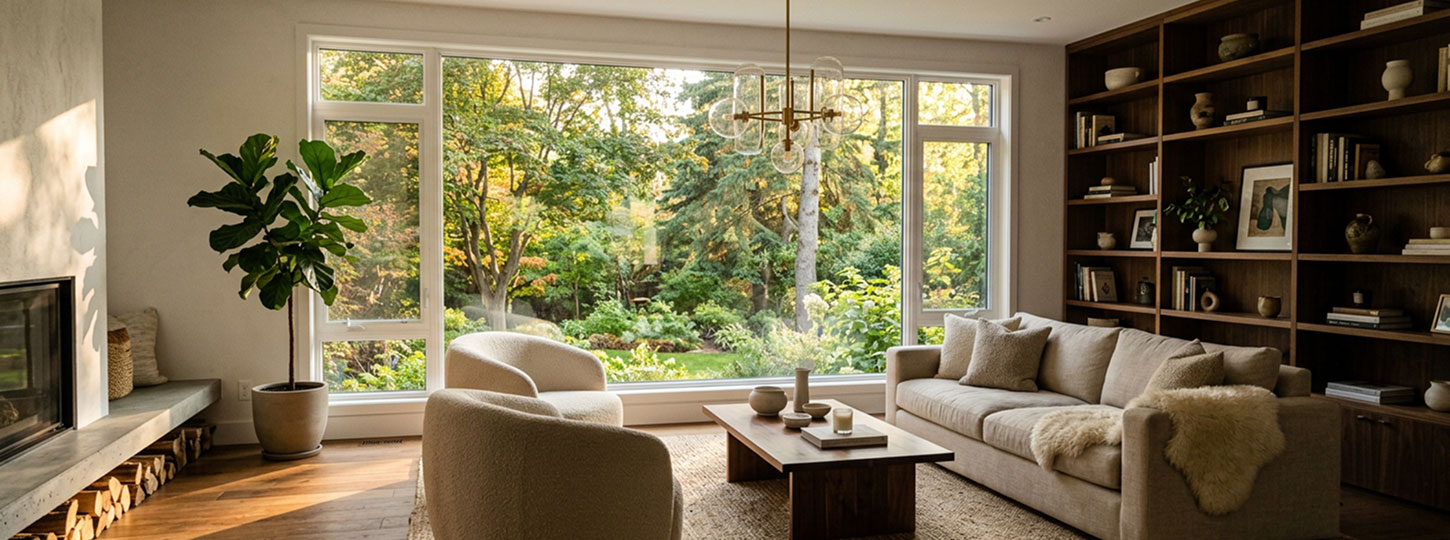
Linen, unfinished wood, natural stone, and matte plaster define the tactile side of 2026 interiors, and the appeal comes from contrast: a smooth, hard-edged material feels more intentional when it sits next to something soft or irregular. This layering approach is a direct response to years of flat, single-texture rooms, and it extends naturally to the surfaces immediately around a window, including trim, jamb extensions, and fabric treatments.
A wood-look jamb extension or a natural-finish casing gives a window frame the same tactile quality as the furniture and flooring around it, rather than treating it as a plain, painted afterthought. Layered window treatments, such as a linen Roman shade under a structured drapery panel, add softness without blocking the daylight that the rest of the room's materials depend on to read correctly; stone and plaster surfaces in particular reveal their texture only under strong, directional light.
Soft Materials Near Hard Surfaces
Pairing a linen drapery with a stone sill or a plaster reveal is one of the more reliable material combinations in current interior work, because the softness of the fabric offsets the rigidity of the hard surface without competing for attention.
- Linen and cotton-blend treatments soften the edges of stone, concrete, or plaster window surrounds.
- Wood jamb extensions in a matching or complementary tone tie the window into adjacent flooring or millwork.
- Matte-finish hardware, rather than polished metal, keeps the tactile palette consistent across frames and fixtures.
How Daylight Reveals Texture
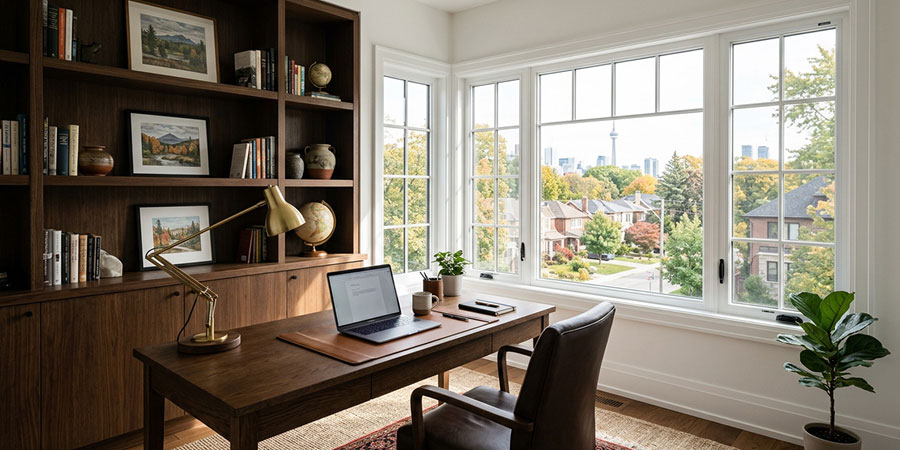
Texture becomes more pronounced when daylight strikes a surface at an angle, creating shadows that emphasize depth and material variation. Research has shown that occupants report higher satisfaction in spaces with greater access to daylight and appropriately sized windows, reinforcing why designers increasingly view window placement as both a material and functional consideration. A north-facing wall with soft, diffuse light can make heavily textured plaster appear flatter, while the same finish, illuminated by angled afternoon sunlight through a west-facing opening, reveals significantly more depth, shadow, and visual character.
How Can Gen Z Decor Trends Influence Window Choices in Stylish and Practical Spaces?
Gen Z decor is defined less by a fixed aesthetic and more by a set of priorities: individuality, flexibility, confident use of colour, and a comfort with mixing vintage pieces alongside new furniture. Renters and first-time buyers in this group tend to favour decisions that can be undone or adjusted, which pushes them toward window solutions that are as flexible as their furniture arrangements.
Natural light plays a specific role in this trend beyond aesthetics: well-lit interiors are often preferred for supporting photography, video calls, and other visually oriented activities common in modern households, and daylight control becomes part of styling a room for that purpose. Smart or layered coverings that shift between open and private without permanent changes to the window itself suit renter-friendly thinking, letting the same opening support a bright, camera-ready look during the day and a more private, closed-in feel in the evening.
Engineer Sergey Essipov, with 20 years of experience in window manufacturing, notes:
We're seeing more requests from younger homeowners for taller, narrower operable units rather than one oversized fixed pane, because it gives them independent control over light and airflow in different parts of the same room without committing to a single fixed look.
Windows also intersect with Gen Z priorities around adaptable, multifunctional rooms, where a home office by day becomes a media or guest space by night. A window that admits strong, even daylight during work hours but can be dimmed or screened easily supports that kind of room-switching far better than a single heavy drapery panel designed for one fixed use.
Which Interior Trends Work Best With Larger Windows and More Natural Light?
Colour drenching, darker wood tones, richer jewel-toned palettes, curved furniture silhouettes, and layered plants and artisanal details are among the strongest 2026 interior trends, and nearly all of them read better under generous, well-managed daylight than under artificial light alone. A deep, saturated wall colour shows its full depth only when natural light moves across it through the day, while the same colour under constant artificial lighting can look flat or muddy.
Rooms with expansive glazing benefit the most from these richer trends because the volume of daylight offsets the visual weight of darker furniture and walls, keeping the space from feeling closed in. The trade-off is glare and UV exposure: a larger glass area without the right coating can wash out saturated colours, fade upholstery, and create uncomfortable hot spots near seating. Colour-drenched walls and layered greenery show best under shifting daylight but rely most heavily on a low-E coating to limit UV-driven fading, while curved, sculptural furniture reads well under almost any light condition and places fewer demands on the glazing package.
Light-Sensitive Materials
Unfinished wood, natural fibre rugs, and vintage upholstery are among the materials most likely to fade or discolour under sustained direct sun exposure, making the choice of glazing a practical concern rather than a purely aesthetic one in rooms built around these trends. Plants and greenery are similarly light-dependent, needing consistent daylight to thrive, which is best supplied by a south- or west-facing orientation paired with glare control rather than an unshaded, uncoated pane.
Rooms That Benefit Most From Expansive Glass
Living rooms, sunrooms, and open kitchen-dining areas gain the most from larger glazing because they combine longer daily occupancy with layered, colour-forward styling that depends on strong, changing light throughout the day.
What Makes Modern Rustic Design Feel Up-to-Date Rather Than Outdated in 2026?
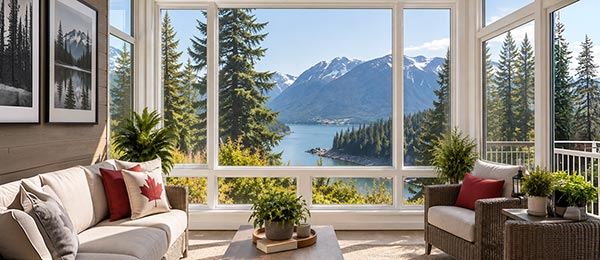
Modern rustic design in 2026 has shifted away from the heavily themed, cabin-style interiors that once defined the look, moving toward a cleaner, more architectural interpretation. Warm wood tones, earthy palettes, natural stone, and matte black or bronze metal accents remain central, but they are now applied with restraint rather than layered across every surface in a room.
The window plays a specific role in keeping this style from feeling dated: a simple, uncluttered grid pattern or a natural wood-look interior finish reads as intentional and architectural, while an overly ornate grille or an inconsistent trim treatment pulls the room back toward a more literal, old-fashioned rustic look.
Rustic Without Heaviness
Modern rustic interiors succeed in 2026 by pairing one or two warm, natural materials with ample negative space, rather than filling every surface with wood, stone, and texture at once. A single exposed wood beam, a stone fireplace surround, and a matte-black window frame can carry an entire room without additional rustic detailing competing for attention.
Window Styles That Modernize the Look
The transition toward a more contemporary rustic style relies on simplifying traditional details rather than replacing the underlying materials. Traditional rustic interiors leaned on dense, multi-pane grille patterns, natural wood stain carried across the entire frame, thick, heavily proportioned profiles, and ornate, oversized hardware. The 2026 version keeps the warmth of wood and the presence of a visible grid but simplifies each element: a two- or three-lite pattern instead of a dense grid, a matte black or bronze exterior paired with a wood-look interior finish, a slimmer sightline within an otherwise traditional-style unit, and simplified matte-black hardware in place of ornate fixtures.
How Do Window Frame Colours and Finishes Support Current Interior Trends?
Frame colour is one of the most overlooked decisions in a design-led renovation, largely because homeowners tend to select it last, after wall colours and furniture have already been chosen. In 2026. Frame finishes are being deliberately coordinated rather than selected as a neutral default.
Contrast and integration are both valid strategies, and the right choice depends on the surrounding palette. A black or dark bronze frame against a soft white or warm neutral wall creates a deliberate contrast that reads as architectural, while a wood-look or soft white frame against a similarly toned wall integrates quietly, letting the view outside become the visual focus rather than the frame itself.
Natural Resources Canada notes that ENERGY STAR-certified windows are approximately 20 percent more energy-efficient than the average window on the market, demonstrating that homeowners do not have to sacrifice performance to achieve a design-forward look. Energy-efficient frame systems are available in a wide range of finishes, allowing current interior colour trends to be incorporated without compromising comfort or long-term efficiency.
Matching Frame Finishes to Room Style
Window frame finishes work best when they reinforce the dominant materials and colour palette already present in the room rather than introducing an unrelated accent. In 2026 interiors, homeowners are increasingly treating frames as part of the architectural composition, coordinating them with flooring, cabinetry, hardware, and wall finishes. The goal is not necessarily a perfect colour match, but a balanced relationship between contrast, warmth, and visual continuity.
- Deep green or plum frames pair well with warm wood tones and brass hardware for a layered, moody living space.
- Black or dark bronze frames suit modern, contemporary and updated rustic interiors where contrast defines the architecture.
- Soft white or wood-look interior finishes support Scandinavian-influenced and light-driven rooms where the frame should recede.
Interior-Facing Finishes Homeowners Overlook
Many renovation plans focus entirely on the exterior frame colour and treat the interior-facing finish as an afterthought, even though it is the surface homeowners see every day. Matching the interior jamb and sash finish to the trim and millwork elsewhere in the room closes a visual gap that would otherwise make even a well-chosen exterior colour feel disconnected from the rest of the space.
Why Is Wellness Becoming a Design Priority in Trend-Forward Interiors?
Wellness has moved from a niche design idea to a mainstream priority in 2026, and windows sit at the center of that shift because daylight, ventilation, thermal comfort, and acoustic control all pass through the same opening. Recent research on occupant well-being suggests that access to daylight and views through windows can provide restorative psychological benefits, improve occupant satisfaction, and influence broader measures of health, comfort, and workplace performance.
Studies examining indoor environmental quality consistently identify daylight access as one of the strongest predictors of occupant satisfaction in residential and workplace settings. Researchers have also observed that spaces with adequate daylight exposure can support healthier circadian rhythms and reduce dependence on artificial lighting during occupied hours.
This research-backed connection is encouraging homeowners and designers to view high-performance windows as a wellness investment rather than solely a technical building-envelope component. An operable window that provides fresh air on demand, paired with glazing that controls glare and moderates temperature fluctuations near seating areas, contributes directly to how comfortable and restorative a room feels throughout the day, not just how it appears in photographs.
The Role of Operability
A window that opens easily and holds its position supports natural ventilation strategies that reduce reliance on mechanical cooling during shoulder seasons, which is both an energy and a comfort consideration in most Canadian climates.
Glass, Comfort, and Mood
Glare, radiant heat near glass, and inconsistent surface temperatures around a window frame are common but underrecognized sources of daily discomfort, and each can be addressed through glazing selection and frame design rather than through furniture placement alone.
An inconsistent temperature at the glass edge is a manufacturing variable, not an inevitable property of windows. Window Force builds every sealed unit with a dual-seal, metal-free warm-edge spacer, so the perimeter of the glass, the coldest point of any window in a Canadian winter, stays closer to room temperature. In a wellness-driven layout that places reading chairs, a desk, or a bed beside the glazing, that detail determines whether the seat by the window is genuinely comfortable in January or merely photogenic.
How Should Homeowners Balance Trend-Driven Design With Long-Term Window Performance?
Interior trends move faster than the service life of a window, and that mismatch is where renovation budgets are most often wasted. A frame colour or grille pattern chosen to match a current trend still needs to perform for decades, which means design decisions should not be driven by a single trend image but by the room's actual light conditions and orientation.
Micro-trends, such as a highly specific accent colour or an unusual grille pattern tied to a single design moment, are the riskiest place to invest in a permanent architectural element like a window. A safer approach separates decisions into two categories: elements that are inexpensive and easy to change later, such as coverings, paint, and furniture, and elements that are expensive and difficult to change, such as frame colour, glazing configuration, and window style.
Engineer Sergey Essipov, with 20 years of experience in window manufacturing, explains:
The frame decisions homeowners most often want to reverse are the ones driven by a single trend photo rather than the room's light and orientation. At our facility, colour longevity is an engineering property: we compound our lead-free uPVC with UV stabilizers, so the finish a homeowner selects looks the same after fifteen summers as it did at installation. That permanence cuts both ways; it's exactly why we advise putting trend experiments into coverings and paint, and choosing a frame finish you expect to still like after the trend cycle has turned over twice.
What Should Stay Timeless
Frame profile, glazing performance, and overall window style are the elements most worth choosing for the long term, since replacing them later means disturbing trim, insulation, and finished walls.
Where to Experiment Safely
Coverings, interior paint on adjacent trim, and decorative hardware finishes can absorb more trend risk because they are comparatively inexpensive to update as interior styles continue to shift.
Which Window Styles Suit Living Rooms, Kitchens, and Bedrooms in 2026?
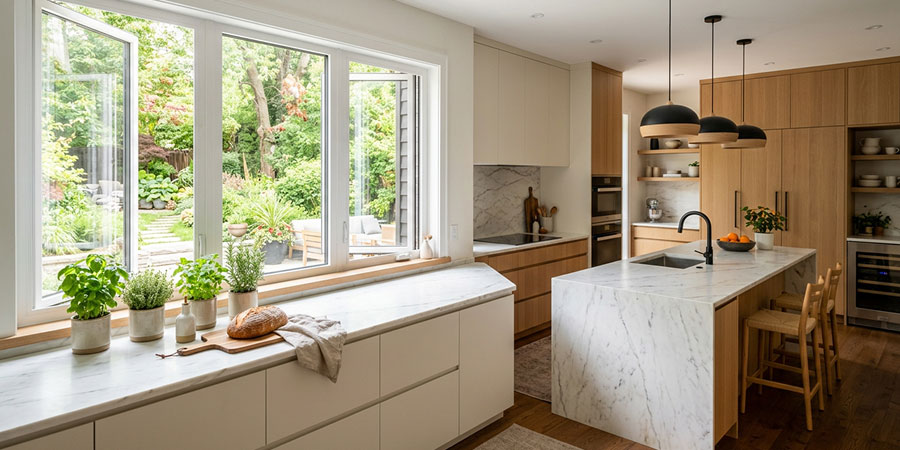
Room function should drive window style selection well before aesthetic trends enter the decision, since a living room, a kitchen, and a bedroom each place different demands on glazing, ventilation, and privacy. Picture windows suit living areas built around a view or a strong architectural focal point; operable units are essential near kitchen work zones that need ventilation, and bedrooms benefit from configurations that balance daylight with privacy at night.
| Room | Best-Suited Style | Key Consideration |
| Living room | Large fixed picture window | Uninterrupted view and daylight, minimal maintenance |
| Kitchen | Casement or awning near the sink and cooktop | Ventilation and easy operation over counters |
| Primary bedroom | Casement or double-hung with privacy glass options | Balance of daylight, ventilation, and night privacy |
| Secondary bedroom | Single or double-hung | Cost-effective, familiar operation for children's rooms |
Best Options by Room
A living room generally benefits from the largest possible fixed glass area paired with a small number of operable units for airflow, while a kitchen depends more heavily on operable styles positioned where they will not interfere with cabinetry or appliances.
Fixed vs Operable Choices
Fixed units cost less per square foot of glass and support the cleanest sightlines. Most occupied rooms benefit from at least one operable window to support ventilation, while local code requirements may dictate additional openings in certain spaces.
How Can Homeowners Use Interior Trends Without Making Rooms Feel Too Dark or Overdesigned?
Richer colours, heavier textures, and layered pattern use are defining features of 2026 interiors, but they carry a real risk of making a room feel crowded or dim if daylight and glass area are not treated as part of the design plan from the start. A deep, saturated wall colour or a heavily patterned textile can visually absorb light rather than reflect it, which means the same daylight level that worked in a lighter room may not be sufficient once darker finishes are introduced.
Frame restraint is one of the most effective tools for preventing a trend-rich room from feeling overdesigned. Keeping the window frame simple, whether through a slim profile or a quiet neutral finish, gives the eye a resting point among richer wall colours, patterned textiles, and layered furniture.
Avoiding Visual Heaviness
Rich colours, layered textures, and patterned materials can make a room feel inviting and sophisticated, but they also absorb more light than neutral finishes. Maintaining a sense of openness requires balancing these design choices with sufficient daylight and clear visual breathing space. Strategic placement of darker elements helps preserve depth and comfort without making the interior feel crowded or enclosed.
- Reserve the darkest or most saturated colours for walls that receive strong, direct daylight rather than shaded corners.
- Balance heavy textiles with at least one large area of unobstructed glass to keep a sense of openness.
- Limit pattern-on-pattern layering to rooms with higher-than-average glass-to-wall ratios.
Letting the Architecture Breathe
A single well-placed large window can do more to prevent an overdesigned feeling than removing furniture or simplifying colour choices, because it resets the room's sense of scale and gives the layered materials somewhere to recede against.
What Should You Ask a Window Manufacturer Before Upgrading for a Trend-Led Renovation?
A renovation driven by current interior trends still requires the same technical diligence as any window replacement project, and the questions homeowners ask before ordering determine whether the finished result matches both the design vision and long-term performance expectations. Glazing package, frame material, sightline width, energy ratings, UV protection, installation quality, and warranty terms are the areas most likely to be overlooked when a project is driven primarily by aesthetics.
Homeowners planning a trend-led upgrade should confirm that the glazing package supports both the desired look and the room's orientation, since a south-facing wall of glass has different UV and solar heat-gain needs than a north-facing one. Sightline width affects how "clean" the finished opening will look, frame material determines long-term maintenance, and installation quality determines whether the finished window performs as specified rather than underperforming due to a poor fit in the rough opening.
Questions Before Ordering
Asking detailed questions before placing an order helps homeowners avoid design compromises and unexpected performance issues later on. Understanding how a specific window system responds to orientation, interior finishes, and long-term maintenance expectations makes it easier to choose a product that supports both aesthetics and durability.
- What glazing package and coatings are recommended for this room's orientation and the planned interior finishes?
- What is the visible sightline width, and how does it compare across frame series?
- What warranty coverage applies to the frame, the glass seal, and the finish separately?
Red Flags to Avoid
A manufacturer unwilling to provide written specifications, vague answers about lead time, or pressure to accept a stock size that is close to but not matching the actual opening are all signs that a project may run into fit or performance problems after installation.
Those red flags are usually structural to how a supplier operates, not occasional lapses. Window Force works from the opposite model: as a custom-to-order manufacturer, every unit is built to the measured opening at our Ontario facility; full written specifications accompany each order; and lead times are quoted from an actual production schedule rather than estimated based on whatever stock happens to be available. A trend-led project depends on precise finishes and dimensions, which is precisely what a made-to-order process exists to document.
What Are the Best Ways to Combine Interior Trends With Energy-Efficient Window Design in 2026?
Style and performance are not competing priorities in current window design, and treating them as separate decisions is one of the more common mistakes in trend-driven renovations. Low-E coatings, argon gas fills, and orientation-specific glazing all work quietly in the background to support the interior look a homeowner is trying to achieve by controlling glare, protecting finishes from UV fading, and keeping surfaces near the glass comfortable to sit beside.
Solar orientation has a measurable impact on window performance. The Canadian Centre for Housing Technology has shown that glazing selection based on facade orientation can improve comfort and reduce seasonal heating and cooling demands, particularly in homes with expansive south- and west-facing glass areas.
South- and west-facing rooms with large glazing areas, the configurations most associated with modern, contemporary and biophilic trends, benefit the most from solar control coatings that reduce unwanted heat gain without darkening the glass in a way that flattens interior colour. North-facing rooms, by contrast, can prioritize maximum light transmission since solar heat gain is less of a concern.
Design-First and Performance-First Can Work Together
A well-specified glazing package should be treated as part of the design brief from the earliest planning stage, not added afterward as a technical checklist item, so that the selected frame, coating, and gas fill support the exact look and comfort level the room is designed around.
Practical Examples
A sunroom built around a colour-drenched, plant-filled aesthetic performs best with a low-E, argon-filled unit that controls heat gain while still admitting the daylight volume the plants and saturated colours depend on. A north-facing home office designed around darker wood tones can prioritize a clearer, higher-visible-transmittance glazing package since glare and fading are less of a concern in that orientation.
What Is the Best Takeaway for Homeowners Planning a Stylish Window Upgrade in 2026?
The strongest 2026 interior trends, from slim-profile modern contemporary glazing to layered natural textures, richer colour palettes, and wellness-driven daylight design, all depend on the window performing well long after the current aesthetic moment has passed. Frame profile, glazing configuration, and overall window quality are the safest places to invest for the long term, while coverings, paint, and decorative finishes remain the right places to experiment with shorter-lived trends.
| Trend Direction | Safest Long-Term Choice | Where to Experiment |
| Modern contemporary, slim sightlines | Narrow-profile fixed and operable glazing | Frame colour, hardware finish |
| Natural textures and layering | Neutral or wood-look interior finish | Coverings, trim, jamb detailing |
| Richer color and larger glass | Low-E, glare-controlled glazing | Wall colour, furniture tone |
| Wellness-driven daylight design | Operable units with reliable ventilation | Layout of seating relative to glass |
Homeowners approaching a stylish renovation in 2026 are best served by treating the window as the first decision in the room, not the last, since frame colour, glazing performance, and sightline width shape everything else that gets layered on top of it. Consulting a Canadian manufacturer directly, rather than finalizing paint and furniture first, allows the technical specification and the design vision to be developed together, not in conflict.
That window-first sequence is the model Window Force is organized around. Each unit is manufactured to order in Ontario and installed through our authorized dealer network, is CSA certified, and meets or exceeds ENERGY STAR® requirements in every Canadian climate zone, so the technical foundation beneath a design-led renovation is verified rather than assumed. And because the 25-year warranty is transferable, the frame profile and glazing chosen for this year's interior remain covered through the next several redecorating cycles and through a future sale of the home.
Conclusion
The interior trends shaping 2026, from slim modern contemporary sightlines to layered natural materials, Gen Z flexibility, richer colour palettes, and wellness-driven daylight, all rely on windows that perform as well as they look. The frame profile, glazing package, and finish should be selected with long-term performance in mind, while decorative elements can evolve with changing interior trends.
Homeowners who want a room to stay current for more than one design season should prioritize durable, energy-efficient glazing and a versatile frame finish first, then layer trend-specific coverings, paint, and furniture on top. A Canadian-manufactured window built to current ENERGY STAR standards gives a renovation the technical foundation to support whichever interior direction comes next.
Frequently Asked Questions
Do black or dark window frames make a room feel smaller?
Not when the glass area is generous. A dark frame creates visual contrast against lighter walls, which tends to make the window read as a deliberate architectural feature rather than shrinking the perceived size of the room. The effect depends more on the glass-to-wall ratio than on frame colour alone.
Is it worth choosing a trend-specific frame colour for a renovation?
It depends on how the colour is used. Frame colours tied to a broader, versatile palette, such as black, bronze, or a warm wood tone, tend to hold up across several redecorating cycles, whereas highly specific accent colours tied to a single design moment carry greater long-term risk.
Do low-E coatings change how a room looks?
A high-quality low-E coating has minimal visible impact on glass clarity while reducing UV transmission and controlling heat gain, helping protect furniture, flooring, and wall colours from premature fading without noticeably tinting the view.
How many operable windows does a room need for effective ventilation and wellness?
Most rooms benefit from at least one operable unit positioned to create cross-ventilation with another opening or doorway. The exact number depends on room size, layout, and local building code requirements for egress in bedrooms.
Should the frame finish match the trim colour exactly, or is contrast better?
Both approaches work, and the right choice depends on the room's overall style. Contemporary and updated rustic interiors often use contrast intentionally, while Scandinavian-influenced or light-driven rooms tend to favour a frame finish that blends closely with surrounding trim.
Can existing windows be updated to align with new interior design trends without a full replacement?
In some cases, updating interior-facing trim, jamb extensions, and hardware finish can substantially change a window's look. However, frame colour, sightline width, and glazing performance require replacement of the unit itself, since these are manufactured properties rather than surface finishes.
People Also Ask