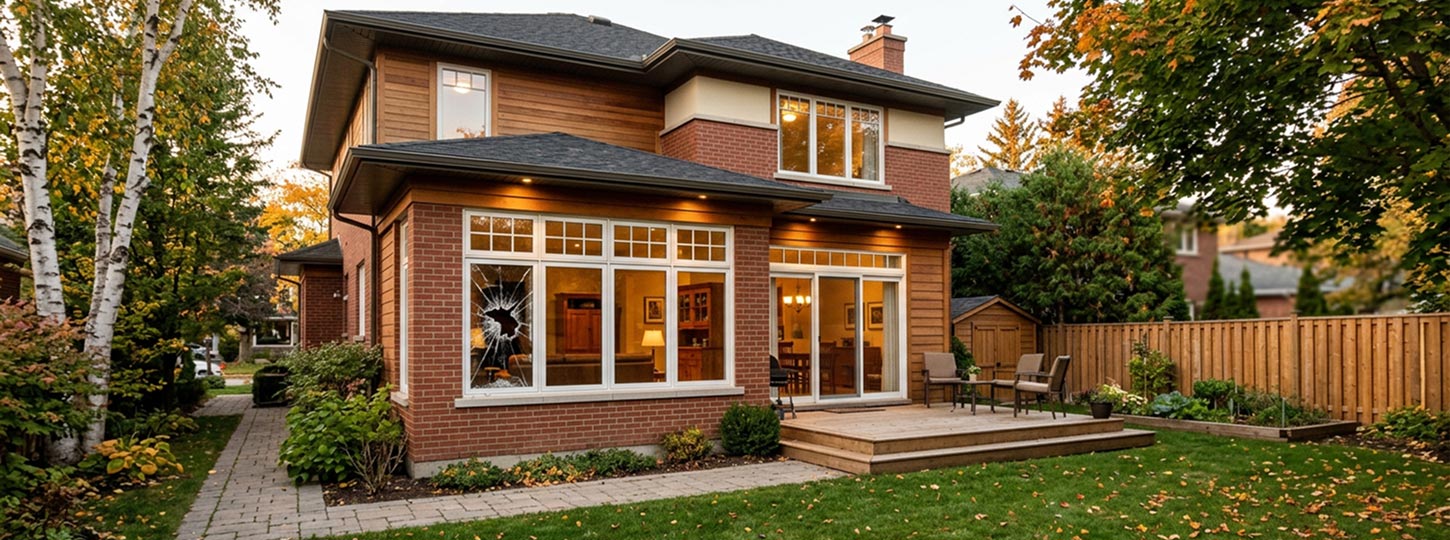


A cracked pane or a foggy insulated unit does not automatically mean the entire window needs to be replaced. In many Canadian homes, replacing only the glass is a legitimate and cost-effective option, but whether it makes sense depends on the condition of the frame, sash, and seals, not just the glass itself. This guide walks through every scenario where glass-only replacement works, where it falls short, and what homeowners need to know before making a decision.
The guidance in this article reflects nearly two decades of hands-on experience building custom vinyl windows in Canada. Window Force operates a purpose-built production plant in Ontario spanning 80,000 square feet, where IGU assemblies, replacement frames, and complete window systems are manufactured to order for builders, dealers, contractors, and homeowners from coast to coast. The decision framework described here comes directly from what our production and field teams encounter on real Canadian projects: when glass-only replacement holds up, and when it does not.
Key Takeaways
- In many cases, replacing only the glass or insulated glass unit is a viable option, particularly when the frame and sash remain structurally sound and free from moisture damage.
- Glass-only replacement is most cost-effective when damage is limited to the pane itself and the surrounding components still perform adequately.
- Foggy double-pane windows, cracked glass, and failed seals are the most common candidates for glass-only repair, but not all types of damage qualify.
- The decision between replacing the glass and the full window comes down to the condition of the frame, the functionality of the hardware, the age of the unit, and long-term energy performance goals.
- Insulated glass units (IGUs) can often be replaced without disturbing the frame, provided the new unit matches the original specifications precisely.
- Costs for glass repair and replacement vary based on glass type, size, coatings, spacer material, and site conditions, not simply the size of the break.
- New glass can restore thermal performance when the seal has failed, but if air leakage through the frame is the source of drafts, replacing the glass alone will not solve the problem.
- Ordering replacement glass requires accurate measurements, the correct thickness, appropriate coatings, and confirmation of compliance with safety glazing requirements.
- Some window styles, particularly older wood windows and certain custom designs, make glass-only replacement more difficult or impractical.
- Prompt action on broken glass matters: safety, weather exposure, and moisture infiltration are all risks that compound quickly when a window is left unaddressed.
Is It Possible to Replace Just the Glass in a Window?
For many homeowners, the first question after discovering a cracked pane or a fogged double-pane unit is whether the entire window needs to be replaced or whether only the glass can be swapped out. The answer is that glass-only replacement is genuinely possible in many situations, but it is not a universal solution. The outcome depends on what has actually failed: the glass, the seal, the frame, or some combination of all three. Understanding the distinction before calling a glazier can save both time and money.
Short Answer
Yes, indeed, and in many situations, it is possible to replace only the glass without touching the frame or sash. Whether this approach is appropriate depends on several factors: the condition of the existing frame, the type of seal used in the unit, the construction of the sash, and the extent of the damage. A homeowner dealing with a single cracked pane in an otherwise sound window has a very different situation from one dealing with a fogged unit in a frame that has started to show signs of rot or warping.
Glass-only replacement is appropriate when the failure is limited to the glass unit itself and all surrounding components, including the frame, sash, and hardware, remain structurally sound and fully functional. The frame, sash, seals, and hardware should be inspected first to confirm that the glass is the only failed component. The operative word is "only"; the glass has to be the actual problem, not a symptom of a broader issue with the window system.
When Glass-Only Replacement Works Best
The best candidates are impact-damaged panes, failed IGUs, and minor glass defects where the surrounding window components still function properly.
It is worth noting that glass-only replacement is more straightforward in some window styles than others. A fixed picture window or a simple casement with a standard rectangular unit is generally easier to re-glaze than a complex bay configuration or an older double-hung with a multi-lite sash. The physical accessibility of the glass and the availability of matching replacement units both affect whether a glass-only approach is practical.
Windows Near Me
When Is Window Glass Replacement a Better Option Than Replacing the Whole Window?
Not every damaged window requires a full replacement, and not every glass problem justifies the cost and disruption of removing an entire window unit. Window glass replacement occupies a clear middle ground: it addresses the glazing without disturbing the frame, hardware, or surrounding structure. Recognizing when that approach is sufficient and when it is not is the core decision most homeowners face after discovering glass damage. The factors that tip the balance are primarily the condition of the frame and the age of the overall window system.
Best-Case Scenarios
Window glass replacement makes the most sense when the failure is limited to the glazing and the existing window system remains functional.
This approach is particularly well-suited to homes where the existing windows are relatively recent, perhaps five to fifteen years old, and have been maintained properly. A frame that was installed correctly and has not been exposed to sustained moisture or physical stress will typically outlast its glass unit, especially if the seal fails prematurely due to a manufacturing defect or an unusual impact event rather than overall deterioration.
What Makes Glass-Only Replacement Cost-Effective
The cost advantage of a glass-only replacement comes from avoiding the labour and material costs of removing and reinstalling the full window unit. Full window replacement requires removing interior and exterior trim, potentially disturbing wall finishes, re-insulating the rough opening, and reinstalling all the surrounding details. Glass-only replacement avoids all of that. The trade-off is that if the frame has underlying problems, those problems remain after the new glass goes in.
| Scenario | Glass-Only Replacement | Full Window Replacement |
| Frame condition | Sound, square, no rot or warping | Damaged, moisture-affected, or failed |
| Hardware | Functioning correctly | Stiff, broken, or corroded |
| Age of the window | Under 15 years | 20+ years or at the end of service life |
| Energy performance | Adequate except for the failed glass | Poor overall, including frame and seals |
| Cost range | Lower upfront cost | Higher upfront, better long-term value |
| Disruption | Minimal | Requires trim removal and reinstallation |
| Recommended when | Damage is isolated to the glass | The frame, sash, or hardware is failing |
What Types of Window Damage Can Be Fixed With Broken Window Glass Repair?
Broken window glass repair is not a single procedure; it encompasses several distinct types of damage, each with its own repair logic and limitations. Some problems, like a clean impact crack in a single pane, are straightforward candidates for glass-only work. Others, like stress fractures caused by frame movement, require addressing the underlying cause before the glass is touched. Knowing which category a given problem falls into determines whether a glass repair will hold long-term or simply delay a larger intervention.
Cracks vs Seal Failure
Broken window glass repair covers a range of damage types, and the appropriate response depends on both what has failed and how the failure affects safety and performance. The most straightforward case is a cracked or shattered pane caused by impact. Provided the sash and frame are undamaged, replacing the glass unit resolves the problem entirely. Chips at the edge of a pane are also candidates for glass replacement, particularly when the chip has compromised the unit's structural integrity or reached a critical size that puts the pane at risk of further cracking.
Seal failure in double-pane units is the other major category. When the hermetic seal between the two panes of an insulated glass unit deteriorates, atmospheric moisture enters the gap and condenses on the interior surfaces of the glass, producing the characteristic foggy or hazy appearance that cannot be cleaned away. This is a glass unit failure, not a frame failure, and in most cases, the solution is to replace the insulated glass unit while leaving the sash and frame intact.
| Damage Type | Repairable With Glass-Only Approach? | Notes |
| Single cracked pane | Yes | Frame and sash must be undamaged |
| Shattered pane | Yes | Safety glazing may be required in replacement |
| Foggy double-pane (seal failure) | Yes | Replace the IGU, sash and frame, typically unaffected |
| Edge chip | Yes, if significant | Assess structural risk before deferring |
| Stress crack from frame movement | Conditional | Address the cause of the movement before replacing the glass |
| Broken sash or frame | No | Frame repair or full replacement is needed first |
| Extensive water infiltration | No | The frame and wall cavity must be assessed |
What Cannot Be Repaired Safely
Not all glass damage is suitable for a glass-only repair. When a crack is caused by frame movement, thermal stress from improper installation, or building settlement, replacing the glass without addressing the underlying cause will cause the same problem to recur. Similarly, when moisture has entered the frame material itself, producing soft spots in wood frames, delamination in composite frames, or corrosion in metal frames, replacing the glass while leaving the compromised frame in place does not solve the actual problem.
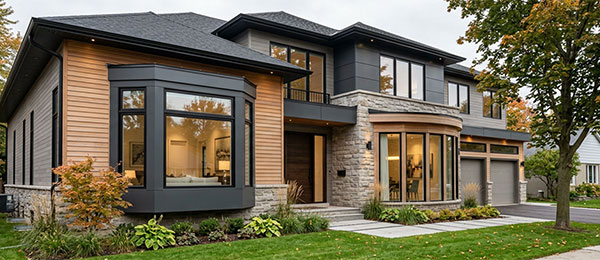
Stress cracks that run from the edge of the glass inward are a particular warning sign. These often indicate either a frame that is no longer square or a glass unit that was specified incorrectly for the opening. In either case, the issue lies beyond the glass, and a broken window glass repair that addresses only the pane will not produce a durable result.
Frame geometry at the time of IGU installation is something we control from the manufacturing stage onward. Window Force manufactures its frames from lead-free uPVC with UV stabilizers, using multi-chamber profiles throughout our frame construction — not as a single hollow extrusion but as a cross-section of discrete chambers that distribute loads and resist racking and bowing that cause sash joints to open over time. Every corner is fusion-welded rather than mechanically fastened, maintaining the frame’s structural continuity through decades of Canadian thermal cycling. A frame that holds its geometry under seasonal stress gives a replacement IGU the stable rebate it needs to seat and seal correctly from day one, rather than beginning life in a slightly distorted opening.
How Can You Tell Whether You Need Replacement Window Glass or a Brand-New Window?
The visual symptoms of a failing window, such as fogging, condensation, drafts, and sticking sashes, do not always point clearly to the glass as the source of the problem. Replacement window glass is the right solution when the glazing has failed, and everything surrounding it remains sound. But when the frame, sash, hardware, or rough-opening insulation has also deteriorated, replacing only the glass addresses only one layer of a multi-layer problem. A systematic inspection before ordering glass is the most reliable way to avoid spending money on a repair that does not resolve the actual issue.
Inspection Checklist
The decision between replacement window glass and a full window replacement is best made by systematically evaluating the condition of every component in the window assembly, not just the glass. The following inspection sequence covers the key indicators.
Signs the Whole Window Is Failing
Certain findings during inspection reliably indicate that a full replacement is the appropriate response rather than re-glazing. Visible rot in a wood frame, significant warping that has altered the shape of the opening, corrosion that has compromised the structural integrity of a metal frame, or water staining that extends into the wall cavity are all indicators that the frame has reached the end of its service life. Similarly, a window in which the hardware has failed, and replacement parts are no longer available, may be a candidate for full replacement on practical grounds.
According to research by the Canada Mortgage and Housing Corporation (CMHC) and the National Research Council of Canada (NRC) on building envelope performance, moisture infiltration around window assemblies can contribute to the deterioration of building materials and increase the risk of mould growth within wall systems. Signs of moisture intrusion, such as staining, paint failure, or soft wall surfaces, are commonly associated with underlying envelope failures and should be evaluated at the source of water ingress.
Can Double-Pane or Insulated Window Units Have Only the Glass Replaced?
Double-pane windows are more complex than single-pane units, but that complexity does not necessarily mean glass-only replacement is off the table. In most cases, the glass component of the insulated glass unit can be replaced independently of the sash and frame that hold it. What matters is understanding how an IGU is constructed, why seals fail, and what specifications must be matched for the replacement unit to perform as intended. Getting those details right is what separates a durable repair from one that fails prematurely.
What an IGU Is
An insulated glass unit (IGU) is a sealed assembly of two or more panes of glass separated by a spacer and filled with air or gas for insulation. The IGU sits within the sash of the window and is the primary thermal and acoustic barrier in a modern double or triple-pane window. When people refer to "replacing the glass" in a double-pane window, they typically mean replacing the entire unit rather than just one pane.
IGU replacement is generally possible without replacing the sash or frame when the new unit matches the original specifications. The sash is designed to accept a glass unit of a specific thickness and size, and a correctly matched replacement unit can be installed using the existing glazing stops and sealant.
Why Seal Failure Matters
The seal at the perimeter of an IGU is the component most vulnerable to deterioration over time. Thermal cycling, the repeated expansion and contraction of the glass and spacer materials through daily and seasonal temperature changes, gradually stresses the sealant system. Over time, this stress can cause the seal to fail, allowing moisture-laden air to enter the cavity. Once moisture enters, it condenses on the inner glass surfaces as temperatures drop, producing fogging, the most visible symptom of seal failure.
Seal failure does not mean the entire window has failed. In most cases, the sash and frame remain structurally sound, and the hardware continues to operate correctly. Replacing the IGU in a failed unit restores the window's insulating performance and eliminates fogging, typically without disturbing the surrounding structure.
The durability of an IGU seal is directly tied to how well the spacer system manages thermal stress at the glass edge. At Window Force, we specify a dual-seal, metal-free warm-edge spacer on every insulated glass unit we manufacture. Unlike aluminum spacers, which create a continuous thermal bridge around the perimeter and accelerate sealant fatigue, leading to gas loss, our metal-free design maintains a more stable temperature gradient at the edge. In Canadian climates, where a window assembly can experience a 60°C+ temperature differential between a January night and a summer afternoon, edge stability is one of the most meaningful factors in long-term seal performance.
| IGU Specification | What to Confirm Before Ordering |
| Overall thickness | Measure the existing unit; the sash is built for a specific glass thickness |
| Pane dimensions (height x width) | Measure from inside the sash rebate with glass removed |
| Glass thickness per pane | Standard is 3 mm or 4 mm; safety glazing may require 6 mm or laminated |
| Spacer type and width | Warm-edge vs aluminum spacer; affects edge performance |
| Gas fill | Argon is standard; confirm for ENERGY STAR compliance |
| Low-E coating | Specify coating type (LoĒ² or LoĒ³) to match original or upgrade |
| Safety glazing | Required indoors, sidelites, and low windows; must be tempered or laminated |
Engineer Sergey Essipov, with 20 years of experience in window manufacturing, explains:
When homeowners ask whether their IGU can be replaced, the first thing we check is whether the sash was designed for a standard unit size or a custom one. A standard casement or picture window in a modern vinyl frame will almost always accept a replacement IGU without modification. Older wood windows with irregular rebate depths or custom profiles are more complex; the glass may fit, but the sealant system and glazing stop compatibility need to be confirmed before the unit is ordered.
What Factors Affect the Cost of Home Glass Repair Near Me?
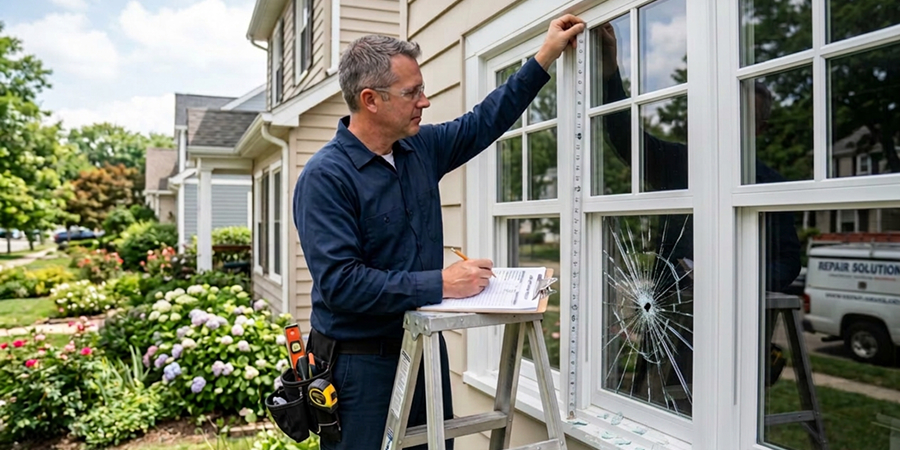
When homeowners look for local glass repair services, the quotes they receive can vary significantly, sometimes by a factor of two or three for what appears to be the same job. Understanding what drives those cost differences makes it easier to evaluate quotes accurately and avoid surprises. Glass replacement pricing is not simply a function of how much glass is broken; it reflects the type of glass, the complexity of the installation, site access, urgency, and local labour market conditions, all of which interact in ways that are not always obvious from the outside.
What Changes the Quote
The most significant cost variable is glass specification. Standard clear double-pane units are priced differently from low-E coated units, and the coating type matters: a LoĒ³-366 unit costs more than a basic LoĒ² unit. Tempered glass carries a premium over annealed glass, and laminated glass, required in some applications for safety or security, adds further cost. Custom tints, decorative patterns, or obscure glass for privacy applications also affect pricing.
Unit size is another major factor. Glass cutting and handling costs scale with size, and very large panes require additional labour and equipment to remove and install safely. Unusual shapes, angled tops, arched units, or non-rectangular configurations require custom fabrication and command a corresponding premium.
Emergency Repairs
Emergency glass repair, same-day or after-hours service following a break-in, storm damage, or accidental impact carries a meaningful cost premium over scheduled work. If the situation does not require immediate professional attention, temporary boarding or heavy-duty plastic sheeting secured over the opening can protect the home while a repair is scheduled through normal channels, typically at a lower total cost. Emergency repairs usually cost more than scheduled service due to after-hours labour, limited availability, and urgency.
According to Statistics Canada's Residential Construction survey data, glass and glazing labour costs in Canada's major urban centres have increased by approximately 18 percent over the past five years, reflecting both material price inflation and the availability of skilled trades. Homeowners in markets with fewer glazing contractors, particularly outside major urban centres, should expect labour premiums to be at the higher end of typical ranges.
Is Repairing Broken Window Glass Enough to Restore Energy Efficiency?
A failed IGU seal does more than produce an unsightly foggy appearance; it meaningfully degrades the window's thermal performance. Replacing the glass unit restores the intended energy performance of the glazing, but it does not address all possible sources of heat loss in the window assembly. Whether a glass repair fully resolves an energy-efficiency problem depends on where the problem actually originates: the glass, the frame, or the installation around the rough opening. The distinction matters because a glass repair that does not target the root cause of the problem will not deliver the comfort or utility bill improvements the homeowner expects.
Seal Failure and Heat Loss
When an insulated glass unit's seal fails, the insulating gas typically escapes and is replaced by ordinary air containing atmospheric moisture. The immediate visible symptom is fogging between the panes, but the thermal consequence is equally significant. An argon-filled unit with a quality Low-E coating can achieve a centre-of-glass U-factor well below 1.0 W/m²K. The same unit, with a failed seal and a lost gas fill, will have reduced thermal performance compared with its original specification.
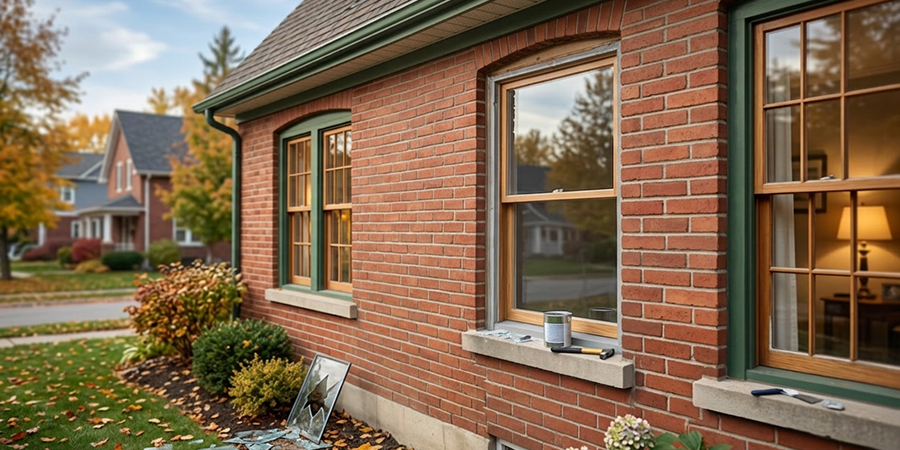
Replacing a failed IGU with a correctly specified new unit restores the window's designed thermal performance. For homes with energy-efficient windows that experienced premature seal failure, this restoration can yield meaningful improvements in comfort and heating costs, particularly in Canadian winters, when the performance gap between a functional and a failed unit is widest.
When Repairs Won't Solve Drafts
Glass replacement restores the thermal properties of the glazing itself, but it does not address air infiltration through other parts of the window assembly. If the primary source of drafts is gaps between the frame and the rough opening, deterioration of the weather-stripping around the sash, or separation at the frame corners, replacing the glass will not produce a noticeable improvement in comfort.
Homeowners who install new glass and still feel drafts should have the frame perimeter inspected on both the interior and exterior. Gaps in caulking around the exterior frame, missing or compressed weather-stripping at the sash, and missing or deteriorated insulation in the rough opening are all common sources of infiltration that glass replacement cannot address. In some older Canadian homes, the gap between the original window frame and the rough opening was never adequately insulated during installation, and the problem has persisted since then, masked by other issues.
For homeowners considering a full window replacement as part of a broader energy efficiency upgrade, it is worth noting that window replacement alone typically yields modest reductions in overall energy consumption unless the existing windows are severely degraded or the replacement units are significantly higher-performing. The Canada Greener Homes Grant program has provided a useful framework for evaluating which upgrades deliver the best return in terms of energy reduction per dollar invested.
What Should Homeowners Know Before Ordering Replacement Glass for a Window?
Ordering replacement glass may sound straightforward, but it involves several specification decisions that directly affect whether the new unit fits, performs properly, and meets building code requirements. Mistakes at the ordering stage are particularly costly because glass is fabricated to specific dimensions and cannot be modified after production. Taking the time to gather accurate information before placing an order, including measurements, coating type, thickness, and safety glazing requirements, is the single most effective way to avoid delays, additional costs, and performance disappointments.
Why Exact Measurements Matter
Ordering replacement glass with incorrect measurements is one of the most common and costly mistakes in a glass replacement project. Unlike many building materials that can be trimmed on site, glass cut to the wrong dimensions cannot be adjusted and must be reordered. The cost of a second unit, combined with the delay, can easily exceed the original savings from a glass-only approach compared to full window replacement.
Measurements for IGU replacement are taken from inside the sash rebate, the channel or groove in the sash that holds the glass. The correct dimension is the size of the glass unit itself, not the overall sash size. For most standard double-pane units, the glass sits in the rebate with a small clearance gap on all sides to allow for thermal expansion, and the glass supplier accounts for this clearance in the unit dimensions. Homeowners should not attempt to account for the clearance gap themselves; the supplier needs the measured glass size, not the rebate size.
Custom-order manufacturing removes much of the measurement anxiety from this process. Every Window Force IGU is fabricated to the exact dimensions and specifications provided at the time of order — we do not round to the nearest stock size or substitute a close equivalent. That means the unit arriving on site has been built for the specific opening, with the correct coating, spacer, gas fill, and glass thickness confirmed in writing before production begins. For homeowners working through our authorized dealer network, this specification documentation travels with the unit and supports the 25-year transferable warranty from the moment of installation.
Can Every Window Style Be Repaired by Replacing Only the Glass?
Window design varies considerably across Canadian homes, and not every style lends itself equally to glass-only replacement. The ease of the repair depends on how the glass is secured within the sash, whether the sash itself can be removed for bench work, and whether a matching replacement unit is available for the specific size and configuration. Some styles are designed with glass replacement in mind; others make the process difficult, expensive, or impractical, particularly when the window is old enough that parts and matching units are no longer in production.
Easy vs Difficult Styles
Not all window configurations are equally suited to glass-only replacement. The ease of the repair depends on how the glass is held in place, whether the sash can be removed from the frame for bench work, and whether replacement units in the correct size and specification are readily available.
Fixed picture windows are among the easiest to re-glaze, provided the unit is a standard rectangular size. The glass is typically held by exterior glazing stops or interior trim, and replacement involves removing those stops, extracting the old unit, and installing the new one. Casement windows are similarly straightforward in most cases: the sash can usually be removed from the frame, making bench work possible and simplifying the installation of the new IGU.
Single-hung and double-hung windows vary in complexity depending on the sash construction. Modern vinyl double-hung sashes are typically designed for easy removal and glass replacement. Older wood double-hung windows with traditional glazing compound and linseed oil putty require considerably more preparation; the old compound must be removed completely, a time-consuming process that may damage the wood if done carelessly.
Why Age Changes Repair Options
Older windows present additional challenges beyond the physical complexity of the repair. Windows manufactured before approximately 1990 may have been built to specifications that are no longer standard, making exact-match replacement units difficult or impossible to source. Non-standard IGU thicknesses, unusual glass sizes, or sash rebate profiles that do not accept modern unit tolerances can all complicate what appears to be a straightforward glass replacement.
Engineer Sergey Essipov, with 20 years of experience in window manufacturing, notes:
We see this regularly with wood windows from the 1970s and 1980s. The original glass was single-pane or an early-generation double-pane with a very narrow gap, and the sash rebate was sized for that unit. Installing a modern argon-filled IGU with a warm-edge spacer into that sash requires either a custom unit to fit the original rebate or modifications to the sash itself. Neither option is impossible, but homeowners should get a clear scope of work before committing to glass-only replacement on an older wood window.
What Are the Most Common Reasons Glass-Only Window Repairs Are Not Possible?
Glass-only repair is sometimes ruled out not by the glass itself but by conditions in the surrounding structure that only become visible once work begins. A broken pane is an obvious trigger for a repair call, but it is not always the whole story. Frame rot, warping, failed hardware, and moisture damage behind the glazing stops can each make a glass-only approach impractical, either because the new unit cannot be installed correctly or because the same problem will recur shortly after installation if the underlying cause is left unaddressed.
Hidden Damage Behind the Glass
The most significant challenge with glass-only repairs is that the glass is often the most visible sign of a problem rather than the problem itself. When a technician removes a failed IGU and finds frame material that is soft, discoloured, or visibly deteriorated behind the glazing stops, the original scope of work changes. This hidden damage is not rare; it is a common finding in windows that have experienced seal failure, because failed seals allow moisture to reach the frame over time, and that moisture causes wood to rot, metal to corrode, and composite materials to delaminate.
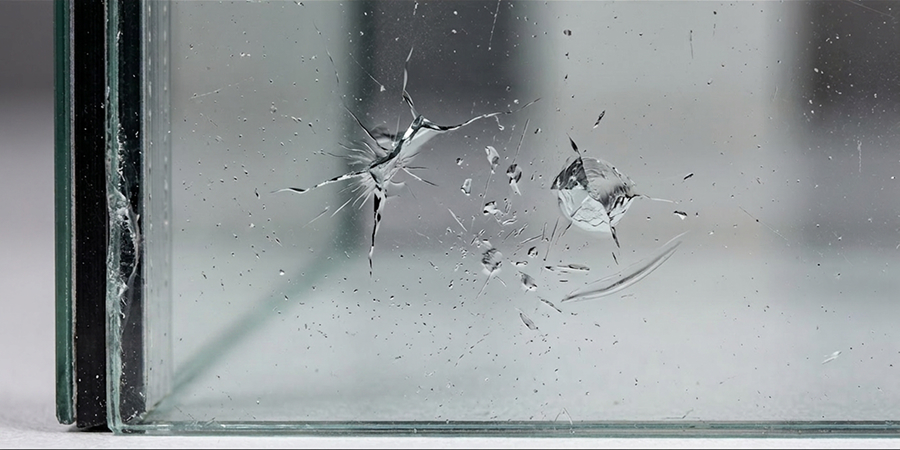
Warping is another factor that makes glass-only replacement difficult or inadvisable. A sash or frame that has moved out of square will not hold a new glass unit correctly, and the gaps or pressure points created by the distortion will stress the new unit's seal from the moment of installation. Replacing the glass without correcting the underlying geometry prolongs the problem rather than solving it.
When Replacement Becomes the Safer Option
Certain conditions make full window replacement the more responsible recommendation, even when the immediate trigger was a broken pane. These include situations where the frame has been penetrated by moisture and the damage extends into the rough opening or the surrounding wall; where the hardware is no longer functional, and replacement parts are unavailable; where the window is so far outside current energy-efficiency standards that re-glazing would produce a unit that still underperforms significantly relative to current requirements; or where the sash itself has failed structurally.
According to research from the National Research Council of Canada, moisture management is a critical factor affecting the durability and service life of building envelope components, including window assemblies. Wood window systems approaching the end of their service life or showing signs of moisture damage should be evaluated as a complete assembly, not merely for glass replacement without a detailed inspection.
Should You Repair or Replace a Window If Only One Pane Is Broken?
A single broken pane creates an immediate practical problem, but the right response depends on more than just the glass. The condition of the frame, the age of the window, the cost of repair versus replacement, and the homeowner's longer-term plans all factor into a decision that is rarely as simple as it first appears. In some cases, repairing the glass is the clear right answer; in others, it is a short-term fix that defers a more significant expense. Working through a structured comparison helps avoid both overspending on a full replacement when it is not needed and underspending on a repair that will not last.
Short-Term Fix vs Long-Term Investment
The decision depends on whether the repair restores a window with useful service life remaining or merely delays an inevitable replacement. Spending money on a new IGU in a window that will need full replacement within a few years is a less efficient use of resources than absorbing the higher upfront cost of a full replacement now and benefiting from a new frame, new hardware, updated weather-stripping, and improved thermal performance from the outset.
| Factor | Repair glass | Replace window |
| Frame | Sound | Damaged |
| Age | Relatively recent | Near the end of service life |
| Hardware | Works properly | Failing |
| Energy goals | Glass is the issue | The whole unit underperforms |
| Budget | Lower upfront cost | Long-term upgrade |
Questions to Ask Before Choosing
Before committing to either approach, homeowners should work through a short set of practical questions. Is the frame demonstrably sound, or are there signs that a thorough inspection might find hidden problems? What is the total cost of the glass-only repair versus the full replacement, and how does that compare to the expected remaining life of the existing frame? Is the window under any existing warranty, either from the original manufacturer or from the company that installed it? Is the current glass specification adequate for the home's energy performance goals, or would a full replacement with more efficient glazing deliver meaningful additional benefit?
Consult a local window specialist to assess whether the existing frame and sash are worth preserving before investing in new glass. A professional inspection that identifies hidden frame damage before the glass is ordered is far less costly than discovering that damage after a new IGU has already been fabricated. Window Force offers assessments for homeowners across Canada and can advise on whether glass-only replacement or full window replacement is the more appropriate recommendation for a specific situation.
How Quickly Should Broken Window Glass Repair Be Handled?
Timing matters with broken glass in a way that it does not with most home maintenance issues. A failed seal produces an aesthetic problem that can wait; a cracked or shattered pane introduces safety, security, and weather risks that can escalate quickly. The urgency of the response depends on the nature and location of the damage, but in most cases, even a temporary protective measure should be in place within hours of the break, not days. Delaying action on a compromised window, particularly during the Canadian heating season or in wet weather, can turn a straightforward glass replacement into a more extensive and costly repair.
Immediate Safety Steps
A broken window is a time-sensitive situation. Beyond the obvious discomfort of a compromised thermal barrier, there are safety, security, and moisture risks that compound with each day the window is left in a damaged state. Glass fragments, whether in a cracked pane that is still partially in place or a fully shattered unit, present an injury risk, particularly where children or pets have access. The first priority after a break is to make the immediate area safe.
When Damage Becomes Urgent
Certain situations justify same-day or emergency repair service rather than waiting for a scheduled appointment. A window that is fully open to the weather during a cold snap or significant rainfall requires immediate temporary protection at a minimum, with professional repair following as soon as possible. A break in a door or other security-critical location should also be addressed promptly, as the compromised opening represents a security vulnerability.
Extended exposure of an unprotected opening to rain can introduce moisture into the rough opening, insulation, and wall cavity within days. Once moisture reaches the structural framing around the window, the remediation scope expands well beyond the window itself. The cost difference between prompt temporary protection and a delayed response can be significant; what starts as a glass replacement can become a partial wall repair if moisture damage is allowed to develop.
According to the Insurance Bureau of Canada, water damage is consistently among the most costly categories of home insurance claims, and window-related water ingress is a common contributing factor. Prompt action to limit weather exposure after glass breakage is the most effective step a homeowner can take to contain the total cost of the incident. Source: https://www.ibc.ca
What Mistakes Should Homeowners Avoid When Planning a Window Glass Replacement Project?
Glass replacement is a more technically precise task than it appears from the outside, and the most common errors are made before the glazier ever arrives on site. Incorrect measurements, mismatched specifications, overlooked safety glazing requirements, and underestimated frame problems can each derail a project that started with a simple, clearly defined scope. Awareness of these pitfalls and a disciplined approach to gathering information before ordering prevent the majority of them.
DIY Measurement Errors
The most consequential mistake in a glass replacement project is providing incorrect measurements to the glass supplier. Unlike materials that can be adjusted on site, a fabricated IGU cannot be modified after production. If the unit arrives at the wrong size, it must be reordered, adding both cost and time to the project. The correct approach is to measure the glass unit itself, not the sash opening, not the rough opening, and not the visible glass dimensions from the interior, and to confirm that measurement from both sides of the sash before placing an order.
A secondary measurement error involves thickness. Homeowners who measure only the width and height of the opening and neglect to confirm the overall IGU thickness will frequently receive a unit that does not fit the sash rebate depth. Modern replacement IGUs are typically 24 mm or 28 mm thick for standard residential double-pane units, but older windows may have been built with thinner or thicker units.
Why Matching Specifications Matters
Ordering a replacement unit without matching the original specifications can, in some cases, result in outcomes worse than the original failure. Installing clear, uncoated glass to replace a low-E unit eliminates the coating's thermal and UV protection benefits. Installing annealed glass in a location that requires tempered glass creates a code compliance problem. Installing a unit with an aluminum spacer in a climate zone that benefits from a warm-edge spacer introduces a thermal bridge that undermines the glass coating's performance.
Engineer Sergey Essipov, with 20 years of experience in window manufacturing, explains:
The specification matching question comes up on almost every replacement IGU order we receive. Homeowners often assume that any double-pane unit is equivalent to any other. The reality is that the coating, gas fill, spacer material, and glass thickness all interact to determine the unit's actual performance. A replacement that changes any of those variables, even if it physically fits the sash, may not deliver the same comfort or energy performance the homeowner expects.
Across Canada, the cost of window replacement can vary by location. Whether you are considering window installation in Alberta, window replacement in British Columbia, or new windows in Ontario, pricing is influenced by glass specifications, unit size, and site conditions. Working with a window manufacturer that provides full specification documentation with every order removes much of the uncertainty from the process.
What Should You Remember Before Choosing Window Glass Replacement?
Glass-only replacement is a practical solution when the glazing has failed, but the window structure remains serviceable. When the frame, hardware, or installation is also failing, a full replacement usually provides better long-term value.
When those conditions are not met, glass-only replacement is, at best, a temporary measure and, at worst, a way of deferring a more significant expense while continuing to lose energy through a degraded frame. The most reliable approach is a professional inspection before ordering glass, not to justify a more expensive solution, but to confirm that the less expensive one will actually work.
For homeowners planning a larger renovation or considering a full window replacement, working with a reputable window manufacturer rather than a general contractor for the glazing component often provides better access to product specifications, warranty documentation, and technical guidance on glass selection. Window Force manufactures energy-efficient windows in a range of configurations and serves communities throughout Canada, including homeowners in British Columbia and other climate zones with specific performance requirements. Our team can assist with product selection, specification matching, and confirming whether a glass-only replacement or installing a new unit is the right approach for your situation.
Window Force manufactures insulated glass units and complete window assemblies on a custom-to-order basis at our Ontario facility, with CSA certification and ENERGY STAR® qualification across all Canadian climate zones. Every unit we produce carries a 25-year transferable warranty, and installations are coordinated through our authorized dealer network, which means the specification you approve is the specification that gets built and installed, with accountability that carries forward even if you sell the home.
Ready to confirm whether glass-only replacement or a full new window is the right call for your situation? Submit a request through our website, and our team will review your opening dimensions, existing glass specifications, and frame condition to recommend the most cost-effective path forward, including a written configuration recommendation and production lead time.
Making the Right Choice Between Glass Replacement and Full Window Replacement
Replacing only the glass is a sound decision when the problem is genuinely confined to the glazing and the surrounding structure remains in good condition. In those cases, it delivers real value: restored thermal performance, improved appearance, and a fraction of the cost of a full replacement. The key is to confirm the assessment with a proper inspection before ordering glass, not after the sash has been disassembled and the frame damage is visible.
For windows approaching the end of their service life, or where the frame, hardware, or rough-opening insulation have begun to fail alongside the glass, glass-only replacement is often the more expensive choice in the long run. A full window replacement in those circumstances provides a new warranty, improved energy performance, and the certainty that every component in the assembly is in known condition.
Frequently Asked Questions
Can I replace just one pane of a double-pane window rather than the whole unit?
In most modern double-pane windows, the sealed insulated glass unit (IGU) is replaced as a complete assembly because it cannot be reliably separated and resealed on site. When one pane cracks or the seal fails, the entire IGU is replaced as a unit. The sash and frame can remain in place if they are in good condition.
How long does a glass-only replacement typically take?
Once the replacement IGU has been fabricated, typically five to ten business days for standard sizes, the installation itself takes one to three hours for most residential windows. Older windows with traditional glazing compound may require additional preparation time.
Will replacing the glass improve my energy bills?
If the original failure was a failed IGU seal, replacing the unit with a correctly specified argon-filled low-E IGU restores the window's designed thermal performance and can produce a measurable improvement in energy costs. If the frame or rough-opening insulation is the primary source of heat loss, replacing the glass alone will not yield a significant energy improvement.
Does replacement window glass need to be tempered?
In specific locations defined by the National Building Code of Canada, safety glazing is required. These include glass within 900 mm of a walking surface, glass in doors and adjacent sidelites, and glass in low windows accessible to children. Replacement glass at these locations must be tempered or laminated, regardless of the original glass type.
Is it cheaper to replace the glass myself?
DIY glass replacement is technically possible for some window styles, but the risks of measurement errors, improper sealing, and non-compliance with safety glazing requirements are significant. Professional installation is generally recommended for IGU replacement, particularly for argon-filled units, where seal integrity depends on proper installation technique.
How do I know if my window has a low-E coating?
The edge label of most modern IGUs lists the coating designation and gas fill. A low-E coating can sometimes be identified by comparing reflections from different glass surfaces, but the most reliable method is to check the IGU label or manufacturer specifications.
Can a fogged double-pane window be defogged rather than replaced?
Defogging services, which drill holes in the unit, apply cleaning solutions, and insert anti-fog plugs, are offered by some companies as a lower-cost alternative to IGU replacement. The results are variable; the thermal performance of the original unit is not fully restored, and the procedure typically voids any remaining warranty on the unit. IGU replacement is the more reliable and durable solution.
What is the lifespan of a replacement IGU?
Quality replacement IGUs from established manufacturers carry seal warranties of 10 to 20 years against failure. Field studies of insulated glass units across diverse climates have found cumulative seal failure rates under 10 percent at 25 years for well-manufactured units, indicating that a correctly specified and installed replacement IGU can be expected to outlast the original in many cases.
People Also Ask