

For most Canadian homeowners, tilt-and-turn windows are worth it, but only when the application is right. They outperform standard casement and awning styles on air sealing, ventilation control, and interior cleaning access, but they require more planning around inward clearance and carry a higher unit cost. This article covers everything a homeowner or contractor needs to make that assessment: how the mechanism works, where these windows perform best, and what they actually cost in a Canadian project.
Tilt-and-turn windows sit at the intersection of precision hardware and thermal engineering — which means the manufacturing decisions behind them matter as much as the design. Window Force has operated as a custom vinyl window manufacturer since 2007, producing windows to order at an 80,000 sq ft facility in Ontario for builders, contractors, and homeowners across Canada. The hardware tolerances, installation sequencing, and climate performance considerations described throughout this guide reflect what nearly two decades of production and field data actually show.
Key Takeaways
- Tilt-and-turn windows operate in two distinct modes: top-tilt for controlled ventilation and side-turn for full inward opening, making them more functional than most single-mode window styles.
- Their multi-point locking hardware and tight perimeter seals make them among the most weather-resistant window options for Canadian climates, where air leakage and heat loss are primary performance concerns.
- ENERGY STAR certification for windows in Canada is assessed by Natural Resources Canada using U-factor and Energy Rating thresholds. Knowing these numbers before purchasing any window is essential, not optional.
- Tilt-and-turn windows require an inward clearance of roughly 18 — 24 inches, depending on sash size; ignoring this during planning is the most common installation mistake in renovation projects.
- They are particularly well-suited to bedrooms, upper-floor rooms, condos, and locations where exterior access for cleaning is restricted or unsafe.
What Are Tilt-and-turn Windows, and How Do They Work?
Tilt-and-turn windows are named after their two operating modes, both controlled by a single handle. Rotating the handle 90 degrees activates tilt mode: the bottom of the sash tilts inward from the top, creating a narrow ventilation gap while the perimeter hardware remains engaged. Rotating the handle 180 degrees switches to turn mode: the sash swings inward on side hinges, opening like a door for full access to the glass and the exterior.
The hardware that makes this possible is a European-style multi-point locking system. When closed, steel locking points engage simultaneously along the top, bottom, and both sides of the frame, producing a perimeter seal that single-point locks cannot match. This is not just a security feature; it is the primary reason Tilt-and-turn windows outperform many other styles for air and water infiltration resistance.
The tilt position is often used in Canadian homes for day-to-day ventilation, particularly during transitional seasons.
Common Rooms Where They Are Used
Tilt-and-turn windows are most commonly found in bedrooms, kitchens, and bathrooms, where ventilation control matters more than maximum opening width. They are also common in basements with grade-level openings, upper-floor rooms where exterior ladder access is impractical, and modern-style condominiums where clean sightlines and flush profiles are a design priority.
Windows Near Me
Are Tilt-and-turn Windows Worth It for Canadian Homes?
For most Canadian homeowners, the answer is yes, with qualifications. The value proposition depends less on the style itself than on where and how it is installed.
In a cold climate, the combination of multi-point perimeter sealing and thermally broken framing means that a properly manufactured and installed Tilt-and-turn window will outperform many competing styles in terms of air leakage. That matters because heat loss through gaps and seals is often greater than heat loss through the glass itself. The tilt position also allows a homeowner to ventilate without creating the large, difficult-to-control opening that a fully swung casement produces, which is particularly useful for bedrooms in spring and autumn when temperatures fluctuate overnight.
Homeowners pursuing replacement windows in Vancouver frequently prioritize tilt ventilation and single-handle operation, practical advantages in high-rise and multi-unit buildings where accessible cleaning and controlled airflow are everyday considerations. In Calgary, where temperature swings between seasons are more extreme, those same buyers looking at replacement windows in Calgary tend to focus on the airtight compression seal: the feature that addresses acoustics in Vancouver functions as a thermal barrier in Alberta.
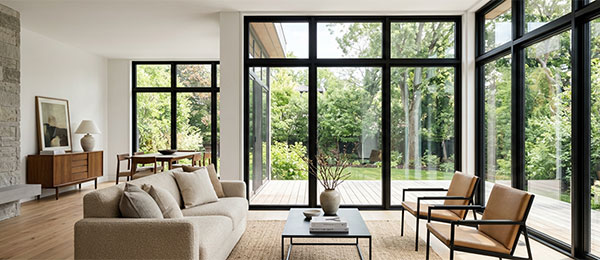
What Are the Main Advantages and Disadvantages of Tilt-and-turn Windows?
Tilt-and-turn windows are designed to provide greater flexibility than most conventional window styles. Their dual-opening mechanism allows homeowners to choose between secure everyday ventilation and full access for cleaning or emergency egress. Understanding both the benefits and limitations of this design is essential before deciding whether it is the right fit for a particular room or project.
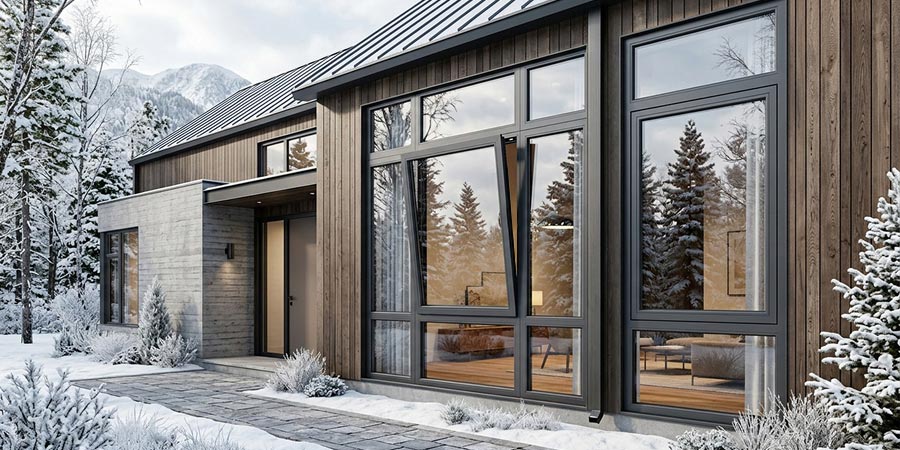
Ventilation and Comfort
The tilt position delivers what building professionals call controlled natural ventilation. Instead of a fully open sash that lets in unfiltered weather, the tilt gap directs incoming air upward across the ceiling rather than directly across the occupied zone. This reduces the sensation of draught at seated height and helps regulate room temperature more consistently than a wide-open window. For rooms where someone sleeps or works for extended periods, that is a meaningful comfort advantage.
Cleaning Access
Turn mode allows both faces of the glass to be cleaned from inside the home. For upper-floor windows or any opening facing a wall, fence, or structure that blocks exterior access, this is a practical necessity rather than a luxury. The full inward swing also allows the frame corners and hardware to be wiped down without requiring a ladder, an extension tool, or a contractor visit.
Security
Multi-point locking is a security advantage, though its significance varies by floor level and neighbourhood. More relevant to most homeowners is that the tilt position remains engaged on multiple sides of the frame, making a window left in tilt mode overnight more secure than a single-latch casement left ajar. The distribution of locking points around the sash also helps resist deformation and reduces stress on individual hardware components, particularly in larger operable windows.
Disadvantages and Limitations
The inward-opening sash is the most common planning oversight. In turn mode, the sash swings completely inside the room, requiring clear floor and wall space. Furniture positioned within 18 — 24 inches of the window opening will prevent the sash from opening fully or at all. This is rarely a problem in new construction, where the layout can be planned around the window, but it creates real constraints in retrofit and window replacement projects where the room is already furnished.
The hardware is also more complex than standard casement or hung hardware, which increases both the upfront cost and the probability of needing adjustment over the product's lifetime. European-style multi-point hardware can be adjusted by a qualified installer, but it is not a DIY repair for most homeowners.
Frame geometry is what makes multi-point hardware reliable over time. Window Force manufactures tilt-and-turn frames from lead-free uPVC with UV stabilizers using fusion-welded corners — a construction method that maintains the 90° geometry at each corner without the dimensional drift that mechanically fastened frames develop over years of thermal cycling. For a window style where the locking mechanism depends on consistent frame squareness to function correctly, that structural stability is not incidental; it is a prerequisite for long-term hardware performance.
How Much Does a Tilt-and-turn Window Cost in Canada?
The cost of tilt-and-turn windows in Canada is influenced by a combination of product and project variables, none of which operate in isolation. Understanding what drives price helps homeowners compare quotes on equal terms rather than choosing the lowest number on a spreadsheet.
Frame material is typically the starting point. Vinyl frames are standard for Canadian residential construction, offering a balance of thermal performance, low maintenance, and manufacturing precision. Aluminum-clad and fibreglass options are available and carry higher unit costs. Glass package selection, double or triple pane, low-E coating variant, argon versus krypton gas fill adds to the unit cost but also directly affects energy performance ratings and long-term operating costs.
Hardware finish, custom colour coating, grille inserts, and sash sizing each affect the price. For window replacement projects, the cost of installation labour, framing adjustments, insulation, and exterior finishing must be added to the product cost. Projects involving rot remediation, non-standard rough openings, or multi-storey access will incur additional charges that a surface-level quote may not show upfront. Homeowners comparing Tilt-and-turn quotes against standard windows should confirm that both quotes include the same scope of work, glass package, and warranty terms before drawing conclusions.
| Cost Variable | Impact on Price | Notes |
| Frame size | Proportional | Larger sash = more hardware travel required |
| Glass package | Moderate to high | Triple pane + low-E + argon raises unit cost |
| Custom colour | Moderate | Factory-applied colour coating vs. standard white |
| Hardware complexity | Moderate | Multi-point vs. single-point |
| Installation conditions | Variable | Retrofit vs. new construction; floor level; access |
| Project volume | Reduces unit cost | Per-unit pricing typically improves for 5+ windows |
For projects in Alberta, the cost of window installation in Alberta tends to reflect local labour rates, project scale, and seasonal timing. Winter installations may carry premium charges for cold-weather sealing procedures.
What Should Homeowners Know About Tilt-and-turn Window Installation?
Tilt-and-turn window installation follows the same foundational sequence as any precision fenestration project, but the multi-point hardware and heavier sash weight introduce additional variables that affect long-term performance.
Engineer Sergey Essipov, with 20 years of experience in window manufacturing, explains:
At our facility, we manufacture tilt-and-turn frames with fusion-welded corners precisely because the multi-point hardware depends on the frame holding its geometry over time. If the rough opening is racked even a few millimetres out of plumb at installation, the locking mechanism will bind or fail to engage fully, and no amount of hardware adjustment will compensate for a frame that was never square to begin with. Squaring the opening before the frame goes in is the single most important step an installer can take.
Replacement Installation
In a replacement scenario, the existing frame or liner is removed, the rough opening is inspected for rot, moisture damage, and dimensional accuracy, and the new frame is shimmed level and plumb before fastening. Air sealing at the perimeter, typically with low-expansion spray foam and a backing backer rod, is the step most frequently shortchanged in low-cost installations. Gaps in the perimeter seal are not visible once trim is reinstalled, but they directly undermine thermal and acoustic performance.
New Construction Installation
New construction allows the rough opening to be framed to the manufacturer's specified dimensions from the start, which simplifies both fitting and air sealing. Nailing fin options, where available in the product line, allow direct attachment to the stud framing before exterior cladding is applied, providing a more effective weather barrier than retrofit methods.
Post-Installation Adjustment
All European-style multi-point hardware includes adjustable locking points and hinge compression settings. After installation and after the first full seasonal cycle, a qualified installer should check that the sash compresses evenly against the frame gasket in the closed position. Uneven compression can cause air and water infiltration at the weakest point, even in a correctly manufactured window.
Post-installation checklist:
- Sash operates smoothly through both Tilt-and-turn positions without binding
- All locking points engage without force when the handle is rotated
- No visible gap between sash and frame when closed
- Weep holes at the sill are clear and draining correctly
- Exterior sealant is continuous and adheres to all four perimeter corners
- Interior air seal is complete before trim is reinstalled

How Do Tilt-and-turn Windows Compare with Casement, Awning, and Sliding Windows?
Each window style involves real trade-offs, and the right choice depends on the room, the opening size, and the homeowner's priorities. The table below summarises the key practical differences.
| Feature | Tilt-and-turn | Casement | Awning | Sliding |
| Opening direction | Inward (tilt top/turn side) | Outward on side hinges | Outward on the top hinge | Horizontally in frame |
| Ventilation control | Two-level: tilt or full turn | Full width when open | Partial, protected from rain | Half-width maximum |
| Cleaning access | Both faces from the interior | Exterior face from inside | Limited — fixed hinge angle | Exterior requires exterior access |
| Air leakage | Very low (multi-point seal) | Low to moderate | Low | Moderate (sliding seal degrades) |
| Inward clearance needed | Yes — 18 — 24 in., depending on size | No | No | No |
| Best applications | Bedrooms, upper floors, condos | Living rooms, kitchens | Bathrooms, basement vents | Wide, low openings |
| Relative cost | Higher | Moderate | Moderate | Lower |
Casement windows remain the more common choice for main-floor living areas where outward opening does not create a clearance problem and where maximum light transmission is the priority. Tilt-and-turn windows are more likely to outperform casements in rooms where ventilation precision, interior cleaning access, and multi-point security are the primary concerns.
Are Tilt-and-turn Windows Energy Efficient in Canadian Weather?
Tilt-and-turn windows, when manufactured to correct specifications, perform well against both metrics. The perimeter multi-point seal reduces real-world air leakage below what most single-latch styles achieve in testing, and double or triple-pane insulated glass units with argon gas fill and low-E coating bring U-factor values within the ENERGY STAR Most Efficient range. The keyword is manufactured correctly: the U-factor on the label reflects the performance of a tested unit; actual performance in service depends on installation quality and the integrity of the perimeter seal.
Engineer Sergey Essipov, with 20 years of experience in window manufacturing, notes:
A high U-factor rating on the label can be completely undone by a poor perimeter seal during installation. We always recommend that installers reference the manufacturer's installation guide for the specific product; the tolerances and sealing sequence for a Tilt-and-turn unit are different from a standard casement, and treating them the same way is a common source of performance complaints.
For homeowners seeking energy-efficient windows in British Columbia, climate zone and building envelope details should inform the selection of the glass package. Coastal British Columbia has milder winters but higher humidity than prairie provinces; a high ER window that manages solar gain efficiently may outperform a very low U-factor window depending on building orientation.
Can Tilt-and-turn Windows Improve Ventilation and Indoor Comfort?
Natural ventilation through windows is one of the primary strategies available to homeowners for maintaining indoor air quality. Health Canada's publication Ventilation and the Indoor Environment (2018) establishes that adequate ventilation reduces indoor pollutant and moisture levels that can directly affect occupant health and comfort, and that residential ventilation may occur naturally or mechanically.
Tilt-and-turn windows address the most common ventilation problem in Canadian homes: the binary choice between fully closed (no air exchange) and fully open (uncontrolled heat loss or rain entry). The tilt position creates a sustained, directional air exchange that can run for hours without the occupant needing to monitor weather conditions. Because the gap directs incoming air upward, the mixing effect across the room is more even than a casement or awning opened at full swing.
Condensation management is a secondary benefit of ventilation. In bedrooms and bathrooms where moisture generation is high, regular tilt-mode ventilation reduces surface condensation on glazing and frames, which, over the years of service, translates into lower maintenance demands and a reduced risk of frame deterioration at corners and sill joints. This is particularly relevant in cold climates where the temperature differential between interior glass surfaces and room air is greatest.
Mechanical ventilation remains necessary regardless of window style in any home with a sealed envelope and a heat recovery ventilator. Windows should be understood as a complement to the mechanical system, not a replacement for it.
What Window Glass and Frame Options Matter Most for Tilt-and-turn Windows?
The glass package is the single largest determinant of thermal performance in any insulated window unit. For a Tilt-and-turn window, the frame and hardware contribute to performance through sealing quality, but the glazing configuration drives the U-factor and ER numbers on the label.
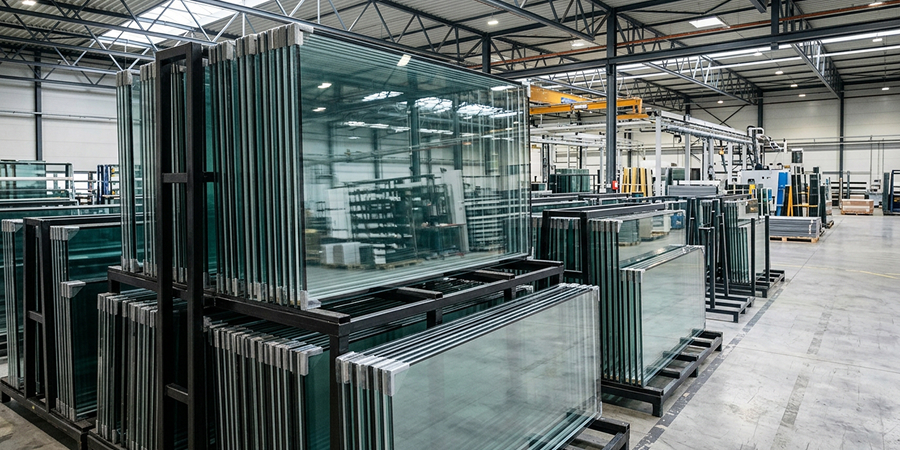
Glass options for Tilt-and-turn windows in Canadian residential construction typically follow this decision hierarchy:
Double vs. triple pane
Triple pane adds a third glass layer and an additional sealed gas cavity, reducing U-factor by roughly 20 — 30% compared to double pane. The weight increase is meaningful; triple-pane sashes are heavier and require hardware rated for the additional load. For most Ontario and prairie installations, triple pane provides the greatest long-term operating cost benefit.
Low-E coating
Low-emissivity coatings are applied to interior glass surfaces to reduce radiant heat transfer. The coating specification, hard coat vs. soft coat, and which surface it is applied to affect both U-factor and solar heat gain coefficient. A window manufacturer's technical representative can advise on the optimal coating position for a given building orientation and climate.
Gas fill
Argon is the standard fill gas for Canadian residential windows; krypton provides marginally better insulating performance but at a higher cost. Both gases reduce convective heat transfer within the sealed unit relative to air fill.
Warm-edge spacers:
The spacer system separating the glass panes at the perimeter of the sealed unit is a critical point of thermal bridging. Conventional aluminum spacers conduct heat efficiently along the edge, causing condensation along the glass perimeter in cold weather. Polymer or stainless steel warm-edge spacers reduce this effect measurably.
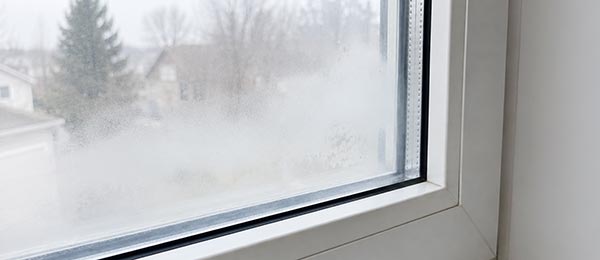
Field studies in cold climates have shown that edge-of-glass temperatures are often the first locations where condensation develops during winter. Warm-edge spacer systems improve interior glass edge temperatures, reducing the risk of condensation and helping maintain occupant comfort near window openings.
The thermal bridging problem at the glass edge is one that conventional aluminum spacers structurally cannot solve — the metal conducts heat regardless of how well the rest of the unit is assembled. Window Force uses a metal-free warm-edge spacer system with a dual-seal configuration, which measurably raises interior glass edge temperatures in cold weather and reduces the condensation risk left unaddressed by standard spacers. For tilt-and-turn units, where the sash spends more time in the tilt position with sustained airflow near the glass perimeter, that edge performance is particularly relevant.
Where Should Tilt-and-turn Windows Be Installed in a Home?
Room selection matters more for Tilt-and-turn windows than for most other styles because the inward-opening sash requires clear interior space that not every room provides.
| Room | Suitability | Key Consideration |
| Bedroom | Excellent | Tilt mode for overnight ventilation; clearance planning needed |
| Kitchen | Good | Turn mode allows cleaning near countertop height; ensure sash clears cabinetry |
| Bathroom | Good | Ventilation control valuable; measure clearance from fixtures |
| Upper floor / condo | Excellent | Interior cleaning access eliminates the need for exterior ladder work |
| Basement | Moderate | Verify inward clearance against furniture and stored items |
| Living room | Depends on layout | Large sashes require more clearance; casement may be more practical |
| Street-facing rooms | Good | Multi-point security and the laminated glass option are useful here |
The general principle is to confirm the available inward swing space before specifying the sash size. A 36-inch wide Tilt-and-turn sash requires approximately 20 inches of unobstructed floor space in front of the opening when in turn mode. Rooms with furniture positioned against the exterior wall, or with radiators, baseboards, or heating vents directly below the sill, require careful measurement and may need furniture repositioning or a narrower sash configuration.
For homeowners working with Window Force's service areas across Ontario, Alberta, and British Columbia, a pre-installation site measurement by a qualified representative will identify clearance constraints before the product is manufactured to size.
Are Tilt-and-turn Windows the Right Choice for Your Canadian Home?
For homeowners who prioritize ventilation control, interior cleaning access, and weather-sealing performance, Tilt-and-turn windows are a technically sound choice for most Canadian climates. They are not the cheapest option per unit, and they require more planning around inward clearance than standard outward-opening styles. But for the right application, upper-floor rooms, condos, modern builds, or any opening where exterior access is limited, the functional advantages are concrete and durable over the product's lifetime.
They are a less natural fit for large main-floor openings where maximum light and easy screen installation are priorities, or for rooms where furniture placement makes the required inward clearance genuinely impractical. In those situations, a casement or awning window typically produces better results with less constraint.
For any Canadian homeowner considering a window replacement or new construction project, the decision should start with performance specifications: confirm the U-factor and Energy Rating against NRCan's ENERGY STAR thresholds, specify the glass package for the climate zone and building orientation, and plan for professional installation to a recognized standard such as CSA A440.4. The window itself is only as good as its installation. Window Force manufactures tilt-and-turn windows to CSA and ENERGY STAR® standards across all Canadian climate zones, supplies them custom-to-order through an authorized dealer network, and backs every unit with a 25-year transferable warranty. That combination — verified performance certification, professional installation through qualified dealers, and long-term warranty coverage — removes the uncertainty left by generic purchasing decisions.
Conclusion: Are Tilt-and-turn Windows Worth It in Canada?
Tilt-and-turn windows earn their place in Canadian residential construction when the application is right. Their combination of multi-point weather sealing, two-mode ventilation, and interior cleaning access addresses real performance and maintenance problems, not features invented for marketing purposes. For bedrooms, upper-floor rooms, condos, and any opening without practical exterior access, they consistently outperform simpler window styles throughout their service life.
The decision becomes straightforward once you confirm two things: that the room has adequate inward clearance for the specified sash size, and that the product meets NRCan's ENERGY STAR thresholds for your climate zone. If both conditions are met, working with a qualified Canadian window manufacturer and professional installer removes the remaining variables. The window does what the specification says it will do for decades.
Frequently Asked Questions
What is the difference between tilt mode and turn mode on a Tilt-and-turn window?
Tilt mode opens the top of the sash inward by a few inches, creating a controlled ventilation gap while the hardware remains engaged on three sides. Turn mode swings the entire sash inward on side hinges, like a door, for full access to the glass exterior and maximum airflow. Both functions are controlled by rotating the same handle to different positions.
Do Tilt-and-turn windows work well in cold Canadian winters?
Yes. The multi-point perimeter locking system compresses the sash against the frame gasket on all four sides simultaneously, producing significantly lower air leakage than single-latch window styles. When combined with a triple-pane glass package and warm-edge spacers, they meet Canadian ENERGY STAR thresholds in all climate zones.
How much interior clearance does a Tilt-and-turn window require?
In turn mode, the sash swings fully inward, requiring roughly 18 — 24 inches of unobstructed floor space depending on sash width. Furniture, radiators, or other fixtures within that zone will prevent the window from opening fully. This clearance requirement should be confirmed before specifying the sash size in any retrofit project.
Are Tilt-and-turn windows more expensive than casement windows?
Generally yes. The multi-point hardware and more complex sash operation increase the per-unit manufacturing cost relative to standard casement or awning windows. The gap varies by manufacturer, glass package, and project volume, but homeowners should plan for a meaningful price premium per unit, partially offset by lower maintenance costs over the window's service life.
Can Tilt-and-turn windows be used with window screens?
Standard insect screens are more difficult to integrate with Tilt-and-turn windows than with outward-opening styles, because the sash opens inward past the screen position. Purpose-built interior screens exist for Tilt-and-turn applications but are less common than standard exterior mesh screens and should be specified at the time of order rather than added after installation.
How do I verify that a Tilt-and-turn window meets ENERGY STAR requirements in Canada?
Natural Resources Canada maintains a searchable product list of all ENERGY STAR-certified windows sold in Canada. Before purchasing, confirm that the specific model appears on that list and note the product's U-factor and Energy Rating values.
People Also Ask