

Replacing windows in a Canadian home is not simply a matter of choosing a frame style. The glass package, coatings, gas fills, and insulated unit construction determine how much heat stays inside on a January night and how much solar radiation is blocked on a July afternoon. Cardinal Glass Industries is one of the most widely recognized glass suppliers in the North American window industry, and understanding what that designation actually means can help homeowners make a more informed purchasing decision.
Most homeowners hear "Cardinal Glass" and assume that’s the whole story, but the name on the spec sheet tells you almost nothing on its own. What actually determines how a window performs is the coating designation behind it, and that’s the detail most sales conversations skip past. Since 2007, Window Force has manufactured custom vinyl windows at an 80,000 sq ft production facility in Ontario, and our team walks through the same LoĒ coating categories covered in this guide — LoĒ², LoĒ³-366, and LoĒ-i89 — every time an order specifies a coating instead of a performance number.
Kay Takeaways
- Cardinal Glass Industries is one of North America's most established insulated glass manufacturers, supplying coated glass units to premium window brands rather than selling finished windows directly to consumers.
- The performance of a Cardinal Glass package depends heavily on the selected LoĒ coating system. Products such as LoĒ²-272, LoĒ³-366, and LoĒ-i89 serve different performance objectives and are not interchangeable.
- According to Natural Resources Canada, inefficient windows can account for up to 25% of a home's heating and cooling loss. Choosing the right glass package for your climate zone is one of the highest-impact decisions in a window replacement project.
- Cardinal Glass performs well in cold Canadian climates, but the glass alone does not determine window performance; frame material, spacer type, installation quality, and overall IGU construction all contribute to the rated U-factor.
- Homeowners should verify glass specifications through NFRC labels and ENERGY STAR documentation rather than relying on the brand name alone.
What Is Cardinal Glass and Why Is It Used in Replacement Windows?
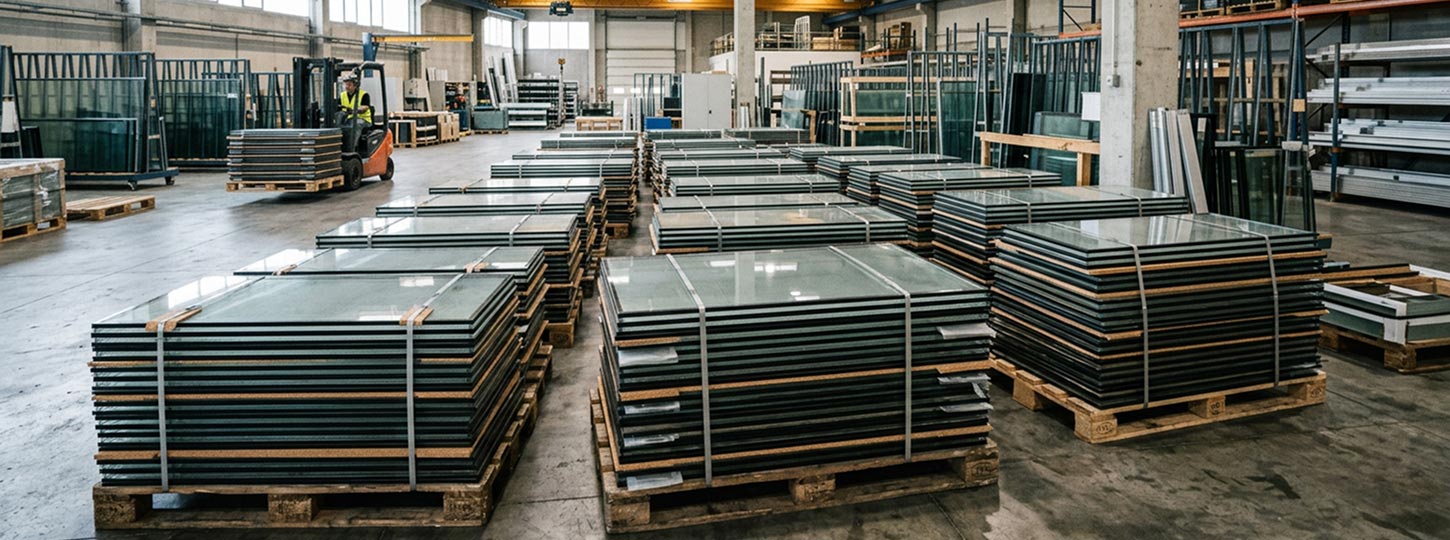
Cardinal Glass Industries is a privately held American manufacturer headquartered in Eden Prairie, Minnesota, with production facilities across the United States. The company does not manufacture finished windows. Instead, it produces coated glass and insulated glass units (IGUs) that window fabricators incorporate into their own products. Many premium vinyl and fibreglass window brands in Canada source their glass packages from Cardinal.
The Company and Its Role in the Supply Chain
Cardinal operates at the glass fabrication stage of the window industry. The company supplies coated glass panes for installation in window assemblies rather than manufacturing complete windows. This distinction matters for homeowners. When a window company advertises "Cardinal Glass," they are referencing the glazing component inside the unit, not the overall product. The window's total performance is determined by how that glass is assembled into the complete unit, including the frame, spacer, gas fill, and installation.
Cardinal's primary contribution to the window industry is its proprietary LoĒ coating technology. These soft-coat, sputtered silver-based coatings are applied under vacuum and incorporated into sealed IGUs, where they remain protected from contact, cleaning, and weathering. Cardinal holds trademarks for the specific formulations designated as Loē, LoĒ², LoĒ³, and Quad Loē, which describe distinct coating compositions, not just marketing tiers.

Industry Standing
Cardinal is among the largest glass coating operations in North America by production volume. Window manufacturers specify Cardinal glass packages for several reasons: manufacturing consistency, coating performance data, and the availability of technical documentation that supports ENERGY STAR and NFRC certification. For window companies supplying builders, dealers, and contractors, especially those serving large residential projects in Canada, supplier traceability and manufacturing consistency are practical requirements rather than prestige factors.
Windows Near Me
How Does Cardinal Glass Differ from Standard Window Glass?
The term "standard window glass" typically refers to either single-pane glazing or early-generation double-pane units assembled without a meaningful Low-E coating. Cardinal glass packages differ from these in three measurable ways: surface coatings, gas fill, and unit construction.
| Feature | Standard Double-Pane Glass | Cardinal LoĒ IGU |
| Low-E coating | None or basic hard-coat | Soft-coat sputtered LoĒ, LoĒ², or LoĒ³ |
| Gas fill | Air | Argon (standard) or krypton (premium) |
| Emissivity | ~0.84 (uncoated) | 0.02 — 0.04 (depending on coating) |
| U-factor (centre-of-glass) | ~1.1 — 1.3 W/m²K | ~0.29 — 0.50 W/m²K |
| UV blockage | Minimal | Up to 95% (LoĒ³-366) |
| Interior surface temperature | Cold in winter | Closer to room temperature |
The practical consequence of this difference is measurable comfort. A standard double-pane window in a Canadian winter will have an interior glass surface cold enough to create radiant discomfort and condensation. A properly specified Cardinal LoĒ unit keeps the interior surface temperature warmer by reflecting heat back into the room rather than allowing it to pass through the glass.
What Energy-Efficiency Technologies Are Available in Cardinal Glass Products?
Cardinal's product catalogue is built around three primary LoĒ coating families, each optimized for a different performance objective. Understanding the distinctions between them is important because specifying the wrong coating for your climate can yield suboptimal or, in some cases, counterproductive results.
LoĒ² Balanced Year-Round Performance
LoĒ²-272 and LoĒ²-270 are Cardinal's mid-range coatings, designed for balanced performance across heating and cooling seasons. They reflect a moderate amount of solar heat in summer while retaining interior heat in winter. LoĒ²-272 provides slightly higher visible light transmittance; LoĒ²-270 offers marginally more solar control. Both are well-suited to mixed climates and remain among the most widely used glazing options in Canadian residential construction.
LoĒ³-366 Maximum Solar and UV Control
LoĒ³-366 uses a triple-layer soft-coat formulation that achieves a higher degree of solar control than LoĒ² products. It blocks nearly all UV radiation and significantly reduces solar heat gain, making it appropriate for south- and west-facing windows in homes with high summer solar loads. For Canadian homeowners in climates with short but intense summers and long heating seasons, LoĒ³-366 needs to be specified with care: its lower solar heat gain coefficient (SHGC) means less free passive solar heating in winter, which can increase heating costs if used indiscriminately.
LoĒ-i89 Cold-Climate Winter Performance
LoĒ-i89 is an indium-based fourth-surface coating designed specifically for cold-climate performance. Unlike the coatings applied to inner surfaces of the IGU, LoĒ-i89 is applied to surface 4 of a double-pane unit (the room-facing side of the inner pane), where it reflects radiant heat back into the living space. When combined with a LoĒ³ or LoĒ² coating and argon fill, a double-pane unit with LoĒ-i89 can achieve a centre-of-glass U-factor of 0.20 performance that previously required a triple-pane unit.
This value refers specifically to the centre-of-glass performance of a specific IGU configuration and should not be compared directly with whole-window U-factor ratings. Typical Cardinal LoĒ IGU configurations achieve centre-of-glass U-factors in the range of approximately 0.29 — 0.50 W/m²K, while specialized Loē-i89 configurations can achieve around 0.20 W/m²K under specific conditions.
According to Natural Resources Canada's technical guidance on window upgrades, a Solar Heat Gain Coefficient of 0.3 — 0.4 is generally optimal for energy-efficient and new-build homes in Canada, reflecting the need to balance winter solar gain with summer overheating. The correct Loē coating selection directly determines whether your window's SHGC falls within or outside that range.
What Are the Main Advantages of Choosing Cardinal Glass Windows?
The advantages of Cardinal Glass windows come from the combination of advanced Low-E coating technology, insulated glass unit design, and performance characteristics that address the main concerns of Canadian homeowners. The key benefits include improved energy efficiency, protection against UV damage, better condensation resistance, and enhanced year-round comfort.
Energy Performance
The primary advantage of a Cardinal LoĒ IGU over uncoated or hard-coat glass is a substantive reduction in heat transfer. Soft-coat Low-E coatings have an emissivity in the range of 0.02 — 0.04, compared with approximately 0.84 for uncoated glass, a difference that translates directly into a lower U-factor at the centre of glass. For Canadian homeowners, where heating season energy costs are the dominant driver of window payback, this performance difference is financially meaningful over the life of the window.
UV and Furniture Protection
Cardinal LoĒ³-366 glass blocks up to 95% of UV radiation. This level of UV filtration significantly slows the degradation of hardwood flooring, upholstered furniture, artwork, and textiles near windows, a benefit that standard glass, which offers minimal UV protection, cannot match. The coating achieves this without a visible tint, while maintaining high visible-light transmittance.
Condensation Resistance
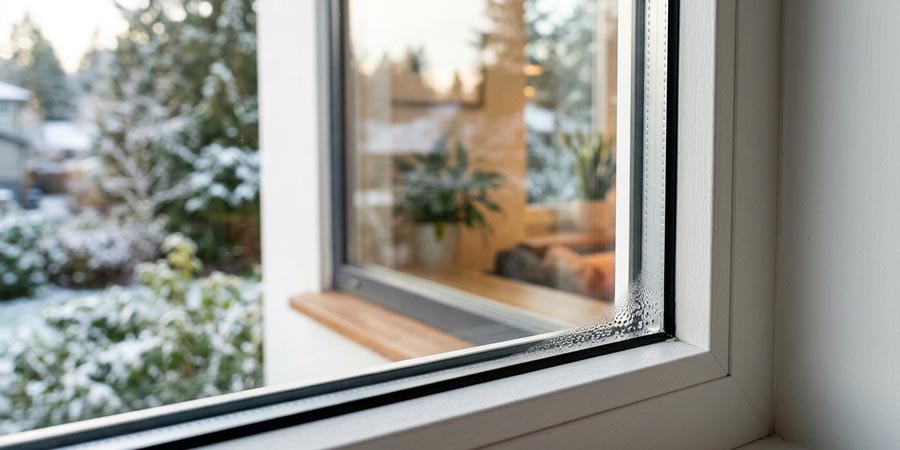
A properly specified Cardinal Loē unit keeps the interior glass surface warmer than uncoated glass under the same conditions, reducing the frequency and severity of condensation on the interior surface. Condensation is a symptom of surface temperatures falling below the dew point of indoor air; by raising the interior glass temperature, Low-E coatings shift the conditions under which condensation forms. This is a meaningful benefit in Canadian winters, where large indoor-to-outdoor temperature differentials are sustained for months at a time.
Noise Attenuation
The multi-layer construction of an IGU, with two or more glass panes separated by an air or gas space, provides a degree of noise attenuation relative to single-pane glazing. Cardinal's LoĒ-i89 units, designed with a thicker glass configuration, offer modestly improved acoustic performance compared to standard double-pane units.
Engineer Sergey Essipov, with over 20 years of experience in window manufacturing, puts a number on it:
Glass thickness alone gets you maybe a 2 — 3 decibel improvement. At our facility, we don't treat that as the whole acoustic package; we pair the IGU with a multi-chamber uPVC frame because the dead-air pockets within the profile itself absorb mid-frequency road noise that the glass can't handle on its own. On a Loē-i89-specified unit in particular, that combination is the difference between a homeowner near an arterial road noticing the upgrade and not noticing it at all.
Are There Any Disadvantages to Cardinal Glass That Homeowners Should Consider?
Cardinal Glass is not without limitations, and several common assumptions about the product deserve scrutiny.
Cost and Value Calibration
Windows incorporating Cardinal LoĒ coatings carry a higher unit cost than those built with standard or hard-coat glass. The premium reflects the manufacturing complexity of sputtered soft-coat coatings and the quality of the IGU construction. Whether that premium is justified depends on the climate, the home's heating load, and how long the homeowner expects to remain in the property. In most Canadian climates, the energy savings over a 10 — 15-year period will offset the incremental cost of a quality Loē package, but this calculation is not universal.
The value calculation also depends on who is responsible for the unit after installation. Window Force manufactures to order through an authorized dealer network rather than holding pre-built inventory, so a homeowner specifying a high-performance LoĒ glass package isn't absorbing the carrying cost of unsold stock; the price reflects that exact configuration. Every unit we build carries a 25-year transferable warranty, which moves a meaningful share of the long-term cost-versus-value question off the homeowner's books.
Performance Depends on the Whole Window, Not Just the Glass
This is the most consequential limitation for consumers to understand. Cardinal supplies glass to dozens of window manufacturers, and those manufacturers assemble it into products of widely varying quality. A Cardinal LoĒ² glass package installed in a poorly constructed vinyl frame with an aluminum spacer will underperform the same glass package installed in a quality frame with a warm-edge spacer. The NFRC-rated U-factor for the complete window assembly accounts for frame conduction, edge-of-glass heat loss, and spacer performance, not just the centre-of-glass value. Cardinal glass can significantly improve thermal performance, but the final result depends on the complete window assembly, including the frame, spacer, gas fill, and installation quality.
This is the gap Window Force engineers around at the frame level. Our lead-free uPVC profiles use UV-stabilized compounds to resist the chalking and brittleness that lower-grade vinyl develops after repeated freeze-thaw cycles, and every corner is fusion-welded rather than mechanically fastened, removing a common point of air infiltration around the sash. A high-performance LoĒ glass package set into a frame built to that standard holds its rated centre-of-glass performance at the whole-window level, which is the figure that actually shows up on a heating bill.
Availability and Product Verification
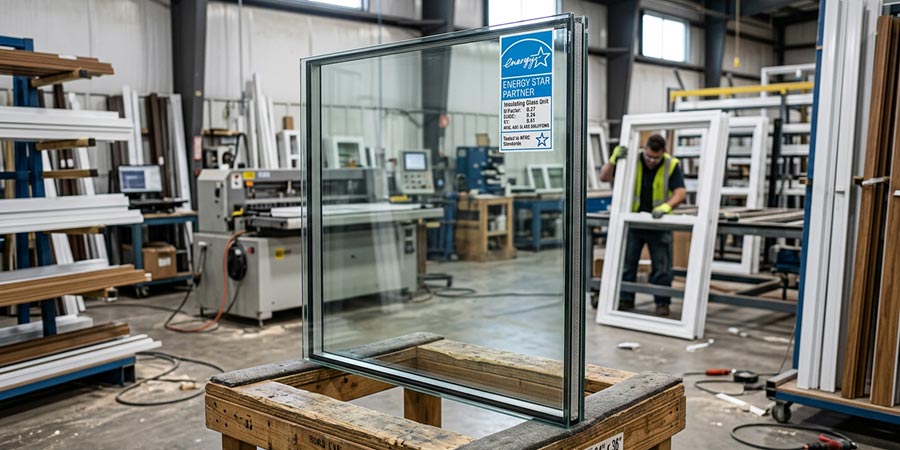
Because Cardinal is a glass supplier rather than a window brand, homeowners cannot purchase "Cardinal Glass windows" directly. They can only access Cardinal glass indirectly, through the window manufacturers that specify it. This makes product verification important. Homeowners should ask for documentation confirming the glass package specification, ideally an NFRC label or product data sheet identifying the coating type and IGU configuration, rather than accepting a sales claim at face value.
How Does Cardinal Glass Perform in Canadian Climates?
Canadian climates impose specific demands on window glass that differ from those in more moderate regions. Heating seasons are long, temperature differences between indoor and outdoor conditions are extreme in winter, and summer solar loads vary significantly by region and window orientation.
For the heating season, the key performance metric is U-factor. Cardinal's LoĒ-i89 coating in a double-pane configuration achieves a centre-of-glass U-factor of 0.20, a performance previously achieved only with triple-pane construction. For builders and homeowners in Toronto and the GTA, where January mean temperatures regularly fall below -5°C, this performance level meaningfully reduces radiant heat loss, which makes windows the thermal weak point of an otherwise well-insulated home.
For the cooling season, the relevant metric is SHGC. Cardinal LoĒ³-366 achieves a lower SHGC than LoĒ² products, reducing solar heat gain on sun-exposed elevations in summer. However, as noted above, this needs to be balanced against the winter passive solar benefit. A south-facing window in a well-insulated Canadian home benefits from solar gain in winter, and indiscriminate use of high-solar-control glass on that elevation can increase heating energy consumption.
Condensation behaviour also changes with climate severity. In very cold conditions, even well-specified Low-E units can experience condensation at the glass edge, near the spacer, where thermal bridging is highest. Warm-edge spacers made from stainless steel or polymer composites, rather than aluminum, reduce this edge-of-glass heat loss. Homeowners should confirm spacer specification alongside glass coating when evaluating a window package for harsh Canadian winters.
There's a less-discussed factor that compounds the performance of glass and spacer in a Canadian winter: how the frame clears moisture at the sill. Window Force positions weep holes in the sash and frame profile specifically to drain condensation and wind-driven precipitation away from the glazing pocket before it can sit against the spacer or seal. On a unit glazed with a cold-climate Loē coating, that drainage detail matters as much as the coating itself; standing moisture at the sill is one of the more common and more preventable causes of premature edge-seal failure, regardless of which glass coating is specified.
Does Cardinal Glass Improve Home Energy Efficiency Enough to Lower Utility Bills?
The actual impact depends on the replacement scenario and the performance of the complete window assembly. Cardinal LoĒ glass, specified correctly and installed in a quality window with a warm-edge spacer and proper installation, can produce measurable energy savings relative to older uncoated glass. The scale of those savings depends on the baseline being compared.
What Cardinal glass cannot do is compensate for installation defects, a poor-quality frame, or a mismatched glass specification. A LoĒ³-366 unit installed without proper air sealing will lose much of its thermal advantage through infiltration. Actual energy savings depend on the performance of the complete window assembly, not only the glass specification. For a deeper review of how low-e coating selection affects total window efficiency, the low-e glass guide on the Window Force website provides a comprehensive breakdown of coating types, surface positions, and climate recommendations.
How Important Is the Window Frame When Using Cardinal Glass?
Engineer Sergey Essipov notes:
We regularly work with builders who have been told they're getting a premium glass package, and they assume the window will perform to spec no matter what. The frame and spacer account for a significant portion of total window heat loss. A well-specified Cardinal glass unit in a poorly constructed frame won't deliver the U-factor the homeowner expects. The IGU performance and the whole-window performance are different numbers, and the number that matters is the whole-window figure.
This observation reflects an important technical reality. The NFRC whole-window U-factor incorporates frame conduction, spacer thermal bridging, and edge-of-glass losses, not only the centre-of-glass value that coated glass specifications typically report.
| Window Component | Its Role in Thermal Performance |
| Glass coating (LoĒ) | Reduces radiant heat transfer; primary driver of centre-of-glass U-factor |
| Gas fill (argon/krypton) | Reduces convective and conductive heat transfer between panes |
| Spacer bar | Affects edge-of-glass temperature; aluminum spacers create thermal bridges |
| Frame material | Vinyl, fibreglass, and wood frames all conduct heat differently |
| Installation and sealing | Air infiltration can negate glass performance gains entirely |
A vinyl frame with fusion-welded corners and a dual-seal, metal-free warm-edge spacer, combined with a quality LoĒ glass package, produces the kind of whole-window performance that justifies the investment. The glass package and the frame are inseparable in terms of performance. Window Force manufactures its vinyl windows with precisely this integrated approach, specifying glass coatings and frame construction together to ensure the rated performance is achievable under real installation conditions.
How Can Homeowners Determine Whether Cardinal Glass Is Included in a Window Package?
Confirming glass specifications requires looking beyond the sales presentation. The following steps provide a reliable way to verify what you are purchasing.
Is Cardinal Glass Worth the Investment for Replacement Windows?
For most Canadian homeowners replacing older single-pane or early-generation double-pane windows, a Cardinal LoĒ glass package represents a clear upgrade in thermal performance, UV protection, and interior comfort. The return on that investment is strongest when the glass specification is matched to the window's solar orientation, the frame quality supports the glazing performance, and the installation is performed properly.
| Scenario | Cardinal Glass Recommendation |
| Replacing 1970s — 1980s single-pane windows | great: large thermal improvement; rapid energy savings |
| Upgrading to an early double-pane with hard-coat glass | Solid: measurable U-factor and comfort improvement |
| Adding south-facing windows for solar gain | Specify LoĒ² (not LoĒ³) to preserve passive solar SHGC |
| North-facing windows in very cold climates | Consider LoĒ-i89 for maximum U-factor in double-pane configuration |
| Homeowner prioritizing UV and furniture protection | LoĒ³-366 is the appropriate specification |
The limiting factor in any Cardinal Glass purchase is not the glass itself; it is the quality of the window assembly surrounding it. Homeowners in Toronto, Calgary, Vancouver, or elsewhere in Canada are best served by working with a manufacturer that can confirm both the glass specification and the frame and spacer construction as part of a documented whole-window performance claim. Exploring replacement windows from a Canadian manufacturer with transparent product specifications is the most reliable way to find a window that delivers on its specifications. Reviewing the full range of available vinyl window styles alongside glass specifications helps clarify which frame type and coating combination suits each opening.
When the manufacturer also controls the frame and assembly, that verification step gets simpler. Window Force builds every window on our own production line and distributes exclusively through an authorized dealer network, so the CSA certification and ENERGY STAR® qualification on the label apply to the whole unit standing in the rough opening, not just the glass inside it. That alignment is backed by a 25-year transferable warranty, which means the performance figures in this guide are the same ones a homeowner can hold us to a decade from now.
Conclusion
Cardinal Glass is a well-established glass manufacturer whose LoĒ coating families LoĒ², LoĒ³-366, and LoĒ-i89 represent genuinely different performance profiles suited to different climates, orientations, and performance objectives. For Canadian homeowners, the most important considerations are selecting the correct coating for the climate zone and solar exposure, confirming that the glass is assembled into a quality window frame and spacer system, and verifying specifications through NFRC labels and ENERGY STAR documentation rather than brand names alone.
Investing in a Cardinal LoĒ glass package as part of a well-constructed replacement window is a sound decision for most Canadian homes. The thermal, comfort, and UV protection benefits are real and measurable throughout the window's service life. The key is ensuring that the glass specification matches the home's needs and that the window assembly delivering that glass meets the same standard as the glazing inside it. If you are evaluating replacement windows for your home, Window Force serves communities across Canada and can assist with product selection and with matching specifications to your climate zone.
People Also Ask