

Replacing windows or doors is one of the highest-return upgrades a Canadian homeowner can make and the right rebate can take a meaningful bite out of the cost. The problem is that the rebate landscape changed dramatically through 2025 and into 2026. Several of the programs that dominated search results for years, including the federal Canada Greener Homes Grant and Loan, have closed to new applicants, while newer provincial and utility programs have taken their place. A lot of the advice online still points people at money that is no longer there.
This guide fixes that. Every program below has been checked against the official government or utility source, with its status as of July 2026, the amount, the eligibility rules, and where to apply. It covers all ten provinces, all three territories, and the federal, utility and municipal layers, so you can see exactly what you can claim where you live. Window Force is a Canadian window manufacturer, so we have built this as a reference first and a sales page never. Where a number can vary or a program is mid-transition, we say so and send you to the official page rather than guess.
How to use this guide
Start with the quick-reference table to find your province or territory.
Read the federal section once, since it applies everywhere in Canada.
Jump to your province for the active program details, amounts and links.
Always confirm current amounts and deadlines on the official program page before you buy. Program funding and rules change during the year.
Window and Door Rebates Explained
A rebate (sometimes also called a grant) is money a government or utility gives back to you for installing more energy-efficient windows or doors. A loan program instead lends you the money at a low or zero interest rate, often repaid through your property tax bill. Both exist across Canada in 2026, and in many cases you can use one on top of the other.
A few rules show up in almost every program, so it helps to understand them once:
- ENERGY STAR certification. Nearly every program requires the new windows or doors to be ENERGY STAR certified for the correct Canadian climate zone. "Energy efficient" on a brochure is not the same thing. Only a valid ENERGY STAR certificate counts.
- Rough openings, not panes. Rebates are usually paid per rough opening, meaning one hole in the wall. A large bay or bow window made of several sections still counts as one opening. Replacing only the glass, the sash, or a door slab without the frame generally does not qualify.
- Professional installation. Most programs require installation by a licensed or registered contractor, and some require the contractor to be pre-approved before work starts.
- Energy assessment. Loan programs and some rebates require an EnerGuide home energy assessment by a Registered Energy Advisor before and after the work. Simpler rebate streams, such as Ontario's, often skip this step.
- Keep records. Itemized invoices, product specification sheets and ENERGY STAR certificates are what get a claim approved. Keep them all.
A word on safety, not just savings
Natural Resources Canada has confirmed that neither it nor its brands (ENERGY STAR, EnerGuide) ever make unsolicited phone calls, send unsolicited emails, or go door to door to sign homeowners up for rebate programs. If someone contacts you out of the blue offering to "register" you, treat it as a scam and apply only through the official links in this guide.
Federal Programs in Canada
The federal picture in 2026 is defined by one big change: the broad, first-come Canada Greener Homes Grant and Loan that funded hundreds of thousands of retrofits are both closed to new applicants. Federal support has shifted toward income-qualified households. Here is where each program stands.
| Program | What it offered | Status (July 2026) | Who it is for |
| Canada Greener Homes Grant | $125 to $5,000 back on retrofits, plus up to $600 for evaluations. Windows and doors were eligible. | Closed. Open May 2021 to Feb 2024; final document deadline Dec 31, 2025. In-system files still processing. | No new applicants |
| Canada Greener Homes Loan | Interest-free loan of $5,000 to $40,000 over 10 years. | Closed to new applicants. Last day to apply was Oct 1, 2025. Approved homeowners continue. | No new applicants |
| Canada Greener Homes Affordability Program (CGHAP) | No-cost, direct-install retrofits (insulation, heat pumps and, depending on the delivery partner, envelope measures). | Active. Rolling out through provinces, territories and Indigenous organizations. Availability varies by province. | Low to median income homeowners and tenants |
| Oil to Heat Pump Affordability (OHPA) | Grant to switch from oil heating to a cold-climate heat pump. Not a window program. | Active for eligible regions. Not available where homes are off the integrated grid (for example Nunavut). | Low to median income oil-heated homes |
| CMHC Eco Plus / Eco Improvement | 25% partial refund on CMHC mortgage loan insurance premiums for energy-efficient homes. | Active. The main federal support that touches new-build and buyers. | Insured buyers and builders |
The practical takeaway for 2026: there is no broad federal cash-back program for windows and doors open to everyone. Most homeowners will get their window and door money from a provincial, utility or municipal program instead, and lower-income households should check CGHAP eligibility through their province. Verify federal status at Natural Resources Canada.
From our workshop
ENERGY STAR certification is the gate for almost every one of these programs, and it is model-specific and zone-specific. A window that qualifies in a mild coastal zone will not automatically qualify in a cold interior zone. Before a homeowner commits, we confirm the exact U-factor, Solar Heat Gain Coefficient and Energy Rating on the certificate against the program threshold for their region. That one check is what separates an approved claim from a denied one.
— Sergey Essipov, Production Engineer, Window Force (20+ years in fenestration manufacturing)
The Main Window Program by Province and Territory
This is the fastest way to see what is active where you live in 2026. Full details, eligibility and links follow below.
| Province / Territory | Main active window/door program | Amount | Type |
| Ontario | Home Renovation Savings Program (Save on Energy + Enbridge) | $100 per opening | Rebate |
| Quebec | Renoclimat (Government of Quebec) | $150 per opening | Rebate |
| British Columbia | CleanBC Better Homes Energy Savings Program | Up to $950 per opening, $9,500 per home | Income-qualified rebate |
| Alberta | No provincial window grant. CEIP financing plus seniors (SHARP) | Financing; local rebates in some cities | Loan / municipal |
| Saskatchewan | Saskatoon HELP financing (provincial rebate tied to closed federal grant) | Up to $60,000 financing | Loan |
| Manitoba | Efficiency Manitoba Windows and Doors Rebate | $100 per opening ($300 if income-qualified) | Rebate |
| New Brunswick | NB Power Total Home Energy Savings Program | Per-opening rebate for ENERGY STAR units | Rebate |
| Nova Scotia | Efficiency Nova Scotia Home Energy Assessment | Rebates via assessment, up to $5,000 total | Rebate |
| Prince Edward Island | efficiencyPEI building envelope rebate | $100 per window ($200 low-income) | Rebate |
| Newfoundland & Labrador | takeCHARGE and NLHC repair funding (no dedicated window rebate) | Varies; income-based repair funding | Rebate / repair |
| Yukon | Good Energy rebate (Government of Yukon) | $100 per window, up to $1,000 | Rebate |
| Northwest Territories | Arctic Energy Alliance rebate | $250 per window, up to $3,000 | Rebate |
| Nunavut | No dedicated window rebate; Nunavut Housing repair programs | Varies | Repair |
Ontario
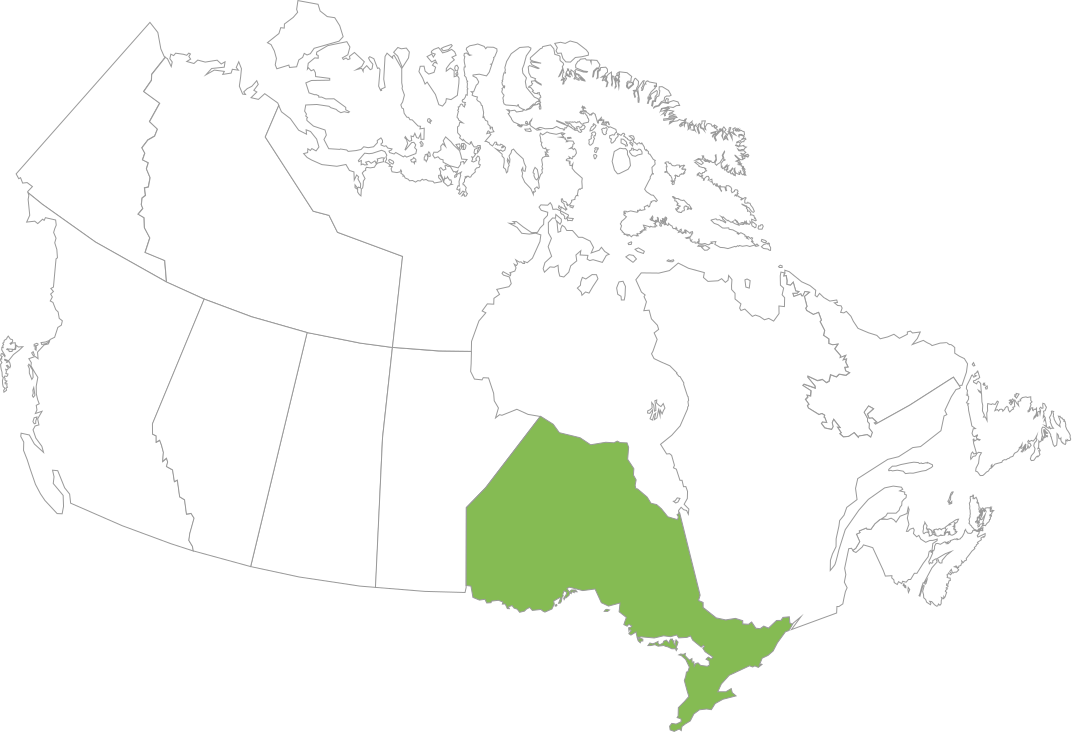
Ontario is the clearest example of why 2026 advice needs updating. The Enbridge Home Efficiency Rebate Plus (HER+) and the federal Greener Homes programs that used to headline Ontario guides are all closed. What is active, open to new applications, and accessible to most homeowners is the province's own program.
Home Renovation Savings Program
The Home Renovation Savings Program is delivered through Save on Energy (a brand of the Independent Electricity System Operator) together with Enbridge Gas, and backed by the Government of Ontario. It pays $100 per eligible window or door rough opening when you install ENERGY STAR certified products, and it applies whether you heat with electricity, natural gas, oil, propane or wood. Total program rebates across all eligible upgrades can reach $12,000 per home.
- Amount: $100 per eligible window or door rough opening. Installing a new window into an existing frame qualifies; replacing only glass, sash or a door slab does not.
- Timing: The program is running through November 2026. Confirm the current end date before you start.
- Two paths: You can complete a home energy assessment and bundle two or more upgrades, or take the simpler route and claim eligible single upgrades. Opening minimums and bundling rules can change, so check the current rules on the official hub.
- Eligibility: Own a home in Ontario that you have lived in, install ENERGY STAR certified windows or doors, and keep your invoices and certificates.
Apply and confirm current amounts at saveonenergy.ca/homerenovationsavings or the program hub homerenovationsavings.ca.
Low-income and municipal options in Ontario
- Energy Affordability Program (EAP): free energy-efficiency upgrades, including window and door replacement for eligible households, delivered through Save on Energy.
- Toronto Home Energy Loan Program (HELP): low-interest financing up to $125,000 over terms as long as 20 years, tied to the property and repaid on the property tax bill. Covers windows and doors among other upgrades.
- Better Homes Ottawa Loan Program: low-interest 20-year loans up to the lesser of $125,000 or 10% of home value (minimum $10,000), delivered by EnviroCentre. Thermal envelope upgrades including windows qualify.
- Durham Greener Homes: retrofit support for homeowners in the Region of Durham.
Note on CGHAP in Ontario: as of early 2026 the province was still finalizing its agreement with the federal government, so the income-qualified CGHAP stream was not yet open to Ontario homeowners. Check betterhomesontario.ca for the current status. For product options, see our replacement windows and new construction windows pages, and our window replacement cost guide for how rebates fit into a full-home budget.
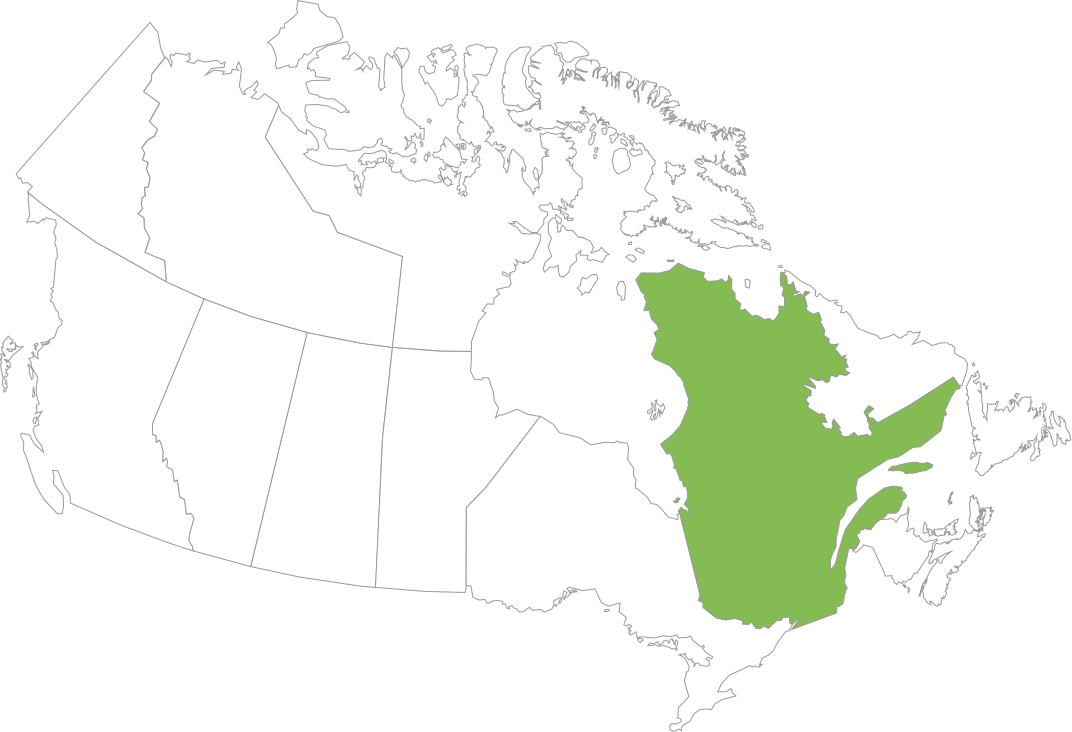
Quebec
Quebec runs the most stable window rebate in the country through Renoclimat, the provincial government's envelope-upgrade program. It is separate from LogisVert, Hydro-Quebec's program, which focuses on equipment such as heat pumps rather than windows.
Renoclimat
- Amount: $150 per existing rough opening replaced with an ENERGY STAR certified window or exterior door. A bay or bow window counts as a single opening. The amount is fixed per opening regardless of what you pay for the window.
- Eligibility: Only complete replacements qualify. Glass-only, sash-only or door-panel-only work is excluded. Products must be ENERGY STAR certified for the Quebec climate zone (Zone 3).
- Process: A pre-work EnerGuide evaluation by a Renoclimat advisor is required before you start, with a follow-up evaluation after. Advisor fees typically run a few hundred dollars for the pair.
- Federal stacking has ended: Renoclimat could previously combine with the federal Greener Homes Grant for up to $400 per opening, but that federal top-up closed for 2026.
Confirm details and book an evaluation through the Government of Quebec Renoclimat program page at quebec.ca (Renoclimat). Lower-income households should also check CGHAP, which expanded into Quebec in 2026. For window styles suited to Quebec winters, see our energy-efficient window types overview.
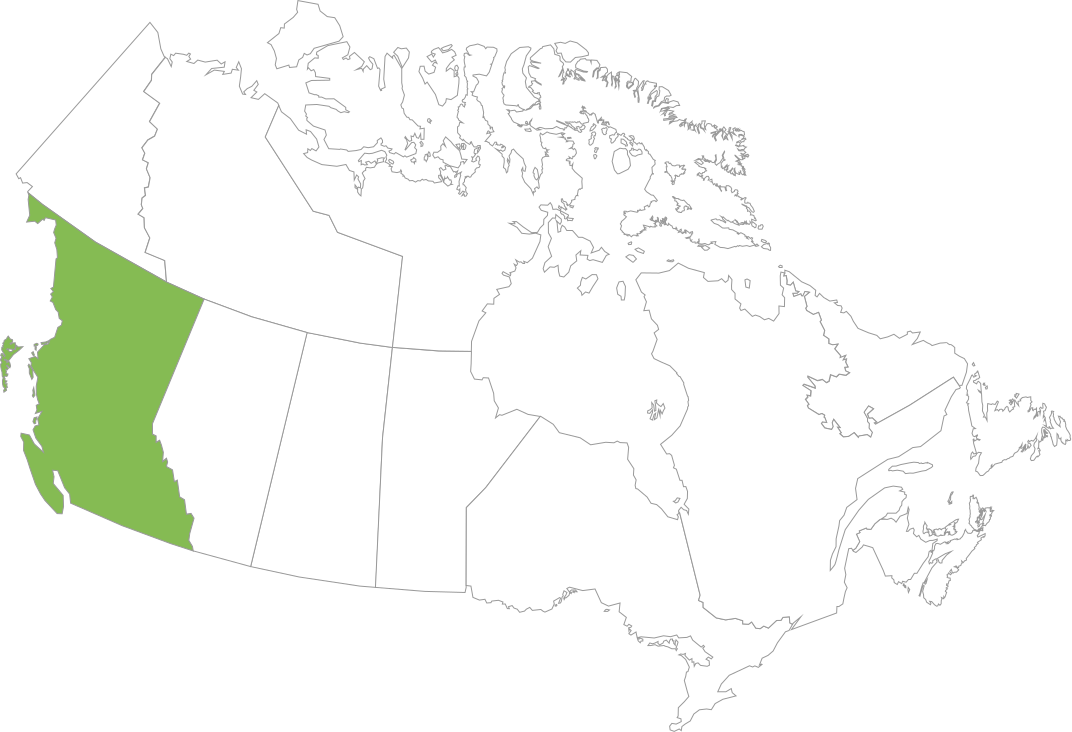
British Columbia
BC's window and door rebate now sits inside the income-qualified stream of the CleanBC program, delivered in partnership between the Province, BC Hydro and FortisBC. The broad, everyone-qualifies window rebate that BC offered in earlier years has narrowed.
CleanBC Better Homes Energy Savings Program (income-qualified)
- Amount: Up to $950 per window or door, to a maximum of $9,500 per home. Income Level 1 households can receive up to 95% of eligible upgrade costs; Income Level 2 up to 60%.
- Product spec: New windows and doors must have a U-factor of 1.22 W/m2K or less and be installed by a program-registered contractor.
- Eligibility: You must have a residential utility account with BC Hydro, FortisBC or a municipal utility, meet income qualification, and your home's assessed value must fall under the program cap (at or under $1,200,000 for registrations on or after April 1, 2026).
- Important exclusion: Window and door rebates are not available in the City of Vancouver.
- Pre-approval: Quote approval must be obtained before installation begins. Starting work first can void the rebate.
Confirm income thresholds and current rules at betterhomesbc.ca. Homeowners who do not income-qualify can still use financing and should watch for standard-stream updates.
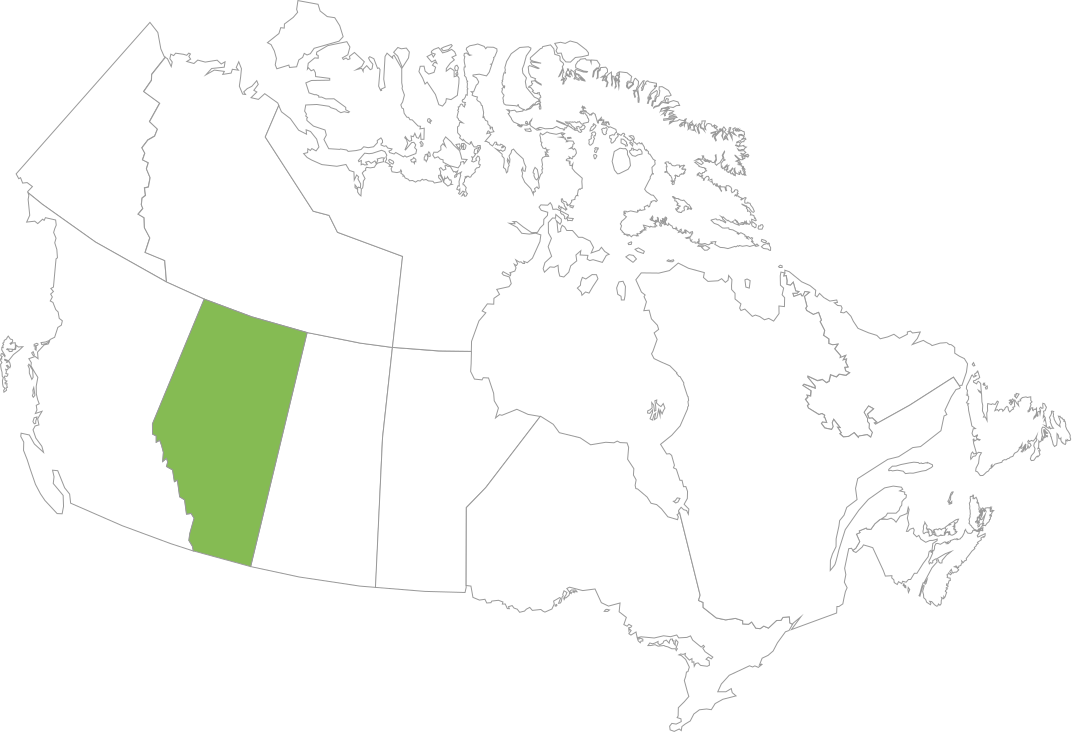
Alberta
Alberta has no province-wide cash rebate specifically for windows and doors in 2026. Support comes through a seniors program, municipal financing, and a handful of city-level utility rebates.
- Seniors Home Adaptation and Repair Program (SHARP): a low-interest home equity loan of up to $40,000 for seniors aged 65 and older to fund home repairs and improvements, including energy-efficiency upgrades such as windows. Eligibility depends on combined household income and home equity. A grant stream has existed for the lowest-income seniors; confirm current amounts on alberta.ca before applying.
- Clean Energy Improvement Program (CEIP): municipal financing repaid through your property tax bill, available in participating municipalities including Calgary, Edmonton, Lethbridge, Canmore, Banff, Medicine Hat, Wetaskiwin, Red Deer, Airdrie, Okotoks, Spruce Grove and St. Albert. High-performance windows and doors are commonly approved measures. This is financing, not free money, but the balance transfers with the property if you sell.
- Medicine Hat HAT Smart: a City of Medicine Hat utility program with tiered rebates for high-efficiency windows and doors. Up to $5,000 per home for combined retrofits. The 2026 term began January 1, 2026, with deadlines that vary by measure. Open only to City of Medicine Hat utility customers.
Check alberta.ca for SHARP, your city's CEIP page for financing, and medicinehat.ca for HAT Smart.
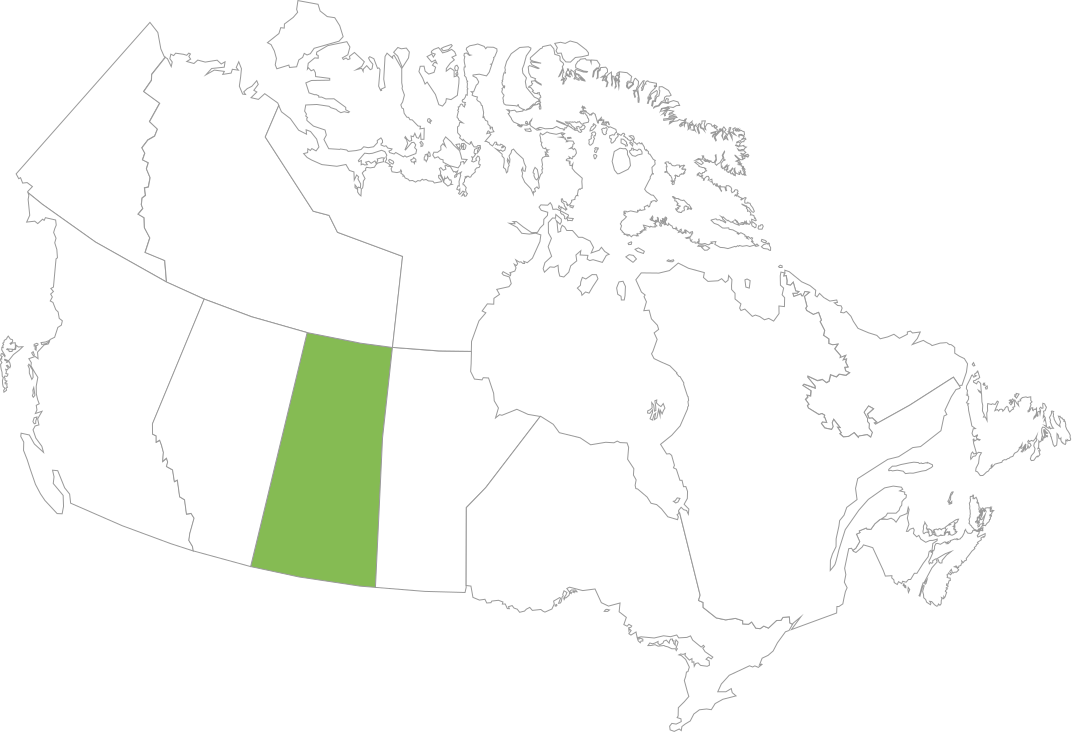
Saskatchewan
Saskatchewan does not have a broad, currently-open provincial window rebate in 2026. The SaskEnergy and SaskPower Home Efficiency Retrofit Rebate required registration under the federal Canada Greener Homes Grant, which is closed, so that route is no longer open to new applicants. The active path is municipal financing.
- Saskatoon Home Energy Loan Program (HELP): municipal financing of up to $60,000 for energy upgrades including ENERGY STAR windows, repaid through the property tax bill. Terms and interest rates vary by repayment length, with a program administration fee. Available only within the City of Saskatoon.
- Provincial rebate status: The SaskEnergy Home Efficiency Retrofit Rebate is tied to the now-closed federal grant. Confirm current status at saskenergy.com before assuming it is available.
Verify at saskenergy.com and the City of Saskatoon HELP page. Lower-income households should also check CGHAP through the province.
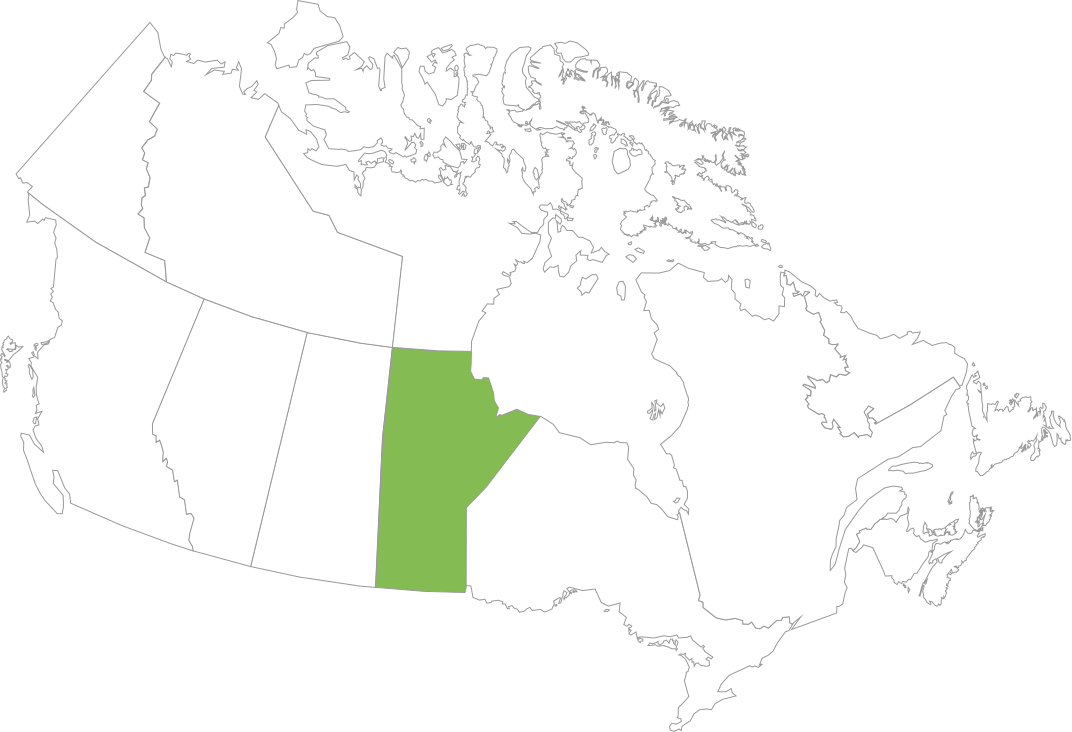
Manitoba
Manitoba has one of the simplest and most accessible window rebates in the country through Efficiency Manitoba, with a genuinely higher amount for income-qualified and Indigenous households.
Efficiency Manitoba Windows and Doors Rebate
- Standard amount: $100 per eligible ENERGY STAR certified triple-pane window or door, up to a total of $2,000 per property.
- Higher amount ($300 per opening): available to income-qualified households, First Nation community members, and income-qualifying Red River Metis homeowners and renters.
- Product spec: Windows and doors must be ENERGY STAR certified and triple-pane, and must replace existing units between a heated and unheated space.
- Counting: Rebates are per opening. A bay window is one opening. A maximum of 20 openings can be rebated at one property over the lifetime of the program.
Manitoba Hydro also offers financing for qualifying upgrades. Confirm current details at efficiencymb.ca.
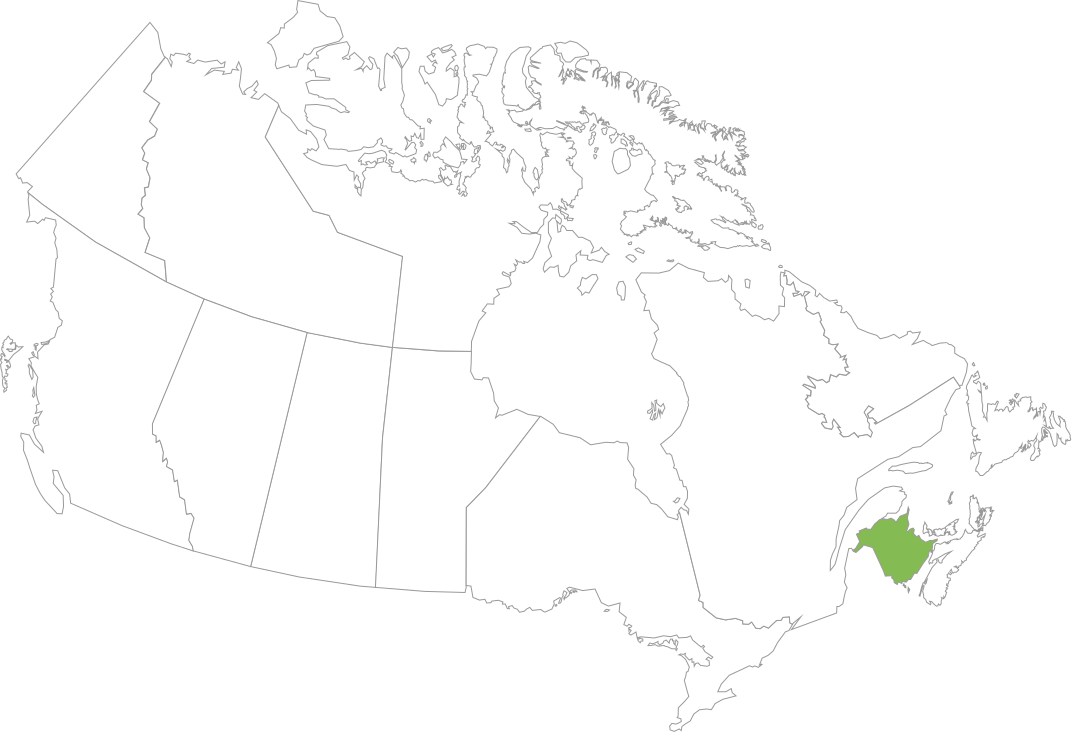
New Brunswick
New Brunswick's window and door support runs through NB Power, which delivers the province's residential efficiency programs.
- Total Home Energy Savings Program: a per-opening rebate for ENERGY STAR certified windows and doors, alongside rebates for insulation, air sealing and heating. Windows and doors must meet the required ENERGY STAR version. Reported per-opening amounts have sat in the $30 to $50 range depending on tier, so confirm the current figure directly with NB Power.
- Income-qualified stream: NB Power offers an enhanced program with higher support for lower-income households, and the federal CGHAP direct-install program also operates in New Brunswick. Note that CGHAP registration in NB was set to close June 30, 2026, so timing matters.
- A home energy evaluation by a certified energy advisor is typically required to identify eligible upgrades.
Confirm amounts and register at nbpower.com.
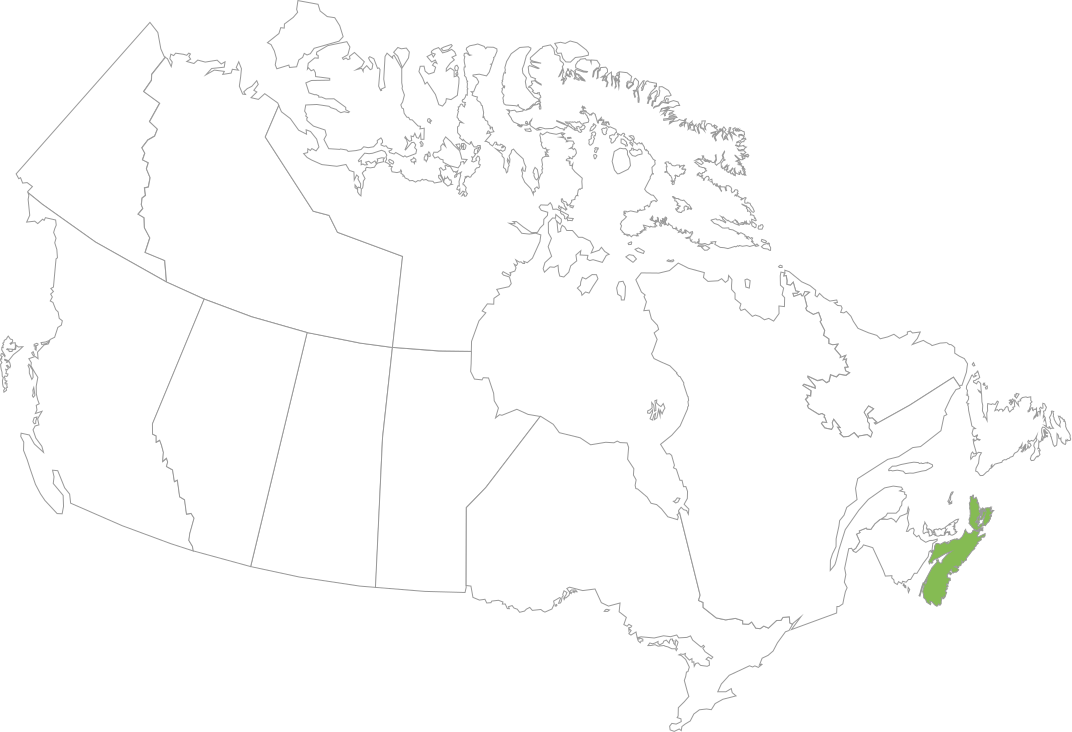
Nova Scotia
Nova Scotia delivers its residential rebates through Efficiency Nova Scotia. Window and door rebates are identified through a home energy assessment rather than claimed as a flat per-window amount, and the province historically co-delivered the federal grant through the same channel.
- Home Energy Assessment program: start with a home energy assessment, which identifies eligible upgrades including window and door replacement, insulation and more. Rebates apply to identified measures, with total home rebates reaching up to $5,000. The home must generally be at least six months old and not yet under renovation.
- HomeWarming: a no-cost program for income-qualified households that can include envelope upgrades.
- Program change: Efficiency Nova Scotia's Home Heating System Rebates program closed December 31, 2025. The home energy assessment path for envelope upgrades remains the route for windows and doors.
- CGHAP: the federal income-qualified direct-install program expanded into Nova Scotia in 2026.
Book an assessment and confirm current rebates at efficiencyns.ca.
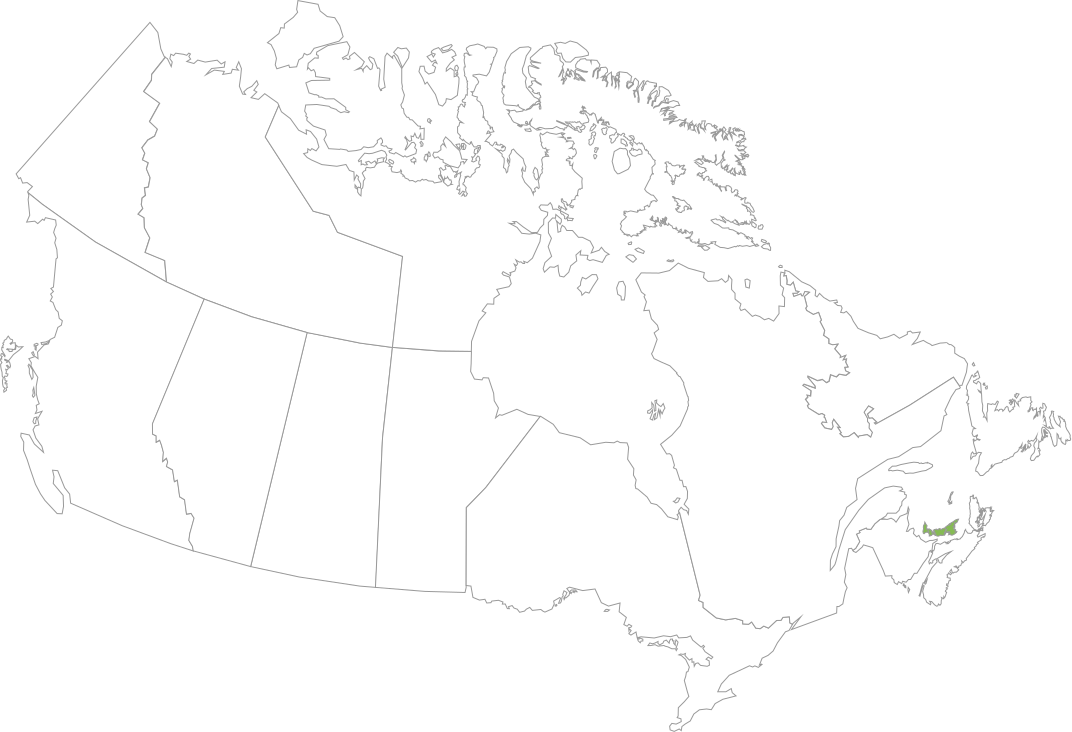
Prince Edward Island
PEI offers a straightforward building-envelope rebate through efficiencyPEI, with a higher tier for lower-income households.
- Standard rebate: approximately $100 per ENERGY STAR window, up to $1,000 per property.
- Low-income rebate: a higher amount (reported around $200 per window, up to $2,000 per property) for qualifying households. Some sources cite higher per-opening figures, so confirm the current tier on the official page.
- Requirements: windows and doors must be ENERGY STAR certified (v5, 2020 onward), and an energy audit through an efficiencyPEI energy partner is required.
- Landlords: since June 2, 2025, residential rental property owners can also apply. Financing is available through the Government of PEI for some upfront costs.
- CGHAP: the federal direct-install program expanded into PEI in 2026 for low to median income households.
Confirm current amounts at princeedwardisland.ca (efficiencyPEI).
Newfoundland and Labrador
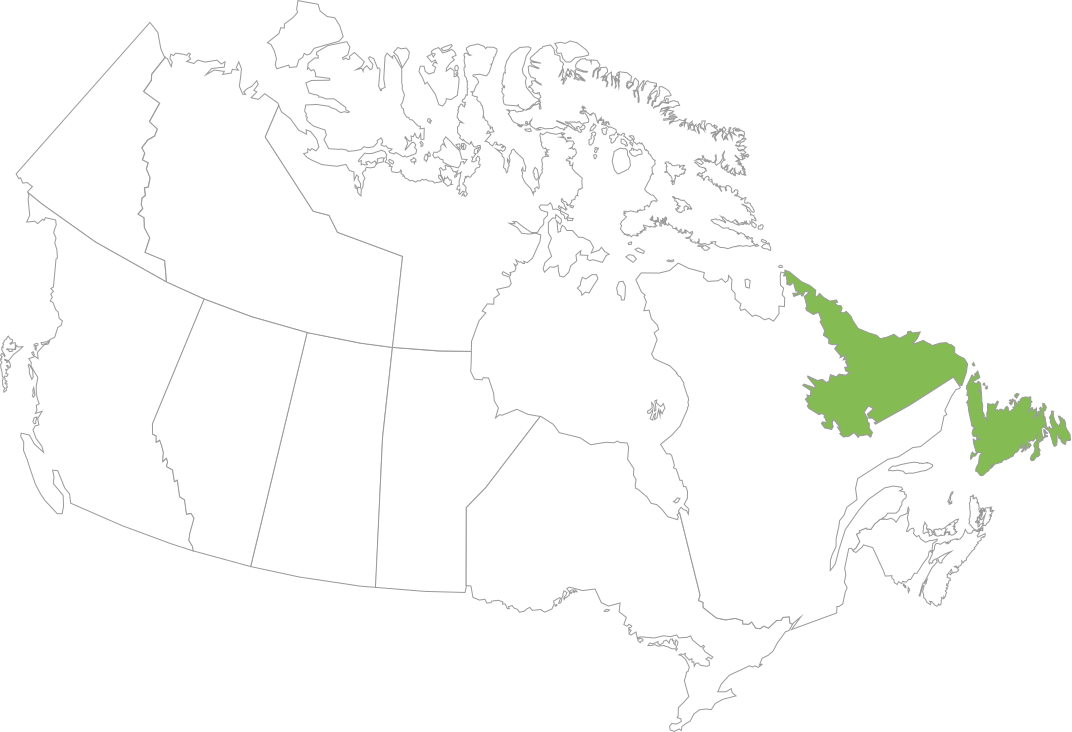
Newfoundland and Labrador does not have a dedicated per-window rebate open to all homeowners in 2026. Support is more targeted.
- takeCHARGE: the joint Newfoundland Power and NL Hydro program offers home energy rebates focused mainly on insulation, heat pumps and other measures. Confirm whether any current window or envelope incentive applies to your project.
- Provincial Home Repair Program (PHRP): delivered through Newfoundland and Labrador Housing, PHRP provides income-qualified funding to make necessary repairs to a home, which can include windows and doors, roofing, heating and structural work.
Check takechargenl.ca and nlhc.nl.ca for current eligibility.
The Territories
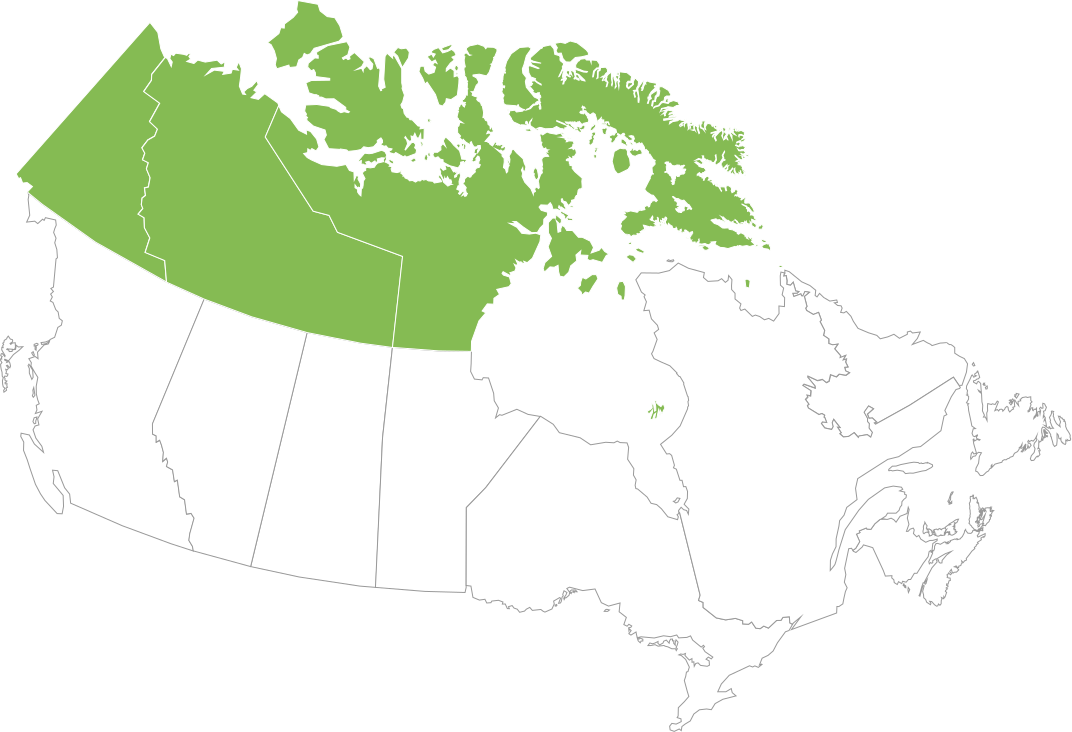
Yukon
- Good Energy rebate (Government of Yukon): $100 per window when you replace existing windows with ENERGY STAR Zone 3 windows, to a maximum of $1,000 per home. The home must be at least five years old. Apply online through the Good Energy rebates portal.
Details at yukon.ca (Good Energy).
Northwest Territories
- Arctic Energy Alliance (AEA): rebates for windows in older, less efficient homes. Homeowners can receive up to $3,000 for ENERGY STAR windows at $250 per window, up to 12 windows. An exterior wall insulation upgrade and a home energy evaluation are required to qualify. AEA increased some maximum amounts for the 2026-27 fiscal year (April 1, 2026 to March 31, 2027).
Details at aea.nt.ca.
Nunavut
- No dedicated window rebate. Nunavut homeowners do not have a standalone window and door rebate in 2026, and the territory is not eligible for the federal OHPA program because homes are not on an integrated electricity grid. Repair and housing support is available through the Nunavut Housing Corporation.
How to claim the most: a practical checklist
A few habits consistently separate homeowners who get the full amount from those who leave money on the table.
From our workshop
The definition of a rough opening trips people up more than the money does. Programs pay per opening, not per pane of glass, so a five-section bay window is one rebate, not five. And full replacement matters. Sliding a new sash into an old, out-of-square frame will not perform to the certified rating and, in most programs, will not qualify at all. When we quote a project, we flag which openings are eligible and make sure the invoice describes the work the way the program needs to see it.
— Sergey Essipov, Production Engineer, Window Force
Where Window Force fits in
Window Force has manufactured vinyl windows in Canada since 2007, from an 80,000 square foot facility at 8810 Jane Street in Concord, Vaughan, Ontario. We supply builders, dealers and contractors across the country and also take direct orders from homeowners, connecting them with authorized dealers and installers.
Because nearly every rebate program in this guide hinges on ENERGY STAR certification, it is worth knowing what our windows are built and certified to:
- ENERGY STAR Partner. ENERGY STAR certification is the baseline requirement for most of the programs above. Confirm the specific model's U-factor, SHGC and Energy Rating against your program's threshold and climate zone.
- CSA certified and NFRC-rated (tested to NAFS-11). Independent, third-party performance testing is exactly the kind of documentation rebate programs want to see.
- Built for Canadian climates. Lead-free uPVC with UV stabilizers, fusion-welded corners, multi-chamber profiles, and a dual-seal, metal-free warm-edge spacer that keeps glass edges warmer and cuts condensation.
- 25-year transferable warranty. Full coverage in years 1 to 25, an 80/20 split in years 25 to 30, and a 25/75 split after year 30. The warranty transfers to a new owner if you sell. Labour is the installer's responsibility; the warranty covers product and materials.
You can read the full warranty terms and browse window types to see which styles fit your project.
The bottom line
The 2026 rebate map is more fragmented than it used to be, but real money is still on the table in most of the country. Ontario, Quebec, BC and Manitoba have clear, active window programs; the territories and Atlantic provinces have targeted ones; and Alberta and Saskatchewan lean on financing and seniors' support. The two things that matter most are simple: install genuinely ENERGY STAR certified products for your climate zone, and apply through the official program before funding windows close.
Window Force manufactures ENERGY STAR certified, rebate-ready windows and works with builders, dealers and contractors across Canada. To get product recommendations, confirm which models meet your program's thresholds, and connect with an authorized dealer or installer in your area, request a quote through the form on this page or call us.
Official sources
- Natural Resources Canada, Canada Greener Homes Initiative (Grant, Loan, CGHAP, OHPA).
https://natural-resources.canada.ca/energy-efficiency/home-energy-efficiency/canada-greener-homes-initiative - Ontario Home Renovation Savings Program, Save on Energy.
https://www.saveonenergy.ca/homerenovationsavings - City of Toronto Home Energy Loan Program (HELP).
https://www.toronto.ca/services-payments/water-environment/environmental-grants-incentives/home-energy-loan-program-help/ - Better Homes Ottawa Loan Program.
https://betterhomesottawa.ca/rebate-and-incentive-programs/better-homes-loan-program/ - Government of Quebec, Renoclimat.
https://www.quebec.ca/en/housing-territory/energy-efficiency-renovation/renoclimat - CleanBC Better Homes (BC).
https://betterhomesbc.ca/learn-about-programs/energy-savings-program/ - Government of Alberta, SHARP (seniors).
https://www.alberta.ca/seniors-home-adaptation-and-repair-program - City of Medicine Hat, HAT Smart.
https://www.medicinehat.ca/home-property-utilities/utilities/hat-smart/ - SaskEnergy Home Efficiency Retrofit Rebate.
https://www.saskenergy.com/ways-save/home-efficiency-retrofit-rebate - Efficiency Manitoba, Windows and Doors.
https://efficiencymb.ca/my-home/windows-and-doors/ - NB Power energy efficiency programs.
https://www.nbpower.com/en/products-services/energy-efficiency-programs - Efficiency Nova Scotia, Windows and Doors.
https://www.efficiencyns.ca/residential/products-rebates/windows-doors/ - efficiencyPEI home energy rebates.
https://www.princeedwardisland.ca/en/information/environment-energy-and-climate-action - takeCHARGE (Newfoundland and Labrador).
https://takechargenl.ca - Newfoundland and Labrador Housing, Provincial Home Repair Program.
https://www.nlhc.nl.ca/housing-programs/provincial-home-repair-program-phrp/ - Government of Yukon, Good Energy rebates.
https://yukon.ca/en/good-energy-rebates - Arctic Energy Alliance (Northwest Territories).
https://aea.nt.ca/program/energy-efficient-products/
This guide is for general information. Program amounts, eligibility and deadlines change during the year. Always confirm the current terms on the official program page before making a purchase decision.
Frequently Asked Questions
Is there still a federal window rebate in Canada in 2026?
No broad one. The Canada Greener Homes Grant and Loan are both closed to new applicants. Federal support now centres on the income-qualified Canada Greener Homes Affordability Program and the Oil to Heat Pump Affordability program. Most homeowners get their window money from a provincial, utility or municipal program instead.
What is the main window rebate in Ontario right now?
The Home Renovation Savings Program, delivered through Save on Energy and Enbridge Gas. It pays $100 per eligible ENERGY STAR window or door rough opening and is running through November 2026.
Do my windows have to be ENERGY STAR certified?
For almost every program, yes. ENERGY STAR certification for the correct Canadian climate zone is the baseline requirement. A general "energy efficient" label is not enough.
What counts as a rough opening?
One hole in the wall. A large bay or bow window built from several sections still counts as one opening, so it earns one per-opening rebate, not several.
Can I combine or stack rebates?
Often, yes. Federal, provincial, utility and municipal programs frequently combine, but some cannot be used together for the same upgrade. Check each program's stacking rules and confirm before counting on the total.
Does replacing only the glass or sash qualify?
Generally no. Most programs require a full window or door replacement, including the frame. Glass-only, sash-only or door-slab-only work is usually excluded.
Do I need a professional installer and an energy audit?
Most programs require professional installation, and some require a pre-approved or registered contractor. Loan programs and some rebates (such as Quebec's Renoclimat) require an EnerGuide assessment before and after. Ontario's rebate stream can skip the pre-audit.
Which provinces have the most generous per-opening window rebates in 2026?
BC's income-qualified stream is highest at up to $950 per opening, followed by NWT at $250 and Quebec at $150. Manitoba pays $300 per opening for income-qualified and Indigenous households and $100 otherwise.
Are there any rebates in the territories?
Yes in Yukon ($100 per window, up to $1,000) and the Northwest Territories ($250 per window, up to $3,000, with conditions). Nunavut has no dedicated window rebate.
Do Window Force windows qualify for these rebates?
Window Force is an ENERGY STAR Partner and its windows are CSA certified and NFRC-rated (tested to NAFS-11), which is the certification base most programs require. Because thresholds vary by program and climate zone, confirm the specific model's ratings against your program before you buy.
People Also Ask