

The 13 major questions to ask a company before replacing windows follow the purchase in order, because each answer is useless until you settle the one before it. The first three decide the job: which openings are failing, whether the unit is a replacement or a new-construction window, and whether the old frame stays. The next three lock the product, the three after that put the product on paper, and the three after that cover the crew and the day in the house. The last question asks whether the company will still give you the answer from the first question when that answer is a smaller sale.
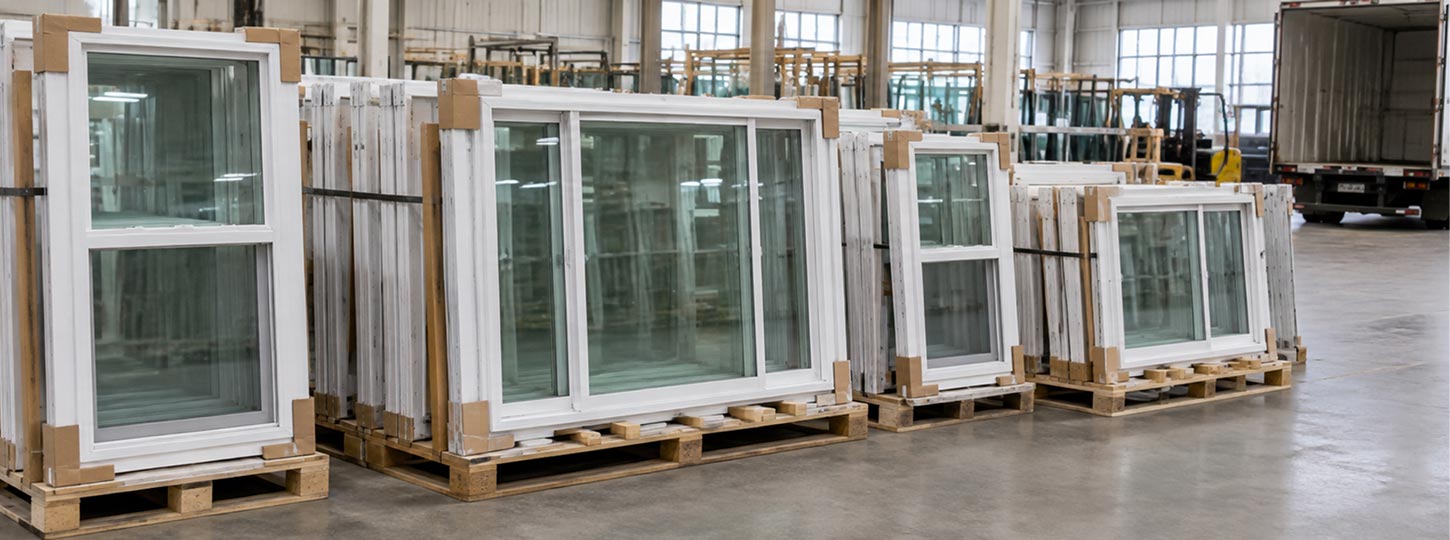
Since 2007, every one of the custom vinyl windows built at Window Force has needed an order that names the opening, the installation method, and the glass package before a frame is cut. That check is made on the line in an 80,000 sq ft Ontario plant, because a missing line becomes the wrong unit in the hole. The questions a homeowner asks before signing are those same lines, read from the other side of the counter.
Key Takeaways
- The 13 questions run in purchase order: the job, the unit, the paper, the people in the house, then a test of whether the company will walk away from the wrong sale.
- You can compare two quotes only when they name the same openings, the same frame method, and the same glass. A lower total on a different job is not a lower price.
- An insert and a full frame replacement are different scopes. The condition of the existing frame chooses the method.
- The performance label on the delivered unit verifies the energy claim in the quote. A centre-of-glass number is not that label.
- The product warranty and the labour warranty usually come from different parties. Both have to be in writing, and a verbal promise is not part of the contract.
- A company that will tell you to repair one opening is the company you want on the opening that truly has to come out.
What are the 13 major questions to ask a company before replacing windows?
The 13 major questions to ask a company before replacing windows are a sequence, not a pile of tips. Ask them in the order a real purchase happens, so a later answer cannot float free of an earlier one. If question 3 is unanswered, question 7 is a total with nothing under it. If question 1 says the frame is sound, question 13 is the test of whether the company agrees.
Each line is the question, then the reason it sits there. A useful answer names something you can write down and check later. A weak answer is an adjective, a discount, or a total with no scope under it.
A company that answers in this order is describing one job. A company that jumps to a package price, a colour, or a discount has skipped the lines that make the package price mean anything. Stop at the first missing answer. The questions after it are pricing a unit you have not agreed to buy.
Windows Near Me
1. Which windows need replacing, and which are still a repair?
This question comes first because it decides whether the other twelve are about your house at all. A failed lock, a single cracked pane, or a sash that only needs a balance is a repair. Quoting a new window for that opening spends the budget on a frame that was still doing its job.
Ask the company to walk the house opening by opening, and to say which symptom it is looking at. Four patterns justify a replacement conversation. Anything else should be named as a part, with a reason, before a full unit is on the quote.
- Air that still moves at the sash after you adjust or replace the weatherstripping. The cause may be a poor seal, a sash out of line, or a frame that is no longer square.
- Fog that remains after you wipe both sides of the glass. That moisture is inside the sealed unit. You cannot clean it from the room, and the gas fill may already be gone.
- A sash that binds, sticks, or will not close. A distorted frame, a failed balance, or swelling from water can all do that, and they are not the same repair.
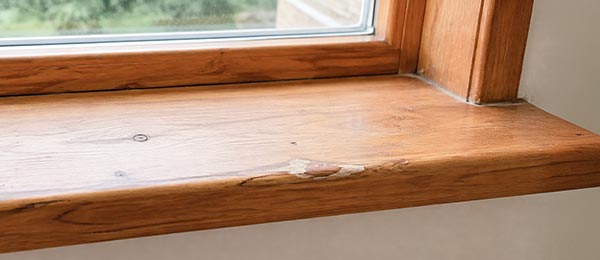
- Soft, darkened, or crumbling material at the sill, the bottom of the jambs, or the sash corners. Water has been in the assembly for a while.
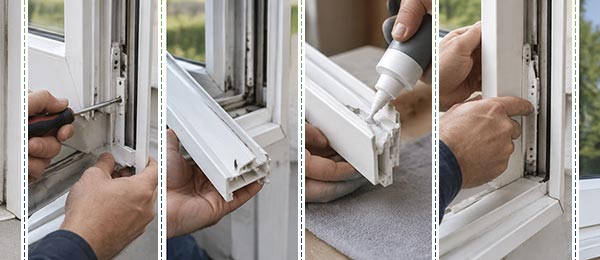
A single cracked pane, a lock that no longer catches, and the window's age do not belong on that list. Age is not a failure. A well-kept older unit can outperform a new one that was set badly. When the fog is between the panes and the frame is still square and solid, the practical job is to fix a foggy window by replacing the sealed unit and leaving the frame in the wall.
Ask for the answer in writing, opening by opening, before anyone measures for a full house. If the note says "all windows, same scope," the company has not answered the question. The limit is real: one soft sill does not condemn the window on the opposite wall, and one fogged unit does not require a new frame.
Engineer Sergey Essipov, with 20 years of experience in window manufacturing, explains:
Before a measure, I ask homeowners to note which window shows the symptom, on which wall, and in what weather. Fog on a north-facing unit in January and a draft on a west-facing sash during a windstorm are different failures with different causes. A company that arrives knowing that can tell you whether you need one new sealed unit or a new window, and that distinction protects your budget more than any discount.
2. Is the quote for a replacement window or a new-construction window?
Once you know which openings are in the job, the next question is which kind of unit is being sold. Replacement windows are built for an existing opening and are set from inside the house. A new-construction window is fastened to exposed wall framing, often with a nailing fin, before siding or brick goes on.
The two products are not a style choice. Fastening, flashing, and trim differ, and so does the mess in a finished room. A price that does not name the type is a price for an unknown installation. Within the replacement category, there's another split: insert or full frame, and that split is the next question. Do not let a quote collapse all three into the word "windows".
When does a new-construction window belong in a finished wall?
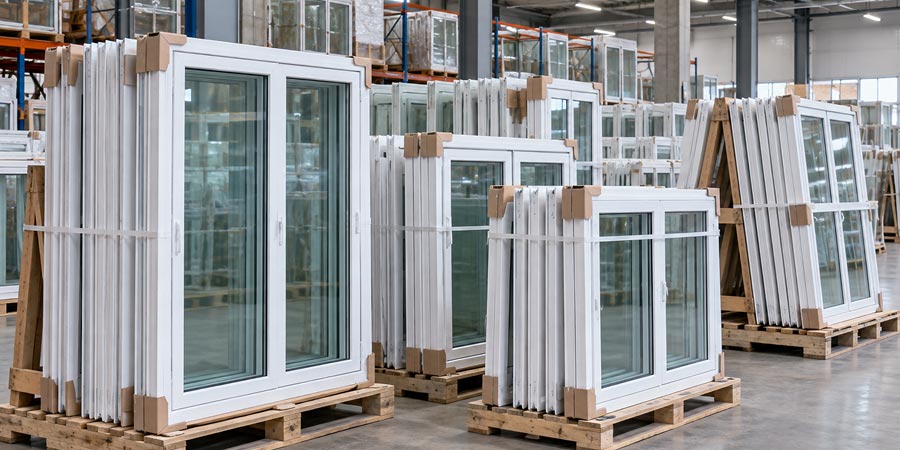
A new-construction window belongs in a finished wall only when the exterior cladding and the interior finish will come off far enough for the fin and the flashing to be done properly. Additions, gut renovations, and walls that are already open are that job. On the Ultraslim series, the nailing fin is an option for fastening to the studs, which is the new-build condition, not a shortcut for a closed wall.
Forcing that unit into a wall that stays closed usually means cutting back cladding and drywall just to reach the fastening, then rebuilding both. The quote should say so, including who patches the finishes. If the sentence is "we will make it fit," ask how the head and the sill will be flashed once the old cladding is disturbed. A fit without flashing is a leak with a new frame around it.
What does frame depth change on a retrofit?
A new-build frame is often deeper than a retrofit frame, because it is sized to the wall, not to the trim you are keeping. If you slide a deep frame into an opening that still has its interior casing and exterior cladding, the frame may stand proud of the trim or force the casing off. Ask for the frame depth in inches, and ask whether the existing trim stays.
A retrofit frame does not have to match the wall thickness to slow heat. Window Force builds multi-chamber profiles, so the frame resists heat through a series of separated air spaces rather than through a single deep wall of material. Ask for that profile detail when a quote says only that the frame is vinyl.
3. When is a full frame window replacement the right call?
A full frame window replacement is the right call when the existing frame is no longer a sound part of the wall. An insert keeps that frame and sets the new unit inside it. This method isn't a preference or a discount tier. It describes what is left in the opening the day after the crew leaves.
Ask the question at the measure, with a tool on the sill, not from the sidewalk. Measure width, height, and depth in three places, and use the smallest of each to size replacement windows when the opening isn't a clean rectangle. A frame that is out of square will show up in those three numbers before anyone argues about glass.
When can the old frame stay?
The old frame can stay when it is square, dry, and firmly attached to the structure, and when a probe into the sill and the lower jambs meets firm material. An insert then keeps the interior trim and the exterior cladding, shortens the day, and limits the dust. The trade-off is glass area. The new frame sits inside the old one, so the view gets slightly smaller, and the old frame remains part of the assembly for as long as the new unit does.
That trade-off is acceptable only while the old frame is worth keeping. A sound frame is a foundation. A soft frame is a hidden gutter. If the measurer will not say which of those two they found, the insert price is a guess.
When does the frame have to come out?
The frame has to come out when it is rotten, when the opening is so far out of square that a new unit cannot be set plumb and level, or when earlier water, a bad repair, or missing flashing has already ruined it. A full frame removal takes the old frame, the sill, and the trim down to the rough opening, so the opening can be inspected, repaired, insulated, and flashed before the new unit goes in. An insert in that opening would seal a known defect behind new material.
A full-frame replacement can also recover glass that an insert gives up, because the new frame is not nested inside the old one. That is a benefit after the frame has earned its removal. It is not a reason to tear out a frame that is still square and dry. The grid shows the difference. The choice still depends on what a probe finds in that opening.
| Method | What stays | What is removed | What rules it out |
| Insert | Existing frame, and usually the interior trim and exterior cladding | Sashes and the parts that must come out to fit the new unit | Rot, a racked opening, or a soft sill |
| Full frame | Rough opening and the wall around it | The whole old frame, sill, and trim down to the opening | A frame that is square, dry, and firmly fixed |
If two quotes disagree on this row, they are not competing prices. They are competing scopes. Ask each company to mark insert or full frame on every opening, in the same words, before you look at the total.
4. Which frame material and which profile series are you supplying?
The material question comes after the method, because a vinyl insert and a vinyl full frame unit are still different products, and a quote that says only "vinyl" has named neither. Ask which material, then which series, then which colour on the outside and on the room side. Other frame materials exist on the market. This plant builds vinyl. If a quote mixes materials without saying so, you are not looking at one specification.
The series is the profile: the depth, the sightline, and how the sash meets the frame. Two vinyl windows with different sightlines will not look like the same house, even when the glass is similar. Get the series name on the quote next to each opening, especially if only some of the windows are being replaced.
What should a vinyl answer name?
A useful answer to the vinyl question names four things you can check later. If any one of them is missing, the frame is still a description, not a product.
- The series, so the depth and the sightline are fixed and not left to the crew on the day.
- The exterior colour and the interior colour, including whether a dark exterior is rated for sun on that wall.
- The corner joint: welded, or mechanically fastened with a corner key.
- How the frame will be finished where it meets stucco, brick, or existing casing, so the joint is part of the quote and not a later extra.
A vinyl answer is still incomplete when the corners are only fastened with keys. Window Force fusion-welds the corners, melting the profiles into one continuous joint, and the frames are lead-free uPVC with UV stabilizers. Those details decide whether a white frame or a dark frame keeps its shape and its surface on a south wall. Ask for them in writing when the quote names a colour and stops there.
5. What performance label will be on the unit, and does it match the quote?
The label question comes after the frame, because energy claims are about the whole unit, not about a coating mentioned in a brochure. Ask which label will be on the glass when it arrives, and ask the quote to name the same glass package: panes, coating, gas, spacer, and the performance numbers for that exact build. If the supplier can quote a number but cannot name the model it belongs to, you cannot check the delivery.
Confirm the claim on the label, not in the sales conversation. The unit on installation day should carry the package the quote already named. A swapped coating, a missing gas fill, or a thinner unit is a different product, even when the frame colour matches.
What does the U-factor tell you that a glass-only number does not?
A centre-of-glass rating covers only the glass, not the whole product. The U-factor is the rate of heat transfer from warm to cold, and a lower number means a more efficient product. Ask for the U-factor of the model being supplied, then check that the delivered label shows the same value. A centre-of-glass figure from a pamphlet leaves the frame and the spacer out of the story.
In Canada, that performance is rated under CSA A440.2. Window Force windows are CSA certified, and Window Force is an ENERGY STAR Partner whose windows are engineered to meet ENERGY STAR requirements. That is a statement about the product line and the program. It is not a promise that every glass package, in every size, carries the same number. The label on your unit is the number that matters.
What should the coating do on a sunny wall?
Solar heat gain coefficient is the share of the sun's heat that passes through the product. A higher number means more solar heat passes through. Coatings are not interchangeable. A cold-climate coating keeps heat in. A higher solar-control coating cuts heat on glass that already overheats. The glass list names LoE-180 for cold-climate heat retention, LoE2-272 for a balanced coating, LoE3-366 for higher solar control, and LoE-i89 as an interior-surface coating. The quote should use those names, or the names of whatever package is actually being built, not the words "low-e" alone.
A long heating season puts low winter sun on south-facing glass for months, while a west wall can still run hot on a clear afternoon. A window supplier in Edmonton should be able to name the coating on that south wall, and the coating on the west wall, and both names should be on the quote. Ask why. A single coating on every elevation is a purchasing convenience, not an answer to the sun.
"Double pane" is the same kind of shortcut. The insulated unit may be 13/16 in overall or 1-3/8 in overall, and the cavity may be argon-filled or not. Those are different builds. A line that stops at double pane has not specified the unit.
A coating and a gas fill hold their values only as long as the edge of the sealed unit stays closed. Window Force builds that edge as a dual-seal metal-free warm-edge spacer: the inner seal limits moisture and gas movement, and the outer seal bonds the panes. The spacer cuts heat at the glass edge. Labelled performance still depends on the whole unit staying sealed, and on the installation staying sound.
6. Who manufactures the window, and who installs it?
Three names can sit on one job, and you need all three before the quote is comparable. The name on the contract may be a dealer who sells and coordinates. The name on the frame label is the plant. The crew in the driveway may work for a third company. None of those arrangements is a problem on its own. A missing name is a problem, because each party answers for a different part of the result.
Window Force has built windows to order since 2007, so the unit that ships is the unit on the order, not a finished size pulled from a warehouse shelf. The authorized dealer network handles installation in the areas served. The factory warranty does not cover that labour. Ask the dealer to write down the plant and the company that will install, and to say who warrants the installation if a subcontractor does the work.
If the installer and the measurer are different people, ask who owns a unit that arrives the wrong size. The measurer's notes on sill condition and any change from insert to full frame must reach the crew. A plant can build exactly what was ordered and still leave you with the wrong window if the order was wrong. That risk belongs in the contract, not in a phone call after the truck unloads.
7. Which line items should a window replacement quote name?
A window replacement quote is useful only when you can lay another quote beside it. Innovation, Science and Economic Development Canada tells homeowners to compare estimates that use the same specifications, so they can be compared effectively; a lower total on a different scope is not a lower price. A single number at the bottom of the quote fails that test on the first reading.
Ask for every opening to be identified, and ask for the lines below to appear on their own. Itemized breakdowns are the point. A lump that hides the glass, the method, or the haul-away cannot be normalized against the next company's lump.
- Window style and size for each opening, so a picture unit is not priced as if it were an operating sash.
- Frame material and profile series.
- Glass package: number of panes, coating, gas fill, spacer, and overall unit thickness.
- Installation method on that opening: insert or full frame.
- Interior and exterior trim, casing, capping, or brickmould, and whether the existing trim stays.
- Removal and haul-away of the old units, glass, and trim.
- Who obtains any permit, and whether the fee is in the price. Federal guidance lists permits among the responsibilities a renovation contract should assign.
- The deposit, the payment schedule, and when you are asked to sign off. Ontario's guidance recommends keeping the down payment to no more than 10%.
Product names belong on that paper too. A contract that says "windows as discussed" cannot be enforced as a glass package, a colour, or a series. If an extra job is added later, the original contract should be amended in writing, with the new lines and the new price, before that work starts. Do not sign a completion note on the evening of installation until you have opened, closed, and locked every new sash and checked the label against this list.
8. What can change the price after the measure, and who approves the change?
The most common change is rot that appears once the trim or old unit comes off. That can turn one insert into a full frame job. Other fair triggers include a rough opening that doesn't match the visible frame, a permit that appears only when an opening is enlarged, and structural damage behind the interior finish. Unfair triggers are a price that was never a real estimate, or a crew that starts the extra work and explains it afterwards.
A winter that thaws, rains, and freezes again drives water into the sill of an older opening. A window company in Ottawa should probe the lower jambs and the sill at the measure, and should price a full frame on that opening before you approve the quote. Soft wood found at the measure is a scope decision. Soft wood found on installation day is a surprise with a change order attached.
Provincial rules on the gap between an estimate and a final bill vary. In Ontario, the Consumer Protection Act caps the final price at 10% above an estimate written into the contract unless you agree to new work or a new price. In Alberta, charging a final price that exceeds an estimate by more than 10 percent, to a maximum of $100, without the consumer's agreement, is listed as an unfair practice, so on a larger job the limit is effectively $100 over the estimate. If the house is in another province, ask what limit applies there. Either way, put the rule you are relying on in the contract: no extra work, and no new price, without your written approval.
Engineer Sergey Essipov, with 20 years of experience in window manufacturing, explains:
On our line, a change in the opening is a change in the order, and it has to be written before the saw moves. If the measurer finds a soft sill and the paperwork still says insert, the plant is about to build the wrong unit for that hole. The homeowner's protection is the same piece of paper: no extra work, and no different method, until that line is rewritten and priced.
Ask how a change will be priced: a fixed extra per opening, or time and materials with a cap you can see. Ask who is allowed to approve it if you are not standing in the room. A crew that "will sort it out and show you the bill" has not answered the question.
9. Who warrants the unit, who warrants the labour, and does it transfer?
Warranty questions come after the quote is specific, because a warranty on "the windows" does not say which party you call. The product warranty and the labour warranty are usually two documents from two parties. The manufacturer covers product defects, on its own terms. The installer covers how the unit was set up. When those parties differ, a leak at the perimeter and a failed edge seal are not the same phone call.
Ask for both documents before the deposit. A spoken assurance is difficult to use once the job is finished and the crew has moved on. The papers should be the ones that match the brand on the frame label, not a generic comfort line in the sales quote.
What does the product warranty promise, and for how long?
Read the materials and workmanship warranty as a schedule, not as a single flat promise. Coverage on vinyl frames, sash, and hardware is 100 percent factory coverage for up to 25 years, then 80 percent factory and 20 percent customer from 25 to 30 years, and 25 percent factory and 75 percent customer after 30. It is a 25-year transferable warranty, meaning the next owner can take over the remaining term. It is not an unlimited warranty, and it does not bundle glass, hardware, and labour into one period.
Insulated glass has its own 10-year non-prorated limited warranty. Under normal conditions, it covers obstruction of vision from film or dust between the interior glass surfaces (a sealed-unit failure) within 10 years of installation. It does not promise to replace a pane cracked by impact. Liability for a covered defect is repair or replacement of the defective component. Incidental costs, including labour, are excluded.
What stays with the installer?
Installation labour, damage during handling or installation, and faulty installation stay with the dealer or contractor who set the unit. So do settlement, fire, wind, lightning, accidental damage, neglect, and harm from high indoor humidity, including ordinary condensation, frost, or mould on the room-side glass. A cracked or broken unit is an exclusion, and so is a unit past its original 25-year term. Condensation on the room side of a sound unit is a humidity problem. Fog between the panes is covered under the glass warranty if it is film or dust within the 10 years and the unit was used normally.
Ask whether coverage is prorated, whether it transfers, how a claim is filed, and who sends the technician. A warranty that depends on who set the unit is only as good as that installer's standing with the manufacturer, so ask them to confirm it in writing. If the answer is that "the company looks after everything," ask which company, and for which defect.
The line people skip is the paperwork after the crew leaves. Window Force asks for the certificate of installation within 30 days, and a later claim needs the original invoice number plus the size and style of that window. Defective units or parts go back to Window Force at the purchaser's expense, and replacement parts or units are supplied F.O.B. the factory. Keep the invoice with the installer's name. Without it, the product warranty has nothing to match.
10. Who employs the crew, and are they licensed and insured?
This question is about the people who will be in the house, which is a different question from who made the frame. Start with the employment relationship, then the cover that pays if something goes wrong. A polite crew with no paperwork is not an answer.
The Canada Revenue Agency's guidance on hiring for renovation work says to verify Workers' Compensation and private liability insurance before the job starts. If the crew isn't insured and causes damage, the homeowner may have to pay for repairs. Ask for a certificate that names the company and is current as of the installation date, and ask how subcontracted workers are covered.
- Ask for the business or contractor licence your municipality or province requires, and ask for the number in writing. Do not assume every city licences window crews the way it licences electricians. Ask what applies, and check the answer.
- Liability insurance for injury and for damage to the house, current on the day of the work.
- Workers' compensation coverage for the contractor's own workers, and a clear statement of how subcontractors are covered.
- Whether the installers are employees of the company you are signing with, or a subcontracted crew, and whether that same crew will finish every opening.
The contract should say who hires subcontractors, who pays them, and who is responsible for their work. A quote that is silent on subcontracting leaves you unable to tell who answers for a scratched floor or a unit set out of level. A licence number you cannot look up, or a certificate that expired last season, is the same as no answer.
11. How will you protect the house, and who removes the old windows?
Window replacement in an occupied house is dusty, and the old glass has to go somewhere. Ask how they'll protect floors, furniture, blinds, and alarm sensors near each opening; whether drop sheets and a dust barrier are standard; and who vacuums at the end of the day. "We are careful" is a mood. It is not a method.
Confirm that the old units, glass, and trim leave with the company and aren't piled at the curb for you to deal with. Ask who owns that material once it is out of the wall, and whether a broken pane in the old unit is handled as ordinary waste or as something the crew must contain. The contract should also name who is responsible for the clean-up, in the same way it names who is responsible for the new unit.
Ask whether an adult has to be home. Someone needs to give access, approve a scope change if question 8 comes due, and walk the finished openings with the lead installer before the truck leaves. If the company will proceed in an empty house, ask how a change gets approved and how you record a defect you did not see.
The limit of this question is the building, not the window. Good floor protection doesn't fix a soft sill, and a spotless room doesn't mean the flashing was done. Use it to keep the house intact. Use questions 3 and 5 to judge the unit.
12. How long will each opening stay uncovered, and what weather stops the work?
An empty opening is a hole in the heated envelope. This question is about how long that hole exists, what weather suspends the work, and what you have to move before the crew can reach the frame. Ask it after you know the method, because a full frame opening is uncovered differently from an insert that never takes the old frame out.
Walk the day in this order, and get the answers onto the schedule, not into a text message the night before.
Temporary plastic is not a closed window. It keeps some rain off. It doesn't restore security, and it doesn't keep heat in the way a glazed unit does. If the schedule depends on leaving openings covered overnight, say that before you book the day, along with who watches the house. A date that cannot move when the sealant is outside its range is a date that will be installed badly or broken later. Either result is more expensive than a delay.
13. Will you say so if a full replacement is the wrong job?
This is the first question, asked again at the end, on purpose. Question 1 sorts the house. Question 13 tests whether the company will say the same thing after it has priced a larger job. A full replacement is the wrong job when one part has failed, and the frame around it is still square, dry, and solid.
You are listening for a smaller sale. A company that can describe a sealed-unit replacement, a hardware repair, or a single full frame opening among a row of inserts is showing the judgment you want on the day the wall is open. A company that can only sell the whole house has not answered.
Which faults are still a part of it, not a new window?
Fog between the panes, in a frame that is still square, is a sealed-unit problem. A cracked pane from an impact, a lock that will not catch, a worn weatherstrip, and a broken sash balance are local repairs when the frame around them is sound. The contractor should name the cause and say why that part is the right scope. Replacing the unit and keeping the window is a legitimate job. It is not a consolation prize.
Do not let the part list grow until it is a new window in disguise. If the sash binds, the edge seal has failed, and the sill is soft in the same opening, the faults usually share a cause in water or movement. Swapping parts one at a time then only postpones the full frame job. That opening needs the frame replaced, not a stack of small invoices.
Which faults mean the frame should come out?
Rot in the frame or the sill, an opening racked out of square, and several failed parts that share one cause all point to a frame that should come out. The check is the same probe described earlier: firm wood resists; soft wood that yields or crumbles does not. When the probe fails, the quote for that opening changes from insert to full frame, and the price is updated before the order is placed.
Window Force manufactures the unit to the measured opening and coordinates installation through the authorized dealer network, so one opening can stay an insert while the next is a full frame. The scope can follow the condition of each opening. It doesn't have to be one method for the whole house, and it shouldn't be.
You can compare quotes only after these 13 answers describe the same job
The sequence is the comparison. Question 1 decides which openings are in the job. Questions 2 and 3 decide how each opening is built and fastened. Questions 4 through 6 fix the frame, the label, and the names behind the unit. Questions 7 through 9 put that specification, the price changes, and both warranties on paper. Questions 10 through 12 cover who enters the house and how long an opening stays empty. Question 13 checks that the company will still recommend the smaller job.
Stop at the first answer that is missing, or that describes a different method. Every question after that one is pricing a unit you have not agreed to. The sequence will not find rot that appears only after the trim comes off, which is why the written approval in question 8 has to exist before that day, not after the crew has already cut the frame.
When you are ready to have the openings measured, ask for the installation method and the low-e coatings to be written on the order before the frame is cut. The window is built to that order. A change after it leaves the plant is a different unit, not a note in the margin.
Planning a replacement? Send a request through our website, and an authorized Window Force dealer will measure each opening, record the installation method and glass package for it, and give you the production timeline for custom vinyl windows built to that order. The 25-year transferable warranty on the frame, sash and hardware moves with the house if you sell.
Frequently Asked Questions
How many quotes should I get before I compare them?
Two or three written quotes are enough when each one uses the same openings, method, and glass package. More quotes do not help if each company is pricing a different job. Normalize the lines in question 7 before you look at the totals.
Can I replace only the windows that have failed?
Yes. Leaving a sound window in place is a reasonable scope. Ask for the new units to match the profile, colour, and sightlines of the windows that stay, so the house doesn't look like two projects. Question 1 is how you decide which openings are in, and which are out.
Does every window replacement need a building permit?
Not every job does. Setting a unit of the same size in the same opening is often treated differently from enlarging an opening, cutting a new header, or adding an egress window. Ask the company to confirm the rule with your building department, and write into the quote who obtains the permit. Unless the contract says otherwise, don't assume the crew has taken on that duty.
What is the difference between condensation on the glass and fog between the panes?
Condensation on the room-side surface is indoor humidity meeting cool glass. Ventilation and a lower indoor humidity usually manage it, and it can happen on a sealed unit. Fog between the panes is moisture inside the sealed unit. You cannot wipe it off, and it points to a failed edge seal. That second case is a glass-unit repair when the frame is sound, and a warranty question for film or dust within the glass term.
Should the person who measures also be the person who installs?
It is not essential that they are the same person. It is essential that the installers receive the notes on frame condition, sill condition, and any change of method. Ask who measured, who installs, and who pays if a unit arrives the wrong size. A careful measure that never reaches the order is the same as no measure.
What should I check before the crew leaves?
Open, close, and lock every new sash. Look for a continuous seal at the exterior perimeter, and check that the label on each unit matches the quote. Confirm the trim is fastened, the old units are gone, and the rooms are clean. Write down any defect before you sign a completion note. A note you thought of the next morning is harder to tie to the day's work.
People Also Ask