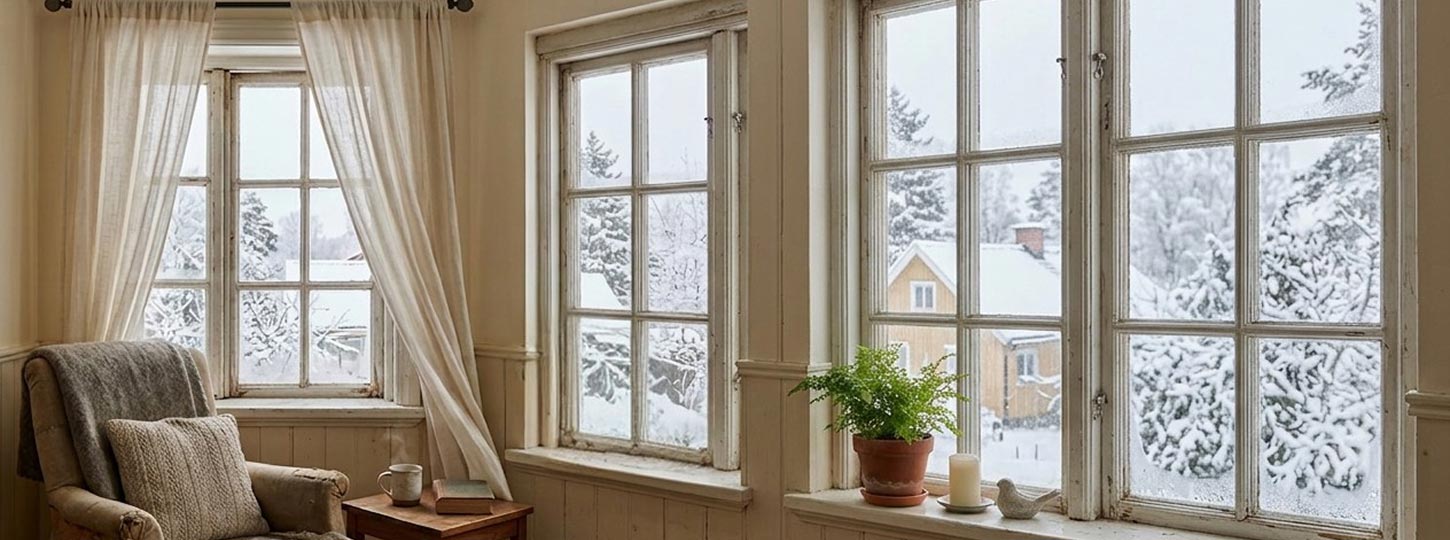


A cold spot beside a closed window is one of the most common comfort complaints in Canadian homes, yet many homeowners live with it for years before investigating the cause. Drafty windows are rarely caused by a single issue. They are usually the result of factors such as material ageing, seasonal movement, installation quality, or lack of maintenance. Understanding which factor is responsible is the first step toward fixing the problem correctly.
Window Force has been manufacturing custom vinyl windows in Ontario since 2007, producing units for builders, contractors, and homeowners through an authorized dealer network that spans every Canadian climate zone. Operating at that scale, across an eighty-thousand-square-foot production facility and installation crews working in all four seasons, means we have a detailed picture of how windows behave over time in Canadian conditions. The diagnostic patterns and repair thresholds described in this article are grounded in that accumulated production and field knowledge.
Key Takeaways
- Drafty windows are most commonly caused by failed weatherstripping, deteriorated caulking, broken insulated glass unit seals, or frame warping — each requires a different remedy.
- According to Natural Resources Canada, windows, doors, and skylights together account for up to 35% of total heat loss in a home, making window air leakage one of the most significant sources of wasted energy in Canadian homes.
- Simple DIY fixes such as re-caulking and replacing weatherstripping resolve most minor drafts, but fogging between panes or visible frame damage typically signals that professional repair or full unit replacement is the appropriate course.
- Modern energy-efficient windows with multi-pane glazing, low-E coatings, and argon gas fill dramatically outperform windows manufactured 15 — 20 years ago in both thermal resistance and air leakage control.
- Before investing in repairs, homeowners should distinguish between a weatherstripping problem, which is inexpensive to correct and a sealed-unit failure or structural issue, which usually warrants a broader assessment.
What Are Drafty Windows and How Can They Affect Your Home?
A drafty window allows uncontrolled air movement between the outdoors and indoors through gaps, failed seals, or deteriorated components. The term covers a range of conditions, from a barely perceptible trickle around a sash edge to a sustained cold stream along the sill during a winter wind event. What unites them is air leakage: the uncontrolled movement of air through or around the window assembly.
What Is a Draft?
In building science, a draft is a detectable air current produced by pressure differences between the interior and exterior of a building. Windows become entry points for these currents when their sealing components fail, when the frame separates from the surrounding wall structure, or when the glazing unit itself loses its integrity. The effect is most noticeable in winter because the incoming air is cold enough to be felt against the skin, but air leakage can also occur in summer and may increase cooling demand.
Signs of Air Leakage
The observable signs of window air leakage include cold spots along the frame or sash perimeter, curtains that move in still indoor air, a whistling or hissing sound during windy conditions, condensation forming on the inner glass surface rather than remaining between the panes, and, in severe cases, frost accumulation on interior window components. Each sign indicates a different potential cause, which is explained in the sections below.
Energy Efficiency Concerns
The energy cost of uncontrolled air leakage is substantial. According to Natural Resources Canada, windows, doors, and skylights collectively account for up to 35% of total house heat loss in Canadian homes, a figure that rises sharply when seals have degraded or frames have shifted. Leaking windows force the heating system to run longer cycles, increase fuel or electricity consumption, and create uneven temperature distribution throughout the home. In cold climates, the cumulative effect on annual utility bills can become noticeable over time.
Windows Near Me
Why Do Windows Become Drafty Over Time?
Windows do not fail arbitrarily. Their tendency to develop drafts is a predictable consequence of material ageing, environmental stress, and the physical demands placed on every component in the assembly.
Aging Windows
Most window components have defined service lives. Weatherstripping typically degrades over 10 — 15 years under Canadian climate conditions. Caulking along the exterior perimeter becomes brittle and cracks in 7 — 12 years without maintenance. Vinyl frames are more durable, and properly manufactured profiles can retain their dimensional stability for 25 — 40 years, but the hardware, glazing seals, and gaskets within those frames are not designed for the same lifespan. A window that has performed without issue for 20 years may begin developing drafts as its secondary sealing components reach the end of their service life simultaneously.
Environmental Factors
Canada's major population centres each impose distinct stresses on window assemblies. The demand for window replacement in Ontario is driven by an extreme temperature range, with temperatures swinging from — 25°C in January to +35°C in July, a 60°C annual cycle that fatigues gaskets, loosens caulked joints, and opens gaps throughout the assembly. Window suppliers in Alberta prioritize seal material flexibility above all else, as dry cold that regularly reaches — 30°C accelerates hardening more than any other Canadian climate. Custom-order windows in British Columbia must address sustained moisture: mild temperatures combined with wind-driven rain place continuous pressure on frame drainage, weep hole placement, and perimeter seal integrity.
The underlying mechanism is consistent across all three regions; differential thermal movement between vinyl, glass, rubber, and hardware accumulates over hundreds of seasonal cycles. What varies is which component fails first and how quickly, making climate zone one of the most relevant factors when assessing why a specific window is drafting and what the correct repair interval should be.

Structural Movement
House structures move. Soil settlement, wood framing shrinkage, freeze-thaw heaving of foundations, and differential movement between dissimilar materials all cause the rough opening around a window to change shape over time. When the opening distorts, the window frame follows or fails to follow, and gaps form at the interface between the frame and the wall. This is a common source of drafts in older homes and is separate from any failure of the window unit itself.
| Factor | Primary effect | Typical onset |
| Weatherstripping ageing | Air leakage at operable sash | 10 — 15 years |
| Caulk failure | Air leakage at the frame-to-wall joint | 7 — 12 years (exterior) |
| Vinyl frame expansion cycles | Dimensional changes at corners and joints | 20+ years |
| IGU seal deterioration | Fogging, loss of gas fill, thermal bridging | 10 — 20 years |
| Foundation or framing movement | Frame distortion, gap formation | Variable |
| Hardware wear | Inadequate sash compression | 10 — 15 years |
How Can You Tell If Your Windows Are Letting Cold Air Inside?
Detecting window air leakage does not require specialized equipment. The following diagnostic sequence works reliably and can be completed without tools on a cold, windy day.
Energy Indicators
If energy bills have increased without an obvious explanation, no new appliances, no significant changes in occupancy, or no thermostat adjustments, a thorough inspection of all window seals should be part of the diagnostic process. Heating system runtime can also be compared between seasons: a measurable increase in the number of heating cycles per hour on similar weather days suggests the building envelope has become less airtight.
What Are the Most Common Causes of Drafty Windows?
Most cases of window air leakage can be traced to one of five root causes. Identifying the correct cause matters because each requires a different response.
Seal Failures
The term "seal" in window construction refers to two distinct components that are often confused. The first is the weatherstripping that creates an air barrier between the moving sash and the stationary frame when the window is closed. The second is the edge seal of the insulated glass unit, the perimeter bond that keeps the gas fill trapped between the panes and prevents outdoor air from entering the sealed unit. Failure of the first creates a conventional draft. Failure of the second causes fogging and reduced thermal performance but does not create air movement into the room.
Installation Issues
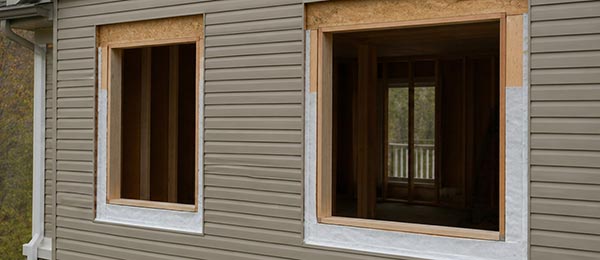
A window installed without adequate shimming, flashing, or perimeter caulking will leak in its first winter, regardless of the unit's quality. Gaps between the rough opening framing and the window frame must be filled with low-expansion foam and covered with a continuous, flexible exterior caulk bead. If either step was skipped or performed inadequately, air leakage at the frame perimeter will appear within a few heating seasons. Poor installation is a particularly common cause of drafts in replacement windows where the installer skipped proper finishing steps.
Frame Damage
Vinyl frames can warp if exposed to sustained extreme heat; a south-facing window behind a storm screen, for example, can reach surface temperatures high enough to cause creep deformation in lower-quality profiles. Wood frames are susceptible to rot and dimensional swelling. Aluminum frames, though resistant to rot, conduct heat extremely well and can create localized cold zones that increase the risk of condensation. In all cases, a warped or damaged frame will not compress the weatherstripping evenly, leaving gaps through which air can pass, regardless of how intact the weatherstripping itself may be.
| Cause | What you observe | Likely remedy |
| Worn weatherstripping | Draught at the sash edges when the window is closed | Weatherstripping replacement |
| Failed exterior caulk | Cold along the frame perimeter, visible cracking | Re-caulking exterior bead |
| Warped sash or frame | Uneven gap around sash, visible light at corners | Adjustment or unit replacement |
| IGU seal failure | Fogging between panes | IGU or window replacement |
| Poor installation | Persistent draft at the top or sides of the frame | Frame resealing, flashing repair |
| Hardware failure | The window will not close firmly | Hardware adjustment or replacement |
Can Damaged Weatherstripping Make Windows Drafty?
Weatherstripping is the primary dynamic seal in any operable window. When a window is closed and latched, the weatherstripping compresses between the sash and the frame, creating a barrier that blocks both air movement and water infiltration. When that seal degrades, air leakage follows directly.
Types of Weatherstripping
There are three main weatherstripping profiles used in residential windows. Compression seals, typically a hollow or solid bulb of EPDM rubber or thermoplastic elastomer, are used in casement and awning windows, where the sash swings shut against a continuous perimeter gasket. This type provides a tighter seal and is commonly used in high-performance windows. Pile or brush seals are used in sliding and hung windows, where the sash moves parallel to the frame rather than pressing against it. Foam tape seals are the simplest option, used in lower-cost applications and in DIY repairs. Each type has a different service life and failure mode.
Inspection Tips
To assess weatherstripping conditions, clean the seal surface and close the window slowly while watching the contact zone. A healthy compression seal should deform slightly and spring back when the window opens. A flat, cracked, or hardened gasket that no longer deforms is no longer providing meaningful compression, and the window will leak. For pile seals, look for fibres that are worn to the backing or compressed flat. A strip of paper held in the closed sash and pulled free should offer moderate resistance; if it slides out with no resistance, the seal has failed.
Replacement Process
- Open the window fully and identify the weatherstripping profile currently installed.
- Remove the old seal by peeling, unscrewing, or unclipping it from its channel, depending on the attachment method.
- Clean the channel or frame surface of adhesive residue or debris.
- Cut the new weatherstripping to length, ensuring the corners are mitre-cut or overlapped cleanly to prevent gaps.
- Install the new seal according to the manufacturer's method: adhesive-backed, snap-in, or screw-fixed.
- Close and latch the window to verify the new seal compresses evenly across its full length.
How Do Failed Window Seals Contribute to Drafts?
The insulated glass unit is a factory-sealed assembly consisting of two or more panes of glass separated by a spacer bar and bonded along the perimeter with a dual-component seal. The gas fill, typically argon, between the panes provides the majority of the unit's thermal resistance. When the perimeter seal fails, that gas escapes, humid outdoor air enters, and the unit's insulating value drops significantly.
Understanding Window Seals
IGU seal failure is not the same as weatherstripping failure and does not, by itself, create an air path between the outdoors and the room interior. The sealed unit remains physically intact, and air cannot pass through the glass. The consequence of a seal failure is reduced thermal resistance: without the gas fill, the unit's U-factor increases, meaning heat loss through the glass increases. The interior glass surface cools, increasing the risk of condensation and creating the sensation of cold radiating from the window even when no actual draft is present.
Seal Failure Signs
The most reliable indicator of IGU seal failure is permanent fogging or condensation between the two glass panes that cannot be wiped away. In early-stage failure, this fogging may appear only in cold weather and be clear in summer. In advanced failure, a residue of mineral deposits, a faint haze or streaking becomes visible permanently as moisture evaporates and leaves mineral traces on the interior glass surfaces. This residue confirms the seal has been open long enough for repeated moisture cycles to occur.

Repair vs. Replacement
An IGU that has lost its seal cannot be re-sealed; the gas fill cannot be reintroduced without disassembling the unit under controlled conditions, which is not economically viable for standard residential units. The practical options are to replace the glazing unit within the existing frame (if the frame is structurally sound) or to replace the entire window. For windows within their manufacturer's warranty period, a failed IGU seal is typically a warranty-covered defect; homeowners should verify coverage terms before paying for a replacement unit out of pocket. For older windows outside warranty coverage, the condition of the frame and hardware should guide the decision between glazing replacement and full window replacement.
How Can You Stop Drafty Windows Without Replacing Them?
Not every drafty window requires replacement. Many of the most common causes are correctable with targeted repairs that cost substantially less than new windows and restore performance to an acceptable level.
DIY Fixes
Re-caulking the exterior perimeter is the most cost-effective repair for frame-to-wall air leakage. Remove all existing caulk mechanically or with a solvent, clean and dry the joint, and apply a continuous bead of a high-quality silicone or polyurethane caulk rated for exterior use. This repair typically costs under $20 in materials and, if done correctly, will last 10 or more years before needing attention. Replacing weatherstripping is similarly cost-effective: the materials for a standard casement window run $15 — 40, and the replacement process takes under an hour.
Rope caulk, a temporary, pliable sealant applied by hand, is an effective winter measure for sealing sash-to-frame gaps without committing to a permanent fix. It peels away cleanly in spring and leaves no residue on most surfaces.
Seasonal Solutions
Interior window insulation film, applied over the window opening with adhesive tape and tightened with a hair dryer to remove wrinkles, creates a dead-air space between the film and the glass. This reduces both radiant heat loss from the cold glass surface and convective currents along the window wall. It is particularly useful for older, single-pane windows or in spaces where heating costs are disproportionately high. Thermal curtains with a dense interlining provide additional insulation at night when the window is not in use, though they do not address the root cause of the draft.
Long-Term Improvements
For windows where weatherstripping and caulking have already been replaced, and drafts persist, the issue typically lies in frame distortion, hardware failure, or sash warping. At this point, a professional assessment is warranted. A qualified installer can determine whether the window can be adjusted through shimming, hardware replacement, or frame realignment or whether the unit has reached the end of its serviceable life. Continuing to apply temporary fixes to a fundamentally compromised unit extends the period of energy loss without resolving it.
Which DIY Fixes Work Best for Minor Window Drafts?
The table below compares the four most widely used DIY methods for addressing minor window air leakage, based on expected performance, material cost, and the type of problem each addresses.
| Method | Best for | Material cost | Effectiveness | Longevity |
| Exterior re-caulking | Frame-to-wall gaps | $10 — 25 | High | 10 — 15 years |
| Weatherstripping replacement | Sash-to-frame leakage | $15 — 40 per window | High | 5 — 10 years |
| Rope caulk (temporary) | Sash edge gaps (seasonal) | $5 — 10 | Moderate | One season |
| Insulation film | Entire window opening | $10 — 20 per window | Moderate — High | One season |
| Draft stopper (sill) | Bottom sill air entry | $5 — 15 | Low — Moderate | Ongoing |
Exterior re-caulking - addresses the highest-volume leakage pathway in most homes: the joint between the window frame and the surrounding wall surface. No amount of interior measures will resolve a failing exterior caulk joint, because outdoor air enters the wall cavity through that gap and travels inward regardless of interior sealing.
Weatherstripping replacement - is the correct fix when the hand test or candle test shows air entry specifically at the sash perimeter. It should be matched to the seal profile already installed, substituting a different type risks poor compression and premature failure.
Insulation film is most effective for older windows where the glass itself is the primary source of radiant cold and for rooms where budget constraints make replacement impractical in the near term.
Are Old Windows Costing You Money on Energy Bills?
The relationship between window age and energy cost is direct and quantifiable. Windows manufactured 20 or more years ago were typically built to significantly lower thermal performance standards than those available today. Their frames lack the modern foam reinforcement and multi-chamber profiles that reduce conductive heat transfer. Their glass units, if sealed, were filled with air rather than argon, and most lacked low-E coatings. A window of that generation, even in perfect mechanical condition, transfers heat at two to three times the rate of a current ENERGY STAR-certified unit.
Energy Loss Explained
Heat escapes through windows through three mechanisms: conduction through the glass and frame materials, convection in the air layer adjacent to the cold glass surface, and air leakage through any gap in the assembly. In a drafty older window, all three are operating simultaneously and at elevated rates. The heating system responds by increasing its runtime, which is the mechanism by which window conditions directly appear on the utility bill.
Sergey Essipov, with over 20 years of experience in window manufacturing, explains:
From a production standpoint, the performance gap between a window built 20 years ago and a current double-pane argon-filled unit with low-E coating is substantial. We regularly receive older windows for evaluation, and what stands out is not just the degraded seals, but also that the original specifications were simply not designed for what Canadian winters require. The thermal bridging through those older frames alone would disqualify them from current ENERGY STAR certification.
Cost Impact
Heating costs vary by home size, climate zone, thermostat settings, and fuel type, so precise figures require an individual energy audit. What is consistent across assessments is that windows account for a disproportionate share of envelope heat loss relative to their area, because they are the lowest-resistance element in a typical insulated wall assembly. Replacing failed or outdated windows with ENERGY STAR-rated units typically materially reduces the window-related share of heating costs, with larger gains in homes where windows were in poor condition before replacement.
Efficiency Upgrades
For homeowners who want to understand the full scope of energy loss before committing to any repair or replacement, a home energy audit conducted by a certified energy advisor will identify the relative contribution of windows, wall insulation, attic bypasses, and mechanical system efficiency to total energy consumption. This allows repair and replacement priorities to be set based on actual cost-benefit rather than assumption.
Before making major home upgrades, an energy audit can determine whether windows are the primary source of heat loss or whether the issue lies elsewhere in the building envelope, such as insulation, air leakage, or ventilation. In Canada, EnerGuide programs use a whole-home assessment and recommendations from a certified energy advisor to identify upgrade priorities based on actual performance data rather than solely on the age of building components.
How Do Modern Energy-Efficient Windows Prevent Drafts?
The efficiency improvements in current residential windows result from incremental advances across every component of the assembly: frame materials, spacer bars, glazing configurations, and sealing systems.
Modern Technologies
Contemporary vinyl window frames are manufactured using multi-chamber profiles that divide the interior of the frame and sash into several sealed cavities. Each cavity acts as a separate insulating air column, reducing the rate of thermal conduction through the frame from exterior to interior. The fusion-welded corners used in quality vinyl windows eliminate the mechanical joints that older aluminum frames relied on, which were consistent sources of air infiltration. Modern frames also incorporate reinforced weather channels that maintain their shape over decades of thermal cycling, keeping the weatherstripping geometry consistent.
Glass technology has advanced substantially. A double-pane unit with argon gas fill and a passive low-E coating on the inner surface of the outer pane achieves a centre-of-glass U-factor in the range of 1.1 — 1.6 W/m²·K, compared to 3.0 — 5.0 W/m²·K for single-pane glass. Triple-pane units with two low-E surfaces and krypton fill reach U-factors below 0.8 W/m²·K, which is the range of a well-insulated wall assembly.
Energy Ratings
The Canadian standard for window energy performance is the ENERGY STAR Energy Rating (ER) system administered by Natural Resources Canada. The ER combines U-factor (heat loss), solar heat gain coefficient (solar energy admitted), and air leakage rate into a single figure. A minimum ER of 34 is required for ENERGY STAR certification; the most efficient certified products reach ER values above 40. Windows bearing the ENERGY STAR label have been independently tested and certified to meet these thresholds, a meaningful assurance in a market rife with unverified performance claims.
Window Force manufactures its vinyl windows to meet or exceed ENERGY STAR standards across all product lines, using fusion-welded frame corners, dual-component IGU seals, and argon gas fill as standard specifications. Units are produced and inspected at the company’s Canadian manufacturing facility under strict quality controls designed to ensure that the window delivers the same performance in real-world conditions as its certified ratings indicate.
Performance Benefits
A properly installed modern window eliminates drafts at the sash interface through compression weatherstripping that maintains consistent closure force over its design life. It eliminates conductive cold zones through insulated frame profiles. It reduces radiant heat loss through low-E-coated glass. And it seals the frame perimeter through pre-installed or site-applied flashing and caulking systems that are continuous and tested before sign-off. The result is a window that does not require temporary seasonal fixes, does not degrade into a draft problem within a decade, and contributes meaningfully to the thermal performance of the building envelope.
What Should Homeowners Know Before Choosing Window Replacement?
The decision to replace windows involves more variables than most homeowners anticipate at the outset. A structured approach to that decision reduces the risk of selecting products that underperform or are installed in ways that negate their performance ratings.
Choosing the Right Window
Window type affects both performance and function. Casement and awning windows, which close with a compression seal, are inherently tighter than sliding or hung windows, which rely on pile seals. For rooms where maximum airtightness is the priority, a north-facing bedroom or a home office, a casement or awning configuration will outperform a slider of equivalent glazing specification on air leakage. Material choice matters too: vinyl frames with multi-chamber profiles offer the best combination of thermal resistance and long-term dimensional stability for Canadian conditions. Fibreglass is an alternative with superior dimensional stability but at a higher price point.
Sergey Essipov notes:
At our facility, we see firsthand what happens when frame geometry is compromised by cost-cutting on profile design. Our lead-free uPVC frames with UV stabilizers are produced to maintain dimensional stability across the full Canadian temperature range — that stability is what determines whether the sash still closes with the same compression force in year fifteen as it did in year one. A window that holds its geometry holds its seal. That is the most reliable long-term defence against drafts, and it is why frame construction should be the first specification a homeowner evaluates, not the last.
Installation Considerations
A high-performance window installed without proper flashing, continuous perimeter caulking, and verified shimming to prevent frame racking will leak from its first winter. For replacement windows, the installation should include: removal of all existing interior stops and exterior trim to expose the full frame perimeter; inspection of the rough opening framing for rot, moisture damage, or distortion; shimming to ensure the frame sits plumb, level, and square; insulation of the gap between the rough opening and the window frame with low-expansion foam; installation of flexible self-adhesive flashing at the sill and head; and a continuous bead of exterior caulk along all four sides. Steps skipped during installation become service calls within a few years.
Warranty Review
Window warranties vary significantly in what they cover and for how long. A reputable manufacturer's warranty will cover manufacturing and material defects in both the frame and the sealed glass unit for a defined period, typically 10 — 25 years on the IGU and a lifetime on the frame under normal residential use. Warranties that exclude labour costs for remediation, or that require the homeowner to prove that failure was not caused by installation error, are less protective than they appear. Before purchase, ask specifically what the process is for claiming a failed IGU seal, since this is the most common warranty event, and confirm whether the manufacturer requires authorized installation to maintain coverage.
For a broader view of what the indicators suggest about windows reaching the end of their practical service life, the article on signs your windows need replacing provides a detailed diagnostic framework covering visible damage, energy performance decline, and condensation patterns.
Window Force approaches replacement as a complete system decision, not a product transaction. Windows are produced to order at our Ontario facility, CSA-certified, and ENERGY STAR-qualified across all Canadian climate zones, and delivered through an authorized dealer network that handles installation to the full perimeter-sealing standard described above. Every unit is backed by a 25-year transferable warranty covering both the frame and the sealed glass unit — a coverage term that reflects confidence in the manufacturing specification rather than a marketing figure. For homeowners, that transferability also means the warranty follows the home, not the original purchaser, which is a meaningful consideration if the property changes hands during the warranty period.
Conclusion: Diagnosing and Fixing Drafty Windows
Drafty windows are a solvable problem in most cases, but the correct solution depends entirely on an accurate diagnosis. A caulk failure at the exterior frame perimeter requires re-caulking. A degraded compression gasket on a casement window requires replacement of the weatherstripping. A fogged sealed unit with a failed IGU seal requires glazing or window replacement. Applying the wrong remedy wastes time and money while the actual failure continues to drive heat loss and discomfort.
For windows where targeted repairs have already been completed, and drafts persist, or where the window is more than 20 years old and showing multiple signs of failure simultaneously, a professional assessment is the most efficient next step. Scheduling a window maintenance inspection before the heating season allows problems to be identified while repair options are still available, rather than after repeated cold days have made the consequences unavoidable.
Frequently Asked Questions
What causes a window to feel cold even when there is no obvious draft?
A cold sensation near a window without perceptible airflow is usually caused by radiant heat loss from the cold glass surface or by convective currents in the room air adjacent to the cold glass. This is distinct from air leakage and is addressed by improving the glazing specification, typically by adding a low-E coating or upgrading to a double- or triple-pane unit rather than by sealing measures.
How do I know if my window needs re-caulking or full replacement?
If the draft is localized at the junction between the window frame and the wall, and the window unit itself closes and latches firmly, re-caulking the exterior perimeter is usually sufficient. If the draft is present at the sash perimeter when the window is fully closed and latched, the weatherstripping requires attention. If both of those are intact and the window still leaks, or if the frame is visibly warped or the glass is fogged between the panes, a professional assessment for replacement is warranted.
Can I use spray foam to seal around my window frame?
Low-expansion spray foam is appropriate for filling the gap between the rough opening framing and the window frame, a space that must be insulated and sealed. High-expansion foam should not be used in this application, as it can exert sufficient pressure on the frame to cause warping, preventing the sash from closing evenly. The foam fill should always be covered by a flexible, paintable exterior caulk that provides UV resistance and accommodates seasonal movement.
How long does weatherstripping last on vinyl windows in Ontario?
Under typical Ontario climate conditions, where thermal cycling between winter and summer temperatures is extreme, weatherstripping on casement and awning windows generally lasts 10 — 15 years before it loses enough resilience to maintain a consistent air seal. Pile seals on sliding and hung windows may need attention sooner, in the 7 — 12 year range, as the fibres compress and wear with repeated operation.
Does window condensation always mean the window is drafty?
Not necessarily. Condensation on the interior surface of the inner glass pane is caused by that surface falling below the dew point of the indoor air. It indicates that the window's thermal resistance is insufficient for the indoor humidity level, but it does not confirm air leakage. Condensation between the panes of a sealed double-pane unit indicates IGU seal failure. This affects the window's insulating performance and requires repair or replacement of the affected glass unit, but it does not mean that outdoor air is entering the room through the window. Neither condition should be confused with condensation on the glass's exterior surface, which is a normal atmospheric phenomenon.
At what point does repairing a drafty window stop making sense financially?
When a window requires repeated repairs over a short interval, new weatherstripping, followed by hardware adjustment, followed by re-caulking within three to five years, the cumulative repair cost typically approaches or exceeds the replacement cost. Additionally, if the window is more than 20 years old, the glazing specification it was built to is substantially below current ENERGY STAR standards, meaning that a repaired older window still performs at a fraction of what a replacement unit would deliver. At that stage, replacement provides a better long-term return than continued repair.
People Also Ask