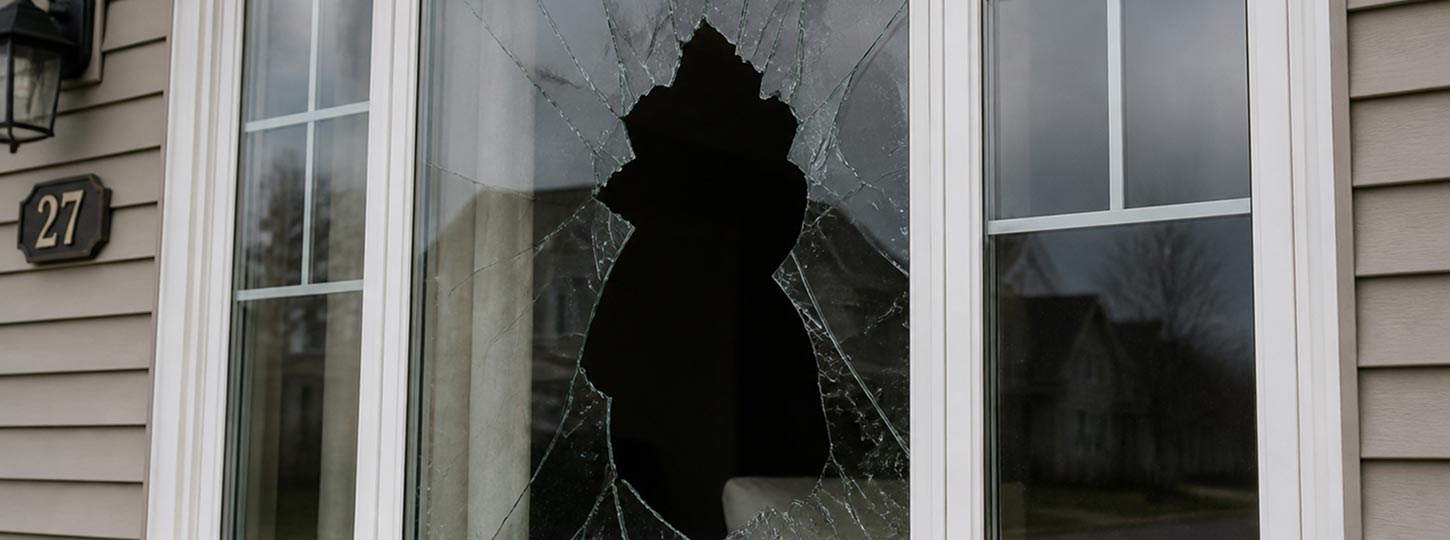


Window glass can be repaired in a narrow set of cases: shallow surface chips and scratches that have not extended into a crack. Once a crack has a defined point of origin and radiating lines, the pane has lost mechanical integrity at that location, and in a sealed insulated glass unit the Low-E coating, argon fill, warm-edge spacer, and perimeter seal perform only as an intact assembly across a cavity of roughly 12 to 16 mm, so the unit is replaced rather than patched. Which of those outcomes applies depends on three observable facts: where the crack started, how far it has travelled, and whether the surrounding seal and frame are still sound.
Replacement glazing is where a manufacturer sees the consequences of every earlier decision: we take in the failed unit's dimensions, coating type, cavity depth, and spacer height, and rebuild the unit to match, which means the reasons sealed units fail early cross our production floor in concentrated form. Window Force has manufactured fenestration for the Canadian market since 2007, and the Ontario plant now runs 80,000 sq ft of production supporting both new window lines and replacement glazing built to specification. The distinctions drawn in this article come from that vantage point rather than from a service-call log.
Key Takeaways
- A cracked pane can sometimes be repaired, but the right fix depends on whether the damage is cosmetic, structural, or due to a failed seal in an insulated glass unit.
- Small chips and superficial scratches can sometimes be repaired, while visible cracks generally require replacement of the affected pane or IGU.
- Fogging or moisture between panes means the seal has failed and the entire insulated glass unit needs replacing, not just the visible crack.
- DIY epoxy kits can slow the spread of a small crack, but they do not restore the structural strength or insulating performance of a modern glazing system.
- Frame damage or water infiltration may require more than glass replacement.
Can Cracked Window Glass Be Repaired Permanently?
A small surface defect or minor chip may sometimes be repaired, depending on its size and location. Once a visible crack has formed in architectural window glass, however, replacement of the affected pane or insulated glass unit is generally the more reliable solution. Surface-applied repair products may temporarily contain minor damage, but they should not be treated as a restoration of the glass's original structural strength.
The distinction that matters most is between four different outcomes: repairing a cosmetic defect, temporarily stabilizing an active crack, replacing a single pane, and replacing an entire insulated glass unit (IGU). Homeowners often assume these are interchangeable, but each addresses a different level of damage, and choosing the wrong one either wastes money or leaves a structural weak point in the window.
| Damage Situation | Realistic Fix | Expected Outcome |
| Small surface scratch | Professional polishing, if suitable | Cosmetic improvement; does not restore damaged glass |
| Small chip without a crack | Professional assessment and appropriate glass repair, if feasible | May provide a durable cosmetic repair when damage is minor and localized |
| Short crack in a single pane | Replace the affected pane | Restores the intended structural and weather-resistant performance |
| Impact or starburst crack | Replace the affected pane | Durable correction |
| Crack in one pane of a double- or triple-pane IGU | Replace the complete IGU | Restores the sealed glazing assembly |
| Fogging or moisture between panes | Replace the complete IGU in most residential applications | Restores the sealed insulating-glass assembly |
For most modern insulated windows, the more accurate expectation is that a crack signals the beginning of a replacement decision, not a one-time patch job.
Windows Near Me
What Types of Cracked Glass Damage Are Repairable?
Not all glass damage behaves the same way, and treating a structural crack like a cosmetic one is one of the more common mistakes homeowners make. The practical division is between damage confined to the surface of the pane, damage that has propagated through its thickness, and damage that has occurred at the perimeter seal rather than in the glass at all. Each is identified differently: surface damage by whether a fingernail catches in it, a structural crack by its point of origin and direction of travel, and a seal failure by what appears between the panes rather than on them.
Minor Surface Damage
Small surface scratches or minor chips may sometimes be repairable when they are shallow, localized, and do not extend into a crack. Damage near the glass edge should be assessed more carefully because edge defects can act as stress concentrators, increasing the risk of fracture. These can be filled with clear epoxy or polished out, and when the damage is minor and properly treated, a cosmetic repair can provide a durable result. Its long-term performance depends on the type, depth, and location of the damage, as well as the repair method used.
Structural Cracks
Impact, stress, and pressure cracks all fall into different categories. Once a crack has a defined starting point and radiating lines, the glass has lost mechanical integrity at that location. Epoxy can temporarily slow the spread, but the pane itself needs to be replaced to restore full strength and weather resistance.
Engineer Sergey Essipov, with 20 years of experience in window manufacturing, explains:
One of the most common misconceptions is that any crack can simply be filled with resin and forgotten. In reality, once a crack compromises the structural integrity of the glass, repair can only delay further damage; the only way to restore the window's original strength and weather resistance is to replace the affected pane or insulated glass unit.
Seal Failure
In a sealed double- or triple-pane unit, the spacer and sealant system keeps the insulating gas in and moisture out. When the perimeter seal fails, moisture can enter the cavity and the insulating gas can escape. In most residential applications, the failed IGU is replaced as a complete sealed unit rather than resealed in place.
From a glazing standards perspective, moisture or frost forming between the panes is a recognized indication of a problem within the sealed insulating-glass cavity. ASTM E546 provides a laboratory method for determining the frost/dew point in the air space of a sealed insulating glass unit, which is relevant to assessing moisture conditions within the sealed cavity.
Most sealed units on the market rely on a single organic seal at the perimeter and a metal spacer that conducts heat directly to the edge of the glass, which is precisely where surface temperatures are lowest and where the seal is most stressed by daily expansion and contraction. Window Force builds every insulated glass unit on a dual-seal, metal-free warm-edge spacer, so the moisture barrier and the structural bond are two separate layers rather than one line of defence at the point of greatest stress. For a homeowner replacing a fogged unit, that determines whether the replacement corrects the symptom or is built to resist the same failure mode.
The table below summarizes how each damage type should typically be handled.
| Damage Type | Re-Glaze | Full Window Replacement |
| Surface scratch / small chip | — | — |
| Short crack | — | |
| Impact crack | — | |
| Thermal stress crack | If recurring | |
| Pressure-related crack | If underlying issue is identified | |
| Fogged/failed seal | — | |
| Shattered pane | — | |
| Crack with frame damage | — | Assess window system |
What Causes a Glass Crack to Form?
Cracks rarely appear without a cause, and identifying that cause matters because it determines whether the same crack is likely to return after a repair. The four mechanisms below leave distinguishable signatures: an impact produces a defined point of origin, thermal stress usually begins at the edge of the pane, pressure differences act on the sealed cavity as a whole, and frame movement loads the perimeter of the glass. Reading that signature before ordering replacement glass is what separates a one-time repair from a recurring one in the same opening. A rough diagnostic: a crack running roughly perpendicular to the glass edge, starting within about 50 mm of the frame, is almost always thermal — the frame shadows that zone while the centre heats uniformly, creating the sharpest temperature differential right at the margin. A crack that radiates outward from a point clearly inside the glass field, rather than from the edge, is almost certainly impact, regardless of whether anyone remembers hitting it. A smooth, gently curving crack with no clear starting point and no obvious impact event deserves a second look at whether the unit is fogging before being attributed to structural cause, because seal failure under pressure loading sometimes produces a crack in the outer lite that looks like spontaneous structural failure.
Impact Cracks
The most visible and easiest to diagnose. A direct hit from a thrown object, storm debris, or accidental contact creates a crack with a clear point of origin, usually radiating outward in a starburst pattern. The severity depends on the force and location of the impact relative to the glass edge.
Thermal Stress Cracks
These form when one side of a pane heats or cools faster than the other, causing uneven expansion across the glass. A peer-reviewed study on glass fracture behaviour found that cracks under thermal loading tend to initiate at the edge of the pane, where shading from the frame creates the sharpest temperature difference between the exposed centre and the covered perimeter.
Glass-engineering perspective: Thermal cracking is driven by tensile stress created when different parts of the pane reach different temperatures. Research on window glass shows that edge conditions and restraint from the frame can increase thermal stress, which is why adequate clearance between the glass and frame is important when diagnosing repeated cracks.
Pressure Cracks
Pressure-related stresses can contribute to glass fracture in sealed IGUs, particularly where significant pressure differences arise from altitude or temperature. Determining the cause usually requires examining the crack pattern, glazing configuration, installation conditions, and frame.
Frame-Related Cracks
Sometimes the glass isn't the problem at all. A settling foundation, a warped frame, or improper installation clearance can put mechanical pressure directly on the edge of the pane. In this case, replacing the glass without correcting the underlying frame or installation issue may result in another crack in the same location.
A crack that returns to the same corner usually indicates the frame rather than the glass, since a sash that racks even slightly transfers that movement straight into the pane edge. Window Force fusion-welds the corners of both sash and outer frame into a continuous joint that resists racking, rather than relying on mechanical fasteners that can work loose as the opening shifts with the building. Where the frame holds its geometry, the glazing pocket keeps its clearance, and the edge of the pane stops carrying loads it was never designed to take.
How Should Homeowners Assess the Damage Safely?
Before deciding on any fix, a short visual assessment tells you most of what you need to know, and it should always be done without applying pressure to the glass.
Start by looking at the crack's length, shape, and starting point. A short, straight crack that stops well short of the frame is far less urgent than one that runs edge to edge or has multiple branches. Check whether the crack is on a single pane or has affected more than one layer in a multi-pane unit, and look for fogging or a milky haze between the panes, which indicates a seal failure rather than a simple surface crack.
- Photograph the damage from a few angles, including a close-up of the starting point.
- Check the sash and frame around the crack for warping, gaps, or soft spots.
- Note whether the crack appeared after a specific event, such as an impact, storm, or temperature change, or whether it was discovered without an obvious trigger.
- Avoid pressing on the glass, forcefully opening or closing the sash, or removing loose fragments yourself.
If the pane is shattered, has loose shards, or the crack runs into the frame itself, that crosses the line from homeowner observation into professional inspection territory. At that point, the safest move is to stop handling the glass and arrange for a technician to assess it.
Can a Cracked Window Be Fixed With a DIY Repair Kit?
DIY glass repair products have a real but narrow role, and understanding what they can and cannot do prevents wasted effort on a fix that will not hold. These kits are formulated to fill a void in the surface of a single sheet of glass and to slow a crack from lengthening; they were never designed to restore tensile strength or to re-establish a sealed, gas-filled cavity. That distinction carries the most weight on modern windows, where the pane a homeowner is looking at is one component of a sealed assembly rather than the window itself.
What DIY Products Can Do
DIY glass repair products may temporarily contain minor damage, but they do not restore the original structural strength of cracked glass. They may be appropriate only as a short-term measure on minor, stable single-pane damage while awaiting professional assessment or replacement.
When DIY Repair Is Unsafe
Advice built around single-pane glass does not automatically transfer to modern double- or triple-pane insulated units. Applying epoxy to a crack in an IGU does not restore the unit's seal or replace insulating gas if the sealed cavity has been compromised. DIY repair also isn't appropriate for large-impact cracks, shattered panes, or any situation involving loose or sharp glass fragments, where the risk of injury outweighs the cost savings. Treat DIY kits as a way to buy time on minor single-pane damage, not as a substitute for structural or seal repair.
What Should You Do Immediately After Discovering Cracked Glass?
The first few minutes after noticing a crack matter more for safety than for the long-term repair decision.
- Keep children and pets away from the affected window until it has been assessed.
- Avoid opening, closing, or leaning on the sash, since movement can widen the crack or dislodge fragments.
- Do not apply pressure to the glass, even to test the extent of the damage.
- Cover the area loosely if it's exposed to wind-driven rain or snow, without pressing on the crack itself.
- Photograph the damage for reference and for any insurance or warranty claim.
- Arrange a professional assessment promptly if the pane is shattered, has loose shards, or the crack extends into the frame.
Shattered or visibly unstable glass warrants urgent attention rather than a wait-and-see approach, particularly in a ground-floor window or one accessible to children.
Can Double- or Triple-Pane Window Glass Be Repaired?
Modern insulated glass units are more complex than a single sheet of glass, which is exactly why a crack in one is rarely a simple fix. An IGU consists of two or three panes separated by a spacer, sealed around the perimeter, and often filled with an inert gas such as argon to slow heat transfer. According to Natural Resources Canada, an energy-efficient window assembly typically combines multiple glass layers, a low-emissivity coating, an inert gas fill, and a warm-edge spacer designed to reduce heat transfer through the edge of the insulated glass unit.
When one pane in that assembly cracks, or the seal fails, the sealed cavity is compromised. Replacing only the visible glass without addressing the seal and spacer defeats the purpose of the unit, since the gas fill and coatings only function properly within an intact, properly sealed cavity. In practice, this means the complete IGU is replaced as a matched unit rather than repaired piece by piece.
In most residential applications, a failed IGU is replaced as a complete sealed unit rather than repaired in place.
Engineer Sergey Essipov, with 20 years of experience in window manufacturing, explains:
An insulated glass unit is engineered as a sealed system, and swapping one pane inside it does not restore that system. At our facility, we build each replacement unit to order against the specification taken from the original, matching pane thickness, coating type, and cavity depth, because a unit that is close but not identical seats poorly in the glazing pocket and fails at the edge long before the glass itself does.
Getting a replacement unit right also means matching the original glass and glazing configurations, including Low-E coating type, pane thickness, spacer style, and whether the glass is tempered or laminated for safety compliance.
When Is Replacing Only the Insulated Glazing Unit the Right Choice?
Glass-only replacement makes sense when the damage is isolated to the glazing and the rest of the window is still doing its job. The ideal candidate has a square, undamaged frame; a sash that opens and closes smoothly; functioning locks and hardware; and a crack or seal failure limited to one unit.
- The frame shows no warping, rot, or moisture staining.
- The sash operates without sticking or excessive resistance.
- Hardware locks securely and hasn't been forced or bent.
- Only the glass or seal has failed, not the surrounding structure.
- The window still has enough remaining service life to justify the investment in new glazing.
If your window meets those conditions, glass-only replacement typically costs less and takes less time than swapping the entire unit, since only the sealed cavity is remanufactured to match your original specifications.
That case only holds if the replacement unit is a genuine match, so Window Force builds replacement glazing to the specification recorded from the original opening and supplies it through an authorized dealer network that verifies coating, pane thickness, and spacer height on site before the order is released to production. Certification carries over to the replacement unit rather than stopping at the original window: products are CSA certified and ENERGY STAR® qualified across all Canadian climate zones, so glass-only work does not quietly downgrade the rating at which the window was installed. The 25-year transferable warranty stays with the property rather than the original purchaser, which matters when glazing is replaced years before a sale.
When Does a Cracked Window Require a Full Window Replacement?
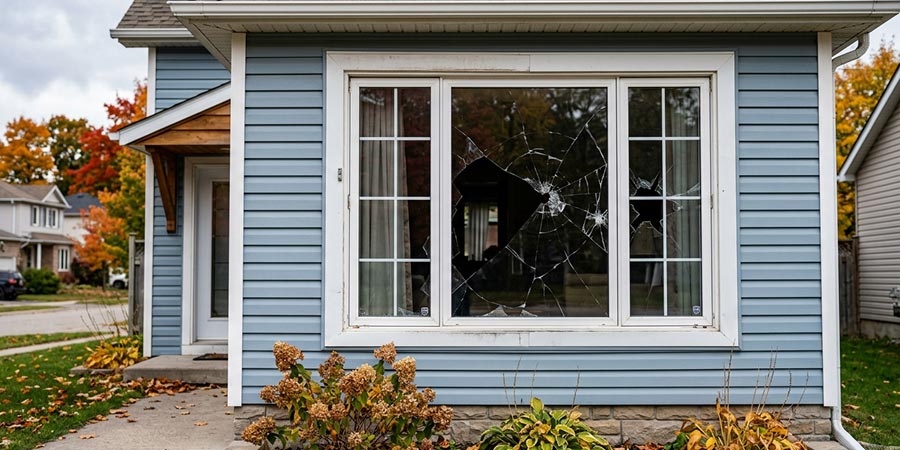
Full window replacement is the right decision when the failure lies in the window system rather than in the glazing: a frame that has moved out of square, rot or moisture staining in the sash, hardware that no longer pulls the sash tight against its weatherstrip, or air and water passing along the perimeter. In those cases, new glass restores the window's appearance without addressing what caused the failure, so the crack, draft, or leak returns on the same schedule as before.
Recurrence is the clearest single indicator. A pane that cracks once may simply have taken an impact; a pane that cracks twice in the same corner is being loaded by something that will not stop at the third replacement, most often a sash that has racked out of square, a foundation still settling under that wall, or a glazing pocket with no clearance left between the pane and the frame. Once the second crack appears in the same location, the arithmetic also shifts, because two glazing units plus two service calls approach the cost of the replacement window that would have ended the cycle.
The availability of a matching unit weighs into the decision regarding older windows. A replacement IGU must match the original cavity depth, spacer height, coating type, and pane thickness to seat correctly in the glazing pocket. On discontinued profiles, a match is not always obtainable, which leaves a compromise unit or a new window. Hardware follows the same logic: if the balance, lock, or operator is no longer produced for that series, glass-only work results in a clear pane in a sash that still cannot be operated or sealed properly.
The surrounding assembly also sets a ceiling on what new glazing can deliver. Fitting a modern sealed unit into a single-glazed timber sash or an aluminum frame without a thermal break improves the centre of glass, while the frame continues to conduct cold and collect condensation around the perimeter, so the comfort problem that prompted the work persists in a slightly quieter form. When the frame is the weaker component, replacing the complete window allows the frame, seal, and glazing to be specified as a single assembly rather than three parts of different ages.
How Much Does Cracked Glass Repair or Replacement Cost?
There's no single universal price for cracked glass repair, because too many variables affect the final number. What follows are the factors that actually move the estimate, so you can compare quotations meaningfully rather than judging by a single quoted figure.
Glass Specifications: Pane dimensions, glass thickness, and whether the unit is tempered or laminated all affect cost, since safety glass and custom shapes require more processing than standard annealed glass. Low-E coatings and argon gas fills add a modest premium but improve long-term energy performance.
Installation Complexity: Custom shapes, grid patterns, and hard-to-access windows, such as upper-storey units or bay and bow configurations, take more labour time than a standard single or double-hung replacement. Whether the frame also needs work changes the scope significantly.
Emergency Service: A shattered pane that needs immediate boarding or same-day glass replacement typically carries a premium over scheduled work booked in advance.
For homeowners in Toronto and across Ontario weighing repair against replacement — the Toronto window replacement cost guide provides a useful baseline for the full-replacement side of that calculation — the most reliable approach is to request itemized quotations that break out glass, labour, and any framing separately, rather than comparing a single bundled number across providers.
How Can Pane Damage Affect Safety, Insulation, and Home Security?
A cracked pane is rarely just a cosmetic problem. Sharp edges and loose fragments create an injury risk, particularly around children and pets, and a compromised pane offers far less resistance to further impact than intact glass. If moisture works its way into a cracked IGU, condensation between the panes follows, along with a gradual loss of the insulating performance the sealed cavity was designed to provide. Cracked glass can reduce the window's resistance to further impact and forced entry compared with intact glazing, particularly at easily accessible locations, which matters most at ground-level and easily accessible windows. It's worth noting that replacing the glass restores the glazing's intended performance, but it won't address drafts or heat loss caused by a poorly sealed frame or an installation gap around the unit. That requires addressing the frame itself.
Homeowners who replace the glass and still feel a draft are usually feeling the frame. Window Force sets the chamber layout of its lead-free uPVC profiles — compounded with UV stabilizers through the full profile wall — so that the frame's thermal resistance stays in step with the sealed unit it holds, rather than becoming the weak link in a high-performance glazing package. It is worth establishing before glass is ordered: where the frame is the limiting component, new glazing raises the centre-of-glass figures and leaves the original comfort complaint untouched.
How Can Homeowners Prevent Future Window Damage?
Most cracks trace back to a handful of preventable causes, and a few habits go a long way toward avoiding repeat repairs. Prevention operates at two levels: the specification decisions made when the glass is ordered, such as glass type and coating matched to the wall's exposure, and the conditions maintained afterwards, such as keeping the frame square and the perimeter clearance around the pane intact. The measures below address the three mechanisms most often responsible for a crack reappearing in the same opening.
Preventing Thermal Stress
Choosing an appropriate glass specification for the window's orientation and sun exposure can reduce the risk of thermal stress cracking. Avoid installing highly heat-absorbing blinds or reflective films directly against sun-exposed glass unless the glazing manufacturer confirms that the combination is suitable.
Preventing Impact Damage
Keep sports activity and yard work away from windows where practical, and consider laminated or tempered glass in higher-risk locations such as near doors, walkways, or play areas, where appropriate for the application and applicable safety-glazing requirements.
Correcting Frame Movement
If cracks recur in the same location, have the frame and installation conditions inspected before replacing the glass again. Investigating and correcting that movement, rather than simply replacing the glass again, is what actually stops the cycle. Professional measurement, square framing, and proper setting blocks during installation all reduce the chance of frame-induced cracking later.
What Is the Best Next Step for Cracked Window Glass?
The right response to a cracked pane depends on the type and extent of the damage and the condition of the surrounding window. A minor surface defect may sometimes be repaired, while a visible crack generally calls for replacement of the affected pane. A crack in a sealed double- or triple-pane unit, or fogging between the panes, typically requires replacement of the complete IGU with matching glazing specifications. If the frame or sash is warped, damaged, or allowing water or air infiltration, full window replacement may be the more appropriate long-term solution.
This article drew on manufacturing and glazing standards from Natural Resources Canada and peer-reviewed research on glass fracture behaviour to ground its recommendations, alongside common patterns observed in residential window damage across Ontario's freeze-thaw climate. If you're weighing glass replacement against a full window upgrade, Window Force's team can help you assess the right path and provide a quote backed by our 25-year transferable warranty coverage. Request an assessment to get a clear recommendation for your specific window. If replacement makes sense, qualifying energy-efficient units may also be eligible for federal or provincial rebates — the Canada window and door rebates guide summarizes current programs.
Frequently Asked Questions
Can a cracked window pane be fixed without replacing the whole window?
Often, yes. If the crack is isolated to the glass and the frame, sash, and hardware are still in good condition, replacing just the glazing unit is usually sufficient. It's only when frame damage, recurring cracks, or air leakage are also present that a full window replacement becomes the better long-term solution.
Is it safe to use an epoxy repair kit on a double-pane window?
A surface repair product does not restore the sealed cavity of a double- or triple-pane IGU. If the glass is cracked or the unit is fogging between panes, the appropriate long-term solution is usually replacement of the affected IGU.
How do I know if my window needs glass replacement or a full window replacement?
Check the frame first. A sound, square frame with working hardware and no water damage usually supports glass-only replacement. Warping, rot, recurring cracks, or drafts around the sash point toward a full window replacement instead.
What does fogging between window panes mean?
Fogging or a milky haze between panes indicates that the IGU seal has failed, allowing moisture into the cavity and potentially allowing the insulating gas to escape. This isn't a surface issue. In most residential applications, the failed sealed unit is replaced rather than repaired in place.
How much does it typically cost to fix a cracked window?
Cost depends on pane size, glass type, whether the frame also needs repair, and how quickly the work is needed. Rather than relying on a flat rate, request an itemized quotation that separates glass, labour, and any frame work.
Can I wait to repair a cracked window, or does it need immediate attention?
Small, stable surface cracks can often wait for a scheduled repair. Shattered glass, cracks with loose fragments, or damage near a frequently used entry point warrant prompt attention due to the associated injury and security risks.
People Also Ask