

Paying for replacement windows in Ontario has changed: the federal interest-free loan is closed, the federal grant is closed, and the provincial rebate now depends on a bundled energy upgrade rather than a window purchase alone. That leaves homeowners with a short list of real paths, and each one works differently on the day the crew arrives. This guide separates the money you borrow from the money you get back, so the payment plan you sign matches the job you are actually buying.
Financing decisions affect more than the payment schedule: they also determine when an order can proceed and what documentation may be needed for a rebate application. Window Force has supplied custom vinyl windows to dealers, contractors and homeowners since 2007 from its 80,000 sq ft Ontario facility. This guide explains how to align the quote, financing approval and project documentation before work begins.
Key Takeaways
- Remaining borrowing paths include a lender payment plan, a renovation loan or line of credit, and a property-tax loan where a municipality offers one.
- Confirm current program eligibility before including any rebate or incentive in your project budget.
- A rebate reduces what the job costs after the work is done; it is not money available on installation day.
- The Ontario rebate path for windows requires an energy assessment before work starts, at least two qualifying upgrades and ENERGY STAR certified models.
- Don't start work or sign a binding contract until the financing is approved and the payment is known.
- A single window fault may be repairable without replacing the entire unit.
What are the ways to finance new windows in Ontario?
Financing new windows in Ontario starts with separating two kinds of money. Some options are a loan, which you repay over time. Others reduce the final bill, either through a rebate after the work or through a grant that you never repay. Homeowners run into trouble when they treat the second kind as the first and sign a contract counting on money that arrives months later, if at all.
Which options are a loan?
Three borrowing paths remain open to an Ontario homeowner replacing windows today:
- A lender payment plan arranged through one of the window replacement companies quoting the job, where a third-party lender approves the homeowner and pays the contractor
- A renovation loan or line of credit from a bank or credit union, secured or unsecured, which the homeowner draws on to pay the contractor directly
- A property-tax loan, repaid as a charge on the property tax bill, available only where the municipality has set up such a program
The federal option many homeowners still ask about, the interest-free Canada Greener Homes Loan, cannot take a new application. Its funding is fully committed, and it should not be part of a financing plan for a job being quoted now.
Which options only reduce the bill?
A rebate and a grant both lower the job's net cost, but neither pays the contractor on installation day. Under the assessment-based Home Renovation Savings Program stream, the rebate process requires completing the eligible upgrades, a final home energy assessment, and submitting the required documentation. A grant is money you do not repay, and the federal grant that once covered windows is no longer available to new applicants. Both are covered in their own sections below, and both belong in a budget as a later reduction rather than as a source of funds.
| Option | Do you repay it? | When does the money arrive? | Who decides eligibility? |
| Lender payment plan | Yes | At or before installation, paid to the contractor | The lender |
| Renovation loan or line of credit | Yes | When you draw on it | Your bank or credit union |
| Property-tax loan | Yes, through the tax bill | According to the municipal program | The municipality |
| Provincial rebate | No | After the work and the final assessment | The program administrator |
Windows Near Me
What does a home renovation loan in Ontario cover for a window job?
A home renovation loan used to finance window replacement is a form of consumer credit. Homeowners can use the borrowed funds to pay the contractor, subject to the lender's terms. For a rental property, confirm the owner's authorization and any applicable program requirements before arranging window replacement. Financing eligibility depends on the lender's requirements, while rebate eligibility is determined separately under the applicable program rules.
Approval criteria, terms and rates are set by each lender, so no single credit score or repayment term applies across the market. What is consistent is the information a lender should give you before you sign. The Financial Consumer Agency of Canada notes that federally regulated institutions such as banks must give clear information about a personal loan, including the term and the annual interest rate, while credit unions regulated provincially follow provincial rules. In Ontario, those rules also require a disclosure statement for a credit union loan, so ask any lender for the written disclosure. Before applying, confirm the following:
- Whether the loan is secured against the home or unsecured
- Whether the rate is fixed or variable
- The total cost of borrowing, including fees, over the full term
- Whether the funds go to you or directly to the contractor
- Whether the loan covers only the windows or the full contract, including trim, disposal and permits
What do you gain by paying over time, and what do you add?
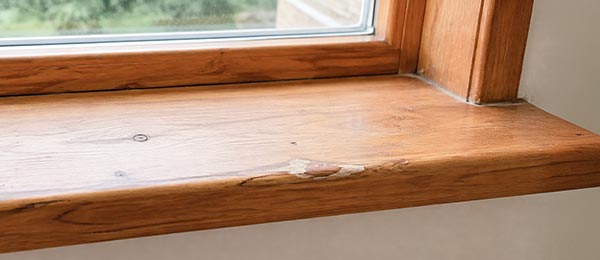
Paying over time lets the work happen before you've saved the full amount, which matters when a failed sealed unit or a rotting sill gets worse each season. That is the real benefit. The cost is that the job acquires a term, a payment that continues long after the installation is finished, and in most cases an interest charge.
A deferral deserves particular attention. A deferred-payment plan does not eliminate the balance. Depending on the agreement, interest may accrue during the deferral period, or promotional terms may require you to pay the outstanding balance by a specified date to avoid additional interest charges. Before signing, ask these questions:
- What is the total amount repaid over the full term, not only the monthly payment?
- Does interest accrue during any deferral period?
- What happens if the balance is not paid in full when a promotional period ends?
- Is there a fee for paying the balance early?
Energy-efficient windows can reduce heating and cooling costs, but the size of that reduction depends on the existing windows, the house and the fuel, and it is not a figure a lender guarantees. A payment plan should be affordable on its own terms, without assuming that lower utility bills will cover it.
A window's service life depends partly on the durability of its sealed glass unit. Window Force uses a dual-seal system with a primary moisture and gas barrier, a secondary structural seal and a metal-free spacer. This design reduces temperature-related stress at the glass edge and supports the sealed unit's long-term performance. Actual service life depends on manufacturing quality, installation and operating conditions.
What does window replacement cost in Ontario before you borrow?
Window replacement cost Ontario homeowners see on a quote moves with a handful of variables: how many openings are being replaced, whether the old frame stays (an insert) or comes out (a full-frame replacement), which glass package is specified, and whether rot is found at the measure. Installation labour costs can vary by location, contractor and project complexity, even when the window products are identical. Base your loan amount on a quote that shows these variables, not an estimate given over the phone.
What should the quote be?
A quote used for financing should be itemized so both the lender and any rebate program can see what you're paying for. Ask for these items to appear separately:
- Each opening, identified by location, window style and size
- Installation method for each opening: insert or full frame
- Frame material, window style and product model
- Glass package, including coating and gas fill
- Trim, capping and interior finishing
- Removal and disposal of the old units
- Permit fees, where a permit applies
- Any non-window work, such as siding or interior painting
List each rough opening separately to make the project scope and eligible replacements easier to verify.
What part of that quote can a loan cover?
A general renovation loan or line of credit usually covers whatever you choose to pay with it, because the money is yours once advanced. A lender payment plan arranged through the contractor may cover only the contract amount, and a program loan may cover only eligible items. If a quote mixes window replacement with other work, ask the lender whether the full total is covered or only part of it, and plan for the difference.
Rot discovered at the time of measurement or after removal of the old unit can raise the final invoice. Ask the contractor how they price these changes, and ask the lender whether they can increase the approved amount if the final invoice is higher than the original quote.
Engineer Sergey Essipov, with 20 years of experience in window manufacturing, notes:
The numbers that move a financed window job are the ones nobody measured: the sill under the old unit and the rough opening behind the trim. We build to the opening the dealer measures, so an order is only as firm as that measurement. A dealer who probes the sill and records the opening size before the quote goes to the lender gives the lender a number that is less likely to move, and that is what keeps an approved amount from falling short on installation day.
How do you line up window financing before the work starts?
Window financing works best when you obtain an itemized quote, confirm the lender's terms and coverage, secure approval, and then sign the contract. This sequence reduces the risk of committing to work before financing is confirmed or missing rebate requirements.
What should you have before you apply?
Before applying, prepare an itemized quote that identifies each opening and separates window replacement from other work. Gather proof of ownership and income if the lender requires it. For the provincial rebate, complete the initial home energy assessment before starting any work.
Engineer Sergey Essipov, with 20 years of experience in window manufacturing, explains:
A financing quote should reflect the actual scope of work, including the installation method and any visible signs of sill or frame damage. Identifying these details before approval reduces the risk of unexpected costs during installation.
What should you not sign before approval?
Do not sign a binding contract, pay a non-refundable deposit or allow the work to begin until you know you are approved and what the payment will be. Signing a contract before financing is approved may leave you responsible for the agreed price even if the lender declines your application. Check the cancellation terms and request a written financing condition before signing. Where a lender plan is arranged by the contractor, ask whether the contract becomes binding only once credit is approved, and get that condition in writing. Ontario's consumer protection guidance also gives a 10-day cooling-off period for a renovation contract worth $50 or more signed in your home, and recommends keeping down payments to no more than 10%. A cooling-off right is not a financing plan, so do not count on it to cover an approval that has not come through.
Window Force works through an authorized dealer network that coordinates measurements, quotes and installation. Window Force windows are CSA certified, and Window Force is an ENERGY STAR Partner whose windows are engineered to meet ENERGY STAR requirements, so product documentation should identify the CSA and ENERGY STAR® status of the specific model and configuration selected. The 25-year transferable warranty, subject to its terms and conditions, covers the frame, sash and hardware, a separate 10-year non-prorated warranty covers sealed glass units, and installation labour is the responsibility of the installing dealer.
How does the Canada Greener Homes Loan differ from a lender plan?
The Canada Greener Homes Loan is closed to new applications. Natural Resources Canada states that funding is fully committed and it cannot approve new loan applications, while homeowners whose loans were already approved keep their funding and can continue with their retrofits. It is therefore a reference point for how a program loan worked, not an option for a new window job.
What did that loan require before it closed?
The federal loan was an interest-free program loan with requirements a commercial lender does not impose in the same way. According to Natural Resources Canada, pre-retrofit EnerGuide evaluation results had to be submitted before an application could be processed, only retrofits eligible for the Canada Greener Homes Grant could be financed, and retrofits left out of the application could not be added later. The maximum eligible loan could also be less than the quoted cost, leaving the homeowner to fund the difference.
What does a lender plan still do?
A lender plan or renovation loan follows the lender's eligibility criteria and terms rather than federal program rules. An energy evaluation is generally not required for ordinary consumer financing, but the approved amount, interest rate and repayment term depend on the lender and the agreement.
| Feature | Canada Greener Homes Loan | Lender plan or renovation loan |
| Accepting new applications | No | Yes, subject to lender approval |
| Energy evaluation required | Yes, before applying | No |
| Interest | None | Set by the lender |
| Eligible work | Only retrofits eligible under the Greener Homes Grant and included in the application | Set by the lender or the contract |
| Order of steps | Pre-retrofit evaluation first, then the application | Set by the lender; starting before approval is not advisable |
How to apply for a window rebate in Ontario without treating it as a loan?
Understanding how to apply for a window rebate in Ontario begins with the structure of the provincial Home Renovation Savings Program, co-delivered by Enbridge Gas and Save on Energy. For windows, the program uses an assessment-based bundle rather than a stand-alone purchase rebate, so the sequence matters more than the paperwork.
What steps must you complete to receive the rebate?
To receive a window rebate through Ontario’s Home Renovation Savings Program, homeowners must follow the required assessment process and complete a qualifying bundle of upgrades. The program’s requirements for assessment-based upgrades outline the process from the initial energy assessment to the final inspection.
The main requirements are:
Why is a rebate not the money you borrow?
The rebate is paid only after the final assessment is complete and the energy advisor submits the documentation, so the contractor must be paid well before any rebate arrives. A budget should treat the rebate as a reduction in the project's net cost, not as a source of funds for the deposit or the final invoice. If the second qualifying upgrade is delayed or cancelled, the window rebate may not be paid at all, which is another reason not to borrow against it.
What is the Canada Greener Homes Grant, and does it finance the job?
The Canada Greener Homes Grant was a federal grant for energy retrofits, including windows. A grant is money you do not repay, but it never financed a job on its own: homeowners paid the contractor first and received the grant after the work was verified.
The Canada Greener Homes Grant is closed to new applicants. Natural Resources Canada's page on the closed grant also covers the deadline notice for homeowners who were already participating. Anyone planning a new window project should not include this grant in their budget.
Can the debt stay with the house instead of with you?
A property-tax loan is repaid as a special charge on the property tax bill rather than as a personal loan payment. In Ontario, provincial amendments made in 2012 allowed municipalities to use local improvement charges for voluntary energy-efficiency work on private property. Under some local improvement charge arrangements, unpaid charges may remain attached to the property after a sale. The municipality's program and the applicable agreement determine how it handles the outstanding balance.
This option exists only where a municipality has chosen to offer it, and each program sets its own eligible work, limits and term. It is not the same as a dealer payment plan and is unrelated to the closed federal loan. If your municipality runs such a program, confirm the following before relying on it:
- Whether windows are an eligible upgrade under that program
- Whether an energy assessment is required before the work
- Whether the program pays the contractor or reimburses you after the work
- How the charge is disclosed to a buyer if you sell
- Whether your mortgage lender must be notified or consent
A charge that passes to a buyer only works in the seller's favour if the windows still read as an asset when the house is listed. Vinyl compounds made without UV protection can chalk, yellow or lose rigidity on sun-facing walls well before the charge is repaid. Window Force frames are made from lead-free uPVC with UV stabilizers in multi-chamber profiles, and every corner is fusion-welded into a single continuous joint, so the frames keep their colour, shape and corner seal through the years a property-tax charge is likely to run. These frame features support long-term appearance, dimensional stability, and reliable operation under normal use.
What can stop an approval even when the windows qualify?
A window that meets every technical requirement can still sit inside an application that fails. Common reasons are not about the product:
- You do not own the home. Most lenders and every program described here require the applicant to own the property.
- The work has already started. Programs that rely on a pre-work assessment exclude work begun before it, and a lender may refuse to finance an invoice for work already underway.
- The quote mixes ineligible work. If siding, painting or an addition are bundled into one total with the windows, a program may decline the whole quote or approve only part of it. A window supplier in Ontario that lists each opening on its own line avoids this problem before filing the application.
- The credit test fails. Each lender applies its own credit and income criteria. The closed federal loan used a specific debt ratio, but that figure belonged to that program and doesn't apply to other lenders.
Keep the initial assessment, approved scope, itemized invoices and final assessment records together to support the rebate application.
How do you pay the loan back without a surprise?
Repayment problems usually start with a question you didn't ask before signing. Work through these steps when you receive the financing offer:
When will a loan for these windows not be the right tool?
Financing is a tool for a job that needs doing now and that you can afford to repay. It is the wrong tool when the program you are counting on is closed, when the expected money arrives after the bill, or when the job itself does not need to be as large as the quote suggests.
Which programs cannot take a new application?
The Canada Greener Homes Loan cannot accept new applications, and neither can the Canada Greener Homes Grant. Program status changes, so before relying on any program, open its official page on the day you plan the work and confirm whether it is accepting new applications. Treat any offer that refers to the closed federal loan as if it were still available as out of date, regardless of who presents it.
Which window jobs are the wrong thing to borrow for?
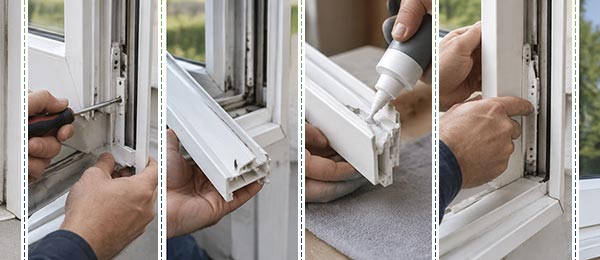
A rebate that requires a second upgrade isn't cash on installation day, so borrowing against it shifts the risk onto you if the second upgrade doesn't happen. Equally, a single failed part in a sound, square frame is not automatically a job to finance. Fog between the panes in one window, a cracked pane, or a lock that will not catch can often be resolved by replacing that component, and a quote that turns one fault into a whole-house replacement deserves a second opinion before you arrange any loan.
Before committing to a project, confirm the approved financing amount, the final scope of work and any program-specific eligibility requirements. These checks help reduce unexpected costs and delays when financing and rebate applications follow different approval processes.
Which way of paying should you use before you sign?
The right way to finance replacement windows in Ontario starts with a detailed quote and a realistic repayment plan. Compare the total borrowing cost, confirm which items the lender will cover, and keep funds available for any work excluded from the approved amount.
If you plan to claim a rebate, verify the current program requirements before work begins and budget for reimbursement only after the required steps are complete. Financing should fit the confirmed scope of work and your ability to repay, without depending on unapproved funding or projected energy savings.
Planning how to pay before you sign? Submit your project details through our contact form. An authorized Window Force dealer can measure each opening, prepare an itemized quote, confirm product documentation and provide the production lead time and available financing options for your project.
Frequently Asked Questions
Can I still apply for the Canada Greener Homes Loan?
No. Natural Resources Canada states that the loan's funding is fully committed and new applications cannot be approved. Homeowners with loans approved before the closure keep their funding.
Can I get a rebate for replacing only my windows in Ontario?
Not through the assessment-based stream of the Home Renovation Savings Program. Windows count as one qualifying upgrade, and the program requires at least two, along with an initial assessment before work starts and a final assessment afterward.
Do the windows have to be ENERGY STAR certified for the Ontario rebate?
Yes. The program requires ENERGY STAR-certified models and sets a minimum number of window rough openings. Confirm the certification on the product documentation before ordering.
Should I sign the window contract before my loan is approved?
No. Signing first commits you to the price whether or not the financing is approved. Where the lender plan is arranged through the contractor, ask for the contract to be conditional on credit approval.
Can a property-tax loan be transferred when I sell my house?
It depends on the municipal program and the agreement governing the charge. The outstanding balance may remain attached to the property or need to be repaid when ownership changes. Confirm the applicable transfer and repayment rules with the municipality before relying on this option.
Is a deferred-payment plan the same as interest-free financing?
Not necessarily. A deferral postpones the first payment, but you still owe the balance, and interest may accrue during the deferral, depending on the agreement. Ask for the total amount repaid and the conditions that apply if the balance is not cleared by the end of the promotional period.
People Also Ask