


Fixing a foggy window starts with locating the moisture, because fog on the room-side glass and fog sealed between the panes have entirely different causes and remedies. Surface condensation is controlled by lowering indoor humidity and keeping air moving across the glass, while persistent haze inside a factory-sealed double- or triple-pane unit indicates seal failure and normally calls for replacement of the insulated glass unit (IGU). Only when the frame or sash has also deteriorated does the fix extend to the whole window.
A fogged sealed unit is one of the few window failures that reaches the manufacturer with its evidence still intact. When a claim is raised on a Window Force window, the unit can be inspected in the field or returned before a replacement is authorized, which puts the spacer, the edge seal, and the condition of the glazing pocket in front of the team that assembles sealed units on an 80,000 sq ft Ontario production floor. Reading failures that way across windows built since 2007 shows whether moisture came in through the unit or whether humidity, blocked drainage, or installation was responsible, and that distinction runs through every section of this guide.
Key Takeaways
- A foggy window can mean interior surface condensation, normal exterior dew, or moisture trapped inside a sealed glass unit, and each condition calls for a different response.
- If you can't wipe the moisture from either glass surface, it may be inside the sealed unit and should be assessed for seal failure.
- Manage interior condensation through humidity control, ventilation, and unobstructed airflow over the glass rather than window repairs.
- A failed sealed unit can usually be replaced on its own when the frame and sash are straight, dry, and structurally sound.
- Defogging and field resealing may improve appearance but do not restore the factory seal, the gas fill, or the original thermal performance.
- Checking the sealed-glass warranty before authorizing any work may shift the cost of the replacement unit from the homeowner to the manufacturer.
Why Does a Foggy Window Develop in the First Place?
"Foggy" describes how the glass looks, not what has gone wrong. The same milky appearance can come from moisture on the room-side surface, dew on the exterior pane, or water vapour that has entered the sealed space between panes, and the physics behind each is different even though the visual result is similar. Determining which is present determines whether the solution lies in the house, in the glass unit, or nowhere at all.
Surface Condensation
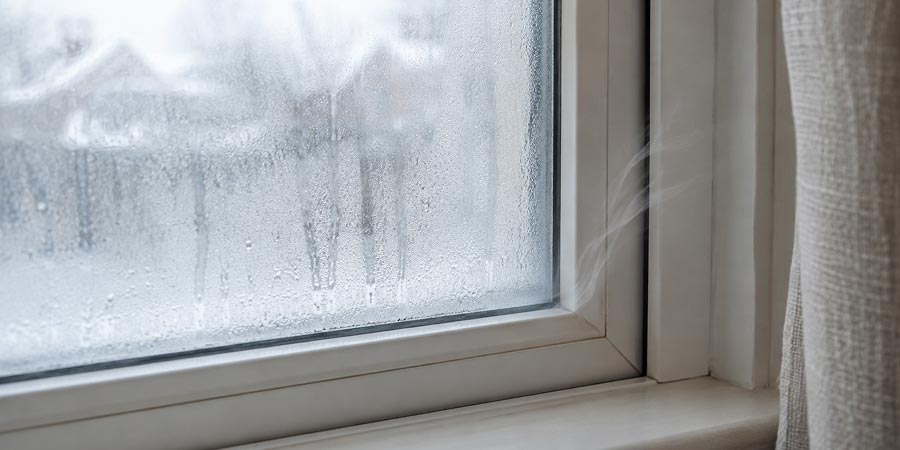
Condensation forms on any surface whose temperature falls below the dew point of the air touching it. In winter, the room-side pane is usually the coldest interior surface in the house, so when warm air carrying moisture from cooking, showers, laundry, and occupants reaches that pane, the vapour turns to droplets or, in severe cold, to frost. The colder the outdoor temperature and the higher the indoor relative humidity, the more of the glass is affected. The same principle works in reverse outdoors: a well-insulated window keeps its outer pane close to outdoor temperature, and on a humid morning that pane can collect dew.
Between-Pane Fogging
A sealed double- or triple-pane unit is manufactured with dry air or argon between the lites, while a desiccant helps control the small amount of residual moisture inside the cavity. When haze, droplets, or a dull film appears in that cavity, the perimeter seal has admitted more water vapour than the internal desiccant can absorb. Because that moisture is sealed away from the room, nothing done to the indoor air can reach it.
Why the Location Matters
Location decides where the fix belongs. Moisture on the room-side glass originates in the living space, so glass work will not change it, and exterior dew belongs to the weather. Moisture inside a factory-sealed cavity most directly indicates failure of the IGU's edge seal.
Older houses add a fourth pattern that is easy to misread. Windows fitted with a storm sash, or with two separate panes that were never factory-sealed together, can show condensation between the layers when warm house air leaks past the inner sash and reaches the cold outer pane. You can correct this with better weatherstripping on the inner sash and open drainage holes in the storm unit, not a new sealed unit, so confirm the window actually contains an IGU before ordering replacement glass.
Windows Near Me
How Can You Tell Whether the Fog Is Inside, Outside, or Between the Glass Panes?
A reliable diagnosis takes a few minutes, a dry microfibre cloth, and access to both sides of the glass. The test works best while the fog is visible, typically on a cold morning or a humid day, since some early seal failures appear and disappear as the temperature changes. Work through the surfaces in order so that each step eliminates one possible cause.
Interior Condensation
Moisture that wipes off the room side is condensation from indoor air. Natural Resources Canada's guidance on window condensation lists the glass, the frames and sashes, and the area near the weather seals as typical places where it collects, and notes that the risk rises as outdoor temperatures fall or indoor humidity climbs. Condensation concentrated along the bottom edge of the glass is especially common, because the perimeter of a sealed unit runs colder than its centre.
Exterior Condensation
Dew on the outside of the glass after a cool, calm, humid night is not a defect. The same federal resource explains that low-emissivity (low-E) coatings on high-performance windows reduce heat loss so effectively that the outer pane can fall below the dew point of the outdoor air around sunrise. The moisture clears as the sun and air warm the glass, and it tends to appear on efficient glazing rather than on the older, leakier windows it replaced.
Condensation Between Panes
When you can't remove the haze from either surface, the moisture is inside the unit. In the early stages, it may appear only on cold mornings or when the sun heats the glass, then disappears for days; over time, it tends to become permanent and to leave a whitish residue on the inner glass surfaces. If moisture is confirmed inside a factory-sealed unit, the usual remedy is to replace the IGU rather than change indoor humidity.
Does Fog Between Double-Pane Glass Mean the Window Seal Has Failed?
In a factory-sealed unit, yes. Fog between the panes cannot form unless water vapour has crossed the edge seal faster than the desiccant can absorb it, which means the barrier that defines the unit has stopped working. Understanding how that barrier is built explains why the symptom is so reliable and why you can't clean it away.
How an IGU Is Sealed
An insulated glass unit consists of two or more panes of glass held apart by a spacer that runs around the perimeter. The spacer contains a desiccant that absorbs residual moisture present at assembly and helps control moisture that enters the cavity over the unit's service life. In a dual-seal design, a primary seal, commonly polyisobutylene, forms the vapour and gas barrier between the spacer and glass, and a secondary sealant such as silicone, polysulphide, or polyurethane bonds the assembly together structurally. The cavity is then left with dry air or filled with an inert gas such as argon.
In Canada, CAN/CGSB-12.8, the National Standard of Canada titled Insulating Glass Units, addresses the durability of that seal. Its March 2026 edition, which supersedes the 2017 version, covers sealed units of two or more lites used in windows, doors, and skylights and sets testing requirements for the integrity and durability of the hermetic seal and, where applicable, gas concentration. The standard is a sensible reference point to raise with any manufacturer quoting a replacement unit.
A test standard qualifies a design by putting sample units through demanding cycles, but a homeowner lives with every unit that follows those samples off the line. In much of the replacement market, the two stages are separated, with sealed units bought in from one fabricator and glazed into sashes by another. Window Force builds double- and triple-pane sealed units and the windows that hold them within one made-to-order process, using lead-free uPVC frames with UV stabilizers and fusion-welded corners, inspects each window against applicable Canadian standards before release, and supplies a finished product that is CSA certified. The seal inside the glass and the pocket it sits in are therefore specified together, not matched after the fact.
What Happens When Moisture Gets Inside
Once vapour enters faster than the desiccant can hold it, the desiccant saturates, and the cavity air starts carrying moisture. When the outer light cools at night or in winter, that moisture condenses on the inner glass surfaces; when the glass warms, it evaporates again. Each cycle leaves minerals behind and can eventually produce streaks or a permanent cloudy film on faces that no cloth can reach, a process explained further in the section on aging below. Where the unit was gas-filled, seal deterioration can also let argon escape and outside air enter, reducing the cavity's insulating performance, so the window loses insulating value as well as clarity.
How Do You Fix Foggy Windows When the Moisture Is Only on the Interior Surface?
Interior condensation comes from moisture in the house, not the window. The goal is to reduce the moisture in the air or keep the glass surface above the air's dew point, and the most durable results come from doing both. The measures below address both sides of that balance.
Reduce Indoor Humidity
The indoor humidity level that avoids window condensation depends on outdoor temperature and the window's performance. As outdoor temperatures fall, you may need to lower indoor relative humidity to prevent condensation or frost. A hygrometer can help you monitor humidity, while persistent condensation signals that you should address moisture levels or ventilation. An inexpensive digital hygrometer removes the guesswork. Where readings are high, reduce the sources first: cover pots while cooking, vent clothes dryers outdoors, avoid drying laundry indoors, and turn down or switch off a furnace humidifier during cold spells.
Climate shifts the practical target. Because winter conditions vary across Canada, the indoor humidity level that avoids condensation can differ from one region to another. Window Force works with homeowners across Canadian climates, where humidity settings may need adjustment as outdoor temperatures change. For windows already in place, homeowners manage that difference through the humidity setting rather than the glass, so a hygrometer reading acceptable in one city can be a problem in another.
Replacing windows does not automatically end the problem, and it can briefly make it worse. Natural Resources Canada's Keeping the Heat In guide points out that old, leaky windows helped reduce indoor humidity, so a tighter house with new windows can see condensation rise unless you lower humidity and improve ventilation.
Improve Ventilation
Moisture has to leave the house, not just move around inside it. Run bathroom exhaust fans during showers and for some time afterwards, use a range hood that discharges outdoors whenever you cook, and confirm that exhaust ducts terminate outside rather than in the attic. If the house has a heat recovery ventilator (HRV), keep it running through the heating season; the condensation guidance above lists this as a basic step.
Keep Warm Air Moving Across the Glass
Air movement over the glass keeps its surface warmer, which is why heating registers and baseboard heaters have traditionally been placed beneath windows. Anything that interrupts that movement lets a layer of cold air settle against the pane: deep sills, furniture pushed against the wall, and heavy drapes or blinds left closed overnight. Opening coverings during the day, leaving a gap beneath blinds at night, and keeping registers clear often reduces condensation on the worst-affected windows. When humidity control and air movement aren't enough, higher-performing glazing can raise the interior glass temperature. Low-E coatings, appropriate gas fills, warm-edge spacers, and triple glazing can all improve thermal performance, depending on the window design.
Can You Fix a Foggy Window Between the Panes Without Replacing the Whole Window?
In many cases, yes. A failed seal is a failure of one component, and when the sash and frame that hold the sealed unit stay straight, dry, and serviceable, you can typically remove and replace that unit while the rest of the window stays installed. Window Force's guidance on glass repair treats fogging between panes as a condition resolved by replacing the complete IGU, not the whole window.
When Glass-Only Replacement Works
Glass-only replacement is appropriate when the defect is confined to the unit and the surrounding window still performs. The table below summarizes the conditions that support it and those that call for a different scope.
| Condition of the window | Glass-only replacement | Reason |
| Fog between panes; sash and frame straight, dry, and operating smoothly | Suitable | The failure is confined to the sealed unit |
| Glazing stops removable and glazing pocket intact | Suitable | The unit can be removed and reset without rebuilding the sash |
| Sash sticks, binds, or is visibly out of square | Correct the sash first | A racked sash loads the edge of a new unit and shortens its life |
| Soft, decayed, or cracked sash or frame members | Not suitable | The structure holding the glass has failed |
| Water staining on the sill, trim, or wall below | Investigate first | Staining points to a leak at the frame or wall, not at the sealed unit |
| Worn or discontinued operating hardware | Assess before replacement | Hardware problems may need to be corrected separately |
When the first two rows describe the window, a fogged unit is a glazing repair rather than a renovation, and the existing interior and exterior finishes around the opening can usually remain in place.
What Must Be Checked First
Before ordering a replacement unit, confirm the window is a sealed-unit design, and inspect the sash for squareness, softening or decay, and smooth operation. The glazing method matters too: many vinyl windows hold the glass with removable glazing stops, while some older wood and aluminum sashes use fixed stops or glazing compounds that make removal more involved. When contacting a window company near me for this kind of assessment, ask whether the visit includes an inspection of the glazing pocket and its drainage, not just a glass measurement.
Engineer Sergey Essipov, with 20 years of experience in window manufacturing, notes:
On older vinyl windows, glazing stops can become brittle after years of UV exposure, and removing them may turn a simple glass replacement into a sash repair. Before ordering a replacement unit, the installer should check that the stops remain flexible and that the glazing pocket is dry and free of standing water.
What Is Insulated Glass Unit Replacement, and How Does It Fix Foggy Windows?
IGU replacement removes the failed sealed unit and installs a new unit manufactured to match the sash. The replacement renews the glass, spacer, desiccant and edge-seal assembly without requiring the entire window to be removed.
What Gets Replaced?
The sequence is similar across most operable and fixed windows, although access differs by style.
Responsibility for the result is divided. A window company that manufactures sealed units controls the quality of the seal itself, while the installer controls how that seal is supported and drained inside the sash; both aspects affect the service life of the new unit.
Which Specifications Must Match?
A replacement that is close but not exact causes problems ranging from poor fit to a visible change in appearance. These details should be confirmed before production:
- Overall unit thickness, which must suit the glazing pocket so the stops seat properly.
- The unit's width and height, not the visible glass area.
- Number of lites and cavity widths, particularly on triple-pane units.
- Low-emissivity coating type and the surface it is applied to.
- Gas fill, spacer type, and spacer colour.
- Tempered or laminated glass wherever safety glazing is required.
- Internal grilles or obscure glass, if the original unit had them.
The coating deserves particular attention on a house where only one or two units are being replaced, because a mismatched low-E coating can make one window look noticeably different in tint and reflection from its neighbours. Reviewing the available glass options against the original specification prevents that mismatch.
Does Window Defogging Permanently Repair a Failed Seal?
No. Defogging is a cosmetic service that can improve visibility through a failed unit, but it does not rebuild the hermetic seal. The distinction matters because the two approaches are sometimes quoted side by side, and the lower price of defogging can make it look like an equivalent repair.
What Defogging Can Improve
A typical defogging process involves drilling small holes through one pane, injecting a cleaning solution to dissolve deposits, drawing out liquid and moisture, drying the cavity, and then plugging the holes. If mineral deposits have not yet etched the glass, the result can be a clear view where there was haze. For a window already scheduled for full replacement within a few years, or for an owner concerned only with appearance, that improvement may be acceptable.
What Defogging Does Not Restore
The original edge seal stays in place with the same breach that let moisture in. Argon that escaped is not replaced, and the desiccant inside the spacer is not renewed. The Keeping the Heat In guide, in the humidity section, characterizes refurbishment of failed sealed units as a temporary fix that does not deliver the original energy efficiency, which matches how the process works mechanically.
| Consideration | Defogging | IGU replacement |
| Original edge seal | Remains in place with its breach | Replaced with a new factory seal |
| Visibility | Improved if deposits have not etched the glass; plugged holes remain | Fully restored with new glass |
| Gas fill | Not restored | Restored to the specified fill |
| Desiccant | Not renewed | New desiccant-filled spacer |
| Thermal performance | Remains below the original design | Restored according to the specification of the replacement unit |
| Risk of fog returning | Original leak path remains | Addressed by the new seal |
Where the goal is lasting performance, defogging postpones the decision rather than resolving it.
When the fogged unit belongs to a Window Force window, the replacement route is built into how the product reaches the home. The authorized dealer who measures the sash also helps assemble the details a warranty assessment needs, and the new sealed unit is manufactured to order and shipped back through that same dealer, so diagnosis, claim, and installation stay with one point of contact. Window Force windows are engineered to meet ENERGY STAR® requirements across all Canadian climate zones, a rating earned with the sealed unit intact, which is exactly what defogging cannot give back. Homeowners replacing a failed unit with a certified configuration may also be eligible for federal or provincial rebates, summarized in the Canada window and door rebates guide. Window Force's transferable materials and workmanship warranty covers the frame and sash, with coverage varying by warranty schedule, while the insulated glass unit has separate 10-year non-prorated coverage.
Can a Failed Insulated Glass Seal Simply Be Resealed?
Not in any way that recreates the original assembly. Homeowners often assume fresh caulking around the glass will stop the fog, but the failed seal isn't visible from either side of the window because it sits inside the glazing pocket between the spacer and the glass.
Perimeter Caulking vs. the IGU Edge Seal
Caulking and glazing sealant along the stops or around the frame manage rain and air at window joints. The IGU edge seal is a different barrier altogether: a thin, continuous vapour seal applied under controlled factory conditions to clean, dry glass, backed by a desiccant-filled spacer and, in gas-filled units, a measured gas concentration. Once moisture enters and the desiccant saturates, applying sealant over the unit's outer edge or frame joints traps the moisture already present rather than removing it, and it cannot restore either the gas fill or the cavity's dryness.
Exterior caulking still has a role, because water held against a unit's edge accelerates seal deterioration. Federal retrofit guidance describes exterior caulking as the last and weakest defence against rain, behind flashing and a properly detailed drainage plane, which places it firmly in the category of prevention rather than repair for a unit that has already fogged. How quickly those joints age depends heavily on exposure: a window manufacturer in Montreal has to assume that meltwater and freezing rain will collect along glazing stops and refreeze repeatedly through a St. Lawrence Valley winter, while the drier and more consistently frozen conditions of the central prairies put far fewer wet freeze cycles on the same joint.
When Should You Replace the Entire Foggy Window Instead of Just the Glass?
Fog between the panes is a glass problem, but it often appears in windows old enough to have developed other problems too. The scope of work should match the condition of the whole assembly: a failed unit in a healthy window justifies replacing the unit, while fogging combined with structural, operational, or water-management failures points to a larger intervention.
IGU Replacement
This is the right scope when the sash and frame are square, sound, and weathertight; the hardware locks and operates properly; and the only symptom is fogged glass. It preserves trim, finishes, and the existing installation.
Sash Replacement
Replacing the sash, meaning the operable panel together with its glass, fits situations where the sash itself is warped, cracked at the corners, or decayed while the main frame remains sound. This option depends on a compatible sash still being available from the original manufacturer, which becomes less likely as the product ages or if that manufacturer is no longer operating.
Full Window Replacement
Complete replacement is warranted when the frame is rotted, cracked, or out of square; when water is entering around the frame or staining the wall below; when drafts come from the frame rather than the sash; when hardware is worn or discontinued; or when several units in the house are failing at similar ages. New glass would leave each of those problems in place. Properly specified replacement windows let you address the frame, glazing, and perimeter air seal as one assembly. Window Force manufactures custom vinyl windows built to the exact opening rather than adapted from stock sizes. The same retrofit guidance distinguishes an insert installation, which uses the existing frame and suits only frames that are sound and well sealed, from a complete tear-out, which integrates the new window with the rough opening using new air-sealing and insulation details.
| Factor | IGU replacement | Sash replacement | Full window replacement |
| What is replaced | Sealed glass unit | Operable sash with its glass | Frame, sash, glass, and hardware |
| Suitable when | Frame and sash are sound | Sash is damaged; frame is sound | Frame is damaged, leaking, or drafty |
| Effect on trim and finishes | Usually none | Usually none | Minimal with an insert; greater with a tear-out |
| Corrects air leakage at the frame | No | No | Yes, when the perimeter is resealed |
| Main constraint | Matching the original unit specification | Availability of a compatible sash | Custom manufacturing lead time and higher cost |
What a homeowner gains from a full replacement is not only clear glass today but a window whose next glazing repair, if one is ever needed, can remain a glass-only job. That outcome depends on the sash staying square around its sealed unit through decades of seasonal movement, since a sash that drifts out of square is a common reason a fogged unit eventually turns into a sash or frame replacement. A full replacement also provides a new sash and frame, which can make future glass-only replacement easier if the new assembly remains structurally sound and the glazing system is serviceable.
Does a Foggy Window Mean the Window Is Also Drafty?
Not necessarily. A failed IGU seal and a draft are two different failures in two different parts of the window, and one does not imply the other. Confusing them leads to paying for a repair that leaves the original complaint unresolved.
IGU Seal Failure
A failed edge seal allows moisture vapour and, in gas-filled units, gas exchange between the sealed cavity and the surrounding air, but that path is typically very small and contained within the unit's edge, so it does not create a channel for indoor air to flow outdoors. What changes is the glass's thermal behaviour: losing gas fill and moisture in the cavity makes the room-side pane colder, and a colder pane can make the area near the window feel uncomfortable even when no outside air is entering.
Weatherstripping and Air Leakage
Actual drafts come from gaps where moving parts meet or where the window meets the wall: worn or compressed weatherstripping, a sash that no longer closes evenly against its seals, failed perimeter caulking, or insulation gaps behind the interior trim. Hinged styles such as casement and awning windows rely on compression seals that press the sash against the frame, while sliding styles typically use brush weatherstripping that wears with use. You can repair these failures by adjusting the sash, replacing weatherstripping, or resealing the frame, and none involve the glass. Weatherstripping is profile-specific, so match a worn sample through the window supplier or the original manufacturer, not a generic hardware-store strip.
| Characteristic | IGU seal failure | Weatherstripping or air leakage |
| Location of the failure | Edge seal inside the glass unit | Sash contact surfaces, frame joints, or the gap between frame and wall |
| Visible sign | Haze, droplets, or film between the panes | Usually nothing on the glass; sometimes frost or dust lines at the sash edge |
| What you feel | Cold glass and cool air falling along the pane | Air moving through the joints on windy days |
| Quick check | Fog remains after wiping both surfaces | A strip of tissue moves when held at the joints |
| Correct repair | Replace the sealed unit | Adjust the sash, replace weatherstripping, or reseal the perimeter |
Engineer Sergey Essipov, with 20 years of experience in window manufacturing, explains:
When a fogged window is also described as drafty, the two complaints are usually treated as one problem, and the unit gets replaced while the draft stays. Cold glass can create a downward convective air movement along the pane, which may be felt near the floor and mistaken for a draft. A strip of tissue held at the sash joints on a windy day settles the question quickly: if it stays still, the discomfort is coming from the glass; if it moves, the weatherstripping needs attention regardless of what happens to the unit.
Why Do Double- and Triple-Pane Windows Become Foggy Over Time?
Sealed units rarely fail at random. Most failures result from years of mechanical and chemical stress on the edge seal, combined with installation conditions that either protect the seal or work against it. Because these factors interact, two identical units on different walls of the same house can fail years apart.
Thermal Cycling
Every change in temperature or barometric pressure alters the pressure of the gas inside a sealed cavity relative to the outdoor air. The panes deflect in and out in response, putting the seal and spacer alternately into tension and compression. A National Research Council Canada Canadian Building Digest on factory-sealed double glazing described this pumping effect as early as 1963, showing that once a leak develops, pressure-driven air movement can carry substantially more moisture into the cavity than diffusion alone. The digest is now archived as a historical reference, yet the mechanism it identified still turns a small seal defect into visible fog.
Climates with large, rapid temperature swings add cycles, and Chinook winds in southern Alberta, which can lift winter temperatures sharply within hours before the cold returns, are one of the clearest Canadian examples of that pattern.
Spacer and Seal Design
The spacer and seal system determines how well a unit tolerates that movement. Traditional aluminum box spacers conduct heat to the edge of the glass, making the perimeter the coldest and most stressed zone of the unit, whereas warm-edge spacers built from lower-conductivity materials keep the edge warmer and reduce condensation there. A dual-seal configuration separates the vapour barrier from the structural bond, so a single sealant is not asked to do both jobs.
The detail most homeowners never hear about is that fog is a late symptom. By the time haze is visible, the desiccant inside the spacer has already absorbed all the moisture it can hold, so a sealed unit's working life depends on how slowly vapour reaches that desiccant in the first place. Window Force builds its sealed units on a metal-free, dual-seal warm-edge spacer, with a dedicated vapour barrier inside a separate structural seal, so no metal carries outdoor cold to the seal line. The practical effect is a longer reserve between the first small breach and the first visible fog, and that reserve is time the window spends performing as designed.
Age and Exposure
Sealants age. Ultraviolet exposure, heat, and repeated wetting gradually reduce their elasticity and adhesion, which is why units on sun-exposed south and west elevations often show seal deterioration earlier. Water is the other accelerant: the same NRC digest identified poorly drained spaces between the glazing unit and the sash as a source of seal damage from water and frost action, and it noted that repeated wetting and drying inside a leaking unit leaches sodium from the glass, leaving a cloudy white film that eventually makes replacement unavoidable. Snowfall patterns change how much of that water a sill actually sees: a window company in Barrie works with houses in the Georgian Bay snowbelt, where drifts pack against lower sashes and melt in the daytime sun, while homes along the Lake Ontario shore in Oakville typically have far less snow held against the glass through the same winter. Blocked weep holes, deteriorated caulking at the glazing stops, and installation movement that racks the sash all concentrate stress or moisture at the unit's edge.
Should You Check the Window Warranty Before Paying to Fix Foggy Windows?
Yes, and before any work is authorized. Many manufacturers cover sealed-unit failure under a dedicated glass warranty, and Natural Resources Canada recommends confirming whether a failed unit is still under warranty before replacing it. Paying for defogging or a third-party replacement before contacting the manufacturer may affect how the claim is assessed, depending on the warranty terms.
Glass coverage is often structured separately from frame coverage. Window Force, for example, provides a 10-year non-prorated glass warranty against film formation or dust collection between the interior glass surfaces, alongside tiered warranty coverage on frames, sash, and hardware. Exclusions deserve as much attention as the term: condensation caused by high indoor humidity, stress from localized heat sources, and damage from improper installation are commonly excluded, and installation labour is frequently the responsibility of the installing dealer rather than the manufacturer.
Foggy Window Warranty Checklist
Before contacting the manufacturer or dealer, work through the checklist below to gather the information a warranty claim will require:
If the original installer is no longer operating, contact the manufacturer directly to confirm whether they can process the warranty claim and what documentation they require.
What Is the Best Way to Fix a Foggy Window for the Long Term?
The best long-term fix matches where the moisture sits and why it is there. Interior condensation is resolved by managing humidity, ventilation, and airflow over the glass; exterior morning dew on efficient glazing needs no correction; fog trapped between the panes calls for a new sealed unit when the frame and sash are healthy; and a window with structural, operational, or water-management problems justifies sash or full replacement.
Two recommendations apply in every case. Diagnose before replacing by using the wipe test on both surfaces and inspecting the sash, frame, and glazing pocket. Then confirm warranty coverage before authorizing paid work, because a failed seal on a relatively recent window may be the manufacturer's responsibility rather than the homeowner's.
Get the fog diagnosed before paying for glass, a sash, or a new window. Send photos of the affected units and the window details through the contact form on the Window Force website, and the team will connect you with an authorized dealer who can confirm whether the moisture is inside the unit, check whether a glass-only replacement suits the sash, review warranty status on Window Force products, and give a production lead time for a replacement unit built to the original specification.
Frequently Asked Questions
Is fog between the panes an urgent problem?
Not from a safety standpoint. Fogging from a failed IGU seal is generally not an immediate safety issue, but it indicates that the sealed unit is no longer performing as designed. The costs are gradual: reduced visibility, higher heat loss through the affected glass, and mineral deposits that become permanent the longer moisture cycles inside the cavity.
Can a hair dryer or a dehumidifier clear fog between the panes?
Warming the glass can make the fog vanish temporarily because the moisture evaporates back into the cavity air, but it condenses again as soon as the glass cools. A dehumidifier lowers room humidity and doesn't affect moisture sealed inside the unit. Neither changes the failed seal.
If a triple-pane window fogs, is only one cavity affected?
It can be. A triple-pane unit has two cavities, and moisture may appear in only one. For a conventional triple-pane IGU, the replacement is normally supplied as one sealed assembly containing all three lites and both cavities.
Why do new windows sometimes show more condensation than the old ones?
Two effects are common. New windows reduce air leakage, which can raise indoor humidity if ventilation hasn't improved, and high-performance low-E glazing can collect dew on its exterior surface on cool, calm mornings. Interior condensation on new windows usually points to indoor humidity, ventilation, or glass-surface temperature rather than a failed IGU seal.
Will a replacement sealed unit change how the window looks?
It should not, as long as the new unit matches the original thickness, coating, spacer colour, and any grilles or obscure glass. Differences are most noticeable when the low-E coating doesn't match the adjacent windows, so confirm the coating type before production.
How long does it take to replace a fogged sealed unit?
Most of the time is spent in manufacturing, because the unit is built to the measured dimensions and specifications after the site visit, and lead time depends on the production schedule and the glass type ordered. The installation itself is usually a short visit compared with full window replacement, and it rarely disturbs interior or exterior trim.
People Also Ask