

A single hung window has one sash that moves and one that never does, and that split decides how the window gets cleaned. The bottom sash can usually be washed on both sides from inside the room, while the exterior face of the fixed top sash can only be reached from outside. This guide treats the two sashes as separate jobs, then covers the uPVC frame, the sill track and the weep holes that keep the window draining.
Since 2007, Window Force has built custom vinyl windows, including single hung units, to order on its own production line at its 80,000 sq ft Ontario plant, so the tilt latches, balance system and sill drainage described below are parts our team assembles and adjusts before each unit ships to an authorized dealer. That vantage point shapes the advice in this guide: each step follows how the sash is engineered to release, re-engage and drain, which is exactly where generic cleaning tips most often go wrong.
Key Takeaways
- On a tilt-in single hung window, three of the four glass surfaces can be cleaned from inside the room: both sides of the bottom sash and the interior face of the fixed top sash. The exterior face of the fixed top sash must be cleaned from outside.
- A tilt-in bottom sash is released by two latches on its top rail. Both latches must be pulled together and must click back into the jambs together when the sash is returned.
- Units that don't tilt should be cleaned from outside or by a professional; forcing a sash out of a frame not designed for removal damages the balance system.
- The fixed top sash has no sliding track, so it needs almost no mechanical maintenance, but its exterior glass usually carries the heaviest film on the house because it is the surface nobody reaches.
- Upper-storey exterior glass should be cleaned with a pole from the ground or by a professional. Ladder falls are a significant household safety risk, so avoid climbing when safer access methods are available.
- uPVC frames need only warm water and mild soap. Solvents, scouring powder and melamine sponges damage the surface, and weep holes must be kept open, never sealed.
Why Do Single Hung Windows Clean Differently From Double Hung Windows?
In a double hung window both sashes slide and, on most modern units, both tilt inward, so every glass surface can be reached from inside the room. In single hung windows only the bottom sash moves. The top sash is fixed in the frame, which gives the unit fewer moving parts and a simpler seal at the head, but leaves one glass surface, the exterior face of the top sash, permanently out of reach from indoors. The design differences go well beyond cleaning, and they are set out in our side-by-side comparison of single and double hung windows.
| Surface | Single hung window | Double hung window |
| Bottom sash, interior glass | From inside | From inside |
| Bottom sash, exterior glass | From inside, if the sash tilts | From inside, sash tilts |
| Top sash, interior glass | From inside | From inside |
| Top sash, exterior glass | From outside only | From inside, sash lowers and tilts |
| Upper sash channel | None, sash is fixed | Sliding channel that collects grit |
On a ground-floor window the difference barely matters, since the top exterior glass is within reach from the yard. On a second storey it becomes the one surface that needs a plan. Many homeowners notice, a year or two after moving in, that the upper panes look duller than the lower ones. That is not a defect in the glass; it is simply the surface that has gone uncleaned since the windows were installed.
Windows Near Me
How Do You Clean the Bottom Sash of a Single Hung Window?
Start by finding out whether the sash tilts. Look at the top rail of the bottom sash: two small latches or buttons near each end indicate a tilt-in design. Not every hung window has them, particularly older or builder-grade units, and the owner's manual or the manufacturer's label on the frame will confirm it if you are unsure.
Cleaning a Tilt-In Bottom Sash
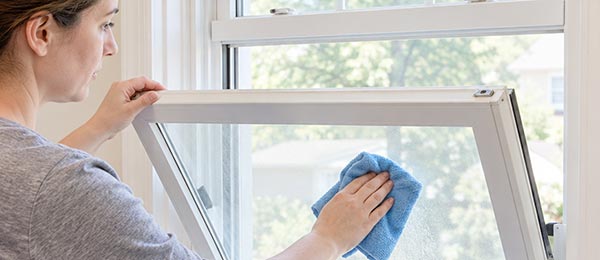
The tilt function makes cleaning the lower sash straightforward because both sides of the glass can be reached from inside the room. The sequence is the same on most tilt-in windows:
On Window Force single hung units, the bottom sash must be returned to its correct operating position after tilting. If it feels loose, drops unexpectedly or does not move smoothly, stop operating it and check the manufacturer's instructions. Do not force the sash into place, as incorrect positioning can affect the balance hardware and locking mechanism.
Cold weather does not automatically prevent a sash from tilting, but frost and ice can bond the weatherstrip to the frame. This is more likely during prolonged cold spells, particularly when indoor condensation freezes along the sash perimeter. If the sash is frozen, allow the ice to thaw naturally before attempting to operate it. Forcing it open can damage the weatherstrip or operating hardware.
A sash that tilts repeatedly must maintain its alignment so that the latches engage correctly when it returns to the frame. Window Force uses fusion-welded uPVC sash corners, which join the profiles into a continuous structure. This construction helps maintain frame rigidity and supports consistent sash operation over time.
How to Clean Single Hung Windows That Don't Tilt
Knowing how to clean single hung windows that don't tilt comes down to accepting that the exterior of both sashes is outside work. There are three realistic options:
- Clean the exterior from outside, which is straightforward on the ground floor.
- Remove the sash, but only where the manufacturer's instructions describe a release procedure. Forcing a sash that is not designed to come out bends the balance hardware and can crack the jamb liner.
- Use an extension pole with a suitable cleaning attachment from a stable position on the ground, where the entire exterior surface can be reached safely. If the window cannot be accessed without leaning out or climbing, hire a professional window cleaner.
Cleaning access should be considered when selecting a window configuration. Window Force builds single hung units to order, allowing authorized dealers to specify the sash operation, glass package and screen for each measured opening. Window Force windows are CSA certified, and Window Force is an ENERGY STAR Partner whose windows are engineered to meet ENERGY STAR requirements. The 25-year transferable warranty covers the frame, sash and hardware, with a separate 10-year non-prorated warranty on sealed glass units, subject to the warranty terms.
How Do You Clean the Fixed Top Sash?
To clean the fixed top sash properly, treat its two faces as separate jobs. The interior face is ordinary indoor work. The exterior face depends entirely on how high the window sits and what is underneath it.
The Interior Face
Lower the bottom sash fully so the whole top glass is exposed, and work from a stable step stool rather than a chair or the sill. Begin at the upper corners, where dust collects against the head of the frame, and work downward so drips land on glass that has not yet been cleaned. Finish by wiping the top of the bottom sash's meeting rail, which sits just below the fixed glass and collects whatever runs off it.
The part of the fixed glass that needs the most scrubbing is usually its bottom edge, where winter condensation gathers and dries into a mineral line or a grey film. That edge zone is governed by the spacer between the panes, a detail rarely mentioned when windows are compared. Window Force glass units use a dual-seal, metal-free warm-edge spacer, with one seal acting as the vapour barrier and the other holding the unit together as the glass flexes, while the non-metal spacer keeps the glass edge warmer than an aluminium spacer would. A warmer glass edge can reduce condensation under suitable indoor humidity conditions, helping limit moisture marks along the bottom of the glass.
However, a warm-edge spacer cannot eliminate condensation if indoor humidity is too high. Health Canada recommends maintaining indoor relative humidity between 30% and 50%. However, Natural Resources Canada explains that the appropriate maximum level can be lower during cold weather, depending on outdoor temperatures and window performance. A hygrometer can help monitor indoor humidity and identify conditions that contribute to window condensation.
The Exterior Face, by Floor Level
Because the fixed top sash cannot tilt inward, cleaning its exterior glass requires a method suited to the window's height and surrounding ground conditions.
| Window location | Practical method | What to watch for |
| Ground floor | From the ground or a short stepladder | Same as any exterior glass |
| Second storey above level ground | Extension pole with scrubber and squeegee, used from the ground | Rinse with a hose at low pressure, never a pressure washer |
| Second storey above a deck, roof, slope or garden bed | Professional with a water-fed pole or proper access equipment | Uneven footing makes a safe ladder setup impossible |
| Third storey and above | Professional | Work at this height requires fall protection |
Professional cleaners often use water-fed poles that deliver purified water through a brush head. Purified or deionized water contains very few dissolved minerals, so it can dry with minimal spotting when applied correctly. This makes water-fed poles a practical option for cleaning high fixed glass from the ground without needing to detail every section by hand.
Engineer Sergey Essipov, with 20 years of experience in window manufacturing, explains:
On a double hung window the top sash slides in its own channel, and that channel and its weatherstrip collect grit like any moving part. A fixed sash has no sliding track or moving hardware, so it generally requires less mechanical maintenance than an operable sash. Its perimeter seals and glazing components should still be inspected periodically for signs of wear or damage. At our facility, the fixed upper section uses a multi-chamber uPVC frame profile that provides insulating air spaces without requiring the sliding hardware used by an operable sash. The trade-off is the outside glass. Because nobody can reach it from the room, it usually carries the heaviest film on the house, so we tell homeowners to put that surface into the spring and autumn routine with a pole from the ground, before the difference between the upper and lower panes becomes obvious.
For new windows, the glass itself can reduce how often that surface needs attention. Window Force offers Neat+ as an option on single hung units, a self-cleaning coating applied to the exterior surface of the glass. It is designed to work with sunlight and rain to loosen and rinse off dirt, so it performs best on elevations with open sky exposure and less well under deep eaves. For an upper-storey fixed sash that is difficult to reach, it is one of the few specifications that directly addresses the cleaning problem.
Ladder Rules If You Do Climb
The risk on this job is the climb, not the glass. According to Parachute's analysis of Canadian Institute for Health Information data, Ontario recorded 8,678 emergency department visits and 1,112 hospitalizations related to ladder falls in 2014/15. Among adults aged 45 to 64 whose location of injury was recorded, 67% of ladder-related emergency department visits occurred at home. The same report found that 61% of ladder-related emergency department visits occurred between July and December.
If a window can only be reached from a ladder and the footing is firm and level, the following rules apply:
- Use a portable ladder that complies with the applicable CSA Z11 standard and has a duty rating sufficient for your combined body weight, clothing and tools.
- Check for overhead power lines before raising the ladder, and set the base out 30 cm for every 120 cm of height, as WorkSafeNB's ladder safety guide advises.
- Keep three points of contact while climbing: two feet and one hand, or two hands and one foot. Hang the squeegee from a belt hook instead of carrying it.
- Never stand above the fourth rung from the top of an extension ladder, and keep your belt buckle between the rails. If you have to reach further, climb down and move the ladder.
- Do not rest the ladder rails on the glass, the sash or the vinyl frame. A stand-off stabilizer that bears on the wall keeps the load off the window and gives you room to work.
When to Hire a Professional
Hire a professional when exterior glass cannot be reached safely from the ground, when the surrounding surface makes ladder placement unstable, or when the work requires access to a third storey. A professional cleaner can use appropriate access equipment to clean multiple upper windows during one visit.
How Should You Clean uPVC Frames, Tracks and Weep Holes?
Clean glass in a dirty frame does not stay clean for long, because the first rain carries grit from the frame back onto the pane. The frame, the sill track and the drainage openings deserve the same attention as the glass, and they are also part of the broader window maintenance tips from a window manufacturer that keep a unit performing for decades.
The Frame and Sash Surfaces
Vinyl window frames need warm water, a few drops of dish soap and a soft cloth, followed by a clean-water rinse and a dry wipe. Stubborn marks respond to a soft nylon brush and patience. Certain chemicals and abrasive cleaning products can damage uPVC surfaces. Strong solvents may affect the finish, while scouring powders and abrasive sponges can leave scratches or dull patches that become harder to clean over time.
Window screens also require periodic cleaning because accumulated dust, pollen and debris can restrict airflow through the mesh. The Fenestration and Glazing Industry Alliance recommends gently vacuuming screens with a brush attachment or removing them and washing them on a flat surface with mild soap, water and a soft brush. Allow the screen to dry before reinstalling it.
Engineer Sergey Essipov, with 20 years of experience in window manufacturing, notes:
Vinyl frames are far more often damaged by cleaning than by weather. At our facility, every frame we fabricate is lead-free uPVC with UV stabilizers built into the compound itself rather than applied as a coating, so the surface never needs a polish or protectant to stay white. What harms it is solvents and abrasives: acetone, paint thinner and some citrus degreasers attack the surface, and a melamine sponge or scouring powder leaves a matte patch that soils faster than the rest of the frame. Warm soapy water and a soft cloth is all that surface needs over its whole service life.
The Sill Track and Weep Holes
A single hung window has one operating sash, so grit concentrates in the sill track beneath it. Vacuum the track with a crevice tool first, then wipe it with a damp cloth; adding water to a gritty track only turns the grit into mud. The weep holes sit on the exterior face of the sill, often behind small hinged covers, and they carry water that reaches the track back outside.
A window's drainage system is designed to manage small amounts of water that enter the sill or track during wind-driven rain, rather than relying on the seals alone to keep every drop out. The water must have an unobstructed route back to the exterior through the sill's drainage channels and weep openings. Blocking these outlets with caulk, paint or debris can interfere with this designed drainage process and allow water to accumulate inside the frame.
Clear accessible weep holes with a pipe cleaner or soft brush, following the manufacturer's instructions. Do not force tools into the drainage channels or pry off protective covers. Pour a small amount of water into the sill track and check that it drains freely to the exterior. If water remains pooled in the track, inspect the drainage openings for debris or contact the manufacturer. In dry, windy areas, airborne dust and fine soil can accumulate in sill tracks more quickly. Homes exposed to frequent wind or nearby construction may need track cleaning more often than the standard twice-yearly schedule.
During fabrication, Window Force sills are designed with drainage slots that direct water from the sill track toward the exterior weep openings. Keeping these outlets clear allows the drainage system to function as intended and helps prevent water from accumulating inside the frame. Homeowners should inspect the openings during routine spring and autumn maintenance.
Jamb Channels and Balances
The bottom sash runs in channels on each side of the frame that house the balance system. Wipe the visible channel surfaces with a damp cloth whenever you clean the sash, and keep oil and household lubricants out of them, since they attract dust and stiffen the sash over time. If the sash drags after cleaning, check first that it has fully re-engaged after tilting, and refer to the manufacturer's instructions before applying any lubricant.
When Is the Best Time to Clean Single Hung Windows in Canada?
Twice a year, once in spring and once in late summer or early autumn, suits most Canadian homes, and our complete guide to cleaning windows covers the general method and tools for each visit. Single hung windows add one consideration: the upper exterior glass should be scheduled deliberately, not left for whenever someone happens to notice it.
Climate shifts the emphasis from region to region. A window supplier in Victoria works in a damp coastal climate where north-facing glass can grow a green organic film over the wet months and salt air leaves a haze near the shore, while homeowners in Regina contend mainly with wind-blown dust; the coastal home benefits from an extra spring wash, the prairie home from more frequent track cleaning. In Ontario, Quebec and the Atlantic provinces, road salt spray and freeze-thaw cycles leave a mineral residue on lower windows by the end of winter.
For the upper exterior glass, late summer or early autumn is a practical time for the main annual cleaning in many parts of Canada. Homes exposed to coastal moisture, road dust or heavy pollen may benefit from an additional cleaning in spring. Choose a dry, overcast day when temperatures are moderate and the glass is cool enough to prevent cleaning solution from drying too quickly. An overcast morning gives the best results on any elevation.
What Mistakes Damage a Single Hung Window During Cleaning?
Most cleaning damage comes from treating a single hung window as if it were a double hung or a fixed picture window. The errors that come up most often are these:
- Releasing one tilt latch at a time, which twists the sash and can pull a balance shoe out of position.
- Prying a non-tilting sash out of its frame without a manufacturer's release procedure.
- Leaning a ladder against the fixed sash or its glazing bead.
- Using a pressure washer from below, which drives water up under the exterior glazing and into the head of the frame.
- Scraping coated glass, including Low-E and self-cleaning coatings, with a razor blade or steel wool.
- Sealing or painting over weep holes to stop a perceived leak, which traps water in the sill.
Each of these is avoidable with the right expectations: the bottom sash is cleaned by tilting, the top sash is cleaned from outside, and the frame is cleaned gently.
Two Sashes, Two Cleaning Routines
Cleaning a single hung window requires two different approaches. A tilt-in bottom sash allows both glass surfaces to be cleaned from inside, while the fixed top sash requires separate exterior access. Planning for both surfaces makes routine maintenance easier and helps prevent dirt from accumulating on hard-to-reach glass.
The frame needs only mild soap and a soft cloth, and clear weep holes matter more than any cleaning product. Scheduling upper exterior glass for late summer or early autumn, using a pole from the ground where possible and a professional where it is not, keeps the whole window clean without anyone taking a risk at height.
Not sure whether your single hung windows tilt or which cleaning products are suitable for their glass coating? Contact Window Force through its website contact form to connect with an authorized dealer who can identify your window configuration, explain the appropriate cleaning methods and help assess any sash or drainage issues. If you are planning replacements, the same request gets you a site measurement, a recommended single hung configuration with a tilting sash and the right glass for hard-to-reach openings, and the production timeline for units built to your openings.
Frequently Asked Questions
Can you clean the outside of a single hung window from inside?
Partly. If the bottom sash tilts, its exterior glass can be cleaned from inside the room. The exterior face of the fixed top sash cannot be reached from inside on any single hung window and has to be cleaned from outside.
How do I know if my single hung window tilts?
Look for two small latches or buttons at each end of the bottom sash's top rail. If there are none, check the owner's manual or the manufacturer's label before trying to tilt or remove the sash.
Is it safe to pressure wash single hung windows?
No. A pressure washer can force water past the glazing and weatherstrip and into the frame, especially when aimed upward at the fixed top sash. A garden hose at low pressure is enough to rinse the exterior.
What should I use to clean vinyl window frames?
Warm water with a little dish soap and a soft cloth, followed by a rinse and a dry wipe. Avoid solvents such as acetone or paint thinner, scouring powder and melamine sponges.
How often should the fixed top sash be cleaned?
Clean the interior face whenever you wash the other windows. The exterior face should generally be cleaned at least once a year, with an additional spring or autumn cleaning for homes exposed to coastal moisture, road dust or heavy pollen.
People Also Ask