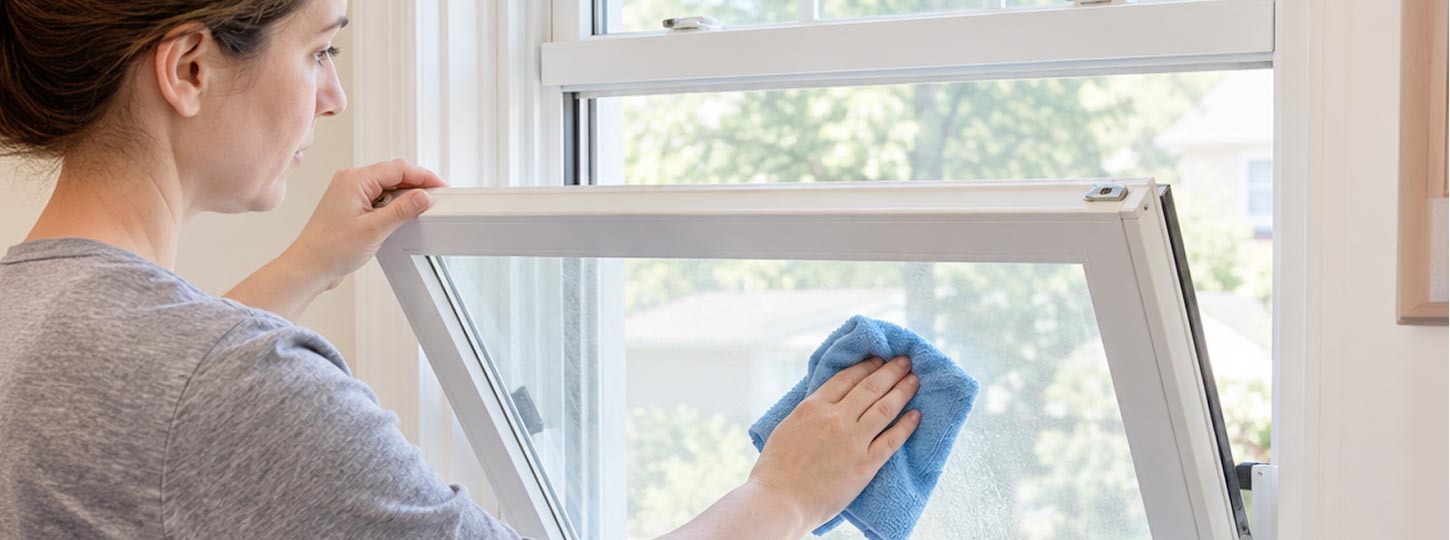


The tilt-in sash is the main reason many homeowners choose a double hung window: both sashes pivot into the room, so homeowners can clean the exterior glass while standing safely inside the room instead of using a ladder. The washing itself is simple, and the part that causes trouble is the return trip, when each sash has to drop back onto its balance shoes and lock square in the frame. This guide covers the full sequence, from releasing the latches to confirming the seal, along with the seasonal adjustments that Canadian weather requires.
Window Force builds custom vinyl windows, including double hung units, at its 80,000 sq ft Ontario plant and supports them through an authorized dealer network. Our production team works with tilt-in hardware during assembly and adjustment, while homeowners frequently contact us with questions about its operation and maintenance after several years of use. Since 2007, homeowners have continued to ask many of the same questions: why a sash will not go back in, why it drops, and why a latch sticks after cleaning. This guide adapts the procedures used by our production team for homeowners, explaining how to tilt, inspect and return a sash safely during routine cleaning.
Key Takeaways
- Tilt the bottom sash first and return it last. It sits on the room side of the upper sash and blocks its path, so the top sash is always tilted second and re-seated first.
- Retract both tilt latches together and keep the sash level as it comes out of the channels. Tilting on one latch twists the sash around a single pivot bar.
- While tilted, the sash hangs on two small pivot bars, so support its free end and never lean on the glass.
- A sash that will not re-engage may have a balance shoe that has unlocked or shifted out of alignment with its partner. Because balance shoes can remain under spring tension, do not attempt to reposition them with a screwdriver unless the manufacturer specifically provides instructions for this procedure. Contact the manufacturer or a qualified window technician if the shoes are misaligned.
- Mild soap and water are generally suitable for uPVC frames and many glass surfaces, but coated glass may require specific cleaning methods. Avoid abrasive pads, metal scrapers and solvent-based products unless the coating manufacturer explicitly approves them.
- Avoid tilting sashes in freezing weather, and plan a spring wash to remove the film of road salt and grit that winter leaves on exterior glass.
How Does a Tilt-In Double Hung Sash Actually Work?
In a double hung window, both sashes ride in vertical channels built into the side jambs, and each one is counterbalanced by spring-loaded balances concealed in those channels. Two pivot bars project from the lower corners of each sash and sit in balance shoes (also called pivot shoes) that travel up and down the channel with the sash. At the top rail, two spring-loaded tilt latches keep the sash upright in its channels. Retract the latches, and the top of the sash is free to swing inward while the bottom pivots on its bars.
| Component | Where it sits | What it does during the tilt |
| Tilt latches | Top rail of each sash | Hold the sash in the jamb channels; retracting them frees the top of the sash |
| Pivot bars | Lower corners of each sash | Form the hinge axis and carry the full weight of the sash while it is tilted |
| Balance shoes | Inside the jamb channels | Receive the pivot bars; on most designs a cam locks the shoe in place when the sash tilts |
| Balances | Jamb channels, connected to the shoes | Counter the sash weight during vertical travel |
| Cam lock and meeting rails | Where the two sashes meet | Draw the sashes together and seal the mid-point of the window when closed |
The locking cam inside the shoe is the detail that matters most. When the sash is upright, the shoe slides freely with it; when the pivot bar rotates during the tilt, it turns the cam, which bears against the channel walls and holds the shoe at that height. This is why a tilted sash does not shoot upward under spring tension, and it is also why both shoes must be aligned with each other before the sash can travel again.
On Window Force double hung windows, both sashes pivot inward on independent tilt mechanisms, and the spring-loaded balance cartridges in the upper and lower channels are calibrated to the weight of their own sash when each window is custom made to order at our Canadian production facility in Concord, Ontario. The balance system remains connected to the sash throughout this process. When the sash returns upright, the pivot bar releases the cam, allowing the balance shoe to move vertically with the sash again. Fusion-welded corners keep the multi-chamber, lead-free uPVC sash square, which is what lets both pivot bars sit level in their shoes each time the sash is tilted and returned. This dual-tilt arrangement is one of the practical differences among the types of vinyl windows: a single hung unit has a fixed upper sash whose exterior face still has to be reached from outside, while a horizontal slider is typically lifted out of its track rather than pivoted.
Windows Near Me
What Do You Need Before You Tilt the Sash?
The kit is small, because the window comes to you rather than the other way around. Gather everything before releasing the first latch, since a tilted sash should not be left unattended while you look for a cloth:
- Two or three clean microfibre cloths, with one kept dry for buffing.
- A spray bottle or small bucket of lukewarm water with a few drops of mild dish soap.
- A soft brush, or a vacuum with a crevice tool, for the jamb channels and the sill.
- A folded towel or padded surface to support the free end of a tilted sash.
- Keep the manufacturer's window instructions nearby in case you need to check the correct procedure for operating or re-seating the sashes.
Take the screen out first. On Window Force hung windows the optional screen is fitted on the interior side and removed from inside, which clears the path for the tilting sash; our guide to window screens covers removal and cleaning in detail.
With the screen out and a sash tilted, the opening is completely unguarded, which matters in any home with young children. According to Fraser Health's window safety guidance, children can fit through openings as small as 12 centimetres, and most screens pop out easily, so a screen should never be treated as a barrier in the first place. Keep children and pets out of the room while you work, return each sash upright as soon as it is clean, and refit the screen before leaving the window.
How to Tilt Double Hung Windows, Step by Step
The sequence below applies to most tilt-in vinyl designs. Hardware details vary between manufacturers, so check any label on the sash or the instructions supplied with the window before starting.
Before applying any cleaning solution, rinse loose dust, sand and other particles from the glass surface. These particles can become trapped between the cleaning cloth and the glass, creating fine scratches during wiping. The National Glass Association also advises against cleaning coated glass in direct sunlight, as well as allowing cleaning residue to dry on the surface.
How Do You Re-Seat the Sashes and Check the Locks?
Re-seating runs in reverse order: the top sash goes back first, then the bottom sash. Raise the tilted sash toward vertical while holding its latches retracted, align it with the channels, and release the latches so they spring outward into the jambs; you should feel or hear each one engage. Then slide the sash through its full travel. It should move evenly on both sides and stay at any height you leave it.
Why a Sash Drops or Will Not Re-Engage
When a sash refuses to go back in, or drops as soon as it is upright, the problem often involves the balance shoes or their connection to the pivot bars. If the sash was lifted at an angle or removed, one pivot bar can leave its shoe before the other, and that shoe can unlock and ride up the channel under spring tension or end up at a different height from its partner. Look into both channels with the sash tilted. If the shoes are at different heights, stop the reinstallation process and contact the window manufacturer. Do not attempt to force them into alignment: the balance mechanism may still be under spring tension, and incorrect adjustment can damage the hardware or cause injury. Once a qualified technician has correctly aligned the balance shoes, the pivot bars can be re-engaged and the sash returned to its upright position.
Engineer Sergey Essipov, with 20 years of experience in window manufacturing, explains: “In any tilt-in design, the cam inside the balance shoe is what stops a tilted sash from being pulled up the channel by its own spring, and it only works when both shoes lock at the same height. At our facility, the jamb channels that guide those shoes are formed as part of the multi-chamber frame extrusion, so the walls the cam bears against stay straight over the full height of the window. When a sash will not go back in, the balance shoes are among the first components a technician should inspect. In many cases, the issue involves alignment rather than a broken component.”
Checking the Cam Lock and Meeting Rails
Close both sashes fully and turn the cam lock. It should draw the interlocking meeting rails together and reach its stop with steady, even resistance. A cam that will not reach its stop usually means that one sash is not fully seated, typically a top sash that has not been pushed all the way up. Look along the meeting rails as well: they should sit flush, and a visible step between them indicates that one sash is out of its channel and needs to be tilted and re-seated.
Which Cleaners Are Safe on uPVC Frames and Low-E Glass?
uPVC frames and sashes need nothing stronger than the same mild soap solution used on the glass. Window Force frames are lead-free uPVC with UV stabilizers in the compound, so the surface needs no polish or protectant. Abrasive cleansers, scouring pads and steel wool scratch the surface and leave a dull patch that collects dirt faster, while solvent-based products such as acetone or lacquer thinner can soften and mark the vinyl. Clean frames when they are cool rather than after hours in direct sun, and rinse off any product residue before it dries.
Coated glass needs a moment of thought before you clean it. In most Window Force units, the Low-E coating sits on surface 2, the inside face of the outer pane, where it is sealed inside the insulated glass unit and never touched by a cloth, and the unit edge is a dual-seal, metal-free warm-edge spacer. Two options in the glass options range are different: LoĒ-i89 sits on surface 4, the room-side face of the inner pane, and the Neat+ self-cleaning coating is applied to the exterior surface. If your glazing package included either one, the coated face is the one you wipe, so the following rules apply:
- Use soft microfibre cloths and a mild soap solution, rinsed and dried promptly.
- Never use razor blades or metal scrapers on a coated face, even to remove paint or labels.
- Avoid abrasive powders and creams, which can mark a coating permanently.
- Follow the coating manufacturer's cleaning instructions wherever they are more specific than this list.
How Do You Clean Tracks, Weatherstripping and Weep Holes?
The jamb channels are fully exposed only while the sashes are tilted, which makes this the moment to clean them. Vacuum each channel from top to bottom, then wipe it with a damp cloth that is wrung almost dry. Do not spray water directly into the channels, because the balances live there, and water carried down into the shoes and onto the sill only moves the dirt rather than removing it. If a sash still drags after cleaning, check with the manufacturer before applying any lubricant, since the balances are factory-set and many designs need none at all.
How quickly the channels fill depends on what the wind carries. A window supplier in Regina may find jamb channels packed with fine, dry prairie dust after a single windy season. This grit can wear against the balance shoes every time the sash moves. In Victoria, the debris is more often damp organic matter that clings to the channel walls and is easier to remove with a damp cloth than with a vacuum. Either way, this buildup can eventually make a sash feel rough during operation.
Weatherstripping runs along the sash stiles and the meeting rail. Wipe it gently with the damp cloth, without pulling on it, and look for sections that are flattened, torn or missing, since those are where drafts start. Finally, check the weep holes on the exterior face of the frame at the sill: clear any blockage with a soft plastic pick, and never seal them, because they are the path by which water leaves the frame. For the full inspection routine that goes beyond cleaning, see our window maintenance tips.
What Can a Cleaning Session Reveal About the Window?
Tilting a sash is the only time most homeowners handle the hardware directly, so it is also the best moment to notice early wear. The symptoms below point to different components, and most of them are part replacements rather than reasons to replace the window.
Not all condensation indicates a failed insulated glass unit. Moisture forming on the room-side surface of the glass is often related to indoor humidity and insufficient air circulation, whereas condensation trapped between the panes points to a failure of the sealed unit. Health Canada recommends maintaining indoor relative humidity between 30% and 50% and drying moisture from window frames and sills to help prevent mould growth.
| What you notice | Likely cause | Next step |
| Sash drops when released or will not stay open | Balance has lost tension or is not engaged with its shoe | Have the balance system inspected; realignment or replacement may be required depending on the cause. |
| Sash creeps upward on its own | Balance too strong for the sash weight | Professional adjustment or a correctly rated balance |
| Latch will not retract or does not spring back | Debris in the latch or a broken latch spring | Clean the latch; replace it if the spring has failed |
| Window rattles in wind when locked | Worn weatherstrip or misaligned cam lock keeper | Adjust the keeper or replace the weatherstrip |
| Fog that stays between the panes | Failed seal in the insulated glass unit | Replace the sealed unit; check warranty coverage first |
Our guide to double hung window repair walks through balance, shoe and latch replacement. Window Force windows are CSA certified, and Window Force is an ENERGY STAR Partner whose windows are engineered to meet ENERGY STAR requirements. They carry a 25-year transferable warranty and a separate 10-year non-prorated sealed unit warranty covering seal failure, with claims handled directly through the factory; the warranty page sets out the terms.
A worn balance, latch or weatherstrip is a part, not a reason to replace a window. The calculation changes when sash corners have split or the frame no longer holds the sashes square. At that point, consider asking two or three qualified window contractors to inspect the opening. The cost of replacing a hung window depends largely on whether the existing frame can remain in place during a retrofit installation or must be removed entirely.
Which Mistakes Damage a Double Hung Window During Cleaning?
Many cleaning-related problems occur when the hardware is subjected to forces it was not designed to handle. The most common mistakes include:
- Tilting the sash with only one latch retracted, so it swings out on one corner.
- Leaning on a tilted sash or pressing hard on its glass, which pushes the pivot bars sideways in their shoes.
- Lifting a tilted sash out at an angle, so one pivot bar leaves its shoe before the other.
- Forcing a sash upright against resistance instead of checking the shoes.
- Spraying water into the jamb channels, where it reaches the balances and the shoes.
Engineer Sergey Essipov, with 20 years of experience in window manufacturing, notes: “The damage we see most often isn’t a broken window, it’s a bent pivot bar: someone leans on a tilted sash to reach a top corner, and the bar takes the load sideways. At our facility, sashes are fusion-welded, so the corners rarely give way under that kind of load; the pivot bar does, and it is the cheaper part to replace. A bent pivot bar can prevent the sash from engaging correctly with its balance shoe, even when the rest of the mechanism remains intact.”
Weather adds one more mistake: tilting sashes in deep cold. During a cold prairie winter, or any stretch well below freezing, opening a sash lets cold air flood the room, the weatherstripping stiffens, and the exterior pane, still at outdoor temperature, frosts over as soon as warm indoor air reaches it. The cleaning solution may freeze on the cold glass before it can be wiped away, so the job is better left for a milder day.
When Is the Best Time to Clean Double Hung Windows in Canada?
Winter leaves a specific kind of dirt on exterior glass. According to Environment and Climate Change Canada, about five million tonnes of road salts are used in Canada each year. Spray from wet roads can carry that salt, mixed with sand and grit, onto the glass and frames of nearby homes. Wiping that film dry drags the grit across the surface, so the first spring wash should begin with plenty of water to dissolve the salt and float the grit away before any cloth touches the glass.
The timing of the main washes depends on where the house is and what each season deposits on it:
| Region | Main seasonal soiling | Practical timing |
| Atlantic coast | Salt spray from the sea, high humidity | Rinse exterior glass after major coastal storms; full wash in late spring and early autumn |
| Quebec and Ontario | Road salt spray, spring tree pollen | First wash once nights stay above freezing; second wash before the first hard frost |
| Prairies | Dust from dry winds, long freezing season | Late spring and early autumn, within a shorter frost-free season |
| BC coast | Wet winters, organic film, moss on shaded frames | Main wash in the drier summer months; check weep holes after the rainy season |
Coastal exposure is one case where the calendar alone is not enough. A window company in Halifax deals with homes whose exterior glass can carry a visible salt film after a single autumn storm off the Atlantic, so a plain-water rinse after such storms keeps the film from building up between scheduled washes; in Montreal, the salt comes from the street rather than the sea, building up gradually over the winter and calling for one long soaking rinse at the first spring wash instead. The Prairies set a different constraint: in Winnipeg, the freezing season leaves only a few mild weeks in spring and autumn when sashes can be tilted safely, so those sessions are worth booking as soon as the weather allows. Everywhere else, two tilt-in sessions a year, in spring and early autumn on a mild, overcast day, keep the glass clear and give you a regular look at the hardware.
Clean the Glass, but Respect the Mechanism
Cleaning a double hung window from inside is straightforward once you understand how its tilt mechanism works. Support each sash properly, release both latches together and follow the manufacturer's instructions when returning the sashes to their channels.
Regular cleaning also creates an opportunity to spot worn weatherstripping, damaged latches and blocked weep holes before they lead to more significant maintenance problems. A sash that will not stay put or a latch that has failed is usually a part replacement, and the window around it can keep working for years.
Fix the part before you replace the window. If a sash drops, creeps or refuses to re-seat after cleaning, send the details through the Window Force website: the window style, roughly when it was installed and what happens when you tilt the sash. Our team will help identify the hardware involved and confirm whether the issue falls under your warranty. If replacement turns out to be the better route, we will arrange a measurement, a recommended configuration and a production timeline for your openings.
Frequently Asked Questions
How often should double hung windows be tilted in for cleaning?
Twice a year suits most homes: once in spring after the freezing nights end, and once in early autumn before the first hard frost. Homes near busy roads or the sea may need an extra exterior rinse between those sessions.
Why won't my sash tilt in?
The usual causes are a cam lock or flush bolt that is still engaged, a bottom sash that has not been raised far enough for the latches to clear, or latches jammed with dirt or paint. Check those three points before applying any force to the sash.
Is it safe to tilt in windows on an upper floor?
Yes, provided the window is designed for tilt-in operation and can be handled safely from inside the room. Follow the manufacturer's operating instructions, support the sash properly and keep children and pets away from the opening while cleaning.
Can I clean double hung windows in winter?
Interior glass can be cleaned in winter, but tilt-in cleaning should be postponed during freezing conditions. Wait for a milder day when the sash and exterior glass can be handled without frost or freezing cleaning solution.
Does tilting the sash affect the warranty?
Tilting is part of the window's designed operation, so normal cleaning does not affect coverage. Damage caused by forcing a sash, such as a bent pivot bar, is generally treated as misuse rather than a manufacturing defect, which is another reason to release both latches together.
People Also Ask