

Argon gas is the quiet workhorse of a modern insulated window. It fills the sealed space between the panes, slows the movement of heat across that gap, and does so without changing how the window looks or operates. This guide, prepared by Window Force, a Canadian manufacturer of vinyl windows serving homeowners and trade partners across Canada, explains how argon glazing works in practice, how long the gas lasts, and what to verify before ordering.
This guide draws on Window Force’s hands-on experience as a Canadian vinyl window manufacturer. Since 2007, we have been building custom-to-order windows at our 80,000 sq ft Ontario facility and delivering them through an authorized dealer network that spans every Canadian climate zone. Argon glazing is not an add-on we specify from a catalogue — it is engineered into the sealed glass units we produce daily, alongside our dual-seal warm-edge spacer system and Low-E coatings, so the performance characteristics described here reflect what we test on the production floor and observe in the field across thousands of installed units.
Key Takeaways
- Argon is a colourless, odourless, non-toxic, inert gas that fills the sealed cavity of a double- or triple-pane insulated glass unit, where it slows heat transfer.
- It conducts heat more slowly than air and is denser, which reduces both conduction and convection inside the glass cavity.
- On its own, argon delivers a real but modest gain. Its value is evident when it works with a Low-E coating and a warm-edge spacer.
- The reference for gas retention is the European standard EN 1279-3, written to ensure that a properly built unit remains above 80 percent argon for well over two decades.
- Argon is completely safe. It already makes up close to 1 percent of the air in every room.
- Gas fill is not the main driver of sound control. Glass thickness and laminated glass do far more for noise reduction.
What Are Argon Gas Windows and How Do They Work?
An argon gas window is an ordinary-looking insulated window whose sealed glass cavity is filled with argon rather than plain air. The glass, the frame, and the hardware are the same as those of a standard unit. The difference sits out of sight, in the few millimetres of space between the panes, where the gas quietly reduces how much heat escapes.
What Is Inside a Modern Insulated Window Unit?
A modern window is built around an insulated glass unit, two or three panes of glass held apart by a spacer and sealed at the edge. The spacer sets the pane spacing and carries a desiccant to keep the cavity dry, while the primary and secondary seals lock the assembly together and hold the gas inside. Every component has a role, and the gas fill is only effective when the rest of the unit is built to contain it.
- Glass panes: the structure, the daylight, and the first thermal barrier, usually carrying a Low-E coating.
- Spacer: holds the panes at a fixed distance and carries the desiccant; Window Force uses a metal-free dual-seal warm-edge spacer.
- Desiccant: a molecular sieve housed within the spacer that absorbs residual moisture, keeping the cavity dry.
- Edge seal: a dual-seal system that contains the gas and blocks incoming moisture.
- Cavity gas fill: the argon itself, standard on ENERGY STAR packages, slows heat transfer across the gap.
Where seal integrity determines how long argon stays at a useful concentration, the spacer design is the first line of defence. Window Force uses a metal-free dual-seal warm-edge spacer across its glass packages, a construction that eliminates the thermal bridge a conventional aluminum spacer creates at the edge zone. The dual-seal configuration locks the cavity against gas migration more effectively than a single-seal system, which is why the units we produce are engineered to hold gas well past the EN 1279-3 threshold over their service life.
How Does Gas Filling Affect Performance?
Argon works on the two ways heat crosses the cavity. It conducts heat more slowly than air, so less energy passes directly from the warm inner pane to the cold outer one. It is denser, so the gas circulates less, and convection inside the cavity is limited. The combined effect lowers the unit’s U-factor, the rate at which it loses heat. Research from Lawrence Berkeley National Laboratory’s Windows and Daylighting group notes that a double-glazed unit with a single Low-E coating and an argon fill is the construction used in most of today’s ENERGY STAR windows.
Windows Near Me
What Is Argon Gas Used for in Modern Window Systems?
Argon has one purpose in a window: to make the sealed cavity insulate better. That single function produces three effects a homeowner notices: lower heat loss, a warmer interior glass surface, and less condensation on cold days.
Why Inert Gases Are Used in Glazing
Inert gases do not react with the spacer, sealant, or coatings, so they retain their properties for the life of the unit. Argon, krypton, and xenon are all options, yet argon dominates residential glazing because it balances performance and cost. A 2023 study in the peer-reviewed journal Glass Structures & Engineering describes energy-efficient double glazing with a Low-E coating and argon as the common standard today, and observes that the gas’s contribution to the U-value, while smaller than the coating’s, still raises overall energy efficiency.
Where Argon Fits in Energy-Efficient Design
No single part carries a window’s energy rating. Argon is one of four contributors, alongside the number of panes, the Low-E coating, and the warm-edge spacer. On its own, the gas is a supporting player; combined with a good coating and a low-conductivity spacer, it lifts a unit from adequate to strongly efficient.
At our facility, we engineer the spacer, the seal, and the gas fill as a single system rather than independent parts. Our metal-free dual-seal warm-edge spacer maintains the cavity geometry and reduces edge-zone heat loss, conditions that enable the argon fill to consistently deliver its rated contribution to the U-factor. Specify any one of those elements without the others, and you leave performance on the table. Build all three correctly, and the window reaches its certified number in every Canadian climate zone we serve.
— Sergey Essipov, Engineer, Window Force
Why Is Argon Used in Windows Instead of Regular Air?
The reason is simple physics. Compared with air, argon slows heat on both fronts that matter inside a sealed cavity, conduction and convection, and it does so at a cost small enough that quality manufacturers include it by default.
Argon vs. Air in Double-Pane Windows
Argon is denser and less thermally conductive than air, so a double-pane window unit filled with argon loses less heat than the same unit filled with air. The gas also performs best at a specific cavity width. Berkeley Lab’s modelling shows that the heat-transfer rate levels off at roughly 11 mm for argon, compared with about 13 mm for air, which is why argon cavities are built slightly narrower than air-filled ones. The reason the optimum is not 'as wide as possible' is counterintuitive: beyond about 13 mm, the gas inside the cavity begins to circulate by convection, which actually increases heat transfer rather than reducing it. Wider is not always better — past the optimum, the gas starts behaving more like a thermal pump than an insulator. That is why manufacturers specify a target cavity width rather than simply maximizing the gap.
| Property | Argon | Air |
| Thermal conductivity | Lower, insulates better | Higher, baseline |
| Density | Denser, less convection | Lighter, more convection |
| Added cost | Small, usually standard | None |
| Best cavity width | Around 11 mm | Around 13 mm |
| Typical use | ENERGY STAR residential glazing | Budget or unconditioned spaces |
Does Gas Fill Change Comfort Indoors?
Yes, in a way, people feel more than they measure. Because argon keeps the inner pane closer to room temperature, the radiant chill near a window in winter is reduced. Standing beside an argon-filled window in a cold room feels warmer than standing beside an air-filled one at the same thermostat setting.

How Much Can Argon Gas in Windows Improve Insulation Performance?
Argon’s contribution to a window’s U-factor is real but bounded. Independent research consistently ranks the gas fill behind the Low-E coating by impact. The Glass Structures & Engineering study frames argon’s U-value effect as small relative to the coating, yet meaningful for the unit’s overall efficiency. In practice, argon is the low-cost measure that helps a good coating reach its full potential.
What Affects Actual Energy Savings?
Real savings depend on more than the gas: the number of panes, where the Low-E coating sits, the spacer’s conductivity, the frame material, and the quality of installation. A perfectly filled unit set into a poorly sealed opening surrenders much of its advantage to air leakage around the frame.
In Canada, whole-window performance is expressed through U-factor and Energy Rating values verified under CSA and NFRC procedures and used by ENERGY STAR to set climate-zone thresholds. Those certified numbers are produced with Berkeley Lab’s WINDOW and THERM simulation software, the same tools the National Fenestration Rating Council relies on, so the rating on a label traces back to recognized, independent testing methods rather than a manufacturer’s claim.
A gas fill performs only as well as the frame that contains it allows. Window Force manufactures its frames from lead-free uPVC with UV stabilizers and joins corners using a fusion-weld process rather than mechanical fasteners, a construction that keeps the frame geometry stable over years of thermal cycling. A frame that holds its shape holds its weather seal, and a weather seal that holds keeps the air barrier around the glass package intact, which is where much of the certified U-factor is preserved or lost in a finished installation.
What Affects Actual Energy Savings?
In a cold climate, the case for argon is straightforward. The colder and longer the heating season, the more a lower U-factor is worth, and argon lowers the U-factor at almost no added cost. Berkeley Lab’s envelope analysis found that windows can account for as much as 45 percent of a home’s envelope heat loss in cold climate zones while making up only about 8 percent of the envelope area, which is exactly why the gas fill earns its place where winters are severe.
Best Climates for Gas-Filled Windows
Argon earns its keep anywhere with a meaningful heating or cooling load. A buyer comparing a window company in Calgary against a coastal supplier will find argon standard in both cases, though the Prairie winter makes its contribution easier to justify. By contrast, a window company in Vancouver serves a milder coastal climate where the payback is slower but still positive.
When Upgrades Bring the Most Value
The gas fill matters most when paired with upgrades that move the needle further: a second Low-E coating, a triple-pane build, and a low-conductivity frame. On a single-glazed or failing double-glazed opening, adding argon as part of a full replacement window project yields far more than improving one component in isolation.
What Are the Differences Between Double-Pane and Triple-Pane Argon Windows?
The core difference is the number of sealed cavities. A double-pane unit has one argon-filled cavity; a triple-pane window unit has two, plus room for a second Low-E coating. More glass and more gas mean a lower U-factor, at the cost of extra weight and price.
| Feature | Double-pane, argon | Triple-pane, argon |
| Argon-filled cavities | One | Two |
| Relative U-factor | Good | Better, lower heat loss |
| Sound control | Good | Slightly better |
| Weight | Lighter | Heavier |
| Relative cost | Lower | Higher |
| Best suited to | Most Canadian homes | Very cold zones, large or north-facing glazing |
When Triple Pane Makes Sense
Triple glazing pays off where heat loss is highest: in severe-cold regions, at large north-facing openings, and for homeowners who want the lowest possible U-factor. Berkeley Lab’s data show that once cavity gaps become very narrow, as in some slim triple-pane designs, manufacturers switch from argon to krypton to keep pushing the R-value upward, moving it up a unit from roughly R5 to R8.
Can Double Pane Still Be Enough?
For most homes, a double-pane unit with argon, a Low-E coating, and a warm-edge spacer comfortably meets ENERGY STAR requirements. Triple glazing adds performance, not necessity, and Window Force offers both across its glass options so the build can match the climate and the opening.
Can Argon Gas Leak Out of Windows Over Time?
Yes, slowly. Every sealed unit loses a little gas because a pressure difference constantly pushes argon out and air in. The European standard EN 1279-3, the reference most of the industry follows, caps the tested leakage at 1 percent per year. The 2023 Glass Structures & Engineering study explains that this limit is specified so that a properly built unit loses less than 5 percent of its gas over 25 years, with the U-value dropping by no more than 0.1 W/m²K over that span. In that framework, a unit filled to a nominal 90 percent argon should still hold above 80 percent deep into its service life, and the same research places the technical lifetime of a quality unit at roughly 30 to 40 years.
Signs of Seal Failure
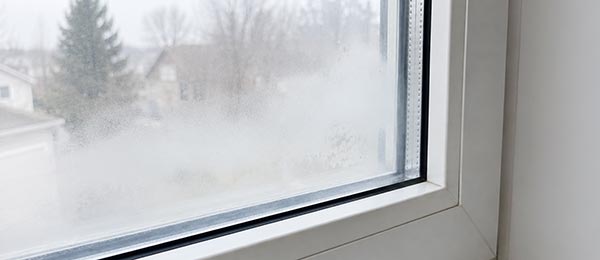
Slow gas loss is not the real concern; seal failure is. When the edge seal cracks or pulls away, argon escapes quickly, and moist air enters. The visible sign is condensation or a haze between the panes that will not wipe off because it sits inside the sealed unit.
For homeowners, the practical protection against seal failure is warranty coverage that remains valid through a property sale. Window Force backs every insulated glass unit with a 25-year transferable warranty, coverage that reflects the service life our sealed units are built and tested to reach, and that passes to a new owner if the home is sold before the term expires. Unlike contractors-only warranties that lapse with the original buyer, transferable coverage keeps the glass package protected regardless of ownership, which is a meaningful difference when a replacement costs more than the window itself.
Does Argon Loss Ruin the Window?
Gradual loss does not. A unit holding 80 percent of its original fill still performs well. A failed seal is a different matter: once moisture is inside, the glass package must be replaced rather than refilled, because refilling would require rebuilding the sealed unit from scratch.
As engineer Sergey Essipov, with 20 years of experience in window manufacturing, notes:
When a homeowner calls about fog between the panes, the gas is not the problem; the seal is. Once moisture is inside the unit, no amount of argon will clear it. We replace the sealed glass package and leave the frame and sash in place. The warning signs are worth watching for: a haze that will not clean off, a cold band along the glass that was not there before, and condensation forming inside the unit rather than on the surface. Caught early, it is a straightforward glass replacement, and on a unit still under warranty, it is usually covered.
How Do Homeowners Know if a Window Contains Argon Gas?
Argon is invisible, so there is no way to confirm it by looking. Verification comes from documents and labels rather than the glass itself. The steps below cover how to check before buying and on windows already installed.
How to Verify Gas-Filled Glazing Before Buying
- Read the spec sheet. Under “glass package” or “insulating glass unit,” look for “argon” or “argon-filled.”
- Check for the ENERGY STAR label and the CSA or NFRC certification. Certified residential units in Canada almost always use argon.
- Ask the manufacturer or installer to state the gas fill in writing on the quote.
- On existing windows, a non-invasive laser tester can read argon concentration without opening the unit, though this is a specialist tool rather than a homeowner check.
That last point is not theoretical. The Glass Structures & Engineering researchers used exactly such a non-invasive laser device to measure argon in windows already installed in buildings, confirming that gas content can be checked in the field without breaking the seal.
Do Argon Gas Windows Also Help Reduce Outside Noise?
A little, but far less than most people expect. Argon is denser than air, so it transmits vibration slightly less, yet the effect is minor. Noise control in windows is governed mainly by glass mass and asymmetry rather than the fill gas.
What Really Improves Window Sound Control?
The measures that make an audible difference are thicker glass, panes of mismatched thickness, laminated glass with an acoustic interlayer, and wider air spaces. For a home near a highway, a flight path, or a busy intersection, the effective upgrade is a laminated or heavier-glass package, not a change in fill gas. Argon is worth having for its thermal benefit, but it should not be sold as a soundproofing feature.
What Should Buyers Look for When Choosing Argon Windows for Their Home?
Argon is table stakes on a quality unit, so the real decision is about the components around it. The checklist below covers what to confirm before ordering, from the frame to the warranty.
- Frame material: multi-chamber vinyl with fusion-welded corners, which drives the frame's U-factor and long-term durability.
- Glass package: a Low-E coating with argon as standard, since this sets the core thermal performance.
- Spacer: a metal-free warm-edge dual-seal spacer to control edge heat loss and condensation.
- Certification: CSA certification and ENERGY STAR qualification as independent proof of performance.
- Warranty: transferable coverage on the insulated glass unit that protects against seal failure over time.
- Installation: a trained crew that seals and fits the unit correctly, which preserves the rated performance.
Questions to Ask Before Ordering
Ask whether argon is standard or an upcharge, what spacer system the unit uses, whether the warranty covers sealed-unit failure and is transferable, and who performs the installation. A reputable window supplier should provide written answers to each of these questions.
Features that matter most
Prioritize the glass package and the spacer because they set the ceiling on performance, then the frame and the warranty. Argon is standard across Window Force glass packages, whether the opening calls for a casement or awning window, a bay or bow window, or a large picture window, so the choice comes down to matching the build to the climate, orientation, and the window type being specified.
Window Force is a custom-to-order manufacturer, which means the configuration, including pane count, Low-E position, spacer, and profile, is matched to the specific opening and climate zone before production begins instead of being selected from a limited stock range. Every unit ships CSA-certified and ENERGY STAR-qualified across all Canadian climate zones, verified through recognized testing methods rather than in-house claims. The 25-year transferable warranty covers sealed-unit integrity, and delivery runs through our authorized dealer network, so installation is carried out by crews trained on our product. For buyers comparing suppliers, manufacturing method, certification scope, and warranty transferability are more reliable criteria than a single specification listed on a product sheet.
How Does Professional Installation Affect the Performance of Argon Gas Windows?
A window’s rated U-factor is measured on the unit alone. It says nothing about the gap between the frame and the wall. If that gap is not sealed correctly, air leaks around an otherwise excellent argon-filled unit, erasing much of its benefit. The gas fill sets the ceiling on performance; installation determines how much of that ceiling the finished wall reaches.
Why Installation Matters as Much as the Glass Package
The rating on the label assumes the window is set square and plumb, properly shimmed, sealed against air and water, and insulated in the rough opening. Skip any of those steps, and field performance falls below the certified number. Poor installation can also compromise warranty coverage, since a unit stressed by a poor fit fails sooner than one properly installed.
The steps that protect the rated performance are consistent: set the unit level and square so the sash seals evenly; seal the perimeter against air with the specified low-expansion sealant rather than relying on interior trim; keep a continuous air barrier between the frame and the rough opening; and flash the exterior so water stays out of the wall.
What Common Myths About Argon-Filled Windows Should Homeowners Ignore?
Argon attracts a fair amount of marketing noise, some of it misleading. Separating the claims from the evidence makes the buying decision clearer.
- “Argon leaks out within a few years.” EN 1279-3 is based on a roughly 1 percent annual loss, and a sound unit remains above 80 percent for decades.
- “Triple-pane is always necessary.” Double-pane with argon and a Low-E coating meets ENERGY STAR in most Canadian homes.
- “The gas fill alone guarantees savings.” Argon is one of four contributors; the coating, spacer, and installation matter as much.
- “You can top up argon in an old window.” Refilling means rebuilding the sealed unit, so a failed unit is replaced rather than refilled.
- “Krypton is always the better choice.” Krypton helps only in narrow cavities and costs far more, roughly 100 times the price of argon, so argon remains the standard.
Separating marketing claims from real performance
The pattern behind every myth is the same: a single feature is presented as the whole story. Argon is a proven, low-cost contributor, not a guarantee. The reliable signals of a good window are certification, a quality seal and spacer, a transferable warranty, and a careful installation, not the gas fill alone.
What Should Homeowners Remember Before Investing in Argon Gas Windows?
Argon gas is not a headline feature; it is a quiet, well-proven contributor that reduces a window’s heat loss at very low cost, provided the seal that holds it is built to last. For most Canadian homes, a double-pane unit with argon, a Low-E coating, and a warm-edge spacer is the sensible standard, with triple glazing reserved for the coldest regions and the largest openings.
The decision that matters is not argon versus no argon, since quality units include it by default. It is choosing a manufacturer whose sealed units hold their gas and an installer who preserves the rated performance in the wall. Window Force builds every unit in Canada with a metal-free dual-seal spacer and backs it with a 25-year transferable warranty on the insulated glass unit. Get the manufacturing and installation right, and the argon will do its job silently for decades.
Frequently Asked Questions
What Exactly Is Argon Gas in a Window?
Argon is a colourless, odourless, non-toxic inert gas used to fill the sealed cavity between the panes of a double or triple-pane window. It reduces heat transfer across the cavity, improving the unit’s insulation. Argon already makes up close to 1 percent of ordinary air.
Is Argon Gas in Windows Safe?
Yes. Argon is non-toxic, non-flammable, and already part of the air in every room. If a window breaks and gas escapes, it simply mixes back into the surrounding air, posing no health risk.
How Long Does Argon Last in a Window?
The industry reference, EN 1279-3, is written around a loss rate of about 1 percent per year. A properly built unit loses less than 5 percent of its argon over 25 years and typically has a technical lifetime of 30 to 40 years. Performance declines gradually rather than suddenly.
Can Argon Be Refilled Once It Leaks Out?
Not in any practical way. The sealed glass unit is factory-built, and refilling would require breaking the seal, replacing the spacer, evacuating the cavity, refilling, and resealing, which amounts to building a new unit. When a sealed unit fails, the glass package is replaced rather than refilled.
Why Are My Windows Fogging Between the Panes?
Fogging inside the sealed unit is a sign of seal failure. The seal has cracked or pulled away, letting moisture in and argon out faster than normal. Surface cleaning will not fix it because the haze is inside the unit. The remedy is to replace the sealed glass package; the frame and sash stay in place.
Is Argon or Krypton Better for My Home?
For most homes, argon is the better practical choice. It performs strongly in standard double- and triple-pane cavities and costs far less than krypton. Krypton only pulls ahead in very narrow cavities, such as some slim triple-pane designs, where its extra cost can be justified.
Does Argon Reduce Outside Noise?
Only slightly. Sound control depends mainly on glass thickness, laminated glass, and pane spacing, not the fill gas. If noise is a priority, a laminated or heavier glass package will make a far bigger difference than the choice of gas.
Is Triple-Pane Always Better Than Double-Pane with Argon?
Not for every home. Triple glazing lowers the U-factor further and suits very cold climates and large openings, but a double-pane unit with argon, a Low-E coating, and a warm-edge spacer meets ENERGY STAR requirements in most Canadian homes.
People Also Ask