

A casement window seals by compression rather than contact: the crank mechanism pulls the sash flush against weatherstripping around the entire perimeter of the frame, a closing action no slider or hung window replicates. That single mechanical detail accounts for nearly every advantage and limitation covered in this guide, from the lowest air leakage figures among operable window types to the exterior clearance a wide-swinging sash demands.
Hinge hardware, crank mechanisms, and compression seals are the parts of a casement window that determine whether the airtightness described in this guide actually holds up after a few winters, and they're also the parts most homeowners never see before installation. Window Force manufactures casement windows at an 80,000 sq ft custom-to-order production facility in Ontario — since 2007 — which means the crank gear, multi-point lock, and weatherstrip compression on every unit are built to a single specification rather than sourced from whichever supplier offered the lowest price that quarter. The breakdown of what makes a casement seal hold or fail below comes from that manufacturing vantage point, not from a sales brochure.
Key Takeaways
- Casement windows seal tighter than nearly any other operable style because the closing mechanism compresses the weatherstrip around the full perimeter, which is why they consistently post some of the lowest air leakage figures among hinged or sliding designs.
- The crank-out design gives full, unobstructed ventilation and a clear outward view, but the same outward swing limits where the window can be placed and rules out window-mounted air conditioning units.
- Vinyl is the dominant frame material for casement windows in Canadian homes due to its balance of thermal performance, durability, and cost, though aluminum and wood remain relevant for specific architectural or budget needs.
- Installed pricing in Canada typically lands in the mid-to-upper range compared with sliders or single-hung units, reflecting the more complex hardware and multi-point locking system rather than the glass itself.
- The choice between casement and other window types should be driven by orientation, room function, and exposure to wind-driven rain, not by which style is marketed as universally "best."
How Do Casement Windows Work?
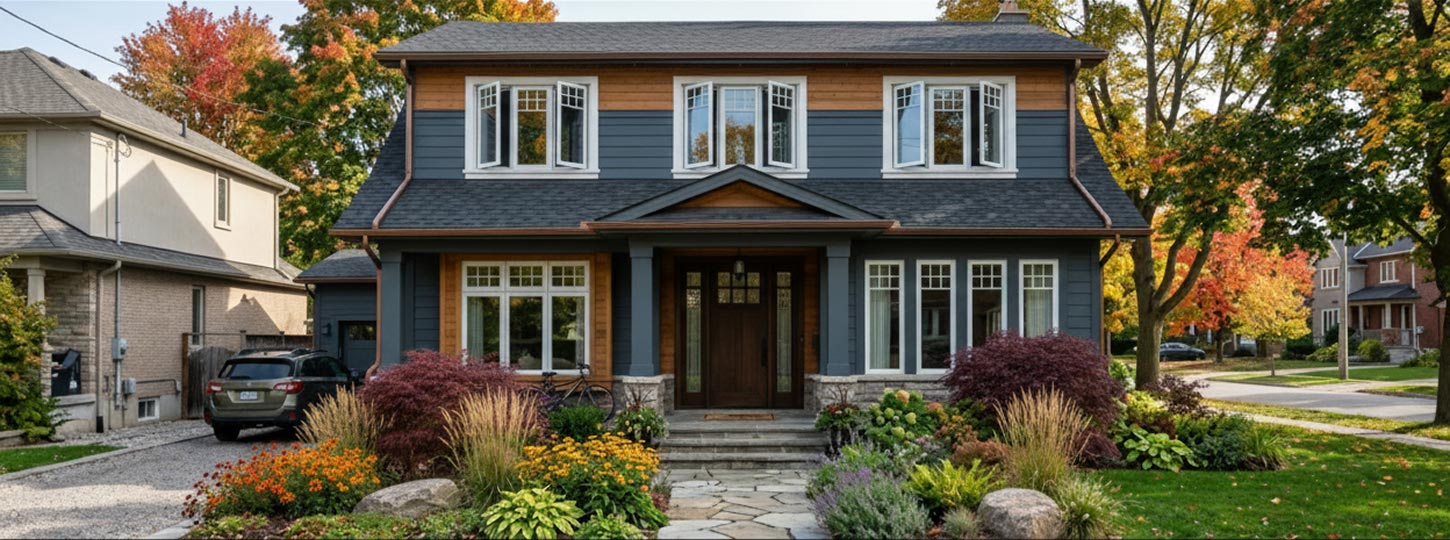
The question of what a casement window is comes down to one defining feature: a single sash attached to the frame by hinges along one vertical edge, most often the side facing away from a porch, walkway, or adjacent structure. Unlike a sliding or hung window, which moves along a horizontal or vertical track, a casement opens outward on its side hinges, in a motion closer to that of a door than to that of a typical window.
Operation is handled through a geared crank mechanism connected to an extension arm. Turning the handle drives the arm outward, pushing the sash away from the frame at a controlled, even rate, which is why this style is sometimes grouped with crank windows in product catalogues. A folding handle is common on modern units, allowing it to lie flat against the frame when not in use so blinds and curtains can move freely.
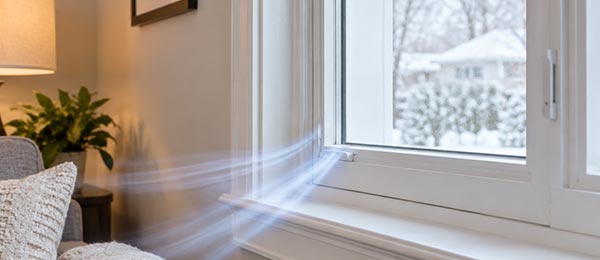
The seal is created differently from a sliding system. As the sash swings closed, the crank mechanism draws it firmly against compressible weatherstripping that runs the full perimeter of the frame. A multi-point locking system, typically engaged by a single lever rather than several separate latches, then pulls the sash flush and locks it at multiple points along its edge simultaneously. This combination of compression-seal closing and multi-point locking is the mechanical basis for the airtightness that casement windows are known for.
Windows Near Me
The Main Advantages of Casement Windows
The benefits of casement windows trace directly back to their hinge-and-crank mechanism, and understanding the "why" behind each one makes it easier to judge whether it matters for a specific room or building.
Airtightness and Energy Efficiency
Because the sash compresses against the weatherstrip as it closes, rather than sliding past it, a casement window achieves a tighter seal at rest than horizontal sliders or vertically hung windows, where the sash simply rests in a track without active compression. This mechanical difference is the main reason energy-efficient casement windows consistently post stronger air leakage figures than comparably specified sliders. According to Natural Resources Canada’s ENERGY STAR technical criteria, qualified windows sold in Canada must achieve an air leakage rate of 1.5 litres per second per square metre or lower. ENERGY STAR-qualified products, as a category, reduce overall annual energy costs by approximately 8 percent compared with standard, non-qualified units.
Sergey Essipov, an engineer with 20 years of experience in window manufacturing, explains:
Most people assume a tighter seal just means better gaskets. At our facility, seal performance starts at the spacer bar. We use a metal-free, dual-seal warm-edge spacer on every casement unit because a standard aluminum spacer creates a cold bridge right at the glass edge, where condensation and seal failure tend to start first. Get that part wrong, and no amount of weatherstripping at the sash perimeter fully compensates for it.
Ventilation and Airflow Control
When fully open, a casement sash creates a wide, unobstructed opening, and its angled position relative to the wall can act as a funnel, catching passing breezes and directing them into the room. A homeowner can fine-tune the sash angle to control how much air enters and from which direction, something a sliding window cannot replicate, since its opening is fixed to a single plane.
Unobstructed Views and Natural Light
With no horizontal or vertical bar dividing the sash into fixed and movable panels, a casement window offers a continuous, uninterrupted view through the full glass area. This makes the style a frequent choice for rooms where outlook matters, such as living rooms facing a garden or a kitchen window above a sink.
Security
The multi-point locking system used in casement windows engages the frame at several points simultaneously rather than at a single latch, which makes the sash significantly harder to pry open from the exterior than a single-point sliding lock. Combined with the fact that the sash swings outward, leverage-based forced entry is more difficult to apply than on a window that can be lifted or slid from a track.
The Drawbacks and Limitations to Consider
No window style is without trade-offs, and the disadvantages of casement windows stem from the same mechanism responsible for the advantages above, so weighing the advantages and disadvantages is essential before specifying the style for a given opening.
The outward swing is the most consequential limitation. Because the sash projects several inches to over a foot beyond the exterior wall when open, casement windows are not well-suited to locations with limited clearance, such as alongside a walkway, deck railing, or a tight side-yard setback. In high-wind conditions, an open sash exposes more surface area to gusts than a sliding window, which can place additional strain on the hinge hardware over time if the window is left open during storms.
Several other problems with casement windows are worth weighing before specifying them for a project:
- Window-mounted air conditioning units cannot be installed in a casement opening, since there is no horizontal sliding track or flat sill area to mount the unit; homes relying on this cooling method need a different window style in that location.
- Hinges and the crank gear assembly are mechanical components that experience wear over years of operation, and while quality hardware is rated for tens of thousands of cycles, it remains a maintenance item that fixed or sliding windows do not have to the same degree.
- Very wide single-sash casement units are difficult to crank smoothly and place greater stress on the hinges, which is why the standard window size available off the shelf is typically narrower than the maximum width achievable with a slider of similar height.
- Initial product and hardware costs tend to run higher than a comparably sized slider, reflecting the more complex crank mechanism and multi-point lock.
These limitations are rarely disqualifying on their own. They simply mean a casement window performs best in locations with clear exterior space and where window-mounted cooling is not part of the plan.
Casement Windows vs Other Window Types
Choosing between window styles is less about identifying a single "best" type and more about matching the mechanism to the room’s function, the wall’s exposure, and the building’s layout.
Casement vs Double Hung: A double-hung window has two vertically sliding sashes and offers the advantages of tilting inward for interior cleaning and compatibility with window air conditioners. A casement seal closes more tightly and provides a larger unobstructed opening for ventilation, but lacks the tilt-in cleaning feature and AC compatibility.
Casement vs Awning Window: An awning window hinges at the top and opens outward from the bottom, which allows it to remain open during light rain without letting water in, making it a common pairing below or beside a fixed casement unit. A casement provides a larger total opening for airflow when ventilation volume matters more than rain tolerance.
Casement vs Sliding Windows: A slider moves horizontally along a track and is generally less expensive, with simpler hardware and no projecting sash to clear. A casement window outperforms a slider on air leakage and total ventilation area, since only half of a slider’s width ever opens.
The table below summarizes how the three most common comparisons stack up across the criteria that typically drive a decision.
| Criterion | Casement | Double Hung | Sliding |
| Air leakage (sealing performance) | Lowest | Moderate | Moderate to higher |
| Maximum ventilation opening | Full sash area | Half of the sash area (per sash) | Half of the total width |
| Window AC compatibility | Not compatible | Compatible | Compatible |
| Ease of interior cleaning | Good (90° swing) | Very good (tilt-in sashes) | Moderate |
| Exterior clearance required | Significant | None | None |
| Typical relative cost | Higher | Moderate | Lower |
Types and Frame Materials
The main types of casement windows on the market are distinguished less by the opening mechanism, which stays largely consistent, and more by frame material, each with distinct trade-offs in thermal performance, maintenance demand, and service life.
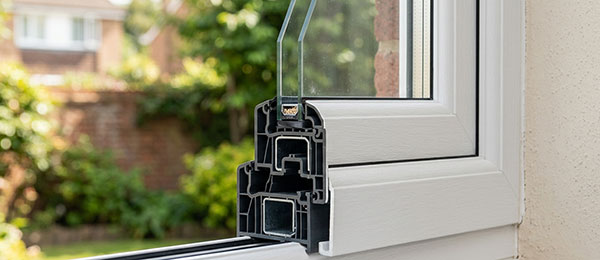
Vinyl casement windows are the most common choice across Canadian residential construction, and for good reason. Multi-chamber vinyl profiles provide strong thermal resistance without the conductive heat loss inherent to metal frames; the material does not require painting or refinishing, and fusion-welded corners create a structurally rigid, weathertight frame. Vinyl handles freeze-thaw cycling well, which matters across Canada’s diverse regional climates, where temperatures swing widely between seasons.
The difference between a vinyl frame that lasts for decades and one that warps or yellows after just a few years usually lies in the design of the corners and the additives incorporated into the material, details that most homeowners never see. Window Force Inc.’s PVC frames are lead-free and manufactured using UV stabilizers that prevent degradation from direct sunlight over time. Each corner is joined by fusion welding rather than mechanical fasteners, ensuring the frame’s rigidity and airtightness at the joints — precisely where lower-quality vinyl frames typically fail first.
Aluminum casement windows offer a slimmer sightline and strong structural rigidity, making them a frequent choice in commercial or contemporary architectural applications where a narrow frame profile is part of the design intent. The trade-off is thermal performance: aluminum conducts heat readily, and without a thermally broken frame design, aluminum casements underperform vinyl in cold climates for insulation unless a thermal break is specifically engineered into the profile.
Wood casement windows remain valued for their traditional appearance and the warmth of a natural material, particularly in heritage or character-home renovations where matching existing architecture matters. Wood requires the most ongoing maintenance of the three materials, including periodic repainting or refinishing and protection from moisture intrusion at the sill, but composite and clad-wood options reduce this burden by pairing a wood interior with a weather-resistant exterior cladding.
For most homeowners balancing performance, cost, and maintenance, vinyl remains the practical middle ground, which is reflected in its dominant market share across new construction and replacement projects in Canada.
How Energy Efficient Are Casement Windows?
Energy performance in any window comes down to how well it resists heat transfer through the glass and frame, and how little air it allows to pass through gaps when closed. Casement windows score well on both counts, but the specific numbers depend on the selected glazing package.
A double-glazed casement unit with an argon fill and a standard Low-E coating typically achieves a U-factor of 1.5-1.6 W/(m²·K). Upgrading to a triple-glazed configuration with a second Low-E coating and an additional argon-filled cavity can bring the U-factor down to 1.2-1.3 W/(m²·K), comfortably clearing the single national ENERGY STAR threshold that now applies uniformly across the country rather than varying by region. Natural Resources Canada’s current technical specification for fenestration products sets that national threshold at a maximum U-factor of 1.22 W/(m²·K), or an alternate minimum Energy Rating of 34, with a required air leakage rate at or below 1.5 litres per second per square metre for both infiltration and exfiltration.
The table on a typical manufacturer’s technical specification sheet, which lists U-factor, solar heat gain coefficient, and ENERGY STAR qualification side by side, is the most reliable way to compare two casement products on energy performance rather than relying on marketing claims alone.
The casement window seal itself plays an equally large role in real-world performance, separate from the glazing package. A casement window’s compression seal means that, when properly closed and locked, very little conditioned air escapes around the sash perimeter, regardless of which glazing tier is installed. This is the practical reason casement window insulation performance tends to hold up better over time than a slider’s: a mid-tier casement window with a tight seal frequently outperforms a premium-glazed slider with a looser-fitting sash in actual heating-season energy use, even though the slider’s printed U-factor may look comparable on paper.
How Much Do Casement Windows Cost in Canada?
Understanding casement window costs requires breaking them into three components: the window unit itself, installation labour, and any glazing or hardware upgrades selected beyond the standard configuration.
As a general market estimate, a standard double-glazed vinyl casement window in a common residential size, supplied and professionally installed, typically falls in the range of $550 to $950 per opening in most Canadian markets. Triple-glazed units, larger window sizes, and custom configurations typically increase the overall project cost.
Are Casement Windows More Expensive Than Other Styles?
The answer depends on what type of window you are comparing them with. Compared to a basic sliding window of the same dimensions, casement windows are often more expensive because they require additional hardware, including hinges, locks, and crank mechanisms. However, when compared with a double-hung window featuring similar glazing and performance specifications, the price difference is often much smaller.
Regional labour rates and material costs can also influence pricing. For example, a window supplier in Alberta may quote differently than a window company in Ontario for the same window specification due to variations in labour markets, transportation costs, and local demand.
Replacement projects in older homes may also cost more. Non-standard rough openings, damaged frames, or additional repair work can increase installation time and labour requirements independently of the window unit's price.
Sergey Essipov, an engineer with 20 years of experience in window manufacturing, explains:
Homeowners often compare window prices based only on the glass package, but frame quality is a major cost factor. Lead-free uPVC with UV stabilizers costs more than standard vinyl, and precision fusion-welded corners require additional manufacturing time. These upgrades increase the initial price, but they also help the window maintain its appearance, structural integrity, and energy performance over the long term.
Replacement and Installation Considerations
The quality of casement window installation determines whether the unit’s rated performance is achieved in practice or left unrealized. Even a correctly manufactured unit will underperform if the rough opening is not properly squared, insulated, and air-sealed during installation, because gaps along the frame perimeter bypass the window’s seal entirely.
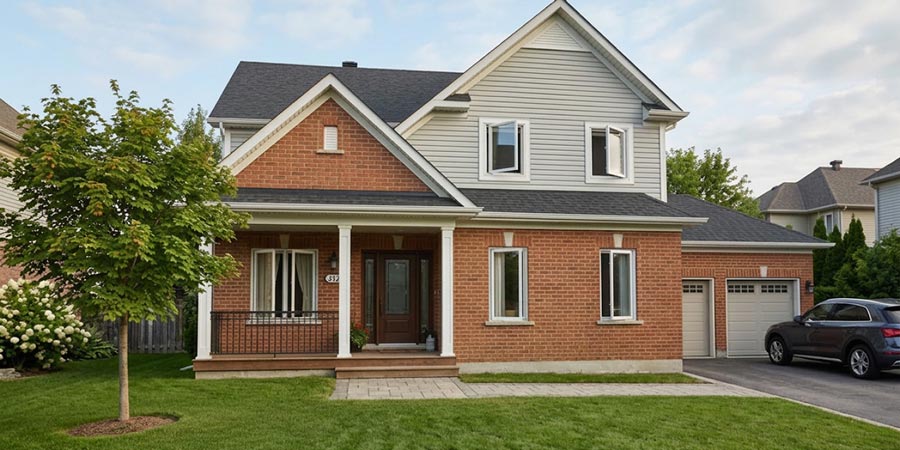
For replacement casement windows fitted into an existing opening, accurate measurement of the rough opening and careful attention to shimming are particularly important, since casement hardware is more sensitive to a slightly out-of-square installation than a fixed or sliding sash. A frame installed even marginally out of plumb can cause the sash to bind against the frame or fail to seal evenly along one edge, undermining the airtightness that is the style’s main advantage. Exploring the available casement window product line and confirming the manufacturer’s published technical specifications before ordering helps ensure that the selected unit matches both the opening dimensions and the performance target for that location.
Warranty terms also depend on installation method in many cases, and this is where the total casement window replacement cost can shift unexpectedly. Manufacturers commonly require installation by a certified or trained installer to keep the full warranty in force, since improper installation is one of the more common causes of early seal or hardware failure that would otherwise be misattributed to a product defect. Confirming installer credentials and asking which specific installation standard they follow is a reasonable step before committing to a replacement project, alongside reviewing the available glass configuration options to match the unit’s orientation and exposure to the room.
This is exactly why we build our casement windows on a custom-to-order model rather than mass-produced stock sizes: an installer working from precise rough-opening measurements has far less room for gaps or misalignment that undermine a casement seal. Every Window Force casement window carries a 25-year transferable warranty, backed by CSA certification and ENERGY STAR® qualification across all Canadian climate zones. Our authorized dealer network installs to the standard the warranty assumes, so the performance numbers on the spec sheet are the numbers you actually get at the window.
Are Casement Windows Worth It?
Casement windows earn their reputation for airtightness honestly: the compression-seal mechanism is a genuine engineering advantage, not a marketing claim, and it shows up directly in measured air leakage performance. That advantage makes casement windows a strong fit for wind-exposed facades, kitchens where a crank-out sash above a sink is more practical to operate than a slider, and any room where an unobstructed view and maximum ventilation area matter more than compatibility with window-mounted cooling.
The same design is a poor fit when exterior clearance is tight, when a window air conditioner is part of the cooling plan, or when budget is the primary constraint and a slider’s lower price point is decisive. The right choice depends on matching the window’s mechanical strengths to the specific demands of the opening, not on treating casement as universally superior or inferior to other operable styles. For homeowners weighing casement windows against other replacement window options for an upcoming project, comparing documented window replacement costs and energy ratings side by side, rather than relying on a single supplier’s recommendation, remains the most reliable way to make a decision. Whether sourcing directly from a manufacturer or searching for a window company near me, requesting the technical specification sheet for any specific model under consideration is a reasonable and informative step before signing a contract.
Window Force builds toward this kind of fit-for-purpose decision rather than pushing one window style as universal. We manufacture casement windows at our Ontario facility and place them with homeowners through our authorized dealer network, with every unit backed by a 25-year transferable warranty and CSA-certified, ENERGY STAR®-qualified performance across all Canadian climate zones. That combination means you're not just buying a window, you're buying a documented performance standard and a warranty that follows the window, whichever style is right for your home.
People Also Ask