

What Defines a Casement Window and Why It Remains Popular Among Builders
Casement windows are hinged on one side and open outward like a door, providing full ventilation and an unobstructed view. This design combines mechanical simplicity with high performance, making it one of the most reliable window types in both residential and commercial construction. Builders continue to prefer casement systems because they offer excellent air sealing, durability, and design flexibility while meeting modern energy and building code requirements.
How Casement Windows Function
Casement windows operate using a crank or lever mechanism that controls a hinged sash. When opened, the sash extends outward from the frame, allowing air to flow into the building. The closing action pulls the sash tightly against a compression seal, providing one of the most effective airtight systems in fenestration design.
| Component | Function | Material Options |
| Frame and Sash | Structural body supporting glazing and hardware | Vinyl, fiberglass, aluminum-clad wood |
| Hinges | Allow sash rotation and secure alignment | Stainless steel or zinc alloy |
| Crank Operator | Opens and closes sash via gear-driven arm | Die-cast or steel components |
| Compression Seal | Ensures air and water resistance | EPDM or silicone gasket |
This system provides strong mechanical leverage, which improves both ease of operation and the ability to withstand high wind pressure.
Design Flexibility and Modern Adaptations
Casement windows fit a wide range of architectural styles — from heritage homes to modern glass façades. Their clean lines and customizable sizing make them ideal for projects emphasizing both aesthetics and energy efficiency.
Current design trends integrate:
- Slim frame profiles for larger glass areas.
- Low-E coated glazing to enhance thermal control.
- Dual and triple-pane configurations for improved sound and insulation performance.
- Automated operators in high-end commercial installations for remote or sensor-based control.
Energy and Ventilation Advantages
Because the sash opens fully, casement windows direct outdoor air into the building — maximizing natural ventilation. When closed, their compression seal eliminates air leakage, outperforming sliding or double-hung windows in both U-Factor and air infiltration ratings. According to Natural Resources Canada (NRCan) (source), properly installed casement windows can reduce heating and cooling costs by up to 20 — 25% compared to non-sealed window types.
Popularity Among Builders and Developers
Builders choose casement systems for their:
- High structural integrity: Excellent performance under CSA A440.2-19 pressure and infiltration tests.
- Ease of installation: Factory-preassembled units simplify on-site fitting.
- Code compliance: ENERGY STAR Tier 2 — 3 certified configurations available across all Canadian zones.
- Aesthetic adaptability: Suitable for contemporary, transitional, and classic design schemes.
Casement windows remain a staple in construction because they blend mechanical reliability, superior sealing, and architectural flexibility. Whether used in large commercial façades or modern residential projects, they deliver lasting value and performance with minimal maintenance. Their combination of energy efficiency, durability, and clean design ensures they continue to be one of the most specified window systems across Canada.
What Are the Main Pros of Casement Windows for Residential and Commercial Projects
Casement windows are favored in modern construction because they provide a strong balance between energy efficiency, functionality, and aesthetics. Their design supports both comfort and compliance with building performance standards, which is why they remain a top choice for developers, architects, and homeowners alike.
1. Superior Energy Efficiency
The defining advantage of casement windows lies in their compression-seal design. When closed, the sash presses firmly against the frame gasket, forming an airtight seal that minimizes heat transfer and air leakage. This design significantly outperforms sliding or double-hung systems that rely on brush seals.
According to Natural Resources Canada (NRCan) (source), ENERGY STAR-certified casement windows can improve home energy performance by up to 25%, lowering heating and cooling loads throughout the year.

2. Enhanced Natural Ventilation
Casement windows open outward up to 90 degrees, allowing builders to optimize natural airflow. The sash acts like an air scoop, directing outside breezes into the room. For commercial properties, this translates into reduced reliance on mechanical ventilation systems — helping meet green building targets and WELL certification standards.
3. Unobstructed Views and Daylighting
Because they don’t require a vertical meeting rail, casement windows provide clear sightlines and allow maximum glass surface area. This makes them ideal for both high-rise façades and residential living areas seeking natural light exposure and scenic views.
| Benefit Category | Casement Windows | Sliding/Double-Hung Windows |
| Air Tightness | Excellent — compression seal | Moderate — brush seal |
| Ventilation Control | Full, directional airflow | Partial opening only |
| Natural Light | Uninterrupted | Obstructed by frame rails |
| Energy Efficiency | High — U-Factor 1.2 — 1.6 W/m²·K | Medium — U-Factor 1.6 — 2.0 W/m²·K |
4. Design Flexibility and Material Options
Casement systems are available in multiple frame materials, including vinyl, fiberglass, aluminum-clad wood, and hybrid composites. This versatility allows builders to match window specifications with both project scale and climate requirements.
Examples:
- Vinyl casements— affordable and energy-efficient for residential builds.
- Fiberglass casements— dimensionally stable, ideal for commercial and high-performance projects.
- Aluminum-clad wood casements— combine aesthetic appeal with exterior durability.
5. Low Maintenance and Long-Term Reliability
Casement windows are easy to maintain due to their simple mechanical systems. The crank and hinge mechanisms are serviceable from inside the building, minimizing exterior maintenance work — particularly valuable for multi-storey applications.
Routine cleaning and lubrication typically keep casement windows performing efficiently for 20 — 30 years, especially when fitted with corrosion-resistant stainless-steel hardware.
The key benefits of casement windows for residential and commercial use include:
- Outstanding energy efficiency with compression-seal design.
- Full ventilation control and improved air circulation.
- Clean, modern aesthetics with unobstructed glass area.
- Multiple material and finish options to suit project requirements.
- Long-lasting durability with minimal maintenance.
For builders and property managers, these advantages translate into lower operational costs, enhanced occupant comfort, and higher property valuation — making casement windows a strategic investment in any building project.
Windows Near Me
What Are the Potential Drawbacks of Casement Windows in Large-Scale Installations
While casement windows provide excellent performance and design advantages, large-scale commercial or multi-unit installations can introduce specific challenges. These issues are generally related to hardware load, maintenance accessibility, and wind pressure management — factors that require proper engineering consideration during project planning.
1. Hardware Wear and Mechanical Stress
Casement windows depend on hinges, cranks, and locks to operate efficiently. In high-use or large-format installations, these components experience greater mechanical stress. The crank operator, in particular, bears increased torque from heavy or oversized sashes.
Over time, this can lead to:
- Stripped gears or worn operator arms.
- Loose or misaligned hinges from repeated opening cycles.
- Difficulty maintaining uniform compression seals.
Maintenance solution: Use commercial-grade stainless steel hinges and heavy-duty multi-point locks to support long-term reliability. Regular lubrication and annual alignment checks minimize wear.
2. Wind-Load and Structural Pressure Challenges
In tall buildings or exposed sites, strong wind pressure can strain casement sashes. Open windows may act as wind catchers, creating high torque on hinges and operator arms. CSA testing under A440.2-19 structural performance standards identifies this as a key consideration in high-rise design.
| Building Height | Recommended Max Sash Width (inches) | Wind Pressure Range (Pa) | Required Hardware Rating |
| Low-Rise (≤3 storeys) | 36 — 42 | 500 — 700 | Standard residential hardware |
| Mid-Rise (4 — 8 storeys) | 32 — 38 | 700 — 900 | Heavy-duty friction hinges |
| High-Rise (9+ storeys) | 28 — 34 | 900 — 1200 | Reinforced or restrictor-equipped hinges |
Mitigation: Specify wind restrictors or limit stops to prevent full outward extension during high wind loads, improving both safety and lifespan.
3. Increased Maintenance Frequency
Casement systems require periodic lubrication of crank mechanisms and inspection of seals. In large developments with hundreds of units, this can become a recurring maintenance task if not planned properly.
- Maintenance contracts should include semiannual servicing of hardware.
- Lubrication with non-petroleum-based silicone grease prevents corrosion and debris accumulation.
- Periodic seal inspections ensure consistent airtightness and noise reduction.
4. Cost and Installation Complexity
Casement windows often cost more than sliding or fixed options due to their hardware and sealing systems. Installation in large-scale projects may require additional precision to align multiple operable units across façades.
Installation recommendations:
- Pre-calibrate hinge and operator tension at the factory.
- Use modular installation templates for consistent alignment.
- Conduct on-site pressure tests for air and water infiltration post-installation.
5. Accessibility Considerations
In certain commercial or institutional applications, crank handles may be difficult to reach or operate for users with limited mobility. Automated operators or extended handles are available but add cost and complexity.
Summary
| Challenge | Impact | Recommended Solution |
| Hardware Wear | Reduced durability in high-use settings | Use reinforced commercial-grade operators |
| Wind Pressure | Excessive torque on hinges and sashes | Install limiters and rated hardware |
| Maintenance Load | Frequent servicing in multi-unit sites | Implement scheduled maintenance plans |
| Cost | Higher per-unit installation expense | Offset with long-term energy savings |
| Accessibility | Limited reach for manual handles | Integrate motorized or extended cranks |
While casement windows remain highly reliable, large-scale projects must address these engineering and maintenance variables early in the design process. Proper specification and professional installation ensure optimal performance and longevity.
Why Do Homeowners and Architects Prefer Casement Windows for Modern Builds
Casement windows are a cornerstone of contemporary design, appreciated by both homeowners and architects for their versatility, energy performance, and aesthetic minimalism. Their integration into sustainable architecture and adaptive construction trends has further solidified their popularity in recent years.
Design Appeal and Modern Aesthetics
Casement windows complement a wide range of architectural styles — from minimalist modern homes to complex mixed-use developments. Their slim frame profiles and expansive glazing areas enhance daylight penetration and maximize outdoor views.
Architects frequently select casement systems for:
- Seamless façade integration with curtain walls or modular panels.
- Clean visual lines that align with modern minimalist design.
- Flexible configurations, including single, double, or fixed combinations.
This flexibility makes them equally suitable for residential infill projects and large commercial façades where natural lighting and visual openness are prioritized.
Alignment with Sustainable Building Trends
The growing emphasis on energy efficiency and environmental responsibility has driven demand for high-performance casement windows. Their compression-seal mechanism provides superior insulation and minimal air infiltration — an essential feature for buildings pursuing ENERGY STAR, LEED, or Passive House certifications.
According to the 2025 Canadian Window Market Report, over 40% of newly specified residential windows are casement-style, primarily due to their proven energy efficiency and compliance with CSA A440.2-19 performance standards.
| Sustainability Metric | Casement Windows | Sliding/Double-Hung Windows |
| Air Leakage (L/s·m²) | 0.4 — 0.6 | 1.0 — 1.5 |
| Average U-Factor (W/m²·K) | 1.2 — 1.5 | 1.6 — 2.0 |
| Daylight Factor Increase | 10 — 15% | 5 — 8% |
| Ventilation Efficiency | Directional, adjustable | Partial, fixed plane |
These efficiency metrics make casement systems a preferred choice in net-zero and high-performance buildings.
Functional Advantages for Modern Living
Casement windows also deliver excellent comfort and usability for end-users:
- Operability: Easy crank or motorized operation from any height.
- Airflow control: Outward-opening design captures side breezes, enhancing indoor air quality.
- Security: Multi-point locking provides enhanced protection compared to single-latch mechanisms.
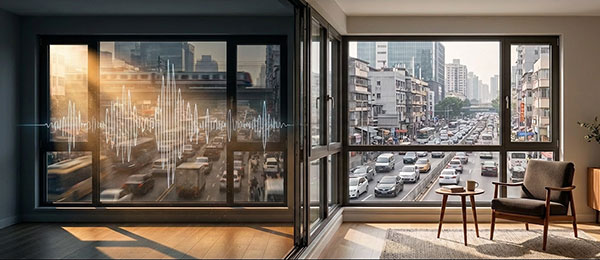
- Noise reduction: Compression seals significantly reduce outdoor sound transmission, ideal for urban or mixed-use developments.
Architectural Trend Integration
Casement windows align with current trends emphasizing:
- Open-plan layouts with expansive glazing.
- Energy-efficient envelopes and passive ventilation.
- Hybrid materials — such as fiberglass composites — for structural stability and slim profiles.
Architectural case studies from Toronto, Vancouver, and Calgary show that casement systems are increasingly integrated into both residential and light commercial projects to achieve higher energy performance without compromising design integrity.
Casement windows remain one of the most specified products in modern architecture because they merge aesthetic precision, operational comfort, and energy performance. Their proven adaptability to sustainable construction and modern design trends ensures continued preference among both homeowners and architects across Canada.
How Do Casement Windows Compare with Other Window Types in ROI and Durability
When evaluating window systems for both residential and commercial projects, casement windows consistently outperform other operable styles in long-term durability, energy performance, and return on investment (ROI). Their design supports sustained efficiency and lower maintenance costs over decades of use.
ROI Comparison by Window Type
Based on performance data from Natural Resources Canada (NRCan) and the 2024 Remodeling Cost vs. Value Report, casement windows provide one of the highest payback ratios in window replacements and new builds.
| Window Type | Average Initial Cost (CAD per sq. ft.) | Estimated Annual Energy Savings | Average Lifespan (years) | ROI Range (%) |
| Casement | $55—$70 | 20 — 25% | 25 — 35 | 70 — 78 |
| Sliding | $45—$60 | 10 — 15% | 20 — 25 | 55 — 65 |
| Double-Hung | $50—$65 | 12 — 18% | 20 — 30 | 60 — 68 |
| Fixed (Non-Operable) | $40—$55 | 15 — 20% | 30 — 40 | 65 — 72 |
Casement windows’ compression seal design yields significant long-term savings through reduced air infiltration and lower heating/cooling demand.
Durability and Maintenance Factors
Casement windows excel in hardware longevity due to improved load distribution on hinges and robust locking systems. Unlike sliders or hung windows, their operators and seals can be serviced without dismantling the frame — reducing repair downtime in commercial buildings.
| Performance Factor | Casement | Sliding | Double-Hung | Fixed |
| Air Tightness | Excellent | Moderate | Moderate | Excellent |
| Hardware Durability | High — rated for 20,000+ cycles | Medium | Medium | N/A |
| Water Resistance | Superior | Fair | Fair | Excellent |
| Maintenance Needs | Low | Medium | Medium | Minimal |
| Ease of Repair | Simple — interior access | Moderate | Moderate | Limited |
Casement systems with fiberglass or aluminum-clad frames are particularly suited to harsh Canadian climates, resisting warping, corrosion, and UV degradation for decades.
Long-Term Cost Efficiency
Although casement windows carry slightly higher upfront costs, they deliver superior lifecycle performance:
- Lower utility bills: Up to 25% annual energy savings through efficient sealing.
- Extended hardware life: Reinforced components maintain function under heavy use.
- Reduced maintenance: Simple access for cleaning and lubrication.
- Increased property value: Modern aesthetics and performance appeal to energy-conscious buyers.
Application Insight
For builders and property managers, casement windows present the best balance of ROI, reliability, and occupant comfort. In mixed-use developments, combining fixed and operable casements provides both design flexibility and performance optimization.
Summary
| Evaluation Category | Casement Advantage |
| Energy Savings | Up to 25% lower heating and cooling costs |
| Maintenance | Simplified, with internal access to hardware |
| Durability | 25 — 35-year lifespan with minimal degradation |
| Value Retention | ROI between 70 — 78% depending on installation scale |
Casement windows offer the highest long-term value among operable window types, providing a strong financial and functional return for residential, institutional, and commercial developments.
How Window Force Inc. Supports Developers and Distributors with Premium Casement Systems
Window Force Inc. partners with construction professionals, developers, and distributors to deliver high-performance casement window solutions optimized for energy compliance, durability, and logistics efficiency. Every system is engineered and manufactured under stringent Canadian standards, ensuring long-term value for projects of all scales.
Manufacturing Standards and Quality Control
Window Force Inc. maintains full-cycle production control — from frame extrusion to final assembly — ensuring consistency and reliability across all casement models. Each unit undergoes testing under CSA A440.2-19 and ENERGY STAR Canada performance protocols for air, water, and structural integrity.
| Quality Metric | Testing Standard | Performance Target |
| Air Infiltration | CSA A440.2 | ≤ 0.5 L/s·m² |
| Water Penetration Resistance | ASTM E547 | ≥ 720 Pa |
| Structural Load Resistance | ASTM E330 | 1200 Pa minimum |
| Thermal Performance | NRCan ENERGY STAR | Zone 3 certified |
This level of control ensures consistent results across large-scale procurement orders and architectural specifications.
Bulk Supply and Project Logistics
For developers managing multiple sites, Window Force Inc. offers volume-based production scheduling and warehouse distribution throughout Ontario and neighboring provinces. Orders can be fulfilled in project-specific lots, simplifying coordination between framing, glazing, and finishing teams.
Key benefits include:
- Predictable lead times through dedicated manufacturing slots.
- Direct-to-site delivery using secured, weather-protected transport.
- Custom labeling and packaging for multi-phase developments.
These services are designed to reduce installation downtime and align seamlessly with construction timelines.
Warranty and Technical Support
Every casement system from Window Force Inc. comes with a comprehensive manufacturer’s warranty, covering hardware, glazing, and frame integrity. Technical teams provide ongoing support during both installation and post-installation phases.
Support resources include:
- On-site consultation for framing alignment and flashing integration.
- Replacement part availability for over 15 years post-installation.
- Assistance with CSA and ENERGY STAR compliance documentation for builders and inspectors.
Client Partnership Programs
To strengthen collaboration, Window Force Inc. offers a Preferred Partner Program that provides additional benefits for repeat and high-volume clients:
- Volume discounts based on annual procurement thresholds.
- Extended warranty terms for qualifying projects.
- Priority production scheduling during peak building seasons.
Partnership clients also gain access to early product updates, technical workshops, and project-specific performance consultations.
Window Force Inc. distinguishes itself through its commitment to precision manufacturing, on-time delivery, and responsive technical support. Whether supplying a single mid-rise project or a national distribution network, the company ensures that each casement system meets the highest standards of performance and dependability — backed by verified certifications and proven client satisfaction.
Conclusion: Are Casement Windows the Right Choice for Your Next Project?
Casement windows combine technical performance with architectural flexibility, making them one of the most valuable investments in modern construction. Their efficiency, durability, and adaptability continue to position them as a leading choice across residential, institutional, and mixed-use developments.
Technical and Design Summary
| Feature | Casement Windows | Performance Impact |
| Energy Efficiency | Compression-sealed design with Low-E glazing | Reduces heating/cooling loads by up to 25% |
| Ventilation Control | Full 90° outward opening | Maximizes air circulation and comfort |
| Structural Durability | Reinforced hinges and multi-point locks | Withstands 1200 Pa wind load (CSA-tested) |
| Maintenance | Minimal, with interior hardware access | Reduces long-term service costs |
| Lifespan | 25 — 35 years | Ensures dependable operation |
Casement windows excel in environments that demand airtight sealing, directional airflow, and long-term mechanical reliability. Their performance advantages over sliding or double-hung systems make them a premium yet practical choice for energy-conscious construction.
Project Application Insights
For developers and builders, casement windows provide key benefits across various project types:
- Residential: Excellent for homes prioritizing natural light and efficiency.
- Commercial: Suitable for offices, schools, and healthcare facilities requiring strong air control and low maintenance.
- High-Rise Installations: Enhanced wind-load resistance and sealing integrity ensure consistent performance across multi-storey façades.
Expert Recommendation
Industry data from Natural Resources Canada and the 2025 Canadian Window Market Report confirm that casement windows continue to hold one of the highest satisfaction and performance ratings in the fenestration industry. Their combination of engineering strength, aesthetic adaptability, and measurable efficiency gains make them the most balanced option for both long-term ROI and occupant comfort.
Summary Table
| Evaluation Area | Casement Window Advantage | Practical Outcome |
| Performance | Superior air and water resistance | Lower operating costs |
| Design Flexibility | Compatible with modern and traditional façades | Broader architectural use |
| Maintenance | Easy access to hinges and operators | Reduced labor time |
| ROI | 70 — 78% average | Proven financial efficiency |
Final Thoughts
Casement windows are not only a design statement but also a strategic performance investment. For developers and contractors focused on meeting stringent energy codes, achieving superior sealing, and delivering long-term occupant satisfaction, they remain one of the most reliable and future-ready window solutions available.
For high-efficiency supply and professional guidance, Window Force Inc. offers certified casement systems that combine technical precision, energy compliance, and project scalability — ensuring every build achieves its full performance potential.

Frequently Asked Questions
What Are the Biggest Advantages of Using Casement Windows in Modern Homes?
Casement windows provide superior energy efficiency and ventilation control compared to most other operable types. Their compression seal ensures a tight closure, minimizing drafts and heat loss. In addition, they open fully to capture breezes and maximize daylight — ideal for both residential and light commercial applications. Modern designs with Low-E glazing and multi-point locks also enhance security and comfort year-round.
What Maintenance Challenges Do Casement Windows Present for Contractors?
While casement windows are generally low maintenance, their moving components require periodic inspection and lubrication. Hinges and crank mechanisms should be serviced every 6 — 12 months to prevent stiffness or wear, particularly in coastal or high-humidity environments. Contractors should also verify gasket compression and ensure all fasteners remain tight following installation.
How Do Casement Windows Improve Resale Value and Energy Compliance?
Casement systems increase property value by improving energy efficiency ratings and overall aesthetics. ENERGY STAR-certified units can reduce utility costs by up to 25%, supporting compliance with national and provincial building codes. From a resale perspective, their clean sightlines, operability, and modern design appeal make them a strong feature for buyers focused on sustainability and long-term performance.
People Also Ask