

Double hung windows sit in the middle of the replacement market on price, yet two quotes for the same opening can be several hundred dollars apart. Most of that gap comes from parts a homeowner never sees: two balance systems, tilt hardware on both sashes and a reinforced meeting rail that has to stay square for decades. This guide sets out what double hung windows cost in Canada in 2026 and explains, from the production side, which choices actually move the number.
Since 2007, Window Force has manufactured custom vinyl windows, including double hung units, at its 80,000 sq ft plant in Concord, Ontario. Each order is specified according to the measured opening, frame series, glazing package and balance requirements before it is shipped to an authorized dealer or installation crew. This production-based approach helps explain which specifications have the greatest impact on the final price.
Key Takeaways
- Published Canadian price guides put a standard-size vinyl double hung window at roughly $400 to $1,100 installed, with large, custom or premium-material units running past $2,000.
- A double hung unit costs more than a single hung or slider because both sashes move: each needs its own balance cartridges, tilt latches and pivot bars, and the meeting rail must carry lock load from both sides.
- Size, glazing package, frame series, colour, grilles and the installation method (retrofit or full-frame) account for most of the spread between quotes.
- Windows are custom made at one Ontario plant, so regional price differences come mainly from labour, freight, climate-driven specifications and local dealer overhead.
- The Canada Greener Homes Grant is closed, and the Canada Greener Homes Affordability Program now provides no-cost retrofits to eligible low-to-median-income households through participating provincial and territorial partners. Available measures vary by location, so homeowners should confirm whether window replacement is included before planning a project.
Quick Answer: What a Double Hung Window Costs in 2026
Public Canadian cost guides agree on the general range but price slightly different scopes, which is why their numbers differ. The table below shows how four widely read sources frame the market. These are reference points, not Window Force prices, and none of them replaces a quote measured to your openings.
| Source | What the range covers | Price per window |
| HomeStars (2026 installation guide) | Vinyl, standard size, installed | $400 to $800 |
| Windows Canada (2026 replacement guide) | Vinyl double hung tilt, installed | $700 to $1,100 |
| RenoQuotes (April 2026) | Single or double hung, full service | $750 to $1,100 |
| Magic Window (2025) | All frame materials and quality tiers | $600 to $2,000 |
Installed price estimates may include the window unit, removal of the existing window, perimeter insulation and basic finishing, but the exact scope varies by source and contractor. Rot repair, extensive exterior capping, permits and sales tax may be charged separately. Always check what each published estimate includes before comparing it with a contractor's quote. When a quote lands well below these ranges, the missing money is almost always in one of those exclusions.
Windows Near Me
What Drives the Double Hung Window Price
A double hung window is priced as a system: the operating mechanism, the glass, the frame series, the finish and the way it goes into the wall. Each of these is a separate decision, and each shows up on an itemized quote.
The Mechanism Inside the Frame
In a single hung window only the lower sash moves, and the upper sash is fixed into the frame. A double hung unit makes both sashes operable, which roughly doubles the moving hardware. Each sash rides on its own spring-loaded balance cartridges, calibrated at manufacture to the weight of the sash they carry, so the sash holds its position at any height without drifting down or feeling heavy to lift.
Compared with a single hung window of the same size, a double hung unit adds:
- a second set of balance cartridges, matched to the weight of the upper sash;
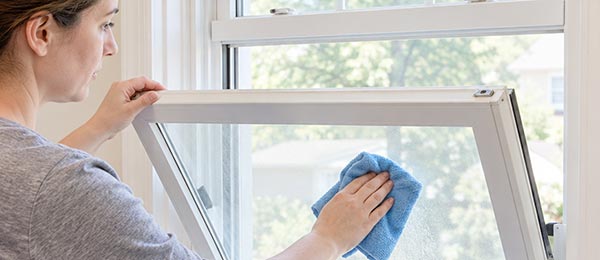
- tilt latches and pivot bars on the upper sash, allowing both sashes to tilt inward for cleaning;
- a fully weatherstripped upper sash perimeter in place of a fixed glazing pocket;
- interlocking meeting rails that pull both sashes together when the cam lock is set, with wider units typically fitted with two locks.
None of these components is expensive on its own. The cost sits in assembly time and tolerances: a balance mismatched to sash weight, or a meeting rail that is slightly out of square, produces a window that is hard to operate and leaks air at the centre, which is exactly where homeowners feel a draft.
Engineer Sergey Essipov, with 20 years of experience in window manufacturing, explains:
A hung sash only operates well when its balance matches its weight: too strong and the sash creeps up, too weak and it slides down on its own. At our facility, we calibrate the spring-loaded balance cartridges to the weight of each sash at manufacture, so a 28-inch sash and a 46-inch sash never leave the line with the same balances. That calibration, done twice on every double hung unit, is a large part of why it costs more to build than a slider, and it is what lets a homeowner lift the sash with one hand for decades.
Hardware and Accessories
Hardware is a smaller share of the price than glass or size, but it is where quotes for the same window can quietly differ. A narrow double hung unit closes with one cam lock at the meeting rail, while wider sashes typically need two to pull the rails together evenly along their length. Optional flush bolts, a removable interior screen and colour-matched hardware finishes are each priced separately. In homes with young children, ask whether compatible sash opening restrictors or other child-safety devices are available. Any restrictor installed on a bedroom window must not compromise the opening's required emergency egress. Confirm the lock count and screen type on the quote, because a lower price sometimes reflects one lock where two belong.
Size and Configuration
Size affects the price of glass, frame material and balance hardware at the same time, because a taller sash is heavier and needs stronger balances. Windows Canada's 2026 guide illustrates the step: about $500 to $650 for a compact unit near 2 by 3 feet, $650 to $850 near 3 by 4 feet and $850 to $1,000 or more near 4 by 5 feet, installed. Window Force builds its double hung units from 15 to 46 inches wide and from 28 to 58 inches high; wider openings are filled with twin or triple mulled units, each with its own full set of hardware. If you are planning new or enlarged openings, keeping dimensions within common product size ranges can simplify the configuration and help control costs.
For mulled configurations, ask whether the twin or triple units are joined at the plant or on site, and make sure the quote lists the mulled configuration being supplied. A factory-joined unit generally means fewer adjustments at installation.
Glazing Package
Window Force double hung windows use a double-pane sealed unit with argon fill as standard and a choice of Low-E coatings (LoĒ-180, LoĒ-272, LoĒ-366 and the room-side LoĒ-i89). Published performance for representative configurations is a U-factor of 1.48 to 1.51 W/(m²·K) and an Energy Rating (ER) of 35 to 38, while the two tested configurations in the certified performance table are listed at ER 31 and 30 under the earlier zone-based criteria, so ask for the NRCan reference number for the exact configuration. Under Natural Resources Canada's ENERGY STAR technical specification, Version 5.0, effective January 1, 2020, residential windows qualify by meeting either a maximum U-factor of 1.22 W/(m²·K) or a minimum Energy Rating (ER) of 34. Version 5.0 replaced the previous climate-zone-based criteria with a single national performance threshold. This means that ENERGY STAR certification is based on the same technical criteria across Canada, although the most suitable glazing specification still depends on local climate and building conditions.
One detail rarely shown on a quote is the importance of the sealed unit's edge construction. Because the glass moves with the sash during operation, the glazing system must remain securely supported and maintain its seal throughout repeated opening, closing and tilting cycles. Window Force assembles every double hung IGU with a dual-seal, metal-free warm-edge spacer, in which one seal retains the argon fill and the second carries the structural load, with no aluminum strip conducting cold to the glass edge. This spacer design helps maintain the sealed unit's thermal performance over time. The sealed unit is also covered by a 10-year non-prorated warranty against seal failure.
Triple-pane glass is not offered in Window Force hung configurations. The extra pane adds substantial weight that the vertical balance system would carry every time the sash is lifted. Among the types of vinyl windows, casement and awning units are the better vehicle when triple glazing is the priority for a particular wall, and many homes combine double hung windows on street-facing elevations with casement windows in areas where improved airtightness or triple glazing is a priority.
Engineer Sergey Essipov, with 20 years of experience in window manufacturing, notes:
A triple-pane unit adds a lot of weight, and the balance system on a hung window carries that weight every time the sash goes up. Ours are sized and calibrated for double-pane sash weight, so we do not build triple-pane hung windows. If a wall needs triple glazing, a casement or awning is the better window because it is hinged rather than balanced, and we would rather tell a homeowner that than sell them a sash that fights its own balances.
Classic vs Ultraslim Series
The Classic series uses a 3 1/4-inch standard-profile frame suited to retrofit and replacement work. The Ultraslim series has a narrower visible profile on a 4 9/16-inch frame depth with a hidden gasket, intended for new construction and larger openings where a narrower sightline matters. The two series differ in profile, depth and sealing detail, so ask for both priced on the same opening before choosing on appearance alone.
Colour, Grilles and Glass Options
White remains the base price on most vinyl windows; exterior colours and woodgrain finishes are extra steps in production and are priced as options. Interior grilles in colonial, prairie or heritage patterns, obscured privacy glass, tempered safety glass where the building code requires it, and the Neat+ self-cleaning exterior coating are each separate line items. Individually they are modest, but on a twelve-window project they can add up to the cost of another window.
Retrofit vs Full-Frame Installation
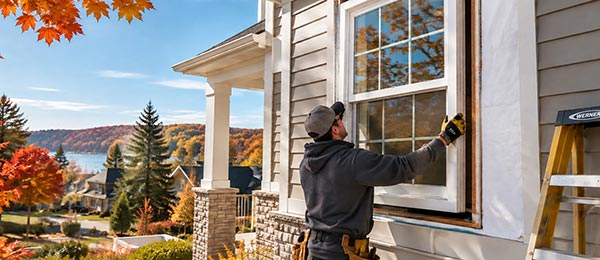
A retrofit (insert) installation keeps the existing frame and sets the new unit inside it, while a full-frame replacement removes everything back to the rough opening. HomeStars' 2026 guide estimates that full-frame work adds about $100 to $200 per window, and notes that it becomes necessary when the old frame is rotted, out of square or water-damaged. For a double hung unit, an out-of-square opening is a particular problem: the sashes slide in tracks, so a racked frame causes binding and an uneven seal at the meeting rail. Housing stock shapes this choice: a window company in Oshawa may work with post-war bungalows whose openings have had decades to settle and can need full-frame work, while replacement windows Regina projects may more often involve newer suburban homes where a retrofit into a sound frame keeps the cost per opening lower.
What a homeowner should expect from a hung window is the same easy sash travel in year fifteen as on installation day, and that depends on the frame staying square in the wall. Window Force fusion-welds every frame and sash corner and builds its profiles from lead-free uPVC with UV stabilizers, so the sun-facing jamb does not soften or bow differently from the shaded one after years of exposure. That stability is what allows a retrofit unit to stay true in an older opening once the installer has squared and shimmed it.
Regional Differences Across Canada
Every Window Force window is custom made to order at our production facility in Concord (Vaughan), Ontario, so the main regional differences come from what happens after a unit leaves the plant.
Labour
Installation is the largest regional variable. Federal Job Bank wage data for glaziers (NOC 73111), updated in November 2025, put the national median at $30.16 an hour, against $28.00 in Alberta and $37.00 in Quebec's Laval region. That is a gap of about 30% in base wages between those two figures, before overhead, insurance and travel time are added. HomeStars estimates that labour in major centres such as Toronto and Vancouver adds roughly $50 to $150 per window compared with mid-sized Prairie or Atlantic cities, which is why the same product carries a different window replacement cost from one city to the next. Because installation is handled by authorized dealers, ask for installation labour as its own line for each opening so you can separate the product cost from the installation cost.
Freight, Climate and Building Requirements
Shipping windows from Ontario adds to the delivered price, with freight costs generally increasing for destinations in Atlantic Canada, the Prairies and British Columbia. Climate also influences the specification and final quote. Cold prairie climates may require glazing packages selected for lower heat loss, while coastal locations place greater emphasis on resistance to wind-driven rain and the appropriate Performance Grade under CSA A440S1.
Building requirements vary by province because each jurisdiction adopts or adapts its own version of the National Building Code of Canada. For example, Ontario applies the Ontario Building Code 2024, while Quebec follows its provincial construction code. Window selection and installation must also account for applicable CSA standards, including CSA A440.4 for installation. These requirements can affect the product specification, preparation work and labour included in the final quote.
Sales Tax on the Final Invoice
Market ranges are almost always quoted before tax, and sales tax is the one regional difference that can be calculated exactly. According to the Canada Revenue Agency's GST/HST rate table, the combined rate is 13% in Ontario, 14% in Nova Scotia since April 1, 2025, and 15% in New Brunswick, Prince Edward Island and Newfoundland and Labrador, while Alberta charges only the 5% GST. On a $6,000 window project, that is the difference between $300 of tax in Calgary and $780 in Toronto. In British Columbia, Saskatchewan, Manitoba and Quebec, provincial sales tax applies alongside the GST, and its treatment on supply-and-install contracts can differ from a supply-only order, so ask for the quote to show tax as a separate line.
The Window Force city cost guides set out local price ranges and the factors specific to each market:
| Region | City cost guide | What shifts the price locally |
| Ontario | Toronto, Ottawa | Urban labour rates, brick veneer openings, freeze-thaw cycles |
| Quebec | Montreal | Provincial building code and regional labour rates, triplex and plex housing stock |
| Atlantic | Halifax, Moncton | Freight distance, coastal wind and driving rain |
| Prairies | Winnipeg, Saskatoon | Long heating season, extreme cold, air-sealing detail |
| Alberta | Calgary, Edmonton | Chinook temperature swings, hail exposure, freight |
| British Columbia | Vancouver | Labour premium, wet coastal climate, condo and strata rules |
A lower-cost hung window may use a frame with fewer internal chambers, reducing material use and potentially affecting thermal performance. Window Force uses multi-chamber profiles in its double hung series to help limit heat transfer through the frame. The overall thermal and structural performance also depends on the profile design, reinforcement, weatherstripping and installation quality. In colder regions, these factors help maintain a more comfortable interior frame surface, while coastal installations require appropriate resistance to wind-driven rain and water penetration.
Double Hung vs Single Hung vs Slider: Cost Compared
Double hung windows cost more than single hung and slider models, but the difference also reflects their greater operating flexibility. Both sashes can move independently, allowing homeowners to adjust ventilation from the top or bottom of the opening.
A slider uses a different mechanism. Its sash or sashes move horizontally on rollers rather than vertical balance systems, which generally keeps the hardware simpler. Depending on the configuration, one or both panels may open, but interior cleaning options vary by model.
The higher cost of double hung replacement windows is easiest to justify on upper floors, where tilt-in sashes allow homeowners to clean both sides of the glass from indoors. They are also useful in rooms where adjustable top and bottom openings support natural ventilation, and on traditional façades where a slider may look out of place. In a basement or a wide, low opening, a slider or single hung unit usually delivers the same daily use for less. Our side-by-side comparison of single and double hung windows covers the differences in more detail.
HomeStars' 2026 figures for standard-size vinyl units, installed, illustrate how the three styles compare in price and operation:
| Style | Installed range (HomeStars, 2026) | Operable sashes | Balance systems | Interior cleaning of both sashes |
| Single hung | $300 to $600 | 1 (lower) | 1 | Lower sash only |
| Slider | $350 to $750 | 1 or 2 | None (rollers) | Depends on model |
| Double hung | $400 to $800 | 2 | 2 | Yes, both tilt in |
Budget Example: Ten Openings, Two Approaches
Applying HomeStars' 2026 installed ranges to a typical ten-window home shows how much the style mix matters. Specifying double hung windows for all ten openings puts the project cost at roughly $4,000 to $8,000 before tax. Keeping double hung for the six street-facing and upper-floor openings, and choosing two sliders for the wide kitchen and family-room windows and two single hung units for the basement, brings the same project to roughly $3,700 to $7,500. Adding full-frame installation on three damaged openings raises either total by about $300 to $600. Tax then widens the regional gap: in Halifax, the 14% HST adds about $560 to $1,120 to the all-double-hung version, while in Edmonton the 5% GST adds $200 to $400 to the same scope. Freight and local labour will move both figures further, which is why the city cost guides above are the better starting point for a local budget. The savings from a mixed window specification may be modest, but choosing each style according to the opening's needs can preserve everyday functionality while freeing up budget for better glazing where it matters most.
When a Casement Is the Better Buy
HomeStars places a standard vinyl casement at $450 to $900 installed, slightly above double hung. For that premium, a casement closes by compression against weatherstripping around the whole sash, so it generally seals tighter than any sliding style, and it can carry triple glazing because hinges, not vertical balances, support the sash weight. On a windward wall, behind a kitchen sink where reaching a lower sash is awkward, or on a north elevation where heat loss is the priority, the casement usually earns its price. Double hung remains the better choice where an outward swing would hit a walkway or deck, where a window air conditioner is used, or where the architecture calls for a vertical two-sash look.
Rebates and How to Lower the Cost
The federal incentive landscape changed at the end of 2025. According to Natural Resources Canada, December 31, 2025, was the last day to submit documents for the Canada Greener Homes Grant, and the Greener Homes Loan is no longer approving applications. Its successor, the Canada Greener Homes Affordability Program, provides no-cost energy-efficiency retrofits to eligible low-to-median-income homeowners and tenants through participating provincial and territorial programs. Available measures and eligibility requirements vary by location.
Provincial programs fill part of the gap. Ontario's Home Renovation Savings Program offers $100 per rough opening for eligible ENERGY STAR certified window and door replacements through its home energy assessment stream. Homeowners must complete a home energy assessment and at least two qualifying upgrades. Check the program's current terms before starting the work. Quebec's Rénoclimat offers financial assistance for eligible window replacements under its applicable program rules. However, its eligibility requirements changed on October 1, 2026, and homeowners should check the current transition rules before applying. In Manitoba, Efficiency Manitoba offers $100 per eligible ENERGY STAR certified triple-pane window, while qualifying households may receive $300 per window through income-based assistance programs. Because Window Force hung windows are double-pane only, they would not meet Manitoba's triple-pane requirement, so a casement or awning is the route there. Our guide to window and door rebates in Canada is updated as programs change.
If you would rather spread the cost of the project, see our guide on how to finance new windows in Ontario.
Rebates are only one way to reduce the total. The window specification itself also matters: choosing the right operating style for each opening, keeping standard dimensions where possible and prioritizing glass performance over decorative upgrades can help control the budget without compromising everyday comfort. In cold climates, the meeting rail and glass package deserve particular attention because they affect comfort near the window. As a practical rule, invest in effective seals and suitable Low-E glass before spending extra on colour or grille upgrades.
Practical Ways to Lower the Cost
The most effective savings come from matching the window to the opening rather than from cutting specification:
- Use double hung only where its operation earns the premium, and choose fixed, single hung or slider units elsewhere.
- Keep new or enlarged openings close to common sizes, and avoid oversized single units that need heavier balances.
- Choose retrofit installation where the existing frame is sound, and reserve full-frame work for openings that need it.
- Group openings into one project; mobilization and setup costs are shared across more windows.
- Ask window replacement companies to price the same specification so that differences reflect labour and scope, not product.
Distance from the plant changes how much grouping is worth: an order handled by a window supplier in Markham, a short drive from our Concord production line, may add little cost when split into two deliveries, while a West Coast project carries cross-country freight on every shipment, so ordering all openings at once saves noticeably more there.
How to Get an Accurate Quote
An accurate double hung quote starts with measured openings, the frame series, the full glass specification (Low-E coatings, gas fill, spacer), the installation method for each opening, and the finish and grille options. Ask for the unit, labour, disposal, capping and any repair allowance as separate lines, and confirm both the product warranty and the installer's labour warranty in writing. Interior and exterior trim can add to the total, so see our window trim renovation cost guide when a quote leaves it out. If two quotes still differ widely, our article on why window quotes vary so much shows where to look.
Window Force supplies each double hung unit through an authorized dealer network that measures, quotes and installs, and the dealer's quote should show the product and the labour as separate lines. Our windows are CSA certified, and Window Force is an ENERGY STAR Partner whose windows are engineered to meet ENERGY STAR requirements. The 25-year transferable warranty covers the frame, sash and hardware and remains with the home when ownership changes, a separate 10-year non-prorated warranty covers sealed glass units, and installation labour is the responsibility of the installing dealer. Before you sign, our checklist of questions to ask a window company covers what the contract should say.
Conclusion
In 2026, a standard vinyl double hung window in Canada typically costs $400 to $1,100 installed, according to published market guides, and more for large, custom or premium units. The premium over a single hung or slider pays for a second balanced, tilting sash and a meeting rail built to seal under lock load from both sides.
The final number depends on size, glazing, series, finish, installation method and where you live. Compare quotes line by line on the same specification, check current provincial rebates before ordering, and use double hung windows where their operation is worth paying for.
Weighing double hung against other styles, or deciding whether to replace at all? Our guides cover the pros and cons of double hung windows, how to choose between single and double hung by room, how to repair double hung windows when a balance or latch fails, and whether windows can be repaired instead of replaced.
Ready to price your double hung openings? Send your window sizes and a few photos through the quote request form, and our team or the nearest authorized dealer will arrange an on-site measurement, recommend the Classic or Ultraslim series and a glass package for each opening, and return an itemized quote with the production lead time for your order.
Frequently Asked Questions
How much does a double hung window cost in Canada?
Published Canadian guides place a standard-size vinyl double hung window at roughly $400 to $1,100 installed in 2026. Large openings, twin or triple mulled units, premium finishes and full-frame installation can push a single opening past $2,000. An itemized quote measured to your openings is the only reliable figure.
Why are double hung windows more expensive than single hung windows?
Both sashes in a double hung window move, so the unit needs a second set of balance cartridges, tilt latches and pivot bars on the upper sash, full weatherstripping around both sashes and an interlocking meeting rail that seals under lock load from both sides. That added hardware and assembly time typically puts double hung units about $100 to $200 above a comparable single hung window.
Can double hung windows be triple-pane?
Some manufacturers offer it, but triple glazing adds substantial weight that the vertical balance system must carry. Window Force builds its double hung windows with double-pane, argon-filled units and offers several Low-E options; for walls where triple glazing is a priority, casement or awning windows are usually the better choice.
Are there rebates for double hung windows in 2026?
The Canada Greener Homes Grant has closed. The federal Canada Greener Homes Affordability Program covers retrofits for eligible low-to-median-income households through provincial partners, and some provinces run their own window rebates, such as Ontario's Home Renovation Savings Program, Quebec's Rénoclimat and Efficiency Manitoba's windows and doors rebate. Most require ENERGY STAR certified products.
Does retrofit installation lower the cost of a double hung window?
Yes. Keeping the existing frame avoids the extra labour of full-frame removal, which HomeStars estimates at about $100 to $200 per window. Retrofit only makes sense when the old frame is dry, solid and square, because a racked frame causes the sashes to bind and leaves gaps at the meeting rail.
Learn more about window prices in your city: