

Window trim renovation costs roughly $80 to $300 per window for interior casing and $150 to $580 per window for exterior trim in Canada, based on a typical 36 by 60 inch window with sound wood behind the old trim. Painting, rot repair, flashing, drywall patching and lead-safe work are extra. Most of the spread comes from labour and from what is found when the old trim comes off, not from the moulding itself: plain primed pine casing was listed at about $1.94 per linear foot at a Canadian building supplies retailer in the listings we checked.
Window Force has manufactured custom vinyl windows since 2007 at its 80,000 sq ft Ontario plant and supplies them through an authorized dealer network, so we see the trim question on every replacement job: whether the old casing can stay, what the opening looks like once it is exposed, and what a finished edge really costs. We do not install trim ourselves, and this guide is not a quote. It builds planning ranges from published Canadian sources, shows every input, and says where the numbers are weakest. Prices reviewed October 2026.
Key Takeaways
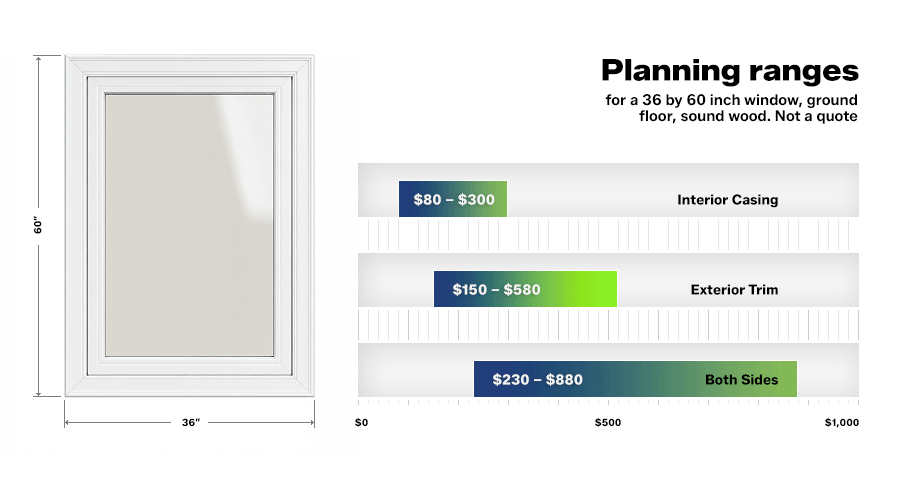
- Planning ranges for a 36 by 60 inch window (about 16 feet of perimeter): interior casing $80 to $300, exterior trim $150 to $580, both sides $230 to $880, before paint, repairs and upper-floor access.
- Trim is priced by the linear foot or by the window, rarely by the square foot. Measure the perimeter of each opening (2 x width + 2 x height), add about 10% for mitres and waste, and multiply by the installed price per linear foot.
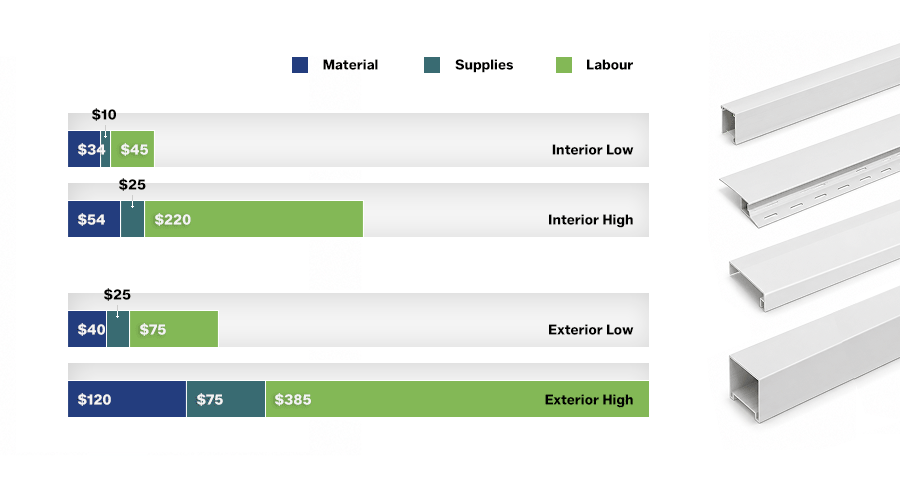
- Labour is the largest line: about 51% to 74% of the interior estimate and 58% to 66% of the exterior estimate. Moulding for interior casing is often $34 to $54 per window.
- Carpenter wages differ across the country. Job Bank puts the national median at $32.12 an hour, with Quebec about 15% above that and New Brunswick about 25% below. A contractor's billed rate is higher than the wage because it also covers insurance, tools, overhead and profit.
- The surprises are hidden: rot, missing flashing, drywall damage and, in homes built before 1990, lead paint. Probe the wood before you accept a quote and write a dollar allowance for repairs into the contract.
- Interior casing is a reasonable DIY job. Exterior trim involves ladders, flashing and sealing details that keep water out of the wall, so most homeowners hire for it.
- If the sash, the glass or the frame is failing, replace the window first. New trim around a failing window is paid for twice, and trim is cheapest when it is installed with the window.
How Much Does Window Trim Renovation Cost in Canada in 2026?
The table below gives planning ranges for one typical window: 36 inches wide by 60 inches tall, with about 16 feet of perimeter. The ranges assume sound wood behind the old trim and a ground-floor opening. They come from a transparent formula (see How We Built These Numbers at the end of this guide), and they sit inside the ranges that Canadian and US cost guides publish. Those guides disagree with each other for ordinary reasons: some quote materials only, some include paint, some are in US dollars, and some have not been revised in years.
| Scope | Per window (36 x 60 in) | Per linear foot | What is usually included |
| Interior casing only | $80 to $300 | $5 to $19 | Remove old casing, install new primed MDF or pine casing, nail, fill and caulk. Paint is extra. |
| Exterior trim only (ground floor, sound wood) | $150 to $580 | $9 to $36 | Remove old trim, install new brickmould or casing, flashing tape and sealant. Paint is extra unless the trim is pre-finished. |
| Both sides | $230 to $880 | Not applicable | Interior and exterior combined. Bundled quotes may price lower per window. |
| Painting new trim | $20 to $50 per side painted | Not applicable | Published Canadian range for brush-applied finish, which we apply to each side painted. More for two coats over bare wood. |
| Upper-storey exterior work | Adds about 25% to 40% to exterior labour | Not applicable | Ladders or staging. Third storeys usually need scaffolding. |
| Rot, flashing, drywall repairs | Priced after the old trim is off | Not applicable | See the hidden costs section below. |
Cost trends matter when you read older guides. Statistics Canada reported that the prices contractors charge for a composite of eight renovation project types rose by more than half between the second quarter of 2018 and the second quarter of 2024 (Statistics Canada's analysis). Growth has since slowed: the Residential Renovation Price Index rose 2.3% year over year in the second quarter of 2026 across 15 metropolitan areas, as reported by Canadian Mortgage Trends. A trim price from 2017 or 2018 is therefore not a usable number today.
What does a whole-house re-trim cost?
Multiply the per-window range by your window count, then add paint, repairs and upper-floor access. The table shows ten, fifteen and twenty windows. The midpoint column is the simple average of the low and high ends, which is useful for a first budget line but is not a typical price: where your job lands depends on the material, the carpenter and what is behind the old trim.
| Windows | Interior only | Exterior only (ground-floor basis) | Both sides | Midpoint, both sides |
| 10 | $800 to $3,000 | $1,500 to $5,800 | $2,300 to $8,800 | $5,550 |
| 15 | $1,200 to $4,500 | $2,250 to $8,700 | $3,450 to $13,200 | $8,325 |
| 20 | $1,600 to $6,000 | $3,000 to $11,600 | $4,600 to $17,600 | $11,100 |
Two cautions. First, the exterior column assumes ground-floor work, so a two-storey house with eight upstairs windows will run higher. Second, many contractors price a bundled job lower per window than a single window, because setup and cleanup are shared, so ask for the bundled number and compare it with an itemized quote.
Prefer to run your own numbers? Use the calculator below, which applies the same formula and the same add-on ranges.
Windows Near Me
What Is the Trim Around a Window Called?
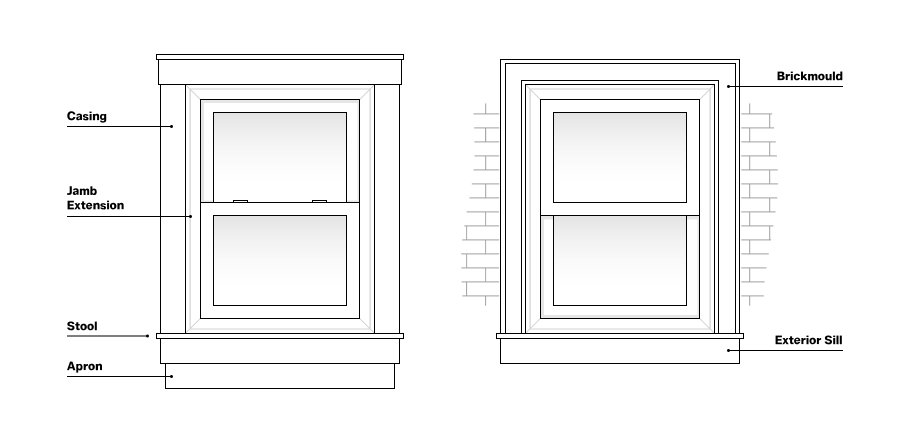
Different parts have different names, and contractors quote them separately, so it helps to know the vocabulary. Inside the room, the trim around a window is called casing; the shelf at the bottom is the stool, and the board under it is the apron. Outside, the equivalent is brickmould or exterior casing, with a sill at the bottom. Our guides to window casing and to the parts of a window explain each piece in more detail.
| Part | Where | What it does | Common materials |
| Casing | Inside, around the opening | Covers the gap between the window jamb and the drywall | Primed MDF, finger-jointed pine, hardwood |
| Stool | Inside, at the bottom (the shelf) | Finishes the bottom of the opening | Pine, MDF, hardwood |
| Apron | Inside, under the stool | Covers the joint beneath the stool | Same as the casing |
| Jamb extension | Inside the opening | Brings the window frame out to the wall surface | Vinyl, wood, MDF |
| Brickmould or exterior casing | Outside, around the frame | Finishes the outer edge and helps shed water at the joint to the wall | PVC, composite, vinyl, wood |
| Exterior sill | Outside, at the bottom | Sheds water away from the wall below | Wood, PVC, or part of the vinyl frame |
On a new or replacement vinyl window, much of this can be specified with the unit. Window Force offers exterior casings in multiple profiles, sizes, colours and corner configurations, lead-free uPVC brickmoulds in multiple sizes and finishes, and a range of jamb sizes so the frame meets the wall surface correctly. Interior casing, stool and apron are usually finish carpentry done on site. Brickmould matters for more than looks, because it sits at the joint where water has to be shed.
How Is Window Trim Priced: Per Linear Foot, Per Window or Per Square Foot?
Trim is sold and installed by length, so the unit that matters is the linear foot. Contractors then convert to a price per window, which is easier to quote, and trim is rarely priced per square foot of window. If a quote uses square feet, ask what area it is measuring and ask for the linear footage behind it.
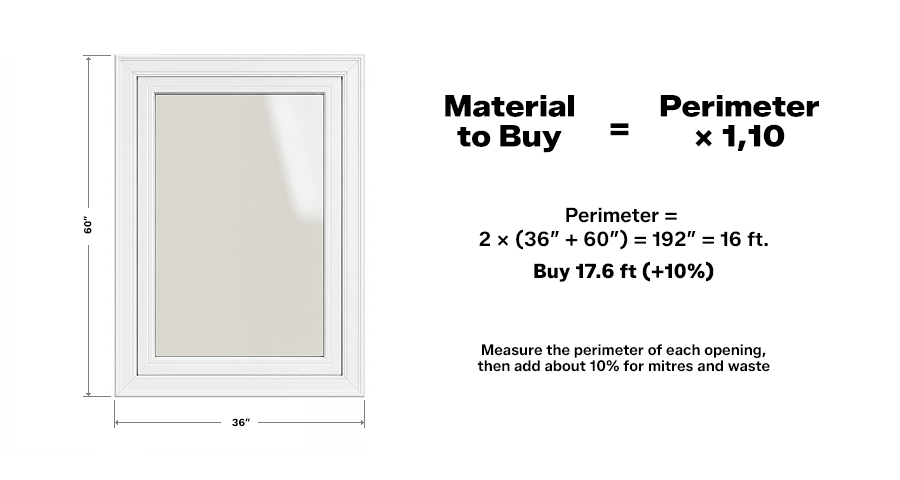
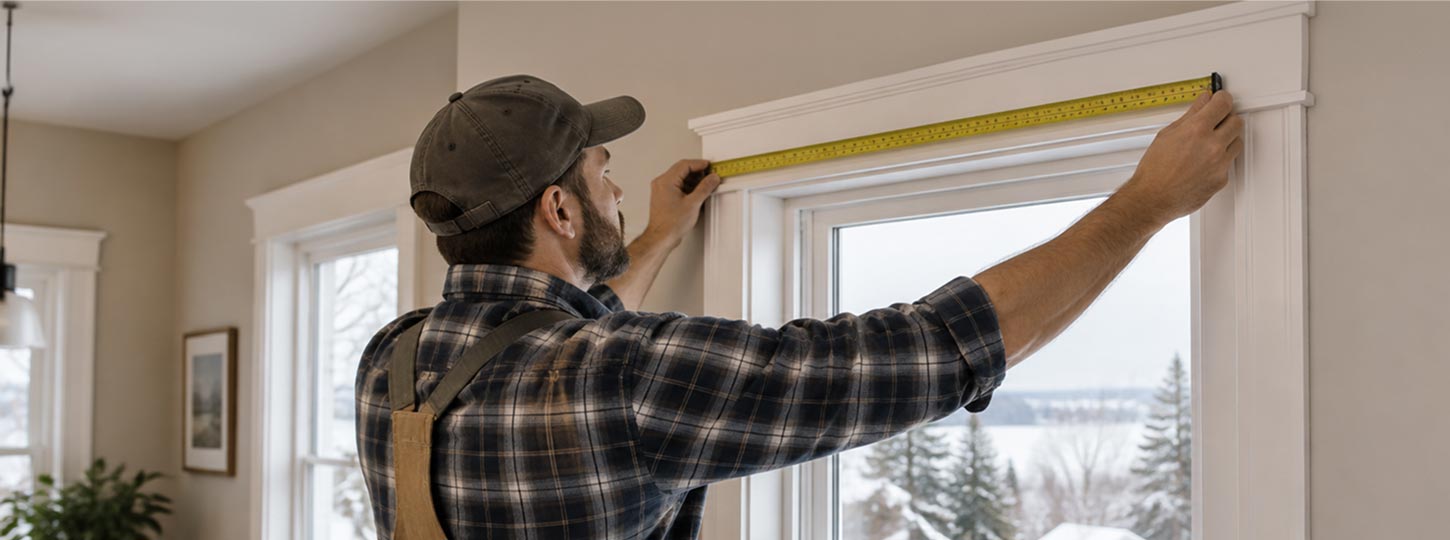
To estimate your own job, measure each opening and apply this formula: perimeter in feet = 2 x (width + height), then material to buy = perimeter x 1.10 to allow for mitres and offcuts. The table shows common sizes. The same perimeter applies to interior casing and to exterior trim, although the pieces and the prices differ.
| Window or door opening | Perimeter | Material to buy (+10%) |
| 24 x 36 in (2 x 3 ft) | 10.0 ft | 11.0 ft |
| 36 x 48 in (3 x 4 ft) | 14.0 ft | 15.4 ft |
| 36 x 60 in (3 x 5 ft) | 16.0 ft | 17.6 ft |
| 48 x 60 in (4 x 5 ft) | 18.0 ft | 19.8 ft |
| 60 x 60 in (5 x 5 ft) | 20.0 ft | 22.0 ft |
| 72 x 60 in picture window (6 x 5 ft) | 22.0 ft | 24.2 ft |
| 72 x 80 in patio door (6 ft x 6 ft 8 in) | 25.3 ft | 27.9 ft |
Measure the opening you are trimming rather than the window's catalogue size, because casing follows the rough opening and jamb extension, not the glass. Our measuring guide and the explainer on the rough opening show where the measurement should be taken.
How much trim does a 2,000 sq ft house need?
House size does not decide the answer; the number of windows and doors does. As an illustration, a house with 15 windows averaging 16 feet of perimeter has 240 feet of opening per side, which is about 264 feet of material to buy after a 10% allowance, for each side you trim. At the ranges in this guide, that is roughly $1,200 to $4,500 for the interior and $2,250 to $8,700 for the exterior on a ground-floor basis. Count your own windows, include patio doors, and use the size table above to get a better number than any house-size rule of thumb.
What Drives Window Trim Renovation Cost?
Five things move the price: labour time, material, access and height, the condition of the opening, and the profile and finish. The build-up below shows how the ranges in this guide were calculated.
| Component | Interior casing | Exterior trim (ground floor) | Basis |
| Material | $34 to $54 | $40 to $120 | Canadian retail listings for interior casing (about $1.94 to $3.08 per linear foot, 17.6 ft to buy); a published Canadian range for exterior brickmould |
| Supplies | $10 to $25 | $25 to $75 | Nails, filler, caulk, primer touch-up; flashing tape and sealant outside. Our assumption |
| Labour hours | 0.75 to 2.0 h | 1.5 to 3.5 h | Hours per window published by three cost guides |
| Billed rate | $60 to $110 per hour | $60 to $110 per hour | Published billing ranges in Canadian and US cost guides |
| Labour | $45 to $220 | $90 to $385 | Hours multiplied by billed rate |
| Total, rounded outward to the nearest $10 | $80 to $300 | $150 to $580 | Sum of the lines above |
Labour makes up about 51% to 74% of the interior estimate and 58% to 66% of the exterior estimate. In the lowest interior case, where an efficient carpenter fits plain stock casing, labour is only about half the job. Material and supplies make up about a quarter to a half of the interior estimate and about a third to two-fifths of the exterior one.
Labour: why a carpenter's wage is not the rate on your quote
Job Bank, the federal government's labour market service, reports a national median wage of $32.12 an hour for carpenters, updated November 2025 (national data, Ontario regions). That is what an employee is paid. A contractor's billed rate also has to cover payroll taxes and benefits, liability insurance and workers' compensation coverage, tools, a truck, estimating time, overhead and profit. Published cost guides put contractor billing at roughly $55 to $110 an hour, and the build-up above uses $60 to $110. Interior hours come from three guides: about 45 to 90 minutes per window in one, 1.1 to 1.4 hours in another and 1 to 2 hours in a third. Exterior hours are less well documented: a US guide gives 2 to 4 hours per window, and a Canadian guide's $110 to $260 exterior labour figure implies roughly 1 to 4 hours at the billing rates above. The build-up uses 1.5 to 3.5 hours.
Materials: usually the smaller line
For interior casing, the moulding is usually the smaller part of the bill. Canadian retail listings we reviewed, all from Kent, an Atlantic Canada building supplies retailer, showed primed finger-jointed pine casing (2-1/4 in) at $13.56 for a 7-foot piece, about $1.94 per linear foot, and primed MDF casing (5/8 x 2-1/2 in) at $16.19 on sale or $21.59 regular for 7 feet, about $2.31 to $3.08 per linear foot. Profile matters more than material: a 3-inch decorative MDF casing from the same retailer was $55.72 for a 14-foot-3-inch length, about $3.91 per linear foot. For a window needing 17.6 feet of casing, plain profiles come to about $34 to $54 of moulding. Listing prices vary by store and date, and contractors buying in volume may pay less per foot than retail piece prices, so check current prices before you order. Exterior trim costs more because it has to resist water: PVC and composite are priced by profile and thickness, and published material-only figures in US guides range from under $1 to over $10 per linear foot, in US dollars.
Access and height
Ground-floor windows are the cheapest to trim. One Canadian guide adds about 25% to 40% to exterior labour for second-storey work and notes that third storeys usually need scaffolding, with rentals of $200 to $600 a week shared across the project. Interior access matters too: a window behind a built-in or over a tub takes longer to work around.
Condition of the opening
This is the biggest unknown. Old casing is often painted or caulked to the drywall, and pulling it can tear the paper face. Behind exterior trim there may be failed flashing, soft wood or water-stained sheathing. None of this can be priced from the street, which is why serious quotes include a written allowance, covered in the hidden costs section below.
Profile and finish
Flat stock casing is the cheapest to buy and install. Built-up craftsman assemblies, picture-frame casing and custom-milled heritage profiles add pieces, mitres and lead time. Finish is a separate line: a Canadian guide puts brush-applied paint on new trim at about $20 to $50 per window, which we apply to each side painted, and vinyl trim does not need painting at all.
Interior vs Exterior Window Trim: Why the Exterior Costs More
Interior and exterior trim are different jobs with different risks, which is why quotes for "window trim" can differ by hundreds of dollars on the same house. Always ask whether a number covers one side or both.
| Interior casing | Exterior trim | |
| Main job | Finishes the opening and hides the gap to the drywall | Finishes the outer edge and is part of how the wall sheds water |
| Typical time per window | About 0.75 to 2 hours for a carpenter | About 1.5 to 3.5 hours, more on upper floors |
| What goes wrong | Torn drywall paper, out-of-square openings, visible mitre gaps | Water behind the trim, rot, missing head flashing, failed sealant |
| Cost range per window | $80 to $300 | $150 to $580 |
| DIY suitability | Good with a mitre saw and a brad nailer | Limited: ladders, flashing and lead-paint risk in older homes |
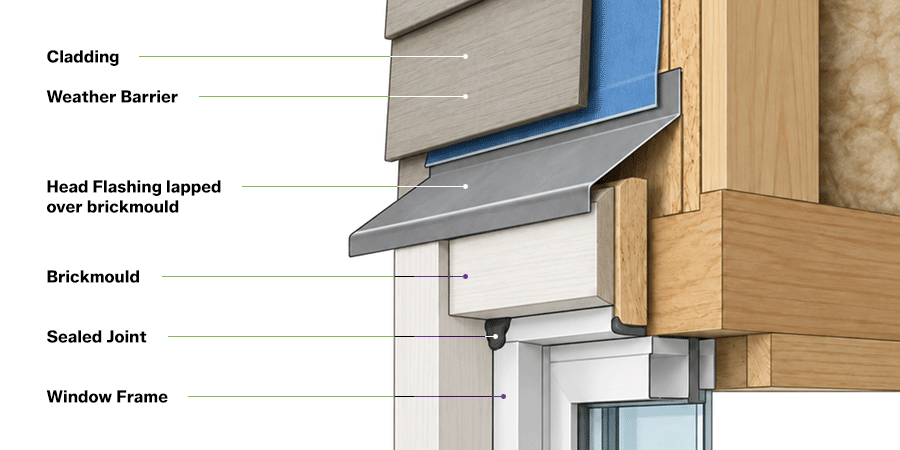
Exterior trim is not only decorative. It sits at the joint where the window frame meets the wall, and that joint is where water gets in if the flashing, the sealant or the trim itself fails. One reason replaced exterior trim can rot again is that the flashing and sealing behind it were not corrected at the same time. If you are also dealing with leaks or failing caulk, our guides to window leaks and window caulking cover the repairs that belong in the same job.
Engineer Sergey Essipov, with 20 years of experience in window manufacturing, explains:
When an exterior trim number looks low, look for what is missing around it: head flashing, support under the sill and a sealed joint to the cladding. The trim is the part you see; the flashing behind it is the part that keeps water out of the wall. We build casings and brickmoulds to match the unit, and vinyl does not rot, but trim is not a flashing system. It only does its job over a dry, flashed opening, so ask who is responsible for that before you compare prices.
Which Trim Material Costs What?
Material choice changes both the price and the maintenance. The installed ranges below come from a Canadian cost guide published in 2026 (named in the methodology section). Our own build-up gives a wider interior range, about $5 to $19 per linear foot, so treat these as a cross-check, not a quote.
| Material | Best for | Published installed range, per linear foot | Notes |
| Vinyl trim | Budget exterior | $5 to $10 | Does not rot and needs no painting; fewer profiles available |
| Aluminum cladding over existing wood | Exterior, sound wood underneath | $8 to $15 | Wraps old wood; it also hides rot, so probe the wood first |
| Primed MDF or finger-jointed pine | Interior casing | $10 to $20 | Retail MDF casing is usually sold for interior use only |
| PVC or composite | Exterior, long-term value | $15 to $25 | Does not absorb water; profile and thickness drive the price |
| Hardwood (oak, maple) | High-end interior, stained | $20 to $35 | Needs on-site finishing; not an exterior material |
| Custom-milled softwood | Heritage profiles | $25 to $40 or more | Longer lead time and a premium over stock profiles |
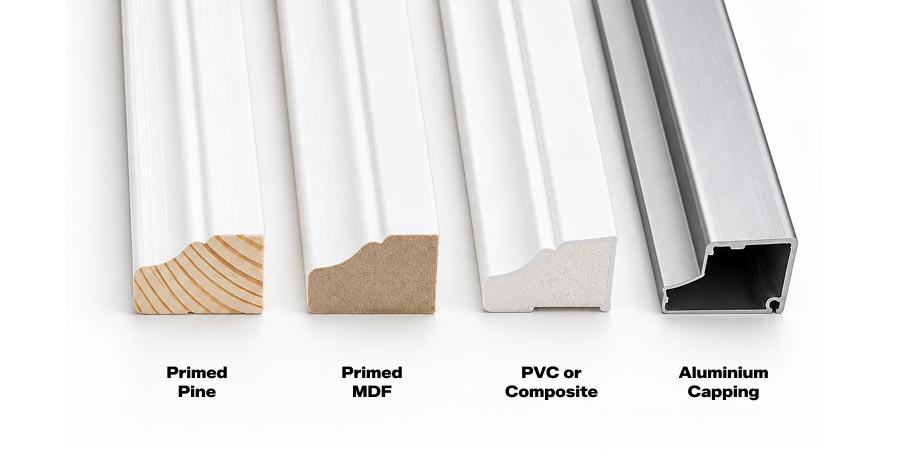
Three practical points. Use MDF only inside, where it stays dry. Choose PVC, composite or vinyl for exterior trim on low elevations, sprinkler splash and shaded walls, where wood is most at risk. And if you are considering aluminum cladding over old wood, probe the wood first, because capping can hide decay for years.
Does Location Change the Cost of Window Trim?
Yes, mainly through labour. The table uses Job Bank median carpenter wages (employee wages, not billed rates) and compares each with the Canadian median of $32.12. The percentages are a guide to relative labour cost, not a price multiplier, because billed rates also reflect overhead, demand and season.
| Region | Median carpenter wage | Versus the Canada median |
| Canada | $32.12 | Baseline |
| Quebec | $36.84 | +15% |
| Toronto region (ON) | $36.00 | +12% |
| Alberta | $34.00 | +6% |
| Kitchener-Waterloo-Barrie region (ON) | $32.50 | +1% |
| Ontario | $32.00 | About the same |
| British Columbia | $32.00 | About the same |
| London region (ON) | $32.00 | About the same |
| Saskatchewan | $30.00 | -7% |
| Hamilton-Niagara region (ON) | $30.00 | -7% |
| Ottawa region (ON) | $28.00 | -13% |
| Manitoba | $27.00 | -16% |
| Nova Scotia | $25.00 | -22% |
| New Brunswick | $24.00 | -25% |
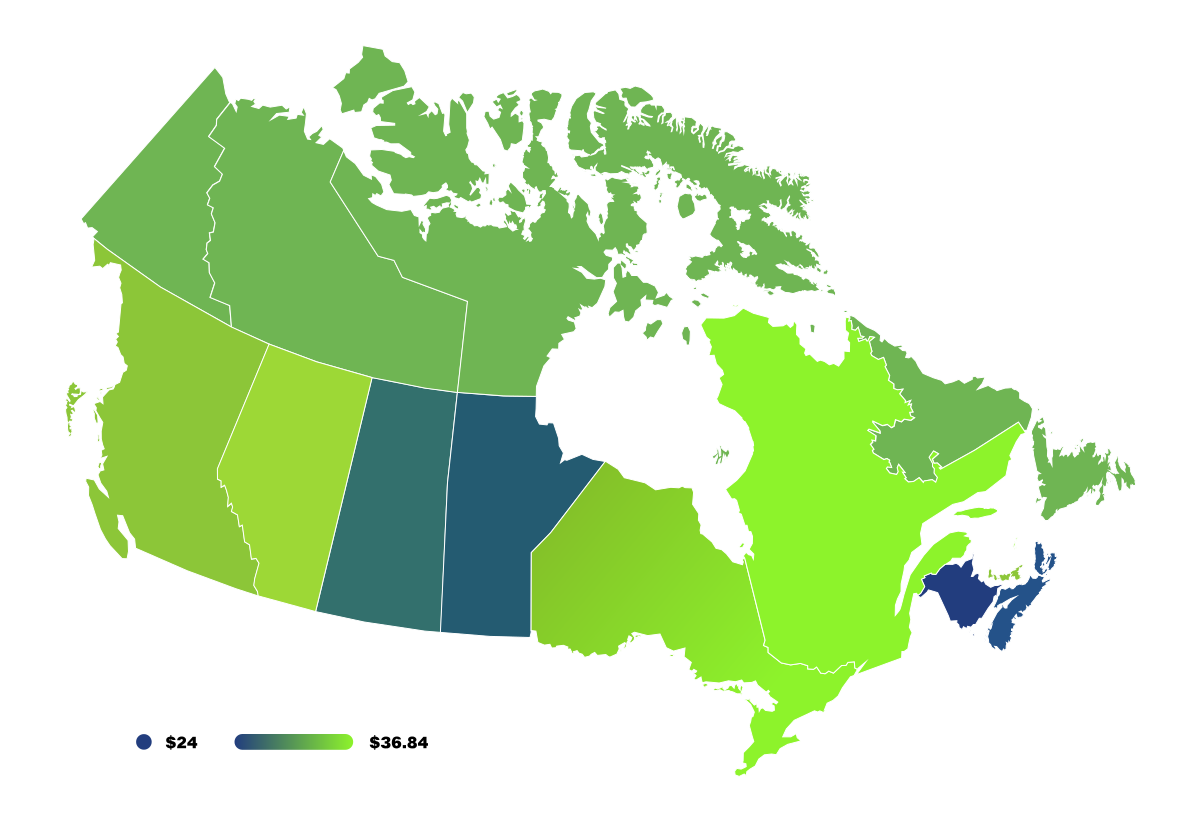
Prices charged by contractors are moving unevenly too. Statistics Canada's Residential Renovation Price Index rose 2.3% year over year in the second quarter of 2026 across 15 metropolitan areas, with Quebec City up 7.1%, Victoria up 5.3%, Halifax up 4.8%, Toronto up 1.0% and Vancouver essentially unchanged, as reported by Canadian Mortgage Trends. The index covers the prices contractors charge for materials, labour, equipment, overhead and profit, so it is a better trend signal than a wage table alone.
If you are pricing windows as well as trim, our city guides break down replacement costs for Toronto, Ottawa, Vancouver, Calgary, Edmonton, Montreal, Winnipeg, Saskatoon, Halifax and Moncton. More cost guides are in our window costs and pricing category.
What Do Rot, Lead Paint and Drywall Damage Add?
The hidden costs decide whether a trim job lands inside the ranges above. The add-ons below come from one Canadian cost guide unless noted, and none can be confirmed until the old trim is off.
| Add-on | Published Canadian planning range | Why it appears |
| Replacing deteriorated flashing behind exterior trim | $50 to $120 per window | New trim over failed flashing rots as fast as the old trim |
| Drywall patching after removing interior casing | $50 to $150 per window | Casing is often painted or caulked to the wall, and paper tears |
| Scaffold rental for third-storey work | $200 to $600 per week, shared across the project | Ladders stop being safe or practical above the second storey |
| Custom-milled profiles for heritage homes | 50% to 100% premium over stock, 3 to 6 week lead time | Matching a discontinued profile needs a millwork shop |
| Rot repair, sill work, wall repairs | Priced after the old trim is off | No honest contractor can price decay they cannot see; ask for an allowance |
| Lead-safe containment, pre-1990 homes | Ask each contractor how they price it | Containment, cleanup and disposal take time and materials |
Probe the wood before you accept a quote
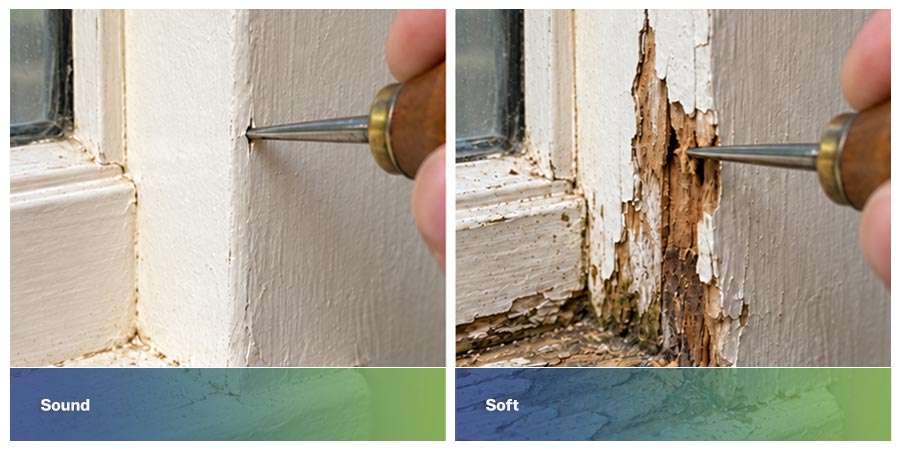
Rot hides under good paint. Before you collect quotes, press an awl or a flat screwdriver into the lower corners, the underside of the sill and the bottom of each vertical piece. Sound wood resists and lifts in long splinters; decayed wood sinks in and breaks off in short crumbs. If it is soft, you have found a repair line for the quote instead of a surprise on day two. If the soft wood reaches the frame or jamb, the question changes from trim to window, as covered below. Moisture problems also show up as black mould on the frame and sill.
Lead paint in older homes
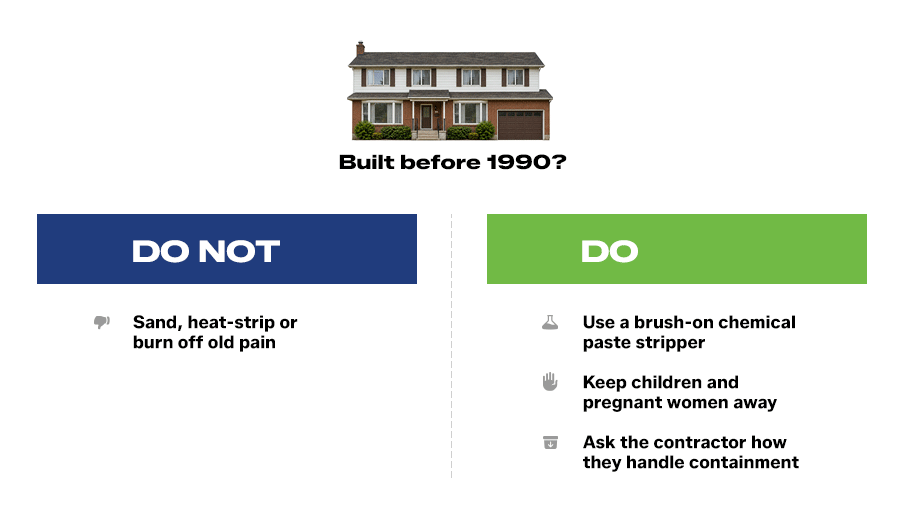
Health Canada advises that a home built before 1960 probably contains lead-based paint, and that the exterior paint on homes built from 1960 to 1990 may contain it too (Health Canada). Its guidance for removal is specific: do not use sanders, heat guns or blowlamps, which create toxic dust and fumes; use a brush-on chemical paint stripper; and keep children and pregnant women away from the work area. Do not dry-sand or heat-strip old trim yourself, and ask any contractor how they handle containment, cleanup and disposal in a house built before 1990, because that work takes time and belongs in a careful quote.
Can You Replace Window Trim Yourself?
Interior casing is the most approachable part. It needs a mitre saw, a brad nailer or a hammer and nail set, a pry bar, a tape measure, caulk and filler. A first window may take one to two hours, and later ones go faster. Exterior trim is a different level of risk.
How to replace interior casing
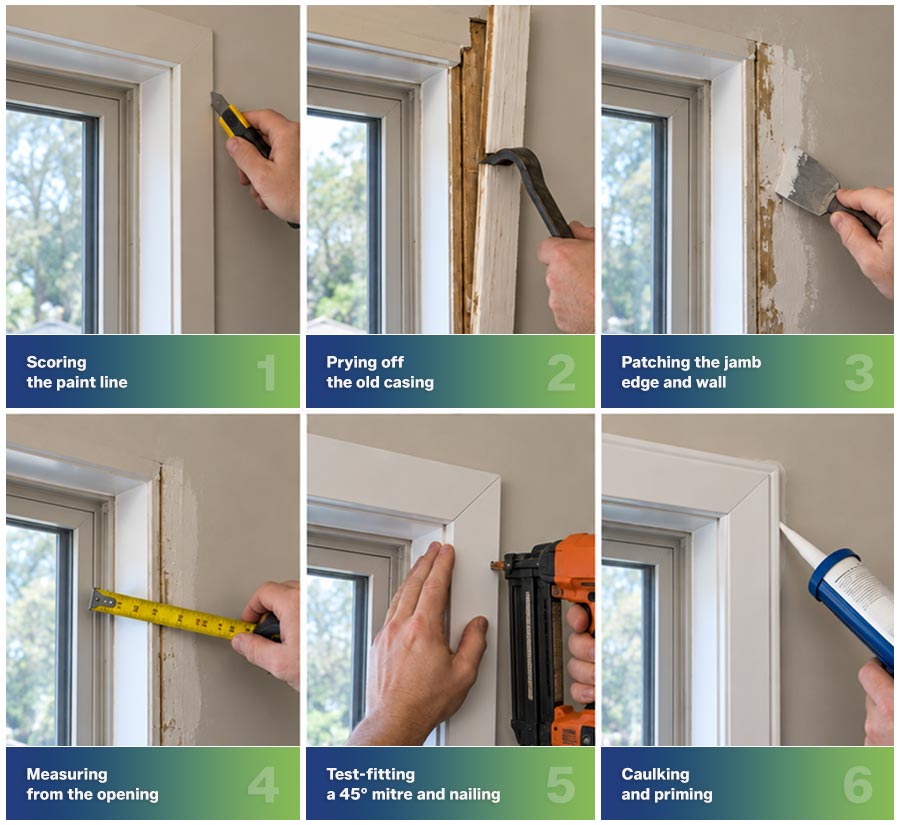
Material, caulk, filler, primer and fasteners come to about $45 to $80 per window based on the retail listings above. Against the $45 to $220 labour line in the build-up, a confident DIYer saves most of that labour on each window.
When to hire a professional
Hire for exterior trim, for any work above the first storey, for homes built before 1990 where old paint may contain lead, and for any opening where probing finds soft wood. Ladder falls are a real injury risk, so if you are not comfortable working at height, that alone is a reason to hire. A licensed carpenter, a painter and, for brick or stone openings, a mason each have a role. Choosing the best window installer explains what to check: references, a written scope, liability insurance and workers' compensation coverage.
When Should You Replace the Window Instead of the Trim?
Trim is the finish on the opening. If the window inside it is failing, new trim is money spent twice, because the trim comes off again when the window is replaced. Use the table to decide which job you actually have.
| What you see | Trim job? | Window job? |
| Peeling paint, soft casing, gaps at the mitres, caulk failing at the wall | Yes | No, if the sash and glass are sound |
| Sash that sticks, drafts at a closed window or a lock that no longer pulls tight | After the window decision | Likely: see our guide to why windows are drafty |
| Fog or haze between the panes | After the window decision | Yes: the sealed glass unit has failed |
| Soft wood that reaches the jamb or frame | Not on its own | Yes, with the rot repaired first |
| Windows that are 20 or more years old and the trim is failing too | Wait | Plan the windows first, then specify trim with them |
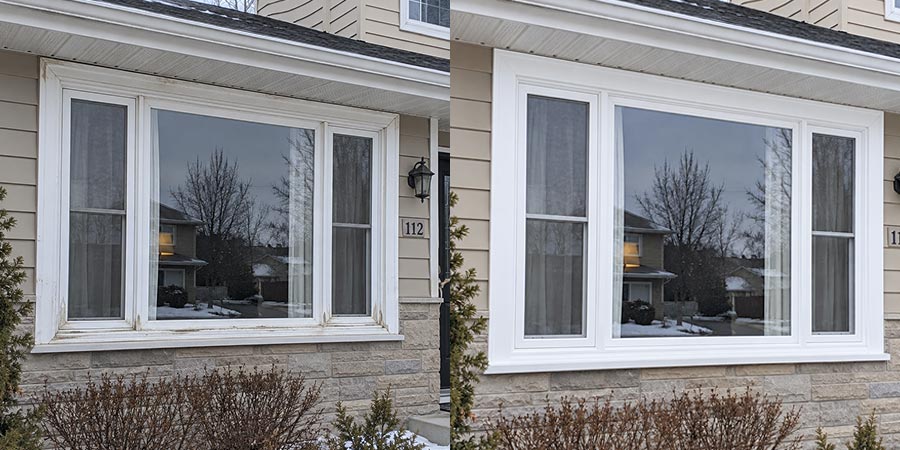
The most reliable guide to age is the sealed glass unit and the weather seals, not the trim. Our guides on the lifespan of vinyl windows and five signs your windows need replacing explain what to look for, our guide to drafty windows covers the sash and seal side, and full-frame replacement explains why a full-frame job lets you inspect and repair the opening and specify trim at the same time.
What trim comes with a new window?
On a replacement, trim is one of the items that makes quotes hard to compare. Ask whether the price includes interior casing, exterior casing or brickmould, jamb extensions, flashing and sealant, and who supplies and paints each. Window Force builds custom vinyl windows to the exact opening, with options for exterior casings, brickmoulds and jamb sizes, so these components can be specified on the order. Installation labour is the responsibility of the installing dealer or contractor, which is why the written scope matters. Why window quotes vary so much explains the line items behind the spread, and our comparison of local manufacturers and big-box programs covers how custom manufacturing and installation scope change the price.
Engineer Sergey Essipov, with 20 years of experience in window manufacturing, notes: "Settle the window question first and the trim second. If the sash is failing, the glass has fogged or the frame has taken water, new trim around that window comes off again when the window goes in. On a replacement, the casing, brickmould and jamb extension are chosen against the frame, so they are cheapest and fit best when they are specified together and measured from the same opening".
Our windows come in the Ultraslim Series, with a slim 2-7/8 inch visible sightline suited to new construction and larger openings, and the Classic Series, with a 3-1/4 inch frame depth suited to replacing windows in existing openings. Both are built from lead-free uPVC with UV stabilizers in multi-chamber profiles with fusion-welded corners. Rebate programs are written around windows and doors that meet efficiency criteria, so trim on its own generally is not what they fund; our rebates guide covers what applies to a replacement project.
How Can You Lower Window Trim Cost Without Cutting Corners?
- Find the rot before the quote. Probing first turns repairs into a named allowance instead of a change order.
- Bundle the work. One setup, one cleanup and one paint session cost less per window. Ask for the bundled price and the itemized price.
- Do the interior yourself if you are comfortable with a mitre saw, and hire for the exterior.
- Match material to location. Use primed MDF or finger-jointed pine inside and PVC, composite or vinyl outside, and do not pay exterior prices for interior trim.
- Standardize the profile so every window uses the same stock pieces and offcuts get reused.
- Pair trim with window replacement when the windows are near the end of their life, so the opening is exposed and flashed once.
- Paint it yourself if the carpenter's price includes finish coats and you are comfortable with a brush.
Compare scope, not totals. Itemized quotes show which low bid leaves out flashing, paint or disposal.
What Should an Itemized Window Trim Quote Include?
A quote you can compare names each of the lines below. If yours does not, ask for the missing ones in writing before you sign.
- Interior, exterior or both, with the number of windows and doors.
- Linear footage, and the material named by profile and type (primed MDF, finger-jointed pine, PVC, composite, vinyl), not just "trim".
- Whether stools and aprons are included or priced separately.
- Flashing, sealant and caulking at the head and sides on any exterior work.
- A repair allowance in dollars for rot or drywall damage, and what happens when it is exceeded.
- Paint: primed only, one coat or two, and who supplies it.
- How lead-safe work is handled on homes built before 1990.
- Disposal, cleanup and drywall patching.
- Taxes (GST/HST, and PST where applicable), proof of liability insurance and workers' compensation coverage, and the contractor's written warranty on workmanship.
- A payment schedule and start and finish dates.
How Do You Modernize Window Trim?
Updating the profile changes the look of a room more than almost any other trim decision, and it costs mainly carpentry time. The options below run from the lowest relative cost to the highest, based on the number of pieces and the skill involved, not on published prices. For design ideas, see our guides to window trim ideas, black window frames and slim-frame windows.
| Style | Relative cost | What changes |
| Flat, slim casing (modern) | Low to moderate | Simple stock profile; mitres still need to be accurate on out-of-square openings |
| Colonial or ranch casing (standard) | Lowest | Widely stocked, fastest to install |
| Craftsman with head cap and thicker stool | Moderate to high | More pieces per window and more carpentry time |
| Picture-frame casing (four mitred sides, no stool) | Moderate | Clean modern look; needs a straight jamb extension |
| Drywall returns, no casing | Moderate to high | Needs drywall finishing skill and an accurate frame |
| Heritage or custom-milled profile | Highest | Millwork shop, longer lead time, skilled carpenter |
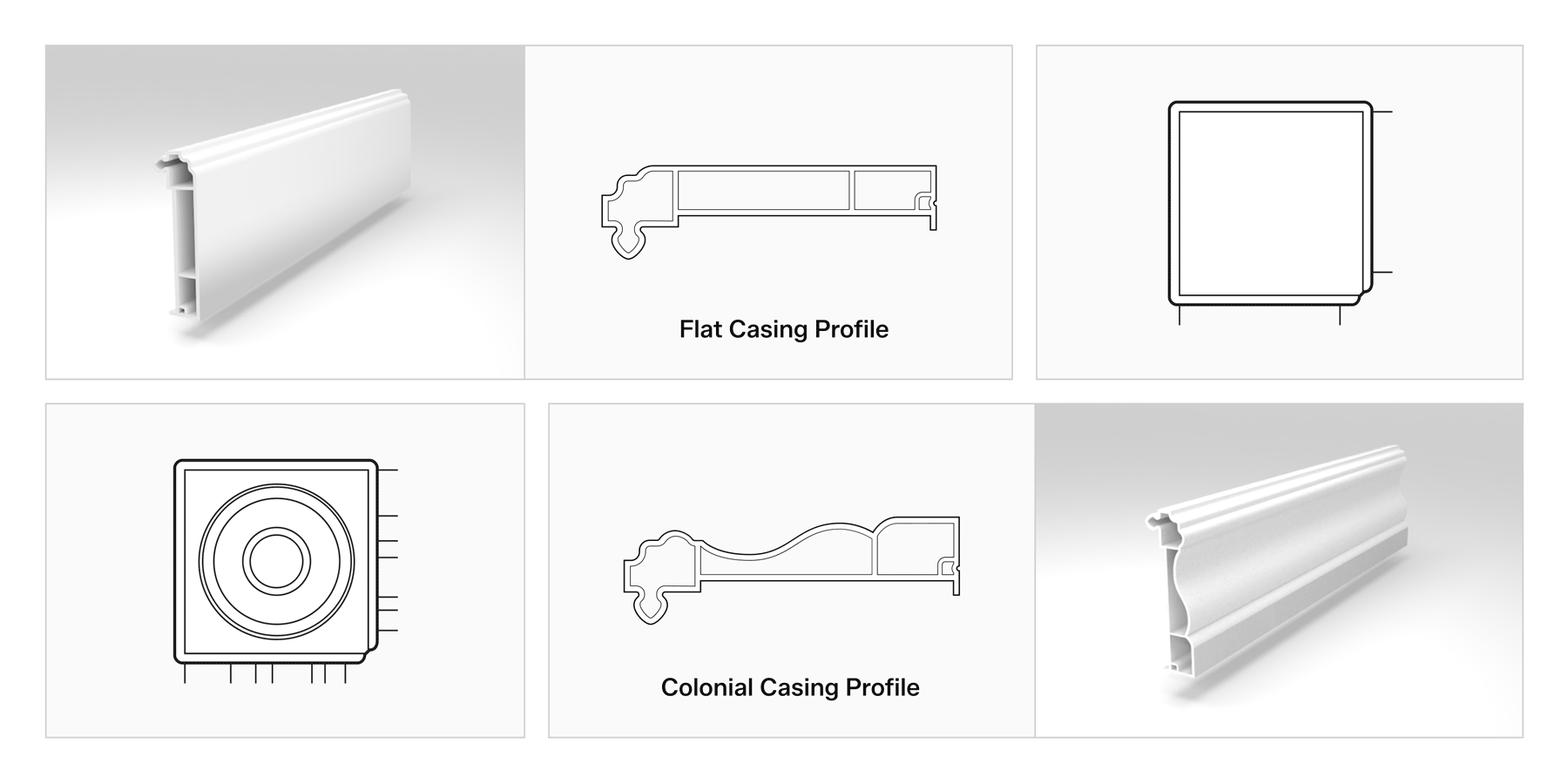
Decide on the profile before you order material, and settle the window question first, because dark or slim-framed windows change which casing looks right. The colour finishes and the types of windows you choose affect the whole opening, not just the trim.
Is Redoing Window Trim Worth the Money?
It depends on whether the problem is cosmetic or a condition. Failing exterior trim can signal water entry and often shows up in a home inspection, so fixing it protects the wall as well as the appearance. Interior casing is mostly cosmetic: buyers notice it, but it rarely decides a sale. We do not quote a return-on-investment percentage, because the figures published for trim vary widely and cite no source. If resale is the goal, read what new windows do for resale value, and spend on condition problems before style.
How We Built These Numbers
Window Force is a manufacturer, not a trim contractor, and these are planning ranges, not quotes or Window Force price lists. They were built as follows, and you can check each step.
- Geometry. Perimeter is 2 x (width + height) for a 36 by 60 inch window (16 feet), plus a 10% allowance for mitres and waste. The allowance is our assumption.
- Materials. Interior casing at about $1.94 to $3.08 per linear foot from Kent listings for 7-foot primed pine and MDF pieces (Kent is an Atlantic Canada retailer, and its prices may differ from other stores and from trade pricing). Exterior material of $40 to $120 per window from a published Canadian range. Listing dates vary.
- Supplies and paint. Supplies of $10 to $25 inside and $25 to $75 outside are our assumptions. The published paint figure of $20 to $50 is quoted per window; we apply it to each side painted, which is also our assumption.
- Labour hours. Inside, 0.75 to 2.0 hours, covering the ranges published by RenoCalc (April 2026), CountBricks (February 2026) and The Handy Hearth (August 2026); the last two are US sites. Outside, 1.5 to 3.5 hours: The Handy Hearth gives 2 to 4 hours, and RenoCalc's $110 to $260 exterior labour figure implies roughly 1 to 4 hours at $60 to $110 an hour. The outside range is our judgment between those.
- Billed rate. $60 to $110 per hour, inside the ranges published by the same three guides, and compared against Job Bank carpenter wage data updated November 2025.
- Regional and trend context. Job Bank wages by province and region; Statistics Canada's Residential Renovation Price Index for the second quarter of 2026, as reported by Canadian Mortgage Trends; Statistics Canada's 2018 to 2024 renovation price analysis.
- Cross-checks. HomeAdvisor (June 2026) and Homewyse (May 2026) publish US figures in US dollars, which we did not convert. Home Network's Canadian figure of $2 to $3 per linear foot refers to mouldings and comes from an article first published in 2017, so we did not use it.
- Rounding. Totals are rounded outward to the nearest $10.
These ranges cannot know your house, your contractor, your market or what is behind your old trim. Where a published source is the only support for a number, we have said so. Get at least three itemized quotes, and treat any figure here as a way to ask better questions.
Conclusion: Plan the Trim With the Window, Not After It
Window trim renovation is mostly a labour and condition question. A typical window costs about $80 to $300 to re-case inside and $150 to $580 outside, and the final bill depends on what the old trim was hiding. Measure your openings, probe the wood, get itemized quotes, and decide the window question before you spend on trim.
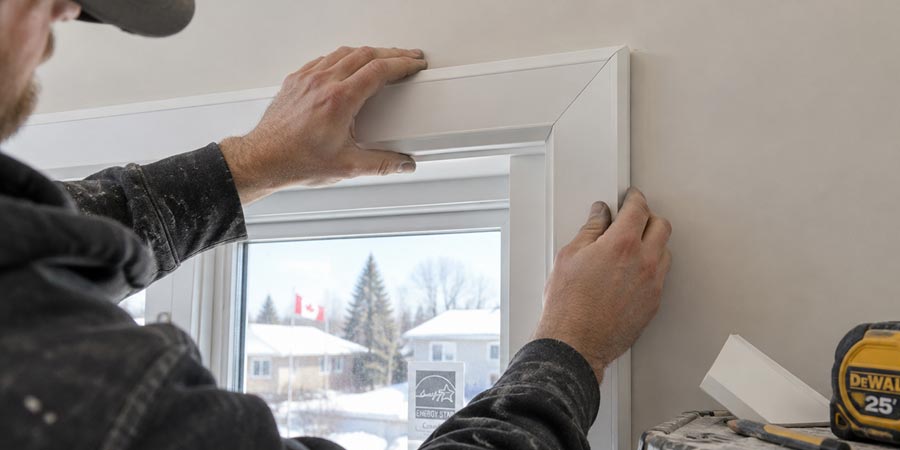
Every Window Force window is built to order from lead-free uPVC with UV stabilizers in multi-chamber profiles, with fusion-welded corners and a dual-seal, metal-free warm-edge spacer. Our windows are CSA certified, Window Force is an ENERGY STAR Partner whose windows are engineered to meet ENERGY STAR requirements, and the 25-year transferable warranty applies to the frame, sash and hardware. Planning a replacement and want the casing, brickmould and jamb extension specified with the windows? Send a request through our website, and an authorized Window Force dealer will measure the openings, confirm which trim components come with the order and which the installer provides, and give you the production timeline for custom vinyl windows built to your openings.
Frequently Asked Questions
What is the average cost to replace window trim?
Plan on roughly $80 to $300 per window for interior casing and $150 to $580 per window for exterior trim on a typical 36 by 60 inch window, so about $230 to $880 for both sides, before painting, rot repair or lead-safe work. Per linear foot that is about $5 to $19 inside and $9 to $36 outside. These are planning ranges, not quotes.
Is it expensive to redo trim?
Trim is one of the more affordable ways to refresh a home, but it is labour-heavy, so a whole-house job adds up: ten windows with both sides done lands between about $2,300 and $8,800 in these planning ranges. The expensive surprises are hidden ones, such as rot, flashing and drywall damage, so probe the wood and ask for a written repair allowance before work starts.
How much is trim for a 2000 sq ft house?
Trim is priced by the linear foot, not by house size, so the window count decides. A house with 15 windows averaging 16 feet of perimeter needs about 240 feet of casing per side, or roughly 264 feet to buy with a 10% allowance. At the planning ranges in this guide, 15 windows cost about $1,200 to $4,500 inside and $2,250 to $8,700 outside.
How much does window trim cost per square foot?
Window trim is not priced per square foot of window. It is priced per linear foot of moulding or per window. To convert, measure the perimeter of each opening in feet (2 x width + 2 x height), add about 10% for waste, and multiply by the installed price per linear foot.
How much does interior window trim cost?
Interior casing runs roughly $80 to $300 per window, or about $5 to $19 per linear foot, depending on the profile, how accurate the mitres need to be, whether the drywall tears when the old casing comes off, and who paints it. Labour is the largest part of the price in most cases.
How much does exterior window trim cost?
Exterior trim runs roughly $150 to $580 per window on the ground floor, or about $9 to $36 per linear foot. Upper floors add about 25% to 40% to exterior labour for ladders or staging, and rot, failed flashing or heritage profiles add more. Exterior trim is part of how the wall sheds water, so it is not a place to save by skipping flashing.
How to modernize window trim?
Switch to a flat, slim casing, use picture-frame casing without a stool, or return the drywall into the opening for a trimless look. Match or contrast the paint with the wall on purpose, and pair dark window frames with simple flat casing. Changing the profile mostly adds carpentry time, so decide before you order material.
Is it difficult to replace window trim?
Interior casing is a manageable DIY job if you can cut accurate 45 degree mitres and fill and caulk neatly; allow one to two hours per window at first. Exterior trim is harder because it involves ladders, flashing and sealing details that keep water out of the wall, and lead paint is a risk in older homes. Many homeowners do the interior themselves and hire for the exterior.
What is the trim around a window called?
Inside the room, the trim is called casing, with a stool (the shelf) and an apron beneath it. Outside, it is usually brickmould or exterior casing, with a sill at the bottom. Together with the jamb, these finish the opening and help shed water at the joint to the wall.
Is there a window trim renovation cost calculator?
The arithmetic is simple enough to do yourself. Step 1: measure each opening's perimeter in feet. Step 2: add 10% for waste. Step 3: multiply by the installed price per linear foot ($5 to $19 inside, $9 to $36 outside on a ground floor). Step 4: add paint, repairs and upper-floor access. The ranges in this guide use the same formula.
Do I need a permit to replace window trim in Canada?
Like-for-like finish trim generally does not need a building permit, but rules vary by municipality. Heritage districts and condo or strata bylaws can require approval, and structural repairs found behind the trim may trigger permits. Check with your municipality, heritage office or condo board before you start.
Can I paint old trim instead of replacing it?
If the trim is sound, with no soft spots, splits or separation from the wall, repainting costs far less than replacing it. In homes built before 1990, old paint may contain lead, so do not dry-sand or use heat guns. Health Canada recommends a brush-on chemical paint stripper and keeping children and pregnant women away from the work area.
Learn more about window prices in your city: