

A single hung window is usually the least expensive operable window a Canadian homeowner can buy, yet published prices for the same style range from a few hundred dollars to well over a thousand per opening. That spread is explained by size, glass, finish and installation scope, not by the style itself. This guide shows where the savings actually come from, what pushes the price back up, and which rooms turn the cheaper style into a false economy.
Most single hung orders begin with a list of rough opening measurements and a project budget. Since 2007, Window Force has built custom vinyl windows at its 80,000 sq ft Ontario plant. Each single hung unit is built to order, with the balance springs weight-calibrated to the lower sash at manufacture. That calibration is one of the production steps that helps distinguish savings that come from the simpler single hung design from cost reductions that could compromise product performance.
Key Takeaways
- Published Canadian sources place single hung windows at the bottom of the price range for operable styles, with figures from roughly $230 per unit for basic products to about $1,200 installed for higher-specification units.
- The savings come mainly from reduced hardware requirements: a fixed upper sash eliminates its balance system, tilt latches and pivot bars. The frame, glass unit and spacer can be specified to the same quality standards as those in a comparable double hung model.
- Size, bedroom egress rules, glass options, exterior colour and installation scope are what push a single hung quote back up.
- Two single hung quotes can be compared more accurately when they specify the same glass package, spacer type, installation method, finishing work and warranty coverage.
- Regional labour and construction cost trends differ sharply: Statistics Canada reported residential construction costs up 9.2% year over year in Québec City in Q2 2026, against a 0.5% decline in Calgary.
- Single hung is a sound budget choice for ground floors, basements and bathrooms, but may be less practical on upper floors where cleaning the fixed exterior sash requires outside access, a ladder or professional service.
Quick Answer: The Typical Market Range
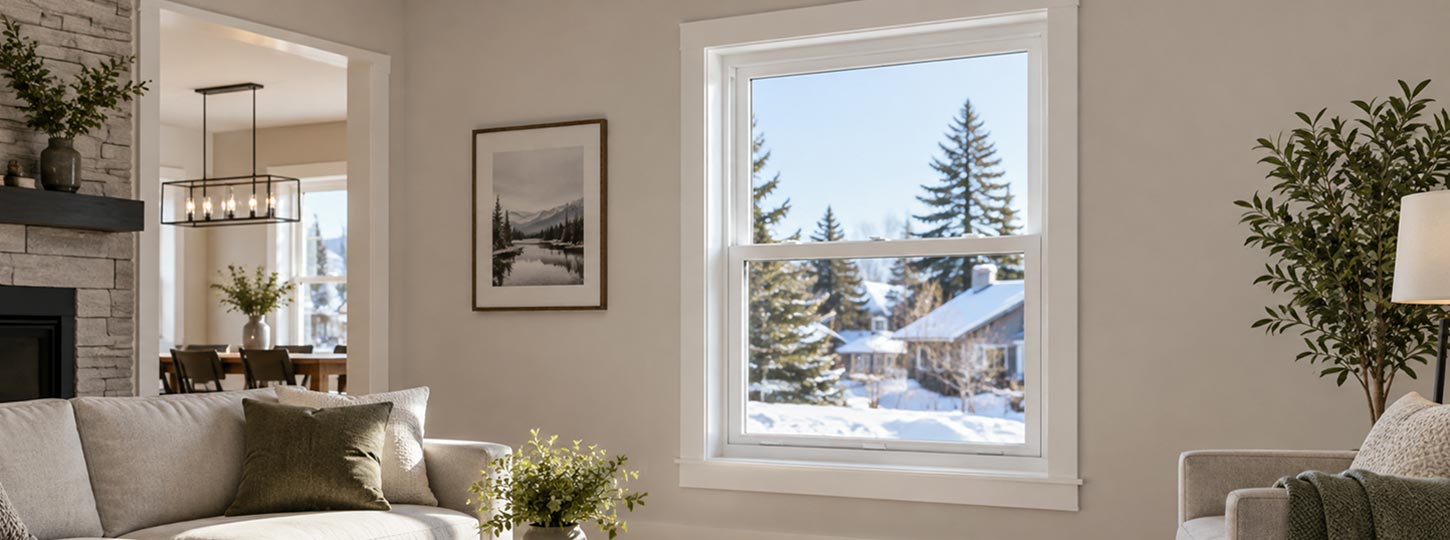
A single hung window has a fixed upper sash and a lower sash that slides up, and in most modern vinyl units the lower sash also tilts inward for cleaning. Homeowners researching single hung window price in Canada will find that published figures are scattered, mainly because each source measures something slightly different: some quote the unit alone, some quote an installed opening, and some do not say which.
Published Canadian price references vary widely because some sources quote the window unit alone, while others include installation or upgraded product specifications. These figures provide market benchmarks, but they are not directly comparable because the sources use different pricing methods and product specifications.
Lower figures generally reflect basic single hung units, while higher estimates may account for larger dimensions, upgraded glass packages, finishes or additional features. Because installation is not consistently included, these figures cannot show how window size and product upgrades affect the final installed cost. A single hung generally costs less than a comparable double hung with the same glass package and frame specifications because it requires fewer operating components. The actual savings depend on window dimensions, hardware, finish options and local installation costs, including labour rates and transportation. Installation quotes can therefore vary between regions, even for identical single hung window configurations.
Windows Near Me
Why Single Hung Costs Less
The price advantage of a single hung is real, but it comes from a short list of specific parts and production steps rather than from a cheaper frame or thinner glass. Knowing exactly what is removed makes it easier to judge whether a low quote reflects the style or a downgraded product.
One Operating Sash, One Balance System
In a double hung window, both sashes move, so each needs its own pair of balances, its own tilt latches and pivot bars, and a weatherstrip system that seals while the sash travels. In a single hung, the upper sash is fixed, so that entire set of moving hardware disappears. The window still has an operating lower sash with a calibrated balance system, a cam lock at the meeting rail and interlocking rails for the mid-point seal, but the component count drops noticeably.
| Component | Single hung | Double hung |
| Operating sashes | 1 (lower) | 2 (upper and lower) |
| Balance sets | 1 pair | 2 pairs |
| Tilt latches and pivot bars | Lower sash only | Both sashes |
| Weatherstrip on moving joints | Lower sash and meeting rail | Both sashes, meeting rail and head |
| Frame, glass unit and spacer | Same as double hung | Same as single hung |
The cost advantage of a fixed upper sash is worthwhile only if the frame remains square and stable throughout the window's service life. The lower sash depends on properly aligned jambs to slide smoothly and maintain an effective seal. Window Force single hung frames are extruded from lead-free uPVC with UV stabilizers and joined with fusion-welded corners, including the internal walls, so the jambs do not rack or soften on a sun-exposed elevation. For the homeowner, the result is a lower sash that keeps sliding evenly and sealing at the meeting rail years after installation, rather than one that starts to bind after a few hot summers.
Simpler Hardware and Fewer Factory Steps
Fewer moving parts also mean fewer machining operations, less assembly time and fewer adjustment checks before a unit leaves the line. Those savings can add up across a whole-house order of 15 to 20 openings, making the style a practical option for rental properties and new subdivisions.
Engineer Sergey Essipov, with 20 years of experience in window manufacturing, explains:
Every operable sash in a hung window needs a balance system matched to the weight of its glass. On a single hung, we calibrate only the lower sash, while the fixed upper section requires no additional operating hardware. This reduces manufacturing costs without requiring changes to the glass specification or frame quality.
What should not change is the frame and glass. Reducing the number of operating components is a legitimate way to lower manufacturing costs. Reducing frame strength or removing specified Low-E features, however, changes the product's performance and specifications.
What Affects the Final Single Hung Window Price?
Choosing a single hung window style is only the starting point. The final price depends on the dimensions, glass package, finish options and installation conditions. Some factors, such as bedroom egress requirements and the limited opening area of the lower sash, can make single hung units more expensive than homeowners initially expect. The following sections explain where those additional costs come from.
Window Size and Bedroom Egress
Price generally increases with glass area. Window Force single hung units are available in sizes up to approximately 21 square feet, subject to the product's dimensional and configuration limits. Bedroom windows add another consideration: the applicable provincial or territorial building code sets minimum requirements for emergency egress openings. Under the Ontario Building Code (Article 9.9.10.1), the required unobstructed opening for a bedroom egress window is at least 0.35 m², with no dimension less than 380 mm. Other provinces and territories adopt their own versions of the National Building Code, so the applicable code and edition must be checked for each project.
Because only the lower sash opens, a single hung window may need to be considerably taller to meet the required clear opening. For example, a clear opening measuring 600 mm wide would need to be approximately 583 mm high to provide an area of 0.35 m². The actual opening must also meet the minimum dimensional requirements and remain unobstructed when the sash is fully open. The fixed upper sash, frame and meeting rail add to the overall height, often bringing the complete unit to around 1.3 m or more. A casement window can provide the same clear opening in a shorter unit because the entire sash swings open. Before accepting a quote, confirm the actual clear opening using the manufacturer's drawing for the selected dimensions, rather than estimating it from the overall frame size.
Glass, Finishes and Hardware Options
A quality single hung window typically comes with double glazing, argon gas and a Low-E coating. Triple glazing is not available in our hung window configurations. Other options that affect the price include:
- Low-E coating: Different coatings affect solar heat gain and thermal performance, which can influence whether the complete window configuration meets ENERGY STAR criteria.
- Specialty glass: Obscured or decorative glass for bathrooms and tempered glass where required by code, including certain locations near bathtubs.
- Appearance options: Exterior colours, interior grille patterns and self-cleaning exterior coatings.
- Additional components: Jamb extensions, brickmould and casing to match wall depth and exterior cladding.
When comparing different types of vinyl windows, ask suppliers to quote the same glass configuration and finish options. Otherwise, a lower price may simply reflect a less complete package.
Another important difference is the spacer along the edge of the sealed glass unit. Conventional aluminum spacers conduct cold toward the glass perimeter, while Window Force uses a dual-seal, metal-free warm-edge spacer. The warm-edge design helps reduce heat transfer along the glass perimeter, while the primary vapour seal and secondary structural seal help maintain the integrity of the sealed unit and retain its argon fill. This is particularly relevant along the bottom of the lower sash, where colder glass surfaces can contribute to winter condensation.
Installation Method and Site Access
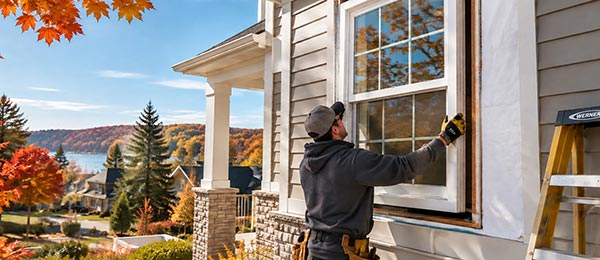
Installation labour can represent a significant share of the total cost, particularly for smaller windows. A retrofit insert into a sound existing frame is generally less expensive than full-frame replacement, which involves additional work on the rough opening, air and vapour barrier details, and interior finishing. Upper-floor installations may also require scaffolding.
Window installation in Canada should follow the applicable requirements of CSA A440.4, the Canadian standard for window, door and skylight installation. The quote should identify the installation method, disposal, exterior capping and trim so the homeowner can see what is included in the total replacement cost.
Window Force builds each single hung window to the measured rough opening rather than relying on the nearest stock size. Accurate manufacturing dimensions help installers achieve a proper fit and reduce the need for excessive shimming, filler strips or oversized trim. Through our authorized dealer network, custom-sized units are supplied to match the measured openings, helping installers reduce on-site adjustments and unnecessary fitting work.
How to Compare Two Single Hung Quotes
Because single hung is the style most often used to win a price comparison, it is also the style where quotes are hardest to read side by side. A lower total can mean a more efficient installer, or it can mean that a line item has quietly disappeared. The checklist below turns two quotes into a like-for-like comparison.
- Glass package: number of panes, gas fill, the exact Low-E coating and whether the complete window configuration meets the ENERGY STAR® criteria, with the model or certification details included in the quote.
- Spacer type: warm-edge or aluminum, and whether the sealed unit uses a dual seal.
- Frame: material, chamber count and corner joining method, since these do not appear in a brochure photo.
- Sizing: custom-built to the measured opening or a stock size adjusted on site with fillers and trim.
- Installation method: retrofit insert or full-frame replacement, with insulation, air and vapour barrier and sealant details stated.
- Exterior and interior finishing: capping, brickmould, interior trim and disposal of the old units, each shown as a separate line.
- Warranty: length, what it covers (frame, sealed unit, hardware, labour) and whether it transfers to the next owner. If one quote leaves any of these lines blank, ask for it in writing before comparing totals. Once both quotes specify the same window configuration and installation scope, the remaining price difference is easier to attribute to labour rates, contractor overhead, materials and profit margins. Our article on why window quotes vary so much walks through the same comparison for every window style.
Regional Differences Across Canada
The same window can carry a noticeably different installed price depending on where it is installed, because labour rates, freight distance and local demand vary across the country. Statistics Canada tracks one useful signal of this: the Building Construction Price Index for Q2 2026 shows residential construction costs up 2.3% year over year across 15 metropolitan areas, but with very wide local swings. The index measures what contractors charge to build new homes rather than window retail prices, so it shows the direction of local labour and contractor pricing, not a window price as such.
| Region | Year-over-year change in the Residential Building Construction Price Index, Q2 2026 (Statistics Canada) |
| British Columbia | Vancouver +0.5%, Victoria +5.5% |
| Alberta | Calgary -0.5%, Edmonton +3.1% |
| Ontario | Toronto +0.1%, Ottawa — Gatineau (Ontario part) +3.5% |
| Quebec | Montréal +8.4%, Québec City +9.2% |
| Atlantic Canada | Halifax +5.8%, St. John's +5.0% |
The regional figures provide context for differences in construction costs, although they do not directly measure the price of supplying and installing individual windows. Regional construction cost trends can influence installation prices, while glass specifications should be selected according to the thermal performance and solar heat gain requirements of the project's climate zone. Homeowners should compare Low-E options according to the thermal performance and solar heat gain requirements of their specific climate zone. In coastal British Columbia, glass selection should account for local heating needs, solar exposure and moisture conditions rather than relying on climate assumptions alone. Confirm the rating for the exact glass configuration quoted, since rebate programs check it.
When Single Hung Is the Right Budget Choice, and When It Is Not
A lower purchase price does not automatically mean lower long-term costs. The right choice depends on the window's location, cleaning access, ventilation needs and whether the opening must serve as an emergency exit. In some rooms, single hung offers a practical way to reduce replacement costs without sacrificing essential performance. In others, its limitations can make a different style more economical over time.
Where Single Hung Offers the Best Value
Single hung is often the least expensive replacement window style that still opens. It works particularly well in ground-floor rooms, basements, bathrooms with obscured glass, laundry rooms and rental properties where straightforward operation and affordability are priorities. It is also a practical choice when replacing existing single hung windows and maintaining a consistent exterior appearance.
However, a lower price should not mean compromising frame construction. Window Force builds its single hung windows using a multi-chamber vinyl profile. These internal chambers help reduce heat transfer through the frame, complementing the insulation provided by the sealed glass unit. This makes the style a practical budget option even in rooms where maintaining a comfortable interior frame temperature matters.
When Another Window Style Makes More Financial Sense
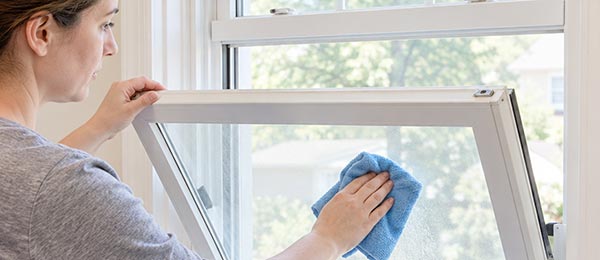
Upper-floor windows present a cleaning challenge because the fixed top sash cannot tilt inward. Its exterior glass must be cleaned from outside, which may require ladder access or professional window-cleaning services on upper floors. These recurring costs and access limitations can reduce the initial savings of a single hung window.
Ventilation is another consideration. Single hung windows provide ventilation through the lower opening only, offering less flexibility for releasing warm air that accumulates near the ceiling than double hung models. Double hung windows offer more flexibility because either sash can open, allowing ventilation through the top or bottom. This difference can matter in upstairs bedrooms without air conditioning, kitchens and rooms with high ceilings. A suitable replacement style should therefore be selected according to the room's ventilation needs, not just its purchase price. For a checklist to take into that conversation, see the questions to ask a window company before you sign.
Engineer Sergey Essipov, with 20 years of experience in window manufacturing, explains:
When a dealer asks us to bring a single hung price down further, we look at practical options such as a standard white finish, efficient sizing and a simpler grille pattern. These adjustments can reduce the final price while preserving the window's core construction and glass specification.
The most practical approach is to choose the window style for each opening rather than use one configuration throughout the house. Window Force builds single hung and double hung windows with matching colours, grilles, brickmoulds and jamb options, allowing homeowners to combine single hung units on the ground floor and in the basement with double hung windows upstairs while maintaining consistent profiles, colours and sightlines.
Every unit in this mixed order carries the same 25-year transferable warranty. Window Force windows are CSA certified, and Window Force is an ENERGY STAR Partner whose windows are engineered to meet ENERGY STAR requirements. The sealed glass units carry a separate 10-year non-prorated warranty. This allows homeowners to reduce costs where single hung is suitable without compromising warranty coverage or the performance requirements of other rooms.
Single Hung vs Other Budget Window Styles
Single hung is not the only inexpensive option, and for some openings a different style delivers the same saving with fewer compromises. The comparison below is relative rather than price-based, because published Canadian sources do not break out every style on equal terms.
| Style | Relative cost | Ventilation | Cleaning from inside | Bedroom egress |
| Fixed (picture) window | Lowest, no operating hardware | None | Interior face only | Cannot provide an operable egress opening |
| Single hung | Low | Lower half only | Lower sash only | Possible with a tall unit |
| Horizontal slider | Low, comparable to single hung | One side only | Usually both sashes lift out | Possible with a wide unit |
| Double hung | Moderate | Top and bottom | Both sashes tilt in | Possible with a tall unit |
| Casement | Higher, crank hardware and multi-point locks | Wide opening that can direct incoming breezes indoors | Both faces reachable when open | Often easier to meet with a suitable opening size |
The table shows why style choice works best opening by opening. A wide, low opening under a deck or in a basement often suits a slider better than a single hung, because the clear opening is created across the width rather than the height. A tall, narrow opening on a ground-floor wall suits a single hung well. A large view opening that never needs to open can be a fixed unit, often flanked by operating windows that provide the airflow. Where an upstairs bedroom needs both easy cleaning and a compliant emergency exit, a double hung or casement may be a more practical long-term choice than a single hung that has to be oversized and cleaned from a ladder.
Not sure which style suits each room? See our side-by-side comparison of single and double hung windows, our guide to choosing single or double hung, and the pros and cons of double hung windows.
Rebates and Getting a Quote
Rebates can narrow the price gap between budget and premium units, but eligibility depends on each program's requirements, including the energy certification of the selected window. Some programs calculate incentives per rough opening rather than per individual window. The federal Canada Greener Homes Grant is closed. Homeowners should check current provincial and utility incentives, including Ontario's Home Renovation Savings Program, Quebec's Rénoclimat program and Efficiency Manitoba's available energy-efficiency offers. Eligibility, eligible window specifications and rebate amounts vary by program. Amounts and deadlines change during the year, so check our up-to-date guide to window and door rebates in Canada before ordering. Some programs, such as Efficiency Manitoba's windows and doors rebate, require ENERGY STAR certified triple-pane units, and Window Force hung windows are double-pane only. If you would rather spread the cost, see how to finance new windows in Ontario.
Conclusion
Single hung windows generally cost less than double hung models because only one sash operates, reducing mechanical complexity. This does not mean the frame or glass must be weaker. Published Canadian price references place basic single hung units at approximately $230 to $460, while double hung models are listed at around $395 to $1,000. These ranges should be treated as indicative benchmarks because the quoted specifications and installation scope may differ. Size, glazing specifications, frame materials and installation requirements can further affect the final price.
The style is a sound budget decision for ground floors, basements, bathrooms and rentals, and a weaker one for upper floors and rooms that need high ventilation. Compare quotes on the same glass configuration and installation method, and check rebate eligibility before you order.
Ready to find out which of your openings can go single hung without compromise? Send us your project details through our request form, and our dealer network will arrange a measurement of each opening, recommend a single hung or double hung configuration for every room, and confirm the glass package, rebate eligibility and production timeline before you commit.
Frequently Asked Questions
How much does a single hung window cost in Canada?
Published Canadian sources place single hung windows between roughly $230 and $460 for basic units and up to about $1,200 installed for higher-specification units. The installed price depends mainly on size, glass options, exterior finish and whether the installation is a retrofit or a full-frame replacement.
Is a single hung window cheaper than a double hung?
Yes. A single hung generally costs less because its fixed upper sash does not require a separate balance system, tilt latches or pivot bars. The actual savings depend on the window size, glass package, finish and installation scope.
Are single hung windows less energy efficient than double hung windows?
Not inherently. Energy performance depends on the glass package, frame construction, spacer and installation quality. A fixed upper sash eliminates one moving joint, but the actual air leakage performance depends on the complete window design, weatherstripping and installation quality.
Can a single hung window be used as a bedroom egress window?
Yes, provided the window meets the applicable provincial or territorial building code requirements for emergency egress. For example, the Ontario Building Code requires an unobstructed opening of at least 0.35 m², with no dimension less than 380 mm. Because only the lower sash opens, a single hung unit may need to be taller than a casement providing the same clear opening.
Do single hung windows qualify for rebates in Canada?
They can, provided the complete window model meets the energy-efficiency and product eligibility requirements of the selected program. Some provincial and utility programs offer incentives per rough opening, while others use different eligibility and payment structures. Check the current program rules before ordering.
Can I mix single hung and double hung windows in the same house?
Yes. Combining both styles allows homeowners to select the most suitable configuration for each opening while maintaining consistent frame profiles, colours and sightlines across the house.
Is a retrofit or a full-frame installation cheaper for single hung windows?
A retrofit insert is usually cheaper because the existing frame stays in place and less interior and exterior finishing is needed. It only makes sense when the old frame is square, dry and free of rot. If there are signs of water damage or air leakage around the frame, full-frame replacement costs more upfront but allows the rough opening to be inspected and sealed properly.
Learn more about window prices in your city: