What Are the Most Common Causes of Casement Window Crank Failure?
Casement window cranks are among the most frequently serviced components in operable window systems. Their moving parts endure repeated mechanical stress and environmental exposure, leading to gradual wear over time. Understanding the common causes of crank failure helps builders and maintenance teams prevent premature damage and ensure long-term reliability.
1. Mechanical Wear and Gear Fatigue
The most common reason for crank malfunction is gear wear within the operator mechanism. The steel or zinc alloy gears inside the crank assembly can degrade from continuous use — especially when excessive force is applied to open or close the sash. Once the teeth strip or misalign, the crank handle may spin freely without moving the window.
Common indicators:
- Handle rotates without resistance but sash doesn’t move.
- Clicking or grinding sound during operation.
- Visible metal shavings near the gear housing.
2. Corrosion and Environmental Exposure
Casement cranks positioned on exterior-facing walls often experience corrosion caused by moisture, condensation, or salt exposure (especially in coastal regions). Over time, corrosion affects both the internal gears and the pivoting arm joints, leading to stiffness or complete failure.
Preventive maintenance includes:
- Regular cleaning of the crank base and arm linkage.
- Application of non-corrosive lubricant at least twice a year.
- Sealing of frame corners to prevent water infiltration.
3. Lack of Lubrication and Dirt Accumulation
Dust, debris, and hardened lubricant can restrict crank movement. When the operator mechanism is forced while dirty or dry, the added friction accelerates internal wear.
Manufacturer recommendation: Use silicone-based or lithium grease every six months on moving joints, avoiding petroleum oils that attract dust. Ensure the crank cover and trim remain tightly fitted to block debris entry.
4. Misalignment or Frame Distortion
If the window sash becomes misaligned due to frame settling or hinge loosening, the crank mechanism experiences uneven torque load. This can bend the crank arm or strip the operator gear prematurely.
Signs of structural misalignment include:
- Uneven gaps between sash and frame when closed.
- Crank resistance increases near the end of motion.
- Sash binds against the sill or side jamb during operation.
In such cases, hinge adjustment or realignment of the entire sash is necessary before replacing the crank.
5. Improper Installation or Hardware Incompatibility
Crank failures can also result from incorrect installation or mismatched hardware. Using screws that are too short or off-angle mounting can loosen the operator housing, causing the arm to detach from the sash bracket under stress.
Checklist for correct installation:
- Confirm operator matches window brand and model.
- Use manufacturer-specified screw lengths and torque.
- Verify smooth sash operation before final tightening.
Reference Data
According to data from Natural Resources Canada (NRCan) (source), improper window maintenance and mechanical misalignment are responsible for over 60% of operable window service issues in residential installations.
Summary
The primary causes of casement window crank failure include:
- Gear wear and stripped teeth from overuse or forceful operation.
- Corrosion from environmental exposure.
- Insufficient lubrication or contamination.
- Frame distortion or hinge misalignment.
- Incorrect hardware selection or poor installation.
Routine maintenance — especially cleaning, lubrication, and hinge checks — can extend the lifespan of casement window cranks by up to 10 additional years, reducing long-term repair costs and operational downtime.

How to Fix a Casement Window Crank That’s Not Working Properly
When a casement window crank stops functioning smoothly or fails to move the sash entirely, the issue usually lies within the operator mechanism, handle, or linkage arm. Performing a systematic repair can restore full operation without replacing the entire window. The following step-by-step process follows manufacturer-recommended repair methods used by major Canadian window suppliers.
Step 1: Diagnose the Problem
- Check crank handle resistance: If the handle spins freely without moving the sash, the internal gears are stripped or detached.
- Inspect operator arm movement: Open the crank cover and confirm whether the arm moves as you turn the handle. Lack of movement indicates a disconnected linkage.
- Verify sash obstruction: Ensure the sash isn’t jammed due to debris, paint buildup, or frame warping.
Step 2: Remove the Crank Mechanism
- Fully open the window to expose the operator arm connection point.
- Unscrew the linkage from the sash bracket using a Phillips or Robertson screwdriver.
- Detach the crank housing from the sill using the manufacturer-specified screws.
- Note the orientation and arm length before removal to ensure proper replacement alignment.
Tip: Photograph the operator setup before removal — this helps ensure correct reassembly later.
Step 3: Inspect Components for Wear or Damage
- Gears: Look for stripped or missing teeth in the crank operator.
- Arm Joint: Check for loosened rivets or excessive play.
- Handle Connection: Ensure the handle spline isn’t rounded or cracked.
If gears or rivets show visible wear, replacement is recommended rather than repair.
Step 4: Clean and Lubricate the Assembly
- Remove any dirt or metal shavings from the housing using a small brush or compressed air.
- Apply silicone or lithium-based grease to gears, pivot joints, and tracks. Avoid petroleum-based lubricants — they attract dust and accelerate wear.
- Wipe excess lubricant to prevent residue buildup around the operator cover.
Step 5: Reinstall or Replace the Crank Operator
- Align the replacement operator with the original screw holes.
- Reconnect the arm to the sash bracket, ensuring proper seating in the track guide.
- Test operation before tightening all screws to final torque (typically 20 — 25 in-lbs).
Manufacturer note: Replacement cranks must match the brand, handedness (left or right), and arm length of the original unit. Using a mismatched operator may cause alignment or sealing issues.
Step 6: Test Operation and Final Adjustments
- Turn the handle to confirm smooth sash motion and even closure.
- Verify full compression seal when the window is shut.
- If stiffness persists, slightly loosen mounting screws and realign the operator base.
Safety and Maintenance Notes
- Always wear gloves to prevent injury from metal edges.
- Test locking hardware and hinges after completing crank repairs.
- Perform crank lubrication twice annually to reduce wear on gears and linkage arms.
Summary
Most crank issues can be fixed by cleaning, lubricating, or replacing the operator assembly. If the gears are stripped or the arm joint is bent, replacement is typically faster and more reliable than repair. Regular maintenance following manufacturer guidelines — especially lubrication and hinge checks — helps avoid costly crank failures and preserves long-term operability.
Windows Near Me
How to Adjust a Casement Window That Won’t Close All the Way
A casement window that doesn’t close properly can compromise energy efficiency, air sealing, and security. Most of the time, this issue results from sash misalignment, hinge wear, or improper crank calibration. Correcting these problems is straightforward with a few targeted adjustments.
Step 1: Identify the Source of Misalignment
Before making adjustments, determine what’s preventing the window from closing completely:
- Uneven gaps along the frame indicate hinge misalignment.
- Binding near the bottom corner suggests frame settling or hinge screw loosening.
- Handle resistance near full closure may mean excessive sash pressure against the weatherstrip.
Inspect the top and bottom hinges for equal tension and verify that the sash closes evenly into the compression seal.
Step 2: Check for Obstructions and Debris
- Clean the window track, hinges, and sill area using a small brush or compressed air.
- Remove any paint, dust, or caulk that may block full sash movement.
- Ensure the weatherstripping is intact and properly seated. Crushed or detached seals should be replaced immediately.
Step 3: Adjust the Hinge Screws
Casement hinges typically allow minor adjustment to realign the sash:
- Locate the hinge screws — usually one at the frame and another at the sash attachment point.
- Loosen each screw slightly (¼ turn) using a Phillips screwdriver.
- Reposition the sash until it aligns evenly with the frame perimeter.
- Retighten the screws while holding the sash in position.
If your window has adjustable friction hinges, rotate the tension screw located near the hinge pivot to fine-tune closure pressure.
| Adjustment Type | Tool Required | Purpose | Typical Screw Location |
| Lateral Adjustment | Phillips screwdriver | Align sash horizontally | Inner hinge leaf |
| Vertical Adjustment | Hex or Allen key | Raise or lower sash | Outer hinge channel |
| Friction Control | Flathead screwdriver | Adjust compression seal pressure | Near hinge pivot |
Step 4: Realign the Crank Operator
If the sash remains offset after hinge adjustment, the crank operator may be slightly misaligned:
- Open the window halfway.
- Loosen the crank base mounting screws.
- Realign the arm within the sash track and retighten.
- Test operation through a full open/close cycle to confirm smooth movement.
Step 5: Inspect Weatherstripping and Frame Warping
Over time, casement frames may warp slightly due to humidity or temperature changes. If minor warping exists:
- Apply additional compression by tightening hinge tension or adjusting locking hardware.
- Replace worn weatherstripping to ensure full perimeter sealing.
Step 6: Test Final Closure
- Turn the handle fully until the sash compresses evenly into the frame seal.
- Check for uniform contact around all four edges.
- If small gaps remain, repeat hinge adjustment until perfect alignment is achieved.
Summary
To fix a casement window that won’t close all the way:
- Identify and correct hinge or operator misalignment.
- Adjust hinge screws for proper sash positioning.
- Ensure crank mechanism and locking hardware are aligned.
- Replace any worn seals to restore full compression.
Properly adjusted casement windows close smoothly and maintain optimal energy efficiency, ensuring tight sealing and reliable operation for years.
What to Do if Your Casement Window Leaves a Gap When Closed
A casement window that leaves a visible gap after closing is a sign of seal failure, hardware misalignment, or frame warping. This not only affects insulation and weatherproofing but can also allow water or air infiltration. Correcting the issue promptly ensures full perimeter sealing and restores window performance.
Common Causes of Gaps
| Cause | Description | Repair Approach |
| Worn or Flattened Gasket | The weatherstrip has lost elasticity or detached from the frame. | Replace the gasket with a manufacturer-approved seal. |
| Loose or Bent Hinges | Hinges have shifted or lost alignment from frequent use. | Tighten or adjust hinge screws; replace damaged hardware. |
| Warped Frame or Sash | Moisture or temperature changes cause slight deformation. | Apply hinge tension adjustments or add seal shims. |
| Crank Misalignment | The operator arm doesn’t fully pull the sash into the compression seal. | Realign the crank base and linkage. |
| Locking Mechanism Offset | Multi-point locks fail to engage evenly across the frame. | Adjust the lock striker plates or locking cam. |
Step 1: Inspect the Seal and Gasket
- Open the window fully and examine the weatherstrip around the perimeter.
- Check for cracks, compression marks, or detachment from the frame channel.
- If the gasket appears brittle or deformed, remove it carefully using a flat plastic tool.
- Clean the groove with mild detergent and reinsert a new gasket that matches the profile type (foam, bulb, or vinyl).
Tip: Always install the new gasket in one continuous loop to prevent corner leaks.
Step 2: Adjust Hinges for Proper Alignment
- Loosen the hinge mounting screws slightly and shift the sash toward the side with the visible gap.
- Retighten while maintaining alignment along the frame edge.
- Use an Allen key or Phillips screwdriver, depending on hinge model.
If the sash rubs or binds when closing, reduce tension slightly until movement feels smooth.
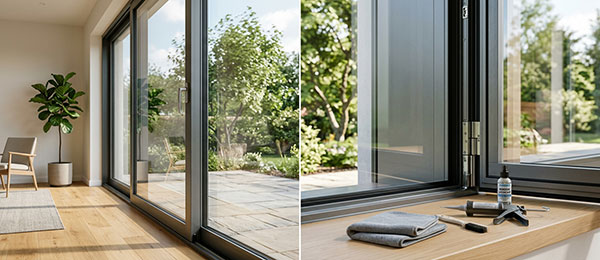
Step 3: Recalibrate the Crank and Locking Mechanism
- With the window half-open, observe whether the crank arm pulls the sash evenly against the seal.
- If not, loosen the operator screws and reposition slightly toward the frame.
- Close the sash fully to test contact pressure.
- For multi-point locks, adjust each strike plate using a screwdriver — rotate or shift to ensure simultaneous engagement.
Step 4: Check Frame Integrity
If a gap persists after adjustments, inspect the frame for twisting or warping:
- Use a straightedge or level along the sill and jamb.
- For minor distortion (≤3 mm), hinge or striker adjustment usually compensates.
- For major warping, consider replacing the sash or frame section.
Technician Inspection Checklist
| Inspection Point | Check For | Corrective Action |
| Gasket Seal | Compression damage or gaps | Replace with matching seal profile |
| Hinge Screws | Loosened fasteners | Tighten to specified torque |
| Lock Engagement | Uneven latch contact | Adjust striker plates |
| Operator Arm | Limited pull range | Realign crank or replace worn arm |
| Frame Alignment | Warping or twist | Shim or replace section if necessary |
Step 5: Verify Final Closure
After adjustments:
- Close the window and inspect for even contact across the seal.
- Perform a paper test — insert a sheet between sash and frame; if it slides freely, compression remains weak. Adjust hinges or locks accordingly.
Summary
A gap after closing typically indicates seal wear or mechanical misalignment. Most issues can be fixed by replacing gaskets, adjusting hinges, and recalibrating the crank. For persistent air leakage or visible distortion, professional inspection may be required to restore structural accuracy and weather resistance.
How to Adjust Casement Window Hinges for Optimal Sealing
Casement window hinges are critical to ensuring proper alignment, smooth operation, and tight weather sealing. Over time, hinges may loosen or shift due to repeated use, temperature expansion, or building movement. Adjusting them restores even pressure across the gasket, eliminating air and water leaks.
Understanding Casement Hinge Types
Before making adjustments, identify the hinge type used on your window. The two most common categories are:
| Hinge Type | Description | Adjustment Capability | Typical Material |
| Standard Friction Hinge | Uses friction pads to hold sash in position at any angle. | Allows horizontal and vertical adjustment. | Stainless steel or zinc alloy. |
| Four-Bar (Track) Hinge | Provides strong sash support for larger windows. | Enables tilt and lateral movement adjustment. | Stainless steel (commercial-grade). |
| Butt Hinge | Fixed axis type for smaller residential units. | Limited adjustment; relies on screw position. | Steel or brass. |
For most vinyl and aluminum-clad windows, friction or four-bar hinges are standard.
Step 1: Check Alignment and Seal Pressure
- Close the window and observe the gasket compression around the perimeter.
- Uneven sealing on one side indicates hinge misalignment or incorrect torque.
- Identify whether the gap appears at the top, bottom, or latch side to determine which hinge requires adjustment.
Step 2: Locate Adjustment Screws
Hinge systems typically have two or three screws controlling different movements:
| Screw Function | Adjustment Range | Tool Required | Effect on Window |
| Lateral (Side) Adjustment Screw | ±2 — 3 mm | Phillips screwdriver | Moves sash left or right for proper frame alignment. |
| Vertical (Height) Adjustment Screw | ±2 mm | Hex or Allen key | Raises or lowers sash to correct uneven closure. |
| Friction Control Screw | ±¼ turn | Flathead screwdriver | Adjusts resistance for smooth opening and sealing force. |
Step 3: Make Adjustments Gradually
- Start with ¼-turn adjustments to avoid over-tightening.
- After each adjustment, test the window by closing it and observing compression along the seal.
- Alternate between upper and lower hinges to maintain even pressure.
- If resistance increases excessively, back off the screw slightly to balance friction.
Step 4: Test Seal Compression and Operation
- Perform the paper test by inserting a sheet of paper along the closing edge and shutting the window.
- The paper should hold firmly without tearing — indicating optimal compression.
- If it slides freely, increase hinge friction slightly.
- Ensure the sash opens smoothly and remains stable at partial openings.
Step 5: Lubricate and Secure
After completing the adjustments:
- Apply silicone spray or lithium grease to hinge joints.
- Tighten all screws to manufacturer torque (typically 20 — 25 in-lbs).
- Replace any stripped or rusted fasteners to prevent future shifting.
Step 6: Final Seal Verification
Close the window and inspect for:
- Even gasket contact around all sides.
- No visible daylight or air leakage.
- Smooth handle engagement and locking without extra force.
Summary
To achieve optimal sealing and performance:
- Identify the hinge type and inspect for wear or looseness.
- Adjust lateral, vertical, and friction screws incrementally.
- Test seal compression with the paper method.
- Lubricate and secure all components for long-term reliability.
Proper hinge adjustment ensures that casement windows maintain airtight compression, smooth function, and consistent insulation performance across their lifespan.
How to Fix or Replace a Faulty Casement Window Latch
A malfunctioning latch can prevent a casement window from sealing properly, reducing security and energy efficiency. Latches are designed to pull the sash tightly against the frame’s compression seal — so even a small misalignment can create drafts or water leaks. Repairing or replacing a latch restores the window’s performance and safety.
Step 1: Identify the Latch Issue
Common signs of latch problems include:
- The handle turns, but the sash doesn’t lock fully.
- The latch feels loose or overly tight when closing.
- There’s visible daylight between the sash and frame after locking.
- The lock mechanism grinds or skips during operation.
Determine whether the problem lies in the lock handle, strike plate, or multi-point linkage system. Each part must align perfectly for a secure closure.
Step 2: Inspect and Tighten the Hardware
- Open the window fully to access both the locking mechanism and striker plate.
- Check for loose screws or stripped threads on the handle base and striker plate.
- Tighten screws using a Phillips screwdriver — apply firm pressure but avoid overtightening.
- Test operation; if stiffness remains, proceed to alignment adjustments.
Step 3: Adjust the Strike Plate Alignment
If the latch does not engage smoothly:
- Loosen the two screws holding the strike plate to the frame.
- Shift it slightly toward or away from the sash until engagement feels even.
- Retighten screws and test closure.
- Repeat as needed until the latch secures the sash with moderate handle resistance.
| Adjustment Type | Tool Required | Adjustment Range | Purpose |
| Strike Plate Position | Phillips screwdriver | ±2 mm | Aligns latch engagement depth |
| Lock Cam Rotation | Hex key | ±15° | Adjusts locking tension |
| Handle Base Tightening | Phillips screwdriver | — | Removes looseness in handle mechanism |
Step 4: Replace Damaged Components
If parts show visible damage or wear:
- Latch Handle: Remove retaining screws and replace with a matching manufacturer model (check for correct left or right orientation).
- Strike Plate: Replace if bent, corroded, or stripped.
- Linkage Arm: Replace if linkage doesn’t move smoothly through the locking cycle.
Ensure all replacement components are manufacturer-approved and rated for your window’s frame material.
Step 5: Lubricate and Test
- Apply a small amount of silicone-based lubricant to moving parts and locking cams.
- Operate the handle several times to distribute lubricant evenly.
- Check for consistent seal compression across the window perimeter.
- Confirm that the latch locks and releases smoothly without excessive force.
Step 6: Final Safety Check
After repairs:
- Test the lock several times to confirm full engagement.
- Verify that the sash cannot be pushed outward when locked.
- Ensure no gaps or rattling occur during operation.
Summary
To fix or replace a faulty casement window latch:
- Identify the issue — looseness, misalignment, or wear.
- Tighten screws and realign the strike plate.
- Replace damaged components as needed.
- Lubricate and test for smooth, secure operation.
Maintaining the latch system ensures proper sealing, safety, and long-term performance, keeping casement windows reliable under daily use and extreme weather conditions.
Conclusion: Professional Maintenance Tips for Reliable Casement Window Operation
Regular maintenance is the key to keeping casement windows operating smoothly, maintaining airtight seals, and preventing mechanical failures. Proper inspection and servicing reduce wear on cranks, hinges, and locks — significantly extending the system’s operational lifespan.
Key Maintenance Areas
| Component | Maintenance Action | Recommended Frequency | Result |
| Crank Operator | Clean and lubricate gears and joints with silicone grease. | Every 6 months | Prevents wear and gear binding. |
| Hinges | Tighten screws and adjust friction screws as needed. | Every 12 months | Maintains proper alignment and compression. |
| Weatherstripping | Inspect for flattening or damage; replace as needed. | Annually | Ensures consistent air and water seal. |
| Locks and Latches | Check strike plate alignment and latch tension. | Every 6 — 12 months | Guarantees secure closure and energy efficiency. |
| Frame and Sash | Clean channels, check for warping or paint buildup. | Every 6 months | Ensures smooth sash movement and proper sealing. |
Preventive Maintenance Best Practices
- Lubricate moving parts regularly— Use non-petroleum lubricants to reduce friction without attracting dirt.
- Avoid excessive force— If a crank or latch resists movement, check for obstruction before applying pressure.
- Clean tracks and hinges— Debris buildup accelerates wear and affects sealing performance.
- Inspect during seasonal changes— Temperature fluctuations can cause minor frame expansion or contraction. Adjust hinges or latches if resistance increases.
- Use proper cleaning materials— Avoid harsh chemicals on vinyl, aluminum, or fiberglass surfaces; mild soap and water are sufficient.
Professional Service Intervals
Even with regular maintenance, casement windows benefit from professional servicing every 3 — 5 years. A certified technician should:
- Recalibrate hinge and crank alignment.
- Replace worn gaskets or operator arms.
- Verify compliance with CSA A440.2-19 performance requirements.
- Conduct air and water infiltration testing when necessary.

Expert Recommendation
Technicians at Window Force Inc. advise that most crank, hinge, and latch failures are preventable through consistent lubrication and tension checks. In particular:
- Apply silicone lubricant twice a year.
- Inspect compression seals every spring before humidity increases.
- Replace weatherstripping at the first signs of deterioration.
Final Summary
| Maintenance Area | Preventive Action | Long-Term Benefit |
| Crank and Hinges | Lubricate and tighten | Extends hardware life by 8 — 10 years. |
| Gaskets and Seals | Inspect and replace early | Prevents air and water infiltration. |
| Frame and Alignment | Adjust annually | Maintains energy efficiency and security. |
| Professional Inspection | Every 3 — 5 years | Ensures compliance with CSA and ENERGY STAR standards. |
By following these professional maintenance practices, builders, facility managers, and homeowners can keep casement windows performing efficiently for decades — preserving both functionality and appearance while minimizing future repair costs.
Frequently Asked Questions
Why Is My Casement Window Crank Not Working Even After Lubrication?
If the crank handle still fails to operate after lubrication, the issue likely lies within the internal gear assembly. Stripped or worn gears prevent the handle from engaging properly. In this case, lubrication won’t help — the operator mechanism must be replaced. Always confirm the new crank matches your window’s brand, handedness, and arm length for proper alignment.
How to Adjust a Casement Window That Won’t Close Evenly?
Uneven closure usually results from hinge misalignment or frame settling. Use a screwdriver or hex key to adjust hinge screws until the sash fits evenly within the frame. Start with small ¼-turn adjustments and test the window after each change. For persistent misalignment, check that the crank operator and strike plates are correctly positioned.
How to Identify When a Casement Crank Needs Replacement Instead of Repair?
Replace the crank mechanism if:
- The handle turns freely with no sash movement.
- Grinding or clicking noises occur during operation.
- The crank arm has visible bending or corrosion.
Minor stiffness can be repaired through cleaning and lubrication, but complete gear stripping or joint damage requires full replacement.
What’s the Correct Way to Realign a Casement Window Latch?
To realign the latch:
- Loosen the strike plate screws slightly.
- Shift the plate toward or away from the sash until engagement feels even.
- Retighten and test for smooth operation.
- If the latch still doesn’t lock securely, adjust the lock cam using an Allen key for tighter compression.
Proper latch alignment ensures the sash compresses evenly into the seal, maintaining both airtightness and security.
People Also Ask