

Heating and cooling now account for a measurable share of every Canadian household budget, and windows sit at the centre of that equation more often than homeowners realize. A window that no longer seals properly does not just feel drafty; it quietly raises furnace run time, strains air conditioning in summer, and shows up as a steady increase on the utility statement. This guide examines why aging windows drive up energy costs, which performance features actually move the needle, and how a properly specified, properly installed window translates into measurable savings rather than marketing promises.
This guide draws on Window Force's experience in manufacturing custom vinyl windows from our 80,000 sq ft Ontario production facility since 2007. Every window we build is made to order — matched to a specific climate zone, orientation, and performance target — which means the energy-efficiency factors described in this guide reflect the decisions we make at the specification stage for every unit that leaves our facility, not general industry averages.
Key Takeaways
- Windows, doors, and skylights can account for a substantial share of total residential heat loss, making window condition one of the largest controllable factors in a home's energy bill.
- Replacement windows lower energy costs primarily through tighter seals and improved glazing, not through any single feature acting alone.
- Triple-pane glass, Low-E coatings, and argon each address different aspects of heat transfer, so the right combination depends on climate and orientation rather than on a universal "best" choice.
- Installation quality affects realized savings as much as the window's rated performance; a high-performance window installed poorly can underperform a mid-range window installed correctly.
- Payback periods vary widely by home age, climate zone, and current window condition, and homeowners should treat published estimates as ranges rather than guarantees.
Why Do Old Windows Make Energy Bills Higher?
Older windows raise energy bills through a combination of mechanisms that compound over the course of a heating season. Air leakage around the sash and frame allows conditioned indoor air to escape and outdoor air to enter, forcing the furnace or heat pump to cycle more frequently to maintain the thermostat setpoint. Aging seals and worn weatherstripping widen these gaps year over year, even when the glass itself has not visibly degraded. At the same time, outdated single-pane or early double-pane glazing transfers heat directly through the glass surface, since there is little insulating gas space or coating to slow that transfer.
Warped or twisted frames compound the problem by preventing the sash from closing fully square against its seals, a common issue in wood and aluminum frames that expand and contract with temperature and humidity. According to Natural Resources Canada's Office of Energy Efficiency, windows, doors, and skylights can account for up to 35 percent of total house heat loss, which makes window condition one of the more consequential variables in a home's heating bill, second only to wall and attic insulation in many older houses.
Common Causes of Window Heat Loss
Several distinct failure points typically combine to produce the heat loss homeowners notice as higher bills. Deteriorated weatherstripping is usually the first to go, followed by failed seals on insulated glass units that allow the argon or krypton fill to escape and moisture to enter between the panes. Frame material also plays a long-term role: aluminum frames conduct heat directly from indoors to outdoors unless they include a thermal break, while older wood frames are prone to swelling, shrinking, and warping with seasonal humidity changes.
The corner joint is where most frame-related air and thermal failures originate — and it is the detail most difficult to inspect after installation. Window Force joins every sash and outer frame using a fusion-welding process rather than corner keys or mechanical fasteners. The weld becomes a continuous, monolithic part of the profile: it does not separate under seasonal thermal movement, and it does not leave a gap at the corner that weatherstripping has to compensate for. Over a 25-year service life in Canadian conditions, that structural continuity keeps the frame's seal geometry intact rather than allowing gaps to slowly open at the joints.
How Drafts Affect HVAC Use
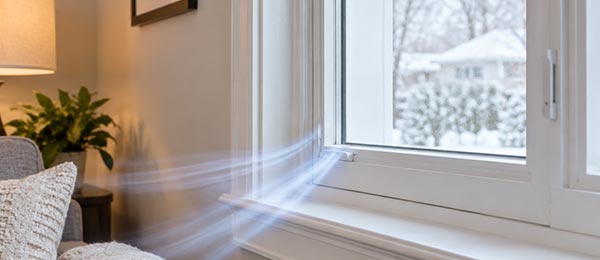
Drafts do more than create discomfort near a window; they change how the entire HVAC system behaves. A furnace or heat pump sized for a tightly sealed envelope has to run longer and more often when air leakage introduces an unplanned cooling or heating load, and that extra runtime is what shows up as higher monthly costs rather than a single dramatic spike. Homeowners can usually notice early signs before the bill confirms it: a hand held near the sash detects moving air, condensation forms on the interior glass surface in cold weather, and rooms near older windows feel noticeably cooler than the rest of the house, even when the thermostat reads the same temperature throughout.
Windows Near Me
How Do Replacement Windows Improve Energy Efficiency in a Home?
Replacement windows improve efficiency through several mechanisms working together rather than any single upgrade. A new installation tightens the seal between the sash and frame, which reduces uncontrolled air infiltration far more than glass upgrades alone. Insulated glazing, typically double or triple-pane with a gas fill between the layers, slows heat conduction through the glass itself. Frame materials such as vinyl or fibreglass insulate better than aluminum and resist warping that compromises seals over time, resulting in a more stable indoor temperature with less reliance on the furnace or air conditioner to correct temperature swings.

It is worth separating comfort gains from bill savings, since they do not always occur simultaneously. A new window can eliminate drafts and even out the room temperature almost immediately, which homeowners notice right away. Actual dollar savings on a utility bill depend on additional variables, including the home's existing insulation, local climate, the size and orientation of the windows being replaced, and how the rest of the building envelope performs. A home with excellent attic and wall insulation will often see a smaller percentage reduction in the bill from window replacement than a home where windows were the weakest link in an otherwise reasonably sealed envelope.
Insulation vs. Air Sealing
Insulating value and air sealing solve different problems, and conflating them leads to mismatched expectations. Insulating performance, reflected in the U-factor, describes how well the window resists heat conduction through the glass and frame once everything is sealed. Air sealing describes how well the installed unit prevents air from moving around the frame through gaps that a U-factor rating does not capture. A window with an excellent U-factor that is installed with poor perimeter sealing will still leak air and underperform its rating in practice, which is why installation detail matters as much as the product specification on the label.
Why Window Efficiency Affects Year-Round Costs
Window performance is not a winter-only concern. In summer, the same glazing and frame characteristics that slow heat loss in January also slow heat gain in July, reducing the load on central air conditioning. Homes that see year-round energy savings from window replacement typically have meaningful heating and cooling seasons, which describes most of the country, from coastal British Columbia through the Prairies to Atlantic Canada, even though the specific climate demands differ by region.
Window Force engineers its frames from lead-free uPVC compounded with UV stabilizers, joined at every corner with fusion-welded construction. For year-round energy performance, the relevant detail is that UV-stabilized uPVC resists the surface brittleness and dimensional creep that lower-grade vinyl develops after years of direct sun exposure — degradation that gradually compromises the compression seal between sash and frame. A frame that holds its original geometry in January holds the same geometry in July, which is why the air-sealing benefit that reduces heating demand in winter carries over directly to reduced cooling demand in summer.
Which Replacement Window Features Help Lower Energy Costs the Most?
Among all the specifications on a window's performance label, a handful of features account for most of the realized energy savings. Glazing configuration, meaning double-pane versus triple-pane construction, sets the baseline insulating value. Low-E coatings, inert gas fills, and warm-edge spacer systems further improve the thermal performance of the glazing unit. Each of these components contributes differently to energy efficiency and is discussed in more detail later in this guide. Frame construction, including the number of internal chambers and the quality of corner welds, rounds out the list of features that most directly affect a window's real-world performance.
For homeowners working within a fixed renovation budget, prioritizing the glazing package and frame quality over purely cosmetic options tends to deliver the best return in the form of reduced energy costs.
Best Glass Upgrades for Efficiency
Within the glazing package, the combination of Low-E coating type and gas fill matters more than any single component viewed in isolation. A passive Low-E coating paired with argon fill performs differently than a solar-control Low-E coating paired with the same gas, and the right pairing depends on whether a home needs to retain winter heat, reject summer heat, or balance both.
Frame Details That Matter
Frame chambers, the internal hollow sections within a vinyl profile, create dead air pockets that slow heat transfer through the frame itself, independent of the glass.
Engineer Sergey Essipov, with 20 years of experience in window manufacturing, notes:
The number and arrangement of frame chambers have a measurable effect on overall frame performance. Multi-chamber vinyl profiles consistently outperform single or double-chamber designs in cold-climate testing.
Window Force builds its frames using multi-chamber profiles paired with a metal-free, dual-seal warm-edge spacer system, which together address both the frame-conduction and edge-of-glass losses that account for a disproportionate share of a window's total heat transfer. The dual-seal design is specifically intended to resist moisture migration into the sealed glass unit over time, which is the mechanism behind most early seal failures. Consumers comparing quotes should ask whether a competing product uses a metal spacer or a warm-edge design, since that detail is rarely highlighted on a sales sheet but affects performance for decades.
What Is the Difference Between Double-Pane and Triple-Pane Windows for Energy Savings?
Double-pane and triple-pane windows differ in the number of glass layers, but the practical differences extend to cost, comfort, sound control, and climate suitability. A double-pane unit, particularly one with a quality Low-E coating and argon fill, performs well across most of the country and remains the more common choice due to its lower upfront cost and lighter weight, which simplifies installation in larger openings. Triple-pane units add a third glass layer and a second sealed air or gas space, improving the U-factor further and noticeably reducing sound transmission from outside, a benefit that matters more in dense urban settings or near busy roads than the energy savings alone might justify.
| Factor | Double-Pane | Triple-Pane |
| Typical U-factor range | Higher (more heat loss) than a triple-pane | Lower (better insulation) than double-pane |
| Relative cost | Lower upfront cost | Higher upfront cost, often 15 — 30% more |
| Sound reduction | Moderate | Noticeably improved |
| Window weight | Lighter, easier for larger openings | Heavier, may need reinforced hardware |
| Best climate fit | Adequate across most climate zones with the right Low-E coating and gas fill | Strongest advantage in colder interior and northern regions |
Cost vs. Performance
The additional cost of triple-pane glass buys a meaningfully lower U-factor and better sound dampening, but the energy-bill payback on that incremental cost is slower than the payback on simply replacing a failing single-pane or early double-pane window with any modern double-pane unit. In other words, the largest jump in performance comes from replacing old windows at all; triple-pane is a refinement on top of that baseline improvement rather than a separate decision.
Best Option for Colder Climates
In regions with longer, harsher winters, such as much of the Prairies and northern Ontario, the additional investment in triple-pane glazing is more likely to pay back through reduced heating demand than it would in a milder coastal climate. Homeowners planning window replacement in Manitoba or Saskatchewan— where January temperatures regularly fall below -25°C — are among those most likely to see triple-pane glazing pay back within the window’s service life. Climate zone, more than personal preference, should drive this particular decision: a window supplier in Alberta will often default toward triple-pane recommendations more readily than a window manufacturer in British Columbia, given how milder the coastal winter is by comparison. A reputable supplier should be willing to explain why a given glazing package suits a specific address rather than recommending the same configuration nationwide.
How Do Low-E Coatings and Gas Fills Affect Heating and Cooling Costs?
Low-E, or low-emissivity, coatings are microscopically thin metallic layers applied to the glass surface that selectively reflect long-wave infrared radiation while allowing visible light to pass largely unaffected. In winter, a passive Low-E coating reflects indoor heat back into the room rather than letting it radiate out through the glass. In summer, a solar-control Low-E coating reflects incoming solar heat before it enters the home, reducing the cooling load. The Low-E coatings reduce radiant heat transfer, helping retain indoor heat during winter while limiting solar heat gain in summer. The U.S. Department of Energy recommends low-E coatings and gas-filled glazing as key features of energy-efficient windows.
Argon and krypton gases fill the work through a separate mechanism: both gases conduct heat more slowly than ordinary air, so filling the sealed space between panes with one of them reduces the conductive heat transfer across that gap. Krypton performs slightly better than argon but costs more, which is why argon remains the standard choice for most residential applications while krypton is typically reserved for narrower gas spaces where its higher density offers a clearer advantage.
How Low-E Works
The practical effect of a Low-E coating depends on which type is specified, and this is where homeowner-facing marketing sometimes oversimplifies. A coating optimized for solar control in a hot climate is the wrong choice for a north-facing window in a cold climate that would benefit from passive solar gain, and vice versa. Getting this match right requires the supplier to ask about orientation and regional climate before recommending a glazing package, rather than simply quoting a single default coating for every order.
What Argon Gas Actually Does
Argon fill only functions correctly within a sealed, intact, insulated glass unit; once a seal fails and the gas escapes, the insulating benefit disappears even though the window may look unchanged from the outside. This is one reason seal quality and spacer design matter as much as the choice of gas itself, since the best gas fill in the world provides no lasting benefit inside a unit that loses its seal within a decade.
Engineer Sergey Essipov, with 20 years of experience in window manufacturing, explains:
Glazing selection should always be matched to a window's compass orientation and the home's climate zone rather than applied uniformly across an entire house. A south-facing window and a north-facing window in the same home often benefit from different SHGC targets, even when every other specification is identical.
Seal longevity is where spacer design and gas retention intersect. Window Force uses a dual-seal, metal-free warm-edge spacer system across every insulated glass unit we manufacture. The dual-seal construction — primary seal for structural bonding, secondary seal for gas retention — is specifically configured to resist the differential pressure cycling that occurs across a Canadian heating season, since that cycling is the mechanism most likely to cause micro-failures in the seal over time. Removing the aluminum component eliminates the thermal bridge at the glass edge, where temperature gradients are steepest and where stress on the seal is greatest during cold snaps.
Can Replacement Windows Really Pay for Themselves Over Time?
Replacement windows can pay for themselves, but the timeline depends on too many variables for a single universal number to be useful. Energy savings are the most commonly cited return, but they are not the only one: reduced maintenance compared to aging wood or poorly sealed aluminum frames, a measurable bump in resale value in many markets, and improved comfort that homeowners value even when it does not show up as a line item on a bill all contribute to the overall return on investment.
The variables that most affect the payback period include the age and condition of the windows being replaced, since switching from single-pane to a modern double-pane unit yields a larger payback than upgrading an already reasonably efficient double-pane window to a triple-pane unit. Climate plays a comparable role, with longer heating or cooling seasons accelerating payback. Window replacement costs vary enough by region and glazing package that buyers should request itemized quotes rather than comparing single bottom-line figures, since two quotes with similar total prices can reflect very different specifications. The home's overall insulation quality matters as well, since windows replaced in a poorly insulated home compete with other heat-loss pathways for the credit, while windows replaced in an otherwise well-insulated home are more likely to be the limiting factor and show a clearer bill reduction.
What Affects Payback Time?
Beyond the variables above, regional utility rates and the availability of rebate programs can shift payback meaningfully in either direction, which is why homeowners should treat any generic payback estimate as a starting point for a conversation with a supplier rather than a guaranteed figure for their specific address.
Savings Beyond Utility Bills
Reduced condensation, fewer drafts near seating areas, and lower outside noise transmission are real benefits that do not appear on a utility statement but still factor into whether a homeowner considers the investment worthwhile. Many buyers, when asked directly, weigh comfort and noise reduction nearly as heavily as projected savings on the bill once they have lived with new windows for a full season.
How Can Homeowners Tell When It Is Time to Replace Their Windows?
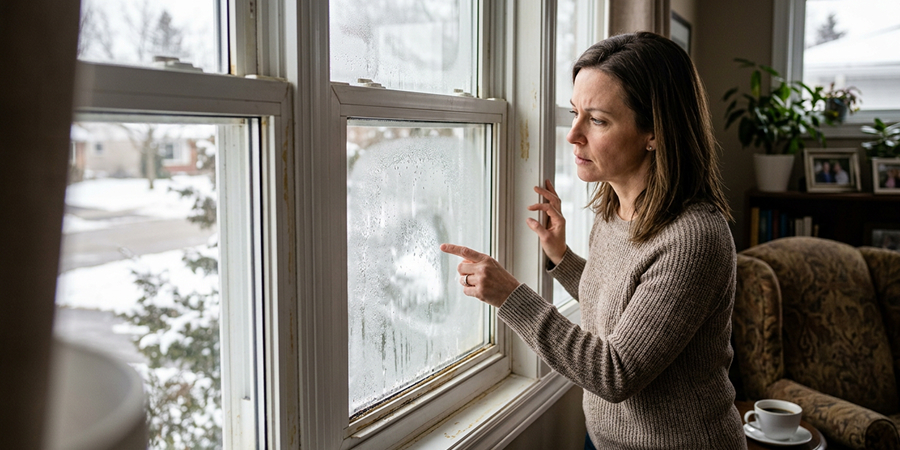
Several practical indicators help those planning a renovation decide whether replacement is likely justified rather than guessing. Rising energy bills with no other explanation, such as a new appliance or a change in occupancy, point toward declining window performance, particularly if the increase tracks with the heating or cooling season. Visible frame damage, including cracking, rot, or chalking on the exterior surface, signals that the frame material itself is degrading rather than just the seals. Windows that are difficult to open, close, or lock often indicate a frame that has warped out of square, which compromises the seal even when the glass looks fine.
Condensation or fogging between the panes of a sealed unit is one of the clearest signs of seal failure, since it means the gas fill has escaped and moisture has entered the sealed cavity, a problem that cannot be repaired without replacing the glass unit. Persistent drafts, noticeably higher outdoor noise transmission than the homeowner remembers, and moisture issues on the interior frame or sill all point in the same direction.
Repair or Replace?
Not every issue calls for full replacement. Hardware problems, such as a worn crank mechanism on an operable window or failed weatherstripping, can often be serviced without replacing the entire unit. Seal failure inside an insulated glass unit, warped frames, and structural rot, on the other hand, typically cannot be corrected through repair and point toward replacement as the more durable solution.
Signs Your Windows Are Underperforming
A simple self-assessment many homeowners use involves checking each window for the indicators above during a single seasonal walkthrough, ideally during the coldest week of winter or the hottest stretch of summer, when underperformance is easiest to detect through touch and observation rather than relying on memory of how a room felt months earlier.
How Does Professional Installation Affect Window Performance and Energy Savings?
Even a window built to the highest specification can underperform significantly if the installation is poor, a factor that buyers often underweight relative to product specification. Proper installation requires accurate air sealing between the window frame and the rough opening, correct shimming so the unit sits square without stressing the frame, and appropriate insulation in the gap between the window and the wall structure, since an unsealed gap there bypasses the window's own performance entirely.
Moisture management during installation is equally important and often invisible once the job is finished. Flashing and sill pan details that direct any water intrusion back outside, rather than into the wall cavity, determine whether a window installation causes hidden rot years later, long after the original installer has moved on. A technically excellent window installed without attention to these details can leak air and, eventually, water, regardless of how well it performed in laboratory testing.
Risks of Poor Installation
The most common installation failures include insufficient air sealing around the frame perimeter, inadequate or missing insulation in the gap between the frame and the rough opening, and shimming errors that leave the sash slightly out of square, preventing weatherstripping from compressing evenly along its full length. Each of these failures independently reduces the realized performance of an otherwise correctly specified window, and they frequently occur together on a poorly managed job.
Questions to Ask Your Installer
Homeowners benefit from asking direct questions before work begins: how the installer plans to air seal the perimeter, what insulation material will fill the gap between frame and opening, how flashing will be detailed at the sill, and whether the installation will affect the manufacturer's warranty if performed by a third party rather than an authorized dealer.
Window Force addresses this gap between product quality and installed performance by coordinating installations through its authorized dealer network rather than leaving fit and sealing to an unaffiliated, unsupervised installer. Whether the project involves window installation in Ontario or a dealer-led job in another province, that network is trained on the specific frame profile and spacer system the company manufactures, which reduces the chance that a correctly engineered window underperforms simply because of how it was installed. Combined with the 25-year transferable window warranty and CSA certification, this structure gives homeowners a documented standard to hold the installation against, rather than relying solely on a verbal assurance.
Which Window Styles Are Best for Reducing Drafts and Improving Insulation?
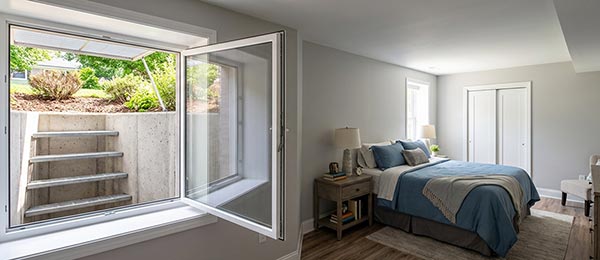
Window style affects sealing performance because operable windows seal in fundamentally different ways depending on their mechanism. For homeowners still deciding between available window styles, the sealing mechanism varies significantly: casement windows, which crank outward and close against the frame with a compression seal, tend to seal more tightly than sliding styles because the sash presses directly into weatherstripping rather than sliding past it. Awning windows share this same compression-seal advantage and open from the bottom, making them useful in locations where rain protection and ventilation matter, such as basements or above a kitchen sink.
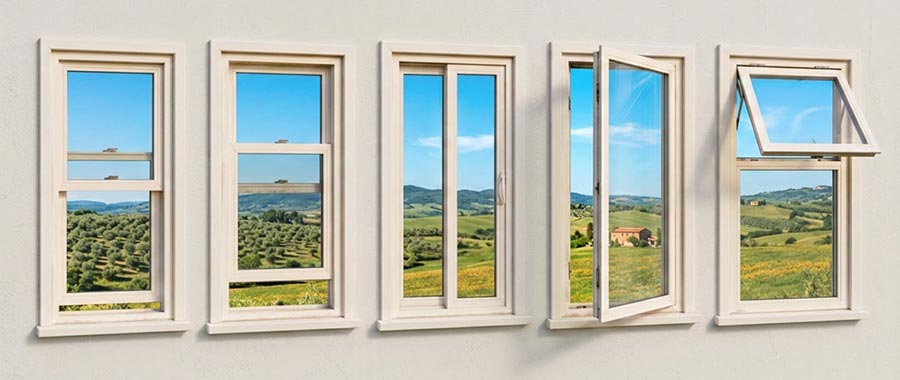
Hung windows, whether single- or double-hung, slide vertically and rely on weatherstripping along the sliding tracks, which generally performs slightly less tightly than a compression seal but offers easier cleaning and a traditional appearance many homeowners prefer. Slider windows operate horizontally on a similar principle. Picture windows, which do not open at all, eliminate the sealing question entirely since there is no moving sash, making them the tightest option by design wherever ventilation is not required for that particular opening.
| Window Style | Seal Type | Relative Air-Tightness | Typical Use Case |
| Casement | Compression seal; sash cranks outward | Among the tightest operable styles | Most rooms, especially where maximum ventilation is desired |
| Awning | Compression seal; sash opens outward from the bottom | Among the tightest operable styles | Basements, above kitchen sinks, and areas exposed to frequent rain |
| Single-/Double-Hung | Sliding seal along vertical tracks | Moderate | Traditional-style homes and spaces where easy cleaning is important |
| Slider | Sliding seal along horizontal tracks | Moderate | Wide window openings and contemporary home designs |
| Picture (Fixed) | No moving sash | Tightest by design | Living rooms and other spaces focused on natural light, where ventilation is not required |
Best Sealing Window Styles
Among operable styles, compression-seal designs such as casement and awning windows generally outperform sliding styles in airtightness testing, which is one reason they are more common in colder climate zones, where minimizing infiltration carries greater weight in overall design decisions.
Choosing by Room Type
Room function should guide style selection as much as raw sealing performance. A bedroom that may need to serve as an emergency egress point has different requirements than a basement window valued mainly for light and minimal maintenance, and a kitchen window above a sink often benefits from an awning configuration that can stay open in light rain without the user needing to monitor the weather.
What Mistakes Can Reduce the Energy-Saving Benefits of New Windows?
Several avoidable mistakes routinely undercut the energy performance homeowners expect from a window upgrade. Choosing strictly on price, without comparing glazing packages or frame construction across quotes, often means selecting a higher U-factor product without realizing it, since the price difference between competing quotes frequently reflects a real difference in components rather than installer margin alone. Ignoring climate needs by accepting a default glazing package not suited to a home's specific orientation and region is a related mistake, since the same window that performs well on a south-facing wall in a mild climate may underperform on a north-facing wall in a harsher one.
Selecting the wrong glazing package for the intended use, such as prioritizing visible light transmittance over solar control in a room that already overheats in summer, undercuts comfort even when the U-factor on paper looks acceptable. Poor installation, discussed earlier in this guide, can erase much of the performance gain from an otherwise well-specified window. Finally, unrealistic savings expectations, often set by aggressive sales messaging rather than an honest range, lead homeowners to judge a window that is performing well as a disappointment simply because it did not match an inflated promise.
Avoiding Common Buying Mistakes
A disciplined approach to comparing quotes, one that lines up glazing specification, frame material, spacer type, and warranty terms side by side rather than comparing only the bottom-line price, helps homeowners avoid most of these pitfalls before signing a contract.
What Should Homeowners Remember Before Choosing Replacement Windows to Reduce Energy Bills?
Lowering energy bills through window replacement comes down to three compounding factors: a glazing package matched to the home's climate and orientation, frame construction that holds its seal for the long term rather than just at installation, and professional fit that translates the product's rated performance into real-world results. None of these factors fully compensates for weaknesses in the other two, which is why comparing quotes on price alone, without examining the specification and installation method, tends to produce disappointing results, even when the window itself carries a respectable brand name.
Homeowners who move from research to an actual quote benefit from bringing specifics to that conversation: the standard size of window openings being replaced, the orientation of each affected wall, and any existing comfort complaints, such as drafts or condensation. That level of detail lets a window company near you, or any regional supplier, recommend a glazing package suited to the actual home rather than a generic default, and it shortens the distance between an initial estimate and an accurate one.
| Decision Factor | What to Check Before Buying |
| Glazing package | Low-E coating type and gas fill matched to your home's orientation and local climate. |
| Frame construction | Frame material, number of internal chambers, corner construction quality, and warm-edge spacer system. |
| Installation method | Proper air sealing, shimming, insulation around the frame, and correct flashing details to prevent air and water leaks. |
| Warranty terms | Warranty length, transferability to future homeowners, and exactly what components and issues are covered or excluded. |
| Realistic savings range | Energy savings estimated based on your home's age, climate, existing window condition, and heating/cooling costs, not a single advertised percentage. |
A 2023 release from Statistics Canada's Canadian Social Survey adds useful context to why this decision carries weight beyond comfort alone: about 14% of Canadian households reported that they kept their dwelling at an unsafe or uncomfortable temperature for at least 1 month in the past 12 months because of unaffordable heating or cooling costs, and about one in seven Canadian households had to reduce or forgo expenses for basic necessities, such as food and medicine, for at least 1 month in the past 12 months in order to pay an energy bill. Reducing a home's heating and cooling demand through a properly specified envelope upgrade is not only a comfort improvement; for a meaningful share of households, it bears directly on energy affordability.
Selecting Replacement Windows That Deliver Lasting Performance
Replacement windows deliver the greatest energy savings when they are selected for the home's specific climate, orientation, and existing building envelope rather than by price or a single performance rating alone. The best results come from treating the window as a complete system instead of focusing on any single specification.
For homeowners comparing replacement options, the most effective approach is to look beyond marketing claims and review the window specification, warranty coverage, and installation process before making a decision. A well-matched window system is more likely to provide consistent comfort, lower heating and cooling costs, and reliable long-term performance than simply choosing the product with the highest advertised specifications.
Window Force supports that approach through custom-built windows manufactured in Ontario, an authorized dealer network trained on the company's products, CSA-certified construction, and a 25-year transferable warranty. Homeowners who are planning a replacement project can compare glazing options and request a personalized quote based on their home's location, orientation, and energy-efficiency goals.
Frequently Asked Questions
How much can replacement windows actually lower my energy bill?
The realistic range depends heavily on the condition of the windows being replaced, local climate, and the rest of the home's insulation. Homes replacing failing single-pane or early double-pane units in a harsher climate zone typically see a larger percentage reduction than homes upgrading already reasonable double-pane windows in a milder region.
Is triple-pane glass worth the extra cost everywhere in Canada?
Not necessarily. Triple-pane glass earns back its added cost faster in colder, longer-winter regions than in milder coastal climates, where a quality double-pane unit with Low-E coating and argon fill often delivers comparable practical performance at a lower price point.
Can I tell if my windows are still under warranty just by looking at them?
No. Warranty status depends on documentation from the original purchase or installation, not visual condition. A window can look fine even if a seal has already failed internally, or look worn even while still well within its warranty period.
Does the time of year I install windows affect their performance?
Quality manufacturing and installation practices account for seasonal temperature ranges, so a properly installed window performs consistently regardless of installation season, though installers may schedule certain sealing or caulking steps around weather conditions on the day of the job.
Are there real cost differences between suppliers in different provinces?
Regional factors such as local labour rates, shipping distance, and climate-driven specification choices can affect quotes from one province to the next. A supplier serving a colder interior region may default to a heavier glazing package, while a coastal supplier may prioritize different features, even when both draw on the same national manufacturing standards.
Will replacing only some of my windows still lower my energy bill?
Partial replacement can help, particularly when it targets the worst-performing windows first, such as those with failed seals or visible drafts. The bill reduction will be smaller than a full-home replacement, but addressing the weakest windows in the envelope typically delivers a noticeable improvement on its own.
People Also Ask