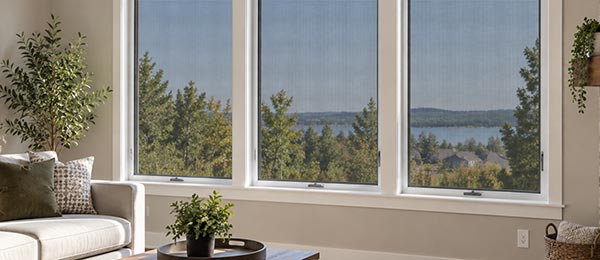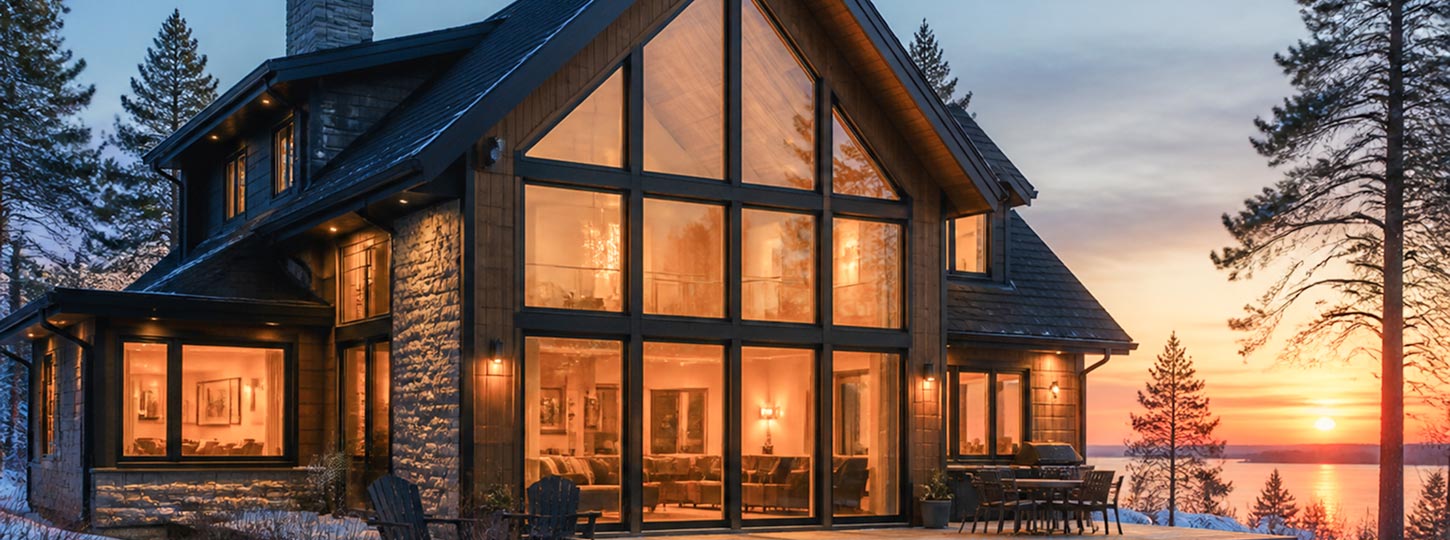


South-facing windows receive the longest daily sun exposure and the strongest passive solar heat gain of any orientation in a Canadian home — lowering heating demand in winter and reducing dependence on artificial lighting year-round. That advantage becomes a liability only when the glazing specification does not account for it: a high Solar Heat Gain Coefficient on a south wall without adequate shading or solar-control coating turns a winter asset into a summer cooling problem.
The orientation-specific glazing recommendations in this guide reflect how Window Force specifies glass across thousands of custom orders each year. Since 2007, we have operated as an Ontario-based manufacturer with our own 80,000 sq ft production line, distributing through an authorized dealer network across Canada. We see firsthand how the same window model performs differently on a south wall versus a north wall in the same home and we build the coating, spacer, and gas-fill specification around that difference before the unit leaves the factory.
Key Takeaways
- South-facing windows capture the most consistent daylight and the strongest passive winter heat gain of any orientation in Canada, but they need the right glass specification to avoid summer overheating.
- The Solar Heat Gain Coefficient (SHGC) of the glass, not the orientation alone, determines whether a south-facing window helps or hurts your energy bill.
- North-facing windows provide steady, glare-free light with almost no solar heat gain, making the north-south pairing a common planning strategy in Canadian homes.
- West-facing windows carry the highest overheating risk because they combine peak sun angle with the hottest part of the day, while east-facing rooms cool down naturally by early afternoon.
- Shading, glazing selection, and room placement, not orientation avoidance, are the most effective tools for getting the benefits of south light without the drawbacks.
What Are South-Facing Windows and Why Do They Matter in Home Design?
A south-facing window is one whose exterior surface faces true south, or close enough to it that it receives the longest period of direct sunlight during the day. Because the sun's path arcs across the southern sky in the Northern Hemisphere, a south wall intercepts sunlight from mid-morning through mid-afternoon almost year-round, while the angle of that sunlight changes dramatically between seasons.
How Window Orientation Is Determined
Orientation is measured against true south, which can differ from magnetic south by several degrees depending on the region, so a compass reading alone is not always precise enough for design purposes. Builders and designers typically confirm orientation using a site survey or an app referenced to true north, and then plan glazing placement accordingly. A wall that reads as "south-facing" can still be rotated up to roughly 20 to 30 degrees toward the southeast or southwest and retain most of its solar behaviour, which matters because very few lots align perfectly with the compass.
Why Homeowners Should Care
Window orientation affects far more than which room gets the best light. It influences heating costs, cooling costs, furniture and flooring durability, and even which rooms feel comfortable to sit in at different times of day. A living room on a south wall behaves completely differently from the same room facing north, even with identical windows installed, because the sun does the work that artificial lighting and the furnace would otherwise have to do. Getting the window direction right at the planning stage, or accounting for it correctly when replacing existing windows, is one of the lowest-cost ways to improve a home's comfort and efficiency.
Windows Near Me
What Are the Main Benefits of South-Facing Windows?
A south-facing orientation is generally considered the most advantageous in Canadian residential design because it provides the longest daily sun exposure and the lowest winter sun angle, which is exactly when homeowners want extra warmth and light. These advantages extend beyond brighter interiors, influencing energy consumption, indoor comfort, and the overall usability of living spaces throughout the year. Proper window specification helps maximize these advantages while limiting seasonal drawbacks. Understanding these advantages allows homeowners to decide where south-facing windows provide the greatest return in both comfort and efficiency.
Natural Light Advantages
South-facing rooms receive direct sunlight for much of the day, particularly from morning through the afternoon, depending on the season and latitude. That daylight is also more even than the low, direct glare typical of east or west exposures, since the sun sits higher in the sky when it crosses the southern face of the house. Living rooms, kitchens, and home offices on the south side of a home tend to feel brighter and more usable throughout the day, without the harsh, low-angle glare that the afternoon sun casts on a west wall.
Winter Comfort Benefits
During winter, the sun sits low on the horizon, which means it penetrates deep into a room through a south-facing window rather than glancing off the glass. According to Natural Resources Canada, heat loss through windows accounts for more than one-quarter of a home's space-heating demand, which is why the glazing choice on a sun-exposed wall has a real impact on the furnace's workload.
A south-facing window with the correct glazing captures low winter sunlight to provide free solar heating, warming the room and reducing demand on the home's heating system during the coldest months of the year, which is precisely when a Canadian household needs it most.
Capturing passive solar heat through south-facing glass is only effective if the insulated glass unit holds that warmth inside the room. Window Force uses a metal-free warm-edge spacer system with a dual seal along the glass perimeter, which reduces the conductive bridge at the pane edge where conventional aluminum spacers bleed heat back to the exterior. On a south wall in January, that edge-of-glass detail determines whether the solar gain stays in the living space or leaks out through the very frame designed to collect it.
What Drawbacks Should Homeowners Consider Before Choosing South-Facing Windows?
The same solar exposure that makes south-facing windows valuable in January can work against a home in July, and the drawbacks are almost entirely about managing that seasonal swing rather than avoiding the orientation altogether. Without appropriate glazing or exterior shading, prolonged exposure to sunlight can raise indoor temperatures and place additional strain on cooling systems. Strong sunlight may also contribute to glare and gradual fading of interior finishes over time. Fortunately, these challenges are predictable and can usually be addressed through thoughtful window specification instead of changing the home's orientation.
Summer Heat Gain
Because a south wall receives sun for most of the day, a poorly specified window can turn a room into the warmest part of the house by mid-afternoon in summer, forcing the air conditioner to work harder to compensate. The issue is typically the glazing specification rather than the window direction itself. A window with a high Solar Heat Gain Coefficient (SHGC) lets in too much solar energy, regardless of how well it insulates against outdoor temperatures. Furniture, hardwood, and fabrics near a large south-facing window are also more exposed to UV-driven fading over time than those in rooms with less direct sun.
| Factor | South-Facing Window (Standard Glazing) | South-Facing Window (Solar-Control Glazing) |
| Winter heat gain | High, beneficial | Moderate, still beneficial |
| Summer heat gain | High, often excessive | Reduced, better balanced |
| Glare at midday | Noticeable in unshaded rooms | Reduced with coated glass |
| UV exposure to interiors | Higher without coating | Lowered with Low-E coating |
| Best paired with | Deep overhangs, exterior shading | Standard shading, moderate overhangs |
Interior Protection Strategies
Engineer Sergey Essipov, with 20 years of experience in window manufacturing, explains:
At our facility, every south-facing unit ships with the coating matched to the orientation noted on the order. When a homeowner asks for a larger glass area on a south wall, we run the SHGC calculation against the exposure before confirming the Low-E tier — because our dual-seal IGU and warm-edge spacer system will retain whatever heat the coating lets through, and on a south wall that means the glass specification has to get the balance right from the start.
Pairing the right glazing with interior treatments such as blinds or UV-filtering film, and with exterior measures such as overhangs meaningfully reduces the trade-off without giving up the light. For homeowners planning south-facing overhangs rather than relying on glazing alone, the geometry is more precise than most people realize. At a latitude of roughly 45°N — approximately Ottawa, Toronto, or Hamilton — the noon sun sits about 68 degrees above the horizon in late June and only about 22 degrees in late December. A 24-inch roof overhang placed 8 inches above the top of the window will shade the glass entirely from above by mid-May and allow the full winter sun to enter from mid-November through February. This is exactly why Canadian farmhouses and older craftsman homes were built with 18- to 24-inch overhangs as a standard architectural detail — not aesthetic tradition but passive solar geometry calculated into the structure before modern Low-E coatings existed.
Sunlight-related fading is cumulative and irreversible: damage builds up with every hour of direct exposure rather than appearing after a single bright day. That means even moderate, steady south light can bleach fabrics and hardwood over time just as effectively as occasional intense direct sun.
How Do South-Facing Windows Compare With North-Facing Windows?
South and north orientations sit at opposite ends of the solar exposure spectrum, which is why architects frequently plan south-facing living spaces and north-facing service rooms in the same home. Each orientation creates a different balance of daylight, solar heat gain, and seasonal comfort. Neither direction is universally better, since the ideal choice depends on how a particular room is used throughout the day. Comparing the two highlights how important orientation is in both new home design and window replacement planning.
Light Quality
Southern light changes character throughout the day and across seasons, moving from a low, warm glow in winter to a higher, more overhead quality in summer. North light, by contrast, is indirect and remarkably consistent because a north wall rarely receives direct sun in the Northern Hemisphere. That consistency makes north-facing rooms well suited to tasks where even glare-free light matters, such as painting studios or home offices with screen-heavy work.
Best Rooms for Each Orientation
South orientation suits living rooms, family rooms, sunrooms, and kitchens, where daylight and winter warmth enhance comfort and reduce reliance on artificial lighting. North-facing rooms work well for bathrooms, laundry rooms, and utility spaces, where consistent, low-heat light is more useful than direct sun, and it also serves bedrooms well for people who prefer a cooler, dimmer room for sleeping. A full side-by-side comparison of all four orientations, including light pattern, solar gain, and best room fit, appears in the summary table at the end of this guide.
How Do West-Facing Windows Affect Comfort in the Afternoon and Evening?
West-facing glass receives the strongest sun during the hottest hours of the day, which is what sets it apart from south-facing glass, even though both get substantial daily exposure. This timing makes west-facing rooms more susceptible to afternoon overheating and intense glare than spaces facing other directions. The combination of high outdoor temperatures and direct solar radiation often creates the greatest cooling demand among window orientations. As a result, west-facing windows typically require more attention to glazing performance and shading strategies.
Afternoon Heat Patterns
A west wall catches direct sun from roughly early afternoon through sunset, overlapping with the period when outdoor temperatures are already at their peak in summer. That overlap compounds the cooling load in a way south-facing glass does not, since the south sun arrives earlier in the day and at a higher angle for much of the year. The low-angle late-day sun on a west wall also produces sharper glare, which can make west-facing living spaces uncomfortable for screen-based work in the late afternoon.
Best Uses for West-Facing Rooms
A west orientation tends to suit rooms used mainly in the evening, such as some dining rooms or casual family spaces, where the warm afternoon light is welcome for a few hours rather than a constant daytime feature. Bedrooms are a weaker fit for west exposure unless shading is planned carefully, since late-day heat buildup can make a west-facing bedroom noticeably warmer at bedtime than one facing another direction.
Are East-Facing Windows Better for Bedrooms, Kitchens, or Morning-Use Spaces?
East-facing windows mirror the west pattern: strong morning sun followed by a cooler, calmer afternoon. This daily cycle creates bright interiors during the first part of the day while avoiding much of the afternoon heat associated with west-facing rooms. As a result, east-facing spaces often remain more comfortable during warm weather without sacrificing natural daylight. These characteristics make an east orientation particularly attractive for rooms used primarily in the morning.
Best Rooms for Morning Light
Bedrooms and kitchens both benefit from east exposure, since morning light supports a natural wake-up rhythm in a bedroom and provides strong illumination in a kitchen during the hours it is most used. Breakfast nooks and home gyms used earlier in the day also tend to work well on an east wall, taking advantage of the bright start without the sustained afternoon heat that a west or south room can accumulate.
When East-Facing Exposure Is Ideal
East orientation is a practical choice in warmer regions or for rooms prone to overheating, since the wall receives little direct sunlight after early afternoon, reducing the cooling burden compared with west or unshaded south exposure. In colder Canadian regions, the trade-off is that east-facing rooms contribute less to solar-assisted winter heating than a south wall does, since the sun is gone from that face for most of the afternoon.
Which Rooms Benefit Most From South-Facing Exposure?
Room use, not just orientation, determines whether south exposure adds real value or simply adds heat load to manage. Spaces occupied for long periods during daylight hours generally benefit the most from the additional sunlight and passive winter warmth. In contrast, rooms used only occasionally may not gain enough practical advantage to justify maximizing southern glazing. Matching orientation with how each room functions leads to a more balanced and energy-efficient home.
Living Spaces
Living rooms and family rooms are the best match for a south orientation because they are used throughout the day, and the extended daylight reduces the need for artificial lighting during those hours. The passive winter warmth also aligns well with how these rooms are used, since they tend to be occupied during the colder evening hours when that stored daytime heat is most welcome.
Work and Relaxation Areas
Home offices benefit from south light when paired with proper glare control, since consistent daylight supports focus without the harsh, low-angle glare typical of east or west exposure. Sunrooms are almost always planned for south orientation specifically to maximize both light and passive heat, making them one of the few room types where a larger-than-typical glazed area on a south wall is usually the right design decision rather than an overreach.
How Can Homeowners Reduce Glare and Overheating From Strong Sun Exposure?
Managing solar exposure is a matter of combining several complementary strategies rather than relying on a single solution.
Homeowners can combine the following measures to bring a sun-exposed room back into balance:
- Select a Low-Ē coating matched to the orientation, favouring stronger solar control on south and west walls.
- Add exterior shading such as overhangs, awnings, or pergolas, which block heat before it reaches the glass.
- Use interior treatments, such as cellular shades or UV-filtering film, in rooms where exterior shading is not practical.
- Plant deciduous trees near south and west windows, which shade the glass in summer and allow sun through once the leaves drop in winter.
Glass Upgrades
The most effective long-term solution is to select the right glass, since exterior shading can be removed, damaged, or neglected over time, whereas a correctly specified coating performs consistently every season without maintenance.
The risk of overheating depends not only on window orientation but also on the Solar Heat Gain Coefficient (SHGC) of the glazing. Selecting an SHGC appropriate for your climate and the window's orientation helps improve year-round comfort by balancing beneficial winter solar gain with reduced summer heat buildup.
Shading Solutions
Exterior shading is generally more effective than interior treatments because it blocks solar heat before it enters the room, rather than after it has already passed through the glass, though the two approaches work well together on the most exposed walls.
What Window Materials and Glass Options Work Best for Sunny Exposures?
Frame material and glazing configuration both influence how well a window performs on a sun-exposed wall, and the two decisions should be considered together instead of separately. While orientation determines the amount of sunlight reaching the window, the frame and glass determine how that energy is managed once it reaches the home. Selecting the right combination improves thermal comfort, limits unwanted heat gain, and supports long-term durability. Modern window systems are designed so that both components contribute to overall energy performance.
Frame Material Choices
Vinyl frames are widely used across Canada for sun-exposed walls because they resist thermal expansion and UV degradation that can affect other materials over years of direct exposure, and multi-chamber vinyl profiles add rigidity without increasing weight. Fibreglass and aluminum-clad options exist as alternatives, though vinyl remains the most common choice for residential replacement projects due to its combination of durability and cost.
Sun-exposed vinyl frames absorb more thermal cycling than shaded ones, which is why the profile construction matters as much as the material itself. Window Force frames are extruded from lead-free uPVC with UV stabilizers that resist chalking and discolouration under sustained southern and western exposure, and every corner is fusion-welded into a continuous joint rather than mechanically fastened. The result is a frame that maintains its dimensional stability through decades of expansion-and-contraction cycles, which south-facing installations experience faster than any other orientation.
Glass Performance Features
Low-Ē coatings, argon gas fills, and warm-edge spacer systems all affect how much heat a window admits and how well it retains conditioned indoor air. Window Force's glass options include several Low-Ē coating tiers designed for different orientation needs, from cold-climate heat retention through to stronger solar control for the sunniest walls. Double- or triple-pane configurations further affect performance, with triple-pane units offering the strongest year-round insulation for homes in areas with both harsh winters and hot summers.
| Coating | Best Suited For | Primary Function |
| Low-Ē 180 | North-facing, cold-climate rooms | Maximizes heat retention |
| Low-Ē² 272 | Mixed exposure, balanced climates | Year-round solar and thermal balance |
| Low-Ē³ 366 | South and west-facing walls | Strong solar control, UV and infrared blocking |
Engineer Sergey Essipov, with 20 years of experience in window manufacturing, notes:
On a south or west wall, we typically steer homeowners toward the higher solar-control coatings, because the frame and spacer can only do so much if the glass itself is letting too much solar energy straight through. The coating provides most of the solar-control performance on those exposures.
How Does Window Orientation Influence Heating and Cooling Costs Throughout the Year?
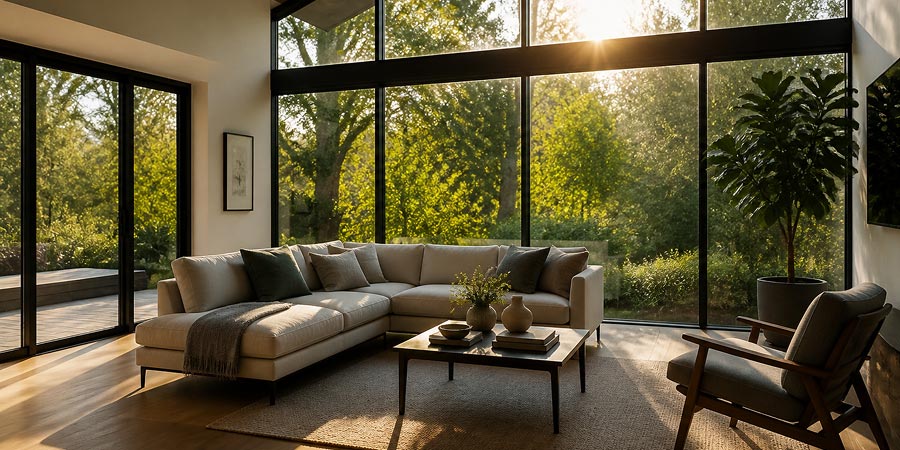
Orientation sets the baseline for how much free heating or unwanted cooling load a home experiences, but the selected glazing determines how much of that potential is actually captured or avoided. Throughout the year, the amount and timing of solar exposure directly influence how often heating and cooling systems need to operate. Homes with well-matched orientation and glazing can take advantage of passive solar energy while reducing unnecessary seasonal energy use. Understanding this relationship enables homeowners to make more informed decisions when selecting replacement windows.
Winter Efficiency
South-facing windows with an appropriately balanced SHGC can meaningfully offset heating costs by capturing low-angle winter sun as passive warmth, reducing how often the furnace needs to run during the day in a room with good exposure. Natural Resources Canada notes that a Solar Heat Gain Coefficient of roughly 0.3 to 0.4 is generally considered appropriate for new or substantially renovated homes in Canada, balancing winter solar gain against the risk of summer overheating. In a city such as Ottawa, where winters are long and sunny days are common even in the coldest months, a well-specified south wall can noticeably reduce the number of hours the heating system runs during the day. A homeowner working with a window manufacturer in Hamilton faces a similar calculation, while a project in Edmonton requires an even more aggressive SHGC target because Alberta's continental climate delivers both colder winters and stronger winter sun intensity than southern Ontario.
Summer Energy Trade-Offs
The same exposure that helps in winter becomes a cooling liability in summer unless the glazing was chosen with that trade-off in mind from the start. Homes in climates with hot, sunny summers, such as parts of Alberta, benefit from lower-SHGC glazing on south and west walls specifically to prevent the cooling system from working overtime during peak afternoon heat. Installation quality also plays a role, since even correctly specified glass underperforms if the surrounding frame is not properly sealed and insulated to prevent air leakage.
The frame's thermal contribution is often overlooked on sun-exposed walls, where most attention goes to the glass. Window Force's multi-chamber profile design divides the frame cross-section into isolated air cavities that slow heat conduction through the vinyl itself — a structural detail that compounds the glazing's solar-control performance on south and west elevations where the frame absorbs direct radiation for hours each day.
Statistics Canada reports that in 2023, 14 percent of Canadian households kept their dwelling at an unsafe or uncomfortable temperature for at least one month because heating or cooling costs were unaffordable. That figure underscores that glazing choice by orientation is not only a comfort decision, but it is also a real factor in a household's ability to manage energy costs.
What Should Canadian Homeowners Consider Before Installing New Windows Based on Direction?
Window placement planning should happen before glazing is ordered, not after, since the coating and frame specifications depend on the direction each wall faces. Climate conditions, room function, and seasonal sun exposure all influence which window configuration will perform best. A glass configuration that works well on one side of the home may be less effective on another with different solar conditions. Considering these factors early helps avoid unnecessary compromises after installation.
Climate Considerations
Homeowners in colder regions generally benefit from prioritizing passive solar gain on south walls, while those in warmer or more humid zones may lean toward stronger solar control across more of the home. A window supplier in Vancouver, for example, typically recommends a different SHGC balance than a vinyl window manufacturer in Calgary, because coastal British Columbia's milder winters and overcast skies reduce the passive solar payoff that Alberta's cold, sunny climate maximizes.
Questions to Ask an Installer
Before finalizing an order, homeowners should ask what SHGC and Low-Ē coating are recommended for each orientation, whether the frame material suits the local climate, and how the quoted lead time and warranty compare across suppliers. A window installer or manufacturer familiar with the areas Window Force serves across Canada can usually speak to regional patterns, such as how a Calgary, Alberta, installation might be specified differently from one in a milder coastal city, based on what tends to perform best in that specific climate zone.
Because Window Force manufactures every unit to order rather than pulling from pre-built stock, the Low-E coating, gas fill, and spacer configuration can be specified per window based on which wall it will occupy — a south-facing kitchen unit and a north-facing bathroom unit in the same order can ship with different glass packages without adding custom pricing. That specification is documented on the order, covered under a 25-year transferable warranty, and verified by CSA certification and ENERGY STAR® qualification across all Canadian climate zones, so the performance claim travels with the window if the home is sold.
Are South-Facing Windows the Right Choice for Every Home Style and Layout?
South orientation is generally advantageous, but lot conditions and existing structures can change how much of that advantage a specific home can actually capture. Nearby buildings, mature trees, roof overhangs, and the home's overall layout all influence how much sunlight actually reaches the windows. In many cases, these site-specific conditions have as much impact on performance as the orientation itself. Evaluating the property as a whole leads to more realistic expectations about the benefits of south-facing glazing.
When They Work Best
An unobstructed south wall on an open lot, with no significant shading from neighbouring structures or mature trees, gets the full benefit of both the light and the passive heat gain that a south orientation offers. Homes with deep roof overhangs already in place are particularly well positioned, since the overhang naturally blocks high summer sun while still admitting the lower winter sun.
When Another Orientation May Be Better
A south wall shadowed for much of the day by a neighbouring building, dense tree cover, or an attached garage loses much of its solar advantage, which can make the investment in premium south-facing glazing less worthwhile than putting that budget toward a less obstructed wall. Family routines matter too: a household that uses a room mainly in the evening may get more practical benefit from a west- or east-facing layout than from a south-facing layout, which is less useful during the hours the room sits empty.
How Can You Choose the Best Window Orientation for Comfort, Light, and Efficiency?
Choosing a window placement strategy comes down to matching the room's purpose, local climate, and glazing selection, rather than defaulting to a single "best" direction for the whole house. Every window direction offers distinct advantages when paired with the right room function and window technology. A balanced approach usually delivers better year-round comfort than maximizing in one direction throughout the home. Reviewing the key considerations before making a final decision helps avoid costly design compromises later.
Checklist Before Buying
A short review before ordering glass helps avoid mismatched specifications:
- Confirm which rooms are used most during the day versus the evening, and orient glazing accordingly.
- Check for shading from trees, neighbouring structures, or rooflines that could reduce a wall's real solar exposure.
- Match the SHGC and Low-Ē coating to each wall's orientation rather than using one specification throughout the home.
- Factor in the local climate zone, since colder regions generally favour more south-facing glazing than milder ones.
Professional Consultation Tips
A brief consultation with a manufacturer or installer before finalizing a project can confirm that the glazing plan matches both the home's orientation and the household's actual daily routines, which is often the detail that gets overlooked when homeowners shop on price or aesthetics alone.
What Are the Key Takeaways About South-Facing Windows, and How Do They Compare With Other Directions?
South-facing windows remain one of the strongest design choices available to Canadian homeowners, offering the longest daily light exposure and the most valuable winter solar heat gain of any orientation. The trade-off, namely summer overheating and glare, is manageable with the right SHGC, Low-Ē coating, and shading strategy, so it is not a reason to avoid south-facing glass altogether.
| Orientation | Light Quality | Solar Heat Gain | Best Rooms | Key Consideration |
| South | Great, changes with the season | High, valuable in winter | Living rooms, kitchens, sunrooms | Match glazing to prevent summer overheating |
| North | Consistent, indirect | Low year-round | Bathrooms, utility rooms | Minimal solar gain, steady light |
| East | Bright mornings, cooler afternoons | Moderate, front-loaded | Bedrooms, kitchens | Ideal for morning-use spaces |
| West | Intense afternoons and evenings | High peaks with the heat of the day | Evening-use spaces | Highest overheating and glare risk |
Window Force's custom-to-order manufacturing model is built around exactly this kind of per-wall specification. Each unit produced at our Ontario facility ships with the coating, spacer, and gas fill matched to the orientation and climate zone recorded on the order, distributed and installed through an authorized dealer network that verifies the glazing plan against the home's actual exposure before installation begins. The full specification is backed by a 25-year transferable warranty, CSA certification, and ENERGY STAR® qualification across all Canadian climate zones — documented performance that stays accountable long after the installation crew leaves the site.
Homeowners planning a window replacement should treat orientation as the starting point for selecting the right glass package. Considering room use, local climate, and glazing together, ideally with a manufacturer who can speak to regional performance patterns, produces a result that delivers the daylight and warmth south orientation is known for without the seasonal downsides that come from mismatched glass.
Frequently Asked Questions
Do south-facing windows always cause overheating?
No. Overheating is primarily determined by the glass specification, not orientation alone. A south-facing window with an appropriate Solar Heat Gain Coefficient and adequate shading can provide strong winter benefits without excessive summer heat gain.
How can I reduce glare from south-facing windows?
Interior treatments such as cellular shades or blinds help manage glare quickly, while a solar-control Low-Ē coating reduces both glare and heat at the glass itself. Exterior shading, such as an overhang or pergola, addresses the problem before sunlight reaches the window at all.
Is upgrading south-facing windows worth it in colder climates?
Yes, in most cases. Colder climates see the greatest benefit from passive solar heat gain during long winters, and correctly specified glazing lets a home capture that benefit while still controlling summer heat with the right coating.
How can I protect my interior furnishings from UV fading near south-facing windows?
A Low-Ē coating with UV-blocking properties is the most effective long-term solution, since it addresses the issue at the glass rather than relying solely on window treatments. Using UV-filtering film and periodically rotating or repositioning furniture can further reduce visible fading.
What is the difference between south-facing and west-facing overheating risk?
South-facing windows receive strong sun for a longer portion of the day but at a higher angle for much of the year, which shading and overhangs manage well. West-facing windows receive lower-angle sun concentrated in the hottest part of the afternoon, making glare and heat harder to control with overhangs alone.
Should every room in a Canadian home be south-facing if possible?
No. Orientation should match room use: living areas and kitchens generally benefit most from south exposure, while bathrooms, utility rooms, and some bedrooms often perform better with north or east exposure, or a balanced mix of orientations, depending on household routines.
People Also Ask