

Fresh air exchange helps reduce carbon dioxide levels, dilute indoor pollutants, and maintain a more comfortable indoor environment, especially in homes with limited natural air leakage. How often that should happen has less to do with a fixed rule and more to do with room function, occupancy, and the type of windows installed.
Ventilation habits only work as well as the windows behind them. Window Force approaches this topic from the manufacturing side: since 2007, our 80,000 sq ft Ontario facility has produced custom operable windows — casement, awning, and slider units among them — for homes in every Canadian climate zone. Because each unit is built to seal tightly when closed and open thousands of times smoothly over its service life, the airing routines described in this guide reflect the same balance between airtightness and controlled airflow that our engineering team designs for on every order.
Key Takeaways
- Most homes benefit from airing out once or twice a day for 5 to 15 minutes, even through winter, rather than leaving a window cracked for hours.
- Cross-ventilation, opening windows on opposite sides of a room or home, clears stale air faster than a single open window.
- Kitchens, bathrooms, and bedrooms carry the heaviest loads of moisture and pollutants and need the most frequent airing.
- Operable window styles such as casement and awning models give homeowners more precise control over airflow than older single-hung styles.
- Skip ventilation during wildfire smoke events, extreme cold snaps, or heavy pollen days, and rely on mechanical ventilation instead.
How Often Should You Open Your Home's Windows for Fresh Air?
Proper ventilation is essential for maintaining a comfortable and healthy indoor environment, particularly in modern energy-efficient homes. Without regular ventilation, moisture, carbon dioxide, and everyday indoor pollutants can gradually accumulate, affecting both air quality and comfort. The ideal ventilation routine depends on factors such as household size, lifestyle habits, local climate conditions, and the home's overall ventilation system. Understanding how often to open windows helps homeowners strike the right balance between improving indoor air quality and minimizing unnecessary heat loss.
Daily ventilation basics
For most households, opening windows once or twice a day is enough to keep indoor air fresh. The right frequency depends on how many people live in the home, whether pets are present, how often meals are cooked, and how humid the climate is. A household with a large family or a home with pets will generally need more frequent airing than a smaller, quieter home.
How long is enough?
Short bursts work better than long ones. Health Canada notes that fresh air should circulate throughout occupied spaces rather than remain confined to a single room, and that leaving interior doors open at night helps distribute fresh air rather than trapping it in one space.
In practice, 5 to 15 minutes of open windows is usually enough to exchange the air in a room without significantly cooling the house, particularly if two windows on opposite walls are opened at once.
Windows Near Me
What Are the Main Benefits of Opening Windows at Home?
Regular window ventilation offers benefits that extend beyond simply making a room feel fresher. Indoor environments naturally accumulate moisture, odours, airborne particles, and gases generated by everyday activities such as cooking, cleaning, and even breathing. Allowing outdoor air to circulate through the home helps dilute many of these contaminants while supporting a more comfortable living environment. The specific advantages become especially noticeable in energy-efficient homes with limited natural air exchange.
Regular air exchange helps reduce carbon dioxide levels, remove indoor pollutants, and improve overall comfort, particularly in tightly sealed homes. The U.S. Environmental Protection Agency notes that indoor air can contain higher concentrations of certain pollutants than outdoor air, making regular ventilation an important part of maintaining healthy indoor conditions. Homes that are regularly ventilated tend to feel less stuffy and more comfortable, and many people notice they concentrate better in a well-ventilated room, especially when working from home for long stretches. Moisture control is the other major benefit. Cooking, showering, laundry, and even breathing add water vapour to indoor air, and without adequate ventilation, that moisture can accumulate indoors. Opening windows for short periods lets that humidity escape before it condenses on cold surfaces or contributes to musty odours that linger in fabric and carpet.
How Do You Air Out a Room Quickly and Effectively?
The effectiveness of natural ventilation depends not only on how often windows are opened but also on how they are used. Strategic airflow patterns can refresh indoor spaces much faster than simply leaving a single window open for an extended period. Factors such as window placement, room layout, and interior obstructions influence how efficiently fresh air circulates through a home. Using the right approach can improve indoor air quality while minimizing heat loss during colder months.
Best airflow setup
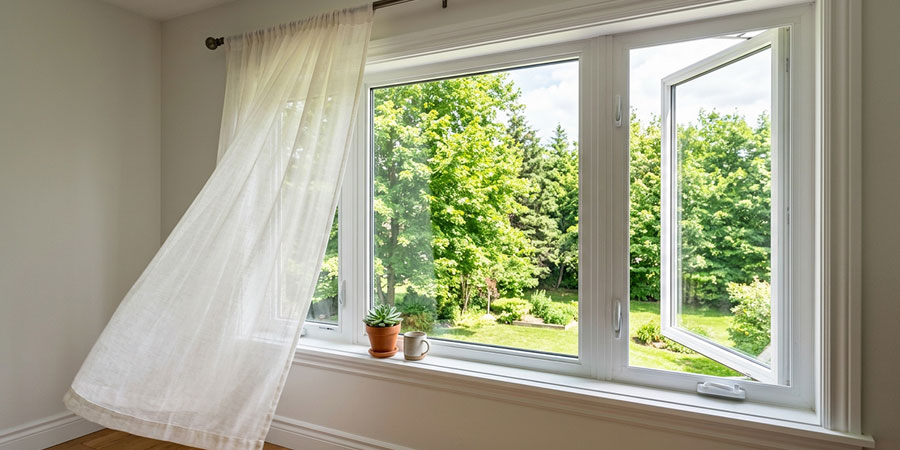
The fastest way to refresh a room is cross-ventilation: opening windows on opposite or adjacent walls so air can move through rather than simply swirl near a single opening. Where only one operable window is available, opening the interior door at the same time helps draw air through the space.
Common mistakes
A few habits reduce how well ventilation actually works:
- Opening only one window in a room limits air movement to the area right next to it
- Leaving heavy curtains or furniture blocking the window opening
- Ventilating for a long stretch instead of a short, deliberate burst
- Ignoring the kitchen or bathroom fan, which should run alongside an open window during and after cooking or showering
Correcting these habits usually improves air exchange more than opening windows more often.
Does Opening Windows Help With Dust, or Can It Make the Problem Worse?
Many homeowners wonder whether opening windows reduces indoor dust levels or simply introduces more particles from outside. The answer depends on outdoor air quality, nearby pollution sources, and the types of particles already present indoors. In some situations, ventilation helps remove dust, allergens, and stale air, while in others it can increase exposure to pollen and airborne debris. Evaluating both indoor and outdoor factors is essential for making informed ventilation decisions.
Indoor vs outdoor dust
Ventilation reduces the buildup of indoor dust sources such as skin cells, fabric fibres, and pet dander by moving stale air out and replacing it with cleaner outdoor air. At the same time, outdoor sources, including pollen, construction debris, and traffic particulates, can enter through an open window, particularly in urban areas or during dry, windy weather.
When to keep them closed
On high-pollen days, near active construction, or when local air quality is poor, it is often better to rely on indoor air circulation, a properly maintained furnace filter, or an air purifier rather than opening windows. Screens help reduce insects and larger debris, but do not filter fine particulate matter.
What Factors Affect Whether Opening Windows Improves Indoor Air Quality?
Opening windows does not always lead to better indoor air quality. Environmental conditions, seasonal changes, and the design of the home itself all influence how beneficial natural ventilation will be. Outdoor pollutants, humidity levels, and airflow pathways inside the house can determine whether fresh air improves comfort or introduces new issues. Understanding these variables helps homeowners ventilate more effectively throughout the year.
Weather and environment
Outdoor air quality should be considered before relying on natural ventilation. During wildfire smoke events or periods of elevated fine particulate pollution, opening windows may introduce harmful pollutants indoors rather than improve indoor conditions. Health authorities recommend limiting natural ventilation when air quality advisories are in effect and using filtration or mechanical ventilation instead.
Home layout considerations
A home's layout affects how efficiently airflow moves through the home once windows are open. Rooms with windows on only one wall exchange air more slowly than those with openings on two sides, and homes with an open-concept main floor tend to circulate fresh air faster than those with many closed-off rooms.
When Is the Best Time of Day to Open Windows in Different Seasons?
The timing of ventilation can influence both indoor comfort and energy efficiency. Outdoor temperatures, humidity levels, and seasonal air quality conditions vary throughout the day, making some periods better suited for airing out a home than others. Choosing the right time to open windows helps maximize fresh air exchange while minimizing unwanted heat gain, heat loss, or excess moisture. Adapting ventilation habits to seasonal conditions allows homeowners to maintain healthier indoor air year-round.
Summer timing
In warmer months, early morning and evening are usually the best times to ventilate, since outdoor temperatures are lower and pollution from daytime traffic has not yet built up. Midday ventilation in summer can introduce additional heat and humidity, reducing indoor comfort and increasing cooling demand.
Winter timing
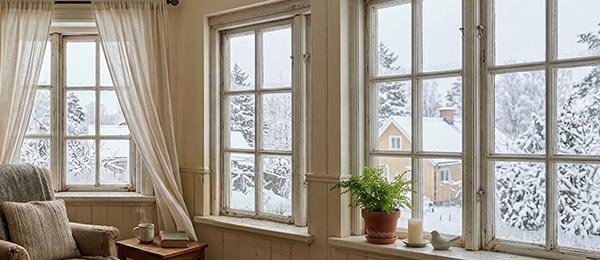
In cold-climate cities such as Calgary, where outdoor air is often very dry, brief midday airing when temperatures are at their highest for the day tends to work best. Short bursts limit heat loss while still exchanging stale indoor air for fresh, if drier, outdoor air.
Should You Open Windows Every Day in Winter in Canada?
Many homeowners hesitate to open windows during winter because they worry about losing heat and increasing energy costs. However, homes with limited natural air leakage can quickly accumulate moisture, odours, and stale air if they are not ventilated regularly. The key is to ventilate strategically, using short periods of fresh air exchange that improve indoor conditions without significantly affecting indoor temperatures. Understanding how to balance ventilation and energy efficiency is particularly important in colder Canadian climates.
Winter airing without wasting heat
Engineer Sergey Essipov, with 20 years of experience in window manufacturing, explains:
Many homeowners avoid opening windows in winter because they assume it causes significant heat loss. In practice, a brief five- to ten-minute session exchanges stale indoor air without noticeably cooling walls, floors, or furnishings. At our facility, we design for exactly this pattern: our multi-chamber profiles trap insulating air within the frame itself, so the structure holds warmth between airings and the room recovers its temperature quickly once the sash is closed. The real winter problem is rarely a deliberate short airing; it's an aging window that leaks all day, whether you want fresh air or not.
According to Natural Resources Canada, windows, doors, and skylights can account for up to 35 percent of a home's total heat loss, which makes short, deliberate airing far more efficient than leaving a window cracked for extended periods.
A useful habit is pairing a 5- to 10-minute daily airing with well-sealed, energy-efficient windows for the rest of the time, so the home loses as little heat as possible between ventilation sessions.
Signs your home needs ventilation
Condensation on glass, persistent odours, and stuffy indoor air are common indicators that additional ventilation may be needed.
Condensation is only a reliable ventilation signal if the window itself isn't creating it. Window Force builds every sealed glass unit with a dual-seal, metal-free warm-edge spacer, which keeps the edge of the glass measurably warmer through a Canadian winter than a conventional aluminum spacer would. On a window built this way, moisture appearing on the glass indicates genuine indoor humidity that airing can fix, not a cold edge manufactured into the product.
Which Rooms in the House Need the Most Ventilation?
Not every room in a home requires the same level of ventilation. Some areas naturally generate more moisture, odours, and airborne pollutants because of daily activities such as cooking, bathing, and sleeping. Prioritizing ventilation in these spaces helps maintain better indoor air quality, reduces condensation, and supports overall comfort. Identifying the rooms with the greatest ventilation needs makes it easier to establish an effective routine.

High-moisture areas
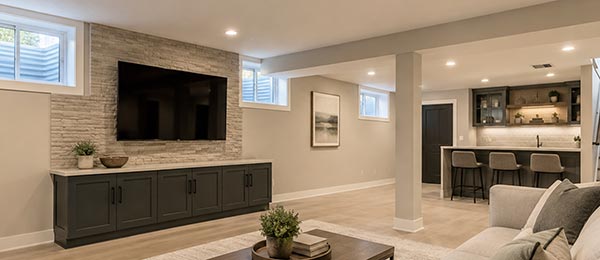
Kitchens, bathrooms, and laundry rooms generate the most moisture and odour and benefit from airing immediately after use, in addition to running an exhaust fan. Basements, particularly in humid prairie climates like Winnipeg's summer months, also need regular airflow to prevent moisture buildup in spaces with limited natural light and ventilation.
Frame material determines how well a window tolerates this daily moisture cycle. Wood frames absorb humidity, and painted finishes eventually peel in rooms that steam up twice a day. Window Force manufactures its frames from lead-free uPVC with UV stabilizers and welds every corner by fusion rather than using mechanical fasteners, so the frame has no seams for moisture to penetrate and no organic material to swell. Bathrooms and kitchens can be aired as often as needed without the frame itself becoming the maintenance problem.
Low-airflow spaces
Bedrooms often experience elevated carbon dioxide levels overnight due to occupant activity during sleep. Closets and small storage rooms, which rarely have their own ventilation, benefit from leaving the door open during the daily airing of the room they connect to.
| Room | Main Concern | Recommended Frequency | Ideal Duration |
| Kitchen | Cooking odours, grease particles, moisture | After cooking | 5 — 10 minutes |
| Bathroom | Humidity, mould risk | After showering | 5 — 10 minutes |
| Bedroom | CO₂ buildup overnight | Morning | 10 — 15 minutes |
| Living areas | General staleness, dust | Once daily | 10 — 20 minutes |
| Basement | Humidity, limited airflow | 2 — 3 times weekly | 15 — 20 minutes |
What Signs Show That Your Home Needs More Fresh Air, and Can Opening Windows Solve the Problem?
Visible condensation on windows, especially in the morning, is one of the clearest indicators that a home may not be receiving enough fresh air. Other warning signs include dark spots or mould developing in corners, closets, or around window frames, as well as a persistent feeling of stuffiness indoors. Lingering cooking smells, pet odours that do not dissipate, and waking up feeling tired or groggy despite getting enough sleep can also suggest insufficient air exchange.
For many households, opening windows daily is enough to address common indoor air quality concerns. Moisture generated by cooking, showering, laundry, or a moderate number of houseplants can usually be managed with short ventilation periods and kitchen and bathroom exhaust fans. Regular airflow helps reduce humidity, limit condensation buildup, and remove stale odours before they become noticeable.
However, natural ventilation has its limits. Homes with ongoing moisture issues, very cold winter conditions, or few operable windows may struggle to maintain healthy indoor humidity levels through window opening alone. In these situations, a heat recovery ventilator (HRV) can provide continuous ventilation while minimizing heat loss, making it a practical solution for households that continue to experience condensation, excess humidity, or stale air despite consistent ventilation habits.
How Should You Open Windows Safely and Efficiently in Canadian Homes?
Ventilation practices should consider both comfort and safety. Window operation methods, locking features, and seasonal weather conditions all affect how effectively fresh air can be introduced into a home. Proper ventilation techniques can improve indoor air quality while reducing concerns related to security, child safety, and energy loss. Understanding these considerations helps homeowners take advantage of natural airflow more efficiently.
Safety first
Locking positions matter for both security and child safety; many modern windows include a partial-open lock that allows airflow without leaving the opening wide enough for a small child or pet to fit through. Insect screens should be checked each spring for tears, since a damaged screen defeats the purpose of ventilating through the window.
Efficient opening methods
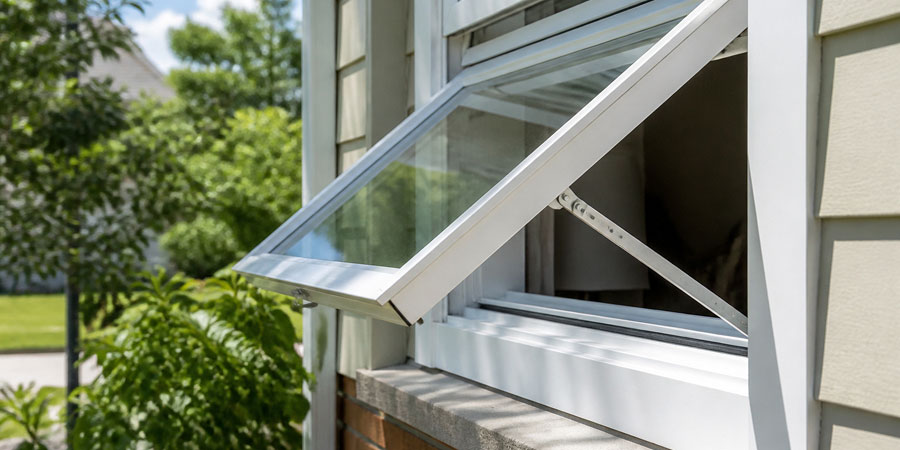
Window Force's casement windows open fully outward on a crank mechanism, which captures side breezes and directs them indoors more effectively than a sash that only slides partway. Awning windows, hinged at the top, allow airflow even during light rain, making them a practical option for bathrooms or upper-floor bedrooms where ventilation is needed regardless of weather. Choosing the right operable window style for each room does more to improve airflow than simply opening windows more often.
How Can Better Windows Improve Ventilation and Comfort at Home?
The design and performance of a window influence more than just energy efficiency. Window style, opening mechanism, and hardware features all affect how easily fresh air can circulate through a home. Modern operable windows allow homeowners to control airflow more precisely while maintaining strong thermal performance when closed. Selecting the right window configuration can therefore contribute to both improved ventilation and greater year-round comfort.
Ventilation-friendly window features
Window design directly affects how well a home ventilates. Multi-point locking systems allow a window to be secured in a partially open position, hinge styles determine how directly air is channelled indoors, and screen quality affects whether insects and debris are kept out during warm-weather airing. Window Force manufactures its windows to meet or exceed ENERGY STAR® standards, which means the same window that seals tightly against drafts when closed also opens cleanly for controlled ventilation when needed.
Engineer Sergey Essipov, with 20 years of experience in window manufacturing, explains:
A window that gets opened every single day has to reseal perfectly every single time, or daily airing gradually turns into a permanent draft. At our facility, we pair crank-operated sashes with multi-point locking hardware that evenly compresses the weatherstripping around the full perimeter at every closure. That means a window opened 365 times a year still seals on cycle one thousand the way it did on day one, which is the whole precondition for making frequent ventilation an energy-neutral habit.
| Window Type | Ventilation Style | Best Rooms | Key Advantage |
| Casement | Full outward crank opening | Living rooms, kitchens | Captures side breezes directly |
| Awning | Hinged at the top, opens outward | Bathrooms, upper floors | Ventilates even in light rain |
| Slider | Horizontal track opening | Basements, bedrooms | Space-saving, low-maintenance |
| Single/Double Hung | Vertical sash opening | Traditional-style rooms | Familiar operation, flexible airflow |
When replacement may help
Older windows with worn weatherstripping or warped frames often leak air even when closed, which undermines the point of controlled ventilation. Pairing operable styles with Low-E glass options helps balance airflow control with year-round thermal performance, since the glass manages heat transfer while the sash manages airflow.
This is where the manufacturing model matters as much as the product. Window Force builds every replacement window to order, measured, specified, and produced at our Ontario facility, then installed through our authorized dealer network, so the people fitting the unit work from the same specifications as the people who built it. Each unit is CSA-certified and carries a 25-year transferable warranty, along with the ENERGY STAR® performance described above. For a homeowner replacing windows specifically to regain control over airflow, that means the tight seal and smooth operation the upgrade was chosen for are documented, certified, and guaranteed for decades, not assumed.
What Is the Best Daily Window-Opening Routine for Most Households?
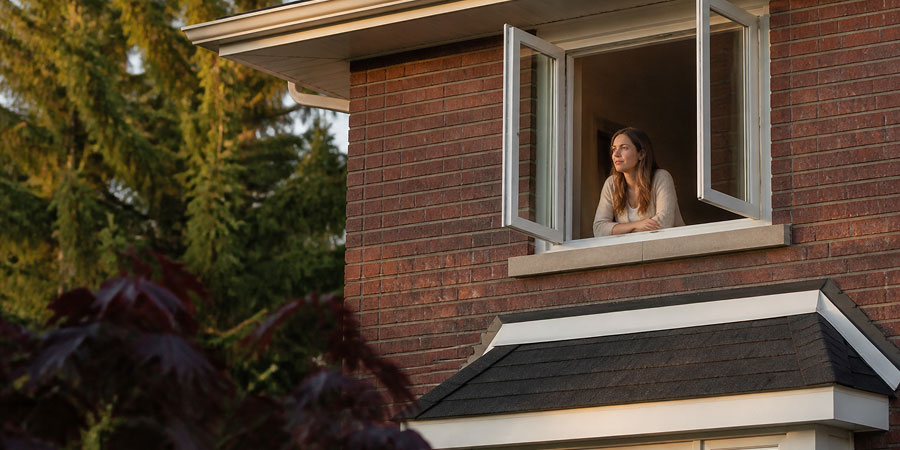
Creating a simple ventilation routine can make it much easier to maintain healthy indoor air quality. Rather than opening windows randomly throughout the day, homeowners often benefit from following a schedule that aligns with typical household activities and seasonal conditions. Consistent short periods of ventilation help reduce moisture buildup, refresh indoor spaces, and improve overall comfort. The ideal routine may vary depending on climate, occupancy levels, and the layout of the home.
Simple daily checklist
A practical routine starts with the bedroom in the morning, moves to the kitchen after breakfast, and includes a midday session with windows open on opposite sides of the main living area. Bathrooms should be aired immediately after each shower, in addition to their exhaust fan.
Routine by season
Ventilation needs to shift with the seasons: summer favours early-morning and evening airing to avoid heat and pollution, while winter favours a single, short midday session when temperatures are highest.
| Season | Frequency | Duration | Key Tip |
| Spring | Daily | 10 — 15 minutes | Watch for high pollen days |
| Summer | Twice daily | 10 — 20 minutes | Ventilate morning and evening |
| Fall | Daily | 10 — 15 minutes | Good general-purpose season |
| Winter | Once daily | 5 — 10 minutes | Choose the warmest part of the day |
What Should Homeowners Remember About Opening Windows for a Healthier Home?
Maintaining fresh indoor air does not require complex equipment or lengthy ventilation sessions. In most homes, a consistent habit of opening windows for a few minutes each day can significantly improve comfort, reduce moisture-related issues, and support healthier living conditions. The most effective approach depends on factors such as weather, season, room usage, and outdoor air quality. By adapting ventilation habits to these conditions, homeowners can create a more comfortable and balanced indoor environment year-round.
Homeowners who pair a short daily routine with well-designed, Canadian-manufactured windows get the best of both worlds: tight energy performance when windows are closed and reliable, controllable airflow when they are open. Reviewing which rooms need airing most and which window styles support that goal is a practical next step for anyone noticing condensation, stuffiness, or lingering odours at home.
Frequently Asked Questions
How long should I leave my windows open each day?
Five to fifteen minutes is usually enough to exchange the air in a room, particularly if two windows on opposite walls are opened at the same time. Leaving a window cracked for hours is less effective and, in winter, wastes more heat than it's worth.
Is it safe to open windows in a Canadian winter?
In winter, brief ventilation sessions of approximately 5 to 10 minutes are typically sufficient to refresh indoor air while minimizing heat loss.
Can opening windows help with mould and condensation?
Regular ventilation reduces humidity, which can lead to condensation and mould growth, especially in kitchens, bathrooms, and basements. Persistent mould despite regular airing usually indicates a moisture source that requires separate attention.
Do I still need to open windows if I have an HRV or mechanical ventilation system?
Homes equipped with an HRV generally require less manual ventilation, although occasionally opening windows in mild weather can still improve comfort.
What is the best window style for maximizing airflow?
Casement windows tend to offer the strongest airflow because they open fully outward and can catch side breezes directly. Awning windows are a close second, especially for rooms that need ventilation regardless of rain.
Should I open windows if there's wildfire smoke or poor outdoor air quality?
No. During smoke events or poor air quality days, keep windows closed and rely on indoor filtration or an HRV instead, since outdoor air in these conditions is worse than what is already inside.
People Also Ask