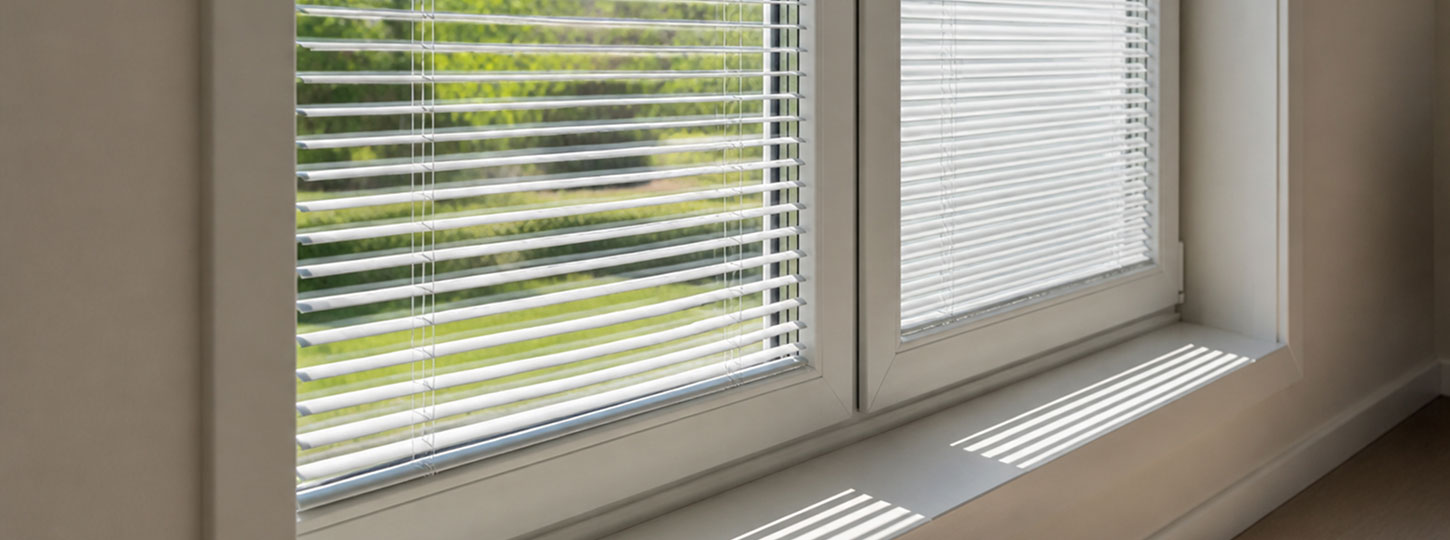


Blinds sealed between two panes of glass promise a home with no dusty slats, no dangling cords, and no snagging when you open the patio door. However, the blind becomes a permanent component of the window itself, which changes the math on cost, thermal performance, and repairs. This guide walks through both sides honestly so you can decide whether a sealed-blind unit is right for your next project.
This article draws on Window Force's experience building the sealed insulated glass units that make integrated blinds possible in the first place. Since 2007, our 80,000 sq ft Ontario facility has produced custom-to-order glass packages, including the multi-chamber, gas-filled units this article evaluates, for builders, dealers, and homeowners across Canada. That means the cost, performance, and maintenance trade-offs described below reflect units we design, seal, and warranty ourselves, not specifications pulled from a supplier catalogue.
Key Takeaways
- Built-in blinds sit inside the sealed cavity of an insulated glass unit, so they never collect household dust and have no accessible cords, which is a genuine safety advantage in homes with young children and pets.
- The convenience comes at a premium: expect a noticeably higher price per window than the same unit with standard glazing, and motorized controls raise the figure further.
- Because integrated blinds occupy space within the insulated glass unit, thermal performance may be slightly lower than that of a comparable high-performance gas-filled unit. Buyers should compare certified ratings for the specific configuration they are considering.
- If the internal mechanism fails, the blind usually cannot be serviced on its own; in most cases, the entire glass unit is swapped out.
- The best candidates are patio doors, kitchens, bathrooms, and hard-to-reach glazing, where cleaning access and cord safety matter more than maximum insulation.
Why Do Homeowners Choose a Window with Built-In Blinds Instead of Traditional Blinds?
The appeal is mostly about daily life rather than engineering. Conventional blinds gather dust, tilt unevenly, tangle, and get bent by kids, pets, and vacuum cleaners. A blind sealed inside the glass does none of that. There is nothing to wipe, nothing to re-string, and nothing hanging in front of the glass when you want a clear view. For busy households, the difference shows up every week: one less surface to clean and one less thing to fix.
Cord safety is the other quiet driver. Families with toddlers increasingly look for coverings without any reachable cord, and an integrated blind operated by a slider or remote removes that hazard entirely rather than managing it with tie-downs and cleats.
Best Rooms for This Option
Sealed blinds earn their keep where ordinary coverings struggle. Patio and entry doors benefit because there is no blind spot slapping against the glass every time the door swings. Kitchens benefit because grease and steam never reach the slats. Bathrooms get privacy without moisture-damaged fabric. Stairwell and two-storey foyer windows benefit simply because nobody wants to climb a ladder to dust them.
Who Benefits Most from Sealed Blinds
The strongest matches are households with young children or shedding pets, allergy sufferers who want fewer dust reservoirs, downsizers who value low upkeep, and owners of rental or multi-generational properties where durability beats decorative variety.
The scale of the underlying risk is documented in the federal record. The Regulatory Impact Analysis accompanying Canada's corded window coverings rules reports 39 strangulation fatalities linked to these products in Canada between 1989 and November 2018, and cites a 2018 epidemiologic study in The Journal of Pediatrics covering 1990 — 2015 in the United States, whose authors concluded that only a mandatory standard eliminating accessible cords would resolve the hazard. Cordless-by-design products are the direct answer to that conclusion.
Windows Near Me
What Are the Main Advantages of Windows with Blinds Inside?
The benefits fall into three clusters, and it is worth separating them because they matter to different buyers. Some homeowners prioritize safety and easier day-to-day living, while others focus on appearance or on reducing long-term maintenance. Looking at each advantage individually provides a clearer picture of where windows with built-in blinds deliver the greatest value.
Safety Benefits
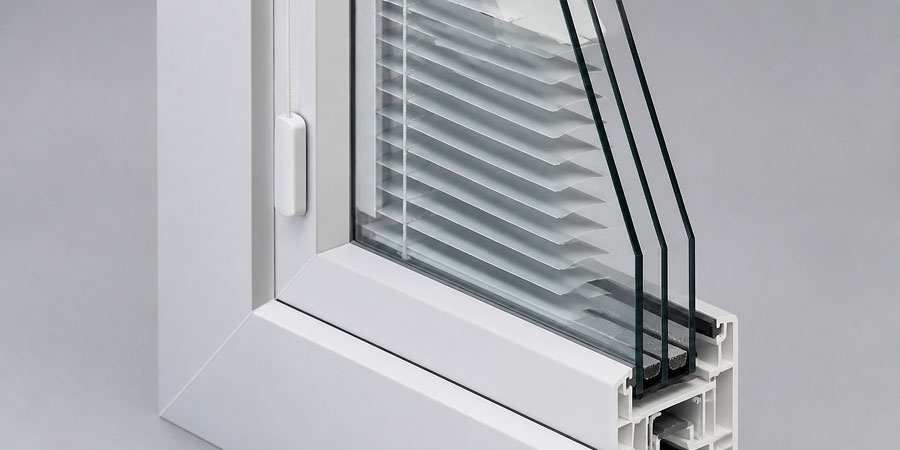
With the blind sealed between panes, there is no free-hanging cord anywhere on the product. Operation happens through a magnetic slider on the frame, a short captive control, or a motor with a remote or wall switch. That design removes the strangulation hazard associated with corded coverings instead of merely shortening or shielding the cord.
Canada treats this hazard as a regulatory matter, not a style preference. Health Canada's Corded Window Coverings Regulations, in force since 2021, are described by the agency as the strictest requirements in the world and apply to every covering sold in Canada, custom or off the shelf; before the rules changed, an average of one child per year died of strangulation on a window covering cord. Products with no accessible cord at all, such as blinds sealed between glass panes, meet the intent of the regulations by design rather than by add-on safety devices.
Maintenance Benefits
The glass protects the slats from dust, cooking residue, pet hair, and accidental damage. You clean the window the way you clean any window: glass and frame only. The slats themselves should look the same in year ten as they did on day one, because nothing in the room ever touches them.
Aesthetic and Usability Benefits
Integrated blinds keep sightlines clean. There are no valances, rods, or stacked fabric, which suits minimalist and modern interiors. Tilt control is even across the whole blind, so you avoid the crooked, half-raised look common with worn corded blinds, and motorized versions can be grouped and scheduled for consistent light control through the day.
What Are the Drawbacks of Window Blinds That Buyers Should Know First?
An honest assessment has to start with the structural reality: putting a blind inside the cavity changes the insulated glass unit itself, and every disadvantage flows from that. While built-in blinds offer clear benefits in convenience and maintenance, they also introduce trade-offs that are less obvious at first glance. Understanding how they affect cost, thermal performance, and long-term serviceability helps buyers weigh those compromises against the practical advantages discussed throughout this guide.
Cost Concerns
A sealed-blind unit is a custom glass package with moving parts inside, so it always costs more than the same window with standard glazing. In the Canadian market, the premium typically runs several hundred dollars per window, and motorized or smart-home versions are even higher. Larger units and doors amplify the difference because the blind hardware scales with the glass.
Energy Performance Concerns
The cavity between panes is normally filled with argon or another inert gas, and that gas fill is a large part of what makes energy-efficient windows perform. Because integrated blinds occupy space within the insulated glass unit, thermal performance may be slightly lower than that of a comparable high-performance gas-filled unit. Performance differences depend on the specific glazing configuration and certified ratings. Buyers comparing certified ratings should check the specific glass package that includes the blind, not the manufacturer's best standard unit.
Most manufacturers still rely on aluminum spacer bars to hold the two panes apart, a design that creates a direct thermal bridge exactly where a blind package needs the seal to perform hardest. Window Force builds its integrated-blind units on a dual-seal, metal-free warm-edge spacer system instead, which removes that conductive path and keeps the seal's structural integrity under the added stress of housing a mechanical blind. For buyers, that translates into a smaller performance gap between a blind-equipped unit and a standard high-performance window than the generic comparisons above might suggest. Certified ratings for the exact configuration remain the only reliable way to confirm it.
Repair and Design Limitations
Because the unit is factory-sealed, the blind cannot be re-strung, re-aligned, or replaced on its own. A failed magnet track or a burned-out motor typically means replacing the whole glass unit. Style choices are also narrow: most integrated blinds come in a handful of neutral colours and a single slat format, so buyers who like changing their décor will find the options restrictive.
This is precisely the risk a warranty needs to cover, not just the glass. Window Force backs every CSA-certified, ENERGY STAR® qualified unit with a 25-year transferable warranty, serviced through our authorized dealer network rather than a third party who never built the product. So when a magnet track or motor fails years into ownership, the cost of the full-unit replacement described above is covered rather than landing on the homeowner as a surprise bill.
Are Inside Window Blinds Easier to Clean and Maintain Over Time?
For the slats themselves, yes, decisively. Dust, allergens, and kitchen film never reach them, which is the core promise of the product. But "maintenance-free" oversells it slightly, because the rest of the window still needs the same care as any other unit.

What Maintenance Is Still Required
Plan on the normal routine: washing interior and exterior glass, wiping frames and tracks, checking weatherstripping seasonally, and keeping drainage openings clear. Motorized models add occasional battery or connection checks. What disappears from the list is everything blind-related: no slat-by-slat dusting, no cord repairs, no bent-louvre replacements.
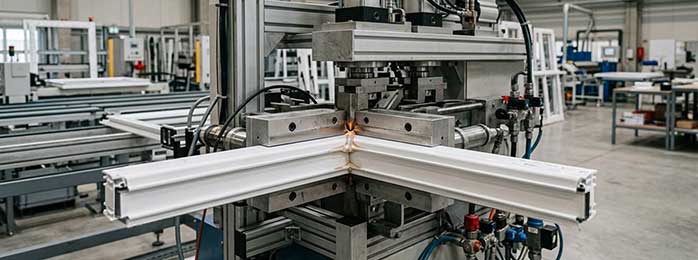
The wipe-down routine is only as easy as the surfaces you are wiping, which is where frame construction quietly matters. Window Force extrudes its frames from lead-free uPVC with UV stabilizers, so the material resists the chalking and yellowing that make older vinyl look tired and feel rough. Fusion-welded corners leave no mechanical joints or fastener heads for grime to settle, resulting in a smooth profile that cleans easily with a damp cloth and keeps its colour through years of direct sun.
How Much Do Windows with Built-In Blinds Price Out Compared with Standard Windows?
The honest answer is a range, because the price of windows with built-in blinds depends on the whole configuration rather than the blind alone. Treat any single national figure with suspicion; regional labour matters too, and the cost of window installation in Alberta will not match quotes in Ontario or on the coast. The factors below drive most of the spread.
| Cost factor | Why does it move the price |
| Unit size and type | Doors and large fixed units need more blind hardware and heavier glass, raising both product and window installation labour costs |
| Control mechanism | Manual magnetic sliders are the entry point; motorized and app-controlled systems add the most |
| Glazing package | Triple glazing with a blind means a thick, heavy unit and a higher price than a double-glazed equivalent |
| Frame material and profile | Premium uPVC or hybrid frames cost more than builder-grade vinyl, regardless of the blind |
| Customization | Non-standard sizes, colours, and shapes are quoted individually as custom glasswork |
What Affects Cost Most
In practice, size and control type dominate. A modest bathroom window with a manual slider carries a small premium; a motorized patio-door package can double the gap. Getting itemized quotes that separate the blind option from the base window is the fastest way to see what you are actually paying for.
Do Built-In Blind Windows Save Money in the Long Run?
Upfront price is only half the ledger. On the savings side: you skip buying separate coverings for those openings, you never pay to replace blinds destroyed by sun, pets, or accidents, and hard-to-reach glazing stops generating cleaning costs. On the expense side: if the internal mechanism or the seal fails outside the warranty period, the appropriate remedy will depend on the nature of the issue, although replacement of the insulated glass unit may sometimes be required.
Climate shapes the calculation as well. In colder climates, homeowners should weigh maintenance benefits against any potential reduction in thermal performance. Shoppers comparing energy-efficient windows in British Columbia, where coastal winters are milder and summer glare control on large glazed walls often matters more, may find the trade-off easier to justify than buyers in the Prairies.

When the Premium May Be Worth It
The premium pays off where the blinds' protection is most needed: doors that see heavy traffic, rooms where conventional coverings fail quickly, and households that would otherwise pay for frequent cleaning or replacement of standard blinds.
Much of the window market separates the company that builds the unit from the company that answers for it years later, which is exactly where long-run math falls apart. Window Force keeps both under one roof: we have manufactured custom-to-order windows since 2007 and stand behind them with a 25-year transferable window warranty serviced through our authorized dealer network. Transferability matters more than most buyers realize because coverage that follows the house protects resale value, not just the original owner.
Where Do Window Blinds Work Best Inside the Home?
While blinds between glass can be installed in many parts of a home, they offer the greatest benefits in rooms where traditional blinds are difficult to maintain or operate. Because the blinds are sealed inside the insulated glass unit, they stay protected from dust, moisture, accidental damage, and everyday wear. Matching the product to the right location allows homeowners to get the most value while minimizing the system’s few limitations. Homeowners still choosing between window styles and opening configurations can compare available options before factoring the sealed-blind specification into their selection.
- Doors: Patio sliding doors, French doors, and front entry doors with glass inserts are among the best applications. Unlike conventional blinds, enclosed blinds do not swing when the door opens or closes, become tangled, or get caught in the handle. They also provide instant privacy with a simple slider or magnetic control.
- Bathrooms and Kitchens: Rooms with high humidity, cooking grease, and frequent cleaning are ideal environments for blinds between glass. Since the blinds are sealed inside the glass, they are protected from moisture, dust, and stains that would normally affect fabric or slatted window coverings. The smooth glass surface is also quick and easy to wipe clean.
- Home Offices and Hard-to-Reach Windows: Blinds between glass work especially well in home offices, where precise light control can help reduce glare during computer work or video calls. They are also an excellent solution for stairwells, foyers, vaulted ceilings, and other high or awkward windows that would otherwise require a ladder to adjust or clean. Their flush, hardware-free appearance also complements modern and minimalist interior designs.
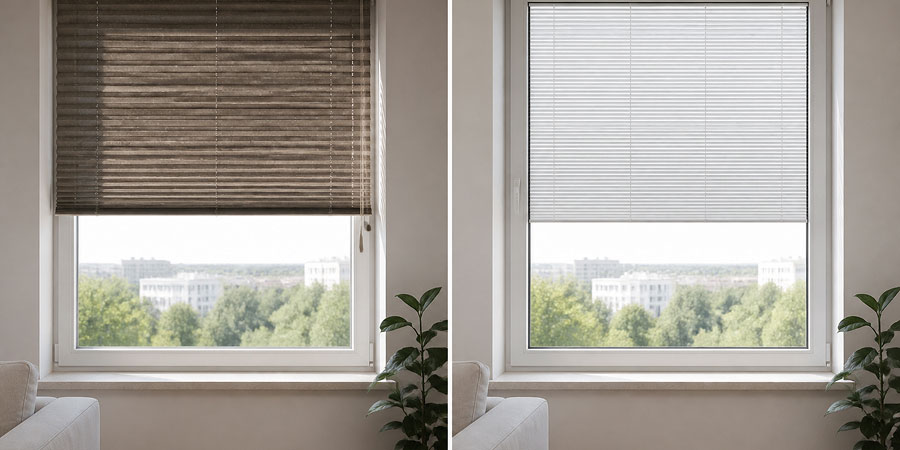
Humidity in bathrooms and kitchens and condensation on stairwells or high glazing do not stop at the glass surface; it also collects in the frame cavity around the sash, and that moisture has to go somewhere. Window Force's multi-chamber uPVC profiles include integrated drainage and weep-hole systems that channel condensation and rainwater infiltration back outside before they can pool against the seal or the blind mechanism inside. In rooms where the whole point of choosing a sealed-blind window is keeping moisture away from the blind, a frame that manages its own water is what makes that promise hold up over the years, not just on installation day.
Are There Any Durability or Repair Issues with a Window with Built-In Blinds?
Two separate risks get mixed together in reviews, and they deserve to be separated. Many homeowners assume that any issue with built-in blinds means the entire window is unreliable, but the reality is more nuanced. Understanding whether a problem involves the blind mechanism or the insulated glass unit makes it much easier to assess durability, repair options, and the product's long-term value.
Common Failure Points
The first risk is the operator: magnetic sliders can desynchronize, cords within slider tracks can wear out, and motors eventually age out. These are mechanical issues with the blind itself. The second, unrelated risk is seal failure of the insulated glass unit, the same risk every sealed unit carries, which shows up as fogging or condensation between panes.
When Repair Is Possible and When Replacement Is Necessary
Minor operator issues on some models can be corrected, and motors mounted in the frame rather than the cavity are sometimes serviceable. But anything inside the sealed cavity, including the slats and internal lift mechanism, is out of reach. A failed internal mechanism or seal generally means a glass unit swap, and if the frame is also aged, many owners opt for full window replacement at that point rather than reinvesting in the old surrounds.
Engineer Sergey Essipov, with 20 years of experience in window manufacturing, notes:
Most premature fogging I have inspected over the years traces back to the edge of the unit, not the glass. At our facility, we build every sealed unit on a dual-seal, metal-free warm-edge spacer system: the primary seal blocks moisture vapour, the secondary seal carries the structural load, and removing metal from the edge reduces the temperature swings that fatigue seals in a Canadian climate. For the homeowner, that is the difference between a warranty you file away and a warranty you use.
How Do Windows with Blinds Inside Compare with Curtains, Shades, and Standard Blinds?
No single option wins every category, so the useful comparison is trade-off by trade-off. Each window covering offers a different balance of maintenance, energy performance, appearance, cost, and long-term practicality. Rather than asking which solution is universally "best," it is more useful to compare how each performs in the areas that matter most for the specific room and the way the space is used.
| Criterion | Built-in blinds | Standard blinds | Shades | Curtains |
| Cleaning effort | Minimal, slats sealed away | High, regular dusting | Moderate | Moderate to high, washing needed |
| Child and pet safety | Excellent, no accessible cords | Varies, cordless models required | Good in cordless versions | Good |
| Style flexibility | Limited neutral palette | Wide | Wide | Widest |
| Upfront cost | Highest | Low | Low to moderate | Low to high |
| Repair or swap | Glass-unit level | Cheap and easy | Cheap and easy | Trivial |
| Light control precision | Very good, even tilt | Good | Moderate | Basic |
| Effect on window thermals | Reduces cavity gas volume | None | Slight insulating benefit | Insulating benefit when closed |
Overall, the comparison highlights a consistent trend: sealed blinds exchange design flexibility for lower maintenance, improved cleanliness, and enhanced safety, while conventional coverings trade ongoing upkeep for freedom and a low entry price.
Whichever covering wins for a given room, the frame around the glass is doing quite a thermal work of its own. Window Force profiles are engineered with multiple internal chambers that divide the frame into separate air pockets, each one interrupting the path heat would otherwise take through the sash. Compared with hollow or two-chamber builder-grade frames, the multi-chamber structure keeps interior surfaces warmer in winter, reducing the risk of condensation at the frame edge, regardless of what is hanging or sealed in front of the glass.
Who Should and Should Not Buy Windows with Blinds Inside?
Choose sealed blinds if you have young children or pets, want the lowest possible upkeep, are outfitting doors or hard-to-reach glazing, or are building a modern interior where visible window treatments would fight the design. They also suit owners planning to stay put long enough to enjoy years of zero blind maintenance.
When to Skip This Option
Pass if maximum thermal performance is your top priority, if your budget is tight and standard coverings would do, or if you enjoy refreshing your décor, since the sealed blind you pick today is the one you will look at for the life of the unit. Renters and short-horizon owners rarely recoup the premium.
Whichever profile fits you, the argument of this article reduces to one principle: buy the window and the accountability together. Because Window Force is both the window manufacturer and the point of origin for every warranty claim, with installation coordinated through an authorized dealer network, there is no gap between who built the unit and who is responsible for it. Every product isCSA-certified and ENERGY STAR® qualified across all Canadian climate zones, and the 25-year transferable warranty means the decision you make now keeps protecting whoever owns the house later. For a product category where a failed component means replacing the whole glass unit, that chain of responsibility is worth as much as any feature.
What Questions Should You Ask Before Ordering Window Blinds for the Inside?
A short interrogation of the supplier prevents most regrets. Work through these before signing:
- Warranty scope. Does coverage include the blind mechanism, the seal, and the motor separately? For how long, and is it transferable?
- Failure procedure. If the mechanism fails in year six, what exactly is replaced, who does the work, and what does the homeowner pay?
- Glass package. What are the certified thermal ratings of this unit with the blind installed, and how do they compare with the same window without it?
- Control mechanism. Manual slider, captive cord, or motor? What powers the motor, and what happens when batteries or power fail?
- Installation method. Full-frame or retrofit, and who performs it: the manufacturer's network or a third party?
- Room fit. Is this configuration recommended for the intended room's humidity, sun exposure, and usage pattern?
Engineer Sergey Essipov, with 20 years of experience in window manufacturing, notes:
The question I wish more buyers asked is about tolerances. At our facility, every unit is custom-to-order, built to the measured opening rather than the nearest stock size, because a sealed-blind package is heavy and unforgiving: a few millimetres of forced fit puts stress on the very seals that protect the blind. Ask your supplier whether the window will be made to your opening or your opening made to fit the window.
What Is the Final Verdict on Windows with Blinds Inside?
Sealed-blind units are a specialist product that solves specific problems extremely well and should not be judged as a universal upgrade. Their biggest advantages are convenience, reduced maintenance, and improved safety in spaces where traditional blinds are difficult to use or keep clean. At the same time, they involve trade-offs in thermal performance, customization, and long-term flexibility, making the right choice dependent on the room, budget, and priorities rather than on a single feature alone.
| Priority | Verdict |
| Low maintenance and clean sightlines | Strong, yes, this is the product's core strength |
| Child and pet safety | Strong yes, no accessible cords by design |
| Maximum thermal performance | No, a standard gas-filled unit performs better |
| Tight budget | No, conventional coverings deliver more per dollar |
| Doors and hard-to-reach glazing | Yes, the single best application |
| Decorative flexibility | No, the palette is narrow and permanent |
Recommendation by room: prioritize sealed blinds for patio doors, kitchens, bathrooms, and high glazing; stick with conventional coverings and a stronger glass package for bedrooms and living areas where insulation and style matter most. If you are unsure, price both configurations for the same opening and let the itemized difference make the argument.
Final Thoughts on Windows with Built-In Blinds
Windows with built-in blinds trade flexibility and some thermal performance for permanence, safety, and near-zero upkeep. That trade is excellent for doors, kitchens, bathrooms, and hard-to-reach openings, and questionable where insulation or budget takes priority.
The deciding factor is rarely the blind itself but the quality of the sealed unit around it and the strength of the warranty behind it. Compare certified ratings for the exact configuration, ask the six questions above, and choose a supplier who will still be accountable a decade from now.
Weighing a sealed-blind unit against a high-performance standard glass package for your own openings? Send your project details via the request form on the Window Force website, and our team will arrange precise measurements, recommend the configuration that best fits each room's priorities, and provide clear production and installation timelines through the authorized dealer nearest you.

Frequently Asked Questions
Can the blinds between the glass be replaced if they break?
Not on their own. The blind is sealed inside the insulated glass unit at the factory, so a failed internal mechanism normally means replacing the entire glass unit. Some frame-mounted motors are the exception and can be serviced externally.
Do built-in blinds make a window less energy efficient?
Potentially, yes. Some configurations may have slightly lower thermal ratings than comparable units without integrated blinds, so buyers should review certified performance data for the specific window package they are considering.
Are windows with internal blinds safe for children?
Yes, this is one of their clearest advantages. There are no accessible cords on the product, eliminating the strangulation hazard that Canadian regulations for corded window coverings were designed to address.
How are integrated blinds operated?
Depending on the model: a magnetic slider on the glass or frame, a captive slider-track control, or an internal motor operated by remote, wall switch, or smartphone app.
Which rooms are the best fit for built-in blinds?
Patio and entry doors first, then kitchens, bathrooms, home offices, and any high or hard-to-reach glazing. These are the locations where cleaning access, moisture resistance, and cord-free operation deliver the most value.
Do built-in blinds cost more than regular blinds?
Yes. They are custom glasswork rather than accessories, so the premium per window is significant, and motorized versions cost even more. The offset is that you skip buying, cleaning, and periodically replacing separate coverings for those openings.
People Also Ask