

Window replacement is one of the most consequential home improvement decisions a Canadian homeowner makes, and price alone rarely tells the full story. Understanding what separates an affordable window from a low-quality one can determine whether it is a long-term investment or an expensive mistake over time.
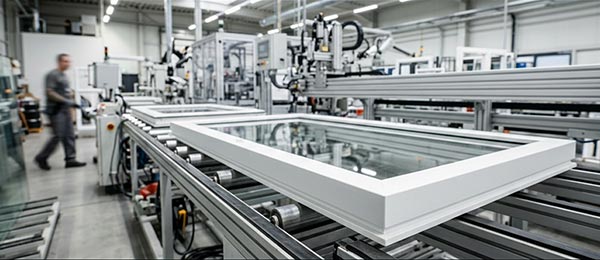
This guide is informed by Window Force’s perspective as a Canadian vinyl window manufacturer. Since 2007, we’ve produced custom windows at our 80,000 sq ft Ontario facility for builders, dealers, contractors, and homeowners across Canada. We see the full quality spectrum firsthand — from the premium units we manufacture to the budget products we’re often asked to replace. That production-floor experience shapes every recommendation in this guide.
Key Takeaways
- "Cheap" and "affordable" are not the same thing: price matters far less than certified performance ratings and verified build quality.
- Budget windows can be a reasonable choice for rental properties, secondary rooms, or short-term ownership, but only when they meet minimum energy standards.
- ENERGY STAR certification and a low U-factor are the two most important metrics to verify before any purchase.
- Hidden costs in a low-price quote, disposal, capping, insulation, trim, and installation warranty, can add hundreds to a project's total.
- Phased replacement, seasonal promotions, and financing can make higher-quality windows accessible without compromising on the specs that matter most for cold Canadian climates.
What Do Cheap Windows Usually Mean for Homeowners?
The word "cheap" covers a wide spectrum. In window replacement, it can refer to deeply discounted builder-grade models, entry-level vinyl products with limited performance specs, windows sold without proper warranties, or products from manufacturers with no local presence or accountability. Before deciding whether a low-cost option is appropriate, it helps to understand exactly what category you are dealing with.
Cheap vs. Affordable Windows
Affordability describes the relationship between price and value: an affordable window delivers solid performance at a fair cost. Cheap refers to products in which cost-cutting significantly reduces performance, durability, or warranty coverage. A mid-range vinyl window from a reputable manufacturer with ENERGY STAR certification, a proper air seal, and a meaningful warranty can be genuinely affordable, even if it costs more upfront than the cheapest unit in a showroom.
| Characteristic | Cheap Window | Affordable Window |
| Frame material | Thin, recycled-mix vinyl | Sturdy virgin or UV-stabilized vinyl |
| Glass package | Single or low-grade double pane | Double or triple pane with Low-E |
| Energy certification | None or unverified | ENERGY STAR certified |
| Warranty | Short or dealer-only | Manufacturer-backed, transferable |
| Air leakage rating | Often not rated | Rated and within NRCan guidelines |
| Spacer system | Standard aluminium | Warm-edge or polymer spacer |
Budget Windows vs. Builder-Grade Windows
Builder-grade windows occupy a specific middle category. They are produced at volume, standardized in size, and installed in new construction where code compliance, not peak performance, drives selection. A builder-grade window from a known manufacturer is not the same as a no-name budget window: it will typically carry legitimate ratings and a limited warranty. The distinction matters when comparing quotes, because some contractors use "builder-grade" as a synonym for "cheap," which is not always accurate.
The distinction between builder-grade and budget windows has practical implications for both resale value and home insurance considerations. During pre-purchase home inspections, windows are frequently identified as a source of concern, particularly when units show failed seals, poor installation quality, or lack recognized energy-efficiency certifications. Homes equipped with documented ENERGY STAR-certified windows are increasingly viewed more favourably by buyers, especially in Canadian real estate markets where energy efficiency and long-term operating costs are becoming more important factors in purchasing decisions.
Windows Near Me
Are Cheap Windows Worth It If You Only Need a Basic Replacement?
Not every window in a home carries the same performance burden, and in certain situations, a lower-cost window may be a reasonable and practical choice.
When Budget Windows Can Make Sense
Rental properties operated as investment properties, rather than as primary residences, often justify cost-minimizing decisions, provided the window still meets building code and basic weatherproofing standards. Similarly, garages, unheated utility rooms, or seasonal cottages do not require the same thermal envelope performance as a main living space. Homeowners planning to sell within three to five years may find that a mid-range certified replacement window recoups sufficient value without requiring a premium unit.
A step-by-step approach to evaluating whether a budget window is acceptable:
- Identify the room's function. A window in a heated bedroom requires substantially better U-factor performance than one in a detached garage.
- Confirm certification. Even for secondary rooms, verify that the product appears on Natural Resources Canada's ENERGY STAR certified product list.
- Check the air leakage rating. NRCan's guidance states that air leakage should not exceed 1.5 L/(s·m² at 75 Pa for new installations.
- Read the warranty terms carefully. A five-year warranty with extensive exclusions is not equivalent to a limited lifetime warranty.
- Get the total installed cost. Ask the contractor to itemize every line item for the glass unit, frame, disposal, capping, trim, insulation, and labour.
Engineer Sergey Essipov, with over 20 years of experience in window manufacturing at Window Force, explains:
A low price tag on a window unit means very little without knowing the spacer system and edge-seal construction. At Window Force, we use a dual-seal, metal-free warm-edge spacer across all product lines because it’s the component that protects the insulating gas fill from escaping over time — and it’s the component most buyers never think to ask about. When I see a budget window that’s failed after 8 years, the spacer is almost always where it started.
Low cost does not automatically mean bad quality. A domestically manufactured vinyl window with verified ratings and proper installation can outperform an expensive imported product installed incorrectly.
When Can Cheap Windows Cost More Over Time?
The sticker price of a window is only one part of its financial impact on a household. A total cost of ownership perspective accounts for energy performance over the window's service life, maintenance and repair expenditures, and the likelihood of early replacement.
The Long-Term Cost Equation
Premature seal failure is one of the most common consequences of choosing a low-quality insulated glass unit (IGU). When the edge seal deteriorates, the inert gas fill typically escapes, air infiltrates the cavity, and condensation forms between the panes. The window's thermal resistance drops, heating and cooling loads increase, and the failed unit must eventually be replaced at full cost.
Weaker frame profiles are more prone to warping in climates with large temperature fluctuations, such as Canadian regions where seasonal differences can exceed 60°C. In some regions. Warped frames break their weatherstrip seals, allow air infiltration, and create drafts that are both uncomfortable and energy-wasteful.
The relationship between spacer system conductance and long-term seal performance is widely recognized in building science research. Warm-edge spacer systems are designed to reduce heat transfer around the edge of the glass, helping minimize temperature fluctuations within the insulating glass unit. By reducing thermal stress from repeated expansion and contraction, these spacers can improve seal durability over time. In Canadian climates, where seasonal temperature differences can exceed 60°C, reducing this type of mechanical stress is important for maintaining the long-term integrity and energy performance of insulated windows.
Window Force’s dual-seal warm-edge spacer system reflects exactly this engineering principle. By eliminating the aluminum thermal bridge at the glass edge, our spacer design reduces the temperature differential that accelerates seal degradation, extending the effective service life of the insulated glass unit across Ontario’s freeze-thaw cycles. This is one of the clearest examples of where a slightly higher-quality component delivers disproportionate long-term value.
How Do Cheap Windows Compare with Higher-Quality Windows?
The performance gap between a low-cost and a high-quality window is not always visible to the naked eye; both may look similar in a showroom. The differences reveal themselves in the specifications, materials, and long-term performance data.
Feature Comparison by Price Tier
| Feature | Budget Tier | Mid-Range | Premium |
| Frame material | Thin vinyl, no UV stabilizer | Reinforced vinyl or PVC | Fibreglass or premium uPVC |
| Glass package | Double pane, no coating | Double pane with basic Low-E | Double or triple pane, advanced Low-E |
| Spacer system | Aluminum (thermally conductive) | Warm-edge metal or hybrid | Polymer (warm-edge, low conductance) |
| Gas fill | Air or limited argon | Argon standard | Argon or krypton |
| Hardware | Plastic, limited cycles | Metal, rated for 10,000+ cycles | Commercial-grade metal |
| Warranty | 1 — 5 years, limited | 10 — 15 years | Lifetime, transferable |
| U-factor range | 1.6 — 2.2 W/(m²·K) | 1.2 — 1.6 W/(m²·K) | 0.8 — 1.2 W/(m²·K) |
| Noise reduction | Minimal | Moderate | Good to excellent |
| ENERGY STAR | Often absent | Usually certified | Certified often exceeds the minimum |
The spacer system deserves particular attention. Aluminum spacers, common in budget units, conduct heat readily at the glass edge, creating a cold strip along the perimeter that can cause interior condensation even when the centre-of-glass performance looks acceptable on paper. Warm-edge polymer spacers eliminate this thermal bridge.
All Window Force windows — across both our Ultraslim and Classic Series — use warm-edge spacers, fusion-welded corners, lead-free uPVC with multi-chamber profiles, and are CSA certified and ENERGY STAR rated. These are the specifications that separate a genuinely affordable window from a cheap one, and they’re the details to look for when comparing any quote.
The durability of the insulated glass unit is the component most directly tied to long-term warranty value. A 25-year field study tracking over 2,400 insulated glass units across 14 cities, published in the Buildings journal (MDPI, 2023), found cumulative seal failure rates of 4.9% at 10 years, 7.9% at 15 years, and 9.2% at 25 years under real-world conditions. Critically, units from lower-quality manufacturers or those installed incorrectly showed substantially higher failure rates, underscoring why both manufacturing quality and installation precision determine how much your warranty will actually be called upon.
Do Cheap Windows Reduce Comfort in Canadian Winters?
Thermal comfort in winter is determined not only by air temperature but by the mean radiant temperature of surrounding surfaces, including window glass. A cold glass surface creates a radiant chill that makes occupants feel cold even when the thermostat reads 21°C.
Interior glass surface temperature is calculated in accordance with ISO 10077-1, which accounts for the combined thermal performance of the glass, frame, and edge. In the building physics literature, thermal modelling based on this standard consistently shows that edge-of-glass and frame regions introduce significant thermal bridging effects that are not captured by centre-of-glass performance alone. As a result, windows using traditional aluminum spacer systems tend to exhibit noticeably higher effective heat loss along the perimeter than at the centre of the glass. This means that the advertised U-factor for lower-cost window systems can underestimate the actual heat transfer occurring at the edges, where thermal bridging has the greatest impact on interior surface temperature and overall comfort performance.
Cold Surfaces, Drafts, and Condensation
Budget windows with higher U-factors allow the interior glass surface to drop significantly below room temperature on cold days. At outdoor temperatures of -20°C, a window with a centre-of-glass U-factor of 2.0 W/(m²·K) can have an interior surface temperature near 5-8°C, well within the range where moisture in indoor air will condense on the glass. Persistent condensation accelerates frame degradation, encourages mould growth on window sills and trim, and signals ongoing energy loss.
In Ontario and other cold regions, climate-appropriate window selection is not a luxury but a practical necessity. NRCan designates most of Ontario as ENERGY STAR Zone 3, requiring windows to meet a minimum ER of 29 or a maximum U-factor of 1.40 W/(m²·K). Cheap windows that fall short of this threshold will underperform from the first winter.
Frame quality compounds the problem. Thin vinyl profiles with no internal reinforcement transmit cold from the exterior face of the frame to the interior, creating additional cold zones at the edges. Draught is a separate but related issue: poor corner welds, inadequate weatherstripping, and substandard hardware that fails to compress the frame tightly against the sash allow cold air infiltration that no amount of thermostat adjustment can fully address.
What Hidden Costs Should You Look for in a Cheap Window Quote?
A window quote that looks attractive on the surface can expand significantly once the full scope of the project is accounted for. Reviewing the complete list of potential line items before signing a contract is one of the most important steps in any window installation project.
Quote-Review Checklist
Before accepting any quote, confirm whether each of the following is included or excluded:
Removal and disposal: Old windows must be removed and disposed of responsibly. Disposal fees vary by municipality and are sometimes excluded from budget quotes.
Capping and exterior trim: Aluminum or vinyl capping around the frame protects the rough opening and provides a finished exterior appearance. Budget installers often quote the window unit alone and add capping as a separate charge.
Interior trim and casing: If the existing trim is removed or damaged during installation, replacement is an additional cost not always reflected in a basic quote.
Insulation and air-sealing: Proper window installation per CSA A440.4, the Canadian standard for window and door installation, requires adequate insulation of the rough opening and careful air-sealing with appropriate sealants or spray foam.
Engineer Sergey Essipov, with over 20 years of experience in window manufacturing at Window Force, explains that real-world window performance is often limited not by the product itself, but by how it interacts with the building envelope:
Even a properly rated window can underperform if the surrounding wall assembly is not properly prepared. At Window Force, we include detailed installation specifications with every order and train our authorized dealer network on proper air-sealing, insulation, and flashing procedures — because thermal breaks, insulation continuity, and air barrier alignment are just as important as the window unit itself.
Rot repair: If the rough framing around an existing window has deteriorated from water infiltration, it must be repaired before installing the new unit. This cost is rarely included in an initial quote.
Custom sizing: Standard windows fit standard openings. Non-standard or historic openings may require custom-manufactured units at a substantial premium.
Window installation warranty: The glass unit and frame may carry a manufacturer's warranty, but if the installer's labour is not separately warranted, a failed installation is the homeowner's problem. Confirm whether the contractor covers their own workmanship for at least two years.
Permits: Some municipalities require permits for window replacement, particularly when structural changes are involved. Permit costs and inspection scheduling should be clarified upfront.
HST/GST: Ensure you know whether the quoted price is before or after applicable taxes.
| Item | Often Excluded in Cheap Quotes | Cost Range (est.) |
| Disposal | Yes | $20—$60 per unit |
| Capping | Frequently | $50—$150 per window |
| Interior trim | Frequently | $80—$200 per window |
| Insulation/air seal | Sometimes | $30—$80 per window |
| Rot repair | Almost always | $150—$600+ per opening |
| Permit | Varies | $50—$300 per project |
| Labour warranty | Often absent | — |
Should You Choose Cheap Windows or Finance Better Windows Over Time?
For homeowners facing a real budget constraint, the choice is rarely as binary as "cheap now versus quality later." Several strategies allow for better windows within a managed financial plan.
Affordability Strategies
Phased replacement is one of the most practical approaches. Rather than replacing all windows at once with the cheapest available product, prioritize the worst-performing units first, typically those with visible condensation, drafts, or damaged seals. Replace those with certified, quality units and defer the remaining windows to subsequent years when the budget allows.
Seasonal promotions from established window manufacturers and installers are common in spring and fall. The cost of window installation in Alberta, for example, can vary meaningfully by season, and buyers who plan in advance often secure better pricing on premium products than those who purchase reactively.
Financing programs offered by some manufacturers or through home improvement financing allow the full cost to be spread over 12 to 60 months. When the monthly payment is compared against the estimated annual energy savings from energy-efficient windows, the net carrying cost is often lower than it initially appears.
When Phased Replacement Makes Sense
Phased replacement is most effective when the home has a mix of window conditions, with some having failed seals or visible deterioration and others still functioning adequately. For homeowners planning phased upgrades, replacing older units with modern, energy-efficient windows in British Columbia on north-facing facades first can help reduce heat loss in the areas most exposed to it before addressing south-facing windows that already benefit from passive solar gain, regardless of their U-factor. This approach aligns expenditure with actual performance impact.
Conclusion: Are Cheap Windows Worth It for Your Home?
Whether cheap windows are worth it depends less on price and more on verified performance and proper installation. A low-cost window can be a reasonable choice only if it meets certified standards for your climate zone and is installed correctly. In such cases, it can provide acceptable comfort and energy performance for secondary spaces or short-term use.
However, when windows lack certification, have unclear specifications, or come with limited warranty coverage, the initial savings are often offset by higher heating costs, reduced comfort, and earlier replacement needs.
For most Canadian homes, the key decision is not between “cheap” and “expensive”, but between uncertified products and properly rated, energy-efficient windows that match local climate requirements.
Window Force manufactures certified vinyl windows at our Ontario production facility, with every unit built to order, CSA certified, ENERGY STAR rated, and backed by a 25-year transferable warranty. Whether you’re replacing a few windows on a budget or planning a full-home upgrade, contact our team and we’ll help you find the right balance of performance, quality, and value for your specific project and climate zone.

Frequently Asked Questions
What is the difference between a cheap window and an affordable window?
An affordable window offers solid certified performance at a reasonable price point. A cheap window has been value-engineered to reduce cost at the expense of frame quality, glass package, or warranty terms. The most reliable way to distinguish them is to check for ENERGY STAR certification and request the product's U-factor and air leakage data sheet.
Can a cheap window still be ENERGY STAR certified?
Yes, in some cases. ENERGY STAR certification ensures minimum performance standards but does not guarantee premium durability or hardware quality. A basic vinyl window can technically meet the certification requirements for its climate zone while still using lower-grade hardware, aluminum spacers, or a shorter warranty than a mid-range or premium product. Certification is a necessary condition for acceptability, not a guarantee of quality.
How do I find out whether a specific window model is ENERGY STAR-certified in Canada?
Use Natural Resources Canada's searchable certified product list, available at nrcan.gc.ca. You can search by manufacturer, product line, or climate zone. If a window a contractor is quoting does not appear in that list, treat it as uncertified until confirmed otherwise.
What U-factor should I target for a window in Ontario?
For ENERGY STAR Zone 3, which covers most of Ontario, NRCan requires a maximum U-factor of 1.40 W/(m²·K) or an Energy Rating of 29 or above. For greater comfort and lower heating costs, target a U-factor of 1.20 or lower, particularly for north-facing windows or large window openings.
Does installation quality affect how a window performs?
Substantially. A premium window installed without proper air-sealing, insulation of the rough opening, or levelling and squaring of the frame will underperform its rated specifications. CSA A440.4 is the Canadian standard governing window installation; asking a contractor whether they follow it is a reasonable and informative question.
How long should a quality window last in a Canadian climate?
A well-manufactured and properly installed window with a quality insulated glass unit should provide 20 to 35 years of reliable service in most Canadian climates. Budget windows with aluminum spacers and thin vinyl frames often begin to show seal failure and frame deterioration within 8 to 15 years, particularly in regions with large seasonal temperature swings.
People Also Ask