

Patio doors are among the largest openings in a residential building envelope, and selecting the correct size has direct consequences for structural integrity, energy performance, and long-term functionality. In Canadian climates, where temperature differentials between interior and exterior can exceed 40°C, the dimensional and material choices embedded in a patio door purchase affect comfort and operating costs for decades. This article covers standard dimensions, measurement methodology, replacement considerations, and the energy performance implications of glazing area across all major patio door types used in Canadian homes.
This guide reflects Window Force's perspective as a Canadian vinyl window and door specialist. Since 2007, Window Force has custom-manufactured windows and patio doors at an 80,000 sq ft production facility in Ontario for builders, contractors, dealers, and homeowners across Canada. Window Force believes that patio doors, like windows, are critical components of a home's thermal envelope, and that sizing decisions deserve the same level of precision as those in any high-performance fenestration project.
Key Takeaways
- Standard patio door widths in Canada range from 60 to 96 inches, with 72 inches being the most common size in post-1970s suburban construction.
- Height is almost universally 80 inches (6 ft 8 in) across standard residential patio doors, though 82-inch units are available for specific applications.
- Rough openings for sliding patio doors require approximately 1 inch of additional clearance in each dimension, compared to the 2-inch standard used for hinged entry doors.
- Accurate measurement requires three width readings and three height readings; the smallest dimension governs the door unit selection for replacement projects.
- Custom patio door sizing is available when standard dimensions do not align with existing openings, particularly in pre-1960s homes and architecturally distinctive builds.
- Patio door glazing area directly affects thermal performance; larger glass panels require verified U-factor and SHGC ratings suited to Canadian climate zones.
- Sliding, French, and multi-panel patio doors each occupy different width ranges and have distinct rough opening and clearance requirements.
- Professional installation is necessary to ensure air-seal integrity, structural load distribution, and warranty validity on modern patio door systems.
What Is the Standard Patio Door Size in Canada?
Standard patio door dimensions in Canadian residential construction reflect a combination of practical factors: typical wall framing dimensions, historical building practices, and the manufacturing efficiencies that allow doors to be stocked and distributed at scale. While no single regulation mandates a specific patio door size, the industry has converged on a narrow range of widths that fit most homes built since the mid-20th century.
Typical Dimensions
The most widely used patio door widths in Canada are 60 inches (5 ft), 72 inches (6 ft), and 96 inches (8 ft), with 80 inches (6 ft 8 in) as the near-universal height for residential units. Among these, the 72-inch two-panel sliding door is the dominant size in suburban construction built after the 1970s, fitting the rough openings that became standard in that era of residential framing.
| Door Type | Standard Width (in) | Standard Height (in) | Common Application |
| Two-panel sliding | 60 or 72 | 80 | Standard suburban residential |
| Three-panel sliding | 96 or 108 | 80 | Wider rear openings, open-plan homes |
| French patio door | 60 to 72 | 80 | Traditional and heritage-style homes |
| Multi-panel/folding | 96 to 192+ | 80 to 96 | Custom builds, large deck openings |
Industry Standards and Code Context
While no prescriptive patio door dimension exists in the National Building Code of Canada (NBCC), the Code does govern accessibility and minimum clear opening widths for dwelling units. For accessible residential construction, the NBCC requires a minimum clear opening width of 810 mm (approximately 32 inches), which a standard 60-inch sliding patio door comfortably exceeds. Local municipal bylaws may impose additional requirements, particularly for new construction or major renovations that involve structural modifications to wall openings.
In practice, standard sizing is driven as much by supply chain reality as by code. Builders and contractors source doors that fit pre-cut framing, and manufacturers produce units that align with these conventions, creating a self-reinforcing market norm around the 60-, 72-, and 96-inch widths.
Windows Near Me
What Are the Most Common Standard Sliding Door Sizes?
Sliding patio doors account for the majority of patio door installations in Canadian suburban homes because they require no swing clearance and operate well in climates with significant seasonal temperature changes. The panel configurations available, two-panel, three-panel, and four-panel, each occupy distinct width ranges and serve different architectural applications.
Two-Panel Sliding Doors
Two-panel sliding doors are the most prevalent patio door type in Canadian residential construction. One panel is fixed while the other slides horizontally along a track. Standard widths are 60 inches and 72 inches, both at 80 inches tall. The 72-inch unit is most commonly found in homes built from the 1970s onward, where rear deck access was incorporated into the original framing design.
The rough opening for a 72-inch two-panel door is approximately 73 inches wide by 81 inches tall, reflecting the reduced clearance requirement compared to hinged doors. Sliding doors rely on track precision rather than shimming to achieve alignment, which is why the clearance tolerance is smaller.
Dimensional consistency between the door unit and the rough opening is only one component of long-term sliding door performance. According to the specialists at Window Force, one of the most impactful factors in patio door performance is the spacer system used within the insulated glass unit. Metal-free warm-edge spacer technology eliminates thermal bridging at the glass perimeter — the area where condensation and seal degradation most commonly begin — unlike conventional aluminum box spacers. For a large-format sliding door with a glazing area of 30 square feet or more, the cumulative thermal benefit of a proper spacer system over a 25-year service life is substantial.
Three-Panel and Larger Openings
Three-panel sliding doors begin at 96 inches wide and extend to 108 inches. In this configuration, two panels are typically fixed while the centre or one side panel operates, or two panels slide while one remains fixed, depending on the manufacturer's design. These doors are used where rear living spaces open onto wide decks or where architectural preference favours a panoramic connection to the outdoors.
Four-panel configurations generally begin at 120 inches. At this scale, structural header engineering becomes critical, as the load previously carried by the wall framing must be redirected through a properly sized beam. Homeowners planning to install a three- or four-panel door in an existing wall opening should engage a structural engineer before modifying the rough opening.
Why Do Standard Patio Door Sizes Vary Between Homes?
Not every home contains a patio door opening that matches the current standard sizes. The variation reflects decades of shifting construction practices, architectural preferences, and the cumulative effect of renovation projects that modified original wall framing. Understanding the sources of this variation helps homeowners anticipate whether a standard or custom door will be required before ordering.
New Homes vs. Older Homes
Homes built after the 1970s were generally framed with standardized rough openings that align with the 60-inch and 72-inch sliding door market. Builders of that era coordinated their framing dimensions with door manufacturers, making standard replacement straightforward in most cases.
Pre-1960s homes present a different situation. Construction practices varied significantly by region, builder, and available materials. Rough openings in older homes may reflect imperial framing traditions that do not correspond to current standard sizes, or they may have been modified during past renovation projects. In some heritage homes across British Columbia and the Prairie provinces, patio access was added retrospectively through wall openings that were sized to whatever door was available at the time, rather than to any current standard.
Design Considerations and Regional Factors
Architectural style also drives variation. Contemporary and post-modern home designs often specify wider openings to maximize the indoor-outdoor visual connection, pushing toward 96-inch or custom-width doors. Conversely, traditional or heritage-style homes in established neighbourhoods may retain narrower openings that predate current sizing conventions.
Regional climate factors influence design choices as well. In areas with short summers and long winters, such as northern Alberta or the Prairie interior, homeowners historically prioritized insulation over large glass openings. As glazing technology has improved, there is a growing demand for larger sliding and multi-panel doors even in cold climates, which sometimes requires modifying existing rough openings.
How Are Patio Door Dimensions Measured Correctly?
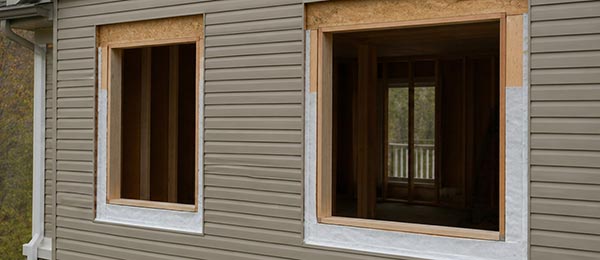
Accurate measurement is the single most important step in a patio door replacement or new installation project. An error of even half an inch in a rough opening measurement can require reordering, reframing, or costly field modifications. The correct approach is to measure the rough opening itself, not the existing door unit or frame.
Measuring Width
Width must be measured at three points: the top of the opening, the midpoint, and the bottom. This accounts for wall settling, framing irregularities, and accumulated damage that can cause openings to become out of square over time. The smallest of the three measurements is the governing dimension for door selection.
Measure from the inside face of one trimmer stud to the inside face of the opposite trimmer stud. For a replacement project where an existing door frame will be removed, measure before and after removal, as the old frame may have been compressing a slightly irregular opening.
Measuring Height
Height is measured from the subfloor to the underside of the header. Take three measurements: near the left jamb, at the centre, and near the right jamb. Again, the smallest measurement governs. If the floor finish is already installed, account for its thickness when determining the effective height available for the door unit and threshold.
The rough opening height for a standard 80-inch patio door is approximately 81 inches. For sliding doors specifically, the tolerance is tighter than for hinged doors, with 1 inch of clearance per dimension rather than the 2-inch clearance used for entry doors.
Engineer Sergey Essipov, with 20 years of experience in window manufacturing, explains:
One of the most common measurement errors in patio door replacement involves confusing the frame dimension with the rough opening dimension. The door unit, including its frame, is always smaller than the rough opening it occupies. Ordering based on the old frame size rather than the actual opening frequently results in a unit that is too small, requiring shimming that compromises the air seal and structural performance.
Window Force manufactures all patio door frames from lead-free uPVC with UV stabilizers, ensuring that the frame dimensions remain stable through seasonal temperature cycles. Standard vinyl frames are susceptible to thermal expansion and contraction that can alter effective clearances over time. Our UV-stabilized profiles maintain their nominal dimensions through decades of exposure, which is particularly relevant in climates with strong seasonal UV cycles, such as those experienced in southern Alberta and coastal British Columbia.
What Patio Door Sizes Are Most Common for Replacement Projects?
Replacement projects differ from new construction in one critical respect: the rough opening already exists and, in most cases, cannot be easily changed without structural work. This means the replacement door must fit the existing opening rather than the opening being built around a preferred door size.
Popular Replacement Sizes
Based on the installed base of Canadian suburban housing, the most frequently encountered rough openings in replacement projects are 73 inches wide by 81 inches tall (for a 72-inch standard two-panel door) and 61 inches wide by 81 inches tall (for a 60-inch unit). These dimensions reflect the framing conventions that dominated residential construction from the late
1960s through the 1990s, when most of Canada's current suburban housing stock was built.
Retrofitting Considerations
When the existing rough opening does not match a standard door size, homeowners have two options: modify the opening to accept a standard door, or order a custom-sized unit. Modifying a rough opening requires structural work, including potentially enlarging the header to carry additional load. This is feasible but adds cost and construction time. For most replacement projects where the opening is close to a standard size, minor shimming within the existing tolerance is the simpler path.
Window Force operates as a custom-to-order manufacturer, which means replacement patio doors can be produced to match non-standard rough-opening dimensions without requiring structural modifications to the wall. Our 25-year transferable warranty applies to custom-dimensioned units on the same terms as standard sizes, because our manufacturing process, not a pre-set catalogue, governs the build. Homeowners considering patio door replacement in Calgary, Vancouver, or anywhere within our authorized dealer network can request a specific rough opening dimension and receive a door engineered precisely to that specification.
Are Custom Patio Door Sizes Available When Standard Dimensions Do Not Fit?
Custom patio door manufacturing is not uncommon. A portion of Canada's housing stock, particularly heritage properties, architecturally distinctive homes, and those that have undergone previous non-standard renovations, contains rough openings that do not align with the 60-inch, 72-inch, or 96-inch conventions. Custom sizing addresses these situations directly.
When Custom Sizes Are Needed
Custom sizing becomes necessary in several situations. Heritage homes, particularly those built before 1950, may have rough openings that reflect older imperial framing practices. Homes with unusually tall ceilings may require 82-inch or 84-inch door heights. Contemporary architectural designs frequently specify non-standard widths to achieve a particular visual proportion or to match an existing window width for facade symmetry.
Custom manufacturing also applies when a homeowner wishes to enlarge an existing opening. If a 72-inch door is being replaced and the owner wants to widen the opening to 96 inches, the framing must be modified to carry the new structural load before the door is installed. In this scenario, the door itself can be manufactured to match the new rough opening precisely.

Cost Factors and Design Flexibility
Custom patio doors generally carry a higher per-unit cost than standard sizes, reflecting the setup time and material allocation required to produce a non-catalogue dimension. Lead times also tend to be longer, as custom units are manufactured to order rather than pulled from stock. For homeowners planning a renovation, the cost difference should be weighed against the alternative of structural framing work to accommodate a standard size.
From a design standpoint, custom sizing offers significant flexibility. Width, height, panel configuration, glazing package, and hardware finish can all be specified to match the home's architecture and the homeowner's performance requirements. This makes custom manufacturing particularly relevant for new construction projects where the architect has specified non-standard dimensions.
How Does Patio Door Size Affect Energy Efficiency?
Patio doors contain more glass area per unit than any other residential door type, and that glass area is the primary driver of their thermal performance. The relationship between door size and energy efficiency is not linear: a larger door admits more solar heat in winter but also loses more heat on cold nights. Managing this balance requires understanding how glazing performance metrics interact with the Canadian climate.
Glass Packages and Thermal Performance
The two principal energy performance metrics for patio door glazing are the U-factor, which measures the rate of heat transfer from warm to cold (lower is better), and the Solar Heat Gain Coefficient (SHGC), which measures the fraction of solar radiation that passes through the glass into the interior. In Canada, these metrics are evaluated in accordance with CSA A440.2 and referenced in Natural Resources Canada's ENERGY STAR qualification criteria for sliding glass doors.
According to Natural Resources Canada's searchable product list for ENERGY STAR-certified sliding glass doors, units qualifying as Most Efficient must achieve a U-factor of 1.05 W/m² or lower or an Energy Rating (ER) of 40 or higher. This threshold reflects the performance level required to make a large glass opening thermally competitive with an insulated wall assembly in Canadian climate zones.
CCHT Research: Glazing Orientation and Size
A research project conducted jointly by the National Research Council of Canada (NRC), Natural Resources Canada (NRCan), and Canada Mortgage and Housing Corporation (CMHC) at the Canadian Centre for Housing Technology (CCHT) tested 31 glazing units across four window types, including patio doors, on all four wall orientations. The study found that high solar gain (HSG) glazing in south-facing patio doors produced annual energy cost savings of $117 to $354 CAD compared to conventional windows, while low solar gain (LSG) glazing saved $71 to $203 CAD annually. The results underscore that glazing orientation and SHGC selection matter as much as size when specifying a patio door for Canadian conditions.
The thermal performance of a patio door's frame contributes to overall energy efficiency alongside the glazing. Window Force engineers multi-chamber uPVC profiles with fusion-welded corners specifically to minimize thermal conductivity through the frame assembly. In a standard-width 72-inch sliding door, the frame perimeter represents a significant linear thermal bridge if the profile design is inadequate. Multi-chamber construction divides the frame cross-section into insulating air cells, reducing heat transfer at the perimeter by comparison to single-chamber or solid aluminum frame designs. This is particularly relevant in cold climate zones across Canada, where frame-edge heat loss compounds the performance losses at the glass centre on the coldest nights.
What Are the Differences Between Sliding, French, and Multi-Panel Patio Door Sizes?
The three principal patio door types used in Canadian residential construction, sliding, French, and multi-panel, have different dimensional footprints, operational characteristics, and space requirements. Selecting between them involves matching the door type to the rough opening size, the available floor space, the home's architectural style, and the intended use.
| Feature | Sliding Patio Door | French Patio Door | Multi-Panel/Folding Door |
| Standard widths (in) | 60, 72, 96, 108 | 60 to 72 | 96 to 192+ |
| Standard height (in) | 80 | 80 | 80 to 96 |
| Rough opening clearance | 1 in each dimension | 2 in each dimension | Varies by system |
| Floor space required (swing) | None (track operation) | Significant (full panel swing) | None (stacks at side) |
| Air seal performance | High (track compression) | Very high (multi-point latch) | Variable by system |
| Typical application | Suburban residential | Traditional/heritage homes | Custom builds, wide openings |
Sliding Doors
Sliding patio doors are the most space-efficient option because they do not require clearance for a swinging panel. The fixed panel and the sliding panel occupy the same wall plane, making them suitable for decks or patios immediately adjacent to the door threshold. Their track-based operation achieves compression sealing when closed, producing strong air-infiltration resistance with a well-maintained track and weatherstrip.
French Patio Doors
French patio doors consist of two hinged panels that swing inward, outward, or in opposite directions from a central meeting point. Standard widths of 60 and 72 inches are common, with each panel representing half the total door width. Because the panels swing, French doors require clear floor space equal to the panel width on the interior or exterior. They are favoured in traditional home styles and where a wider unobstructed opening is desired when both panels are open.
Multi-Panel Systems
Multi-panel and folding door systems, sometimes called lift-and-slide or bi-fold patio doors, begin at 96 inches and can extend to 192 inches or more for custom applications. These systems stack panels to one or both sides of the opening, leaving the full rough opening clear when fully retracted. Their installation requires precise track alignment and header engineering capable of carrying the combined weight of multiple large glass panels. Lead times and per-unit costs are substantially higher than for standard sliding or French configurations.
Can You Replace a Patio Door Without Changing the Opening Size?
In most cases involving homes built after the 1970s, yes. Where the existing rough opening matches a standard door width, a direct replacement can be completed without structural work. The choice between an insert replacement and a full-frame replacement determines how much of the existing installation is disturbed.
Insert Replacement
An insert replacement retains the existing structural frame and installs a new door unit within it. This approach works when the existing frame is structurally sound, free of rot or moisture damage, and dimensionally compatible with a standard door unit. Insert replacements are faster and less disruptive than full-frame work, but they reduce the effective glass area slightly because the new frame is installed within the existing one.
Engineer Sergey Essipov, with 20 years of experience in window manufacturing, notes:
Insert replacements are often selected for speed and cost, but they are only appropriate when the existing frame passes a careful structural and moisture inspection. A compromised frame will eventually transfer its problems to the new door unit. If there is any evidence of water infiltration, rot, or distortion in the existing frame, a full-frame replacement is the correct choice regardless of the added cost.
Full-Frame Replacement
A full-frame replacement removes the existing frame completely and installs a new door unit directly into the rough opening. This exposes the rough opening for inspection and allows for fresh detailing of flashing, air barrier, and insulation. It is the appropriate method when the existing frame shows damage, when the new door unit is a different size than the original, or when updated performance standards require a complete system rebuild.
Full-frame replacement also provides the opportunity to upgrade the surrounding insulation and ensure the rough opening is square, plumb, and level before the new door is installed. This directly affects the long-term performance of the door, particularly its air seal integrity under thermal cycling.
When Modifications Are Needed
Modifications to the rough opening are required when the new door size differs from the existing opening. Enlarging an opening requires header reinforcement; reducing an opening requires infill framing. In either case, the structural work must be completed before the door is ordered, so that the manufacturer can produce a unit matched to the final rough opening dimension.
How Much Space Is Needed Around a Patio Door for Proper Installation?
The required clearance around a patio door unit determines how the rough opening must be sized relative to the door. Insufficient clearance makes proper shimming and levelling impossible; excessive clearance introduces structural gaps that must be filled with framing, which can reduce energy performance if not properly insulated and air-sealed.
Rough Opening Requirements
For standard sliding patio doors, the rough opening should be 1 inch wider and 1 inch taller than the nominal door unit size. A 72-inch-wide by 80-inch-tall door, therefore, requires a rough opening of approximately 73 inches wide by 81 inches tall. This is meaningfully different from the 2-inch clearance convention used for hinged entry doors, and the distinction matters: applying entry door clearance conventions to a sliding patio door can result in a unit that may not fill the opening properly, leading to air infiltration gaps at the head and jambs.
Installation Tolerances and Best Practices
Within the clearance provided by the rough opening, the installer distributes shims to achieve a plumb, level, and square installation. The number and placement of shims affect both the structural load transfer and the compression of the weatherstrip against the door frame. For a 72-inch sliding door, shims are typically placed at the corners and at intermediate points along the head and sill, spaced no more than 24 inches apart.
After shimming and fastening, the gap between the door frame and the rough opening framing is filled with low-expansion spray foam insulation. High-expansion foam can distort vinyl frames, so product selection and application technique matter. The foam fill should be continuous and uninterrupted around the full perimeter of the frame to prevent air infiltration paths at the jamb and head joints.
| Door Type | Nominal Door Width (in) | Nominal Door Height (in) | Rough Opening Width (in) | Rough Opening Height (in) |
| Two-panel sliding | 60 | 80 | 61 | 81 |
| Two-panel sliding | 72 | 80 | 73 | 81 |
| Three-panel sliding | 96 | 80 | 97 | 81 |
| French patio door | 60 | 80 | 62 | 82 |
| French patio door | 72 | 80 | 74 | 82 |
What Factors Should Homeowners Consider When Choosing a Patio Door Size?
Selecting the correct patio door size is not only a dimensional exercise. The door size determines the amount of natural light entering the space, the capacity for traffic flow, the ventilation area when the door is open, and the thermal load on the home's heating and cooling system. All of these interact with each other and with the room's specific geometry.
Design and Practical Considerations
Natural light is one of the primary reasons homeowners choose larger patio doors. A 96-inch three-panel door admits significantly more daylight than a 72-inch two-panel unit, which can reduce reliance on artificial lighting and improve the perceived size of adjacent interior spaces. In southern exposures, this additional light comes with solar gain that can supplement winter heating.
Traffic flow and furniture placement are equally important practical considerations. A 60-inch two-panel sliding door provides 30 inches of clear passage when the sliding panel is fully open, which is adequate for individual use but constraining for moving furniture or hosting gatherings. A 72-inch door provides 36 inches of clear passage, and larger configurations provide proportionally more.
For homeowners planning a patio door installation across Canada, whether in Edmonton, Vancouver, or Hamilton, the combination of correct sizing, verified energy performance ratings, and professional installation determines long-term satisfaction. Window Force produces patio doors through our custom-to-order manufacturing model, meaning each unit is built to the verified rough-opening dimensions supplied by the installer. All units carry CSA certification and are ENERGY STAR qualified across all Canadian climate zones, supported by our 25-year transferable warranty. Choosing a door built and warranted for Canadian conditions, rather than adapted from a US specification, ensures the performance figures on the label reflect the climate conditions the door will actually experience.
Long-Term Value
From a property value perspective, patio doors are among the more visible renovation investments. A door that is properly sized for the opening, thermally certified for the climate zone, and installed to current air-seal standards contributes to both comfort and resale appeal. Buyers and home inspectors look for signs of proper installation, including intact flashing, consistent weatherstrip compression, and the absence of condensation between panes, all of which depend on proper sizing and installation practices.
What Are the Key Takeaways About Standard Patio Door Sizes in Canada?
Patio door sizing in Canadian residential construction follows a narrower range of conventions than it might initially appear. The 72-inch two-panel sliding door is the dominant size in suburban housing built after the 1970s, and the 60-inch and 96-inch variants serve the majority of remaining applications. These dimensions are not arbitrary; they reflect decades of alignment among framing practice, manufacturing economics, and the practical requirements of rear-yard access.
Accurate measurement of the rough opening, with readings taken at multiple points in both dimensions, is the foundation of every successful replacement or new installation. The single-inch clearance convention for sliding doors, distinct from the two-inch convention used for hinged entry doors, is a detail that carries real consequences if overlooked. Combining correct sizing with the right glazing package for the door's orientation and climate zone ensures the investment delivers its performance promise over the full service life of the unit.

Frequently Asked Questions
What is the most common patio door size in Canada?
The 72-inch-wide by 80-inch-tall two-panel sliding door is the most frequently installed size in Canadian suburban homes built after the 1970s. It fits the rough opening dimensions that became standard in residential framing of that era and is widely available through door manufacturers and distributors across the country.
What is the rough opening for a standard 72-inch sliding patio door?
The rough opening for a 72-inch sliding patio door is approximately 73 inches wide by 81 inches tall. Sliding doors require 1 inch of clearance in each dimension, compared to the 2-inch clearance used for hinged entry doors, because their track-based operation requires less shimming tolerance than hinge-mounted panels.
Can a patio door be replaced without changing the wall framing?
In most cases, yes, provided the existing rough opening matches a standard door size, and the existing frame is structurally sound. An insert replacement installs the new unit within the existing frame, while a full-frame replacement removes the old frame entirely and installs the new door directly into the rough opening. Full-frame replacement is recommended whenever the old frame shows moisture damage, distortion, or inadequate insulation detailing.
How does patio door size affect energy bills?
Larger patio doors admit more solar heat in winter when south-facing, which can reduce heating loads, but they also lose more heat through the glass at night and on overcast days. The net effect depends on the door's U-factor, SHGC rating, orientation, and the local climate. Properly specified glazing for the given orientation and climate zone can offset the larger thermal envelope of a wide door, resulting in a net energy benefit compared to a smaller, poorly specified unit.
Are custom patio door sizes more expensive than standard sizes?
Yes. Custom-dimensioned patio doors have higher per-unit costs and longer lead times than standard sizes because they are manufactured to order rather than produced in volume. The cost premium varies by manufacturer. For some projects, it is cost-competitive to modify the wall framing to accept a standard door rather than order a custom unit; for others, particularly where structural modification would be extensive, custom manufacturing is the more economical path.
What is the difference between a sliding patio door and a French patio door in terms of size?
Both types are available in 60-inch and 72-inch widths, but they have different rough-opening requirements and space requirements. Sliding doors need 1 inch of clearance and no swing space on either side of the opening. French doors need 2 inches of clearance and require a clear floor area equal to the width of each panel for the swinging motion. French doors can be ordered to swing inward or outward, depending on the available interior or exterior clearance.
What glazing should I choose for a south-facing patio door in Canada?
A south-facing patio door in most Canadian climate zones benefits from high-solar-gain (HSG) glazing with an SHGC above 0.40, which allows passive solar heat to supplement winter heating. On the other hand, Natural Resources Canada cautions that values above 0.45 facing south or west can cause overheating, particularly when the glass area is large relative to the surrounding wall. Triple-pane glazing with a low U-factor combined with a moderate SHGC in the 0.35 to 0.45 range represents a balanced specification for most Canadian locations.
Does the National Building Code of Canada regulate patio door sizes?
The NBCC does not prescribe specific patio door dimensions. It requires a minimum clear opening width of 810 mm (approximately 32 inches) for accessible dwelling units, a threshold that standard patio doors easily exceed. The Code also governs the structural requirements for wall openings, including header sizing, which applies to any installation that modifies a load-bearing wall to accommodate a patio door.
People Also Ask