

What Defines a High-Performance Double Hung Window
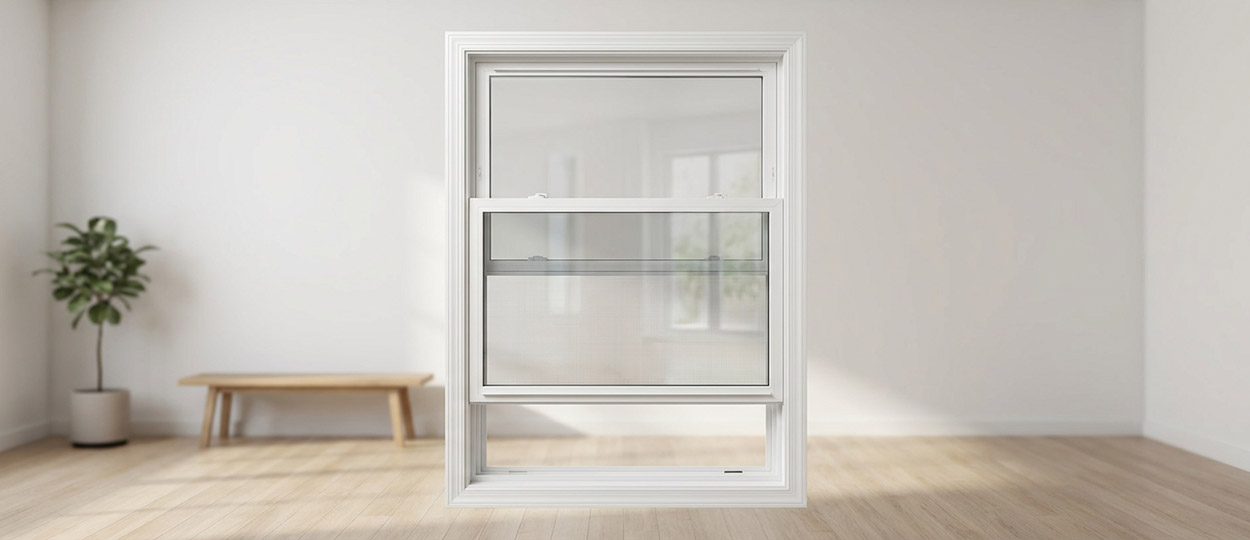
A high-performance double hung window combines superior energy efficiency, structural durability, and precise engineering to meet modern building performance standards. It minimizes energy loss, maintains air and water tightness under varying conditions, and delivers consistent comfort across different climates. Builders and contractors evaluating window systems in 2026 focus primarily on key performance metrics — U-factor, SHGC (Solar Heat Gain Coefficient), air leakage rate, and frame construction quality.
1. U-Factor (Thermal Performance)
The U-factor measures the rate of heat transfer through a window assembly. Lower values indicate better insulation and reduced energy loss.
- Typical high-performance range: 1.2 — 1.5 W/m²·K (ENERGY STAR Zone 2 and 3 compliant).
- Impact: Reduces winter heat loss, stabilizes indoor temperature, and lowers HVAC demand.
Modern double hung models achieve superior U-factors through:
- Low-E (low-emissivity) coatings reflecting infrared heat.
- Argon or krypton gas fills between glass panes.
- Warm-edge spacers that minimize condensation at glass edges.
2. SHGC — Solar Heat Gain Coefficient
The SHGC measures how much solar radiation passes through the glazing. The ideal SHGC varies by region:
- Cold climates: Higher SHGC (0.40 — 0.55) helps retain passive solar heat.
- Warm climates: Lower SHGC (0.25 — 0.35) minimizes cooling loads.
ENERGY STAR-rated double hung windows allow builders to specify SHGC values tailored to regional energy codes, optimizing seasonal comfort and energy performance.
3. Air Leakage (AL)
Air leakage defines the window’s ability to resist air infiltration under pressure differentials. Measured in L/s·m², a lower number represents tighter sealing.
- ENERGY STAR and CSA standard: ≤ 0.5 L/s·m².
- Best-in-class systems: 0.2 — 0.3 L/s·m², achieved through dual compression seals and interlocking meeting rails.
Proper installation, sash alignment, and use of advanced weatherstripping materials are critical to maintaining these ratings in service.
4. Frame Construction and Material Integrity
High-performance double hung windows are built from materials that combine rigidity with thermal resistance. Common frame technologies include:
- Vinyl (uPVC): Multi-chambered design improves insulation and reduces condensation.
- Fiberglass: Offers dimensional stability and low thermal expansion.
- Aluminum-clad wood: Combines aesthetic warmth of wood with exterior weather resistance.
Advanced fabrication methods, such as fusion welding at corners and co-extruded seals, eliminate weak points that can cause air or water infiltration.
5. Glazing Technology
To meet current Canadian standards, high-performance double hung windows typically include:
- Double or triple-pane IGUs (Insulated Glass Units).
- Low-E2 or Low-E3 coatings depending on orientation.
- Argon or krypton gas filling for improved R-value.
6. Certification and Testing Standards
Every high-performance model should carry independent third-party certification, verifying compliance with energy and structural standards:
- CSA A440.2-19— Air, water, and structural performance testing.
- ENERGY STAR Canada 2026— Defines maximum U-factor and SHGC thresholds by climate zone.
- NFRC 100/200— Thermal and solar transmission ratings recognized across North America.
Technical Performance Table
| Performance Metric | High-Performance Range | Standard Range | Regulatory Benchmark |
| U-Factor (W/m²·K) | 1.2 — 1.5 | 1.8 — 2.2 | ENERGY STAR ≤ 1.6 |
| SHGC | 0.25 — 0.45 | 0.50 — 0.65 | ENERGY STAR ≤ 0.50 |
| Air Leakage (L/s·m²) | 0.2 — 0.5 | 0.6 — 0.9 | CSA ≤ 0.5 |
| Water Penetration Resistance | ≥ 500 Pa | 300 — 400 Pa | CSA ≥ 400 Pa |
| Design Pressure Rating | DP 50 — 70 | DP 30 — 40 | CSA ≥ DP 40 |
How Do Premium Double Hung Windows Improve ROI for Large-Scale Projects
Premium double hung windows contribute to stronger project ROI by combining energy efficiency, long-term reliability, and installation efficiency. For contractors and developers managing multi-unit or commercial builds, the right high-performance model can reduce total lifecycle costs while improving energy compliance and occupant satisfaction.

1. Lower Operational Energy Costs
High-performance double hung windows with Low-E3 coatings, argon-filled glass units, and insulated vinyl or fiberglass frames can cut annual heating and cooling costs by up to 20%, according to data from Natural Resources Canada (2025). In large-scale developments, this translates into:
- Substantial operational savings across hundreds of units.
- Improved energy benchmarking scores, supporting sustainability certifications (e.g., LEED, Green Globes).
For projects with energy monitoring programs, these efficiency gains can increase building asset value while reducing the cost of ownership.
2. Faster and More Predictable Installation
Premium-grade double hung windows are engineered for streamlined installation. Features such as pre-welded frame assemblies, factory-applied sealants, and integrated nail fins help crews install windows 20 — 30% faster than traditional modular designs.
Benefits include:
- Reduced on-site labor time and potential for installation errors.
- Fewer adjustments needed post-installation due to consistent frame geometry.
- Easier integration into prefabricated wall panels or retrofit applications.
For high-volume projects, improved installation efficiency directly translates to lower per-unit installation costs and faster project turnover.
3. Reduced Long-Term Maintenance
Premium systems typically feature:
- Dual weatherstripping to maintain compression and prevent air infiltration.
- Upgraded hardware with corrosion-resistant coatings for coastal or humid environments.
- Tilt-in sashes that simplify interior cleaning, minimizing service calls.
Over a 25-year service life, this can reduce maintenance expenses by up to 35%, compared to lower-grade window assemblies.
4. Warranty and Product Assurance
Most premium double hung windows carry extended warranty terms that reinforce project value:
- 20 — 25 years coverage on frame and glass seals.
- 10 — 15 years on hardware and finish.
- Transferable warranties that enhance property resale value.
5. Lifecycle Cost Comparison
| Cost Factor | Standard Window System | Premium Double Hung System | ROI Impact |
| Initial Cost | Lower upfront | Moderate upfront | Short payback period (3 — 5 years) |
| Installation Time | Standard (2 — 3 hours/unit) | Reduced (1.5 — 2 hours/unit) | +10 — 15% labor efficiency |
| Annual Energy Savings | 10 — 12% | 18 — 22% | +7 — 10% operating cost reduction |
| Maintenance Over 25 Years | Higher (frequent seal failures) | Lower (durable seals/hardware) | −35% maintenance cost |
| Resale/Asset Value | Moderate | High | Increased building value |
6. ROI Example — Multi-Unit Retrofit (Toronto)
For a 50-unit residential retrofit using ENERGY STAR-certified premium double hung systems:
- Initial investment: CAD $150,000.
- Annual energy savings: CAD $6,000—$8,000.
- Payback period: Approximately 4 years.
- Total ROI over 20 years: 175 — 200%.
7. Supply and Project Support
Premium window manufacturers like Window Force Inc. support contractors through:
- Volume pricing for orders over 100 units.
- On-site consultation for installation and compliance.
- Pre-tested products meeting CSA A440.2-19 standards.
These integrated supply programs reduce procurement risks and ensure predictable scheduling across multiple phases of development.
Premium double hung windows offer measurable ROI through a combination of energy savings, streamlined installation, extended durability, and robust warranty coverage. Over time, these features significantly lower total cost of ownership, reinforcing their position as a top-performing investment in 2026 construction projects.
Windows Near Me
Which Materials and Glazing Options Perform Best in Commercial Applications
Selecting the right frame materials and glazing options for double hung windows is essential to achieving durability, compliance, and thermal performance in commercial applications. In 2026, advanced material engineering and improved insulated glass technologies allow developers to meet higher energy standards without compromising aesthetics or operational functionality.
1. Optimal Frame Materials for Commercial Use
| Material Type | Thermal Performance | Durability | Maintenance Level | Key Advantages |
| Vinyl (uPVC) | Excellent (U-factor 1.3 — 1.6) | High | Low | Affordable, corrosion-resistant, ideal for multi-unit projects |
| Fiberglass | Superior (U-factor 1.2 — 1.4) | Very High | Low | Dimensional stability, minimal expansion, excellent thermal insulation |
| Aluminum-Clad Wood | High (U-factor 1.4 — 1.6) | Very High | Moderate | Combines aesthetics with exterior protection |
| Composite (Fiberglass + PVC) | Excellent (U-factor 1.2 — 1.5) | High | Low | Lightweight and thermally efficient hybrid option |
| Thermally Broken Aluminum | Moderate (U-factor 1.6 — 1.8) | Very High | Low | Best for large-format or high-traffic applications |
2. Comparative Overview of Glazing Options
Energy-efficient glazing significantly influences the thermal and acoustic performance of double hung windows. For commercial buildings, the ideal glazing combination must balance insulation, solar control, and visible light transmission (VLT).
| Glazing Type | Configuration | U-Factor (W/m²·K) | SHGC | Sound Transmission Class (STC) | Best Application |
| Double Glazing (Low-E + Argon) | 2 panes, 12 — 16 mm gap | 1.4 — 1.6 | 0.35 — 0.45 | 28 — 32 | Standard commercial or retrofit use |
| Triple Glazing (Low-E2 + Argon/Krypton) | 3 panes, 8 — 10 mm gaps | 1.0 — 1.3 | 0.25 — 0.35 | 34 — 38 | High-performance builds, cold climates |
| Laminated IGU (Low-E + PVB Interlayer) | 2 — 3 panes | 1.3 — 1.5 | 0.30 — 0.40 | 36 — 42 | Noise-sensitive or urban projects |
| Tuned Solar Control IGU (Low-E4) | 2 — 3 panes | 1.2 — 1.4 | 0.25 — 0.30 | 30 — 35 | South-facing façades or high solar gain zones |
3. Material and Glazing Synergy
The combination of fiberglass frames with triple Low-E glazing currently delivers the best performance-to-cost ratio for commercial buildings. This pairing ensures:
- Superior condensation resistance (Condensation Resistance Factor ≥ 70).
- High design pressure tolerance (DP 60 — 70).
- Minimal deflection under wind loads, critical for mid-rise façades.
Aluminum-clad or thermally broken aluminum frames are also popular for high-rise commercial properties, offering additional structural rigidity with minimal thermal bridging when combined with advanced IGUs.
4. Specification Insights for Canadian Climate Zones
According to CSA A440.2-19, the ideal double hung configuration for most Canadian zones should achieve:
- U-factor ≤ 1.6 W/m²·K.
- SHGC between 0.25 — 0.40, depending on building orientation.
- Air leakage ≤ 0.5 L/s·m² under 75 Pa pressure.
These benchmarks ensure compliance with National Energy Code for Buildings (NECB 2025) and ENERGY STAR Canada 2026 standards.
5. Performance Comparison Across Material Types
| Feature | Vinyl | Fiberglass | Aluminum-Clad Wood | Composite | Thermally Broken Aluminum |
| Insulation Value | Excellent | Superior | High | Excellent | Moderate |
| Cost Efficiency | High | Moderate | Moderate | High | Low |
| Aesthetics | Moderate | Modern | Premium | Modern | Industrial |
| Weight / Structural Use | Light | Medium | Medium | Medium | Heavy |
| Best Use Case | Multi-unit, retrofit | Commercial, energy-focused builds | Premium developments | Large mixed-use projects | High-rise applications |
6. Choosing the Right System for Performance and ROI
When selecting double hung windows for commercial projects:
- Prioritize fiberglass or composite frames for stability and energy performance.
- Opt for Low-E3 or Low-E4 coatings with argon-filled triple glazing for cold zones.
- Verify CSA A440.2-19 compliance and ENERGY STAR certification by climate zone.
For commercial construction in Canada, fiberglass and composite-framed double hung windows with triple Low-E glazing deliver the highest ROI. They ensure compliance with national energy codes, extend service life, and maintain superior occupant comfort — all while reducing heating and cooling costs year-round.
Why Window Force Inc. Remains a Trusted Manufacturer for High-Quality Double Hung Systems
Window Force Inc. has built a strong reputation in the Canadian fenestration market by combining precision manufacturing, certified materials, and exceptional supply reliability. Its double hung window systems are engineered to exceed performance standards under CSA A440.2-19 and ENERGY STAR Canada 2026, ensuring long-term value for developers, contractors, and distributors.
1. Proven Manufacturing Expertise
Window Force Inc. operates fully automated production facilities using CNC-controlled welding, corner cleaning, and glazing assembly equipment. Every stage of production is governed by rigorous ISO 9001:2015 quality management protocols to ensure dimensional accuracy and material consistency.
Key technical capabilities include:
- Fusion-welded multi-chamber vinyl and composite frames.
- Dual and triple Low-E insulated glazing fabrication in-house.
- Precision calibration of balances, seals, and sash hardware.
2. Comprehensive Product Testing and Certification
All double hung window systems undergo multi-point testing under CSA and NFRC guidelines. Each model is validated for air leakage, water penetration, and structural integrity before release.
Certifications held by Window Force Inc.:
- CSA A440.2-19 Air-Water-Structural Compliance.
- ENERGY STAR Canada Certified for Zones 2 — 3.
- NFRC Thermal and Solar Performance Ratings.
- Independent lab verification through Intertek and QAI Laboratories.
This continuous testing process ensures that Window Force Inc. windows maintain consistent performance across all climate zones and applications.
4.Supply Chain Efficiency and Partner Programs
To meet the demands of large-scale construction projects, Window Force Inc. maintains distribution centers across Ontario and western Canada, enabling rapid order fulfillment and delivery scheduling.
Partnership advantages include:
- Volume pricing and contract-based supply agreements.
- Direct coordination with project managers and architects.
- On-site technical consultation and field inspection services.
This operational model minimizes lead times and ensures consistent supply for projects exceeding 100+ units.
5. Warranty and After-Sales Support
Each Window Force Inc. double hung system is backed by comprehensive protection:
- 25-year frame and IGU warranty.
- 10-year hardware warranty.
- Priority replacement parts program with expedited fulfillment.
After-sales support teams provide detailed installation documentation and technical training to ensure proper product performance over time.
6. Commitment to Sustainability
Window Force Inc. integrates sustainability principles into every stage of production:
- Utilizes recyclable vinyl and aluminum components.
- Implements closed-loop water recycling in manufacturing.
- Sources ENERGY STAR-compliant raw materials from certified suppliers.
Summary Table — Why Window Force Inc. Leads the Market
| Category | Key Strength | Impact on Projects |
| Manufacturing Quality | CNC precision fabrication | Consistent performance and tight tolerances |
| Certifications | CSA, ENERGY STAR, NFRC | Verified compliance and energy efficiency |
| Customization | DH 7000 / DH 9000 / Custom Series | Adaptable for diverse applications |
| Supply Reliability | National distribution centers | Predictable delivery and reduced downtime |
| Warranty & Support | 25-year frame + 10-year hardware | Long-term value and client trust |
Window Force Inc. continues to be a trusted, results-driven manufacturer of double hung window systems by combining superior engineering, verified certification, and customer-centric service. Its focus on quality assurance, energy performance, and logistics efficiency ensures every partner receives durable, high-value window solutions designed for modern construction demands.
Conclusion: Which Double Hung Window Models Stand Out in 2026
In 2026, the double hung window market continues to evolve toward greater efficiency, durability, and customization flexibility. Builders and developers have access to models that not only meet but exceed modern construction standards, offering measurable value in both residential and commercial projects.
Key Takeaways on Performance
High-performance double hung windows deliver an exceptional balance of thermal insulation, airtightness, and operational reliability. Across the top 2026 models, these shared characteristics define market leaders:
- U-Factor Range: 1.2 — 1.5 W/m²·K for optimal energy efficiency.
- Air Leakage Rate: ≤ 0.3 L/s·m² for enhanced airtight performance.
- Water Penetration Resistance: ≥ 500 Pa under CSA standards.
- Structural Integrity: Design Pressure (DP) ratings between 50 — 70, suitable for mid-rise applications.
Summary Table — 2026 Double Hung Window Highlights
| Performance Category | Key Strength | Best Use Case |
| Thermal Efficiency | U-factor 1.3, superior insulation | Multi-unit retrofits |
| Durability | Fiberglass composite frame | High-demand environments |
| Cost Efficiency | Affordable, ENERGY STAR certified | Residential and small projects |
| Design Flexibility | Custom finishes and heritage fit | Custom home design |
Final Thoughts
For developers seeking a high-performance, low-maintenance, and certified window system, the premium double hung models of 2026 — led by Window Force Inc.—offer the ideal balance of performance, value, and reliability. With advancements in glazing and frame engineering, these windows set a new benchmark for the next generation of energy-efficient construction in Canada.

Frequently Asked Questions
What Features Make a Double Hung Window the Best Choice for Builders?
The best double hung windows combine energy efficiency, mechanical durability, and installation flexibility. Builders typically favor models with multi-chamber vinyl or fiberglass frames, Low-E3 argon-filled glazing, and CSA/ENERGY STAR certification. These features ensure reliable insulation, low maintenance, and compliance with national energy codes — critical factors for modern project planning.
Which Double Hung Windows Offer the Best Value for Large Projects?
Models like the Window Force DH 7000 Series and Cardinal Performance DH-LX stand out for large-scale construction. They balance performance and affordability through high energy savings (15 — 20%), simplified installation, and extended warranties. Volume purchasing programs and standardized sizing also help contractors reduce costs per unit while maintaining consistent quality.
How Can Contractors Verify Product Quality and Certification Before Purchase?
To ensure verified quality, contractors should:
- Request CSA A440.2-19 and ENERGY STAR Canada 2026 certificates directly from the manufacturer.
- Confirm third-party testing results from recognized labs such as Intertek or QAI.
- Check the NFRC label on each unit for U-factor, SHGC, and air leakage ratings.
- Review warranty documents and ensure coverage aligns with project timelines.
These steps guarantee compliance with Canadian building codes and confirm that selected windows deliver the promised performance and longevity.
People Also Ask