

Childproofing a window means controlling how far the sash can open, preventing children from reaching the sill, and keeping accessible window-covering cords out of reach. The right measures depend on the window's operating style and the risks present in the room.
Child-safety questions often reach Window Force at a specific point: a dealer needs to know whether a restrictor can go on a sash that is already on order or already in the wall. Answering means checking the device against that exact profile, its hinge or track, its locking hardware, and the clear opening the bedroom needs for escape, one window at a time rather than one product category at a time. Our 80,000 sq ft Ontario plant builds every sash to a recorded configuration, so those checks run against real dimensions instead of catalogue drawings. The company has worked on that build-to-order basis since 2007, and the steps in this guide follow the same order of checking.
Key Takeaways
- Most window falls involve children under five, and an Alberta hospital study found that nearly a third of children treated after a window or balcony fall were admitted.
- An insect screen is not a safety device: it is designed to be removed from inside the room and will not hold a child's weight.
- Guards block the opening, restrictors limit how far the sash travels, and locks secure a closed sash, so each device answers a different risk.
- The 100 mm opening limit appears in the 2020 National Building Code of Canada and in municipal rules such as Toronto's, but the provincial code and local bylaw decide what applies to a specific home.
- Any window that serves as a bedroom emergency exit needs hardware an adult can release without keys or tools, never a permanent barrier.
- Hardware must match the exact sash, because a stop that limits everyday travel can still be bypassed by a tilt-in or lift-out cleaning feature.
Why Is Childproofing Windows Important in Homes With Young Children?
Falls are the most common cause of injury among young children, yet most happen at floor level and end with a bruise. A fall through an open window is far less frequent and far more serious, because it combines height, a hard landing surface and a child whose proportionally heavy head is likely to strike first. That combination is why upper-storey and low-sill windows deserve priority over almost any other household hazard.
Canadian clinical data quantify the risk. A review of 102 children aged 0 to 16 treated at the Stollery Children's Hospital in Edmonton combined chart reviews from 2009 to 2014 with chart reviews from 2015 to 2017 for families enrolled between 2015 and 2017. The study, published in Pediatrics & Child Health, found that 87.2 percent of these falls were from windows, and the median estimated fall height was 4.1 metres. In addition, 58.4 percent of the children sustained at least one major injury, such as a concussion, skull fracture or limb fracture, and 30.4 percent were admitted, with nearly half of those admitted requiring surgery.
Why Upper-Storey Falls Are Different
A median fall height of just over four metres corresponds roughly to the sill of an ordinary second-storey window once foundation height, floor framing and sill height are added together, and how many children sleep behind such a window depends on the local housing stock. A window company in Brampton works largely in two-storey detached and semi-detached subdivisions, where children's bedrooms are typically on the upper floor. Montreal's duplexes and triplexes place entire households above street level, so an upper-floor family may have every window one or two storeys above the sidewalk, while the postwar bungalows common in Winnipeg keep many bedrooms on the main floor. Landing surfaces compound the problem everywhere: driveways, patio slabs, window wells and deck framing sit directly below many upper-floor bedrooms.
Ground-floor windows are not risk-free, but the consequence of the same brief lapse in supervision changes sharply once the sill sits a full storey above concrete. For that reason, any assessment of a window should start with the drop outside rather than the floor the window happens to be on.
Which Children Are Most at Risk?
The Stollery review reported a median age of 4.5 years and concluded that most window and balcony falls occurred in children under five, with boys accounting for 63.7 percent of cases. At this stage, children can climb well before they can judge height, and they readily drag a toy box or stool toward a window that interests them.
Risk also shifts as children grow. A toddler is most likely to fall by pushing against a screen or leaning through a gap, while a school-aged child may have the reach and strength to operate a latch, crank or release mechanism that once kept the window secure. Review the hardware you choose for a two-year-old as the child develops.
Windows Near Me
Do Window Screens Protect Kids From Falling Out of Windows?
No. An insect screen is a lightweight mesh panel designed to keep insects out and be easily removed from inside the room, which is the opposite of what a fall-prevention device must do. Canadian hospital injury surveillance lists children pushing through a window screen among the circumstances that lead to window falls.
Residential insect screens are designed for ventilation and insect control, not to withstand a child's weight or prevent a fall.
Consumer safety regulators say the same. The U.S. Consumer Product Safety Commission's 2026 National Window Safety Week advisory tells caregivers never to depend on screens to keep children from falling and recommends window stops that limit openings to four inches. The advisory estimates that about 5,600 American children aged 12 and under were treated in emergency departments in 2024 after window falls, that roughly one in three needed hospitalization, and that 80 percent of the child deaths it recorded from 2021 to 2023 happened between May and October, when windows stand open for ventilation.
Why a Screen Should Never Be Treated as a Safety Barrier
A screen can make an open window appear more secure than it is, so caregivers should treat a screened window as an open window when assessing fall risk. Canadian municipal guidance makes the point directly: the City of Toronto states that window screens are not safety latches.
The safer operating rule is to treat any screened window as fully open and to decide whether that opening is acceptable in a room where a child plays or sleeps. Purpose-built fall-protection screens do exist as a separate, tested product category, but the insect screen supplied with an ordinary window is not one of them.
What Are Window Guards for Kids, and How Do They Differ From Restrictors and Locks?
Window guards for kids, opening restrictors and standard locks are often sold side by side and described with overlapping terms, yet they solve three different problems. Choosing the wrong category leaves either the fall risk or the emergency exit unaddressed, so it's worth clarifying the distinction before you buy.
| Device | What it controls | Sash position while protecting | Ventilation | Emergency escape requirement |
| Window guard | Blocks the opening with fixed bars or a grille | Sash can open fully behind the guard | Full sash opening available | See emergency egress requirements below |
| Opening restrictor or stop | Limits how far the operable sash travels | Sash partly open, typically to 100 mm | Reduced to a controlled gap | Egress compatibility must be confirmed where required |
| Window lock or latch | Holds a closed sash against the frame | Sash fully closed | None while engaged | Must open from inside without keys where escape is required |
Window Guard
A guard is a set of bars or a grille fixed across the lower part of the opening, with the bars spaced closely enough, commonly no more than 100 mm apart, that a young child cannot pass between them. A properly designed guard can allow the window sash to operate behind the barrier while preventing a child from reaching the opening. If the window is also required for emergency escape, the guard must be specifically designed and permitted for that application so that an adult can release it when needed.
The trade-offs are visual intrusion, the need for secure fastening into the jambs, and an absolute requirement for an adult-operable release when the window is also an escape route. Guards suit windows that a household needs to open wide, such as the only operable window in a warm upper-floor room.
Window Restrictor
A restrictor, also called a window stop or window opening control device, limits how far the operable sash can travel. It maintains a controlled ventilation gap, is far less visible than a guard, and in its better forms re-engages automatically every time the window closes, so protection doesn't depend on someone remembering to set it. Window Force's guide to window restrictors for safety draws a clear line: a lock secures a closed sash, while a restrictor governs how far an open sash can move.
Window Lock
A lock or sash latch holds the window shut and draws the sash against its weatherstripping. It is a security and airtightness component rather than a fall-prevention device, and it protects a child only as long as the window stays closed and the child cannot operate the latch. For a toddler, that may be adequate on a window that is never opened, but it offers little once a child can reach and turn a cam latch.
How Do You Childproof Upstairs Windows Safely?
Childproofing upstairs windows safely follows a fixed order: assess each opening, remove the means of reaching it, fit hardware that suits the sash, and confirm the room still has a usable exit. Assess each window individually so the hardware matches its sash and does not interfere with a required escape route.
Start With the Two Measurements That Define Risk
Before selecting any product, measure the sill height above the finished floor inside the room and estimate the drop from the sill to the ground outside. The interior sill height indicates how easily a child reaches the opening, while the exterior drop indicates how severe a fall would be. Some Canadian building codes use the sill height above the floor and the drop to the exterior as key factors when determining whether an openable window requires fall protection.
Record each window separately. Upstairs rooms in the same house often combine several types of vinyl windows, for instance, a casement above a bed, a slider in a dormer and a fixed unit with an operable vent, and each of them takes different hardware.
Sill height can change during a replacement. Window replacement can change the finished sill height if the new unit or the modified rough opening has different dimensions. Therefore, verify sill height after replacement. Window Force manufactures each unit to the dimensions on its order, so a dealer can treat the existing sill height as a fixed requirement and size the window around it. The room keeps the protective sill position it already had, and the new window does not introduce a hazard the old one never posed.
Upstairs Window Childproofing Checklist
Use the following checklist to assess each upstairs window and reduce fall risks.
The order of these steps matters. Installing hardware before the furniture moves still leaves a child standing at sill height beside a gap they can test repeatedly, and choosing hardware before identifying the exit window can leave a bedroom with no practical escape.
Which Child-Safety Device Works Best for Casement, Sliding, and Hung Windows?
The way the sash moves, not the appearance or price of the device, determines which hardware can work. A device protects only if it stops every movement the sash can make and fastens into material that holds up under a child's push.
| Window style | How the sash moves | Compatible fall-prevention hardware | Bypass to check | Where to measure the opening |
| Single or double slider | Panel travels horizontally in a track | Track-mounted stop or opening control device fixed to the frame | Panel lifting up and out of the track for cleaning | Between the sash edge and the jamb |
| Casement | Sash swings outward on side hinges, driven by a crank operator | Opening control device rated for the sash weight | Operator arm unclipped from the sash for cleaning access | At the lock edge, where the gap is widest |
| Awning | Sash swings outward from a top hinge | Limiting arm or opening control device on the operator side | Operator arms detached for cleaning | At the bottom rail |
| Single or double hung | Sash travels vertically, and many models tilt inward | Vent stop or sash stop in the jamb, plus protection against tilting | Tilt latches releasing the sash into the room | Between the moving sash rail and the sill or meeting rail |
Sliding Windows
Sliders are the simplest style to limit, because the moving panel travels in a straight line. A stop fixed in the track or to the frame caps that travel, but it has to match the track profile. Vinyl slider tracks differ in height and depth between manufacturers and even between product generations, and a stop that does not seat fully can ride over the rail when a child pushes the panel hard.
Position matters as much as fit. Check the stop with the panel pushed firmly against it, because the hardware and sash may flex slightly under load.
Casement and Awning Windows
Hinged windows require hardware suited to angular movement and to the existing locking geometry. On casement windows, the crank operator already controls the sash, so an opening control device is typically mounted between the sash and frame and must be rated for the sash weight, because a child who hangs on an open sash applies a large lever force at the hinge. The gap on a casement is triangular in plan, narrowing toward the hinge, so the 100 mm check belongs at the lock edge.
Casement and awning sashes seal by compression against the weatherstripping. Any added safety device must therefore release completely, allowing the window's locking hardware to pull the sash fully closed against the weatherstripping; otherwise, the window loses airtightness exactly when a Canadian winter tests it. An awning sash projects outward, but its child-safety requirements still depend on the opening size, sill height and how easily a child can reach the sash, although a large awning set low in a bedroom wall still needs its bottom rail limited.
Single- and Double-Hung Windows
Vertically sliding sashes are usually limited with vent stops or sash stops installed in the jambs, which allow the lower sash to rise only a set distance. On double-hung windows, lowering the top sash while the bottom sash stays closed moves the opening higher on the wall, a practice widely recommended in child-safety guidance. It helps only when the meeting rail sits well above the reach of a child standing on anything in the room.
Engineer Sergey Essipov, with 20 years of experience in window manufacturing, notes:
A stop holds the sash at one point, but a child pushes wherever their hands land, often at the corner farthest from the device. If the sash flexes or twists under that push, the free corner travels further than the stop allows and the real gap grows past its setting. At our facility, we fusion-weld every sash corner to create a continuous welded frame. Even so, check a safety device at the point farthest from the stop, because the effective opening depends on the complete sash and hardware assembly. Whatever windows you have, engage the device, push hard on the opposite corner and measure the gap there, then try the tilt or lift-out movement the sash makes for cleaning, because that is the other route past a stop.
How Far Should a Childproofed Window Be Allowed to Open?
For windows that require opening protection, a 100 mm maximum clear opening is a common requirement in Canadian building-code provisions. The exact threshold, exemptions and acceptable hardware depend on the code adopted in the applicable province or territory and, in some cases, on local requirements.
Why 100 mm Is Commonly Used
The 100 mm opening limit appears in the 2020 National Building Code of Canada (NBC) provisions and has been adopted or referenced in some current provincial requirements. The current National Building Code of Canada is the 2025 edition, but provinces and territories adopt model-code provisions on their own timelines and may amend them. The code applicable to a specific window therefore depends on the jurisdiction and the building requirements in force there.
As the Southwest New Brunswick Service Commission explains in its guidance on window opening control devices under NBC 2020, an openable window must have a guard or a window opening control device when all three of the following conditions apply:
- the window is 1.8 m or more above the ground outside;
- it can open wider than 100 mm; and
- Its sill is less than 900 mm above the floor inside.
Where opening protection is required, the device must meet the applicable code requirements. A restrictor on a required egress window must also allow the window to provide the required escape opening. Some jurisdictions permit a window opening control device that combines fall protection with an emergency escape release mechanism, while others may have different requirements. Check the applicable provincial and municipal rules before installing a restrictor on a bedroom egress window.
For example, the Southwest New Brunswick Service Commission states that it accepts window opening control devices meeting ASTM F2090 for egress windows. ASTM F2090 covers window fall-prevention devices with emergency escape (egress) release mechanisms. Measure the clear opening using the method specified by the applicable code and, where relevant, confirm that the installed device has been tested or specified for that opening configuration.
Why Local Requirements Still Need to Be Checked
The national code is a model document with no legal force until a province or territory adopts it, and most jurisdictions adopt it with amendments or publish their own editions. Window specifications from a window supplier Alberta builders rely on, for example, must satisfy the Alberta Edition of the national code, whose window-protection wording and exemptions differ from the 2020 national text, while Ontario, British Columbia, and Quebec each publish their own building codes.
These provisions govern new construction and permitted renovations. They do not automatically require retrofitting an existing house, which means a home can be fully compliant with the code it was built under and still leave a toddler beside an unprotected low sill.
Can Window Guards or Restrictors Interfere With Emergency Egress?
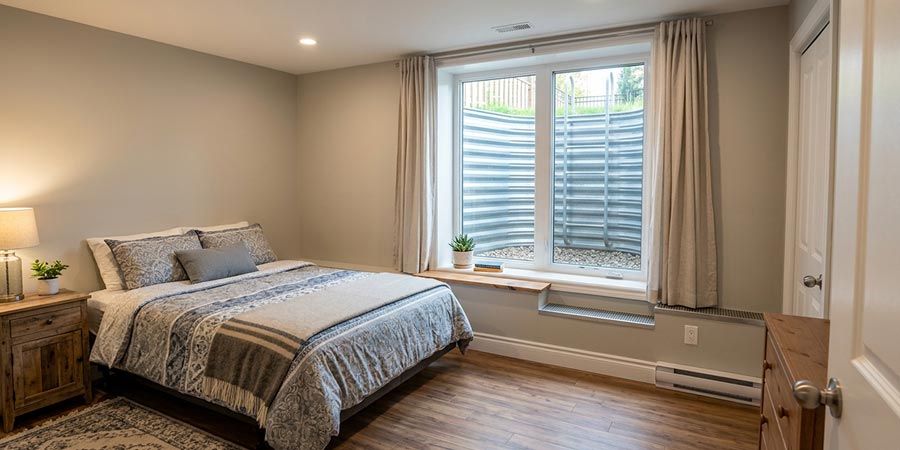
They can, when the wrong device is installed on the wrong window. Fall prevention and fire escape pull in opposite directions: one keeps an opening small, and the other requires it to open quickly, and the hardware has to reconcile both on the same sash.
Under the National Building Code of Canada, each bedroom in a dwelling unit that is not sprinklered needs at least one outside window or exterior door that opens from inside without keys, tools, special knowledge or the removal of sashes or hardware. A window serving this purpose must provide an unobstructed opening of at least 0.35 m², with no dimension less than 380 mm, and must stay open during an emergency without additional support. Provincial codes may vary these figures, but the principle is consistent across Canada.
Quick-Release Hardware
Hardware on an exit window should release through a deliberate adult action, often a two-step sequence that a young child is unlikely to perform, without a key and without removing screws, and it should then allow the sash to reach its full opening. Guards on such windows need the same property: a release that adults operate from inside and that resists a young child.
Everyone who might depend on that window in a fire, including babysitters and visiting grandparents, should practise the release once in daylight. Operating an unfamiliar mechanism in smoke and darkness is a very different task from reading about it.
Bedroom and Egress Windows
Keyed restrictors and permanently screwed stops are the devices most likely to turn a compliant bedroom window into a non-compliant one, because a missing key or an unremovable stop defeats the no-tools requirement. When a bedroom window serves as the required escape opening, the selected safety device must meet its egress requirements.
The simplest safeguard is made at the ordering stage. Specifying bedroom windows whose full opening comfortably exceeds the egress minimum leaves room for safety hardware without eroding the escape path.
Window Force supports that decision before anything is built. The authorized dealer who measures the room can confirm which window serves as the bedroom exit and whether the chosen style leaves enough opening for fall-prevention hardware, so compatibility is settled at ordering rather than improvised after installation. Choosing an egress-capable configuration does not require sacrificing energy performance when the window is properly specified for the applicable climate zone — and qualifying energy-efficient units may also be eligible for rebates through the Canada window and door rebates guide. Each unit is CSA certified and engineered to meet ENERGY STAR® requirements across Canadian climate zones, assessed as a complete window rather than as separate components. The 25-year transferable warranty outlasts the years a child needs protecting and passes to the next owner with the house, which suits a bedroom window that will likely serve more than one family.
Which Canadian Building-Code and Local Bylaw Rules Should Homeowners Check?
Window safety rules in Canada operate at three levels: the national model code, the provincial or territorial code that adopts it, and municipal bylaws that can add requirements for existing buildings. A homeowner planning window changes should know which level governs the project before buying hardware or ordering a new unit.
National Model-Code Guidance
The National Building Code of Canada, published by the National Research Council, sets out the model requirements for window fall protection and bedroom egress described above. Provinces adopt it on their own timelines and frequently modify it, so the edition referenced in a general discussion may not be the one in force where the house stands. The national text is best read as a statement of intent: limit accessible openings above a significant drop, and never at the expense of a usable exit.
Municipal Requirements
Municipal rules usually target existing buildings, particularly rental housing. Under the City of Toronto's bylaw requirements for window safety latches, every openable window in a building with three or more dwelling units that does not lead to a balcony and sits two metres or more above finished grade must have a safety device preventing it from opening more than 100 mm. The property owner, or the condominium corporation in a condominium, must pay for, install and maintain those devices.
That bylaw works alongside the provincial code rather than replacing it. A new window installation in Ontario is governed by the Ontario Building Code, while the Toronto requirement applies to the building's ongoing condition once people live in it.
Other cities handle the same questions differently. In Vancouver, window projects follow the Vancouver Building By-law, which the city administers separately from the provincial building code; in Victoria, projects follow the provincial code directly; and in Toronto, as described above, a property standards requirement is added on top of the Ontario code. Check the applicable local requirements before selecting the device.
When to Ask the Local Building Department
Call the building department before enlarging or reducing a window opening, converting a room into a bedroom, finishing a basement with sleeping space, or creating a secondary suite, since each can trigger egress and fall-protection requirements. Tenants and condominium owners should raise missing safety devices with the landlord or property manager first, because in cities with rules like Toronto's, the obligation rests with the owner, not the occupant.
Why Should Beds, Cribs, Dressers, and Other Furniture Be Kept Away From Windows?
Furniture converts a window that looks out of reach into one a child can reach in seconds. A sill at a toddler's eye level is effectively one step away once a bed, toy chest, or dresser stands beneath it.
Federal guidance advises against placing furniture a child can climb near a window, and injury surveillance describes climbing on furniture or a ledge as a recurring prelude to window falls. Furniture can also give a child greater reach and leverage against the window and its safety hardware.
Create a No-Climb Zone Around the Window
A no-climb zone works best as a room-by-room routine rather than a one-time rearrangement:
- Keep the wall area beneath and beside each operable window clear of anything a child can stand on, including beds, cribs, dressers, shelving and stacked storage bins.
- Place cribs and beds along interior walls so that neither a headboard nor a crib rail offers a route to the sill.
- Give step stools, toy boxes, ottomans and desk chairs on castors a permanent place away from windows, since children move light objects.
- Recheck the layout after every furniture purchase, rearrangement or room swap between siblings.
Fixed features count as furniture for this purpose. A deep interior ledge or a heating unit cover gives the same foothold as a dresser and cannot be moved, so windows above such features should be among the first to receive hardware.
How Should Window Blinds and Cords Be Childproofed?
Window coverings introduce a separate hazard: strangulation. It requires neither an open window nor a climbing child, only a cord within reach of a crib, bed or play area.
Health Canada reports that, before new regulations for corded window coverings came into force in 2021, an average of one child per year in Canada died from strangulation by a window covering cord. Its window covering safety guidance identifies children between one and three years old as most at risk and notes that 22 cm of cord, or a 44 cm loop, is enough to strangle a child. The same guidance states that the safest window coverings have no long, accessible cords.
Choose Cordless Coverings
Cordless lift systems, motorized shades and coverings with fully enclosed cords remove the hazard instead of managing it. Current Canadian requirements apply to products sold in the country, but they do nothing about coverings already hanging in older homes, so those installations remain the main concern.
The window itself offers another route. Glass units with built-in blinds sealed between the panes leave nothing accessible in the room to pull, loop or chew.
What to Do With Older Corded Blinds
When you can't replace every covering at once, start with children's bedrooms and play spaces, as the federal guidance recommends. Until then, keep cords out of reach: secure tension devices to the wall, wrap loose cords on a cleat mounted high on the wall, untie knots as soon as they form, and remove any accessory that creates a dangling loop.
Which Windows and Rooms Should Parents Childproof First?
Priority depends on two factors considered together: how easily a child can reach and open the window, and how serious a fall from it would be. A low-sill nursery window above a patio ranks far ahead of a high basement window, even though both technically open.
Bedrooms and Nurseries
Children spend long unsupervised stretches in bedrooms, including naps, early mornings and the minutes between waking and calling for a parent, which makes these rooms the first priority on any floor above grade. Nurseries add a specific pattern, since a crib is sometimes placed on the exterior wall under the window, and a baby who can pull to standing in a crib is already close to sill height.
Frame material rarely appears in childproofing advice, even though the sill beside a crib is a surface a teething child grips, licks and chews. Original wood sills in older homes are usually painted, and early paint layers may contain lead, while parts of the vinyl market historically relied on lead-based heat stabilizers in the compound. Window Force extrudes its frames from lead-free uPVC with UV stabilizers in the formulation, so a sun-facing sill does not break down into the chalky surface residue that small hands pick up. For a nursery window, that leaves one less material question for a parent to answer.
Playrooms
Playrooms concentrate climbable objects, ride-on toys and play structures, and their layout changes constantly. They are also the rooms where windows tend to be opened during active summer play, so a device on a playroom window is engaged and challenged more often than almost any other in the house.
Upper Floors and Stair Landings
Every operable window on the second storey and above belongs on the list, but stair landings deserve particular attention. Landing windows are sometimes set low for architectural proportion, and a fall toward the stairwell side can extend the effective drop. Projecting bay and bow windows on upper floors call for the same scrutiny when they include a built-in seat, because the seat places a child at sill height directly beside the operable flanking units.
Can Child-Safety Hardware Be Added to Existing Windows?
Most existing windows can accept retrofit child-safety hardware, but you must confirm compatibility for the specific sash rather than assume it based on the style. Sash design, frame material and condition, available mounting locations, existing locks, warranty terms and egress status all determine whether a device will hold.
When Retrofit Hardware Makes Sense
Retrofit hardware is the right answer when the window operates smoothly, the frame is sound, the device manufacturer lists the sash type as compatible, and the opening remains adequate for escape once the device is fitted. On vinyl frames, the main technical caution is fastening. Hollow extrusions contain chambers for insulation and drainage, and a screw driven into an unsupported chamber wall or through a drainage path can strip, loosen with seasonal movement, or open a route for water into the frame.
Drill only at the fastening locations specified by the device maker or the window manufacturer. If it is unclear which zones are solid, the original vinyl window supplier can confirm them before you drill the first hole, and you should review the warranty terms at the same time, since added hardware can affect coverage.
When Window Replacement May Be Worth Considering
Replacement becomes the better investment when an existing window cannot accept a compatible device without being compromised. Typical cases are wood sashes too deteriorated to hold fasteners, sliders with worn tracks that let a stop ride over the rail, casements with failing operators, and hung sashes whose balances no longer hold position. It also makes sense when a bedroom window is already undersized for egress, because no hardware can add an opening area. The specific obstacle depends on the age, condition and design of the existing window.
Replacement windows let you specify the operating style, sill height, clear opening, and child-safety hardware all at once — because Window Force builds custom vinyl windows to the exact dimensions and sash configuration on the order, the style, sill height, and required clear opening are confirmed before any profile is cut. That is also when a style change needs the most care.
Engineer Sergey Essipov, with 20 years of experience in window manufacturing, explains:
When a family replaces a bedroom casement with a slider because a track stop seems easier to live with, the escape opening often shrinks more than they expect. A horizontal slider typically provides a clear opening of substantially less than the full unit width, often around half of the overall width, depending on the sash and frame design. Childproofing and egress have to be worked out on the same drawing, before the window style is changed, not after the new unit arrives on site.
How Often Should Window Guards, Restrictors, and Locks Be Checked?
Inspect child-safety window hardware regularly and after any event that could affect its fit or operation. A device can loosen, corrode or stop resetting even when it still appears intact, so visual inspection alone is not enough. Seasonal movement of window frames, repeated operation and routine cleaning can gradually change how a guard, restrictor or lock engages.
The first inspection each spring is particularly useful because windows that remained closed through winter are being reopened and used more frequently. Additional checks are appropriate after furniture is rearranged, after cleaning that involves tilting, lifting out or disconnecting a sash, after a child has tested or tampered with a safety device, and whenever a child gains enough reach or strength to interact with the window differently. Windows exposed to persistent moisture may require more frequent inspection.
Child-Safety Window Hardware Inspection Checklist
A proper inspection should confirm that the hardware remains securely attached, limits the opening as intended and still operates correctly. Check the following:
Promptly repair or replace any device that fails one of these checks, following the manufacturer’s instructions and the nature of the defect. Until you restore the safety device to proper working order, treat the window as unprotected.
How Moisture Affects Window Safety Hardware
Moisture can shorten the service life of window safety hardware, particularly where condensation repeatedly wets the sill, track or fasteners. Condensation commonly develops near the colder edges of insulated glass, and persistent moisture can contribute to corrosion of exposed metal components over time.
A warm-edge spacer can help keep the glass edge warmer and reduce the conditions that contribute to edge condensation. Window Force, for example, uses a metal-free warm-edge spacer in its insulated glass units. Regardless of the window system, however, address recurring condensation rather than accepting corrosion or deterioration of child-safety hardware.
When a safety device is loose, corroded or no longer resets reliably, do not keep adjusting it indefinitely. Replacement may be necessary if the hardware can no longer provide the required level of protection. If you need a professional assessment, a qualified window service provider can check whether the existing safety hardware matches the window and sash configuration.
Conclusion: What Should You Remember When Childproofing Windows?
Effective window childproofing combines appropriate safety hardware, a clear area around the window and safe window-covering practices while preserving any required emergency exit.
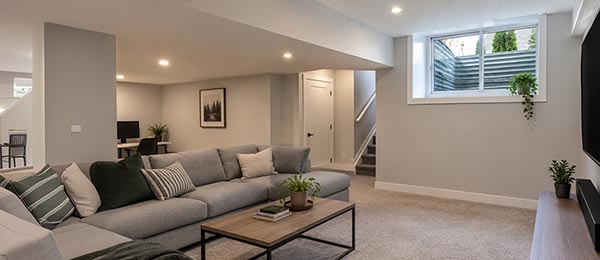
Start with windows a child can reach and where an outside fall would be most serious. Confirm the required egress window before installing any hardware, сonfirm that the selected hardware remains compatible with the window and its required escape function. For upper-storey windows, ground-floor openings above significant drops, and basement bedrooms, the safest solution addresses fall protection without compromising the escape route.
Planning to make a child's bedroom safer before windows start opening again in spring? Send the window sizes, operating styles and floor level through the request form on our site, and our team will confirm which sashes can take fall-prevention hardware, recommend a replacement configuration for any window that cannot accept it without losing its escape opening, arrange a measurement, and confirm current production lead times.
Frequently Asked Questions
What is the safest way to childproof a window?
The appropriate solution depends on the window's operating style, the child's ability to reach it and whether the window is required for emergency egress.
Do window guards need an emergency release?
If a guard is installed on a required escape window, it must have a release mechanism that satisfies the applicable egress requirements.
Can I use a window stop on a bedroom egress window?
Use a restrictor on a required egress window only if the specific device is permitted for that application and still allows the required opening.
At what age can window restrictors be removed?
There is no fixed age. Keep devices in place while a child can climb and does not reliably understand the danger of an open window, and base the decision on the child's behaviour and the height of the fall rather than on a birthday.
Are ground-floor windows a fall risk?
Yes. A ground-floor window can still present a fall risk where there is a raised deck, walkout basement or deep window well outside.
Does child-safety hardware affect a window's energy performance?
A correctly matched device should not. Problems arise when added hardware prevents a compression-sealed sash, such as a casement or awning, from closing fully against its weatherstripping after the device is released.
Who is responsible for window safety devices in a rental building?
That depends on the municipality. In Toronto, owners of buildings with three or more units must install and maintain devices that limit openings to 100 mm on qualifying windows two metres or more above grade, so tenants should first raise missing devices with the landlord.
People Also Ask