

Smart glass windows are glazing units with an electrically or thermally activated layer that changes light transmission, privacy, and solar heat gain on demand — giving homeowners adjustable control that fixed Low-E coatings, tinted film, and blinds cannot replicate once installed. Three technologies serve different needs: electrochromic glass tints gradually and holds its state without power, PDLC switches to full opacity in under a second, and SPD offers fast dimming across a gradient range. The right choice depends on the room's function, not on the technology alone, and the base IGU surrounding the active layer must still meet the same thermal and structural standards as any conventional window.
Window Force has produced base insulated glass units since 2007 at our 80,000 sq ft Ontario facility, including the units that smart glass films and laminates are built into and that base unit's thermal and structural performance is what determines whether the finished product meets Canadian certification standards or falls short of them. Our production team coordinates IGU specifications with glazing contractors and electricians on smart glass projects across Ontario, so the compatibility questions covered in this guide come from real installation coordination, not from product literature alone.
Key Takeaways
- Smart glass changes its light transmission electronically or thermally, giving homeowners on-demand control over privacy and glare that fixed glazing cannot match.
- Electrochromic, PDLC, and SPD technologies each solve a different problem: gradual tinting, instant opacity, or fast dimming, so the right choice depends on the room rather than a single "best" product.
- Independent building-science research shows electrochromic glazing can meaningfully reduce cooling and lighting loads when paired with proper control settings, though results vary by climate and orientation.
- Smart glass is classified as a dynamic glazing product under Canada's ENERGY STAR technical specification, which places it in the same performance framework used to certify conventional windows.
- Successful installation depends on proper planning, compatible framing, and correctly integrated controls.
What are smart glass windows and how do they differ from standard glazing?
Smart glass windows are glazing units that incorporate a dynamic material, typically a film, laminate, or specialized coating, allowing the glass to change its light transmission in response to electricity, heat, or sunlight. Standard glazing, including Low-E coated and argon-filled insulated glass units, is optically fixed once it leaves the factory: whatever tint, coating, and clarity it ships with is what the homeowner lives with for the life of the window. Smart glass adds a controllable variable to that equation, letting the same pane serve as a clear view one moment and a private, shaded surface the next. This distinction is important because homeowners often confuse smart glass with tinted glass, decorative privacy film, or one-way glass, all of which are static once installed and cannot be reversed without physically removing them.
Definition and core mechanism
A smart glass unit works by applying a small electrical charge or by passively responding to heat and sunlight to change the alignment or reactivity of particles, crystals, or a chemical coating embedded in the glass. When the layer is in its "off" or resting state, the window is typically either clear or in its default tint; when activated, it shifts toward opacity or a darker tint depending on the technology. This is a genuinely different category of product from tinted or coated glass, which achieves its appearance through a fixed pigment or metallic coating that does not change after manufacturing. Natural Resources Canada's ENERGY STAR technical specification formally recognizes this category as a "dynamic glazing product," defined as any fenestration product with the fully reversible ability to change performance properties such as U-factor, solar heat gain, or visible transmittance, a definition that explicitly includes chromogenic glazing alongside integrated shading systems.
Smart glass vs traditional glazing
Homeowners comparing options should understand that traditional privacy film and tinted glass offer a single fixed level of light control, while smart glass offers a range that occupants or a control system can adjust throughout the day. The table below summarizes the practical differences that matter most when specifying a window.
| Feature | Smart Glass | Traditional Tinted or Coated Glass |
| Light control | Adjustable, on demand | Fixed at manufacture |
| Privacy | Adjustable privacy (instant with PDLC; gradual with electrochromic) | Requires blinds or curtains |
| Power requirement | Most types need wiring | None |
| Typical cost | Higher per unit | Lower per unit |
| Reversibility | Fully reversible | Permanent |
Common residential use cases
Smart glass is increasingly used in residential spaces where privacy, glare control, or daylight levels need to change throughout the day without relying on traditional window treatments. These applications share a common goal: maintaining natural light and unobstructed views while reducing the need for blinds or curtains.
Windows Near Me
How does smart glass technology actually work?
Three technologies dominate the residential smart glass market, and each achieves opacity or tint changes through fundamentally different physical processes. Understanding how each technology works is important because it directly determines switching speed, power draw, and the degree of visual transition that appears gradual or abrupt. Electrochromic glass uses an electric current to drive ions between layers of the unit, gradually shifting the glass from clear to tinted over seconds to minutes. Suspended particle devices and polymer dispersed liquid crystal units, by contrast, rely on particle or crystal alignment that can switch in a fraction of a second once power is applied or removed.
Main technologies at a glance
Electrochromic glass tints gradually and maintains its state without continuous power once the transition is complete, making it efficient for long-duration shading. Suspended particle devices align microscopic particles under voltage to control the amount of light passing through, offering a gradient of tint levels rather than a simple on-off switch. Polymer-dispersed liquid-crystal units switch between a milky, opaque state and full transparency almost instantly, but they do not offer intermediate tint levels as electrochromic and SPD glass do.
Powered vs non-powered states
Most PDLC and SPD products require continuous power to remain clear and default to opaque or diffuse when power is cut, which is a meaningful consideration for homes in areas with occasional outages. Electrochromic glass behaves differently: it holds whatever tint level it last reached even without ongoing power, drawing current only during the transition itself. This difference affects both energy use and what a homeowner should expect to see during a power interruption, so it is worth confirming with the installer before committing to a specific technology.
Switching performance factors
Switching speed depends on unit size, the technology used, ambient temperature, and the age of the electrical components, with larger panes generally taking longer to transition fully and edge-to-edge. According to a peer-reviewed review of electrochromic building glazing published in the MDPI journal Energies, electrochromic devices modulate visible and near-infrared transmittance through a reversible electrochemical process, and their energy performance in real installations depends heavily on how the switching is controlled relative to daylight and occupancy patterns.
Engineer Sergey Essipov, with 20 years of experience in window manufacturing, explains:
The mechanism a homeowner picks should match how the room is actually used, but the base IGU has to be right first. At our facility, we document the spacer type, gas fill, and Low-E coating for every custom unit before the smart film integrator receives it — because a PDLC layer bonded into an IGU with a mismatched spacer or an incorrect gas fill will underperform thermally even if the switching works perfectly. The active layer gets the attention, but the sealed unit underneath is doing the thermal work.
Why are smart glass windows becoming more popular in modern homes and commercial spaces?
Demand for smart glass has grown as open-concept floor plans, floor-to-ceiling glazing, and home offices with glass walls have become more common, all of which create privacy and glare issues that traditional window treatments address only imperfectly. Buyers increasingly want the visual openness of large glass surfaces without sacrificing the ability to shut out a street view or a neighbouring building in seconds. This shift is not confined to residential design; commercial spaces have adopted smart glass at an even faster pace for reasons that overlap with, but are not identical to, homeowner motivations.
Residential demand drivers
Homeowners renovating bathrooms, home offices, and street-facing rooms are the primary residential adopters, largely because those rooms combine a desire for natural light with an equally strong need for privacy at specific times of day. The appeal is compounded by smart home adoption generally: once a household already controls lighting and thermostats from an app, adding window opacity to that same control layer feels like a natural extension rather than a novelty purchase.
Commercial and hospitality adoption
Offices, clinics, and hotels use smart glass on meeting room partitions, patient consultation rooms, and guest bathrooms to combine an open, modern aesthetic with defensible privacy on demand. In these settings, the ability to switch a wall of glass from transparent to opaque without installing blinds also simplifies cleaning and reduces the visual clutter that window treatments introduce in professional spaces. That same logic increasingly applies to home offices, which functionally resemble small commercial spaces within a residential envelope.
Design trends behind the shift
Architects and designers favour smart glass because it preserves sightlines and natural light in floor plans that would otherwise require walls or heavy drapery to achieve privacy. As glass-heavy architecture continues to trend upward in both new builds and major renovations, the demand for a glazing solution that adapts rather than blocks light entirely is likely to keep growing alongside it.
What benefits can smart glass provide for privacy, comfort, and energy efficiency?
Smart glass delivers three overlapping categories of benefit, and the relative importance of each depends heavily on where in the home it is installed. Privacy is the most immediately obvious advantage, since a switch or app command replaces the need to physically draw a blind. Comfort and energy-related benefits are less visible day-to-day but compound over the life of the window, particularly in rooms with significant west or south sun exposure.
Privacy on demand
A homeowner can shift a bathroom or bedroom window from clear to opaque in seconds, eliminating the gap-and-peek risk that blinds and curtains create when they are not perfectly closed. This is particularly valuable in urban and suburban lots with close neighbouring sightlines, where a permanently frosted or heavily tinted window would sacrifice daylight for the rest of the time.
Comfort and glare control
Smart glass reduces the harsh glare that makes screens hard to read and rooms uncomfortable during peak sun hours, without the light-blocking trade-off of closed blinds. Because the tint level can often be adjusted incrementally rather than as a binary on-off, homeowners can dial in exactly enough shading to cut glare while still keeping the room bright.
Energy-related advantages
By reducing solar heat gain during peak sun exposure, smart glass can reduce the cooling load a home's air conditioning system must handle during summer afternoons, though the magnitude of savings depends on climate, orientation, and how consistently the tinting is used. Independent building-science research on electrochromic glazing has found that automated control strategies tied to daylight and glare thresholds produce measurably better energy outcomes than manual switching alone, since occupants do not always remember to adjust a manual control at the right moment.
Are smart glass windows worth the investment for residential projects?
Whether smart glass justifies its cost depends on the specific room, the household's daily habits, and how much value the homeowner places on eliminating the need for conventional window treatments. For rooms with genuine privacy pressure, such as street-facing bathrooms or home offices with visible glass walls, the investment case is straightforward because there is no equally elegant alternative. For a spare bedroom with a fenced-backyard view, the same investment is much harder to justify compared to a simple blind.
When the investment makes the most sense
Smart glass earns its cost fastest in rooms where privacy needs change throughout the day and where blinds or curtains would otherwise be operated multiple times daily. It is also a stronger fit in new construction or a full glazing replacement, where the electrical wiring for the control system can be planned into the project from the start rather than retrofitted afterward. Resale appeal is a secondary factor: a bathroom or office with switchable privacy glass is a distinctive feature that stands out in a listing, though it should not be the primary justification for the expense.
Best rooms for smart glass
Bathrooms adjacent to a hallway or shared wall, home offices with interior glass partitions, and street-facing living rooms in dense neighbourhoods are the most common high-value applications. Media rooms and home theatres also benefit, since occupants can adjust ambient light without leaving their seats, a feature that is functionally difficult to replicate with manual blinds.
Where alternatives may serve better
For interior rooms with limited sun exposure or windows facing a private backyard, the cost difference between smart glass and a well-chosen blind is difficult to justify on privacy or comfort grounds alone. In those cases, standard Low-E glazing paired with an interior shade typically delivers comparable day-to-day comfort at a fraction of the cost.
For homeowners planning a complete window upgrade rather than a single-glazing replacement, custom vinyl windows can offer a practical combination of thermal performance, durability, and compatibility with modern insulated-glass technologies.
What factors affect the cost of smart glass windows?
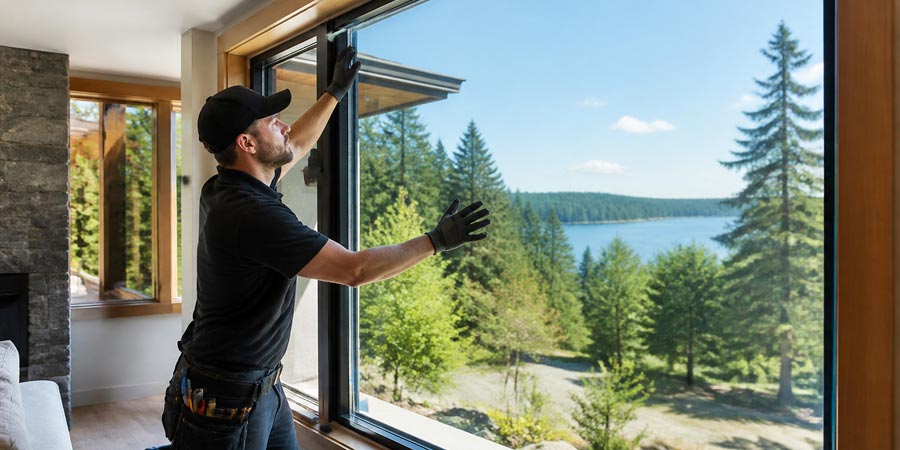
Smart glass pricing is driven by more variables than conventional glazing because the active layer, the control system, and the installation labour all add cost to the base insulated glass unit. Homeowners comparing quotes should understand which of these variables are fixed by the technology chosen and which can be adjusted to manage the budget. Material cost, customization level, and control complexity typically account for the largest swings between quotes for what appears to be a similar-sized project.
Material cost drivers
The active layer itself, whether an electrochromic film, a PDLC film, or an SPD laminate, is the single largest cost component, and pricing scales with the unit's surface area rather than with a flat per-window rate. Larger panes, custom shapes, and units that need to match an existing glazing configuration, such as an argon-filled, Low-E insulated unit, all add to the base material cost before controls are factored in.
Installation and wiring cost drivers
Wiring a smart glass unit into a functioning control system requires an electrician familiar with low-voltage installations, and retrofitting that wiring into finished walls costs considerably more than running it during new construction or a gut renovation. A window company in Oakville typically quotes lower installation labour for smart glass in a new-build subdivision than a window manufacturer in Ottawa working with century-home plaster walls, even when the glass specification is identical, because the wiring access determines the labour scope.
Customization and control system cost
A basic wall switch adds minimal cost, while app-based control, voice integration, and scheduling automation each add incremental expense beyond the glass itself. Homeowners planning a whole-home smart system should confirm compatibility early, since some smart glass control systems integrate more easily with existing platforms than others. When smart film is being paired with a new insulated glass unit rather than retrofitted onto existing glass, working with a manufacturer that offers a full range of glazing and glass configurations, such as Window Force's glass options, makes it easier to match the base unit's coating, gas fill, and spacer specification to the active layer being installed.
Which smart glass option is best for privacy, shading, or dynamic light control?
No single smart glass technology outperforms the others across every category, which is why the right choice depends on ranking privacy, shading, and appearance priorities for the specific room. PDLC leads to instant, complete privacy. Electrochromic leads on gradual shading and daylight-responsive automation. SPD sits between the two, offering fast switching with more granular light control than PDLC provides.
Technology comparison
| Priority | Best-Suited Technology | Why |
| Instant, complete privacy | PDLC | Switches to fully opaque almost instantly |
| Gradual solar shading | Electrochromic | Tints incrementally, holds state without continuous power |
| Fast switching with tint gradient | SPD | Aligns particles quickly across a range of light levels |
| Premium architectural appearance | Electrochromic | Smooth, glare-free transition preferred in higher-end installations |
Matching technology to the room
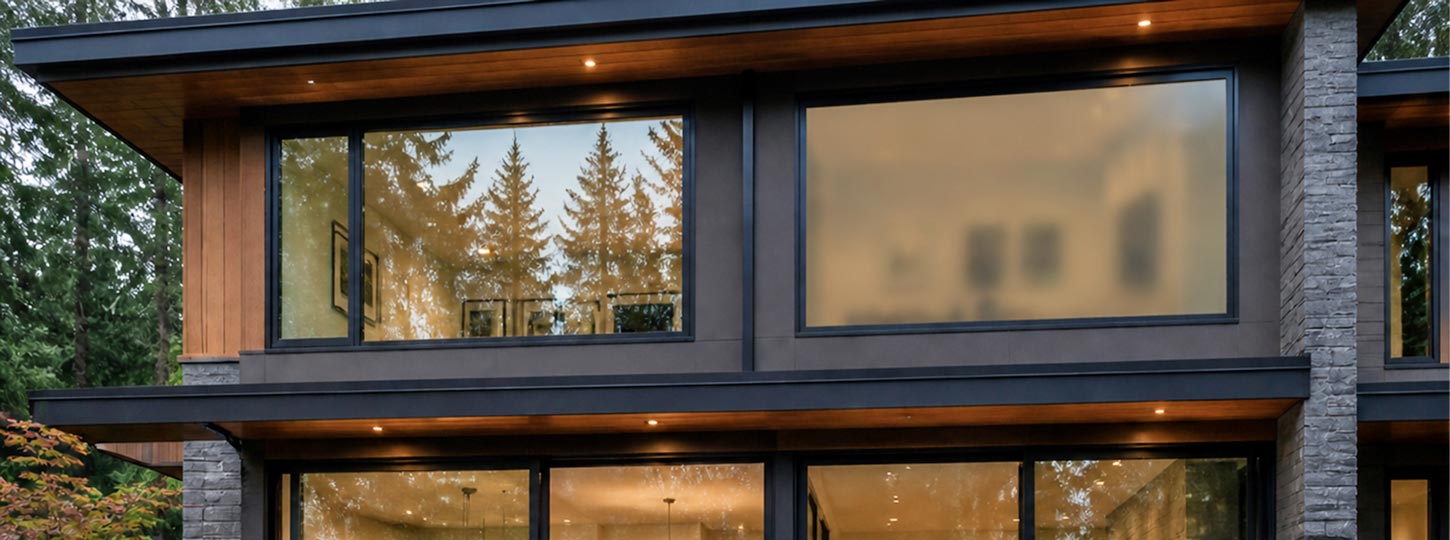
A bathroom or home office glass partition, where the goal is binary privacy, is generally best served by PDLC because the transition is immediate and the finished appearance in its opaque state is uniform and frosted. One important caveat that surprises most homeowners who have not seen PDLC installed before: PDLC in its opaque state is not a true blackout. It creates the appearance of heavy frosted glass — shapes and silhouettes remain visible through it at close range, particularly in strong backlight. If someone stands directly in front of the glass outside, they will still be able to detect movement and general form inside. This is important for rooms such as bathrooms where the expectation might be complete visual privacy. For genuine blackout in a bedroom or media room, PDLC is the wrong choice and a different product category is required. Similarly, electrochromic glass in its darkest state typically retains somewhere between 5 and 10 percent visible light transmission — it dims significantly but does not block. Knowing these limitations before ordering prevents the most common post-installation disappointment in smart glass projects. A living room or sunroom with significant solar exposure benefits more from electrochromic glazing, since the gradual tint responds well to automated daylight sensors and avoids the abrupt visual shift that PDLC produces. Homeowners chasing a premium architectural look, where the transition itself should look refined rather than functional, tend to favour electrochromic glass for that reason as well.
Where can smart glass windows deliver the greatest practical value?
Beyond the general privacy and comfort benefits already covered, certain rooms and building types see disproportionately high practical value from smart glass because the alternative solutions are genuinely inferior in those specific contexts. Bathrooms without a window-treatment-friendly layout, home offices used for video calls, and interior partitions in open-concept renovations are the strongest residential candidates. Commercial and specialty settings extend the same logic to a different scale of the problem.
Residential applications
Smart glass provides the greatest practical value where privacy requirements change throughout the day, where blinds would interfere with the design, or where maintaining uninterrupted views is a priority. In these situations, dynamic glazing offers a level of flexibility that conventional window treatments cannot easily match. The choice of smart glass technology is also influenced by the window style itself as homeowners reviewing available window types and operating mechanisms will find that fixed picture panels and large casement units are the most common carriers for smart glass, since sliders and hung windows introduce mechanical interfaces where wiring can be disrupted by repeated movement.
Commercial and specialty applications
Boardrooms, clinics, and hotel bathrooms use smart glass for many of the same reasons homeowners do, but the switching frequency and the number of daily transitions are typically much higher, which puts additional demand on the durability of the active layer and its control electronics. Storefronts also use dynamic glazing for security and display purposes, switching a display window from transparent to opaque outside business hours.
What should buyers know before installing smart glass in a new build or renovation?
Planning for smart glass has to happen earlier in a project timeline than planning for standard windows, because the electrical and control infrastructure needs to be designed in alongside the glazing rather than added afterward. Homeowners who treat smart glass as a late-stage decision often end up with wiring compromises, exposed conduit, or a control system that cannot cleanly reach every unit. New construction and full renovations offer far more flexibility than a straightforward retrofit into an existing, finished wall.
New construction vs retrofit planning
In new construction, low-voltage wiring for smart glass can be run through the wall cavity before drywall goes up, keeping the finished installation completely concealed. Retrofitting an existing home often requires additional planning for the integration of wiring and glazing, which is why professional replacement services are typically recommended for projects involving smart glass systems.
Retrofitting smart glass into an existing frame adds a variable that new construction avoids: the frame itself must be structurally sound enough to carry the heavier laminated unit and dimensionally stable enough to maintain seal compression around a more complex IGU. Window Force frames are extruded from lead-free uPVC with UV stabilizers and fusion-welded at every corner, which means a retrofit smart glass unit mounted into an existing Window Force frame sits in a profile that has not warped, chalked, or lost compression over its service life — a precondition that older or mechanically fastened frames do not always meet.
Electrical and control planning
Every smart glass unit needs a defined power source, a control method, and a decision about whether it will operate independently or as part of a zoned system with other units in the home. Homeowners should confirm voltage requirements, transformer placement, and whether the control hub needs a dedicated network connection well before the glass itself is ordered, since changes after fabrication are costly. Because the insulated glass unit surrounding the active layer still has to meet the same thermal and structural standards as any other window, buyers working with a manufacturer that documents spacer type, gas fill, and coating specifications in writing, the way Window Force does for every custom IGU produced at its Ontario facility, have an easier time coordinating those requirements with an electrician and installer.
Coordinating with contractors
Smart glass installation typically involves coordination between the glazing contractor, electrical contractor, and control system integrator. Clear communication between these parties is one of the most important factors in avoiding project delays.
How durable, safe, and low-maintenance are smart glass windows over time?
Smart glass has matured enough that durability concerns are now closer to those of other laminated or insulated glass products, though the active layer and its electronics do introduce failure points that standard glazing does not. Most residential units are built with the same laminated safety glass used elsewhere in the home, so their impact resistance is comparable to that of other laminated products. Maintenance is generally simple, but warranty coverage for the electronics is usually separate from, and shorter than, coverage for the glass itself.
Durability expectations
Electrochromic units are typically rated for tens of thousands of switching cycles before performance begins to degrade, which translates to well over a decade of normal residential use in most rooms. PDLC and SPD films have somewhat shorter typical service lives due to the mechanical stress of rapid switching, though manufacturer specifications vary enough that buyers should ask for cycle-rating documentation directly.
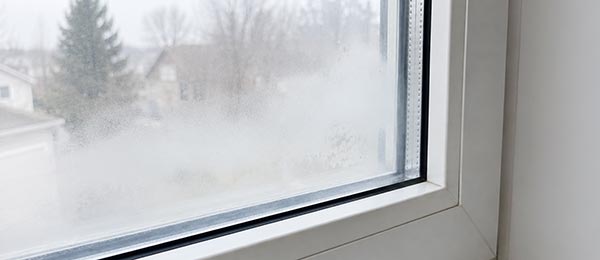
Long-term reliability depends not only on switching cycles but also on maintaining the integrity of the insulated glass seal. Building science research consistently identifies edge-seal failure and the resulting moisture intrusion as leading causes of insulating glass unit (IGU) degradation, reducing thermal performance and service life. These durability considerations apply regardless of the glazing technology used, making seal integrity a critical factor in the long-term performance of both conventional and dynamic glazing systems.
Edge-seal failure is the risk that smart glass shares with every other IGU-based product, and the spacer system at the glass perimeter is the component that determines how long the seal holds. Window Force uses a dual-seal, metal-free warm-edge spacer that eliminates the aluminum bridge where most moisture intrusion originates in conventional assemblies. For a smart glass project, seal integrity directly protects the active film or laminate inside the unit from humidity exposure, which degrades switching performance over time.
Cleaning and maintenance
Smart glass is cleaned the same way as any laminated glass unit, using a non-abrasive cleaner and a soft cloth, and homeowners should avoid ammonia-based products that can degrade certain film layers over time. Because there are no blinds or curtains involved, smart glass also avoids the dust accumulation that traditional window treatments create, which is a modest but real advantage for households managing allergies.
Safety and warranty considerations
The base glass in a smart glass unit still needs to meet Canadian safety glazing requirements in locations such as near walking surfaces, doors, and low windows accessible to children, exactly as any other residential glazing does. Electronics and film warranties typically run five to ten years, which is meaningfully shorter than the structural warranty on the surrounding glass and frame, so buyers should read both warranty documents separately rather than assuming one covers the other.
The warranty gap between the electronics and the glass is where most homeowner confusion arises on smart glass projects. Window Force's 25-year transferable warranty covers the base IGU — frame, sealed glass unit, and spacer system — independently of whatever film or electronics warranty the smart glass supplier provides. Separating the two gives homeowners a documented performance guarantee on the structural and thermal components that outlasts the active layer by a significant margin, and that coverage transfers if the home is sold.
Can smart glass be integrated with modern controls and smart building systems?
Most residential smart glass products are designed for integration, offering manual switches at a minimum and app or voice control at the higher end of the product range. For most homeowners, the key question is not whether integration is possible but how deeply they want the glass tied into an existing smart home ecosystem. Commercial buildings take this further, often integrating smart glazing into building-wide automation systems that manage lighting, HVAC, and glazing together.
Manual and basic controls
A simple wall-mounted switch or dimmer remains the most reliable control method and requires no network connection or app setup, making it the right choice for homeowners who want privacy without added complexity. This baseline option is also the easiest to service, since there are fewer components that can fail or fall out of sync with a software update.
App-based and automated options
Homeowners who already run a broader smart home platform can typically connect compatible smart glass systems through a bridge or hub, enabling scheduling, geofencing, and voice commands alongside their existing lighting and climate controls. Engineer Sergey Essipov, with 20 years of experience in window manufacturing, notes:
Automation adds real convenience, but every added integration point is also another thing that can go out of sync during a firmware update. I tell homeowners to make sure the manual switch still works independently before they layer automation on top of it.
Commercial system integration
In commercial buildings, smart glazing is frequently tied into building management systems that coordinate glass opacity with HVAC setpoints and lighting schedules across an entire floor, a level of integration that is generally beyond what a single-family home needs but illustrates how far the underlying control technology can scale.
What are the most common misconceptions about smart glass?
Several persistent myths shape how homeowners evaluate smart glass, and most of them stem from outdated pricing, early-generation technology limitations, or confusion with static tinted glass. Addressing these directly helps set realistic expectations before a purchase decision is made. The most damaging misconception is treating smart glass as a guaranteed, dramatic reduction in energy bills rather than as one contributing factor among several in a home's overall thermal performance.
Myth vs reality
A common assumption is that smart glass eliminates the need for any other window treatment, but in practice, many homeowners still want a physical option for full blackout in a bedroom regardless of the glass's tinting range. Another frequent misconception is that all smart glass switches instantly; in reality, only PDLC and SPD types switch in seconds, while electrochromic glass transitions gradually over a longer window by design, not as a defect.
Where expectations go wrong on cost and savings
Homeowners sometimes expect smart glass to pay for itself quickly through energy savings alone, but the technology's primary value is functional: privacy and glare control, with energy benefits as a secondary and climate-dependent bonus. Treating it as a direct financial substitute for blinds, rather than as a comfort and privacy upgrade with some energy benefit attached, leads to disappointment when the payback period is compared strictly against utility bill reduction.
Natural Resources Canada emphasizes that windows should be considered one element of an overall energy-efficiency strategy rather than an isolated upgrade. The largest reductions in household energy consumption typically result from combining high-performance glazing with improvements to insulation, air sealing, and HVAC efficiency, rather than relying on glazing technology alone.
How to assess vendor claims
Because switching speed, cycle life, and power draw vary meaningfully between manufacturers even within the same technology category, buyers should ask for documented specifications rather than relying on marketing language like "instant" or "energy-saving," which are used loosely across the industry. A reputable installer will provide cycle-rating data and warranty terms in writing before the sale, not only after installation.
What should you remember when comparing smart glass windows for your project?
Smart glass is a genuinely useful upgrade for rooms where privacy needs shift throughout the day and where the homeowner values an unobstructed view the rest of the time, but it is not a universal replacement for conventional glazing and window treatments. The right technology depends on the specific room: PDLC, for instance, for complete privacy; electrochromic for gradual shading and daylight response; and SPD when fast switching with a light gradient matters most. Getting the electrical and control planning right before the glass is ordered, and confirming that the surrounding insulated glass unit meets the same energy and safety standards as any other window, is what separates a smart glass installation that performs well for years from one that creates ongoing frustration.
Technology comparison summary
| Technology | Switching Speed | Light Control | Best Application |
| Electrochromic | Seconds to minutes | Gradual tint range | Sunrooms, living rooms, daylight automation |
| PDLC | Near-instant | On/off opacity only | Bathrooms, office partitions |
| SPD | Fast | Gradient tint | Media rooms, high-exposure glazing |
Window Force manufactures the base IGU for smart glass projects on a custom-to-order basis, with the spacer, gas fill, and coating specification documented and matched to the active layer before production begins. Every unit is CSA-certified and ENERGY STAR® qualified across all Canadian climate zones, and the 25-year transferable warranty covers the sealed glass unit and frame independently of the smart film supplier's electronics warranty. Our authorized dealer network coordinates directly with glazing and electrical contractors, so the base unit, the active layer, and the wiring plan are verified as compatible before any component is fabricated.
Frequently Asked Questions
Is smart glass the same as one-way privacy glass or tinted film?
No. One-way privacy glass and tinted film are static once installed and cannot be reversed without replacement. Smart glass changes its opacity or tint electronically or thermally, allowing the same pane to shift between clear and private on demand.
How much does a smart glass window typically cost compared to a standard window?
Smart glass units generally cost several times more than a comparable standard insulated glass unit, primarily due to the active film or laminate and the required wiring and control system. Exact pricing depends on unit size, technology, and the level of automation specified.
Can smart glass be added to existing windows, or does it require full replacement?
Some PDLC and electrochromic films can be retrofitted into an existing sash if the frame and wiring access allow it, but a fully integrated smart glass unit built into a new insulated glass unit generally delivers better long-term performance and appearance than a retrofit film.
Does smart glass work during a power outage?
This depends on the technology. Electrochromic glass retains its last tint state without continuous power, whereas most PDLC and SPD units revert to opaque or diffuse when power is lost, as they require voltage to remain clear.
Is smart glass safe for use in bathrooms and near children?
Yes, provided the underlying glass meets the same Canadian safety glazing requirements that apply to any window in that location, such as tempered or laminated glass near walking surfaces or low windows. The active smart layer does not change these baseline safety requirements.
Will smart glass significantly lower my energy bills?
It can help reduce cooling loads in rooms with significant solar exposure, particularly when paired with automated daylight-responsive controls, but the primary value of smart glass is privacy and glare control rather than a guaranteed dramatic reduction in utility costs.
People Also Ask