

A window wall changes the relationship between a room and the outdoors in a way that no standard window can. It is also one of the most technically demanding fenestration decisions a homeowner can make, with structural, thermal, and financial implications that deserve careful consideration before any contractor is called.
Large-format glazing is one of the more unforgiving specifications in residential construction; get the frame, spacer, or installation detail wrong, and the consequences show up at the worst possible moment, not on day one. Window Force has spent close to two decades manufacturing custom vinyl window systems at our 80,000 sq ft Ontario facility, including the wide-panel and floor-to-ceiling configurations that window walls require. The structural and thermal trade-offs covered in this guide are the same ones our engineering team works through on every large-glass order that crosses the production floor.
Key Takeaways
- The frame is supported and anchored between the upper and lower structural floor elements, creating a continuous glazed section across the opening.
- Window walls can perform well in cold climates when specified with the correct glazing package: Low-E coatings, argon gas fills, warm-edge spacers, and a whole-window U-factor matched to your climate zone.
- The difference between window walls and curtain walls comes down to structural attachment: window walls are installed between floor slabs and transfer their loads through the building structure at each floor level, while curtain walls are attached to the exterior structural frame and span continuously across multiple floors.
- Frame material, such as aluminum, vinyl, wood-clad, or fibreglass, affects thermal performance, maintenance requirements, and long-term cost as significantly as glass selection does.
- Adding a window wall during a renovation requires a structural assessment, engineered drawings, and a building permit; skipping any of these steps creates liability and can compromise the installation.
- The upfront cost is higher than standard windows, but the combination of natural light, reduced heating loads, and increased resale value makes window walls a measurable long-term investment for most homeowners.
What Is a Window Wall and How Does It Work?
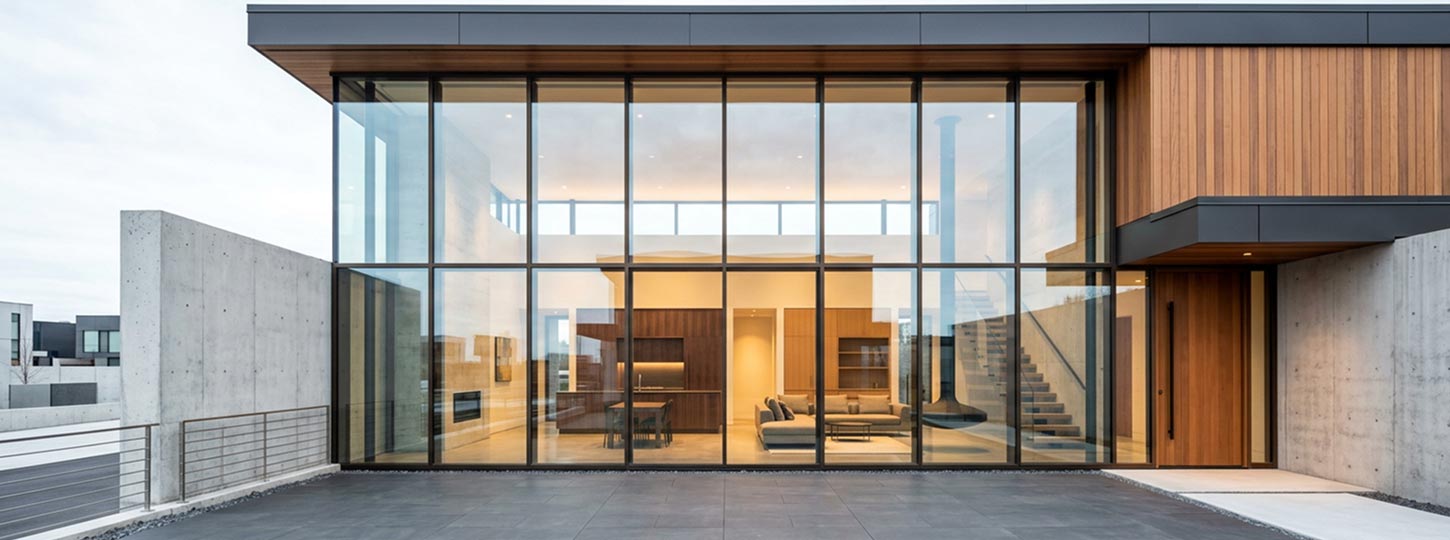
A window wall is a large-format glazing assembly that spans the full height of a room, running from the finished floor level to the underside of the floor or ceiling structure above. Unlike a conventional window installed within a wall opening, a window wall forms a large glazed section of the building envelope between structural floor slabs. The frame is typically recessed into or bearing on the floor slab at the bottom and secured at the top, creating a continuous glass plane across the width of the opening.
The system is composed of several distinct elements: an outer frame (head, sill, and vertical jambs), intermediate vertical mullions that divide the glass area into individual panels, the glazing units themselves, weatherstripping and seals, and, in many configurations, one or more operable sections that open for ventilation. Fixed panels are the most thermally efficient because they eliminate the hardware and seal compromises required for operating mechanisms. Operable sections, typically casement, awning, or sliding configurations, provide controlled ventilation without compromising the wall’s visual continuity. Homeowners exploring which residential window types work best as operable sections within a window wall can compare styles before specifying.
Common Applications in Residential Design
Window walls appear most frequently in living rooms and great rooms facing rear yards or scenic views, master bedroom suites, sunrooms and enclosed porches, and contemporary new-build homes where architects have designed the structure to accommodate large-format glazing from the outset. They are also specified for interior applications, such as between a living area and a covered porch, where thermal performance requirements are lower, and the priority is visual connection rather than weather resistance.
The principle driving demand for window walls is straightforward: natural light improves the perceived quality of a space, and unobstructed views increase a home's market appeal. The engineering challenge is delivering those outcomes while maintaining thermal performance, structural integrity, and long-term watertightness.
Windows Near Me
How Does a Window Wall Differ from Traditional Windows?
The practical differences between a window wall and a conventional window system go well beyond scale. A traditional window is an insert manufactured to fit a framed rough opening in a structural wall, with the surrounding wall material providing the weather barrier, the insulation, and the structural continuity. The window contributes to none of those functions. It admits light and, when operable, air.
A window wall replaces a large portion of the opaque wall area with a glazed assembly. The glazing assembly must manage weather resistance, thermal performance, and structural load transfer on its own. This shifts the performance burden entirely onto the frame system and the glazing specification. There is no insulated stud cavity behind the glass to compensate for a thin frame or a poorly sealed unit.
The visual difference is equally significant. Traditional windows create a pattern of glass openings within an otherwise solid facade of opaque wall material. A window wall eliminates the opaque infill entirely, replacing it with a continuous glass plane broken only by narrow mullions. The interior perception of space changes substantially. Rooms feel larger, ceilings read as higher, and the visual separation between indoor and outdoor spaces is reduced.
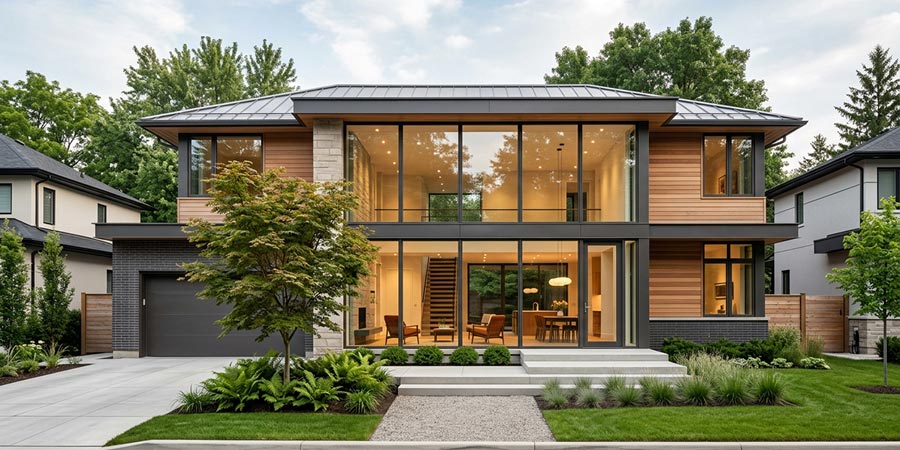
From a practical standpoint, traditional windows are simpler to install, easier to replace, and significantly less expensive. They also provide better privacy by default and create fewer challenges for furniture placement and solar heat management. The choice between the two systems is not simply aesthetic; it entails a trade-off between visual impact and practical constraints that the homeowner must actively manage.
What Is the Difference Between a Window Wall and a Curtain Wall?
This is the single most consistently misunderstood distinction in residential glazing, and it has real consequences for cost, structural planning, and code compliance.
A window wall sits between the structural floor slabs of a building. The bottom of the frame bears on the floor slab or a sub-sill, and the top is secured to the underside of the slab above. This means the glazing system is supported and anchored at each floor level rather than spanning continuously across multiple storeys. In residential construction, this is the standard approach for floor-to-ceiling glazing in homes with concrete or wood-frame floor assemblies.
A curtain wall, by contrast, is mounted on the exterior face of the building's structural frame. It does not bear on the floor slab; it spans past the floor plate, creating a continuous glass skin from grade to roof without horizontal interruptions at each storey. Curtain walls carry their own dead load and are anchored back to the primary structure at specific points. They do not receive lateral support from the floor system.
The structural and cost implications are significant:
| Feature | Window Wall | Curtain Wall |
| Structural support | Bears on floor slab; laterally supported by floor structure | Hung off the primary structure; spans past the floor plates |
| Typical application | Residential; one or two storeys | Commercial high-rise; multi-storey glazing runs |
| Floor plate visibility | Visible between floors (horizontal break) | Concealed; continuous glass from floor to roof |
| Installation complexity | Lower standard residential trades | Higher; requires specialist curtain, wall contractors |
| Thermal bridging risk | At the floor slab junction | At anchor points and transoms |
| Relative cost | Moderate | High |
For most residential projects, a window wall system is more practical and cost-effective than a curtain wall system. The structural demands, cost, and installation complexity are calibrated for commercial buildings with concrete moment frames or steel superstructures. When a residential architect or contractor refers to a "window wall" in the context of a home, they mean a floor-supported system, not a curtain wall.
Because the floor-supported configuration is what virtually every Canadian home actually needs, it's also where a residential-focused manufacturer can add the most value. Window Force designs and builds custom vinyl window wall configurations specifically for the floor-slab-bearing approach described above, not adapted commercial curtain wall hardware, with every unit CSA certified and engineered to meet or exceed ENERGY STAR® requirements across Canadian climate zones. For homeowners, that means the system arriving on site was built for the structural reality of a house, not scaled down from a high-rise specification.
What Are the Benefits of Installing a Window Wall?
The case for a window wall rests on three distinct categories of benefit: design impact, functional performance, and long-term property value.
Design and Lifestyle Benefits
Natural light is the most immediate and consistent benefit reported by homeowners who install window walls. A south- or west-facing window wall can reduce dependence on artificial lighting throughout the day, lowering electricity consumption while creating a living environment that changes character with the time of day and the season. Research consistently links increased exposure to daylight with improved mood, sleep quality, and general well-being benefits that are difficult to quantify but easy to notice.
The connection to outdoor space that a window wall creates is qualitatively different from that of a standard window. A full-width glass wall facing a garden, a lake, or a city view becomes the room's primary design feature, subordinating everything else to the view it frames. Interior designers often work from the window wall outward when specifying furniture, finishes, and lighting for spaces that contain them.
For homes with strong architectural character or striking site conditions, a window wall can also serve as a selling feature, creating measurable differentiation in a competitive real estate market.
Property Value Considerations
Appraisers and real estate professionals consistently rate large-format glazing as a value-add feature in residential properties, particularly in markets where newer construction commands a premium over older stock. The extent of the premium depends heavily on execution quality: a well-specified, properly installed window wall with thermally broken frames and performance glazing is a different asset than a low-grade aluminum system installed without appropriate flashing and sealing.
The caveat is that a window wall also increases maintenance obligations and introduces risks of moisture infiltration, seal failure, and solar heat gain, all of which require active management. A poorly installed or under-specified system can become a liability rather than an asset.
That liability risk is exactly why the manufacturer-installer relationship matters more on a window wall than on a standard replacement project. Window Force builds every unit to order and places it with homeowners exclusively through an authorized dealer network, so the same organization responsible for the glazing specification can be held to the 25-year transferable warranty backing it. For a project of this scale and cost, that accountability chain is worth confirming before signing a contract, not after a problem appears.
Are Window Walls Energy Efficient in Canadian Climates?
This is where the topic becomes technically demanding, and where many homeowners are inadequately informed before making a purchasing decision.
A window wall is, by definition, a large area of glass. Glass generally provides lower thermal resistance than an insulated wall assembly. High-performance glazing may achieve approximately R-2 to R-8, depending on configuration, while insulated walls commonly exceed R-20. Large glazed areas represent a significant part of a home’s thermal envelope, which is why Canadian energy standards evaluate windows using whole-unit performance metrics rather than glass-only values. Natural Resources Canada notes that window performance is assessed using factors such as U-factor, solar heat gain coefficient (SHGC), and air leakage, as the frame, spacer, and installation all influence real-world energy performance. Installing a window wall increases the glazed-to-opaque ratio of the building envelope, thereby increasing its thermal vulnerability. This is a structural fact that no glazing specification fully overcomes.
Glazing technology can minimize that thermal vulnerability through the careful selection of performance components.
Glass Technologies for Canadian Winters
According to Natural Resources Canada, the Solar Heat Gain Coefficient (SHGC) is one of the most important determinants of a window assembly's energy performance; it measures the fraction of incident solar radiation that enters the building. The appropriate SHGC depends on the window's orientation and local climate conditions: south-facing glazing benefits from a higher SHGC in winter to capture passive solar gain, while west-facing glazing typically performs better with a lower SHGC to limit summer overheating.
The U-factor measures the rate of heat loss through the entire window assembly, including frame and spacer. For residential applications, high-performance window wall systems typically target whole-window U-factors closer to 1.0 W/(m²·K) or lower, with triple-pane systems achieving significantly better performance. For homeowners seeking energy-efficient windows with verified performance data, reviewing the certified specifications of each glazing package against the ENERGY STAR® Canada climate zone requirements for their region is the most reliable method of comparison.
Winter Efficiency
In cold climates, the priority is minimizing heat loss while allowing beneficial solar gain during daylight hours. The most effective configurations combine triple-pane insulated glass units with an argon gas fill, a warm-edge spacer system (which reduces edge-of-glass heat loss compared to traditional aluminum box spacers), and a thermally broken frame that prevents heat from conducting directly through the frame material from the interior to the exterior.
Sergey Essipov, with over 20 years of experience in window manufacturing, explains:
In northern Canadian climates, the biggest mistake we see with window walls is over-relying on the centre-of-glass U-factor. That number looks good on a spec sheet, but the whole-window performance is what the homeowner actually lives with. At our facility, every vinyl frame profile we run for a large-glass project carries the same dual-seal, metal-free spacer system we use across our entire product line; there's no 'standard' spacer for small windows and a different one for window walls. A thermally unbroken frame with that spacer still won't outperform a properly engineered vinyl profile with it, which is why we don't treat large-format glazing as a separate product category from a thermal-performance standpoint.
Summer Comfort
Solar heat gain through a large south- or west-facing window wall can cause significant overheating during summer months, increasing cooling loads and reducing comfort. Low-E coatings that limit solar transmittance, particularly LoĒ³-366 class coatings, which combine strong infrared blocking with high visible light transmission, are the standard specification for window walls in orientations with significant summer sun exposure. External shading devices (overhangs, fins, or external blinds) can also reduce solar heat gain at the source rather than managing it after entry through the glass.
What Materials Are Commonly Used in Window Wall Systems?
Frame material selection for a window wall is more consequential than for standard windows because the frame spans a larger area, is more exposed to view, and plays a more significant role in the assembly's overall thermal performance.
Frame Materials
Aluminum is the most common frame material for commercial and high-end residential window walls. It offers narrow sightlines with slim frame profiles between panels, maximizing the visible glass area and creating a clean, contemporary appearance. The structural stiffness of aluminum allows it to span large openings without deflection. Its critical limitation for Canadian climates is thermal conductivity: aluminum has significantly higher thermal conductivity than vinyl, which is why thermal breaks are essential in cold climates. Thermally broken aluminum profiles, which interrupt the metal with a polyamide strip or a foam-filled cavity, address this problem but add cost and require careful specification to achieve meaningful performance improvements.
Vinyl (uPVC) frames offer inherently low thermal conductivity, good weathering resistance, and a lower unit cost than aluminum frames. The trade-off is structural: vinyl deflects more than aluminum under wind loads and thermal expansion, limiting the maximum panel size that can be specified without intermediate structural support. For window walls in residential applications where panel widths are in a manageable range (typically under 1.2 metres per panel), vinyl frames from a Canadian-standard manufacturer can deliver strong performance at a competitive price point.
Wood-clad frames, which use vinyl or aluminum on the exterior and wood on the interior, combine the appearance of timber with the durability of modern exterior materials. They are a popular specification for custom residential projects where the frame's interior finish quality is a design priority. They are also the most maintenance-intensive option and carry a higher unit cost than either aluminum or vinyl.
Fibreglass frames offer thermal performance closest to vinyl, with structural properties closer to aluminum. Fibreglass expands and contracts at a rate similar to that of glass, reducing stress on glazing seals over time. The material is less commonly stocked and more expensive, but it is a technically sound choice for high-performance window wall applications in demanding climates.
Vinyl's structural ceiling on panel width is a real constraint for window walls, but within that range, it remains the most climate-forgiving frame material available. Window Force builds its vinyl profiles with lead-free uPVC compounded with UV stabilizers, specifically to resist the brittleness and surface chalking that lower-grade vinyl develops after years of direct sun exposure across a large glazed wall, and every corner across the assembly is fusion-welded rather than mechanically joined, closing off the infiltration points that otherwise concentrate at panel junctions in a multi-panel system.
| Frame Material | Thermal Performance | Structural Rigidity | Typical Sight Line Width | Relative Cost |
| Aluminum (thermally broken) | Good | Excellent | Narrow (38 — 50 mm) | High |
| Vinyl (uPVC) | Excellent | Moderate | Standard (50 — 70 mm) | Moderate |
| Wood-clad | Good to Excellent | Good | Varies | High |
| Fiberglass | Excellent | Good | Standard (50 — 65 mm) | High |
Glass Packages
For residential window wall applications, the minimum appropriate specification is a double-pane insulated glass unit with Low-E coating and argon gas fill. This configuration delivers meaningfully better thermal performance than clear double-pane and is the baseline for ENERGY STAR® qualification in most Canadian climate zones. Triple-pane glass units provide a further reduction in heat loss and are increasingly specified for window walls in colder regions of Ontario, Alberta, and British Columbia, where the length of the heating season and temperature extremes make the performance premium worthwhile.
The spacer is easy to overlook in a glass-package conversation dominated by pane count and coating type, but on a window wall, it poses greater thermal risk than on a standard window, simply because there's so much more edge-of-glass length to account for. A metal spacer with an aluminum component creates a continuous cold line at every panel perimeter and across a full-height glazed wall, resulting in a meaningfully larger condensation-prone area than the same spacer would create on a handful of standard windows. Window Force specifies a dual-seal, metal-free warm-edge spacer across every IGU we build, which removes that aluminum thermal bridge entirely rather than just reducing it.
What Factors Influence Window Wall Cost?
Window wall pricing is more variable than standard window pricing because more variables affect cost. Homeowners should treat any estimate as preliminary until a site-specific assessment has been completed.
| Cost Factor | Lower-Cost Scenario | Higher-Cost Scenario |
| Glass specification | Double-pane, Low-E + argon | Triple-pane, premium Low-E coatings |
| Frame material | Vinyl | Thermally broken aluminum or fibreglass |
| Panel count and width | Fewer, narrower panels | Many panels or large-format fixed panes |
| Structural modifications | The existing opening accommodates the system | New opening requires a structural header or beam |
| Labour and installation | Straightforward access, ground-floor installation | Multi-storey, scaffold required, complex flashing |
| Custom configurations | Standard rectangular fixed-and-operable system | Corner units, curved profiles, motorized panels |
In broad terms, residential window walls in Canada range from approximately $5,000 to $15,000 or more for supply and standard installation. Large-format systems with thermally broken aluminum frames, triple-pane glass, and structural modifications required to create the opening can exceed $25,000 per wall in complex renovation scenarios. The cost of window installation in Alberta, for example, can reflect additional considerations related to climate-zone performance requirements and regional labour rates that differ from those in the Ontario market.
The most important cost variable that homeowners tend to underestimate is structural modification. Creating a new opening in an existing wall, removing a load-bearing section, installing a correctly sized header or beam, and ensuring the floor structure is adequate to support the bearing load of the window wall frame can add substantial cost and project complexity unrelated to the window itself.
Can a Window Wall Be Added During a Renovation Project?
Yes, but with greater complexity than replacing a standard window. The renovation process for a window wall involves a sequence of steps that cannot be reordered or skipped without compromising the outcome.
The first requirement is a structural assessment. A qualified engineer must evaluate whether the existing wall is load-bearing, determine the size and specification of any header or beam required to span the new opening, and confirm that the floor structure can carry the additional point loads introduced by the window wall frame. This step cannot be delegated to a general contractor based on experience alone; it requires a licensed professional engineer and typically results in stamped engineering drawings.
The second requirement is a building permit. Window walls that involve structural modification to an existing wall require a permit in virtually all Canadian municipalities. The permit process exists to ensure the structural drawings are reviewed and that the installation is inspected at critical stages. Operating without a permit creates liability for the homeowner, can void insurance coverage, and may create complications at resale.
The installation itself involves rough opening preparation, structural framing to the engineer's specifications, window and wall frame setting and levelling, glazing installation, and exterior flashing and sealing. The flashing and sealing stage is the most critical for long-term performance: improper integration of the window wall into the exterior weather barrier is the leading cause of moisture infiltration failures in residential window wall installations.
Installation performance is evaluated separately from the product itself because even a high-performance window can fail if the connection between the frame and building envelope is incorrectly executed. Fenestration standards and testing procedures address issues such as air leakage and water penetration resistance, highlighting that installation quality is critical to long-term window performance.
Sergey Essipov notes:
Renovation window wall projects have a higher failure rate than new construction installations, and the reason is almost always the same: the interface between the window frame and the existing exterior cladding system. We work with installers who understand that this junction needs to be engineered, not improvised. The window itself can be perfect and still leak if the rough opening isn't properly prepared and flashed before the frame is set.
For homeowners in Ontario and across the country considering a window installation of this scale, working with an experienced window manufacturer who can provide both engineering-grade product specifications and a certified installation network is a material advantage over sourcing the product and installation independently.
What Design Options Are Available for Residential Window Walls?
The design flexibility available in modern window wall systems has expanded considerably as manufacturing technology has improved. The basic configuration, a rectangular assembly of fixed panels with one or two operable sections, remains the most common and typically the most cost-effective. But a number of alternative configurations are available and increasingly specified.
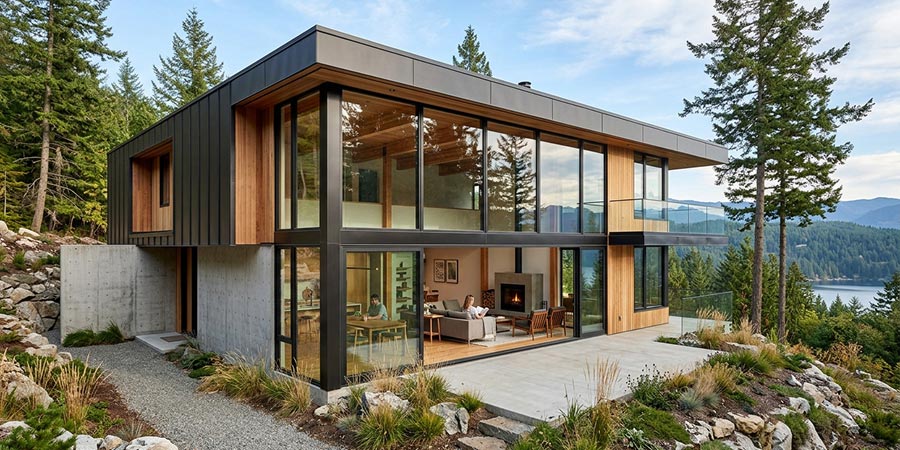
Corner window walls, which eliminate the vertical corner post and create a continuous glass plane that wraps around a building's corner, are among the most architecturally striking options. They require careful structural planning because the corner post traditionally serves a structural function that must be relocated or re-engineered. When executed correctly, a corner window wall creates a floating-room effect that no other fenestration product can replicate.
Sliding window wall systems, sometimes referred to as multi-panel sliding or lift-and-slide systems, incorporate large panels that can be moved horizontally to open a significant portion of the glass area entirely. This creates a true indoor-outdoor connection that suits homes with covered patios or decks in temperate climates. The operational hardware for large sliding panels is considerably heavier and more complex than standard sliding-window hardware, and the floor-track system requires careful consideration of thermal performance and accessibility.
Fixed-only window walls are the simplest and typically highest-performing option, eliminating the hardware compromises inherent in operable sections. They are appropriate for applications where ventilation is provided by other means: an adjacent door, mechanical ventilation, or supplementary casement or awning windows positioned elsewhere in the room.
What Are the Potential Drawbacks of Window Walls?
A balanced assessment of window walls must include the limitations that are frequently understated in sales contexts.
Privacy is the most immediately obvious challenge. A floor-to-ceiling glass wall provides no inherent visual privacy from the outside. This is manageable with window treatments, motorized blinds, interior curtains, or external screening, but those solutions add cost, reduce the visual openness that motivated the installation, and require ongoing maintenance. Sites with close neighbours, street-facing orientations, or elevated vantage points in surrounding buildings require a privacy strategy before any window wall is specified.
Solar heat gain in summer can be severe. A south- or west-facing window wall without adequate solar-control glazing or external shading can substantially increase cooling loads, raise surface temperatures in the room to uncomfortable levels, and cause UV fading of interior furnishings. The glazing specification and orientation-specific design decisions described in the energy efficiency section above are not optional considerations; they are functional necessities for most Canadian residential applications.
Cleaning a large glass wall, particularly from the exterior, is more demanding than cleaning standard windows. Multi-storey installations may require professional window cleaning services or purpose-built access solutions. Interior cleaning is straightforward, but exterior access needs to be considered at the design stage rather than as an afterthought.
Upfront cost relative to standard windows is significantly higher, both for the product and for any structural modifications required. The return on that investment through energy savings, comfort improvement, and property value is real but not immediate. Homeowners with a short expected ownership horizon may find the cost-benefit calculation less favourable than those planning to remain in the home for ten years or more.
Are Window Walls Worth the Investment for Homeowners?
The suitability of a window wall depends on three factors specific to each project. The site and orientation of the proposed installation, the quality of the specified system, and the homeowner's expectations about what a window wall can and cannot do.
For a home with a compelling view, a south or west orientation that allows meaningful passive solar gain in winter, and an owner who values the daily quality of their living environment and plans to remain in the home for a decade or more, a properly specified window wall is almost always worth the investment. The combination of natural light, visual openness, reduced artificial lighting costs, and resale premium creates a durable return.
For a home with a north-facing orientation, urban close proximity that limits views, or a renovation timeline that makes structural modification expensive relative to the available budget, the same decision requires more scrutiny. A well-chosen bay window, a large picture window, or a series of casement windows may deliver most of the benefits of light and visual connection at a fraction of the cost and structural complexity.
Selecting the right system and installer is essential for achieving reliable long-term performance. The difference between a properly designed system and a lower-cost alternative can significantly affect long-term energy efficiency, comfort, and reliability. Window Force Inc. focuses on custom vinyl window solutions featuring engineered double- and triple-pane glazing options, backed by verified U-factor and SHGC performance data. This level of attention is especially important in applications with large glass areas, where even small differences in product performance can have a measurable impact.
Conclusion
A window wall is a significant architectural and engineering decision, not simply a large window. Understanding the structural requirements, glazing performance variables, and long-term maintenance implications before committing to an installation protects both the investment and the building. The distinction between a window wall and a curtain wall is not semantic; it determines how the system is engineered and what it costs. The choice of frame material and glazing package determines how the system performs through decades of seasonal temperature changes.
Homeowners who approach this decision with accurate technical expectations, a clear view of their budget, including structural modification costs, and a commitment to working with qualified professionals, from the structural engineer through to the installation contractor, consistently achieve results that deliver on the product's promise. Those who underestimate the complexity of the process tend to encounter the consequences at exactly the wrong moment: during a cold January night or a heavy autumn rainstorm.
Frequently Asked Questions
What is the difference between a window wall and a curtain wall?
A window wall is installed between floor slabs and supported by the building structure at each level. A curtain wall is attached externally and spans continuously across floors.
Can a window wall be opened for ventilation?
Yes. Most residential window wall systems include one or more operable sections, typically casement, awning, or sliding configurations. Fixed panels deliver the best thermal performance; operable sections introduce controlled ventilation. The ratio of fixed to operable area is specified based on the homeowner's ventilation requirements and performance priorities.
Do window walls require a building permit in Canada?
Any window wall installation that involves structural modification to an existing wall, removal of a load-bearing section, installation of a header or beam, or creation of a new opening requires a building permit in virtually all Canadian municipalities. Even replacing an existing large window with a window wall system may trigger permit requirements, depending on local authority rules. Confirming permit requirements before the project begins is the homeowner's responsibility.
How do window walls perform in Canadian winters?
Performance depends entirely on the glazing specification. A correctly specified window wall with triple-pane insulated glass units, Low-E coatings appropriate to orientation, argon gas fill, and warm-edge spacers can achieve whole-window U-factors that meet ENERGY STAR® Canada requirements for the most demanding climate zones. A poorly specified system with thermally unbroken frames and basic double-pane glass will perform poorly in cold climates regardless of its visual appearance.
What maintenance does a window wall require?
Frame and hardware maintenance for a window wall is similar to standard windows: annual lubrication of operable hardware, inspection of weatherstripping, and cleaning of drainage channels. The glass area requires more frequent cleaning than standard windows, and exterior access for multi-storey installations needs to be planned at the design stage. Seal inspection, looking for fogging between panes or evidence of seal failure at the perimeter, should be part of an annual maintenance routine.
How long does a window wall last?
The service life of a window wall depends on the quality of the frame material, the integrity of the glazing seal, and the quality of the installation. High-quality thermally broken aluminum or vinyl frames with certified insulated glass units and proper installation can remain in service for 25 to 30 years or more. Window performance is evaluated as a complete system rather than by individual components alone. Standardized testing methods measure thermal transmittance of the entire fenestration assembly, including the frame, glazing, and edge effects, which is why whole-window ratings provide a more accurate picture of expected performance. The most common failure point is seal integrity, either at the insulated glass unit perimeter (causing fogging) or at the installation perimeter (causing moisture infiltration). Both are addressed by quality specification and professional installation.
People Also Ask