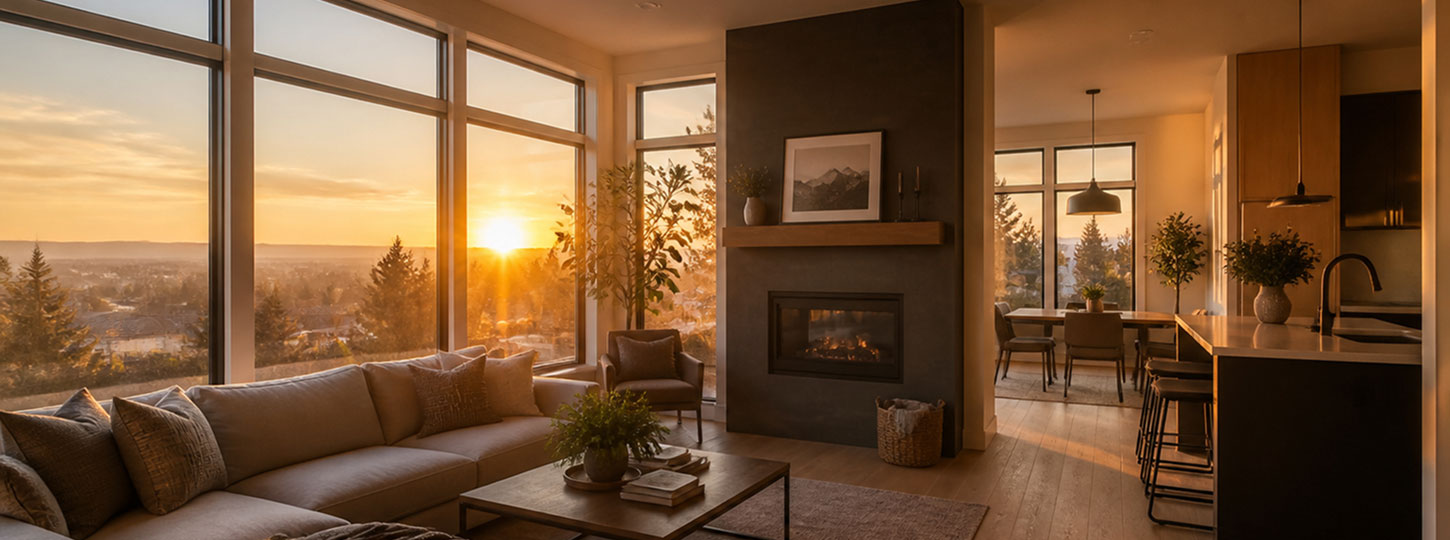


West-facing windows are a strong choice for rooms used in the late afternoon and evening, where they deliver warm, low-angle light and sunset views, and a demanding one everywhere else, because that same sun arrives at the hottest hour of the day and brings overheating, eye-level glare, and faster fading of interior finishes. In southern Canada, the midsummer sun sets roughly 33 to 38 degrees north of due west, at an angle too low for a standard short roof overhang alone to fully intercept, which is why this elevation requires specialized glazing paired with extended or vertical shading solutions.
Orientation is a production input at Window Force, not a detail settled after the order. Every unit is built to order, so the coating, gas fill, and pane count for a west-facing opening are fixed in the specification before the glass is cut, and our team works through those elevation-by-elevation decisions with dealers, builders, and homeowners across the country every week. Manufacturing custom vinyl windows in Canada since 2007 has produced a long record of which west-facing configurations return with comfort complaints and which do not, and that record shapes the recommendations below.
Key Takeaways
- West-facing windows deliver warm, golden light and sunset views in the late afternoon and evening, but the same exposure drives summer overheating, glare, and interior fading.
- Natural Resources Canada notes that rooms facing south and west heat up quickly during the day and cool off rapidly at night, which is why glazing choice matters more on this elevation than on any other except south.
- South-facing glass receives the greatest total solar exposure over a full day in the Northern Hemisphere, while west-facing glass concentrates its exposure into the hottest, most glare-prone hours of the afternoon.
- A lower solar heat gain coefficient (SHGC), paired with exterior shading and the right interior window covering, helps control most heat and glare problems without sacrificing the view. Homeowners comparing upgrade costs can find market-specific pricing for the Calgary window replacement cost guide or the Vancouver window replacement cost guide. Qualifying energy-efficient upgrades may also be eligible for rebates through federal and provincial programs covered in the Canada window and door rebates guide.
- The right decision depends on room use, glass area, and local climate; a living room used mainly in the evening tolerates west sun very differently than a home office used all afternoon.
What does a west-facing window mean for daily sunlight?
A west-facing window faces the setting sun, so it receives little to no direct light in the morning and receives increasingly intense light from early afternoon until sunset. Unlike a south-facing wall, which tracks the sun across most of the day, a west opening stays in shade or indirect light until the sun swings into the western sky, then delivers several hours of direct afternoon sunlight before dusk.
When does direct sunlight reach the glass?
In most of Canada, a west-facing room stays comfortably shaded through breakfast and into early afternoon, then begins receiving direct sun from early to mid-afternoon onward. Because the sun approaches the horizon in the hours before sunset, the light enters at a steep, penetrating angle that reaches deep into the room rather than glancing off the upper part of the glass, which is part of why west light feels so much more intense than the morning sun of similar duration.
How does the experience change by season?
The sun's path shifts meaningfully between winter and summer, and that shift changes what west light delivers in each season. In summer, the sun sets far north of due west and stays higher in the sky later in the evening, extending the window of direct exposure. In winter, the sun sets closer to due south of west and drops earlier, so the same glass sees a shorter, lower-angle burst of late-day light. Nearby buildings and other permanent structures may cast longer shadows across west-facing walls during winter because of the lower solar angle. Deciduous trees, however, lose their leaves and provide much less shade until the growing season returns.
Windows Near Me
What are the main advantages of west-facing windows?
The appeal of west-facing windows rests on how a space feels and functions at the end of the day rather than on how it performs on a spreadsheet. For households that use their main living areas in the evening, that value is real and should be weighed against the technical drawbacks rather than dismissed. It is also the reason the question a vinyl windows supplier hears most often about this elevation is not whether to keep the west glass, but how to control what comes with it.
Evening light and atmosphere
Late-day sun carries a warmer colour temperature than midday light, giving west-facing rooms a golden, saturated quality that many homeowners specifically seek out for dining rooms, family rooms, and kitchens used for evening meals. Unobstructed west glass also frames sunset views directly, which is a genuine architectural asset for properties overlooking open landscape, water, or a low skyline.
Possible cold-season benefits
During the colder months, afternoon sun through west glass adds passive warmth to a room precisely when outdoor temperatures are dropping, and heating demand is rising, which can modestly offset heating load in a well-insulated home. The usefulness of that gain depends heavily on climate, glazing specification, and how much of the day's heating needs falls in the late afternoon rather than the overnight hours, so it should be treated as a secondary benefit rather than the reason to choose the orientation.
What are the main disadvantages of west-facing windows?
The drawbacks of west exposure cluster around the same few hours that produce its best light: the same intense afternoon sun that creates a warm evening glow also drives overheating, glare, and material degradation, and the effects compound in homes with larger glass areas.
Heat and glare
During summer afternoons, direct sun striking west glass at a steep angle can raise interior surface and air temperatures noticeably faster than equivalent south-facing glass, because the low sun angle penetrates deep into the room rather than being partially blocked by a standard overhang. That same afternoon sunlight produces persistent glare at eye level, which interferes with reading, cooking, and screen use during the exact hours many households are most active at home.
Cooling implications
Because the intense portion of west solar gain lands in mid-to-late afternoon, it frequently overlaps with the period of highest outdoor temperature, which pushes cooling systems to work hardest exactly when they are already under the most load. Rooms with large, unshaded west windows commonly run several degrees warmer than the rest of the house on hot afternoons, creating uneven comfort across the home even when the overall HVAC system is correctly sized.
Interior fading
Prolonged, direct exposure to visible light and ultraviolet radiation accelerates fading in flooring, upholstery, artwork, and wood finishes positioned in the path of the afternoon sun, and the effect is not uniform: materials with light-sensitive dyes or pigments show visible change over a shorter period than more stable materials, even when overall light levels seem moderate. The risk is concentrated rather than evenly spread, since surfaces that sit directly in the beam for extended periods each afternoon face far greater exposure than those in rooms that receive only brief or indirect light.
Fading is treated as an interior problem, yet the frame on a west wall absorbs the same ultraviolet load as the flooring in front of it. Standard vinyl profiles answer that exposure by chalking and losing surface gloss on the sunniest elevation years before the shaded walls show any change at all. Window Force extrudes its frames from lead-free uPVC with UV stabilizers compounded through the material rather than applied as a surface layer, with every corner fusion-welded into a single continuous section rather than mechanically fastened, so the exterior face of a west-facing frame keeps its colour and surface integrity under the same conditions that put the room's furnishings at risk.
Which direction gets the most sun in a Canadian home?
This question has two different correct answers depending on what "most sun" means, and homeowners often conflate them when comparing orientations.
Most sunlight throughout the day
Over a full day and across the full year, south-facing openings in the Northern Hemisphere receive the greatest total solar exposure, because the sun tracks across the southern sky for the majority of daylight hours in every season. This is the foundation of passive solar design, which typically concentrates the glass area on the south wall to capture extended exposure.
Strongest afternoon exposure
West-facing glass does not lead in total daily exposure, but it leads in concentrated, high-intensity exposure during a specific window: the hottest hours of a summer afternoon. That concentration, rather than the total volume of light, is what makes west orientation more demanding to manage than its share of daily sun hours would suggest.
How do west-facing windows compare with north, south, and east-facing windows?
Each orientation carries a distinct combination of light timing, heat gain, and glare risk, and matching glazing and room use to the orientation is more effective than treating all four walls the same way.
North-facing windows receive largely indirect, diffuse light with minimal direct-sun glare or overheating risk in any season, making them well-suited to home offices, art studios, and any space where consistent, even light matters more than warmth. East-facing windows deliver direct morning sun, which is generally easier to manage because it arrives when outdoor temperatures are still relatively low, making it a natural fit for breakfast nooks and bedrooms. South-facing windows receive the broadest solar access across the day and the greatest passive-heating benefit in winter, provided the glazing and shading are chosen to prevent summer overheating. West-facing windows, as covered above, concentrate strong, low-angle west sun into the late afternoon and evening, favouring rooms used at that time of day while requiring more deliberate heat and glare control than the other three orientations.
| Orientation | Peak Light Timing | Typical Heat Gain | Glare Risk | Best-Suited Rooms |
| North | Diffuse, all day | Low | Low | Offices, studios, hallways |
| East | Morning | Moderate | Moderate, morning only | Bedrooms, breakfast nooks |
| South | Midday, broadest overall exposure | High, manageable with shading | Moderate | Living rooms, sunrooms |
| West | Afternoon and evening | High, concentrated in hot hours | High, low-angle | Family rooms, dining rooms, patios |
Which rooms benefit most from west-facing windows?
Matching orientation to how a room is actually used through the day resolves most of the tension between west light's appeal and its drawbacks.
Best rooms for evening light
Family rooms, dining rooms, and covered patios or sunrooms used primarily after work and school hours are strong candidates for west exposure, since the room's period of heaviest use coincides with the orientation's best light. Living spaces oriented toward a garden, water view, or open horizon also benefit disproportionately from west glass, because the sunset view becomes a daily feature rather than an occasional one.
Rooms that may require extra control
Home offices, kitchens used for early dinner prep, and any workspace with a screen positioned toward a west window are more likely to experience glare and overheating during working hours. Bedrooms on a west wall can also run uncomfortably warm on summer evenings without adequate shading, since the room absorbs heat through the exact hours when occupants are trying to cool down for the night.
How can a west-facing window affect summer heat, glare, and cooling demand?
Understanding solar heat gain in plain terms helps explain why west orientation feels so different from the others in July, even though the glass itself may be identical to that of a south-facing unit.
The solar heat gain coefficient, or SHGC, is a rating that indicates the fraction of the sun's energy that passes through a window as heat, expressed as a number between 0 and 1: a lower SHGC blocks more solar heat, while a higher SHGC admits more of it. Natural Resources Canada notes that if direct sun makes a room noticeably hotter, a window with a lower SHGC is generally the right choice for that opening, and specifically identifies south- and west-facing rooms as the ones most likely to overheat during the day and cool rapidly again at night.
What SHGC measures
SHGC is distinct from visible brightness: a window can admit plenty of visible light while blocking a meaningful share of the accompanying heat, which is exactly what a solar-control Low-E coating is designed to do. This is why two windows that look equally bright from inside a room can produce very different afternoon temperatures depending on their SHGC rating.
Why large windows create stronger effects
Solar heat gain scales with glass area, so a large west-facing picture window or patio door admits proportionally more heat and glare than a smaller unit with the same specifications. Homes with expansive west glazing, a popular choice for capturing sunset views, need a more deliberate SHGC and shading strategy than homes with modest window openings on the same wall.
Large west-facing openings are where custom manufacturing ceases to be a convenience and becomes a performance requirement. Window Force builds each unit to the verified rough-opening dimensions at its 80,000 sq ft production plant, which allows a wide-picture unit or patio door on the west wall to carry a different coating and pane count than the smaller openings on the same elevation. Building to the measured opening also removes the filler and shimming that a stock-size unit forces into the perimeter, since that perimeter is where afternoon heat and air leakage concentrate first.
Which glazing features work best for west-facing windows?
The right glazing package for a west-facing opening balances two goals that can pull in opposite directions: controlling summer heat gain without sacrificing too much natural light or winter comfort.
As Sergey Essipov, a seasoned engineer with more than 20 years of experience in window manufacturing, explains:
A solar-control coating only performs to its rating if it sits on the correct surface of the insulated unit. At our facility, we position the solar-control layer on the second surface, the inboard face of the outer lite, so the infrared component is reflected before it reaches the air space rather than after the cavity has already absorbed it. Move the same coating to an inner surface and visible brightness barely changes while the afternoon heat load climbs, which is why every west-facing order has its coating position confirmed as part of the glass specification instead of defaulting to whatever the glass supplier ships as standard.
At our facility, when an order comes in for a west-facing opening, the first conversation is about SHGC target, not Low-E tier. Our recommendation for west walls in most of southern Canada is an SHGC below 0.30 — that is the tier where the coating is doing genuine solar-control work. Standard Low-E coatings typically carry an SHGC in the 0.40 to 0.50 range, which delivers meaningful benefit in winter but still passes a large fraction of solar heat on a summer afternoon at a steep angle. The two products are sold using the same category name, but they perform differently on a west wall, and specifying the wrong one is the single most common reason a west-facing room is still overheating after a window upgrade,
says Sergey Essipov, Production Engineer with 20 years of experience in window manufacturing.
Low-E coatings
Low-emissivity coatings are microscopically thin layers applied to the glass that selectively filter solar energy; a solar-control Low-E coating is generally the better fit for west exposure because it reduces the heat load associated with direct afternoon sun while still transmitting usable daylight. The measure that separates the two coating families is the light-to-solar-gain ratio, which compares visible transmittance against SHGC: solar-control coatings sit at the higher end of that ratio, meaning the room stays visually bright while a larger share of the accompanying infrared energy is reflected back outdoors.
Choosing an SHGC
For west-facing glass in most Canadian climate zones, a comparatively lower SHGC is generally the more forgiving choice, since it directly reduces the peak heat load during the hours when the sun is strongest, and the outdoor temperature is already high. The figure that actually governs comfort is the glass area multiplied by SHGC, not the rating on its own, so a wide patio door with a moderate rating can admit more afternoon heat than a smaller window with a higher one. It is also worth confirming which value a quote refers to, since centre-of-glass ratings read lower than whole-window ratings that account for the frame and edge of glass.
Frame and spacer performance
Glass coating is only part of the equation; the spacer system at the edge of the insulated glass unit affects both thermal performance and long-term seal durability. Window Force uses a metal-free, dual-seal spacer system across its insulated glass units, which reduces the thermal bridging that standard aluminum spacers introduce and helps maintain a more stable edge temperature through the wide seasonal swings typical of a Canadian climate.
| Glazing Element | What It Controls | West-Facing Recommendation |
| SHGC | Amount of solar heat admitted | Lower value to offset intense afternoon gain |
| Low-E coating type | Balance of light vs. heat transmission | Solar-control Low-E |
| Spacer type | Edge heat transfer and condensation resistance | Warm-edge, metal-free spacer |
| Gas fill | Overall insulation (U-factor) | Argon, standard for ENERGY STAR compliance |
| Pane count | Insulation and acoustic performance | Double- or triple-pane, based on climate and noise needs |
Should homeowners choose double-pane or triple-pane glass for west-facing exposure?
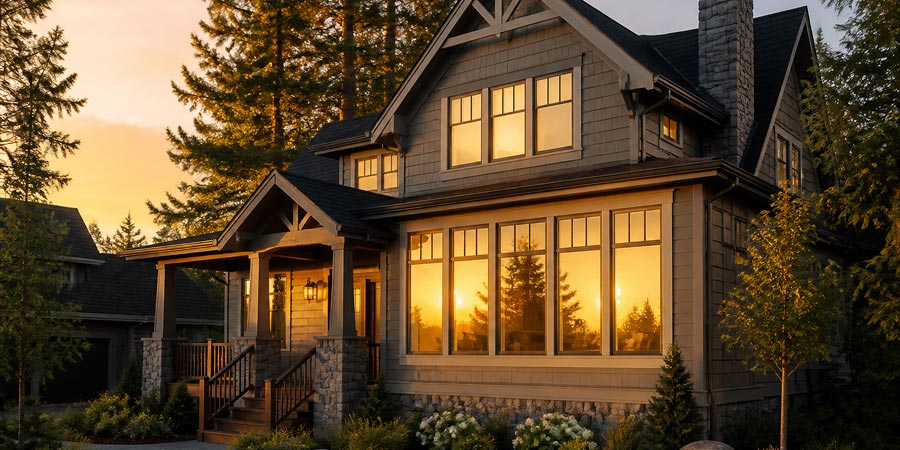
Pane count affects insulation, sound control, and overall unit weight, and the right choice depends on how the west-facing room is used and what climate zone the home sits in.
Where double-pane may be sufficient
For moderate climate zones and rooms without an unusually large glass area, a well-specified double-pane unit with the appropriate solar-control Low-E coating and argon fill can deliver solid year-round performance at a lower upfront cost than triple-pane glazing. This is often adequate for secondary rooms or smaller west-facing openings where the heat and glare load is naturally limited by glass area.
When triple-pane adds value
Triple-pane glass construction improves both thermal insulation and sound attenuation, which matters more on larger west-facing walls, in colder Canadian climate zones, or in homes near busy roads where added acoustic dampening makes a noticeable difference. Window Force manufactures both double- and triple-pane glass configurations and can match the pane count, coatings, and glazing performance to each opening’s orientation and glass area, rather than applying a one-size-fits-all specification across the entire home.
How can blinds, exterior shading, and landscaping control afternoon sun?
Because late-afternoon sunlight is harder to intercept with a standard horizontal overhang than higher midday sun, west-facing rooms typically need a layered shading strategy rather than a single fix.
Exterior solutions
Exterior shading intercepts heat before it ever reaches the glass, which makes it the most effective layer of defence against west-facing overheating. Several approaches work well together:
- Exterior screens, solar shades, or louvres mounted outside the glass intercept heat before it reaches the window, making them more effective than any interior treatment at reducing the rise in indoor temperature.
- Vertical shading elements, such as adjustable louvres or side screens, block direct western sunlight more effectively than a fixed horizontal overhang, which is primarily designed for higher midday sun.
- A deep pergola, retractable drop-arm awning, or covered patio positioned on the west side can provide shade, provided it extends far enough or incorporates vertical drop shades to block the low late-afternoon sun angle.
Interior coverings
Interior blinds, cellular shades, and light-filtering curtains reduce glare and add a secondary layer of heat rejection, though they are generally less effective than exterior shading because they intercept heat only after it has already passed through the glass into the room.
Trees and seasonal planting
Deciduous trees planted on the west side provide dense shade in summer, when their canopy is full, while allowing more winter sunlight through once the leaves drop, which aligns naturally with the seasonal heating and cooling needs of a west-facing room.
How can homeowners reduce fading and protect interior finishes?
Preventing fade damage in a west-facing room means managing the same combination of visible light, ultraviolet radiation, and cumulative exposure time.
Materials most at risk
Wood flooring, upholstery fabric, area rugs, artwork, and framed photographs positioned directly in the path of afternoon sun are the most vulnerable, particularly materials with light-sensitive dyes or pigments. According to the Canadian Conservation Institute, both ultraviolet and visible light contribute to fading, and prolonged exposure can weaken organic materials and cause noticeable colour changes over time, meaning UV-blocking glass alone does not fully eliminate the risk.
Practical protection checklist
No single measure eliminates fading risk on its own, but combining a few habits and glazing choices meaningfully slows the cumulative damage:
- Position furniture, rugs, and artwork away from the direct path of the afternoon sun where the room layout allows.
- Use UV-filtering glazing or solar-control window film to block up to 99% of UV rays, while understanding that interior shades are still necessary during peak hours to limit the fading impact of visible light.
- Close blinds or shades during the most intense afternoon hours in rooms with valuable or light-sensitive furnishings.
- Rotate rugs, cushions, and small decorative items periodically to distribute any fading evenly rather than concentrating it in one area.
Are west-facing windows a good choice for Ontario and other Canadian climates?
The answer depends less on the orientation itself than on how the glazing, shading, and room use are planned together, since the same west wall can perform very differently depending on those choices.
Ontario's seasonal trade-offs
Cooling demand is not distributed evenly across the country, and that difference determines how much a west elevation actually costs to run. Statistics Canada reported that, in 2025, Canadian households used air conditioning or similar cooling equipment, with rates ranging from 83% in Ontario to 45% in British Columbia, a pattern that tracks real regional differences in summer temperature and humidity.
The practical consequence differs by market. For replacement windows in Mississauga and comparable inland southern Ontario markets, where mechanical cooling runs for months and humidity holds overnight temperatures up, an unshaded west wall adds measurably to operating costs during the peak billing period, and a low-solar-gain package is the default. Working with a window supplier in Vancouver shifts the calculation: with fewer cooling days and a heavily overcast winter, the same west wall reads mainly as an afternoon comfort issue, and giving up too much visible transmittance costs more in daylight than it returns in avoided heat. The long heating season in both markets still makes some late-day passive warmth useful through spring and autumn, so the specification follows the local balance rather than a national rule.
Why one glazing package may not suit every elevation
A single SHGC and coating specification applied uniformly across a home rarely serves every orientation equally well. A value that performs well on the north wall may underperform on the west wall, and vice versa. A window-by-window glazing strategy based on opening size, orientation, and room function generally delivers better overall performance than applying the same glass package throughout the home.
The result is that a homeowner is actually buying a house that performs evenly, without one room running warm every August afternoon while the rest of the home sits comfortably. Window Force delivers that through an authorized dealer network, so the party that records each elevation and recommends its glazing is the same party accountable for the 25-year transferable warranty on the finished unit. Every configuration is CSA-certified, and performance is engineered to meet or exceed ENERGY STAR® requirements across all Canadian climate zones, which means the lower-solar-gain package chosen for the west wall still maintains the certified performance level used elsewhere in the home.
Conclusion: Are west-facing windows right for your home?
West-facing windows earn their place in rooms that are lived in after work, where late-day sun becomes an asset rather than a load. The same exposure raises afternoon temperatures, produces glare at eye level, and accelerates fading, which is why this elevation requires its own specification rather than the glass package used for the rest of the house.
Three choices determine the outcome: a lower SHGC with a solar-control Low-E coating, exterior shading that blocks the sun before it reaches the glass, and a room function that matches the hours the space is in direct sun. Handled that way, a west elevation keeps its evening light without the summer penalty.
People Also Ask